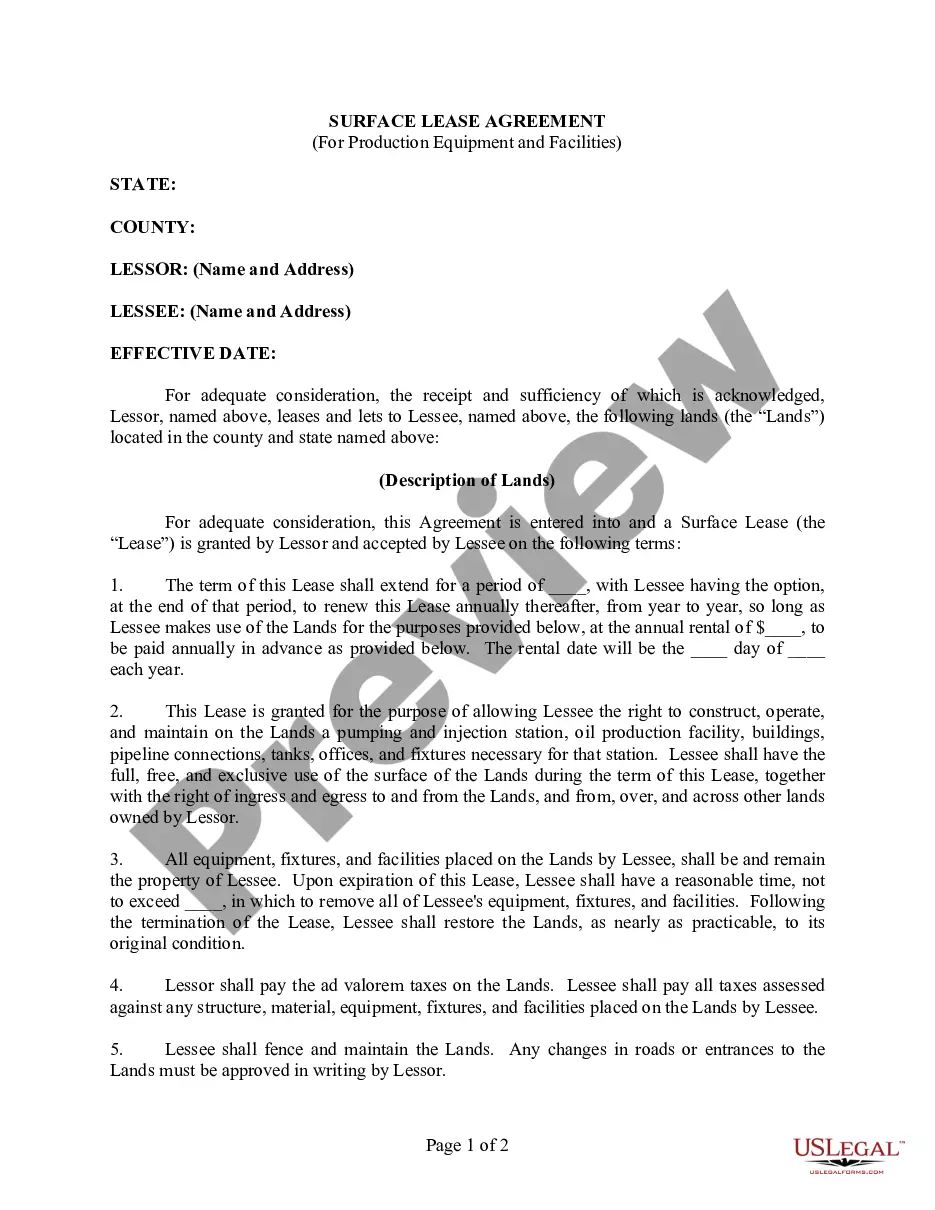
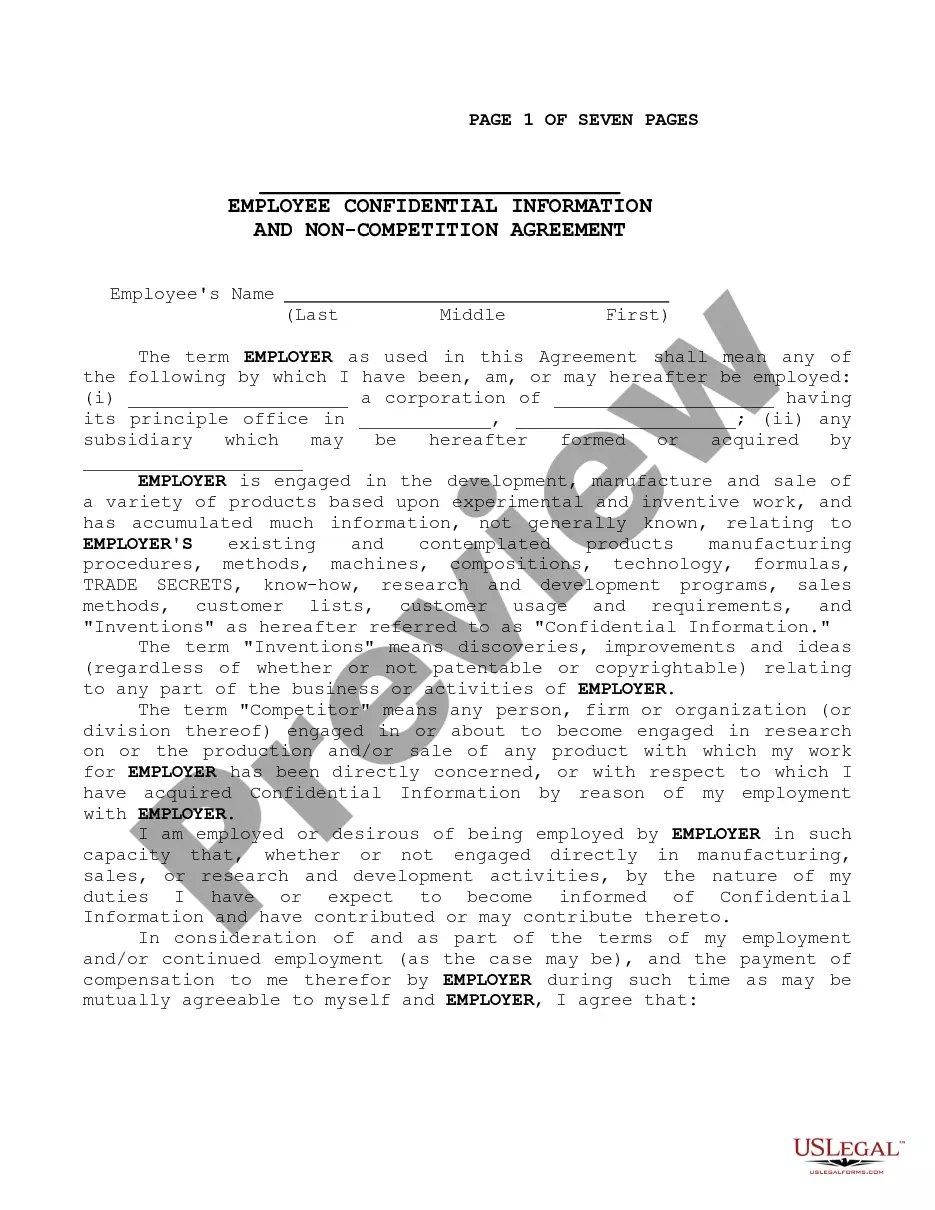
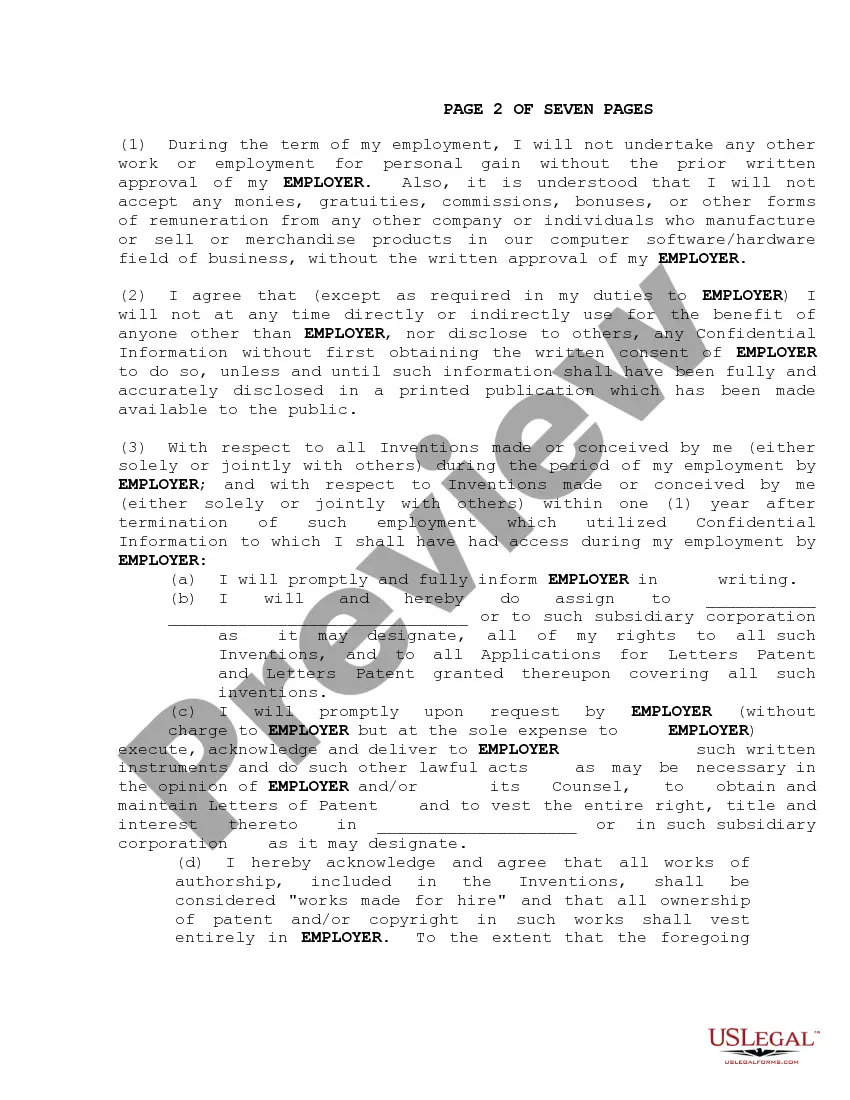
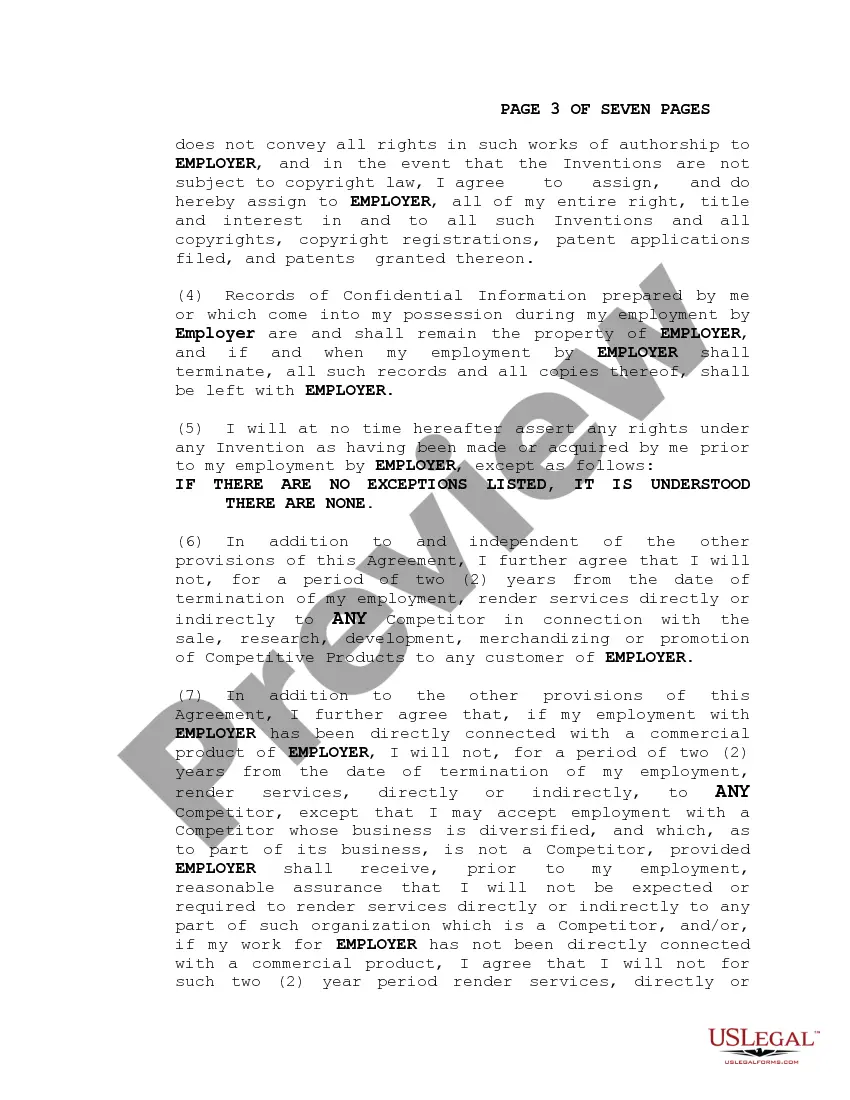
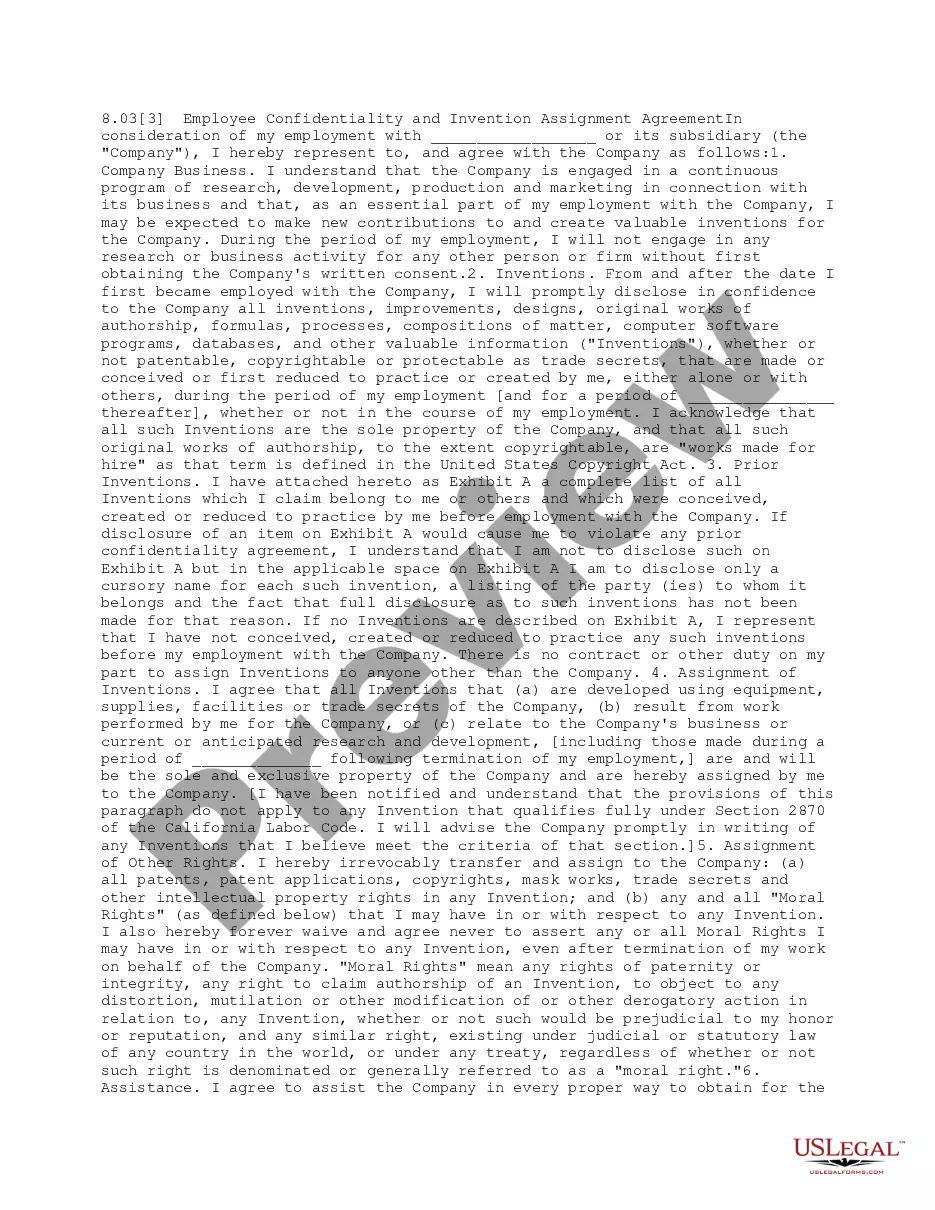
This form is an Employee Confidential Information and Non-Competition Agreement. The employer agrees that during the term of his/her employment with the manufacturer, he/she will not undertake any other work for personal gain without the prior written approval of the manufacturer. The employer also acknowledges that he/she may not assign any rights under the agreement.
Virgin Islands Employee Confidential Information and Noncompetition Agreement - Inventions
State:
Multi-State
Control #:
US-KWP-0024
Format:
Word;
Rich Text
Instant download
Description
Free preview
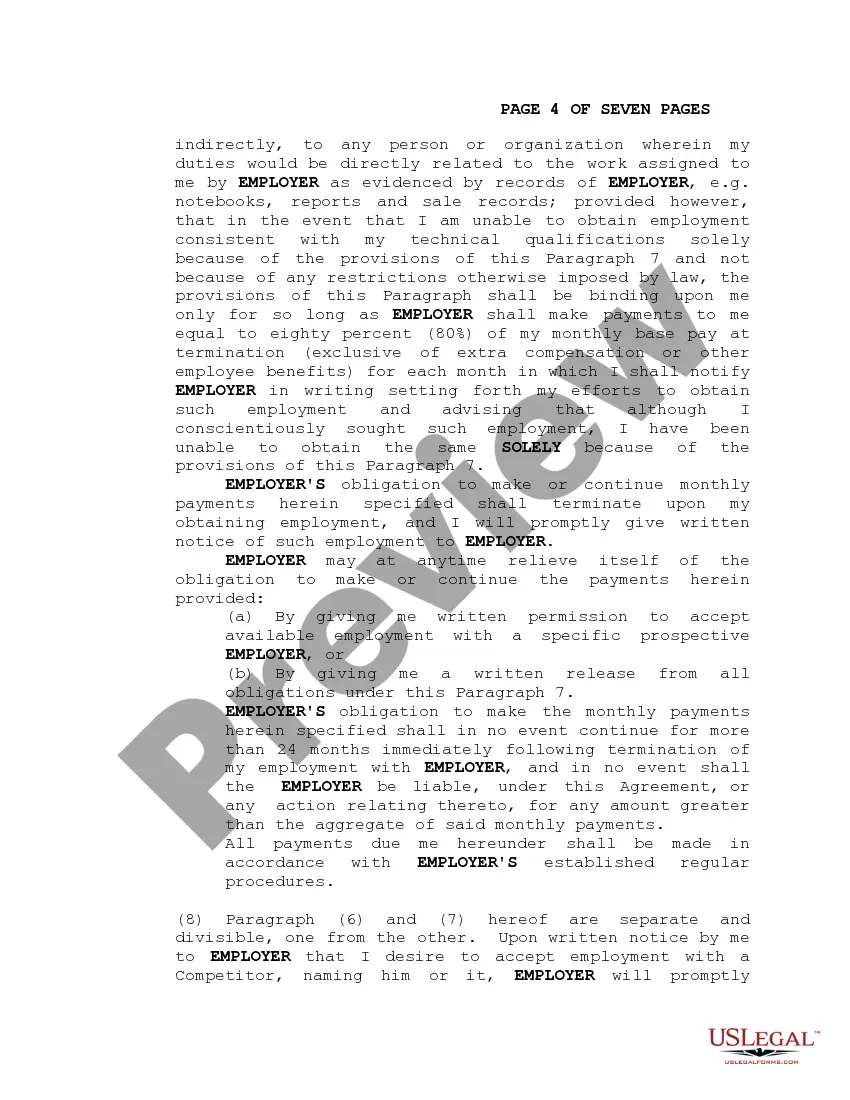
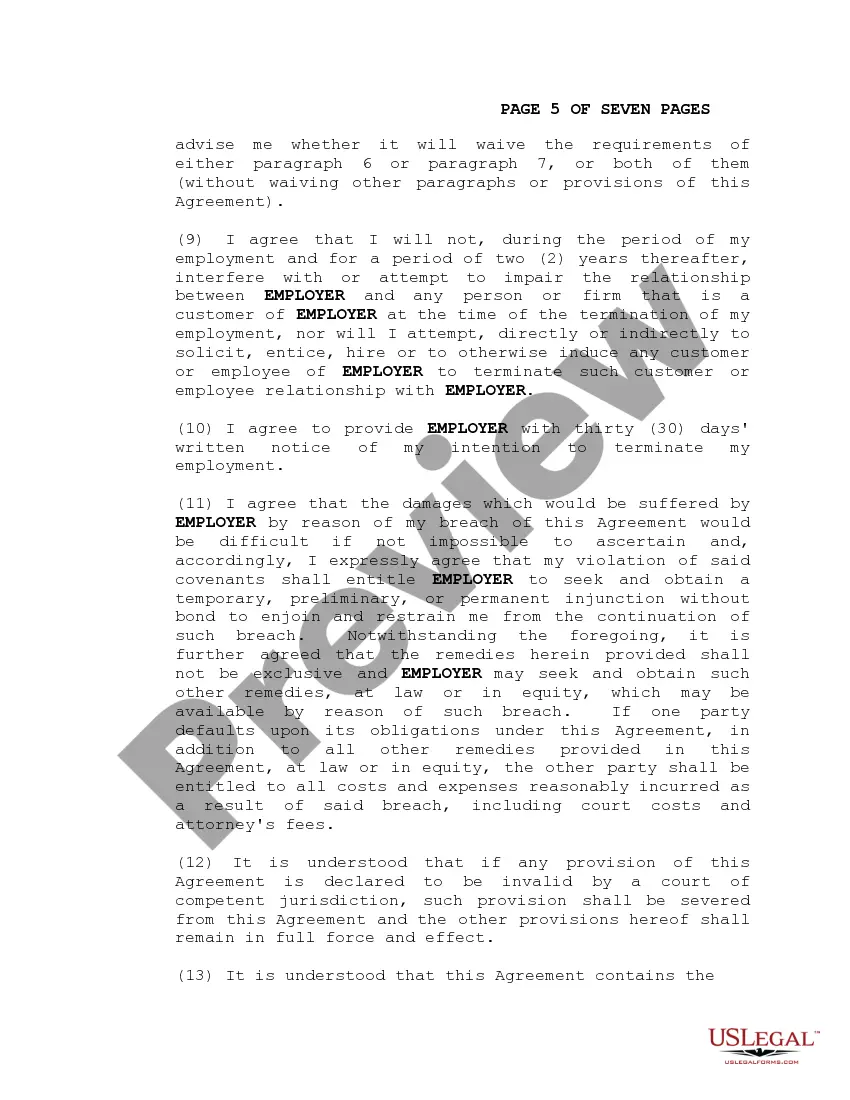
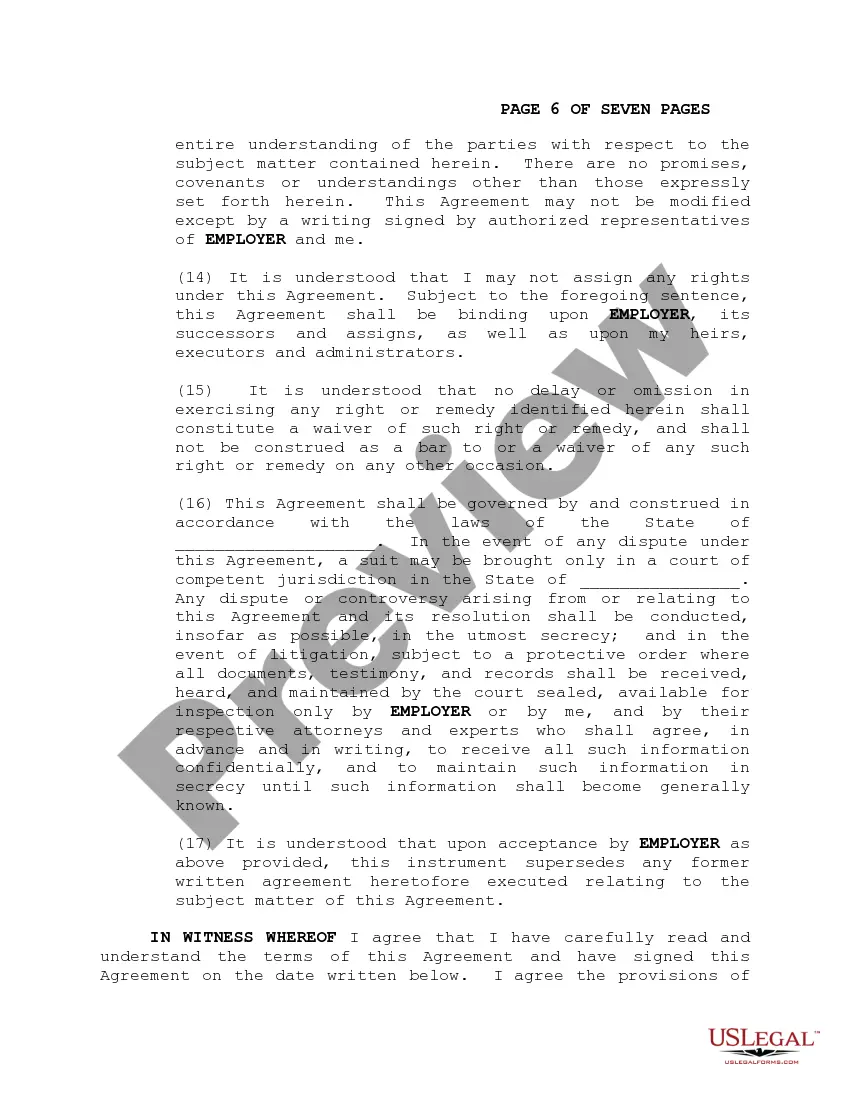
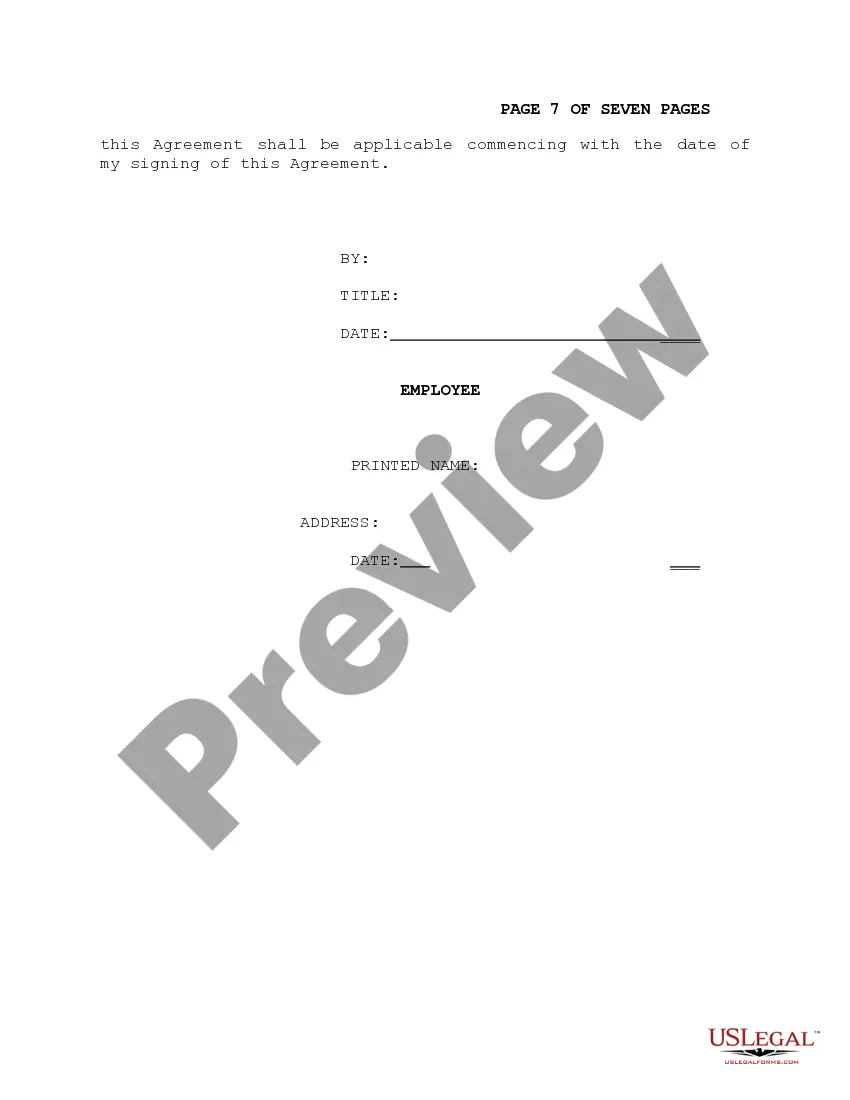
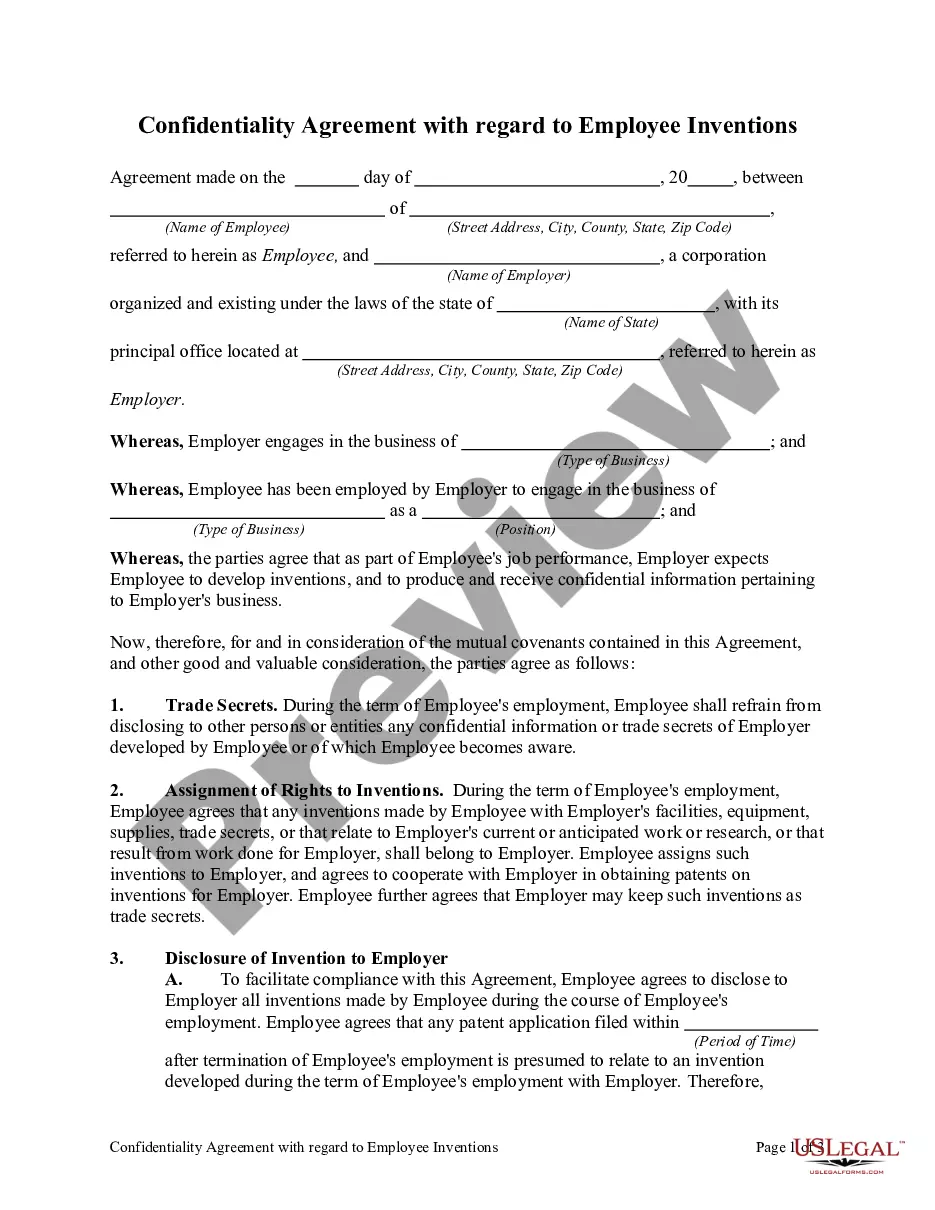
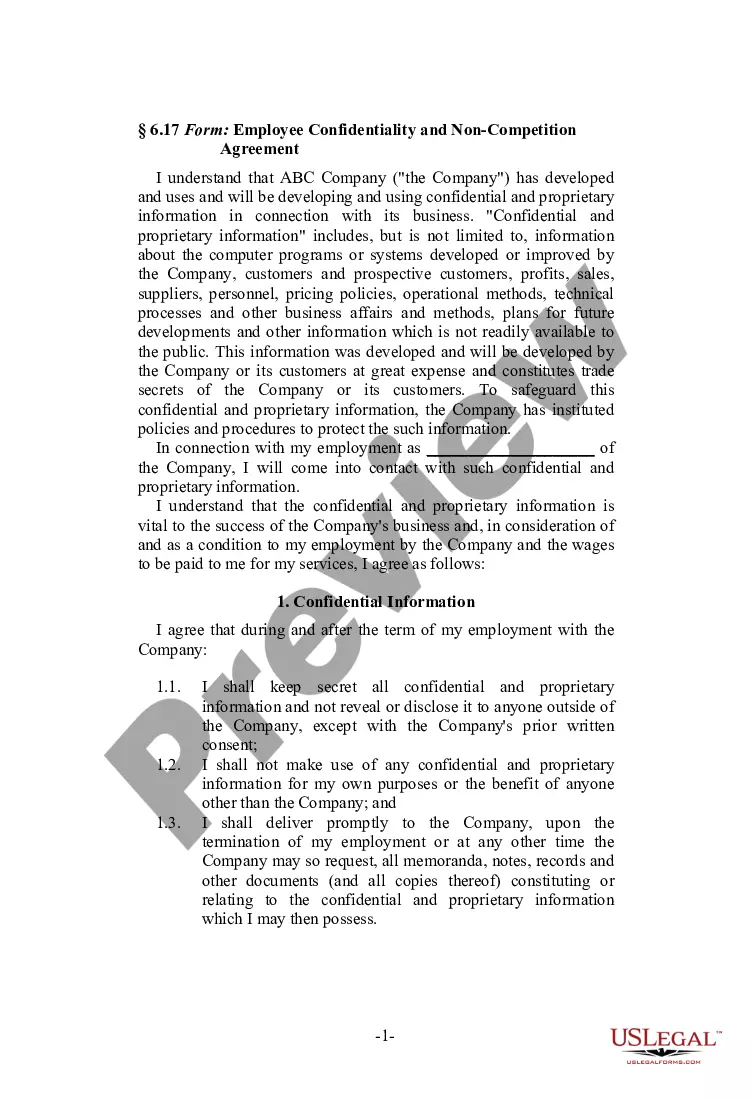
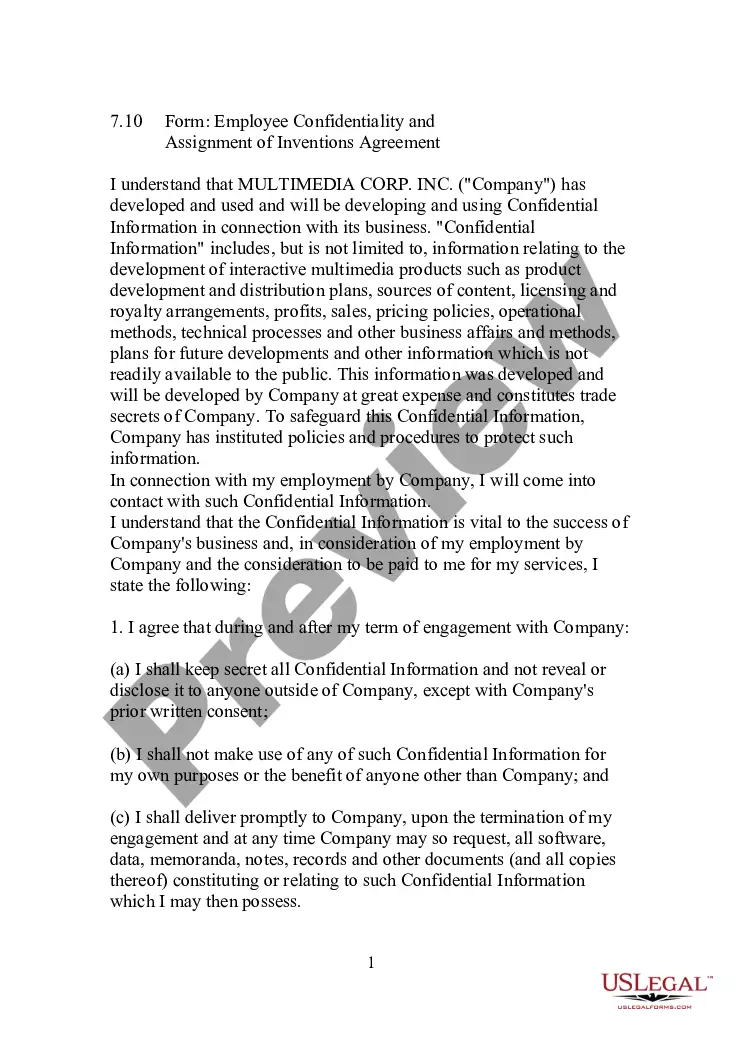
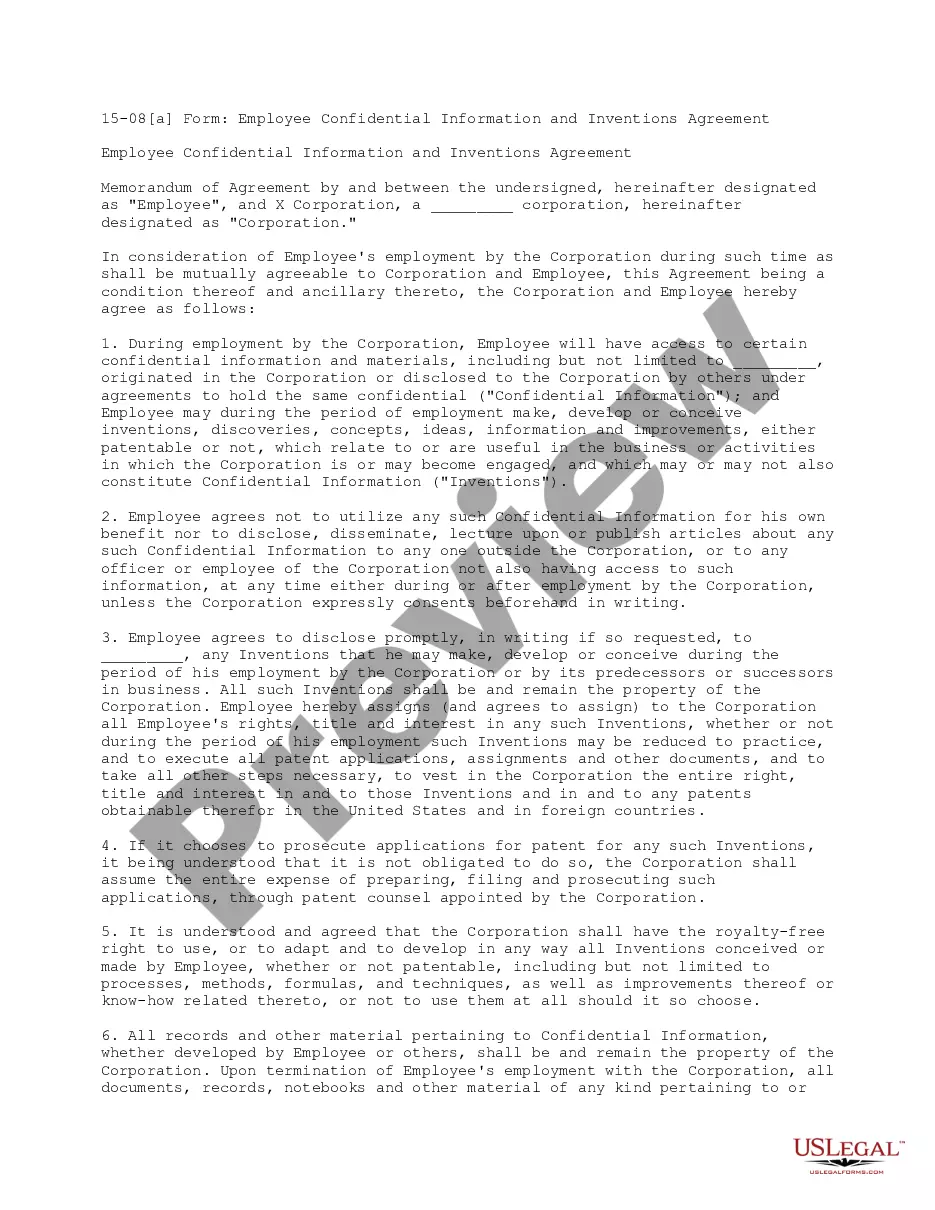
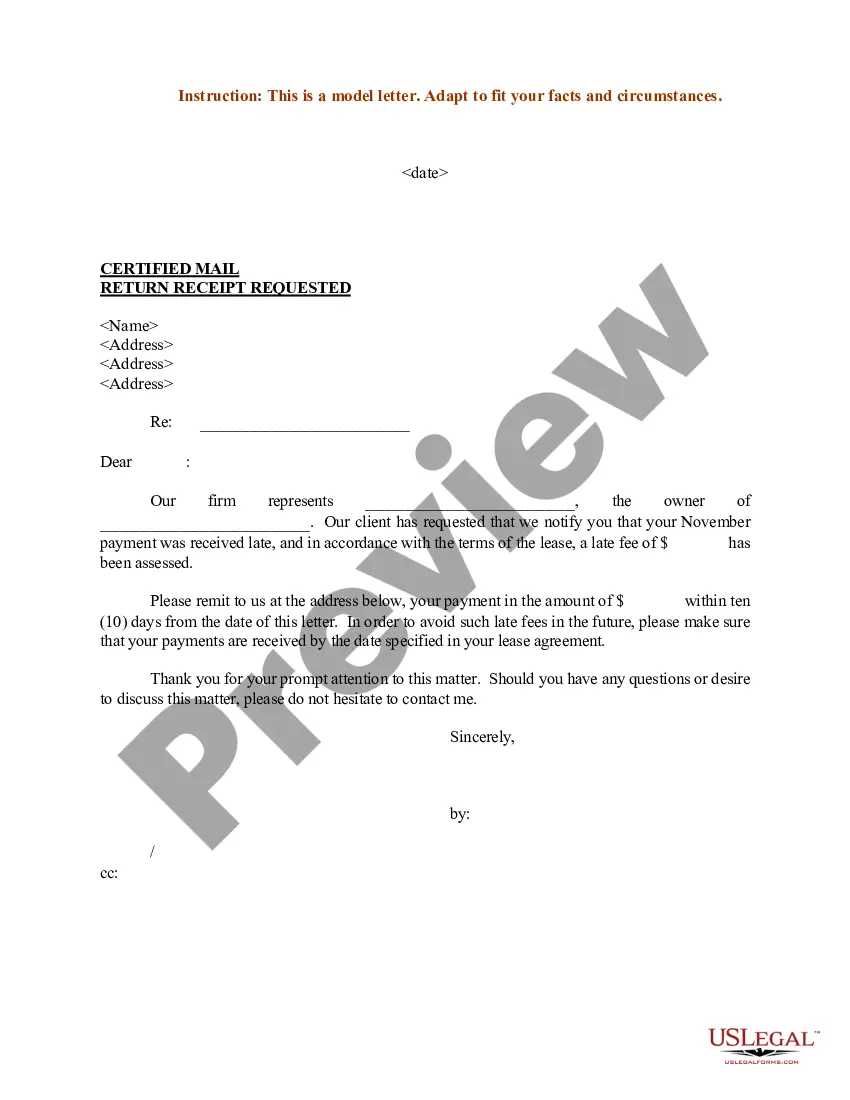
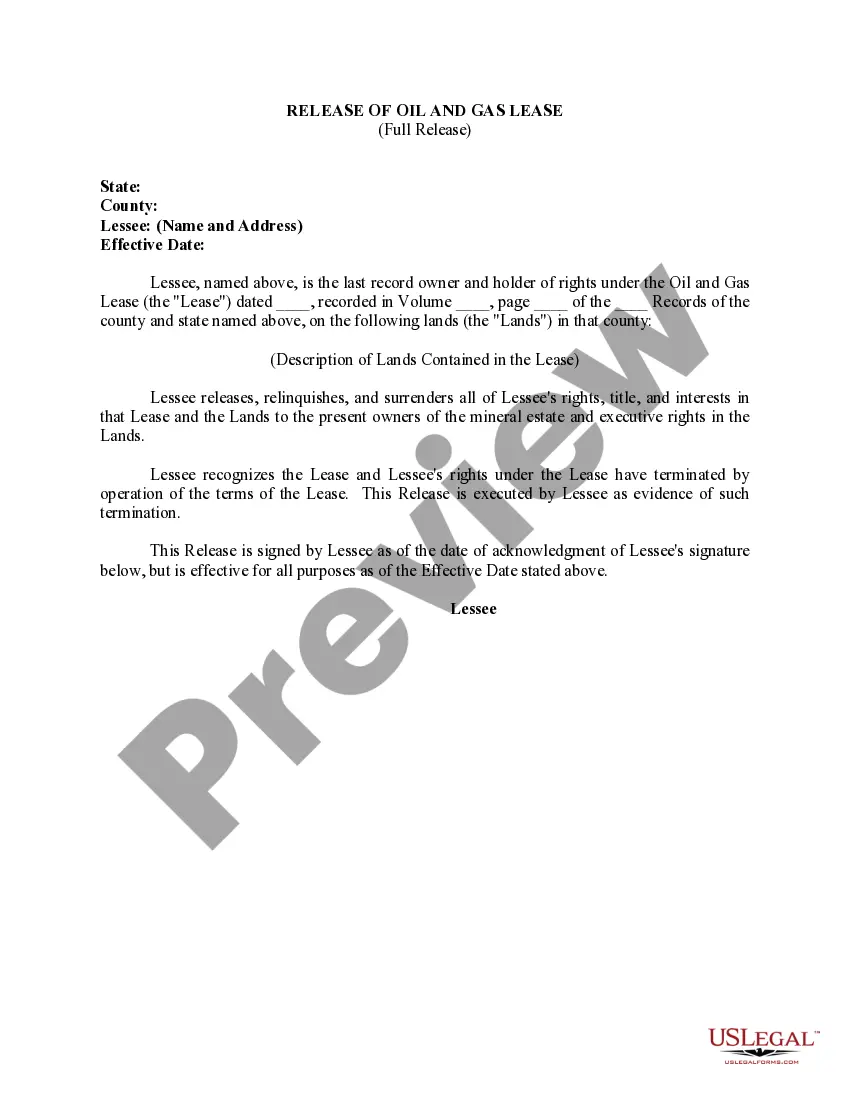
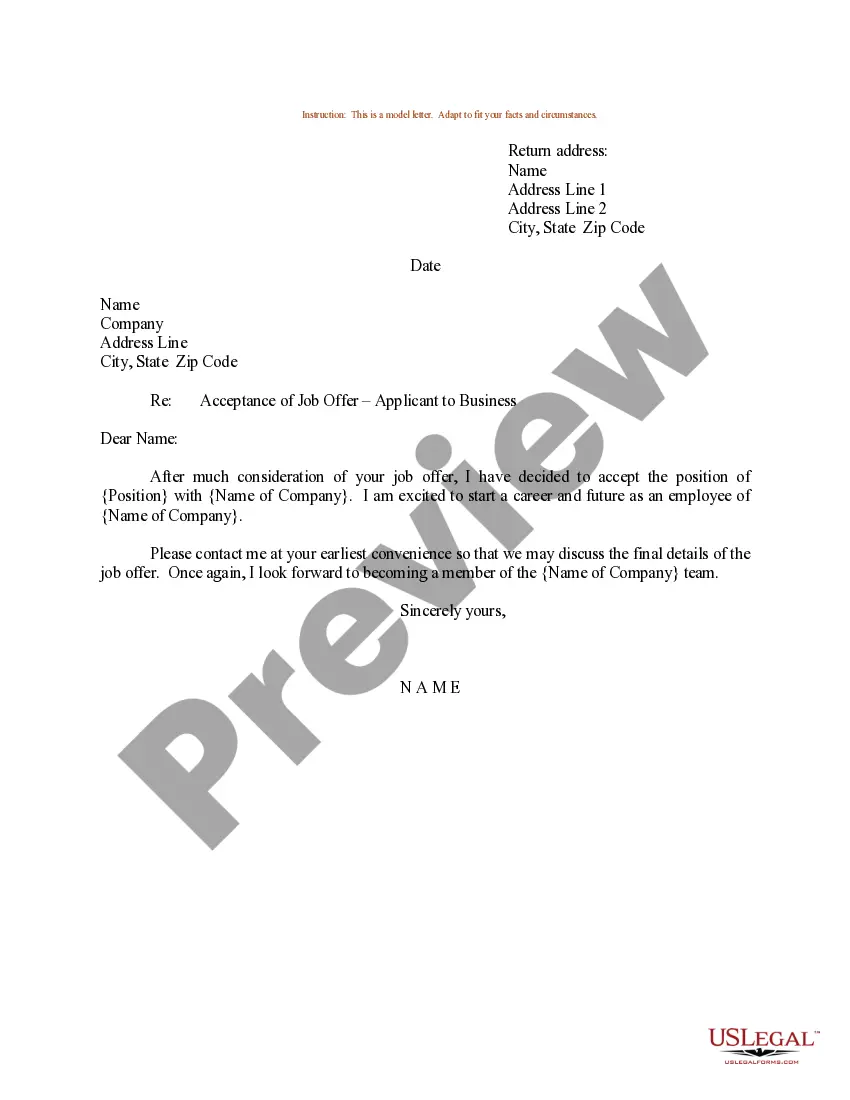
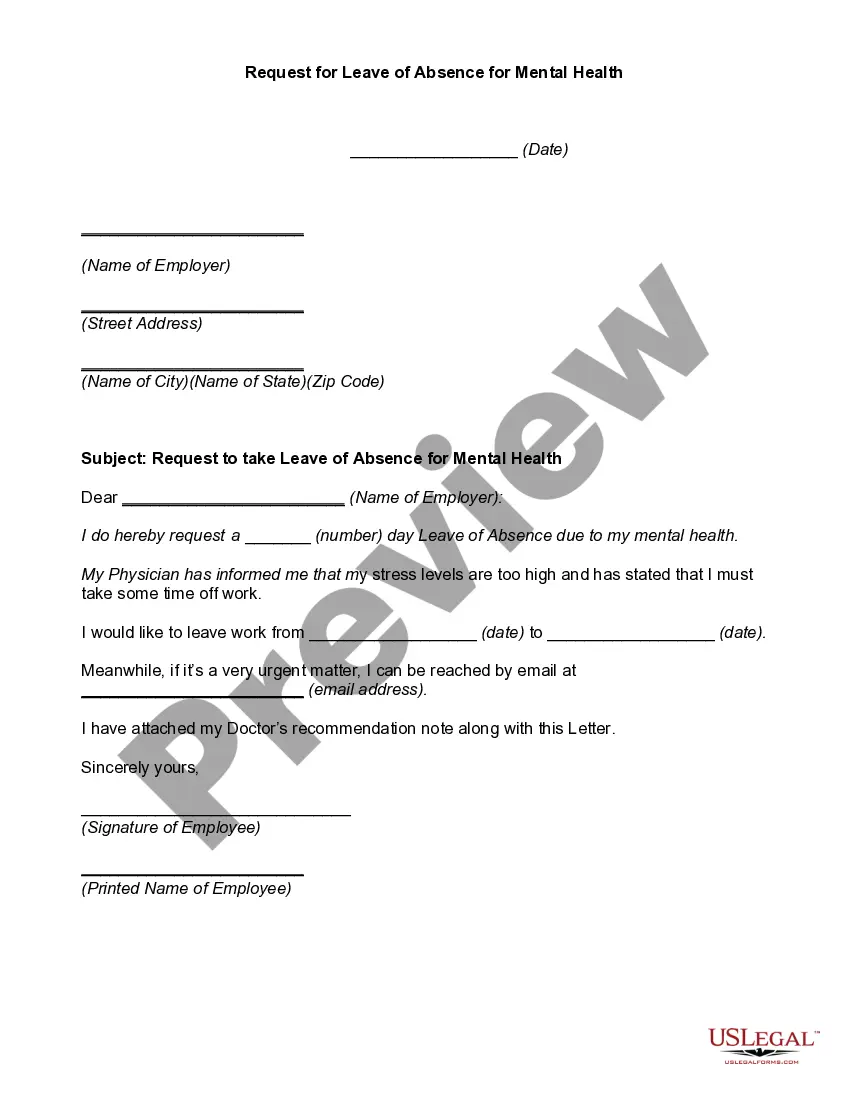
How to fill out Employee Confidential Information And Noncompetition Agreement - Inventions?
Selecting the ideal legal document template can be challenging. Clearly, there are numerous templates available online, but how do you find the legal document you need? Use the US Legal Forms website. The platform offers a multitude of templates, such as the Virgin Islands Employee Confidential Information and Noncompetition Agreement - Inventions, suitable for both business and personal purposes. All documents are reviewed by professionals and meet state and federal requirements.
If you are already registered, Log In to your account and click on the Download button to retrieve the Virgin Islands Employee Confidential Information and Noncompetition Agreement - Inventions. Use your account to browse the legal documents you have previously purchased. Visit the My documents section of your account to download another copy of the document you desire.
If you are a new user of US Legal Forms, here are simple steps for you to follow: First, ensure you have selected the correct form for your city/state. You can review the document using the Review button and read the form description to confirm it is the right one for you. If the document does not meet your requirements, use the Search field to find the correct form. Once you are confident that the document is appropriate, click the Buy now button to purchase the form. Choose the payment plan you prefer and enter the necessary information. Create your account and pay for the order using your PayPal account or credit card. Select the file format and download the legal document template to your device. Finally, complete, modify, print, and sign the obtained Virgin Islands Employee Confidential Information and Noncompetition Agreement - Inventions.
- US Legal Forms is the largest repository of legal documents where you can find a variety of file templates.
- Utilize the service to obtain professionally crafted papers that meet state requirements.
- Browse through thousands of legal forms tailored for various needs.
- Access updates and new templates regularly to stay compliant.
- Save time and effort with ready-to-use legal documents.
- Enjoy peace of mind knowing that all forms are vetted by legal experts.
Form popularity
FAQ
No, a confidentiality agreement and a non-compete agreement serve different purposes. A confidentiality agreement focuses on protecting sensitive information, while a non-compete agreement restricts an employee from working with competitors for a specified duration after leaving the company. Understanding the distinctions between these agreements is crucial when entering into a Virgin Islands Employee Confidential Information and Noncompetition Agreement - Inventions.
In many cases, yes, your employer may own inventions created during your employment, especially if they relate to the company's business. The specifics can vary based on the terms of your employment contract and any agreements you have signed. To understand your rights regarding inventions, it is essential to review your Virgin Islands Employee Confidential Information and Noncompetition Agreement - Inventions or consult a legal professional.
A confidentiality and invention agreement is a contract that safeguards sensitive information while also outlining ownership of inventions created during employment. This type of agreement clarifies the expectations regarding confidentiality and intellectual property rights. By using a Virgin Islands Employee Confidential Information and Noncompetition Agreement - Inventions, both employers and employees can protect their interests and foster a trust-based work environment.
An invention confidential information and non-competition agreement is a legal document that protects an employer's proprietary information and restricts employees from competing after leaving the company. This agreement ensures that any inventions or ideas created during employment remain confidential and are not exploited by former employees. Understanding the nuances of a Virgin Islands Employee Confidential Information and Noncompetition Agreement - Inventions can help you navigate your rights and responsibilities.
Yes, NDAs and non-compete agreements can be enforceable in the Virgin Islands, provided they meet certain legal criteria. These agreements must be reasonable in scope and duration, and they should protect legitimate business interests. If you are considering a Virgin Islands Employee Confidential Information and Noncompetition Agreement - Inventions, it is wise to consult with a legal expert to ensure compliance with local laws.
To fill out a list of prior inventions, begin by compiling all relevant inventions you created before your employment. Clearly label each invention with its title, date of creation, and a brief description of its function and significance. By accurately completing this list for the Virgin Islands Employee Confidential Information and Noncompetition Agreement - Inventions, you safeguard your rights and clarify your contributions.
The employee confidential information and inventions assignment agreement outlines the ownership of inventions and confidential information created during your employment. This document is crucial in the context of the Virgin Islands Employee Confidential Information and Noncompetition Agreement - Inventions, as it protects both the employee's rights and the company's interests. It ensures that any inventions developed within the scope of your job are assigned to the company.
Filling out an invention disclosure form requires clarity and detail. Start by providing a thorough description of your invention, including its purpose and potential applications. When completing this form for the Virgin Islands Employee Confidential Information and Noncompetition Agreement - Inventions, remember to highlight how your invention differs from existing solutions to demonstrate its uniqueness.
Prior creations encompass all works or inventions developed by you prior to your employment with a company. This can include prototypes, sketches, or any other form of creative output that you produced independently. In the context of the Virgin Islands Employee Confidential Information and Noncompetition Agreement - Inventions, these prior creations need to be documented to avoid potential disputes over ownership.
Previous inventions refer to any creations, designs, or innovations you made before your current employment. They are significant when drafting the Virgin Islands Employee Confidential Information and Noncompetition Agreement - Inventions, as they help establish what belongs to you. Listing these inventions protects your intellectual property and clarifies which inventions are not subject to company claims.