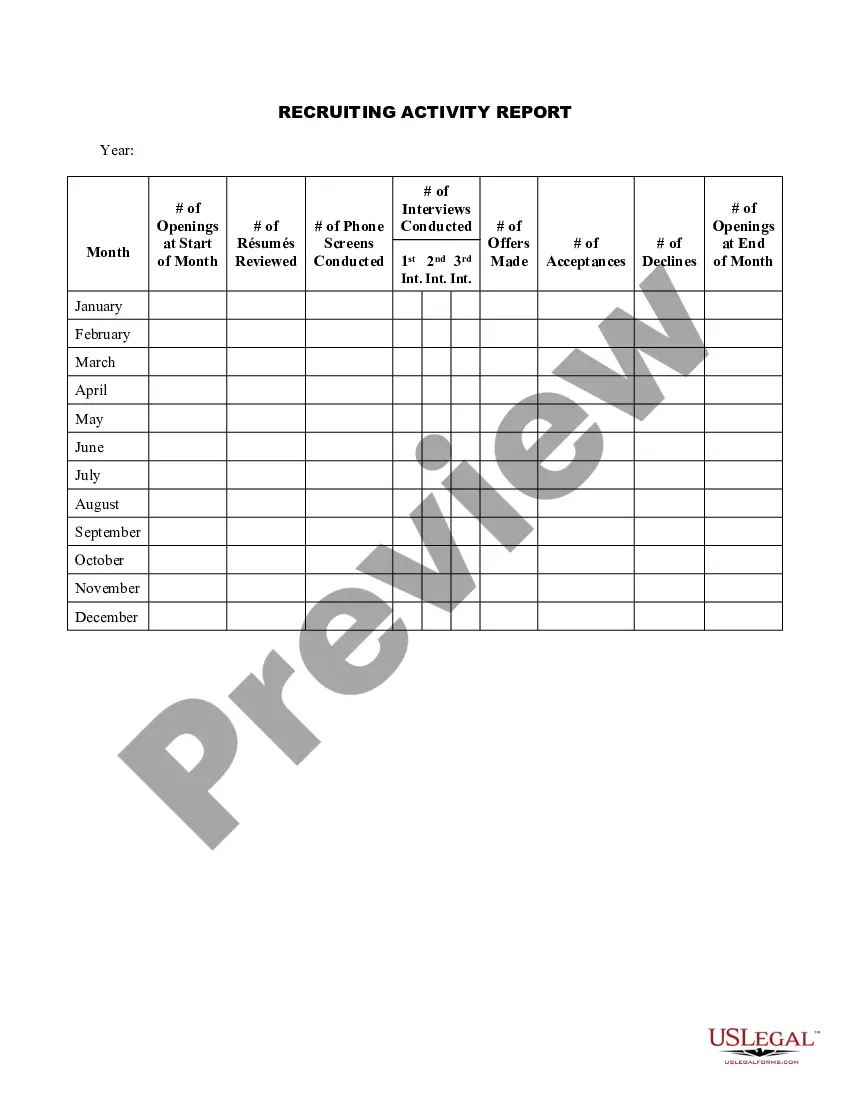
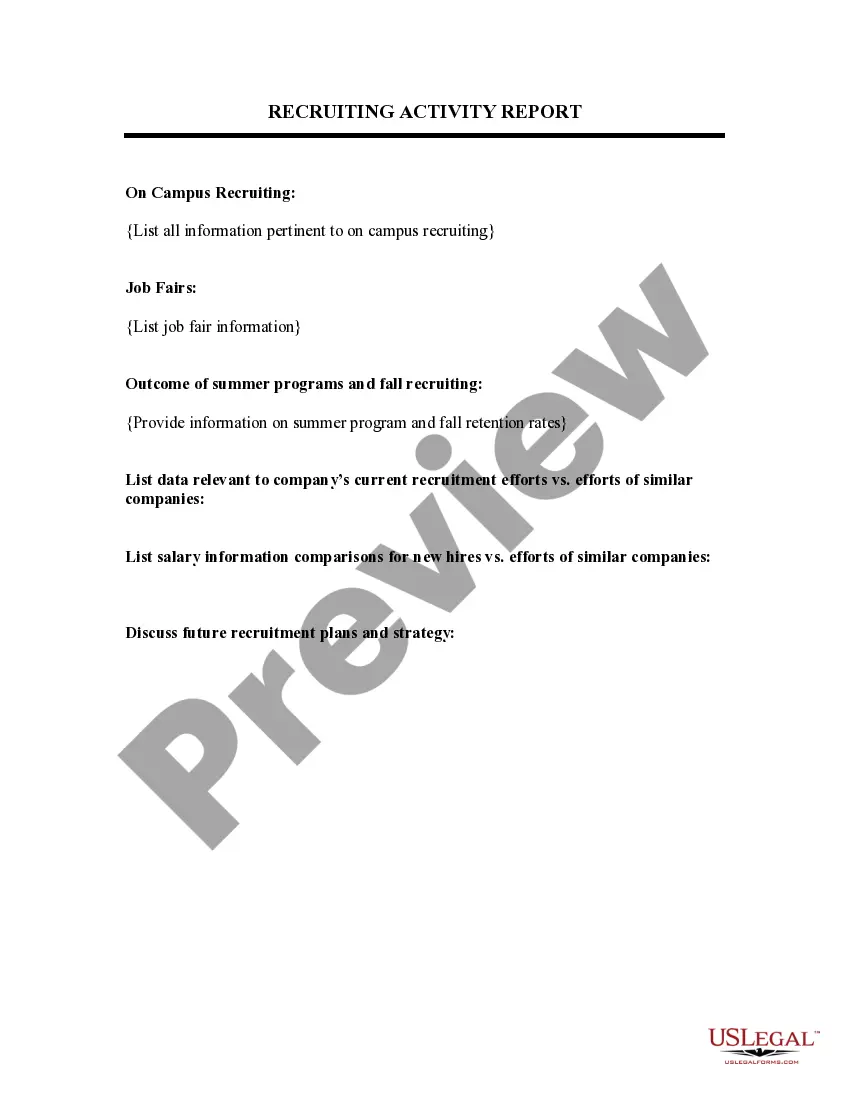
Virgin Islands Recruiting Activity Report - Month by Month Numbers
Description
Get your form ready online
Our built-in tools help you complete, sign, share, and store your documents in one place.
Make edits, fill in missing information, and update formatting in US Legal Forms—just like you would in MS Word.
Download a copy, print it, send it by email, or mail it via USPS—whatever works best for your next step.
Sign and collect signatures with our SignNow integration. Send to multiple recipients, set reminders, and more. Go Premium to unlock E-Sign.
If this form requires notarization, complete it online through a secure video call—no need to meet a notary in person or wait for an appointment.
We protect your documents and personal data by following strict security and privacy standards.

Make edits, fill in missing information, and update formatting in US Legal Forms—just like you would in MS Word.

Download a copy, print it, send it by email, or mail it via USPS—whatever works best for your next step.

Sign and collect signatures with our SignNow integration. Send to multiple recipients, set reminders, and more. Go Premium to unlock E-Sign.

If this form requires notarization, complete it online through a secure video call—no need to meet a notary in person or wait for an appointment.

We protect your documents and personal data by following strict security and privacy standards.
Looking for another form?

How to fill out Recruiting Activity Report - Month By Month Numbers?
US Legal Forms - one of the largest collections of legal documents in the United States - offers a variety of legal form templates that you can download or print.
By using the website, you will find thousands of forms for business and personal needs, organized by categories, claims, or keywords.
You can access the latest forms such as the Virgin Islands Recruiting Activity Report - Month by Month Numbers in just minutes.
Review the form details to confirm that you have chosen the correct document.
If the form does not meet your needs, use the Search field at the top of the screen to find the one that does.
- If you already have a monthly subscription, Log In and download the Virgin Islands Recruiting Activity Report - Month by Month Numbers from the US Legal Forms collection.
- The Download button will appear on every form you view.
- You can access all previously downloaded forms within the My documents section of your account.
- If you are new to US Legal Forms, here are simple steps to help you get started.
- Make sure you have selected the right form for your city/county.
- Use the Preview option to review the contents of the form.
Form popularity
FAQ
Employment rate. The percentage of the labor force that is employed. The employment rate is one of the economic indicators that economists examine to help understand the state of the economy. See also: Unemployment rate.
The Current Employment Statistics (CES) program is a monthly survey of business establishments (or jobs). CES produces estimates on the number of employees on nonfarm payrolls, average hourly earnings, average weekly earnings, and average weekly hours.
Unemployment Rate FormulaDivide the number of unemployed workers by the number of working and non-working individuals.Multiply the resulting decimal number by 100 to calculate the unemployment rate.Subtract the employment rate from 100 to calculate the U.S. employment rate.
Employment-to-population ratio in the world In general, a high ratio is considered to be above 70 percent of the working-age population whereas a ratio below 50 percent is considered to be low.
Divide the number of employed people by the total labor force. Multiply this number by 100. The result of these calculations is the employment rate.
The employment-population ratio is calculated as: (Employed ÷ Civilian Noninstitutional Population) x 100.
Calculate the employment rate. Divide the number of employed people by the total labor force. Multiply this number by 100. The result of these calculations is the employment rate.
The unemployment rate formula is unemployment rate = (Number of unemployed individuals /sums of employed and unemployed individuals) x 100%. Example-Assuming the number of unemployed people is 500 and those employed are 3000, the unemployment rate will be: 500/3500 x 100% =14.29%.
The Current Employment Statistics (CES) program is a monthly survey conducted by the Bureau of Labor Statistics. The survey provides employment, hours, and earnings estimates based on payroll records of business establishments. Data Available.
Bureau of Labor Statistics (BLS) field economists are extensively trained and given detailed instructions on data collection techniques. They employ a variety of methods, including personal visits, mail, telephone, and email, to obtain data from Occupational Requirements Survey (ORS) respondents.