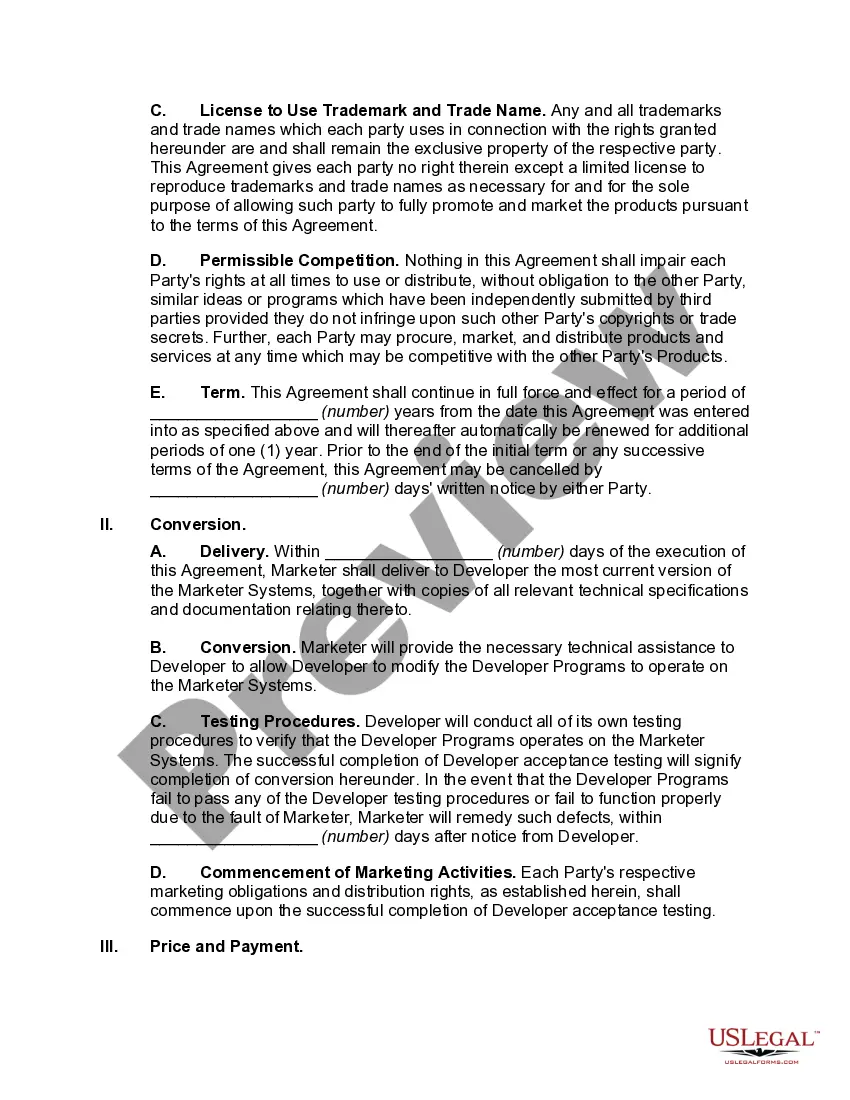
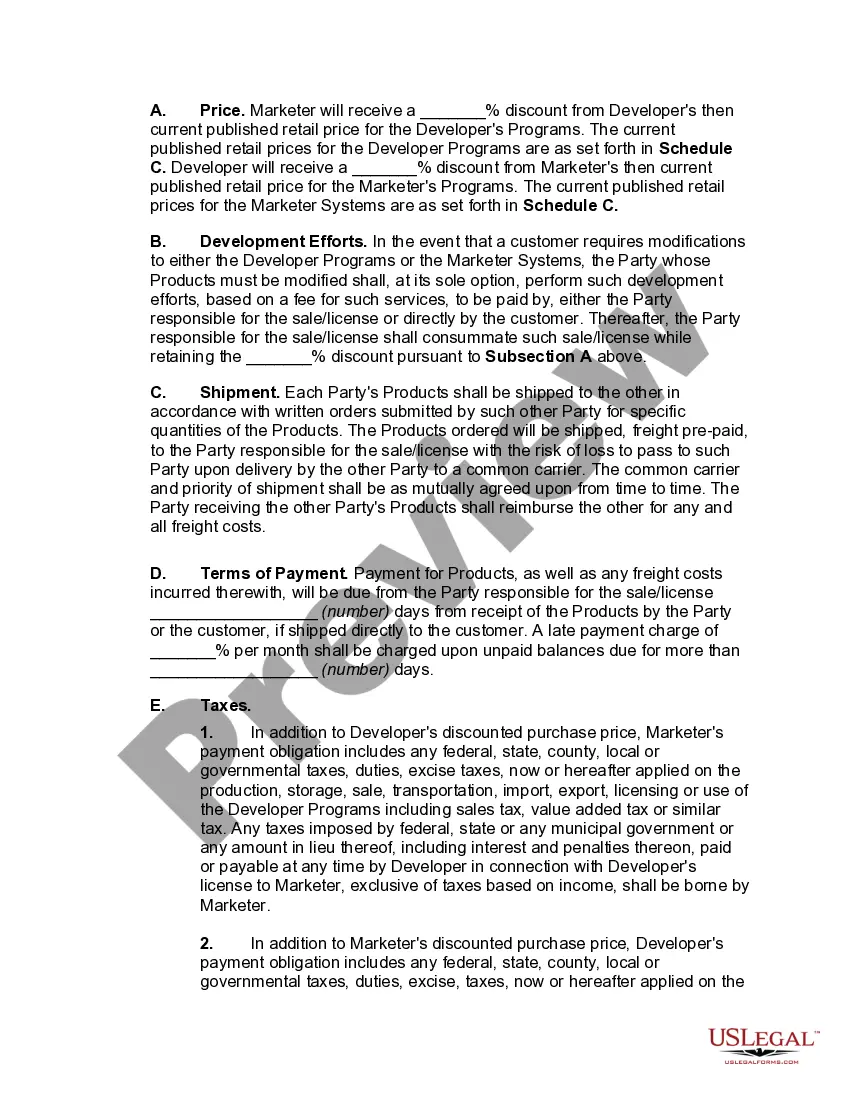
Virgin Islands Joint Marketing and Development Agreement
Description
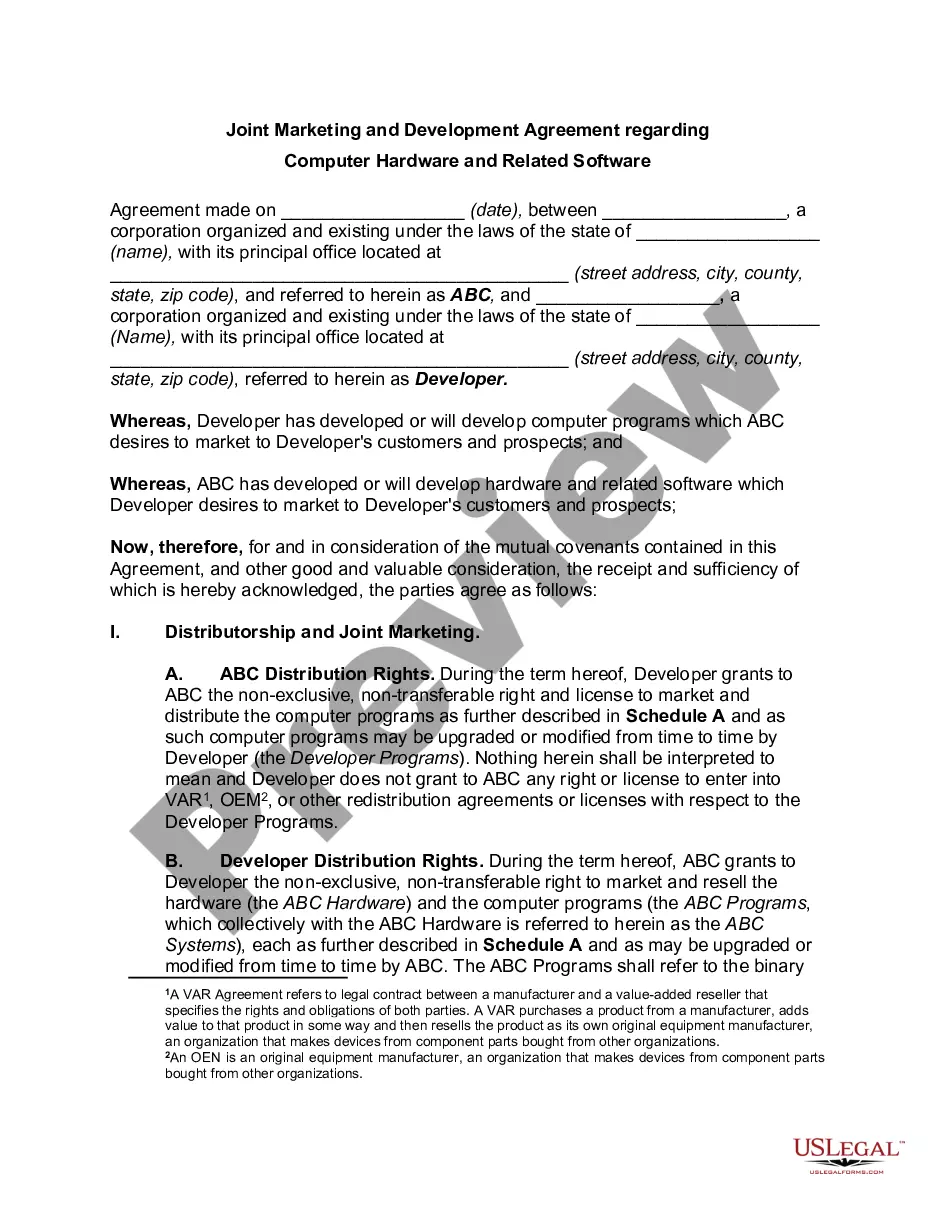
Get your form ready online
Our built-in tools help you complete, sign, share, and store your documents in one place.
Make edits, fill in missing information, and update formatting in US Legal Forms—just like you would in MS Word.
Download a copy, print it, send it by email, or mail it via USPS—whatever works best for your next step.
Sign and collect signatures with our SignNow integration. Send to multiple recipients, set reminders, and more. Go Premium to unlock E-Sign.
If this form requires notarization, complete it online through a secure video call—no need to meet a notary in person or wait for an appointment.
We protect your documents and personal data by following strict security and privacy standards.

Make edits, fill in missing information, and update formatting in US Legal Forms—just like you would in MS Word.

Download a copy, print it, send it by email, or mail it via USPS—whatever works best for your next step.

Sign and collect signatures with our SignNow integration. Send to multiple recipients, set reminders, and more. Go Premium to unlock E-Sign.

If this form requires notarization, complete it online through a secure video call—no need to meet a notary in person or wait for an appointment.

We protect your documents and personal data by following strict security and privacy standards.
Looking for another form?
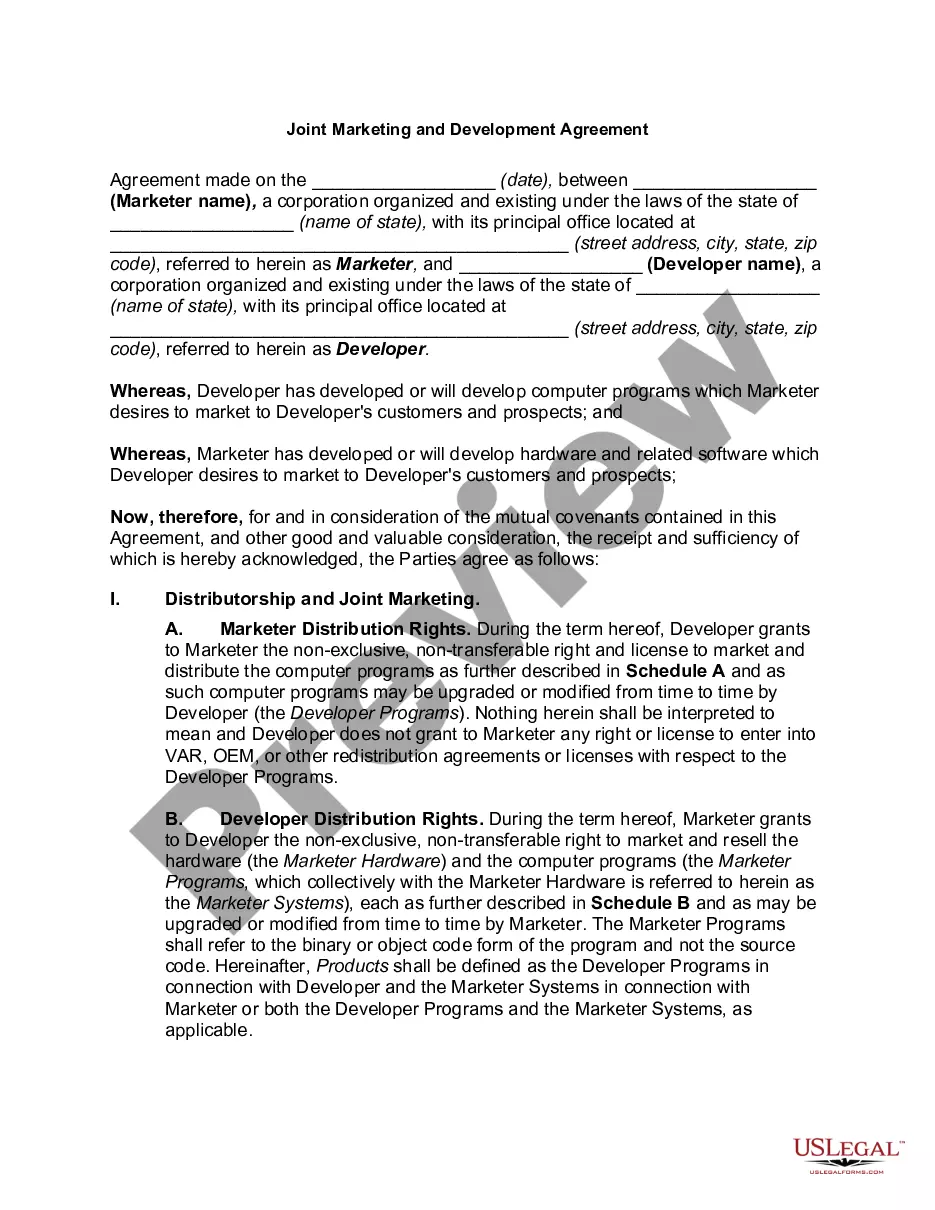
How to fill out Joint Marketing And Development Agreement?
If you need to compile, obtain, or generate lawful document templates, utilize US Legal Forms, the largest assortment of legal forms available online.
Take advantage of the site’s straightforward and user-friendly search to locate the documents you require.
Various templates for business and personal purposes are categorized by types and jurisdictions, or keywords.
- Employ US Legal Forms to find the Virgin Islands Joint Marketing and Development Agreement in just a few clicks.
- If you are an existing US Legal Forms user, Log In to your account and click on the Download button to acquire the Virgin Islands Joint Marketing and Development Agreement.
- You can also access forms you previously saved in the My documents tab of your account.
- If you are using US Legal Forms for the first time, follow the steps below.
- Step 1. Ensure you have selected the form for the correct city/state.
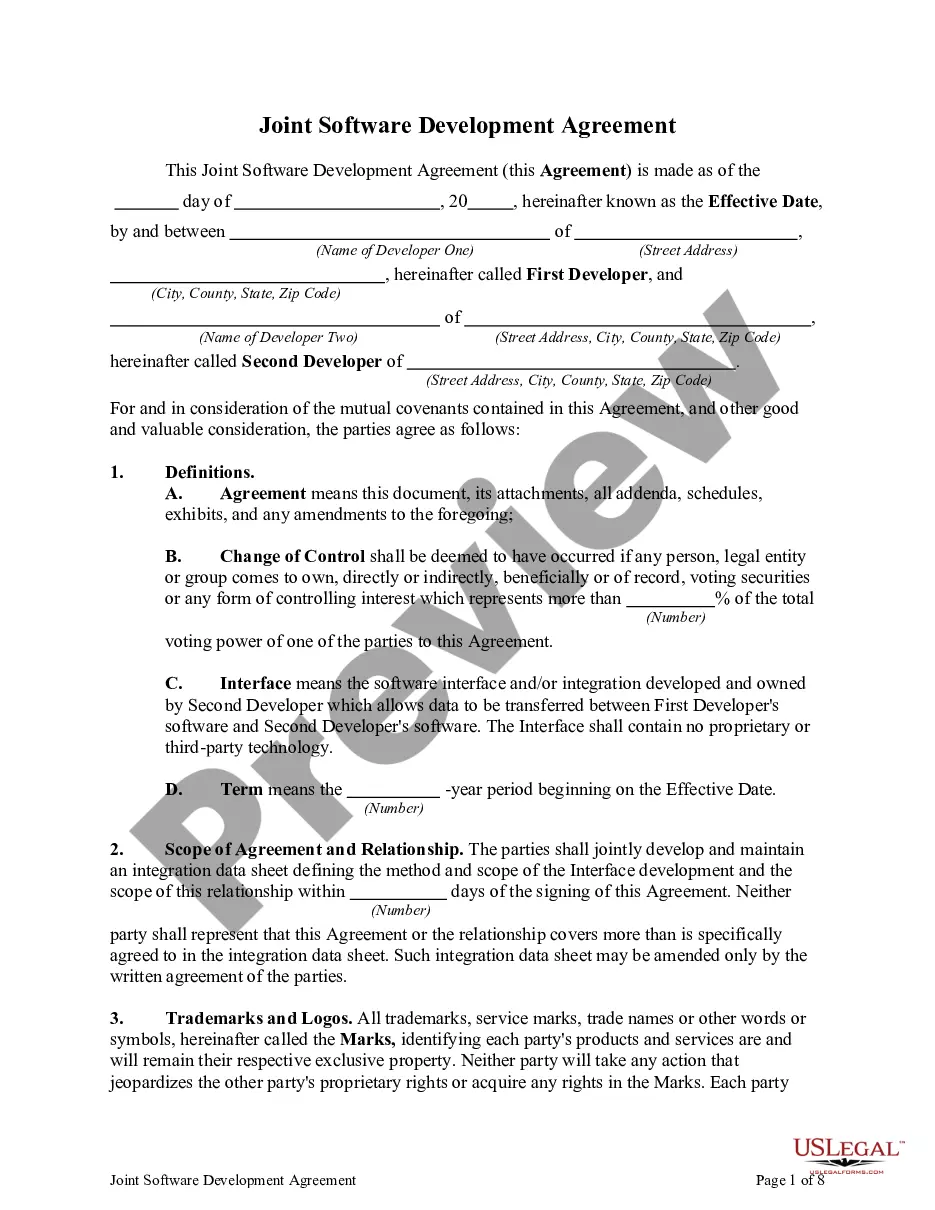
- Step 2. Utilize the Preview option to review the form’s content. Remember to read the details.
- Step 3. If you are unsatisfied with the form, use the Search field at the top of the screen to find other types from the legal form template.
Form popularity
FAQ
A development agreement is a voluntary contract between a local jurisdiction and a person who owns or controls property within the jurisdiction, detailing the obligations of both parties and specifying the standards and conditions that will govern development of the property.
Simply put, joint development is the simultaneous improvement of a transit system and the surrounding real estate coordinated between the transit agency and real estate developers.
A development agreement is not required to be registered. This includes all construction contracts given to a developer. However it attracts a stamp duty of 4% of the market value of the property, subject to a maximum of Rs. 4 lakhs.
A JDA is a legal contract that allows land owners and developers to come together, for the purpose of developing land. At present, JDA is a common form of property development in India across sectors.
The department has now clarified that only Rs 200 will be charged towards stamp duty and registration fee for GPA related to JDA. The JDA, wherein the land owner and the developer agree to share the developed property, is widely used by the builders.
While the former is a deal between multiple parties to work together for accomplishing a specific task which may or may not include a real estate project, the latter is restricted only to the development of a property.
Joint Development Agreement should be registeredThe Joint development Agreement between the builder and the landowner must be registered in the sub registrar. It is one of the common practices to get the joint development agreement notarized or sign it on stamp paper of Rs 200/.
As per article 5 (g-a) and article 25 (b) to ScheduleI of the Bombay Stamp(BS) Act, 1958, stamp duty on development agreement and conveyance is leviable at the rate of one and 10 per cent respectively on the market value or consideration set-forth in the instrument, whichever is higher.
Joint Development Agreement (JDA) It is an arrangement between the Land owner and the Builder/Developer, where the Land owner contributes his land and the Developer takes the full responsibility of obtaining approvals, construction, launching and marketing the project with the help of financial resources.
Development agreements are contracts approved by the Planning Commission and Board of Supervisors entered into by the City and a developer to expressly define a development project's rules, regulations, commitments, and policies for a specific period of time.