This is a multi-state form covering the subject matter of the title.
Virginia Subordination and Attornment Agreement - Landlord - Tenant - Lender
Category:
State:
Multi-State
Control #:
US-XS-0014
Format:
Word;
Rich Text
Instant download
Description
Free preview
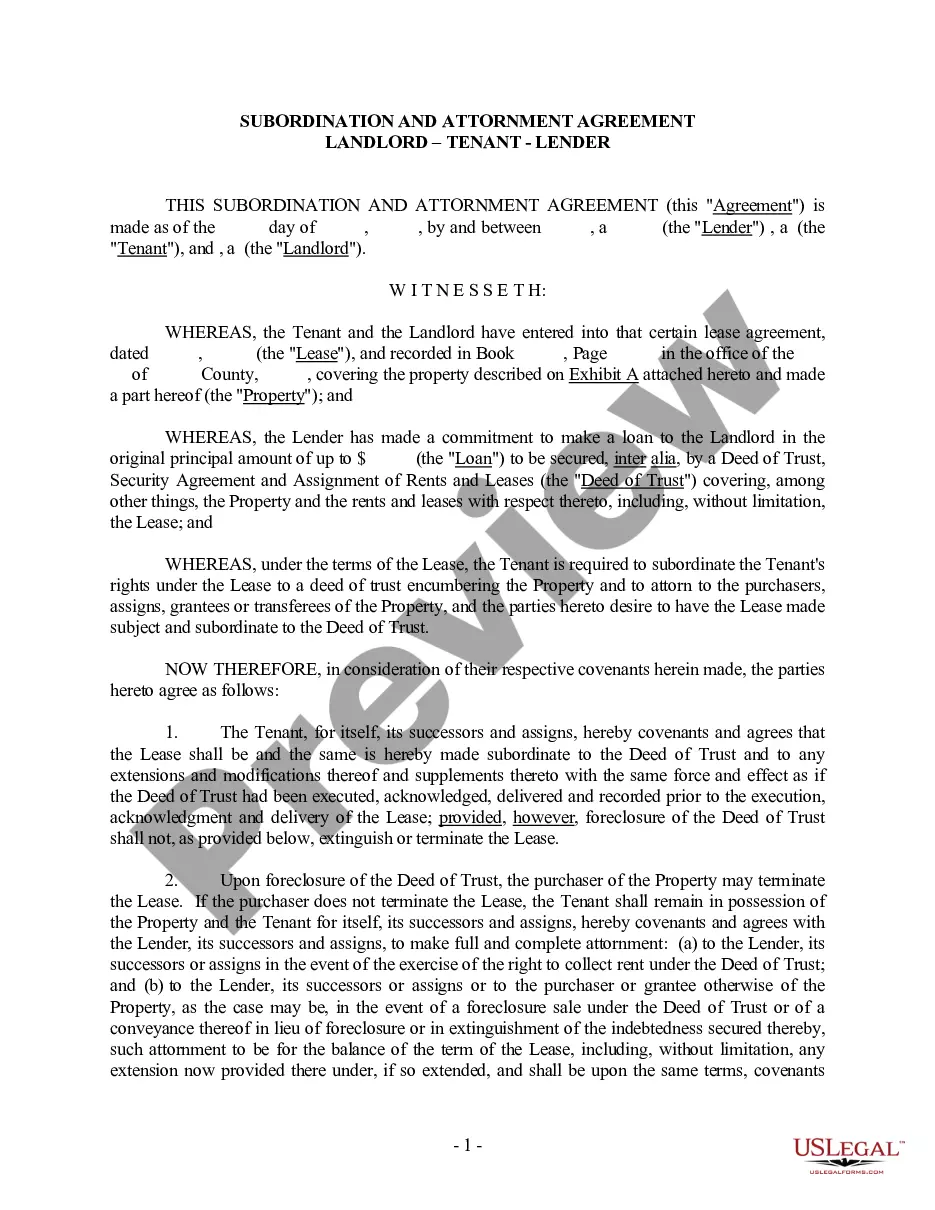
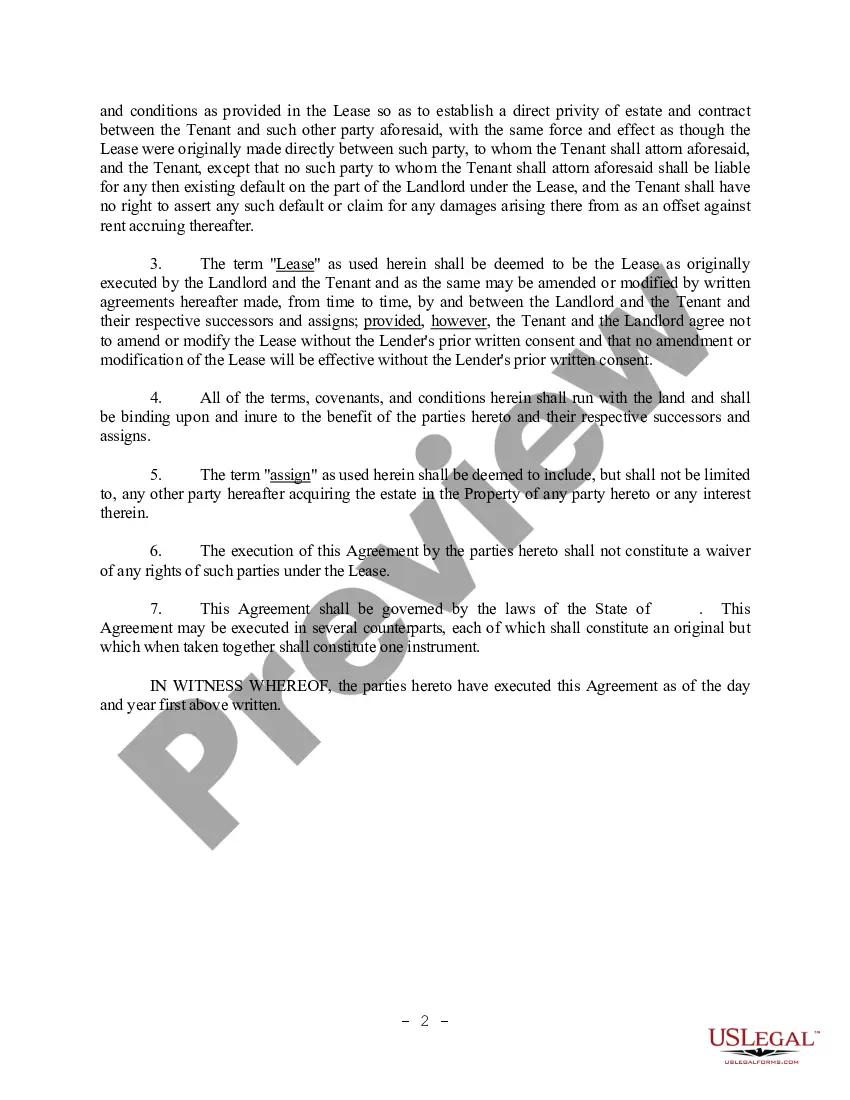
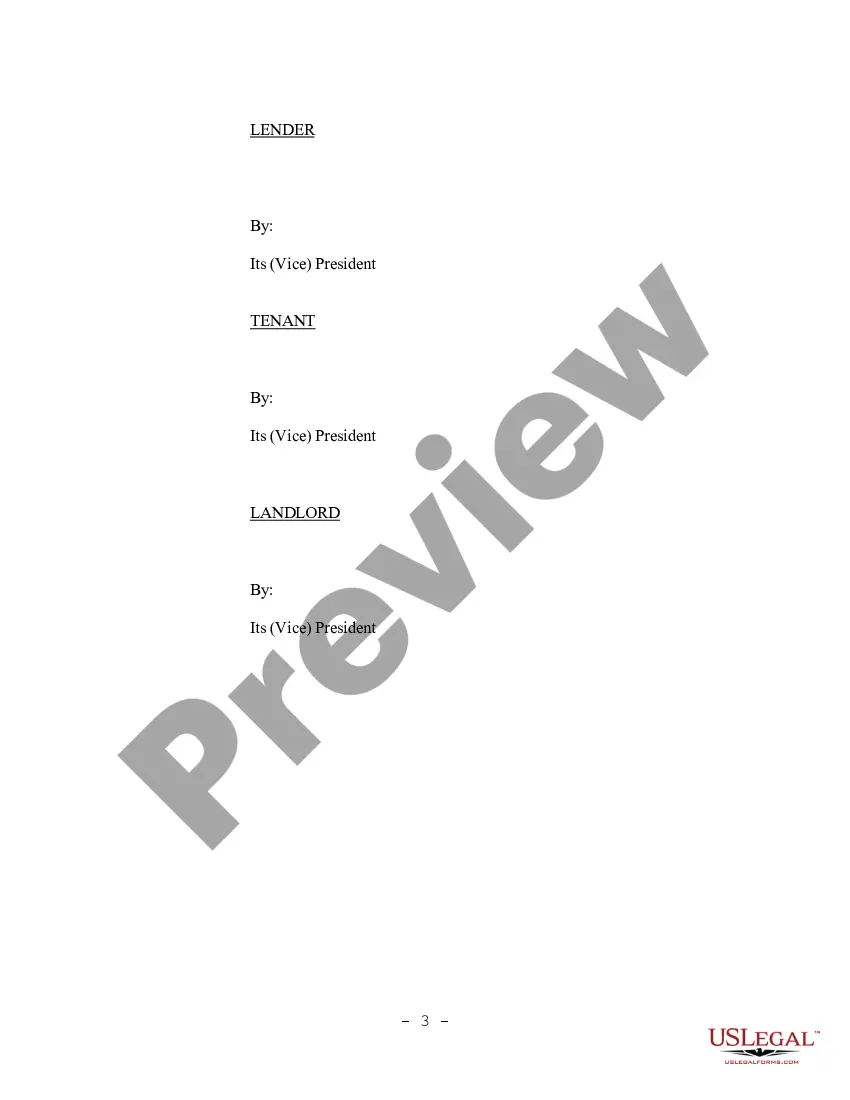
How to fill out Subordination And Attornment Agreement - Landlord - Tenant - Lender?
US Legal Forms - one of several biggest libraries of lawful types in the United States - provides a variety of lawful papers templates you are able to obtain or print out. While using internet site, you may get thousands of types for business and person uses, sorted by groups, states, or keywords and phrases.You will find the most recent models of types like the Virginia Subordination and Attornment Agreement - Landlord - Tenant - Lender in seconds.
If you already possess a subscription, log in and obtain Virginia Subordination and Attornment Agreement - Landlord - Tenant - Lender through the US Legal Forms local library. The Acquire key will show up on each develop you view. You get access to all formerly acquired types in the My Forms tab of your account.
If you would like use US Legal Forms initially, allow me to share easy directions to help you get began:
- Be sure to have chosen the right develop for the city/area. Click on the Preview key to review the form`s information. Browse the develop outline to ensure that you have chosen the right develop.
- If the develop does not fit your specifications, utilize the Research area near the top of the screen to find the one that does.
- If you are content with the shape, affirm your option by simply clicking the Buy now key. Then, pick the prices program you like and offer your credentials to sign up for an account.
- Process the transaction. Utilize your charge card or PayPal account to complete the transaction.
- Choose the file format and obtain the shape in your device.
- Make changes. Fill up, modify and print out and signal the acquired Virginia Subordination and Attornment Agreement - Landlord - Tenant - Lender.
Every single web template you included in your account does not have an expiration date and is also the one you have permanently. So, if you want to obtain or print out one more copy, just visit the My Forms portion and then click in the develop you require.
Gain access to the Virginia Subordination and Attornment Agreement - Landlord - Tenant - Lender with US Legal Forms, probably the most considerable local library of lawful papers templates. Use thousands of expert and condition-certain templates that meet your organization or person requirements and specifications.
Form popularity
FAQ
In Virginia, a lease agreement does not generally need to be notarized to be valid. However, having a notarized lease can serve as additional protection for both landlords and tenants in case of disputes. It is important to ensure that all parties sign the document to uphold its enforceability. For help with lease agreements or Virginia Subordination and Attornment Agreements - Landlord - Tenant - Lender, you can find useful forms and information on the US Legal Forms platform.
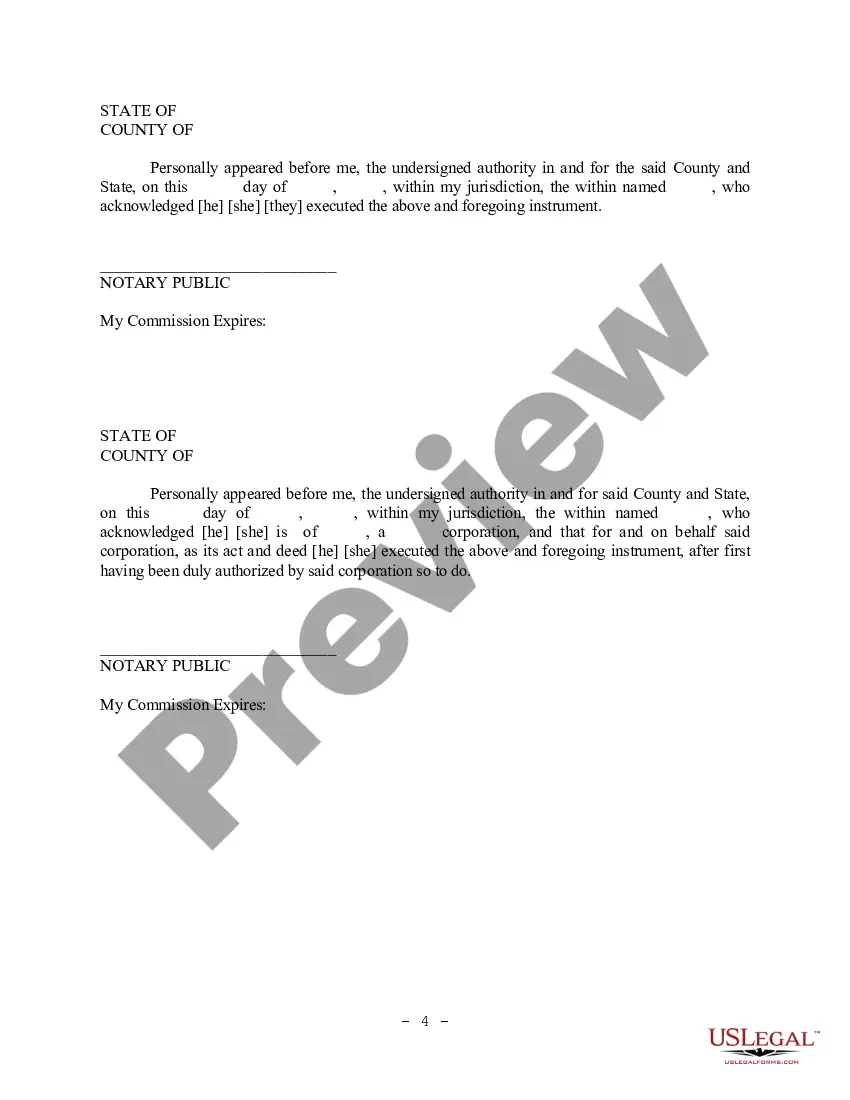
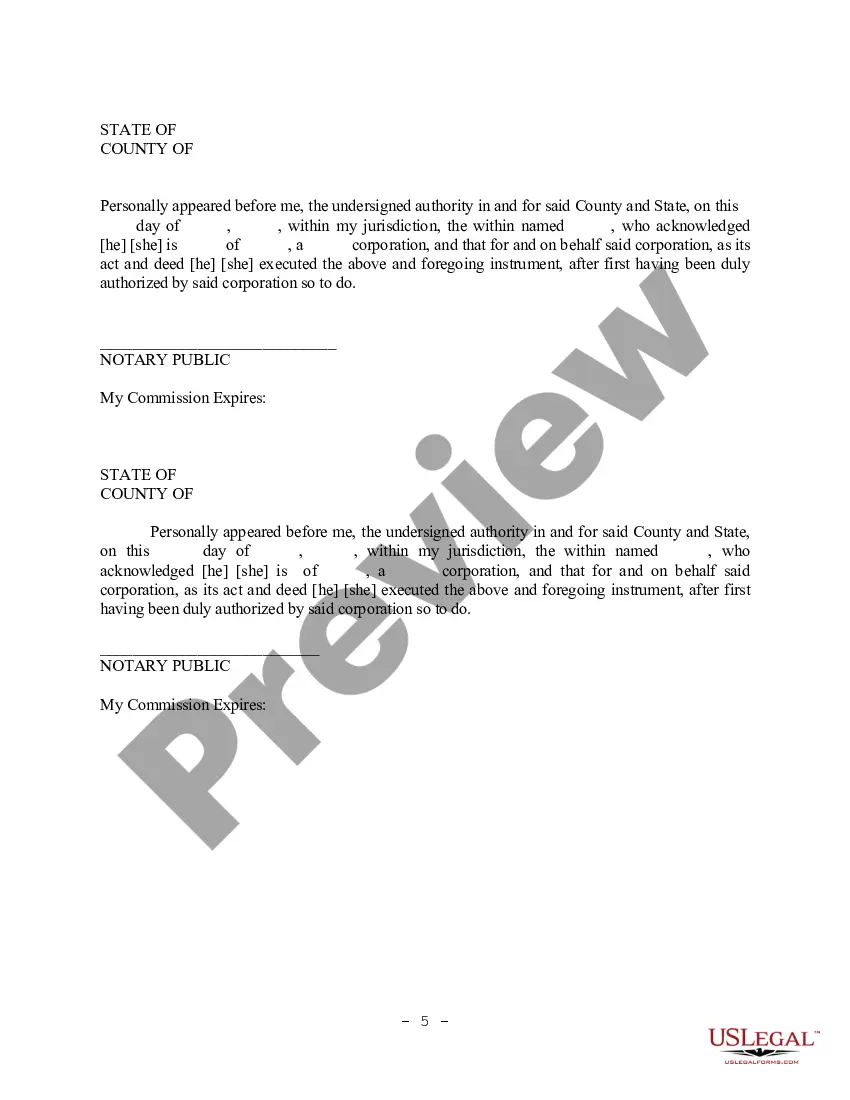
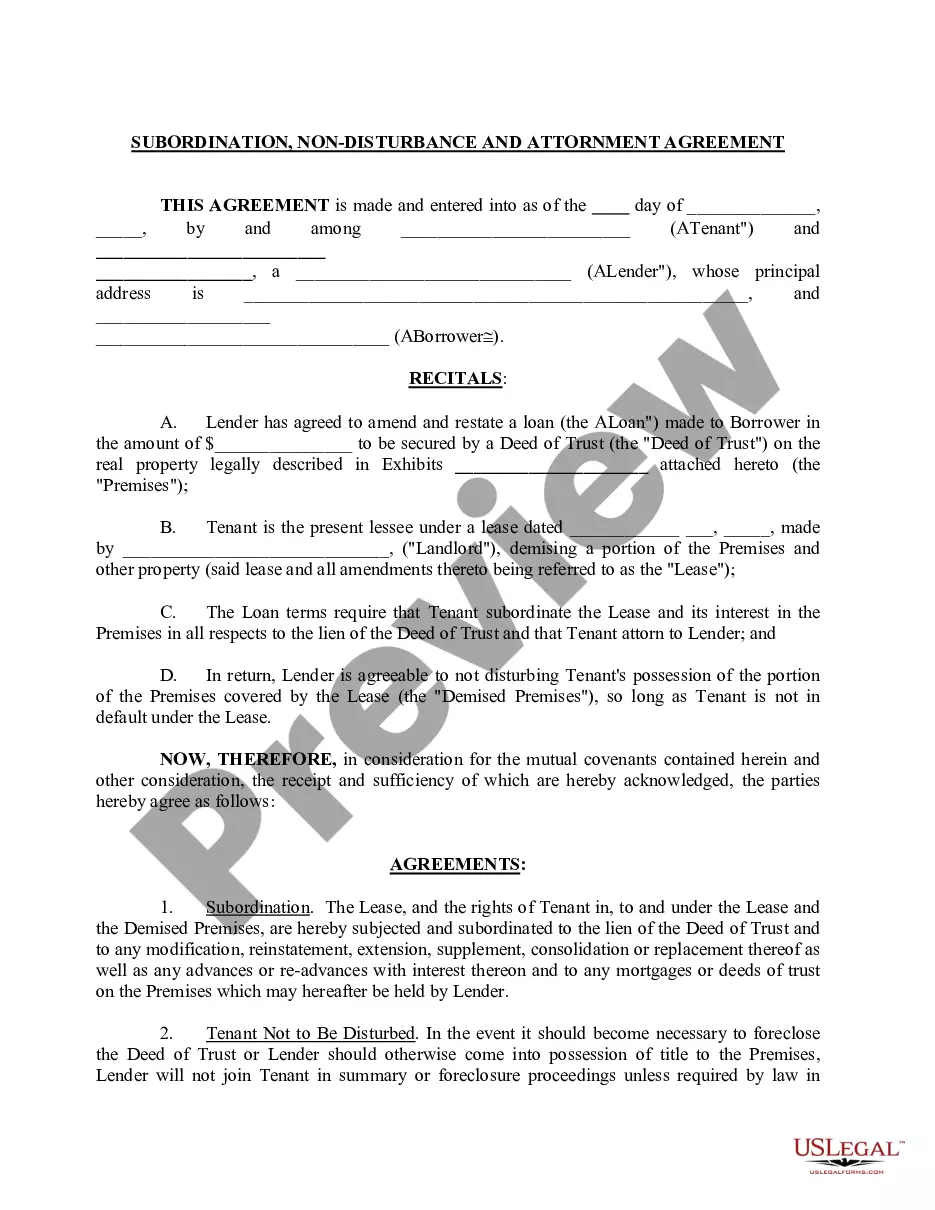
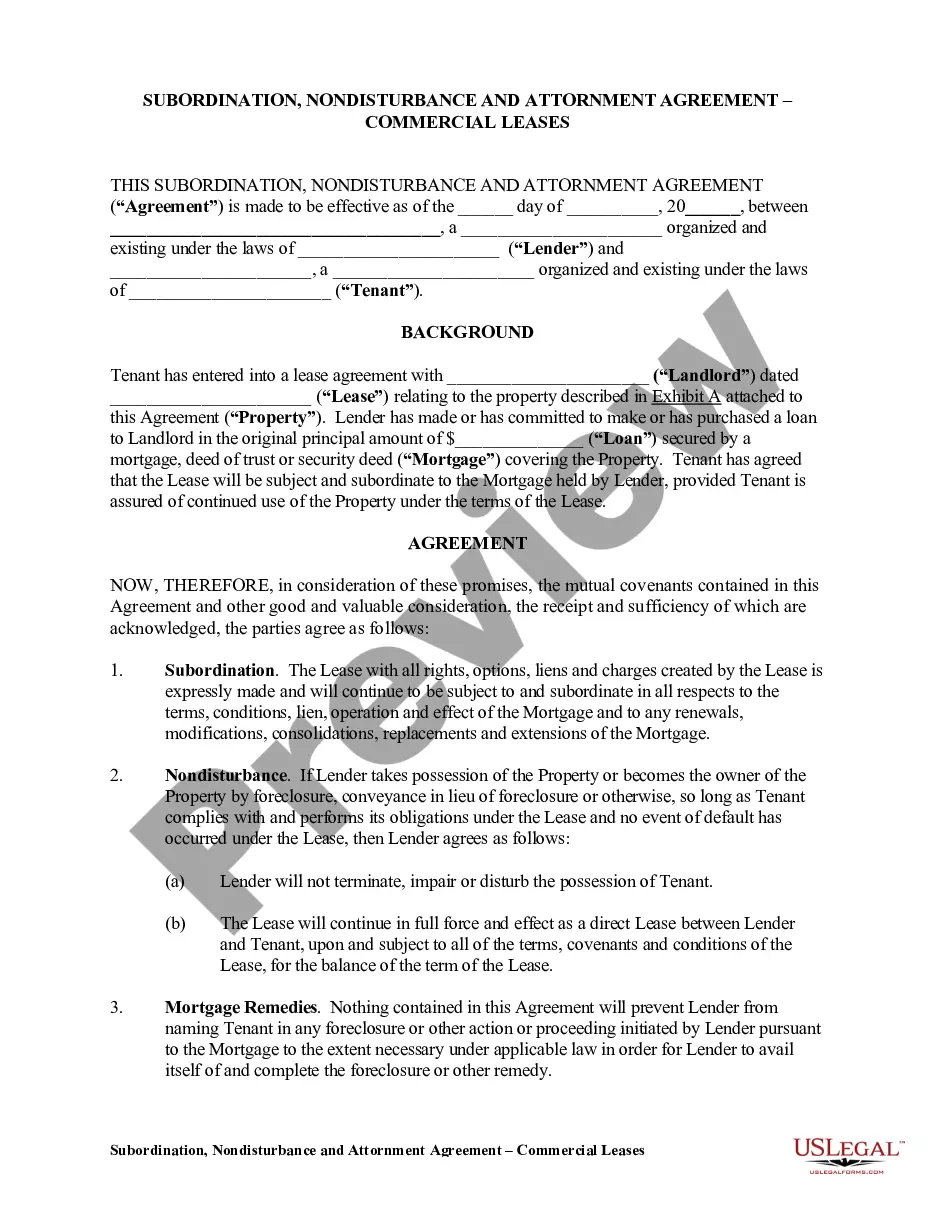
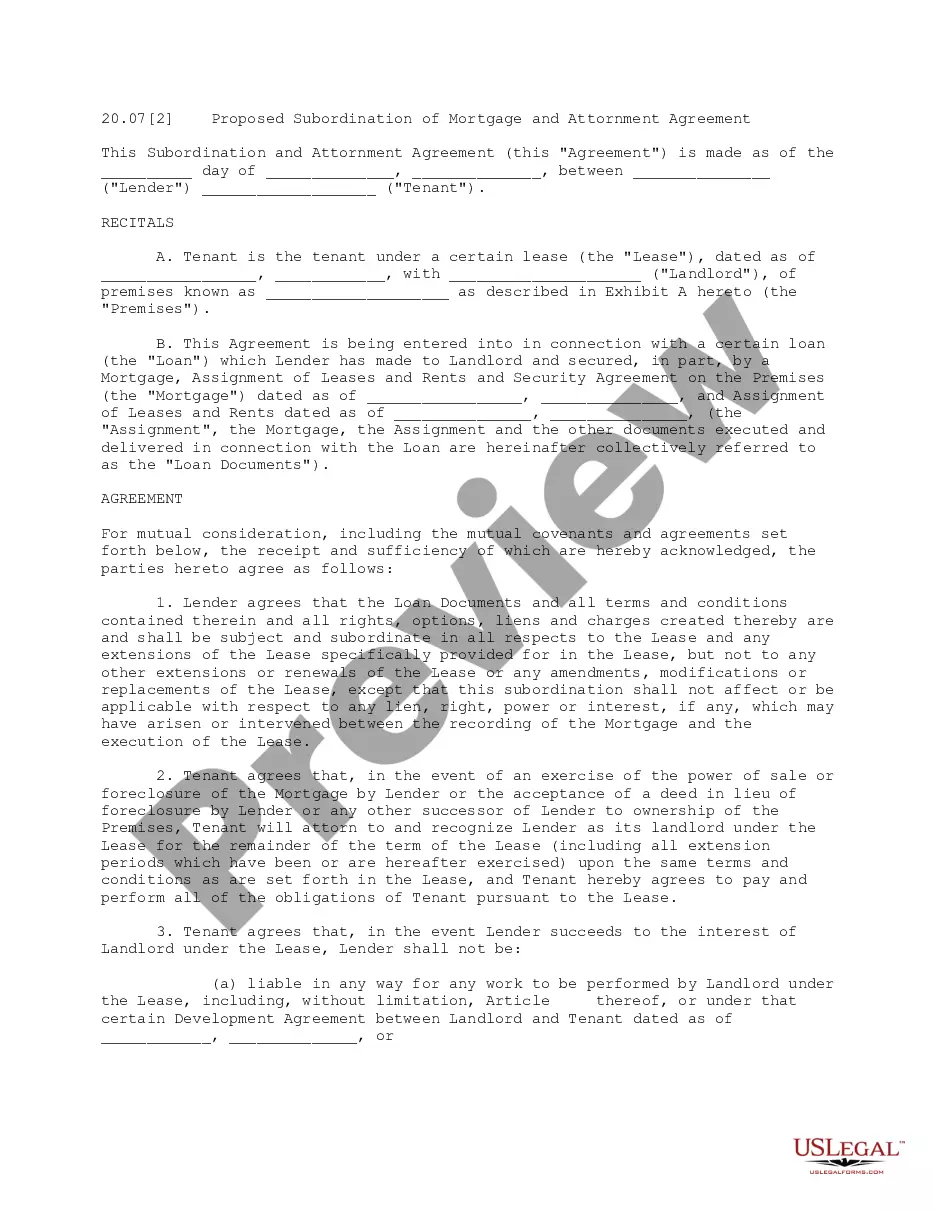
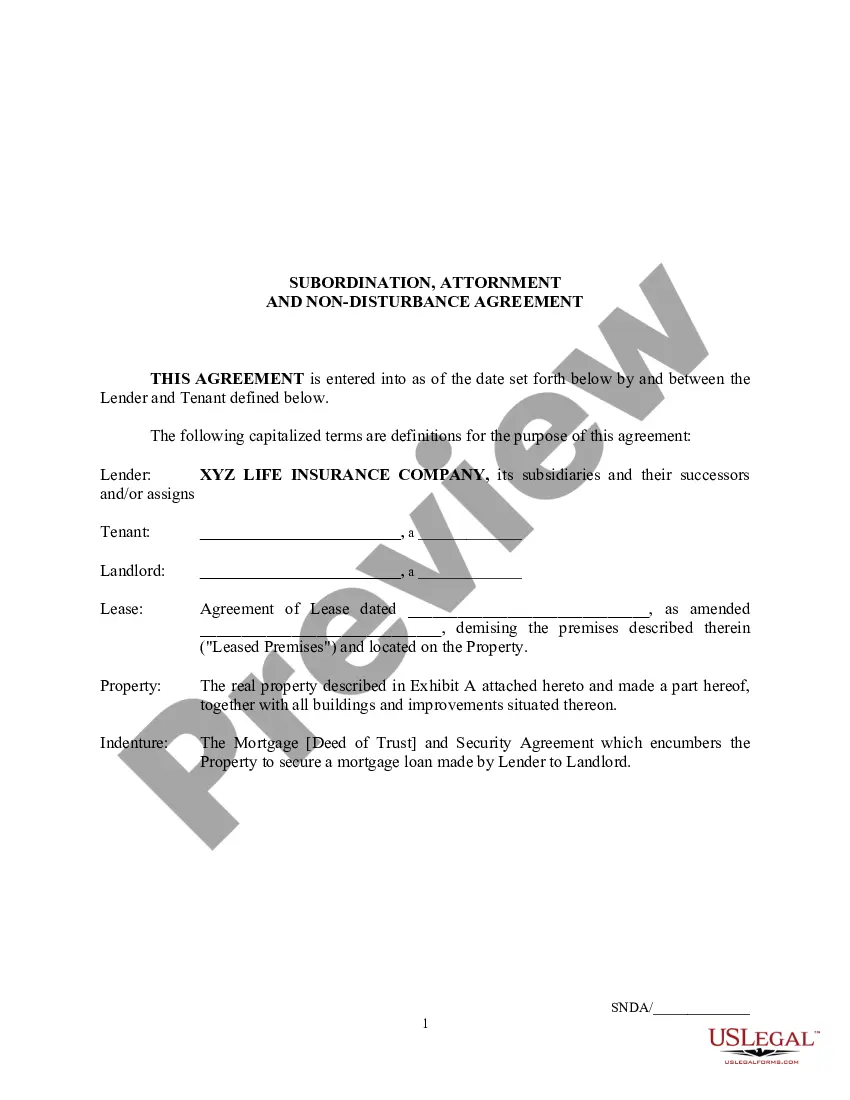
A subordination and attornment agreement is a legal document that outlines the relationship between landlords, tenants, and lenders regarding property rights. This agreement typically allows a lender to take priority over the tenant's lease in the event of foreclosure, while ensuring that the tenant recognizes the lender's rights. This arrangement benefits all parties by clarifying their roles and protecting their interests. For those looking to create a Virginia Subordination and Attornment Agreement - Landlord - Tenant - Lender, US Legal Forms offers comprehensive templates and guidance.
In Virginia, if there is no written lease agreement, your rights as a tenant can be more limited, but you still have some protections. You may be considered a month-to-month tenant, allowing you to occupy the property with certain rights, such as the right to receive proper notice before eviction. It is essential to understand that verbal agreements can still be enforceable under certain conditions. For more detailed information on tenant rights, explore resources like the US Legal Forms platform, especially regarding Virginia Subordination and Attornment Agreement - Landlord - Tenant - Lender.
The primary beneficiaries of a Subordination, Non-Disturbance, and Attornment Agreement (SNDA) are landlords, tenants, and lenders. This agreement secures the relationship between these parties, ensuring that tenants retain their rights to occupy the property even if ownership changes. For landlords, it provides clarity and assurance to lenders, while tenants gain protection in their lease agreements. If you need assistance drafting a Virginia Subordination and Attornment Agreement - Landlord - Tenant - Lender, consider using the US Legal Forms platform.
Typically, the Virginia Subordination and Attornment Agreement - Landlord - Tenant - Lender is drafted by the lender's attorney or an experienced real estate lawyer. This ensures that the agreement meets legal standards and adequately protects all parties involved. If you are unsure about how to proceed, using a reliable platform like uslegalforms can simplify the drafting process. Their resources can guide you in creating a comprehensive agreement tailored to your needs.
A lender seeks a Virginia Subordination and Attornment Agreement - Landlord - Tenant - Lender to ensure their interests are protected in case of a lease default. This agreement establishes the priority of the lender's rights over the tenant's leasehold interest. By having this document in place, the lender can step into the tenant's shoes and enforce the lease if necessary. Ultimately, it strengthens the lender's position and reduces potential risks.
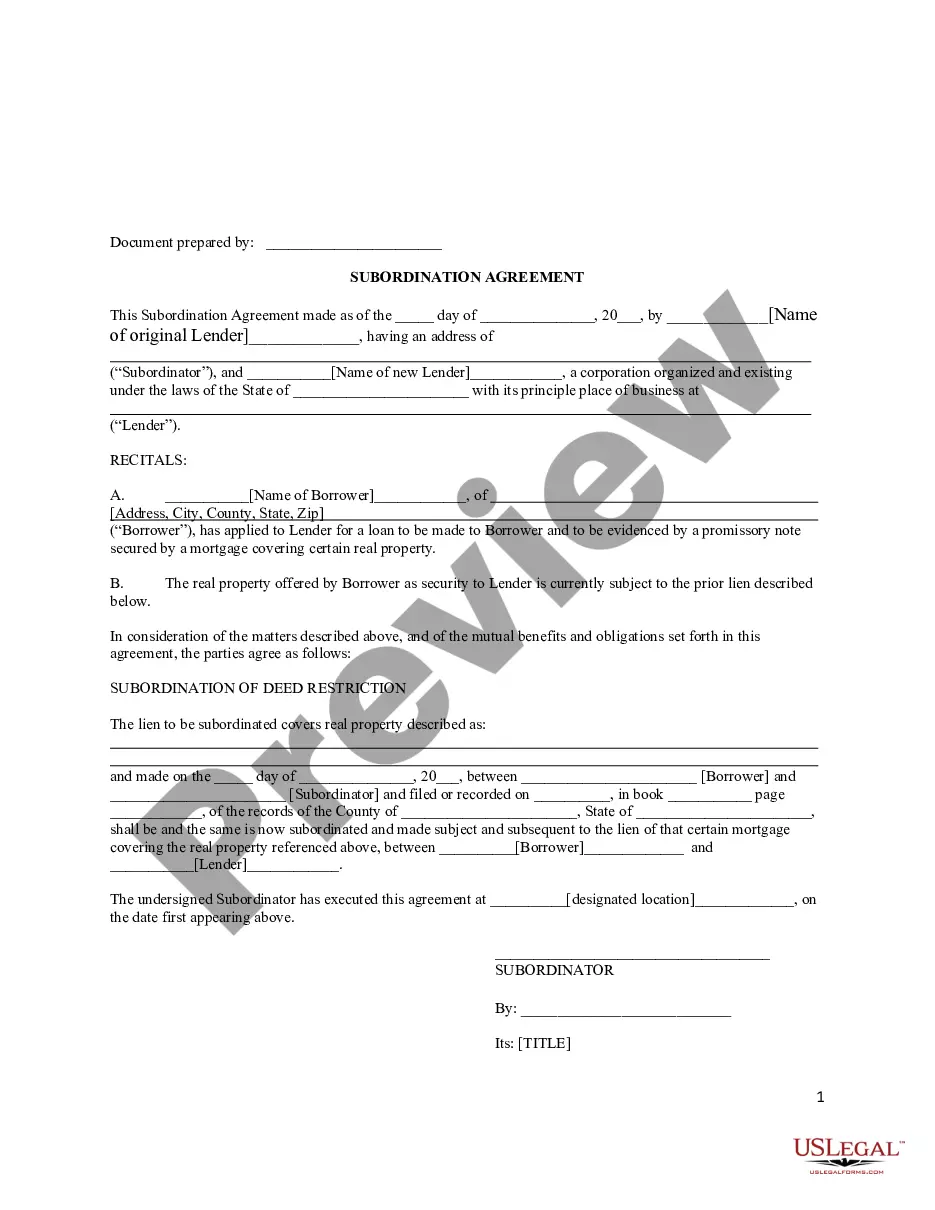
Definition of 'Subordination of Lease' Subordination of lease refers to the tenant's consent to subordinate his or her rights over a property to the rights of the bank holding the mortgage on the property. A subordination of lease agreement is created for this purpose.
Attornment is the act of granting authority or jurisdiction to a party even though no legal rights exist. It applies mainly to real estate transactions and may occur when a tenant acknowledges a new owner of the property as their new landlord.
Attornment acknowledges the relationship between the parties in a transaction. Attornment may occur when a tenant leases an apartment and the building change hands to a new owner during the course of the lease. The attornment agreement only changes the rights of the new owner if it is signed by the tenant.
Overview. An SNDA is a tri-party agreement between a tenant, landlord, and landlord's mortgagee under which the tenant agrees to subordinate its lease to the mortgagee's lien in exchange for the mortgagee's agreement to honor the terms of the lease if mortgagee forecloses on the property.