Virginia Basic Joint-Venture Agreement
Description
Get your form ready online
Our built-in tools help you complete, sign, share, and store your documents in one place.
Make edits, fill in missing information, and update formatting in US Legal Forms—just like you would in MS Word.
Download a copy, print it, send it by email, or mail it via USPS—whatever works best for your next step.
Sign and collect signatures with our SignNow integration. Send to multiple recipients, set reminders, and more. Go Premium to unlock E-Sign.
If this form requires notarization, complete it online through a secure video call—no need to meet a notary in person or wait for an appointment.
We protect your documents and personal data by following strict security and privacy standards.

Make edits, fill in missing information, and update formatting in US Legal Forms—just like you would in MS Word.

Download a copy, print it, send it by email, or mail it via USPS—whatever works best for your next step.

Sign and collect signatures with our SignNow integration. Send to multiple recipients, set reminders, and more. Go Premium to unlock E-Sign.

If this form requires notarization, complete it online through a secure video call—no need to meet a notary in person or wait for an appointment.

We protect your documents and personal data by following strict security and privacy standards.
Looking for another form?






How to fill out Basic Joint-Venture Agreement?
You can devote hours online searching for the legal document template that meets the state and federal requirements you will need.
US Legal Forms offers thousands of legal forms that can be assessed by professionals.
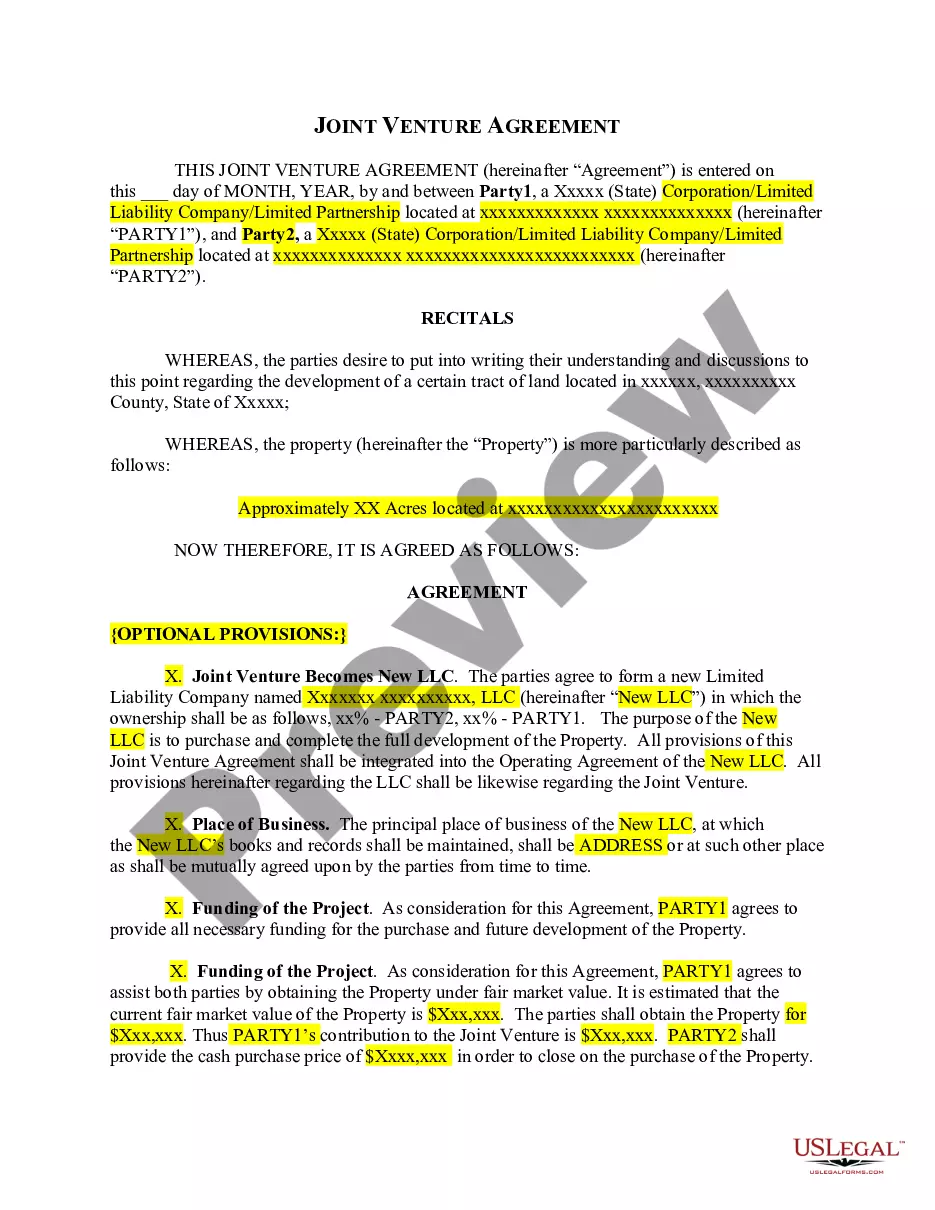
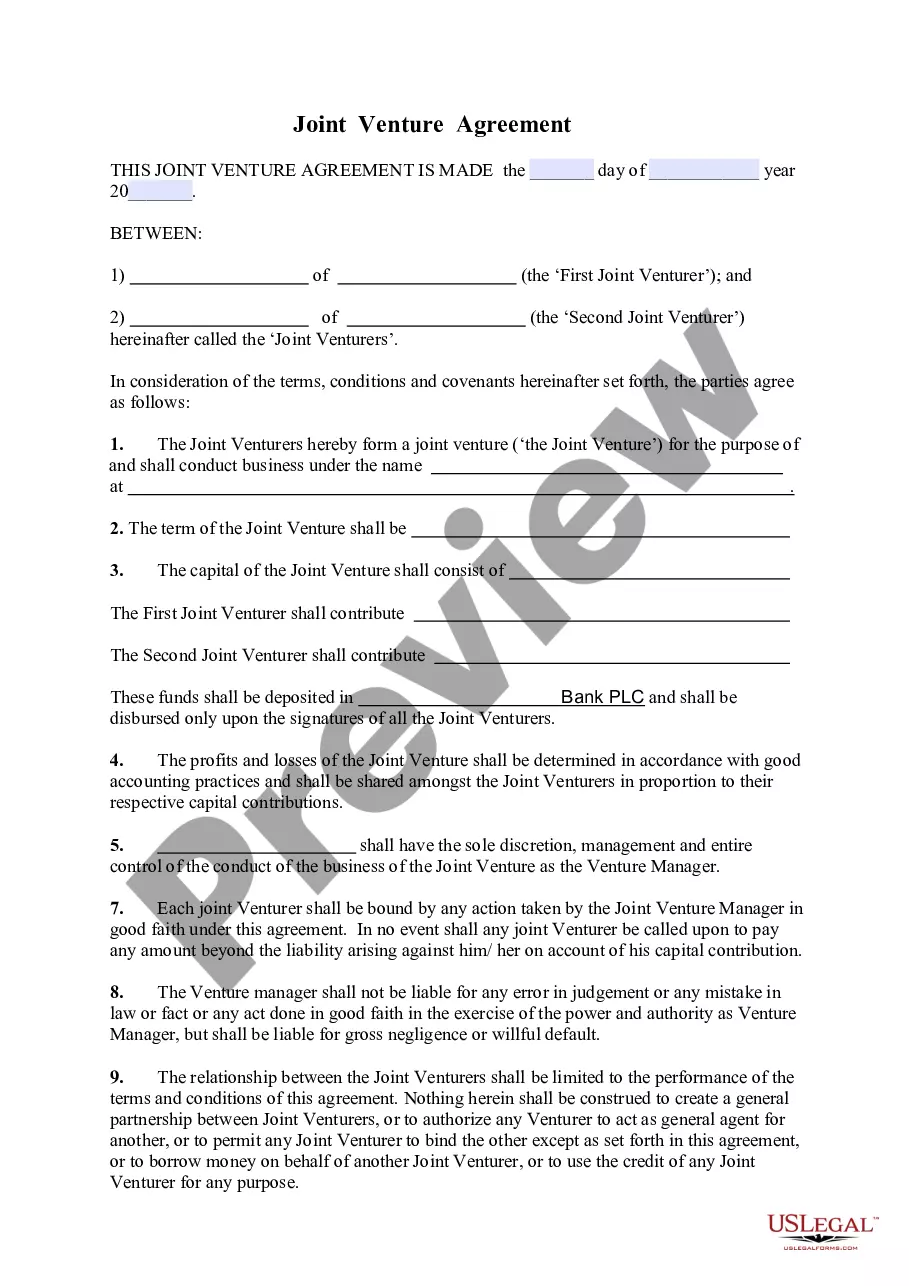
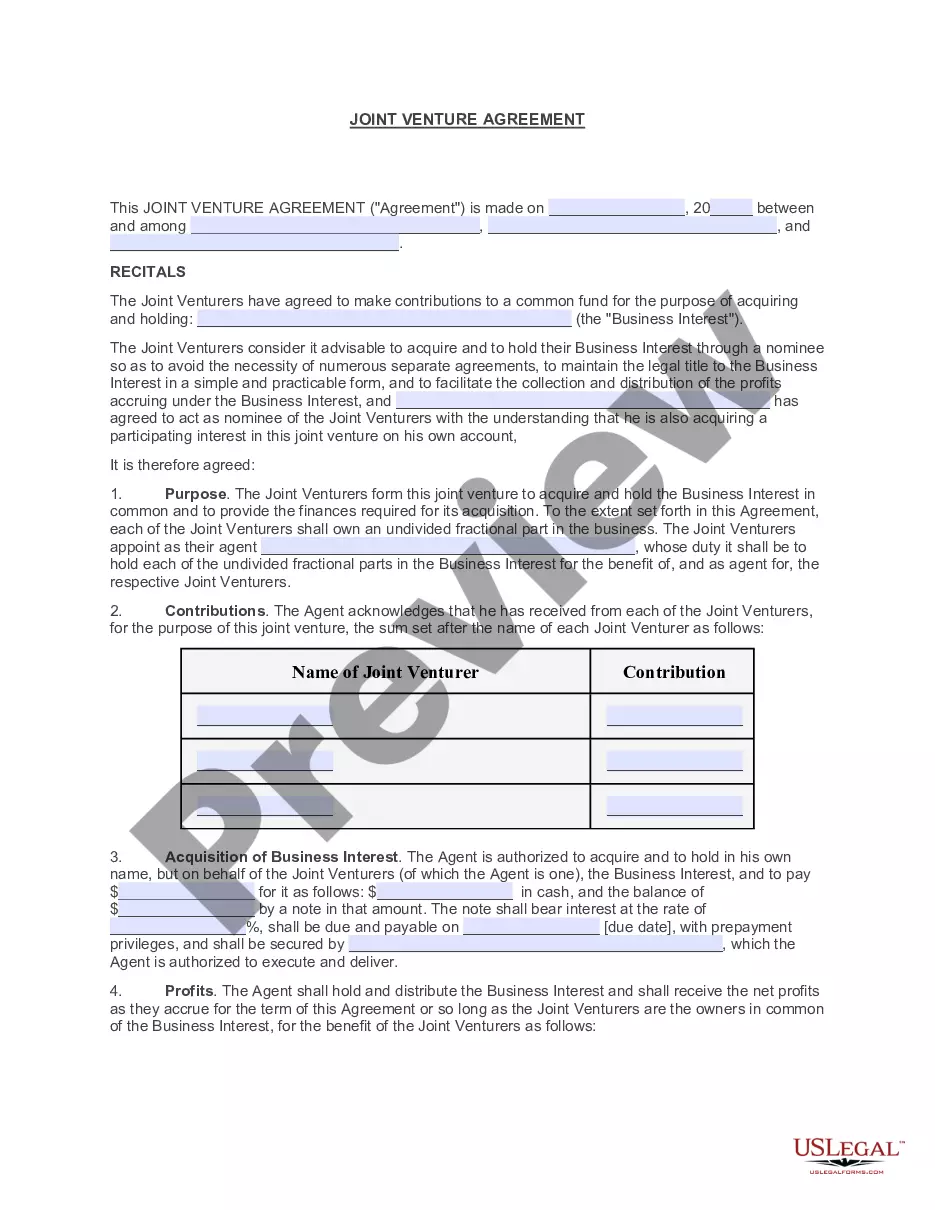
You can download or print the Virginia Basic Joint-Venture Agreement from this service.
If available, use the Review button to browse through the document template as well.
- If you have a US Legal Forms account, you can Log In and click the Acquire button.
- Then, you can complete, modify, print, or sign the Virginia Basic Joint-Venture Agreement.
- Every legal document template you purchase belongs to you forever.
- To obtain another copy of any purchased form, go to the My documents tab and click the corresponding button.
- If you are using the US Legal Forms site for the first time, follow the simple instructions outlined below.
- First, ensure you have selected the correct document template for the state/city of your choice.
- Review the form description to ensure you have selected the right form.
Form popularity
FAQ
You can obtain a joint venture agreement through various means, including online legal platforms like USLegalForms. They provide templates for a Virginia Basic Joint-Venture Agreement that you can customize to meet your specific needs. Simply follow the guidelines provided and ensure all parties understand and agree to the terms outlined in the document. This process simplifies the establishment of legal clarity and mutual understanding.
To legally form a joint venture, start by identifying the partners and defining the purpose of the partnership. Next, create a Virginia Basic Joint-Venture Agreement that outlines the terms, responsibilities, and profit-sharing among the participants. Consult with legal professionals to ensure that the agreement complies with local laws and regulations. This structured approach will set a solid foundation for your joint venture.
No, you do not need an LLC to form a joint venture. However, establishing an LLC can help protect your personal assets and provide a clear structure for your Virginia Basic Joint-Venture Agreement. The joint venture can operate as a partnership or an informal agreement between parties. It’s wise to consider the benefits of forming an LLC to enhance your business arrangement.
The 2-year rule suggests that joint ventures should focus on maintaining their partnership for a minimum of two years to allow for adequate project development and resource allocation. This timeframe helps build trust and collaboration among the partners. When constructing your Virginia Basic Joint-Venture Agreement, consider establishing a two-year duration as a baseline for your efforts.
The 3 in 2 rule indicates that at least three individuals or entities should be involved in forming the joint venture to distribute risks effectively. This approach helps ensure diverse inputs and minimizes the potential for conflict. When preparing your Virginia Basic Joint-Venture Agreement, keep this rule in mind to enhance stability and cooperation.
The primary rule for a joint venture involves a clear definition of the roles and responsibilities of each partner. This clarity helps avoid misunderstandings and disputes throughout the partnership. When drafting your Virginia Basic Joint-Venture Agreement, ensure that all parties agree on their contributions and expectations to foster a successful collaboration.
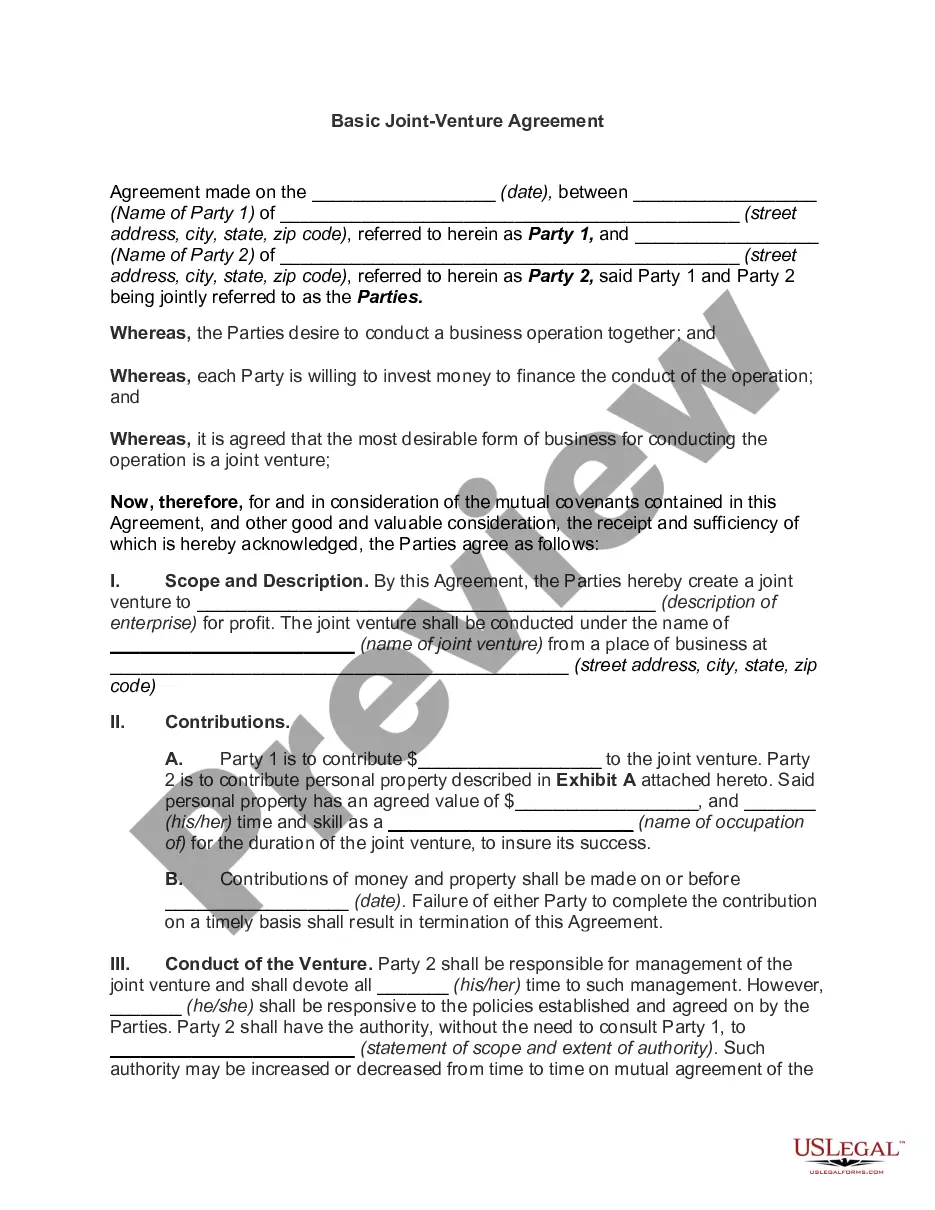
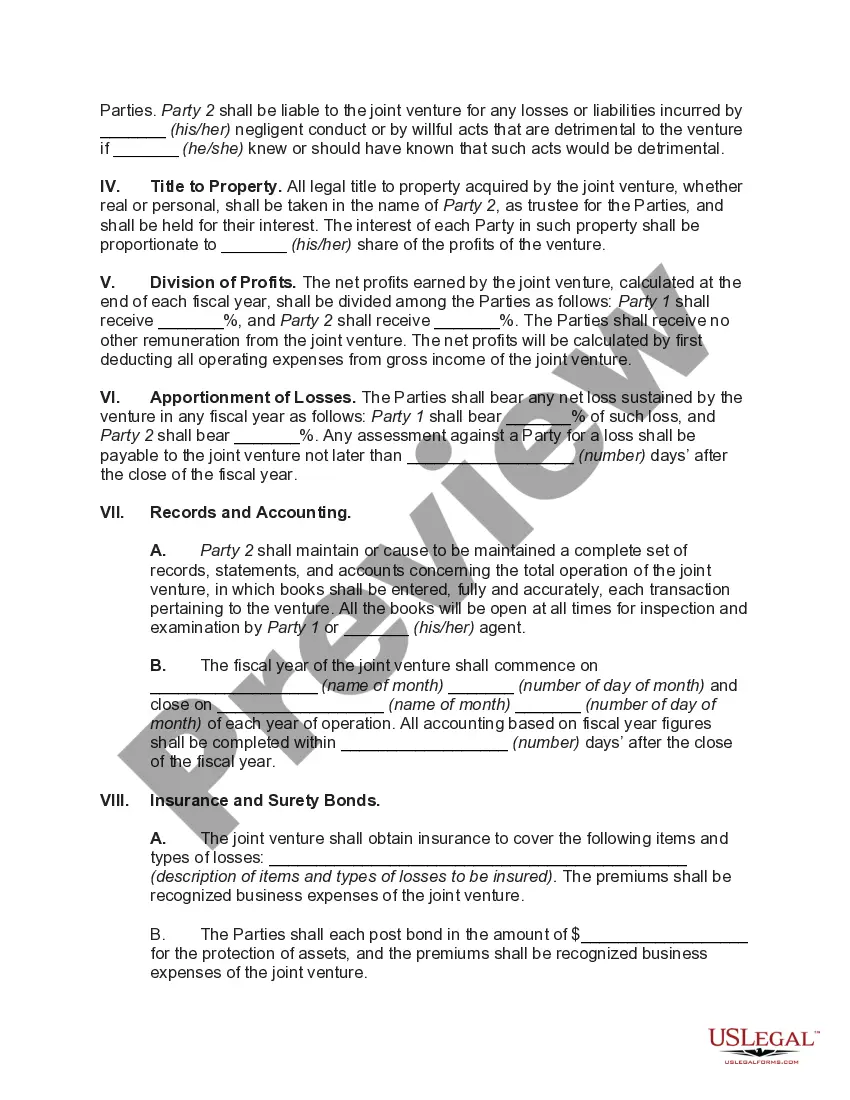
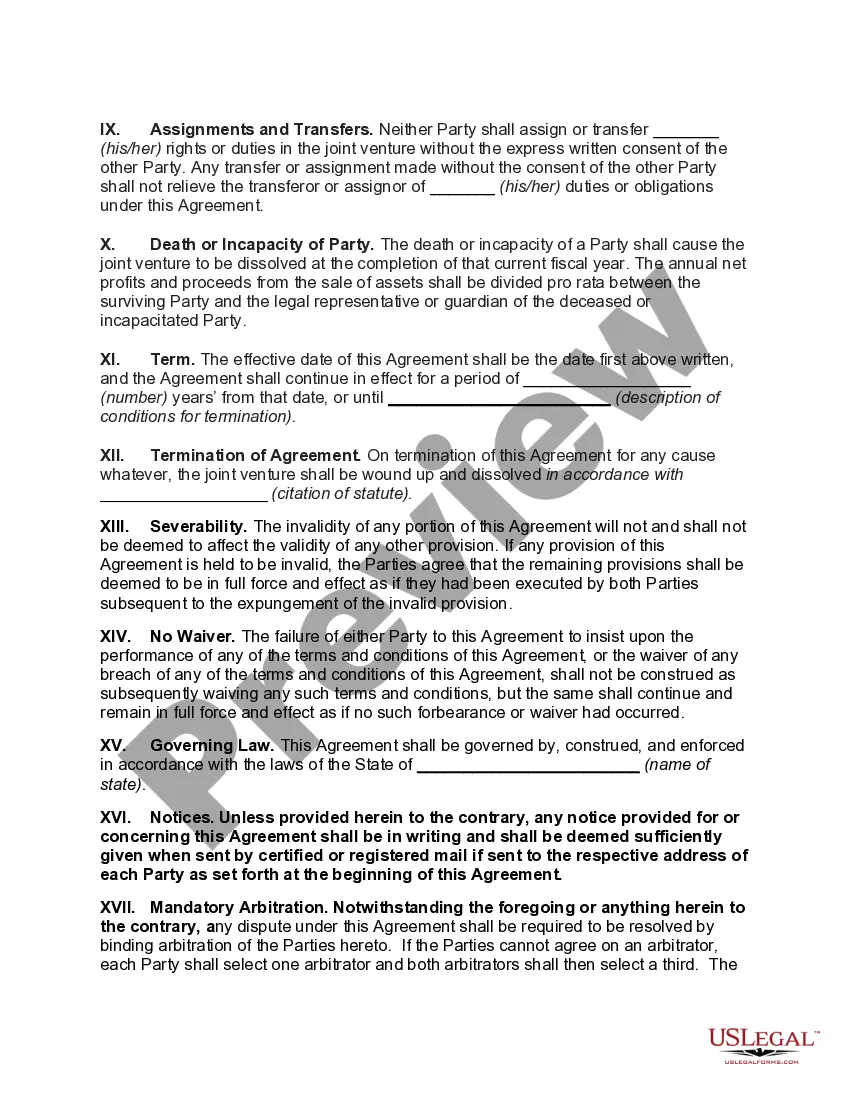
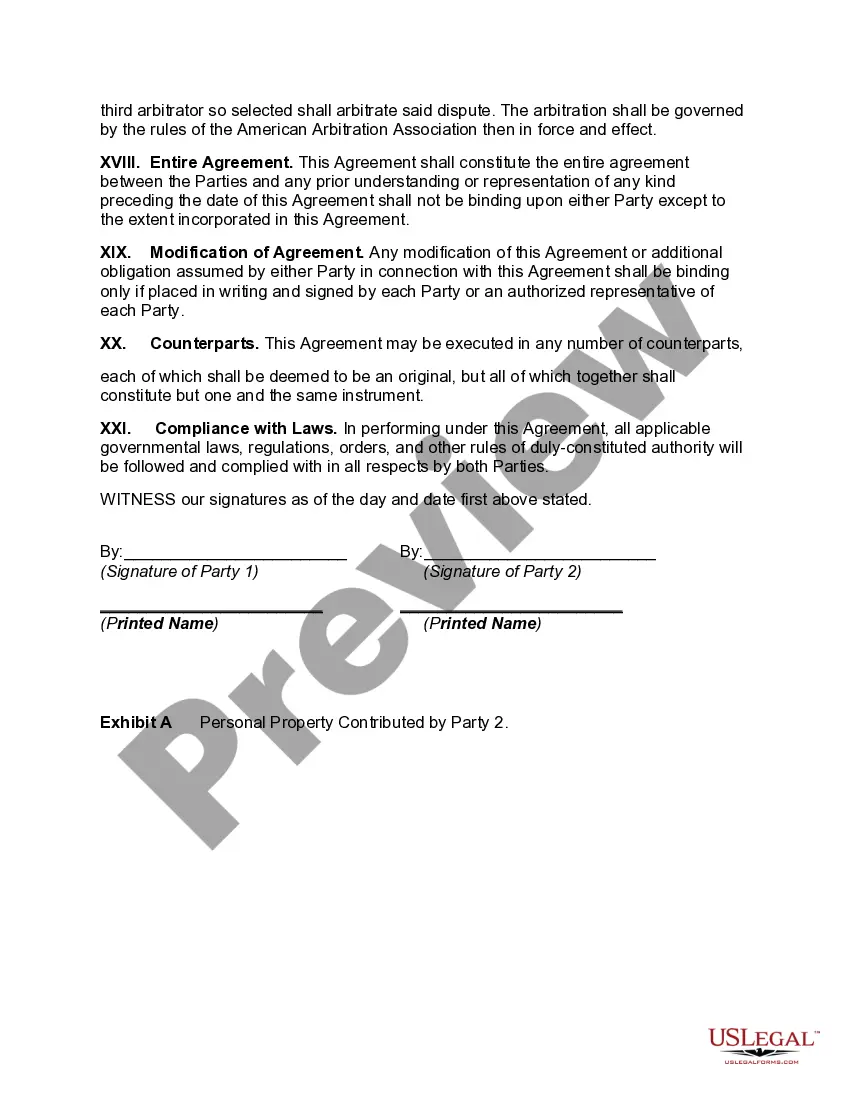
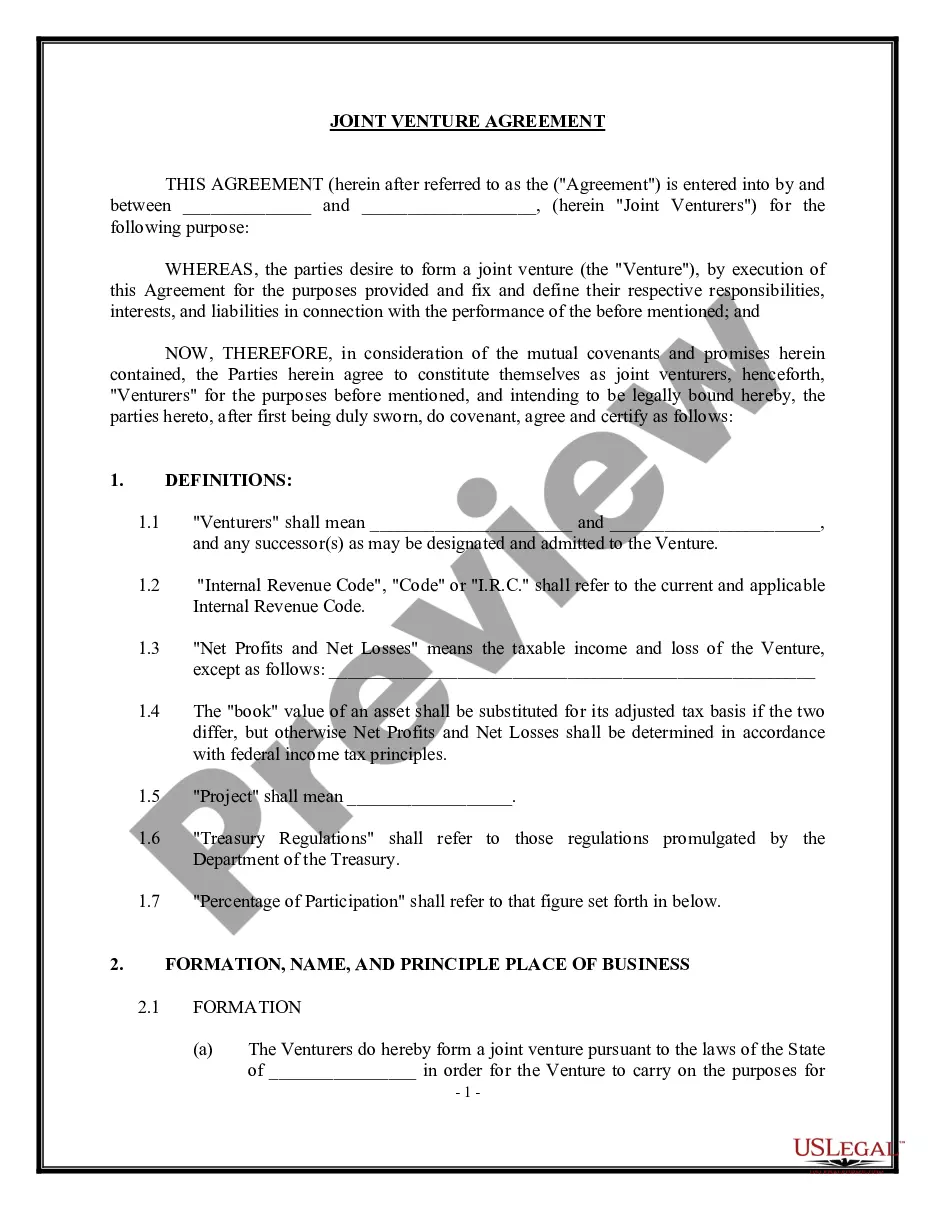
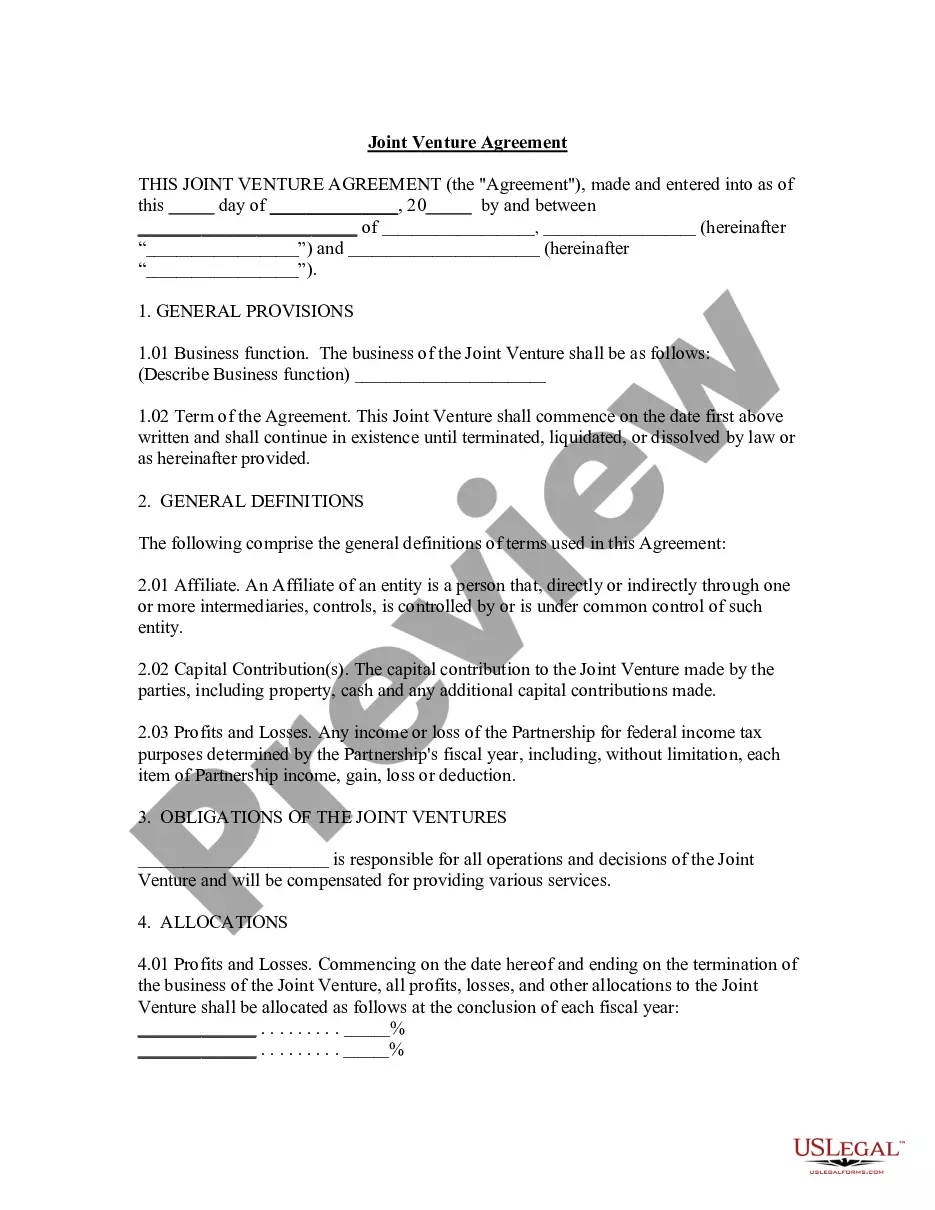
A basic joint venture agreement outlines the terms of the partnership between two or more entities seeking to collaborate on a project or business. This document typically includes the purpose of the joint venture, the roles and responsibilities of each party, and guidelines for financial arrangements. For a comprehensive Virginia Basic Joint-Venture Agreement, it's crucial to address these fundamental aspects.
Three common types of joint ventures include cooperative joint ventures, incorporated joint ventures, and contractual joint ventures. Each type reflects different levels of commitment and legal structure between parties. Understanding these types will help you create a tailored Virginia Basic Joint-Venture Agreement that meets your specific needs.
The 40 rule refers to a guideline suggesting that one party should typically own no more than 40% of the joint venture to maintain flexibility and shared control. This rule is designed to prevent any single member from dominating decision-making processes. When drafting your Virginia Basic Joint-Venture Agreement, consider this rule to promote balanced participation.
In Virginia, you can encounter several types of joint ventures, including contractual joint ventures, equity joint ventures, project joint ventures, and consortiums. Each type serves different purposes and may involve varying degrees of equity and investment from each party. Understanding these distinctions allows you to choose the right structure for your Virginia Basic Joint-Venture Agreement.