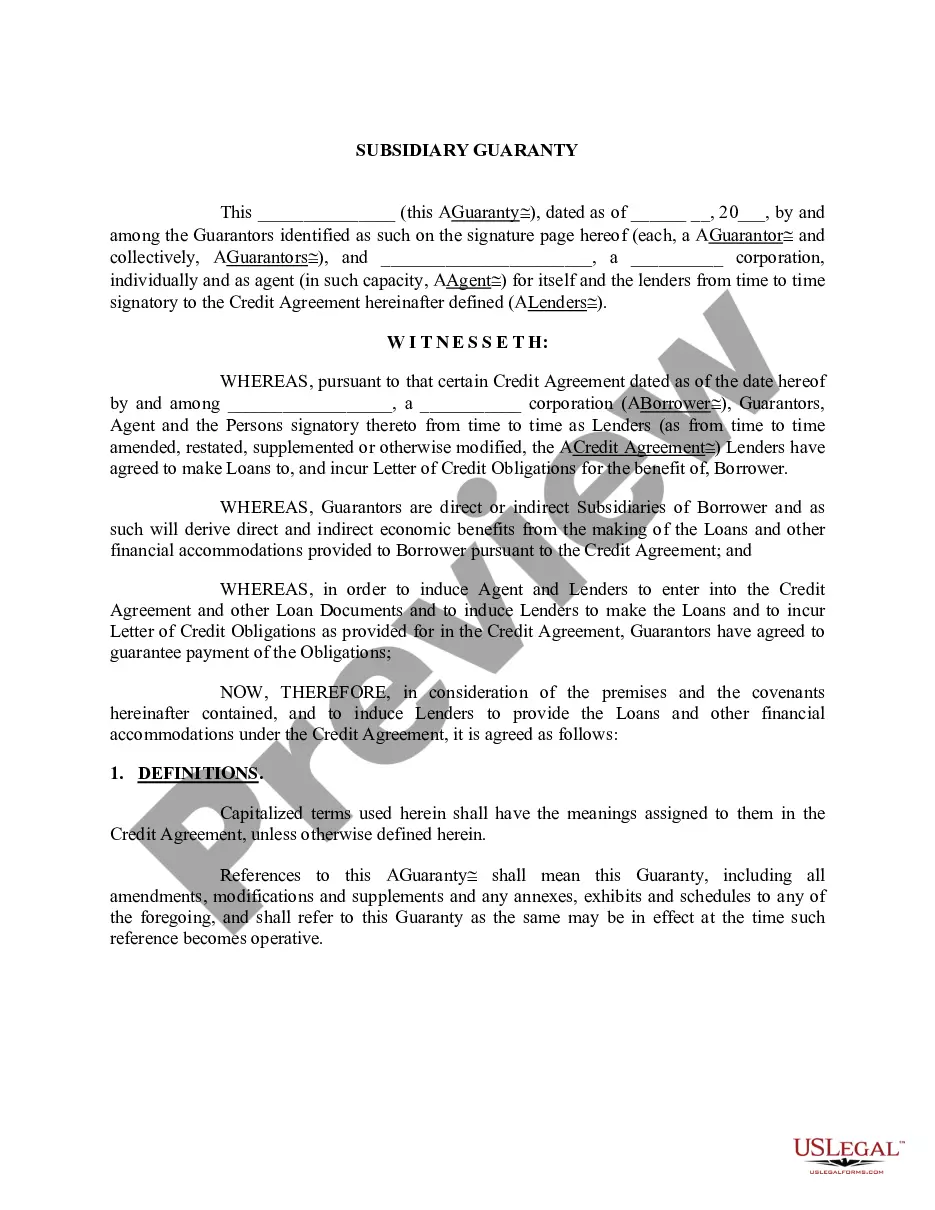
In this guaranty, two corporations guarantee the debt of an affiliate corporation.
Virginia Cross Corporate Guaranty Agreement
107 downloads
Description
Free preview
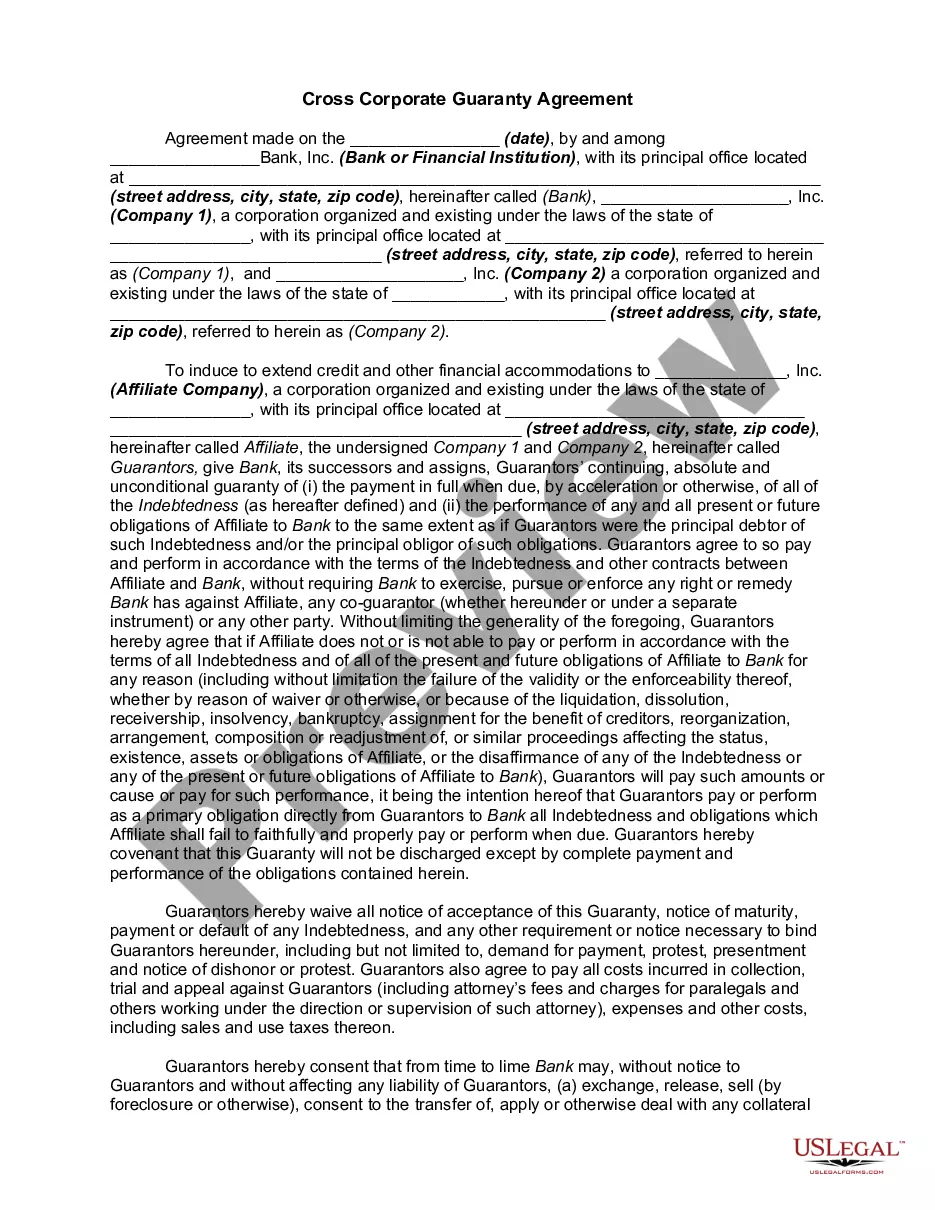
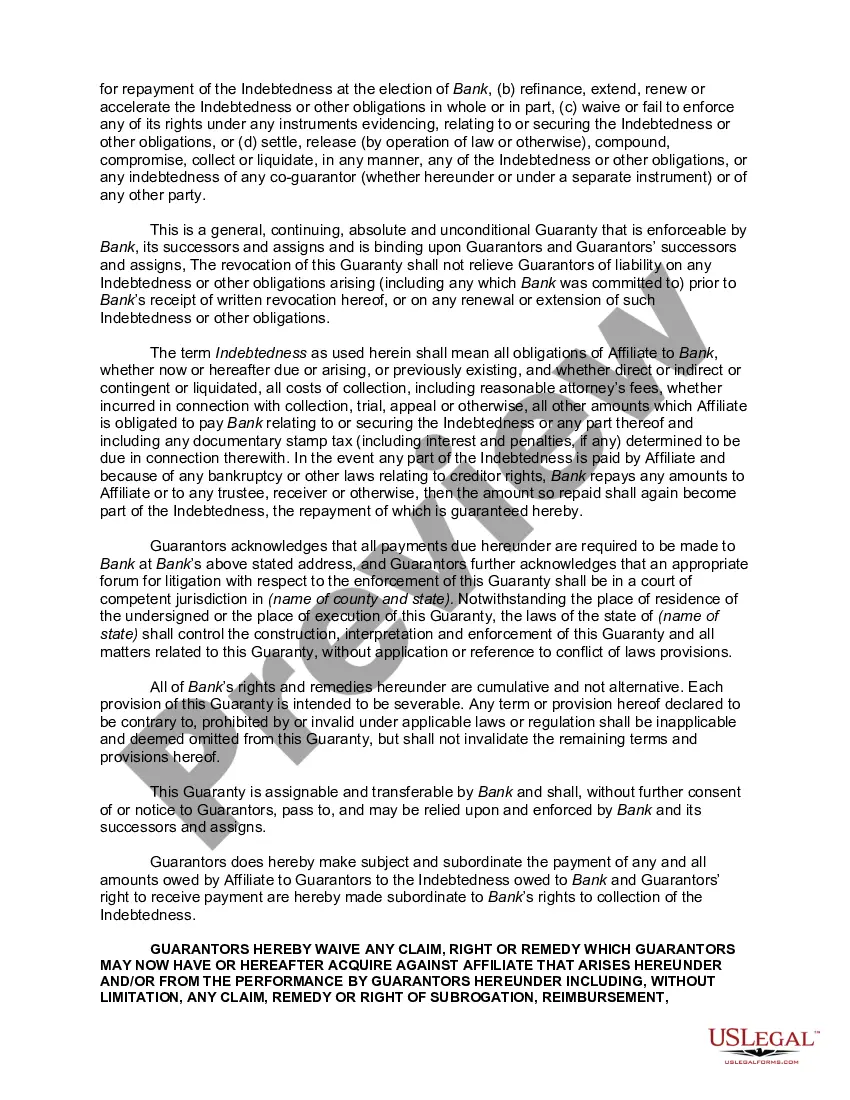
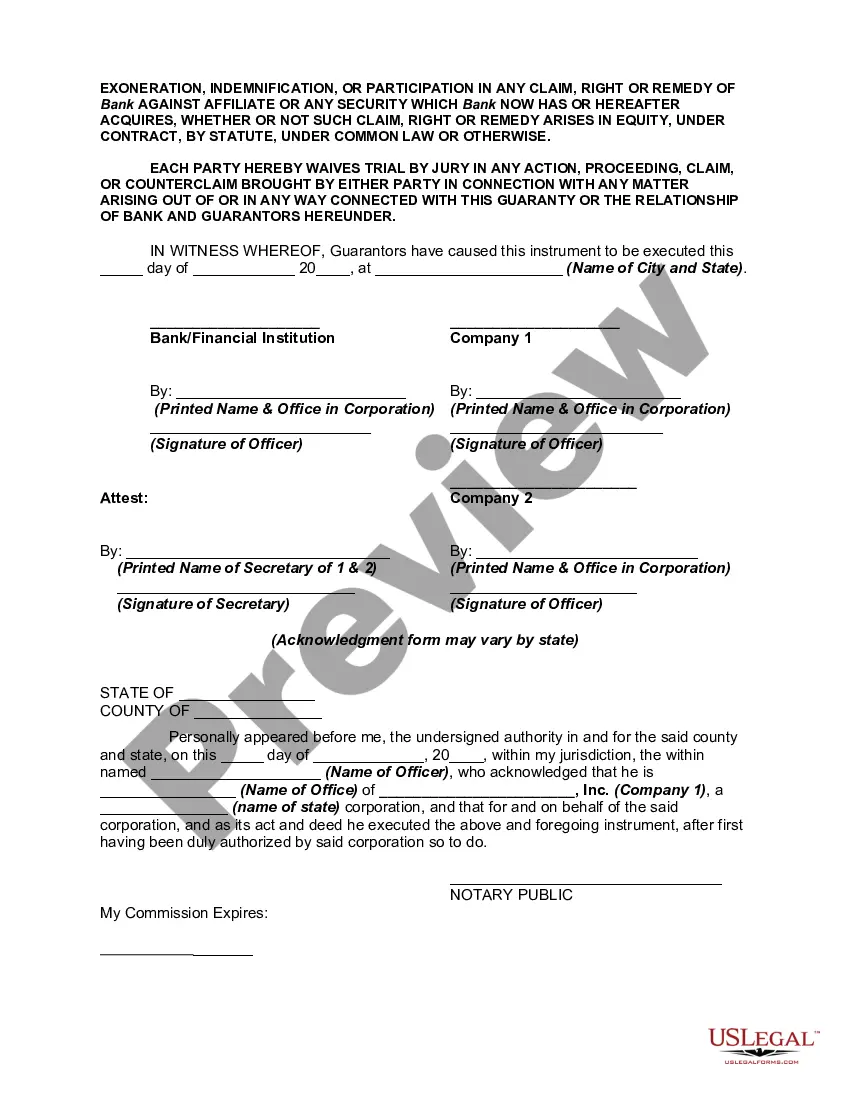
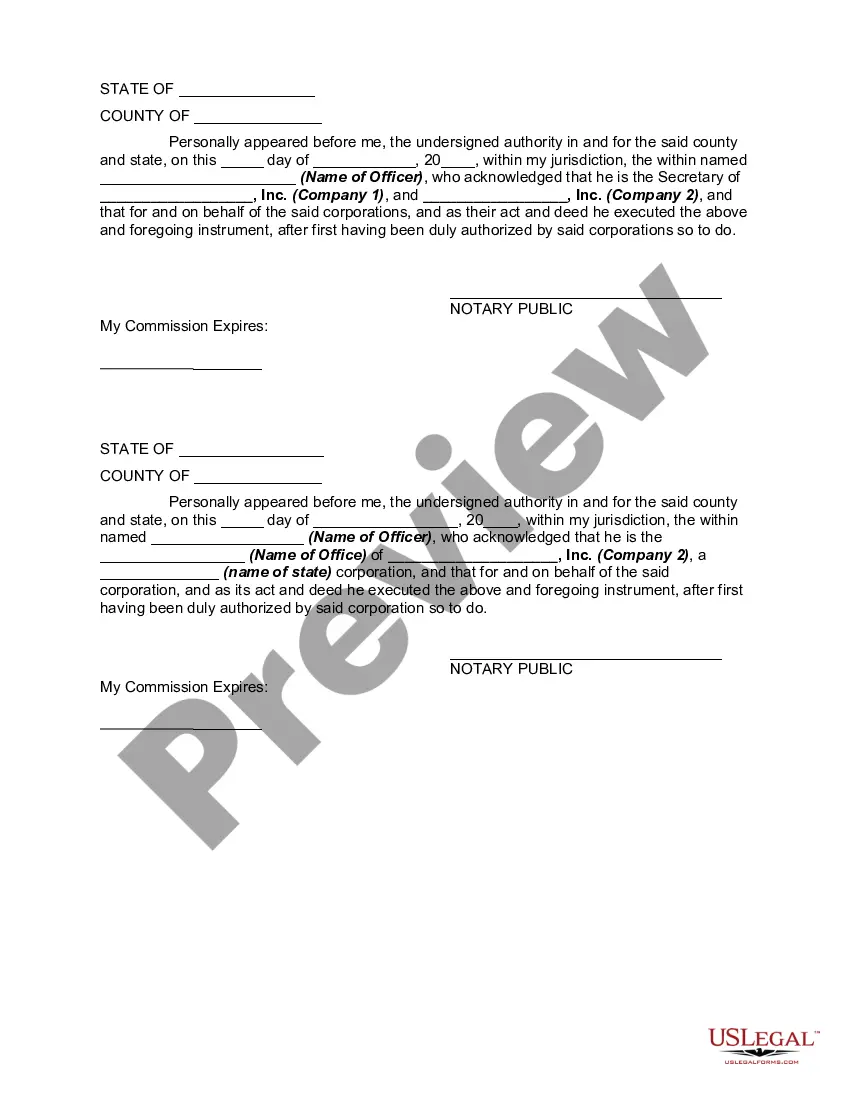
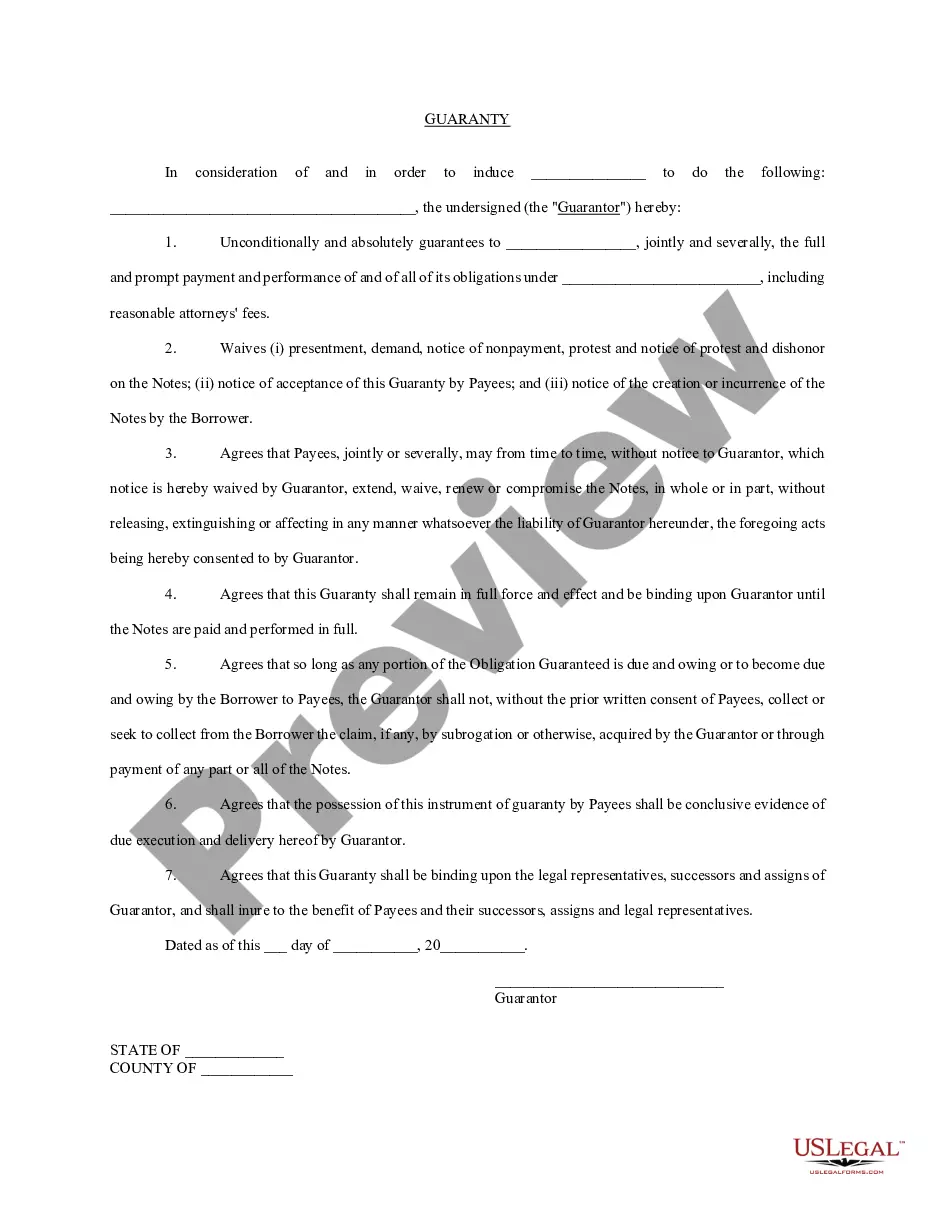
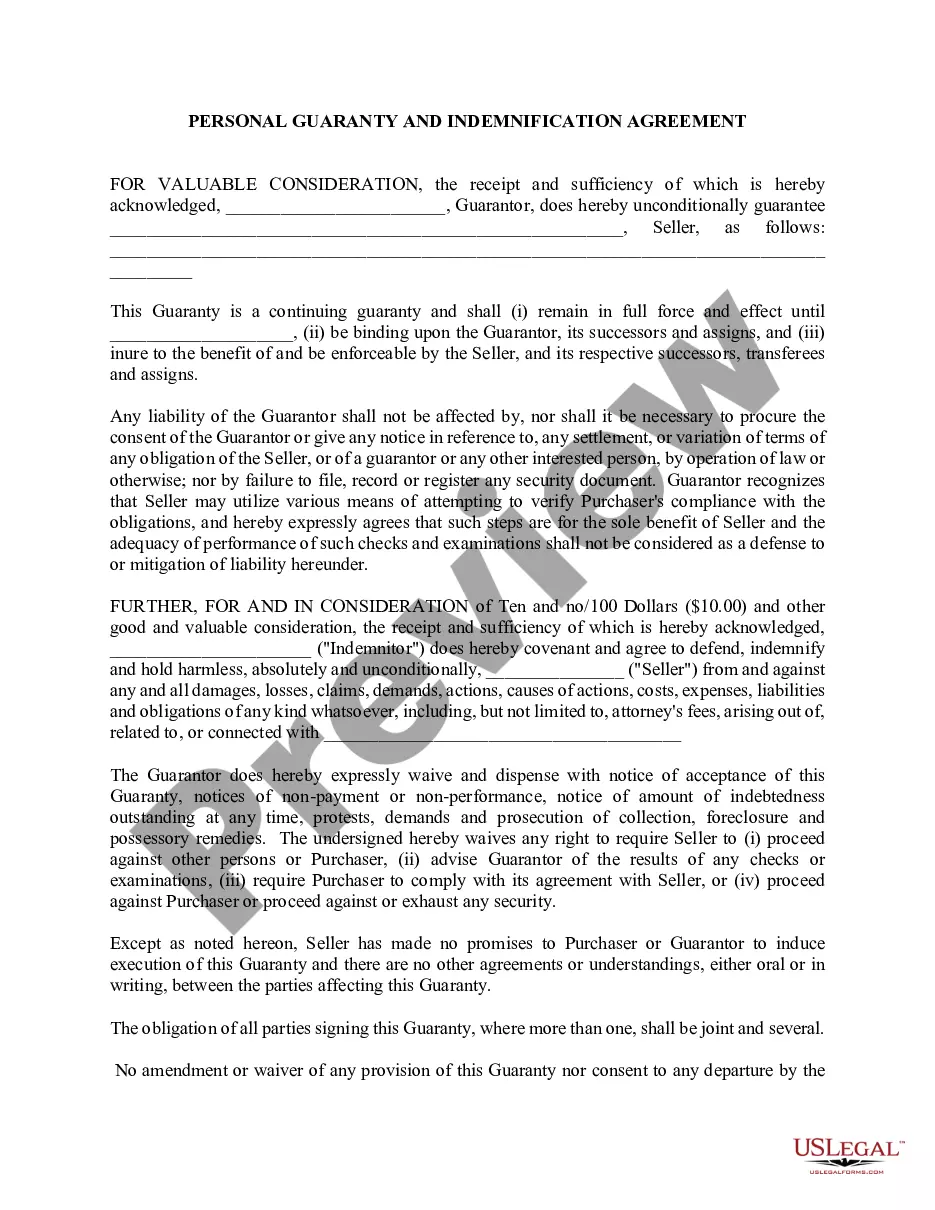
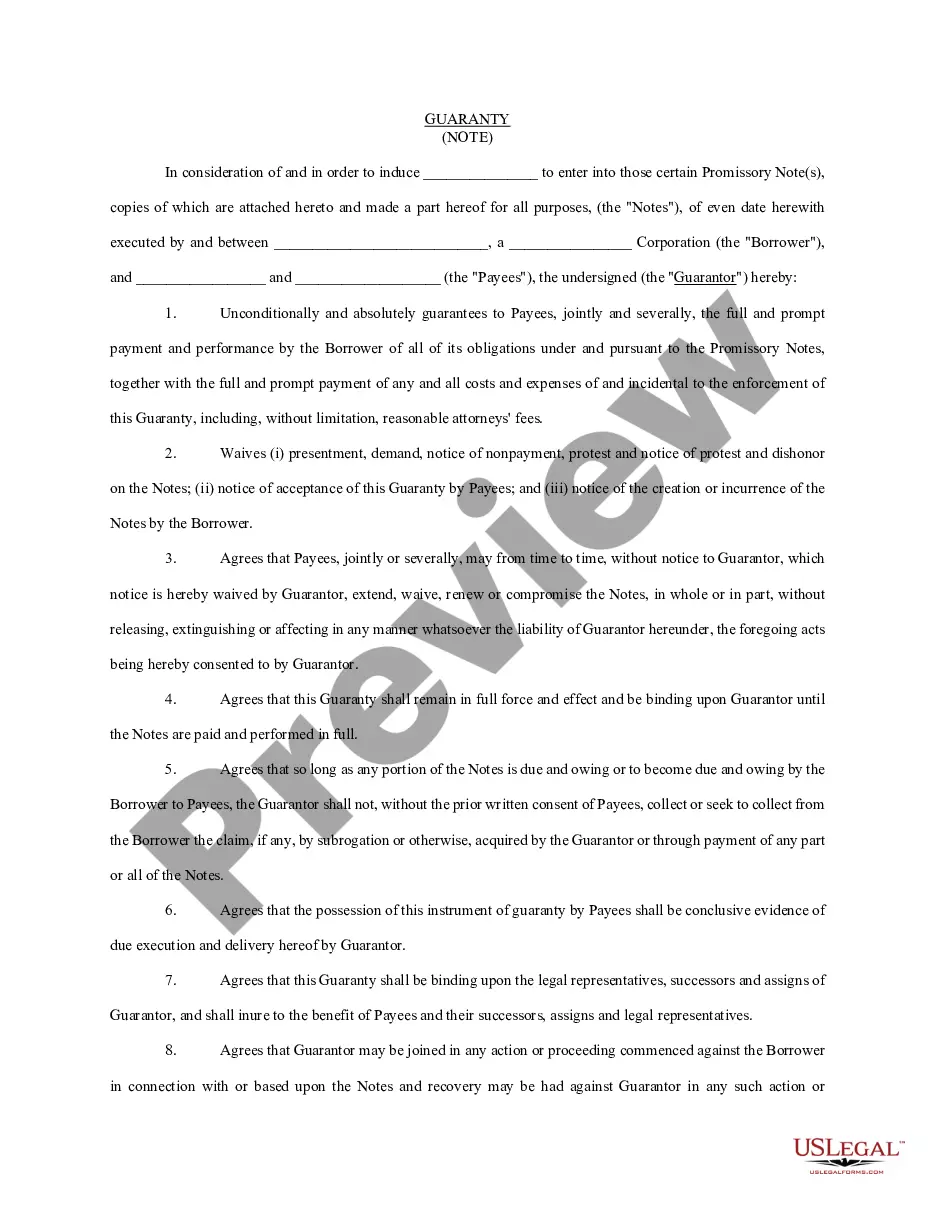
Get your form ready online
Our built-in tools help you complete, sign, share, and store your documents in one place.
Built-in online Word editor
Make edits, fill in missing information, and update formatting in US Legal Forms—just like you would in MS Word.
Export easily
Download a copy, print it, send it by email, or mail it via USPS—whatever works best for your next step.
E-sign your document
Sign and collect signatures with our SignNow integration. Send to multiple recipients, set reminders, and more. Go Premium to unlock E-Sign.
Notarize online 24/7
If this form requires notarization, complete it online through a secure video call—no need to meet a notary in person or wait for an appointment.
Store your document securely
We protect your documents and personal data by following strict security and privacy standards.

Make edits, fill in missing information, and update formatting in US Legal Forms—just like you would in MS Word.

Download a copy, print it, send it by email, or mail it via USPS—whatever works best for your next step.

Sign and collect signatures with our SignNow integration. Send to multiple recipients, set reminders, and more. Go Premium to unlock E-Sign.

If this form requires notarization, complete it online through a secure video call—no need to meet a notary in person or wait for an appointment.

We protect your documents and personal data by following strict security and privacy standards.
Looking for another form?



How to fill out Cross Corporate Guaranty Agreement?
It is feasible to spend time online attempting to locate the legal form template that satisfies both federal and state requirements you need.
US Legal Forms offers a wide selection of legal documents that have been reviewed by experts.
You can download or print the Virginia Cross Corporate Guaranty Agreement from my service.
To find an alternative version of the form, use the Lookup section to locate the template that suits your needs and requirements.
- If you already possess a US Legal Forms account, you can Log In and then click the Acquire button.
- Next, you can complete, revise, print, or sign the Virginia Cross Corporate Guaranty Agreement.
- Every legal document template you purchase is yours indefinitely.
- To obtain another copy of a purchased form, go to the My documents tab and click the corresponding button.
- If you are using the US Legal Forms website for the first time, follow the basic instructions below.
- First, ensure that you have chosen the correct document template for the county/town of your choice.
- Read the form description to confirm you have selected the appropriate form.
Form popularity
FAQ
A guarantor can be an individual or a corporate entity that agrees to be responsible for another party's debt. In business transactions, it is common for companies to act as corporate guarantors to enhance creditworthiness. Understanding this role is crucial when drafting a Virginia Cross Corporate Guaranty Agreement.
To provide a corporate guarantee, first, draft the agreement outlining the guarantee's terms. Ensure that both parties agree to the obligations and sign the document. Subsequently, keep the signed Virginia Cross Corporate Guaranty Agreement on file to maintain clear records and accountability.
The main difference lies in the entities involved. A personal guarantor is an individual who guarantees a debt, while a corporate guarantor is a business entity that assumes that role. In the context of the Virginia Cross Corporate Guaranty Agreement, the choice between personal and corporate guarantees depends on the risk assessment and business structure.
A corporate guarantor serves as a financial backer for another company's obligations. In simpler terms, it means that if a borrower fails to meet its payments, the corporate guarantor steps in to cover those debts. This offers assurance to lenders, enhancing the chances of receiving funds.
A corporate guarantor is a company that commits to fulfilling the obligations of another party. In the context of a Virginia Cross Corporate Guaranty Agreement, the corporate guarantor assumes responsibility for debt repayment or other commitments if the primary party defaults. This adds a layer of security for lenders and service providers.
Yes, a company can indeed guarantee another company's obligations. This practice is common in business relationships, especially through arrangements like the Virginia Cross Corporate Guaranty Agreement. By doing so, the guaranteeing company provides additional assurance to creditors, which can help facilitate loans and improve credit standing.
The cross guarantee allows one company to guarantee the debts and obligations of another company. Within a Virginia Cross Corporate Guaranty Agreement, this mechanism enhances support among related businesses, fostering financial stability. It offers a strategic way for companies to build trust and share risk, ultimately benefiting all parties involved.
The guarantee clause outlines the responsibilities of the guarantor within a contract. Specifically, in a Virginia Cross Corporate Guaranty Agreement, this clause ensures that the guarantor accepts liability if the primary party defaults. This clause is crucial as it clarifies the conditions under which the guarantor agrees to step in and cover obligations.
A guarantee agreement serves as a legally binding contract that provides assurance from one party to another that financial obligations will be met. In the context of a Virginia Cross Corporate Guaranty Agreement, it reinforces the commitment of a guarantor to fulfill the debt of a borrower. This type of agreement offers security and facilitates additional financing options for businesses.
Structuring a guarantee involves defining the key terms, identifying the parties involved, and specifying the obligations being guaranteed. A well-structured Virginia Cross Corporate Guaranty Agreement will also address any conditions or covenants that might affect the guarantee. Properly structuring the agreement ensures clarity and reduces the risk of disputes between the parties involved.