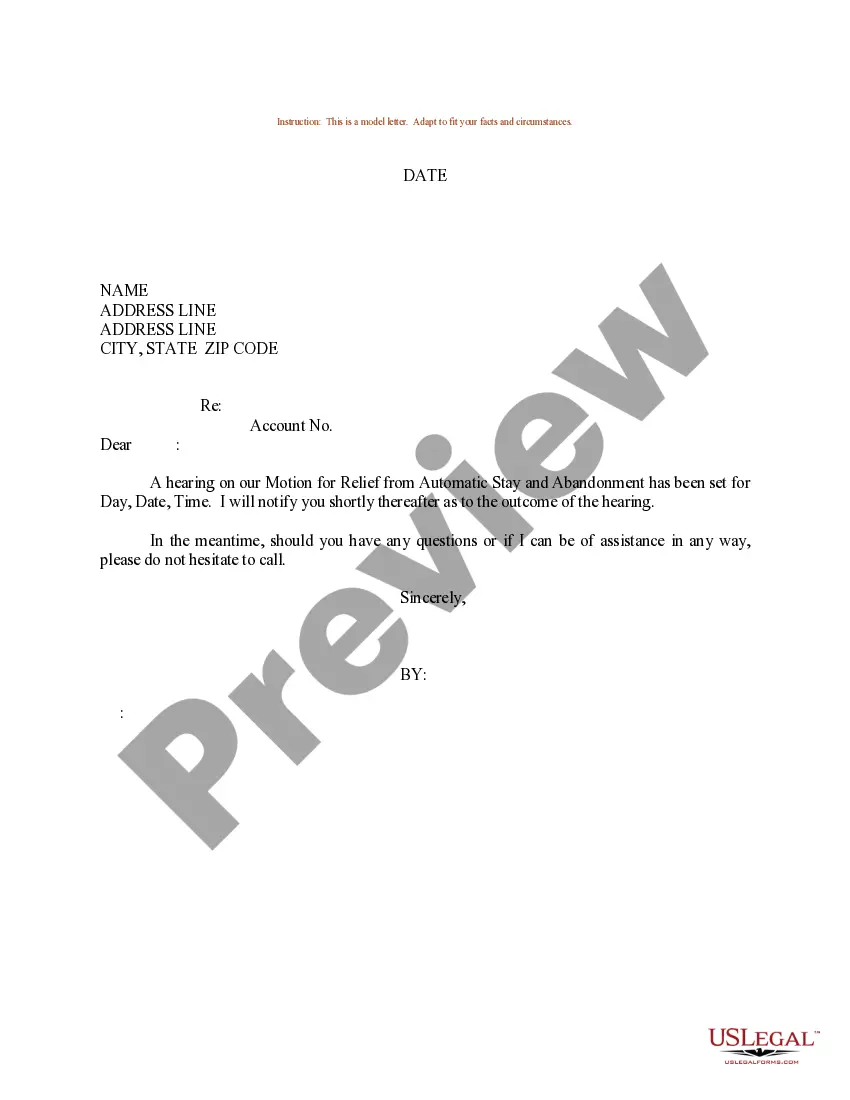
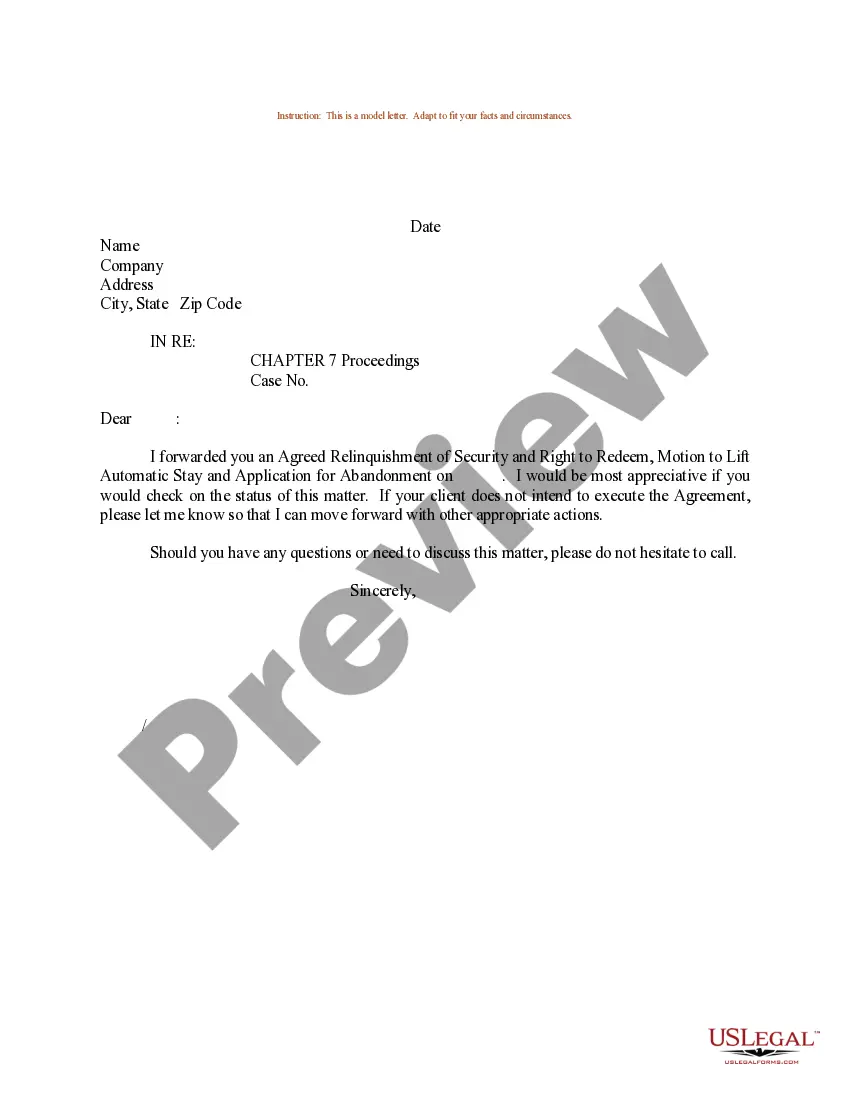
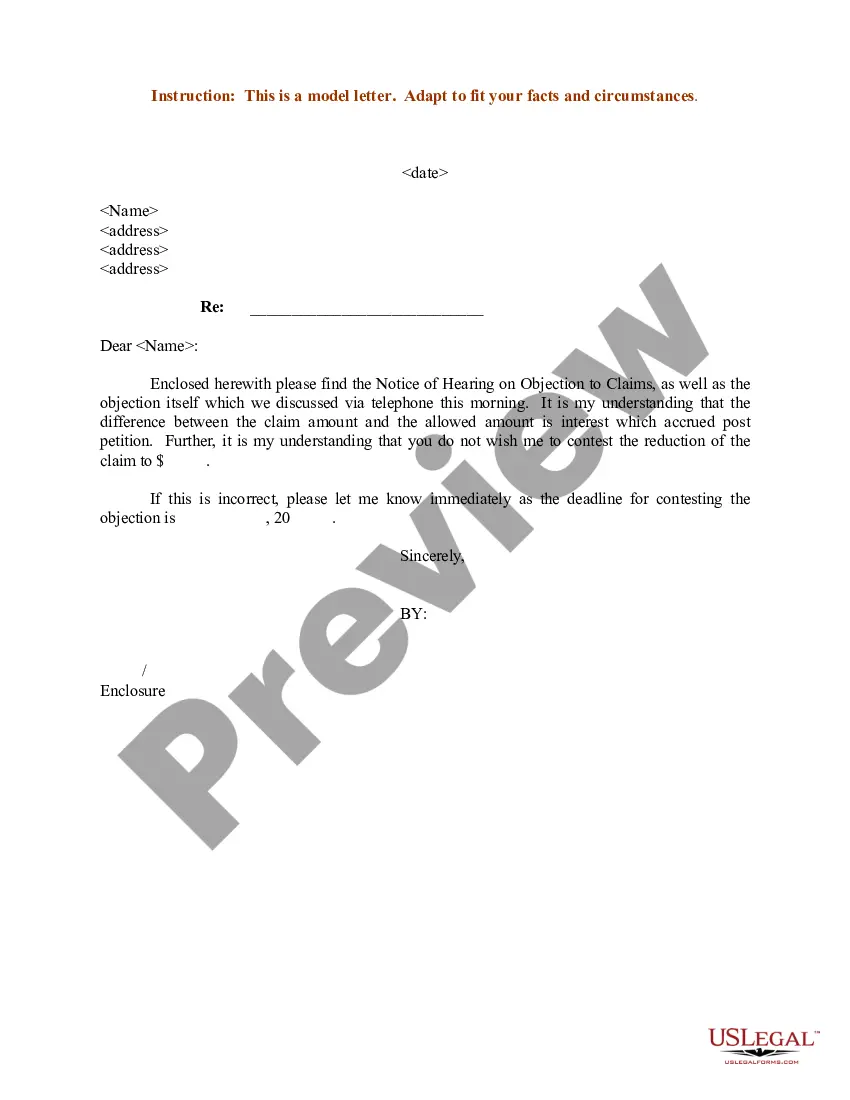
Virginia Sample Letter for Hearing on Motion for Relief from Automatic Stay
Description
Get your form ready online
Our built-in tools help you complete, sign, share, and store your documents in one place.
Make edits, fill in missing information, and update formatting in US Legal Forms—just like you would in MS Word.
Download a copy, print it, send it by email, or mail it via USPS—whatever works best for your next step.
Sign and collect signatures with our SignNow integration. Send to multiple recipients, set reminders, and more. Go Premium to unlock E-Sign.
If this form requires notarization, complete it online through a secure video call—no need to meet a notary in person or wait for an appointment.
We protect your documents and personal data by following strict security and privacy standards.

Make edits, fill in missing information, and update formatting in US Legal Forms—just like you would in MS Word.

Download a copy, print it, send it by email, or mail it via USPS—whatever works best for your next step.

Sign and collect signatures with our SignNow integration. Send to multiple recipients, set reminders, and more. Go Premium to unlock E-Sign.

If this form requires notarization, complete it online through a secure video call—no need to meet a notary in person or wait for an appointment.

We protect your documents and personal data by following strict security and privacy standards.
Looking for another form?








How to fill out Sample Letter For Hearing On Motion For Relief From Automatic Stay?
Have you ever found yourself in a situation where you require documentation for either business or personal purposes almost every day.
There are numerous legal document templates available online, but locating ones you can trust isn’t easy.
US Legal Forms provides thousands of form templates, such as the Virginia Sample Letter for Hearing on Motion for Relief from Automatic Stay, that are designed to comply with federal and state regulations.
Select the pricing plan you prefer, complete the required information to create your account, and place an order using your PayPal or credit card.
Choose a convenient document format and download your copy.
- If you are already familiar with the US Legal Forms website and have an account, simply Log In.
- After that, you can download the Virginia Sample Letter for Hearing on Motion for Relief from Automatic Stay template.
- If you do not have an account and wish to start using US Legal Forms, follow these steps.
- Find the form you need and ensure it is for the correct city/state.
- Use the Preview button to examine the form.
- Check the description to ensure you have selected the right form.
- If the form isn’t what you’re looking for, use the Search field to find the form that suits your requirements.
- Once you find the appropriate form, click on Get now.
Form popularity
FAQ
If you have been a debtor in two or more bankruptcy cases dismissed within the last year, no automatic stay goes into effect and no stay will go into effect unless and until: 1) you request by motion that the court enter an order extending the stay; 2) the request is filed with the bankruptcy court within 30 days of ...
When it comes to filing Chapter 7 bankruptcy, debts incurred before filing are called pre-petition debts, that debtors are discharged from, whereas debts incurred after a filing are post-petition payments, which debtors still must pay on.
The automatic stay generally remains in place until the discharge is entered. Once that happens, you're no longer responsible for the unsecured debts incurred before your Chapter 7 was filed. The permanent protection from creditors provided by the discharge is much stronger than the automatic stay.
The automatic stay remains in effect until your case is closed. But, of course, it isn't always that simple. For Chapter 7, it's often the case that a stay will last the 3-5 months the court case is open. For Chapter 13, bankruptcy cases could take anywhere from 3-5 years.
Automatic Stay -- Immediately after a bankruptcy case is filed, an injunction (called the "Automatic Stay") is generally imposed against certain creditors who want to start or continue taking action against a debtor or the debtor's property.
An order for relief invokes the automatic stay and brings down an iron curtain, separating the pre-bankruptcy from the post-bankruptcy debtor, creating a bankruptcy estate and prohibiting unauthorized transfers of the debtor's property.
Automatic Stay -- Immediately after a bankruptcy case is filed, an injunction (called the "Automatic Stay") is generally imposed against certain creditors who want to start or continue taking action against a debtor or the debtor's property. Bankruptcy Code Section 362 discusses the Automatic Stay.
A borrower's pre-bankruptcy waiver of the automatic stay is more likely to be enforced if contained in a forbearance agreement or an agreement approved by the court in a previous bankruptcy case.