Virginia Roommate Agreement for Homeowner
Description
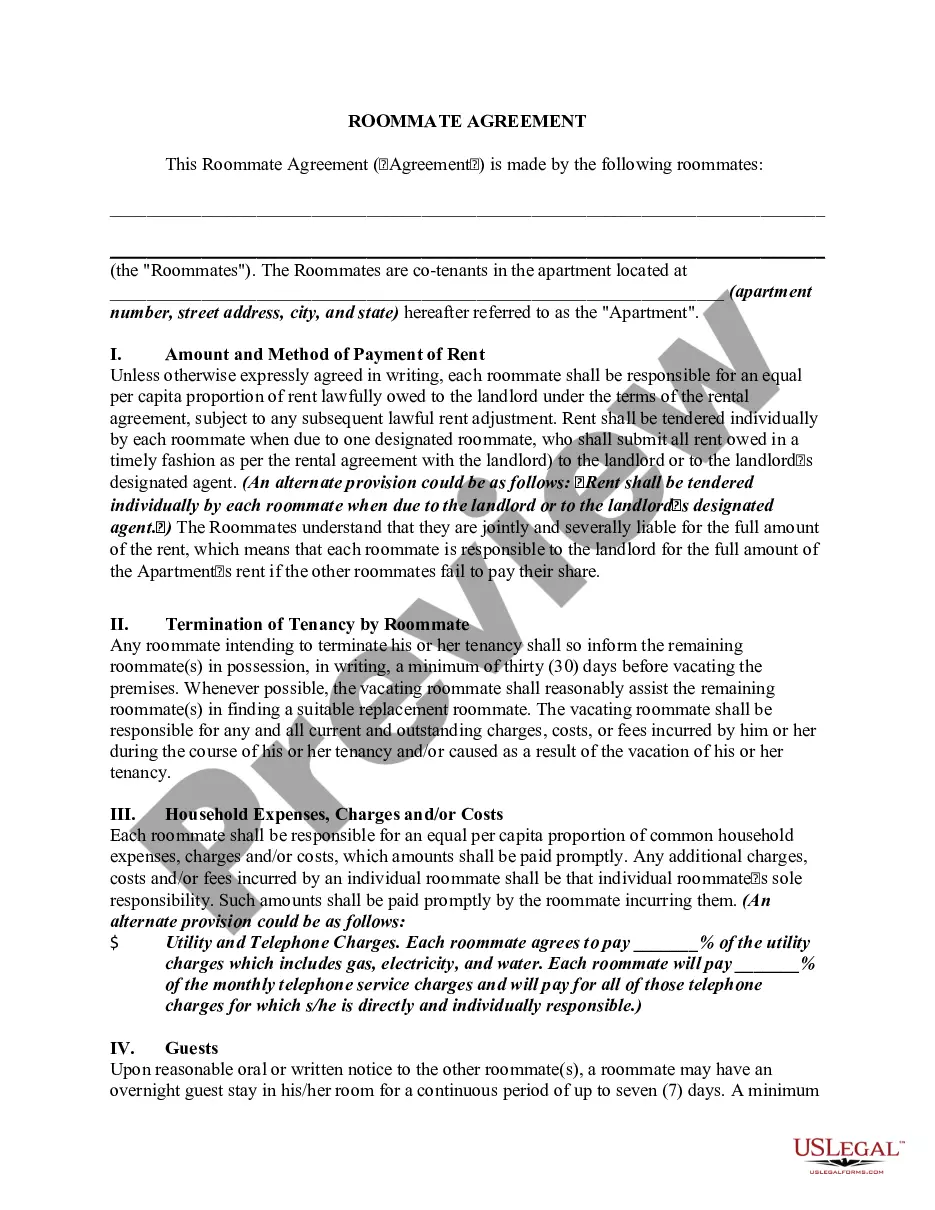
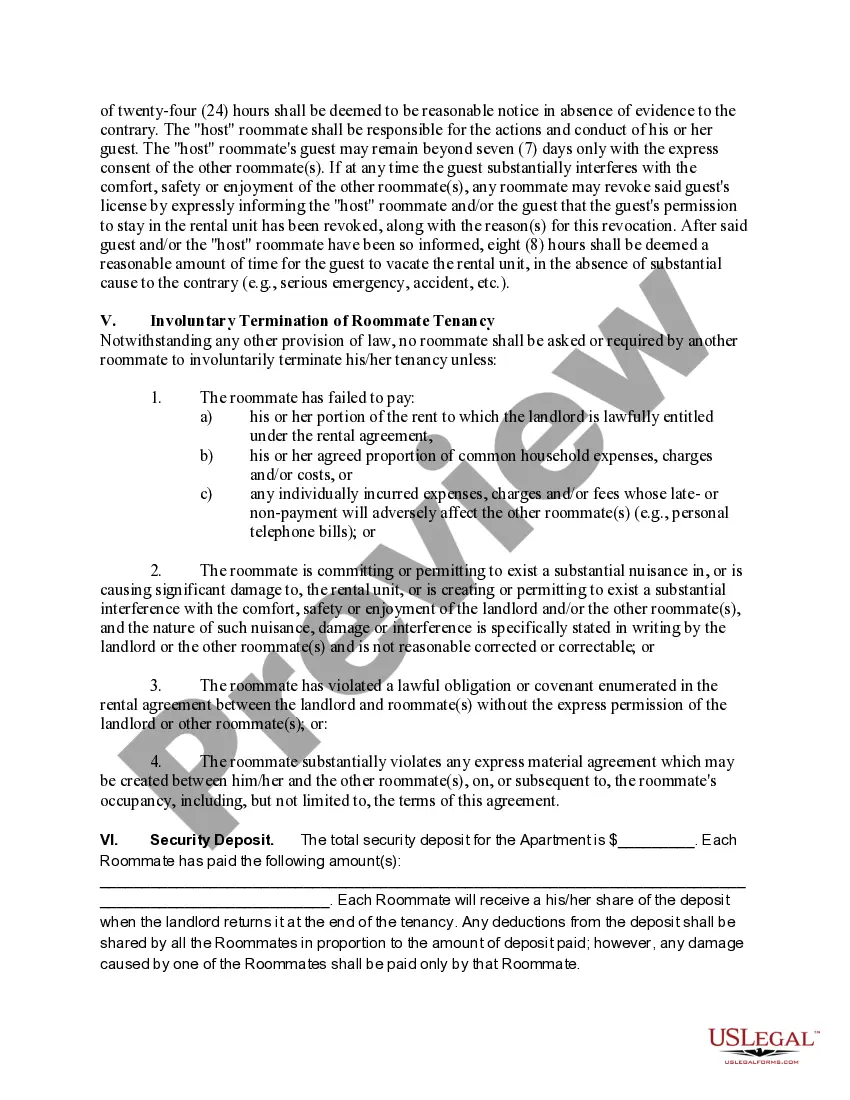
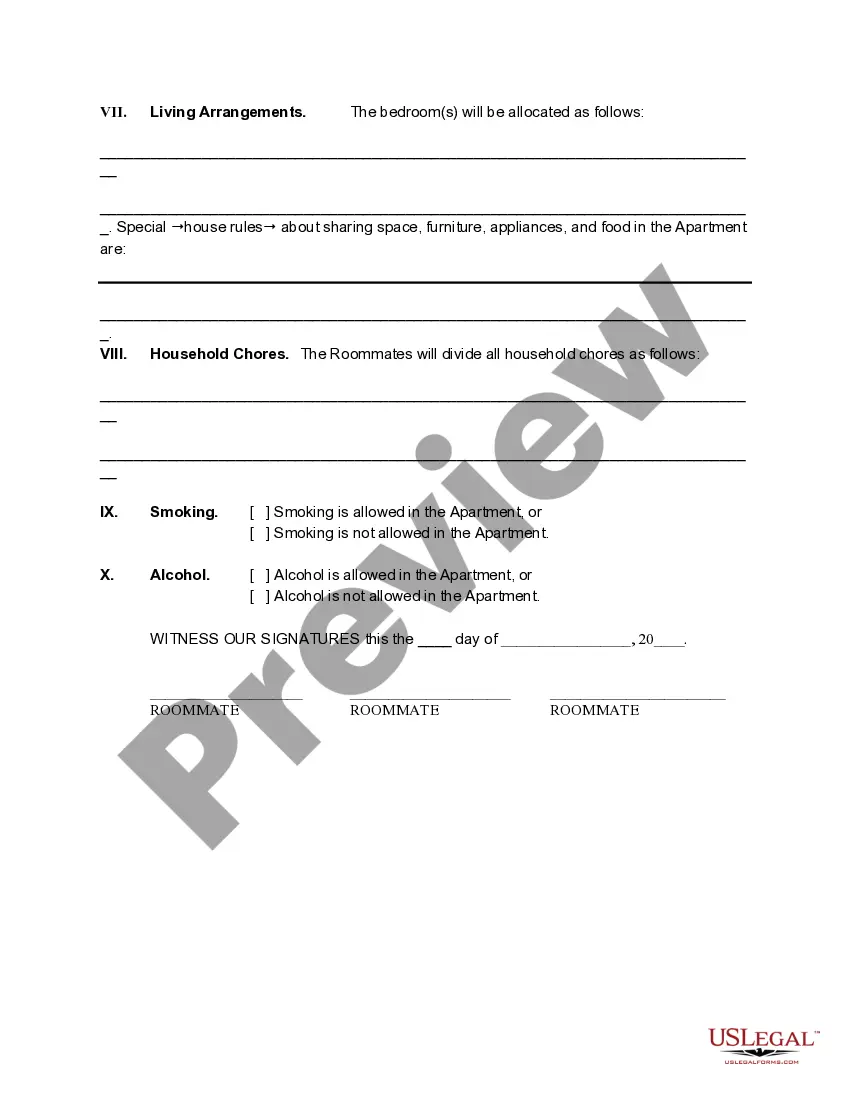

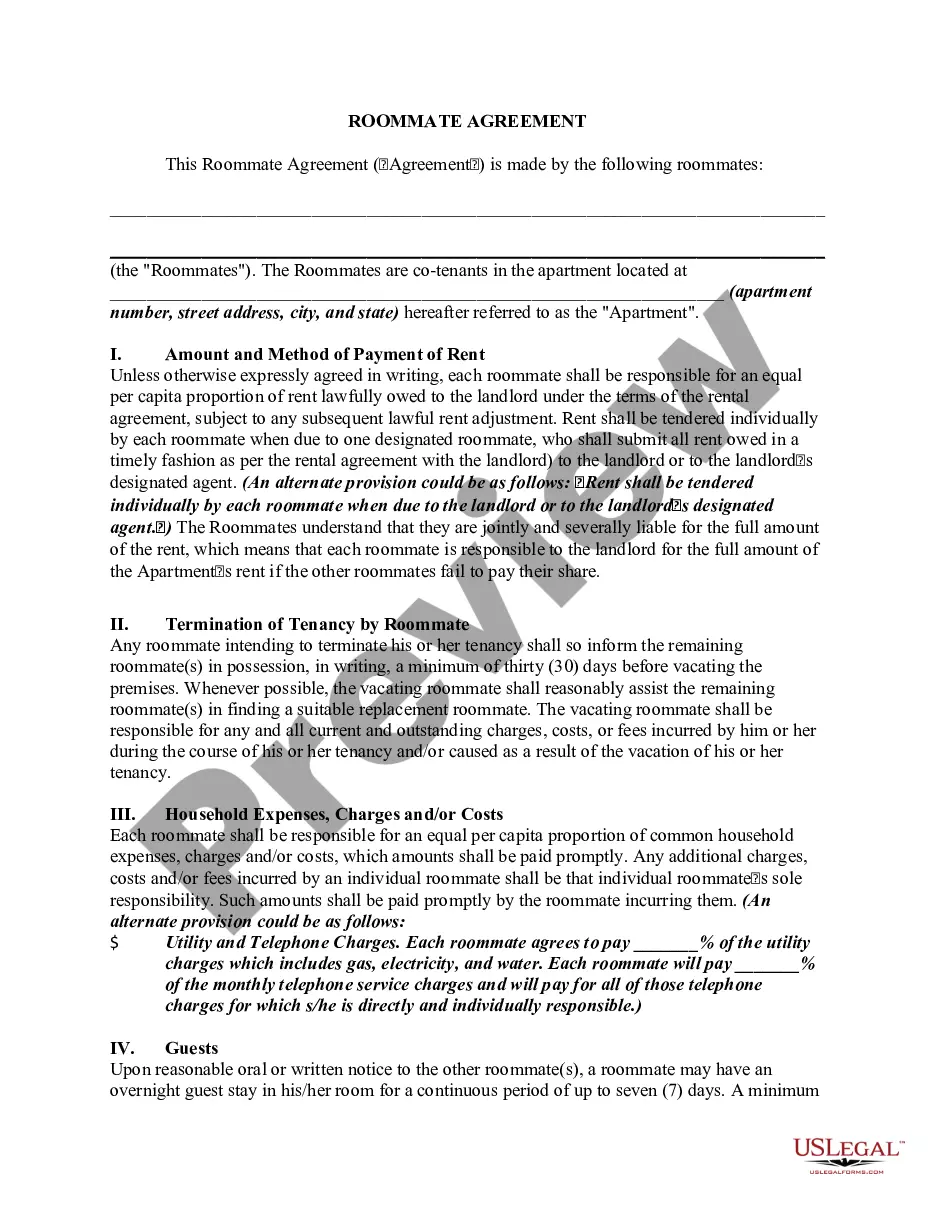
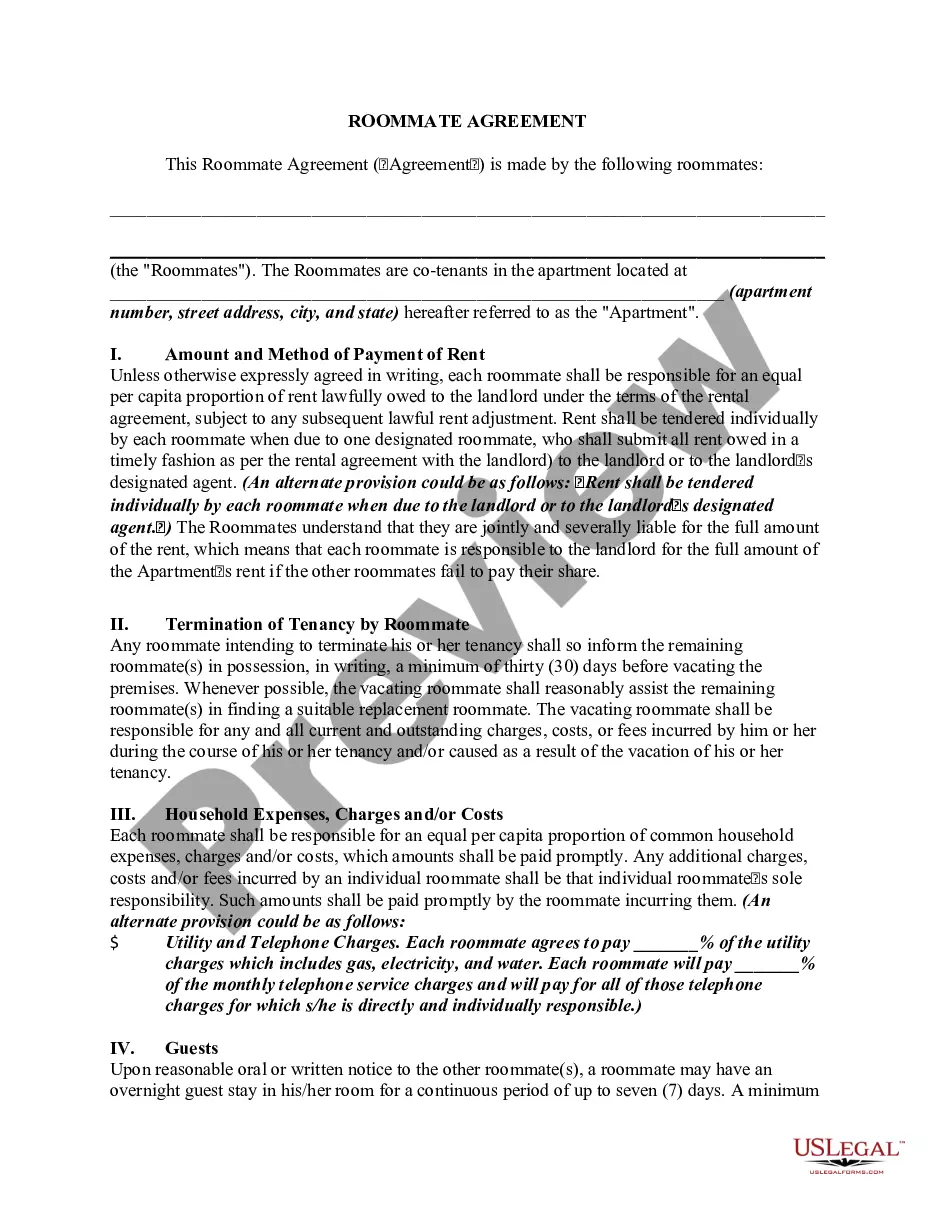
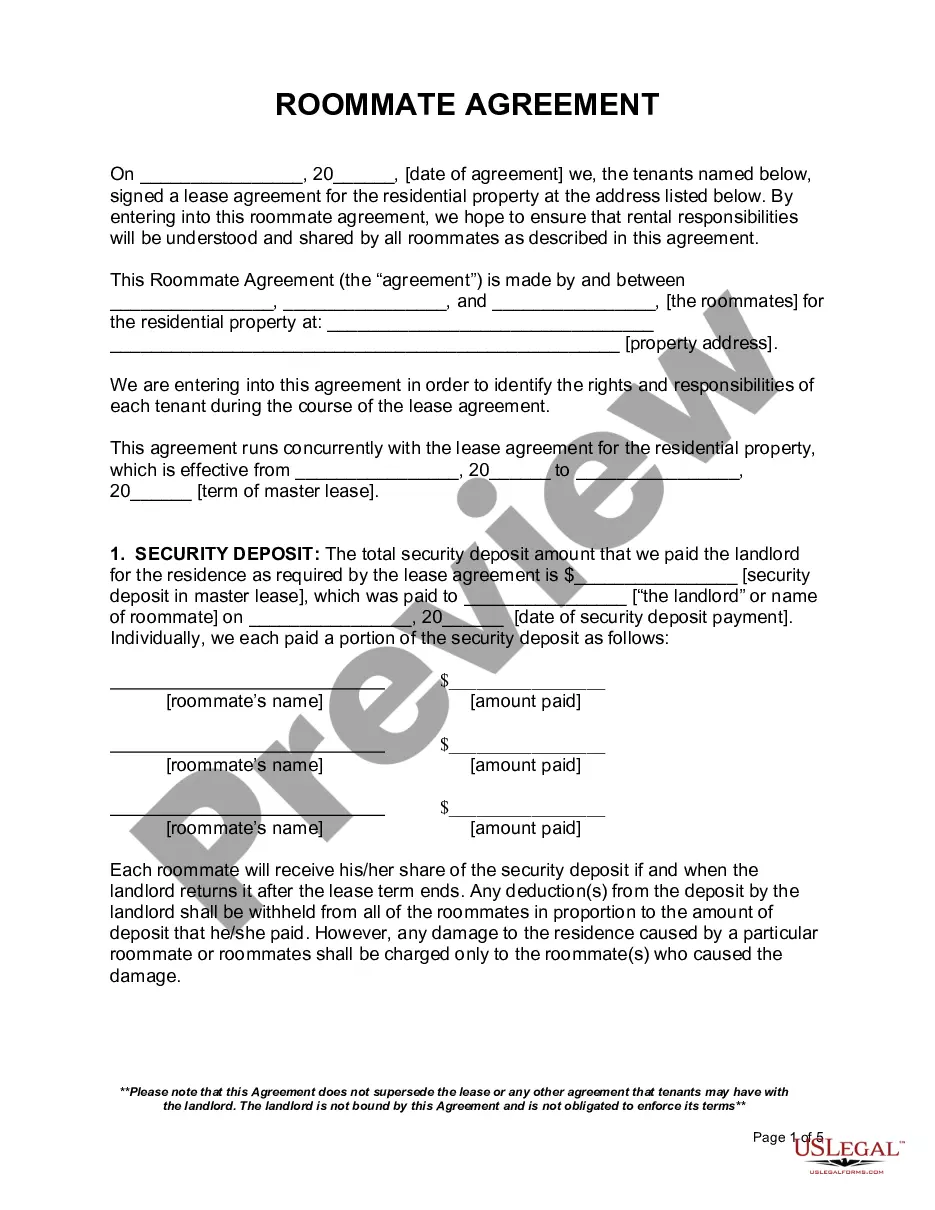
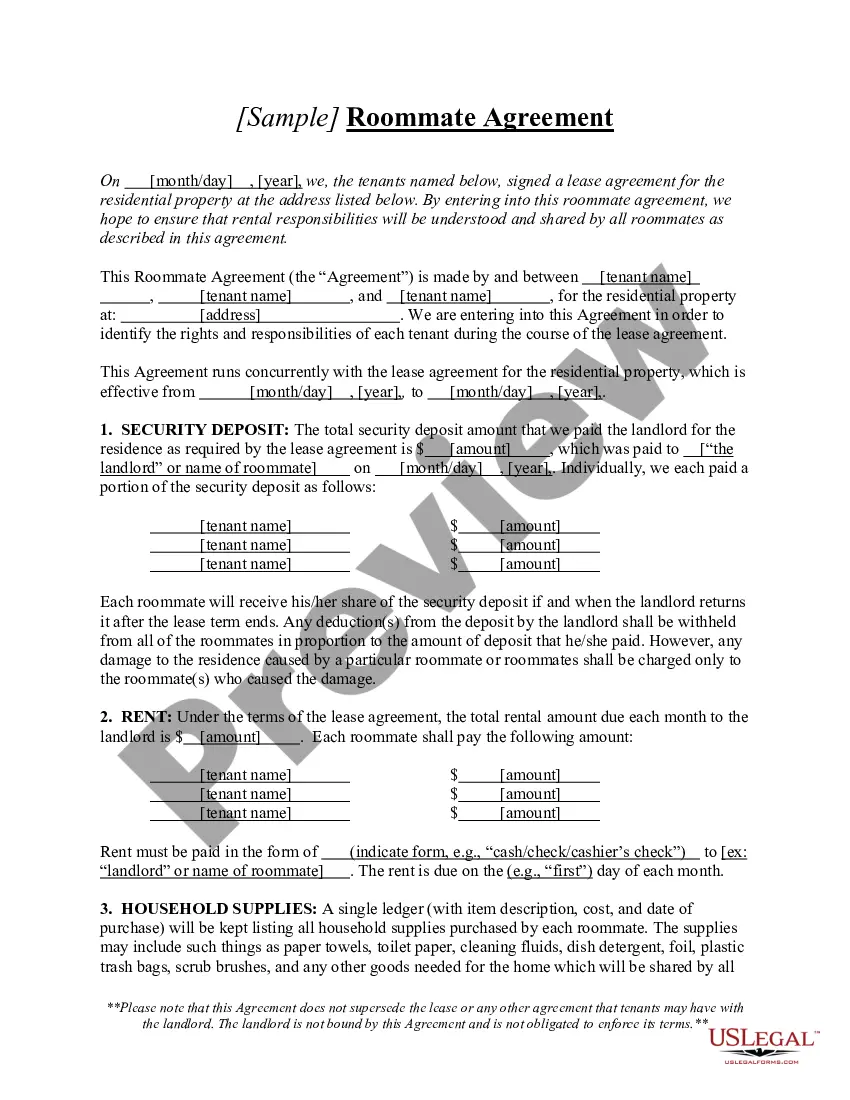
How to fill out Roommate Agreement For Homeowner?
You might spend multiple hours online looking for the legal document template that meets the federal and state requirements you need.
US Legal Forms offers a vast array of legal forms that are reviewed by professionals.
You can conveniently download or print the Virginia Roommate Agreement for Homeowner from the platform.
If available, use the Preview button to review the document template as well. If you wish to find an alternative version of the form, use the Search field to locate the template that suits your needs and specifications.
- If you already have a US Legal Forms account, you can Log In and click the Download button.
- Then, you can complete, modify, print, or sign the Virginia Roommate Agreement for Homeowner.
- Every legal document template you purchase is yours indefinitely.
- To obtain an additional copy of a purchased form, navigate to the My documents section and click the respective button.
- If you are using the US Legal Forms website for the first time, follow the straightforward instructions below.
- First, ensure that you have selected the correct document template for the county/region of your choice.
- Read the form description to verify that you have chosen the correct form.
Form popularity
FAQ
Reasonable expectations for roommates include mutual respect for privacy and personal space. Additionally, roommates should agree on quiet hours and how to handle shared expenses. Open communication is vital, as it helps address issues before they escalate. A well-defined Virginia Roommate Agreement for Homeowner can help set these expectations clearly from the start.
To create a legal Virginia Roommate Agreement for Homeowner, start by discussing key terms with your roommate. Then, document these terms in a written format, ensuring it includes essential details like payment schedules and shared responsibilities. You can use platforms like UsLegalForms to access templates that guide you through the process. Finally, both parties should sign the agreement to formalize it.
A Virginia Roommate Agreement for Homeowner clearly outlines the responsibilities of each roommate. This includes details about rent, utilities, and shared household chores. Furthermore, it promotes open communication to prevent conflicts. By having these expectations in writing, you can create a harmonious living environment.
In Virginia, a guest can potentially be considered a tenant if they stay for an extended period, typically over 30 days. To avoid confusion, it is wise to have an agreement in place, such as a Virginia Roommate Agreement for Homeowner, which outlines the terms of residency. This proactive measure helps you define and manage the length of stay for guests. Always refer to local laws to understand your rights in these situations.
Your partner can live with you without being on the lease in Virginia, but it's advisable to keep the landlord informed. Creating a Virginia Roommate Agreement for Homeowner would benefit both parties by clearly stating shared responsibilities and expectations. This agreement helps avoid misunderstandings and provides a framework should any issues arise later. Communication is key to a successful living arrangement.
Yes, someone can reside with you in Virginia without being on the lease, but it is important that you communicate with the landlord if required. To foster a positive arrangement, consider creating a Virginia Roommate Agreement for Homeowner. This document can outline living arrangements, responsibilities, and other important aspects. Maintaining transparency with all parties involved promotes a better living situation.
In Virginia, if someone is not listed on the lease, the homeowner may have the right to remove them. However, it is crucial to follow legal procedures to avoid complications. A Virginia Roommate Agreement for Homeowner can serve as an additional support system in this situation, highlighting the rules of residency. Always consult local laws or a legal professional to ensure you act within your rights.
Writing a roommate rental agreement begins with defining the key terms, including rent, utilities, and shared responsibilities. You can utilize templates available through platforms like uslegalforms to streamline the process and ensure you cover necessary details. By creating a Virginia Roommate Agreement for Homeowner, you establish clear guidelines, which helps in minimizing future misunderstandings. Be sure to have all parties review and sign the document for it to be effective.
Yes, you can live with someone who is on the tenancy without being directly listed on the lease. However, it is advisable to have a Virginia Roommate Agreement for Homeowner to outline responsibilities and expectations. This kind of agreement helps prevent disputes and clarifies each person’s obligations. Ultimately, it's a practical step to ensure a harmonious living environment.
While notarization isn't always required for a Virginia Roommate Agreement for Homeowner to be valid, doing so adds an extra layer of security. Notarization helps verify identities and ensures that both parties understand the terms they are agreeing to. If your agreement involves significant responsibilities or liabilities, consider this option. US Legal Forms offers resources and guidance for creating agreements that can be easily notarized.