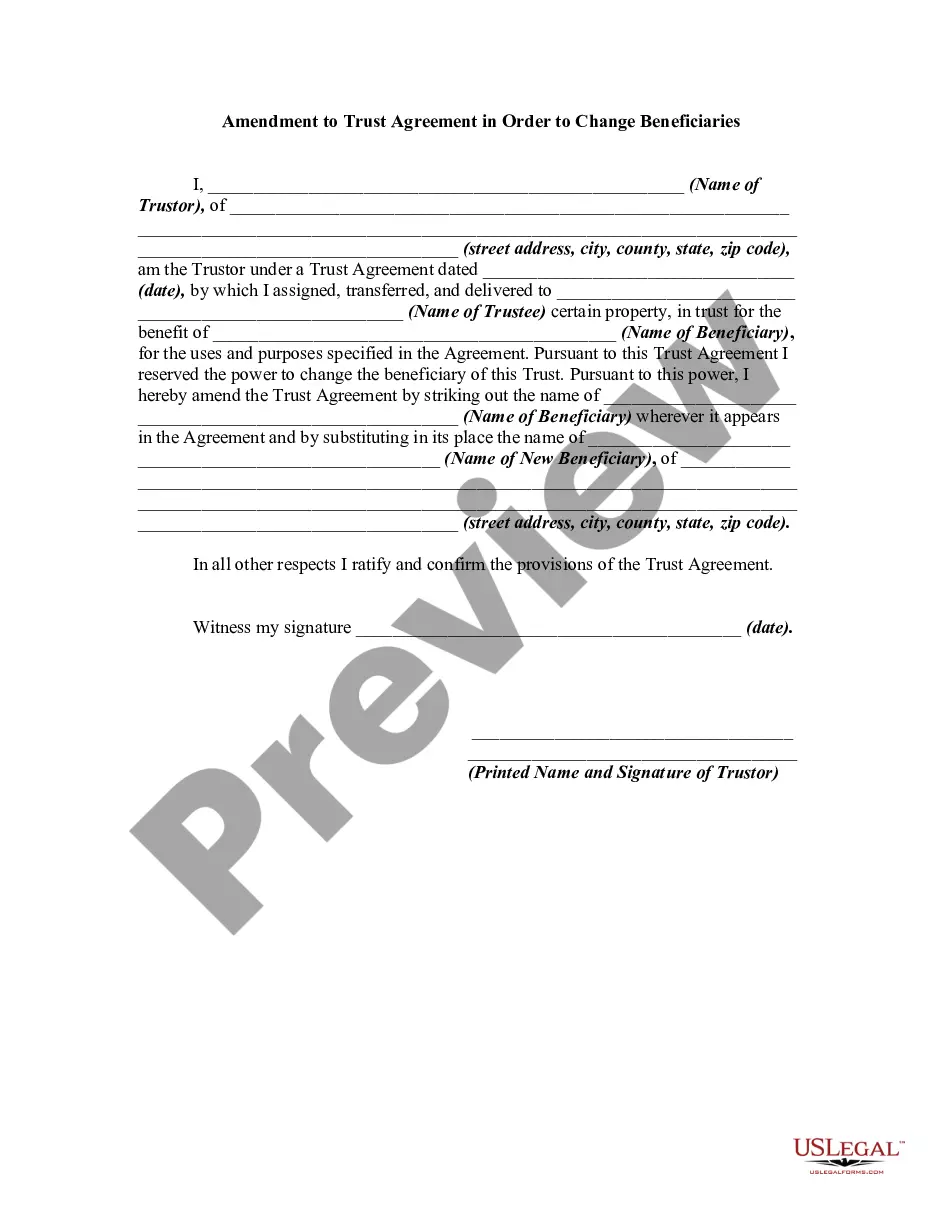
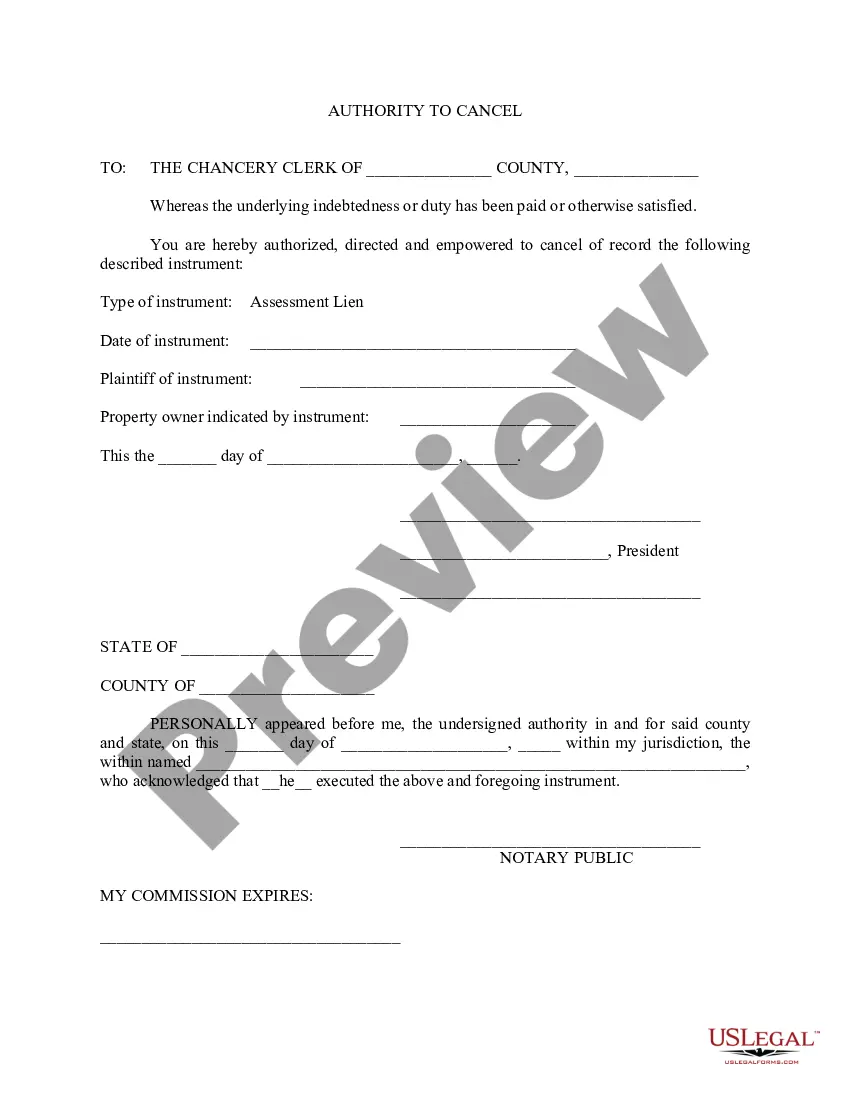
This form is a model Authority to Cancell Lien. Lienholder files with court certifying that indebtedness has been satisfied and lien should be cancelled. Adapt to fit your specific facts and circumstances.
Virginia Authority to Cancel
Category:
State:
Multi-State
Control #:
US-00170
Format:
Word;
Rich Text
Instant download
Description

Get your form ready online
Our built-in tools help you complete, sign, share, and store your documents in one place.
Built-in online Word editor
Make edits, fill in missing information, and update formatting in US Legal Forms—just like you would in MS Word.
Export easily
Download a copy, print it, send it by email, or mail it via USPS—whatever works best for your next step.
E-sign your document
Sign and collect signatures with our SignNow integration. Send to multiple recipients, set reminders, and more. Go Premium to unlock E-Sign.
Notarize online 24/7
If this form requires notarization, complete it online through a secure video call—no need to meet a notary in person or wait for an appointment.
Store your document securely
We protect your documents and personal data by following strict security and privacy standards.

Make edits, fill in missing information, and update formatting in US Legal Forms—just like you would in MS Word.

Download a copy, print it, send it by email, or mail it via USPS—whatever works best for your next step.

Sign and collect signatures with our SignNow integration. Send to multiple recipients, set reminders, and more. Go Premium to unlock E-Sign.

If this form requires notarization, complete it online through a secure video call—no need to meet a notary in person or wait for an appointment.

We protect your documents and personal data by following strict security and privacy standards.
Looking for another form?



How to fill out Authority To Cancel?
You can devote hours online searching for the legal document template that meets the federal and state regulations you need.
US Legal Forms offers a vast array of legal documents that are validated by professionals.
You can easily download or print the Virginia Authority to Cancel from the platform.
If available, use the Preview feature to review the document template as well.
- If you possess a US Legal Forms account, you may Log In and click the Obtain button.
- Subsequently, you can complete, modify, print, or sign the Virginia Authority to Cancel.
- Every legal document template you acquire is yours permanently.
- To receive another copy of a purchased document, navigate to the My documents section and select the corresponding option.
- If this is your first time using the US Legal Forms website, follow the simple instructions provided below.
- First, ensure you have selected the appropriate document format for the county/city of your choice.
- Review the document description to confirm you have chosen the correct form.
Form popularity
FAQ
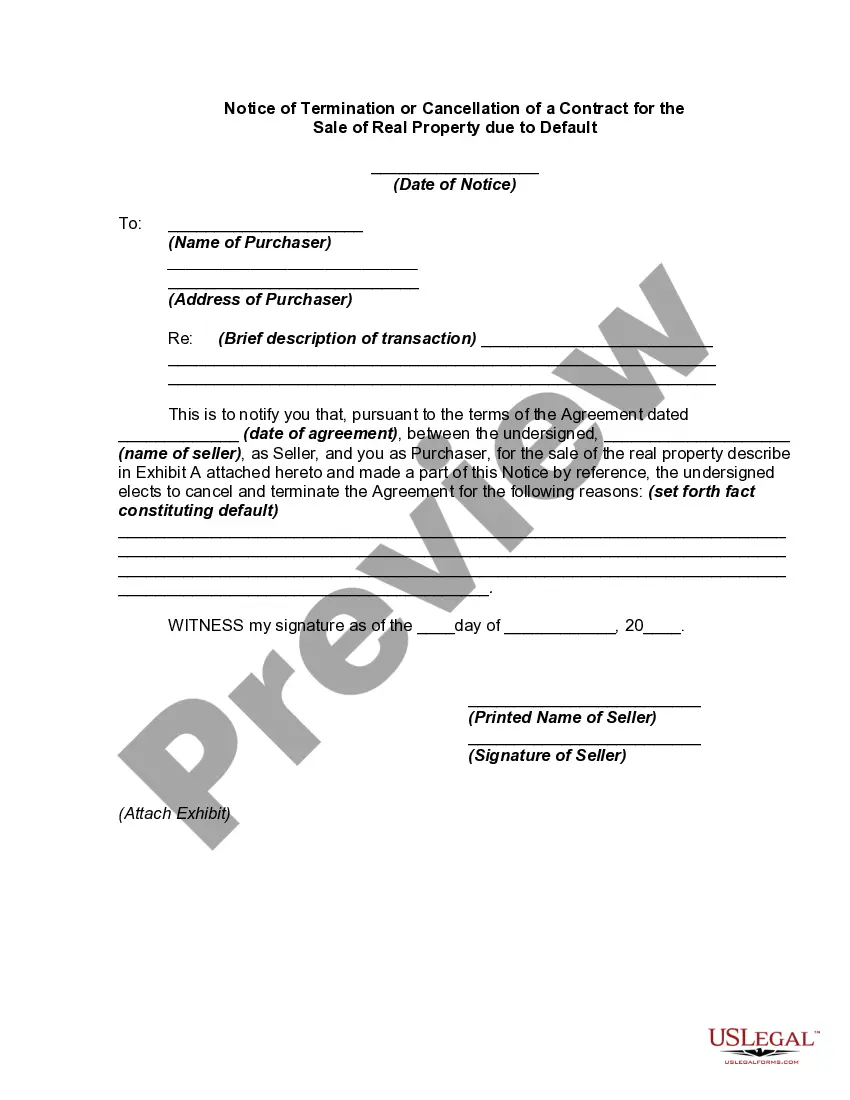
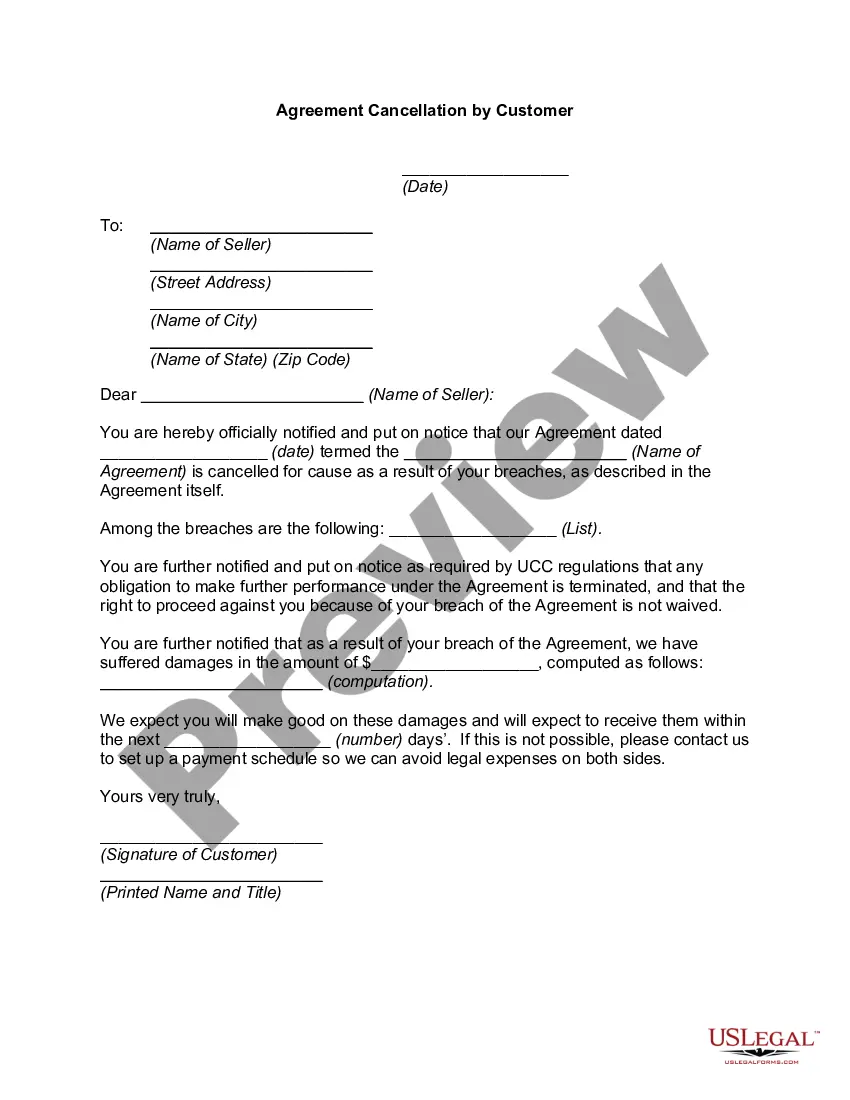
Under normal circumstances, if your purchase wasn't made in a retail establishment, you can use buyer's remorse, otherwise known as a right of rescission, to get out of the contract.
You may cancel this contract, without any penalty or obligation, at any time prior to midnight of the third business day after the date the contract is signed. If you cancel, any payment made by you under this contract will be returned within ten days following receipt by the seller of your cancellation notice.
Check State Laws. Many states, like California, grant consumers a statutory "cooling off" period, typically three to five days, during which a consumer can cancel a contract for any reason by sending the seller a written cancellation notice.
Closing formally takes place a few weeks after the buyer's offer is accepted; the seller transfers ownership on the closing date. Though it's rare, the buyer can still back out until the closing process is complete.
Buyers can cancel the contract for any reason (or for no reason at all) during the home inspection period, or buyers are free to negotiate repairs with the seller. The only exception is the radon inspection.
You may cancel this contract, without any penalty or obligation, at any time prior to midnight of the third business day after the date the contract is signed. If you cancel, any payment made by you under this contract will be returned within ten days following receipt by the seller of your cancellation notice.
The purchaser may cancel the contract (i) within three days, or up to seven days if extended by the ratified real estate contract, after the date of the contract if, on or before the date that the purchaser signs the contract, the purchaser receives the association disclosure packet, is notified that the association
Under normal circumstances, if your purchase wasn't made in a retail establishment, you can use buyer's remorse, otherwise known as a right of rescission, to get out of the contract.
Can you back out of an accepted offer? The short answer: yes. When you sign a purchase agreement for real estate, you're legally bound to the contract terms, and you'll give the seller an upfront deposit called earnest money.