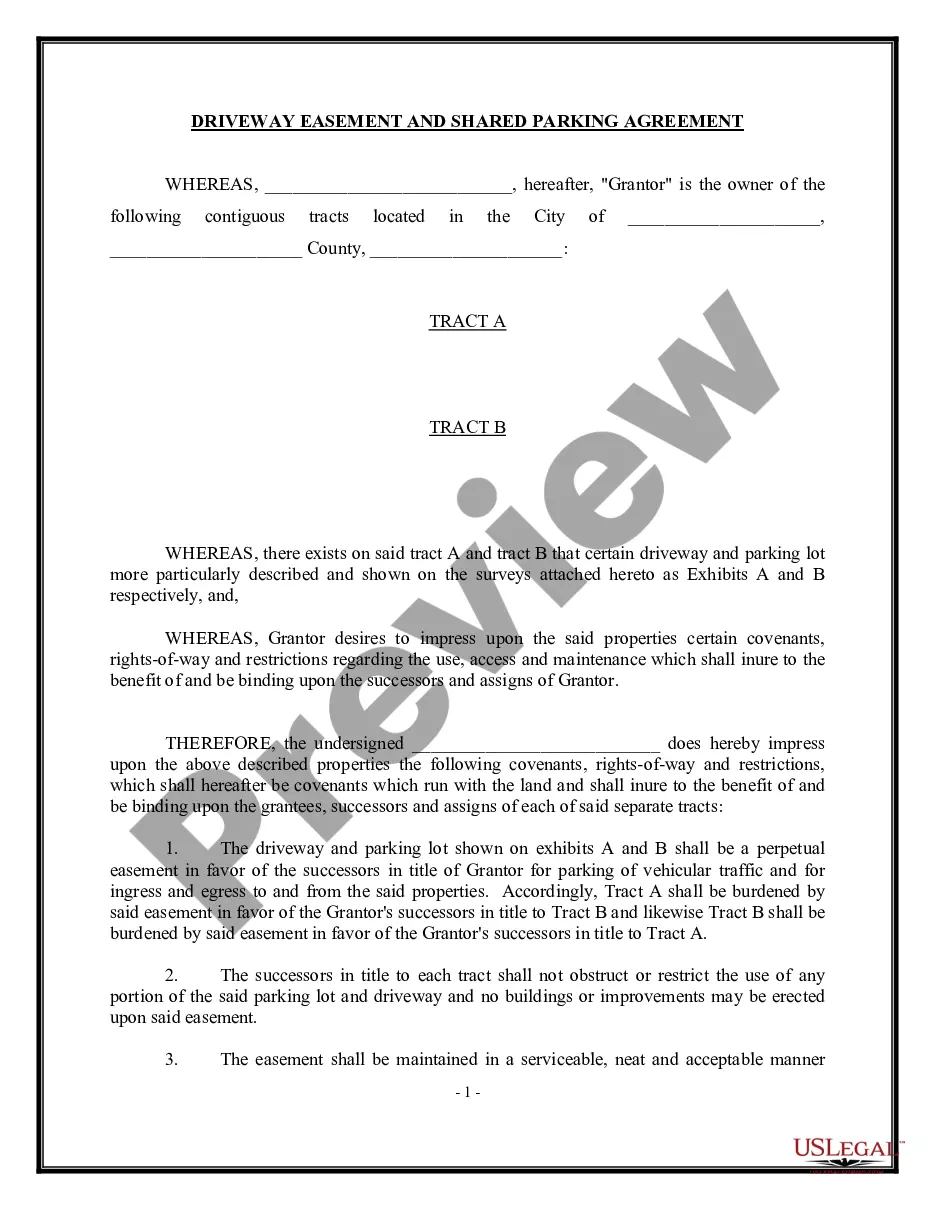
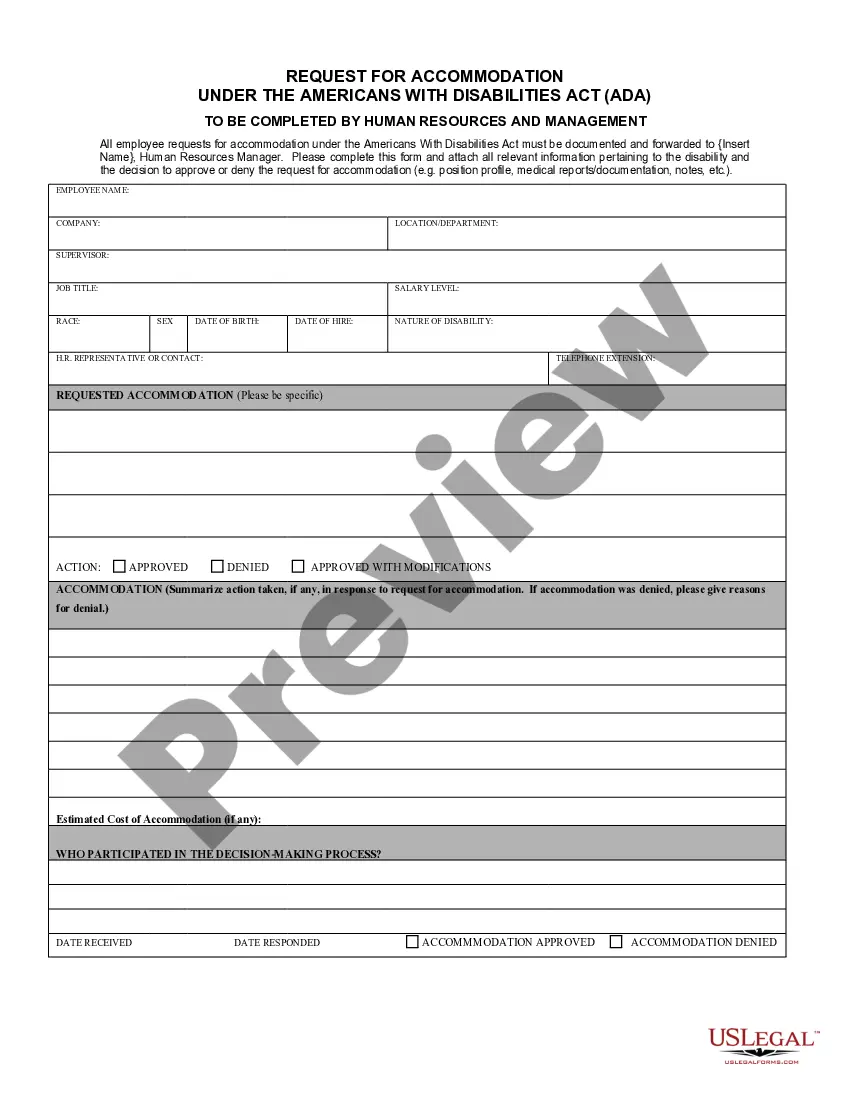
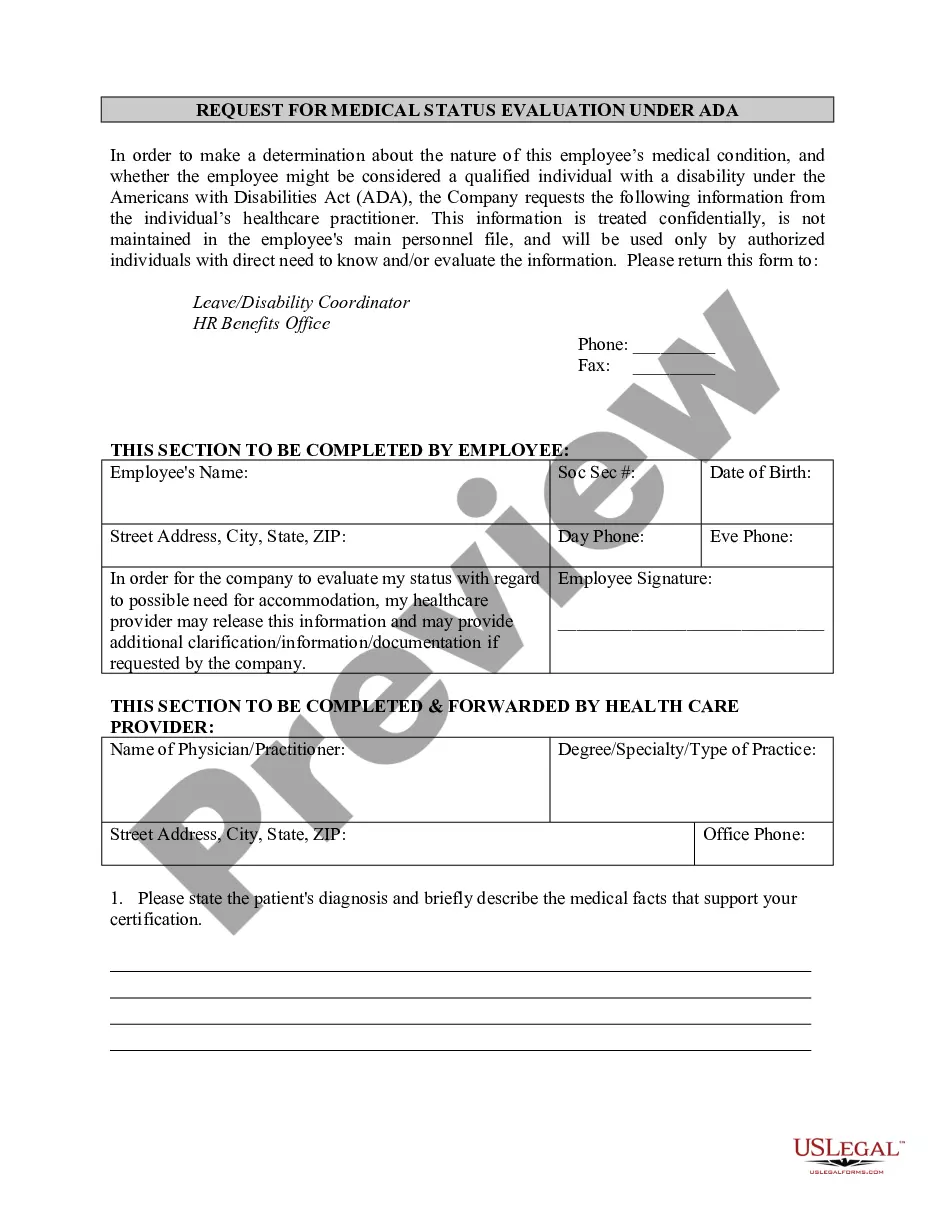
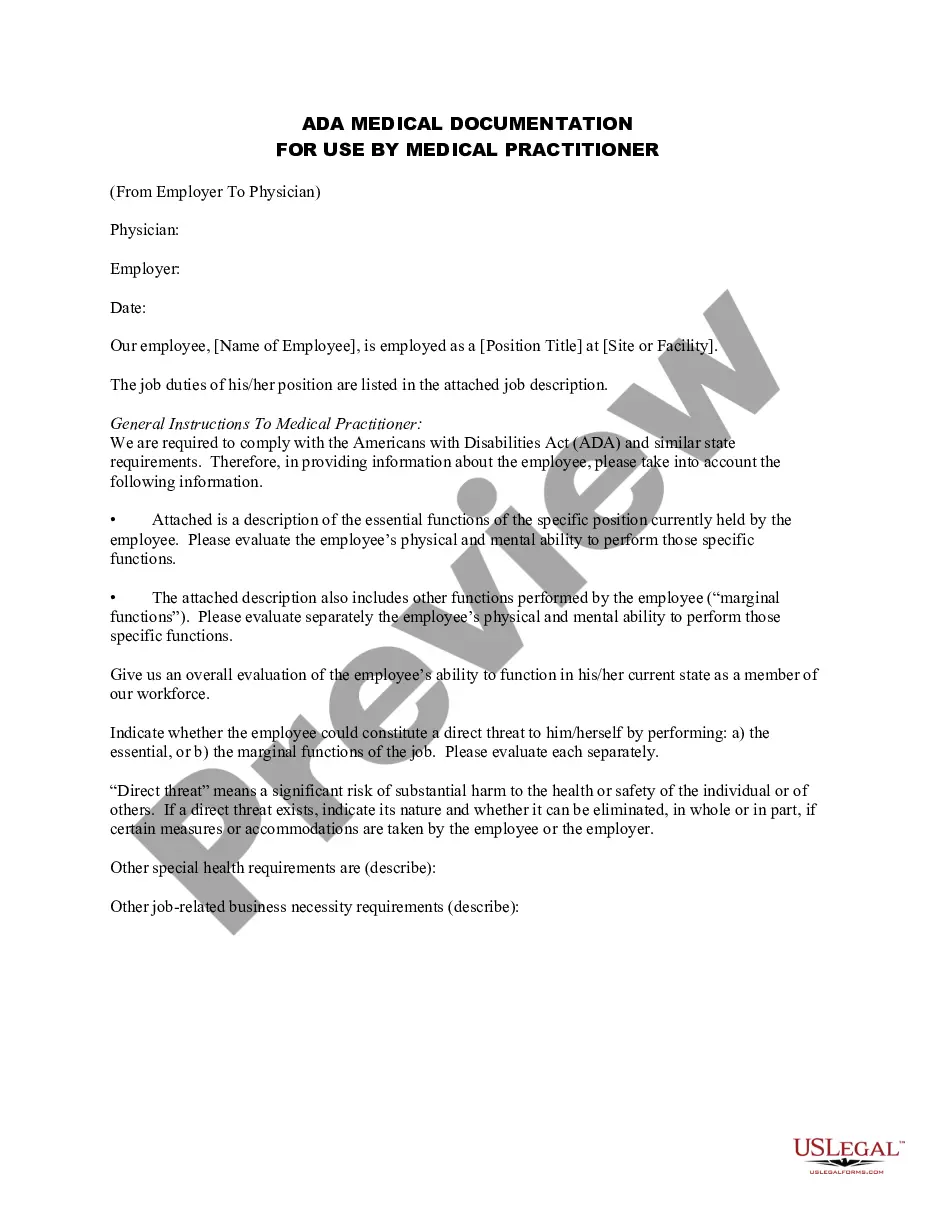
Utah Response Form for ADA Request from Medical Practitioner
Description
Get your form ready online
Our built-in tools help you complete, sign, share, and store your documents in one place.
Make edits, fill in missing information, and update formatting in US Legal Forms—just like you would in MS Word.
Download a copy, print it, send it by email, or mail it via USPS—whatever works best for your next step.
Sign and collect signatures with our SignNow integration. Send to multiple recipients, set reminders, and more. Go Premium to unlock E-Sign.
If this form requires notarization, complete it online through a secure video call—no need to meet a notary in person or wait for an appointment.
We protect your documents and personal data by following strict security and privacy standards.

Make edits, fill in missing information, and update formatting in US Legal Forms—just like you would in MS Word.

Download a copy, print it, send it by email, or mail it via USPS—whatever works best for your next step.

Sign and collect signatures with our SignNow integration. Send to multiple recipients, set reminders, and more. Go Premium to unlock E-Sign.

If this form requires notarization, complete it online through a secure video call—no need to meet a notary in person or wait for an appointment.

We protect your documents and personal data by following strict security and privacy standards.
Looking for another form?



How to fill out Response Form For ADA Request From Medical Practitioner?
Finding the correct valid document template can be challenging.
Of course, there are numerous templates accessible online, but how do you find the specific one you need? Utilize the US Legal Forms website.
The platform offers a vast array of templates, including the Utah Response Form for ADA Request from Medical Practitioner, which can be utilized for business and personal purposes.
- All of the forms are reviewed by professionals and comply with state and federal regulations.
- If you are already registered, Log In to your account and click on the Download button to get the Utah Response Form for ADA Request from Medical Practitioner.
- Use your account to search for the legal forms you have previously purchased.
- Go to the My documents section of your account and retrieve another copy of the document you need.
- If you are a new user of US Legal Forms, here are some simple instructions to follow.
- Firstly, ensure you have selected the correct form for your region/area. You can review the form using the Preview option and read the form details to confirm it is the right one for you.
Form popularity
FAQ
The Americans with Disabilities Act (ADA) prohibits discrimination against people with disabilities in several areas, including employment, transportation, public accommodations, communications and access to state and local government' programs and services.
However, if an employee refuses to discuss his or her disability or the need for accommodation, the Equal Employment Opportunity Commission (EEOC) guidance indicates that employers cannot force employees to request or accept accommodations and employers must treat an employee with a disability the same as a non-
To be protected under the ADA, an individual must have a physical or mental impairment that substantially limits one or more major life activities, a record of such an impairment; or being regarded as having a substantial impairment.
When denying a requested accommodation, the agency must consider available alternative accommodations that would be reasonable and effective and would not constitute an undue hardship or direct threat.
According to the EEOC, there is no specific amount of time that employers have to respond to an accommodation request, but they should respond as quickly as possible. Unnecessary delays in responding or implementing an accommodation can result in a violation of the ADA.
The ADA requires employers to treat any medical information obtained from a disability-related inquiry or medical examination (including medical information from voluntary health or wellness programs (9)), as well as any medical information voluntarily disclosed by an employee, as a confidential medical record.
The ADA does not name all of the impairments that are covered, but common examples of disabilities include wheelchair confinement, blindness, deafness, learning disabilities, and certain kinds of mental illness.
What is an unreasonable accommodation?Eliminating a primary job responsibility.Lowering production standards applied to other employees.Providing more paid leave to an employee with a disability than provided to other employees.Changing an employee's supervisor.More items...
There are various reasons why an employer may choose to deny an accommodation request made under the ADA. It is possible that by asking about your employer's reasons, you might be empowered to change the outcome of the situation.
This questionnaire is part of an interactive process that is necessary in order to determine if your patient (our employee) has a disability recognized under the Americans With Disabilities Act, and, if so, what, if any, reasonable accommodation(s) are necessary and can be made that would enable your patient to perform