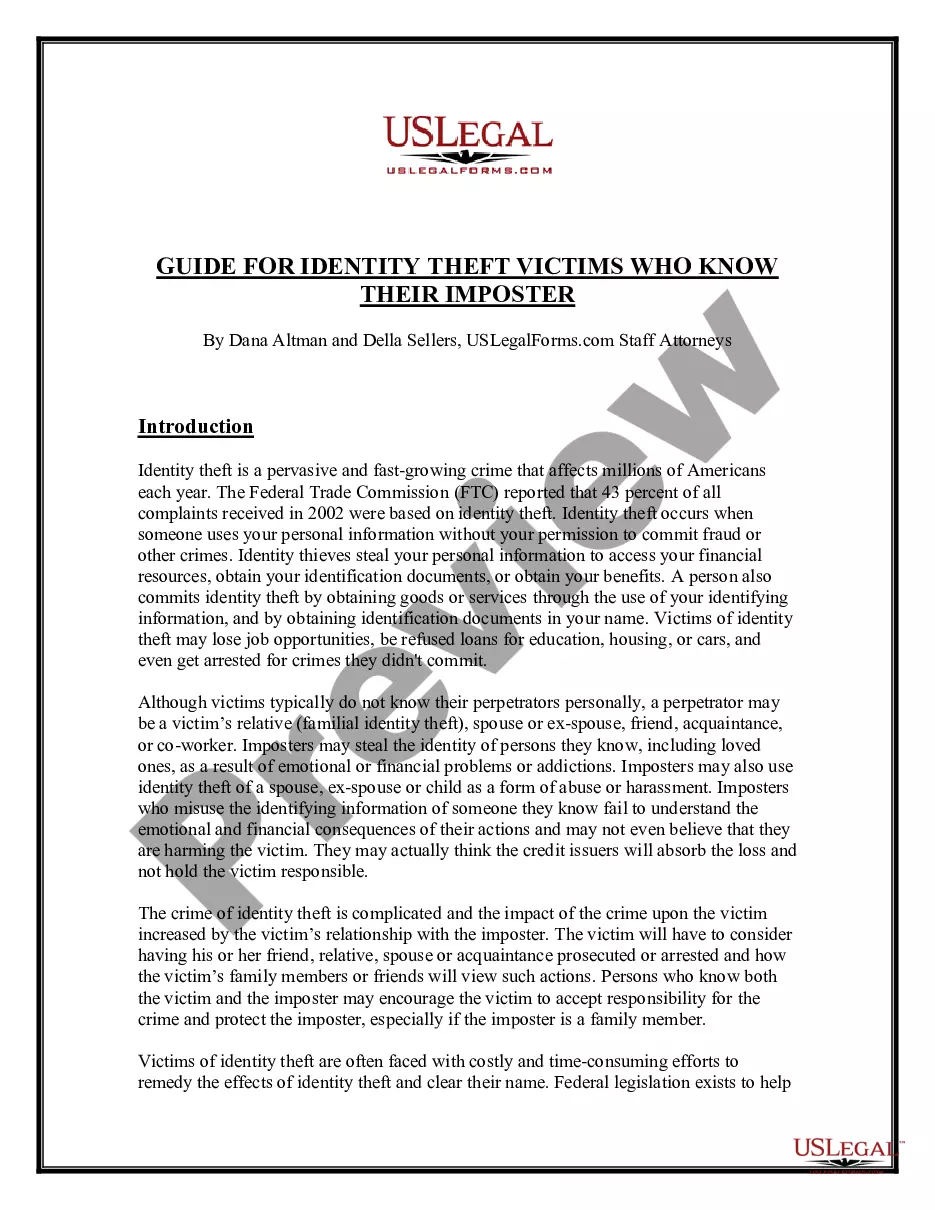
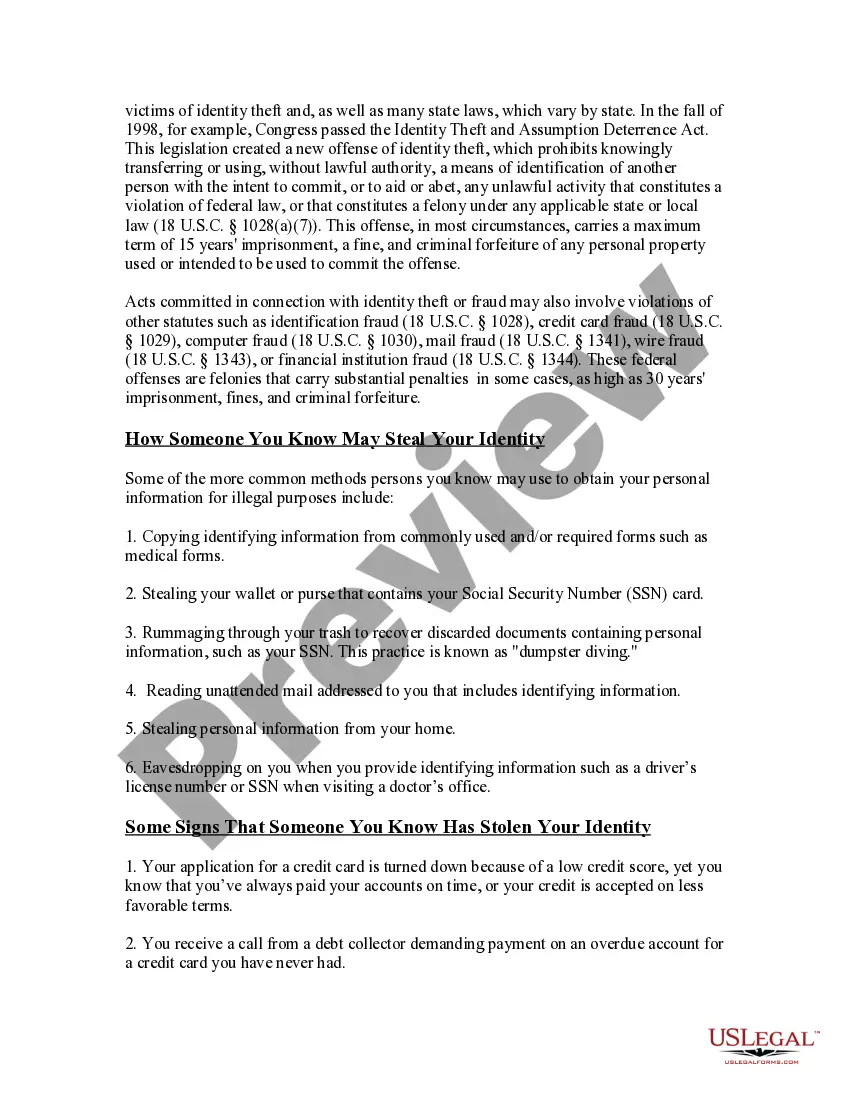
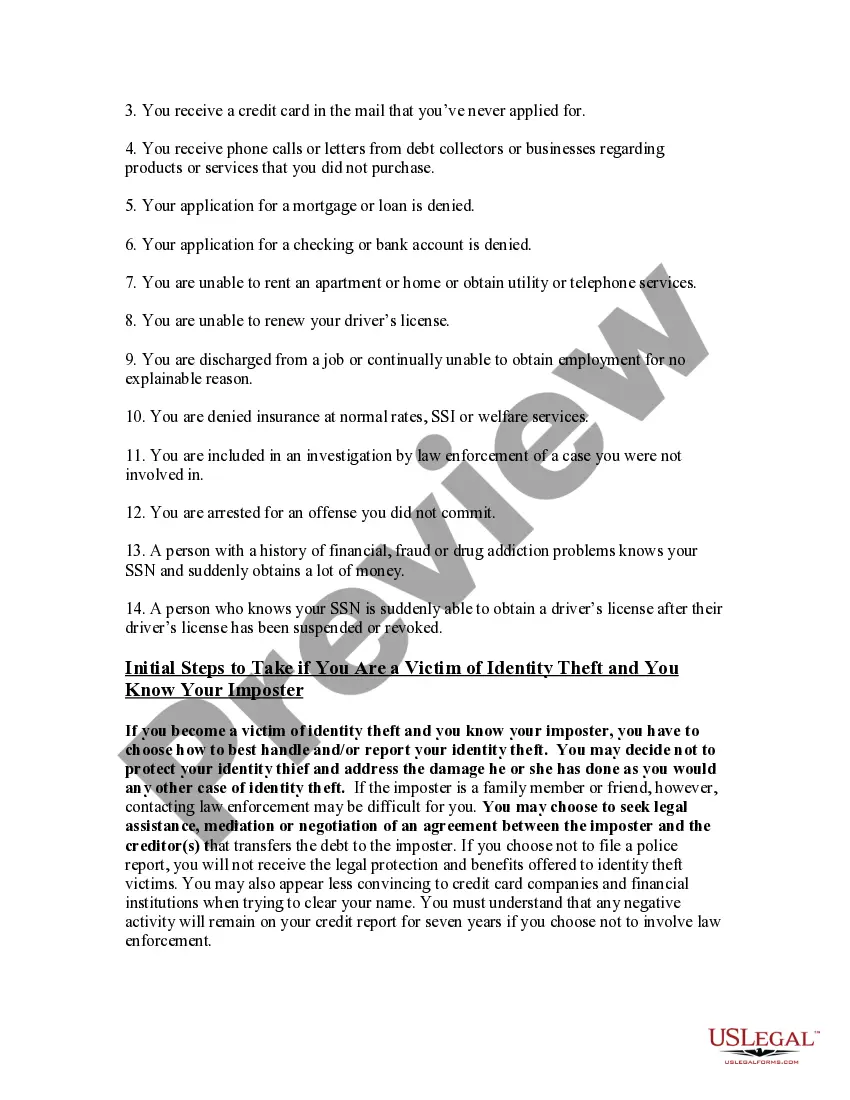
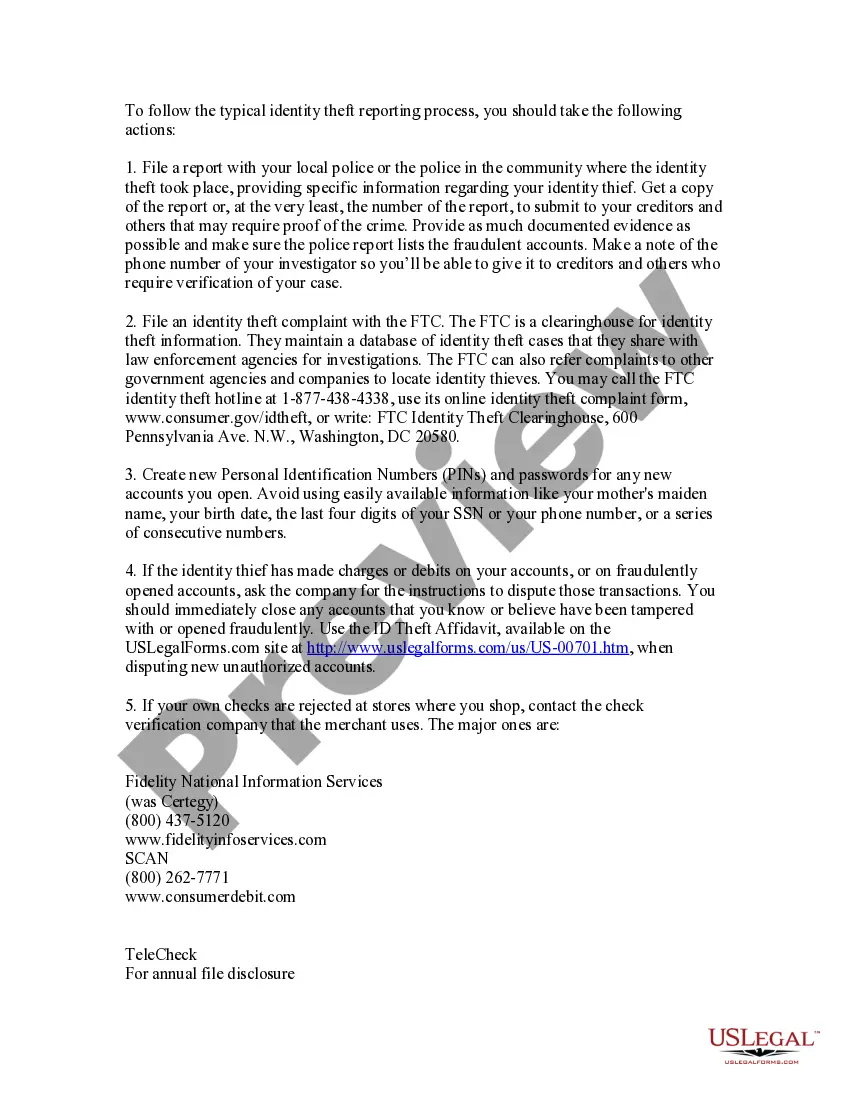
Utah Guide for Identity Theft Victims Who Know Their Imposter
Description
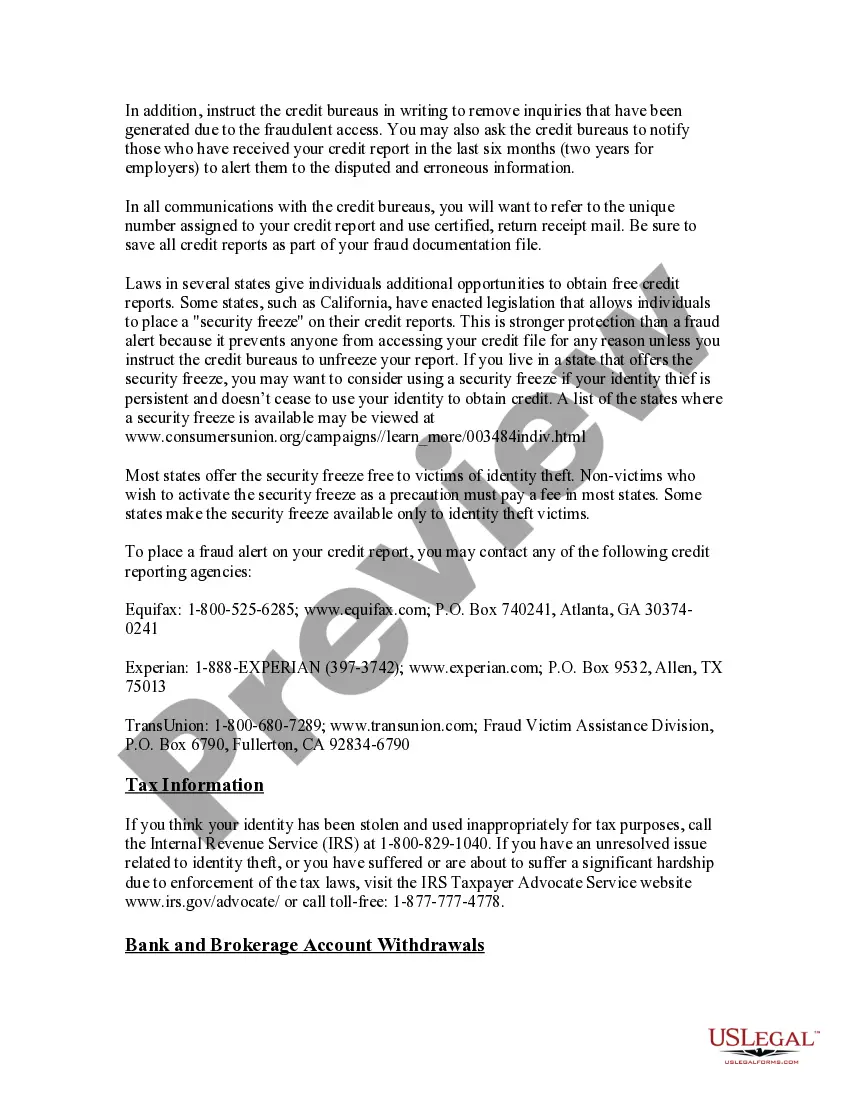
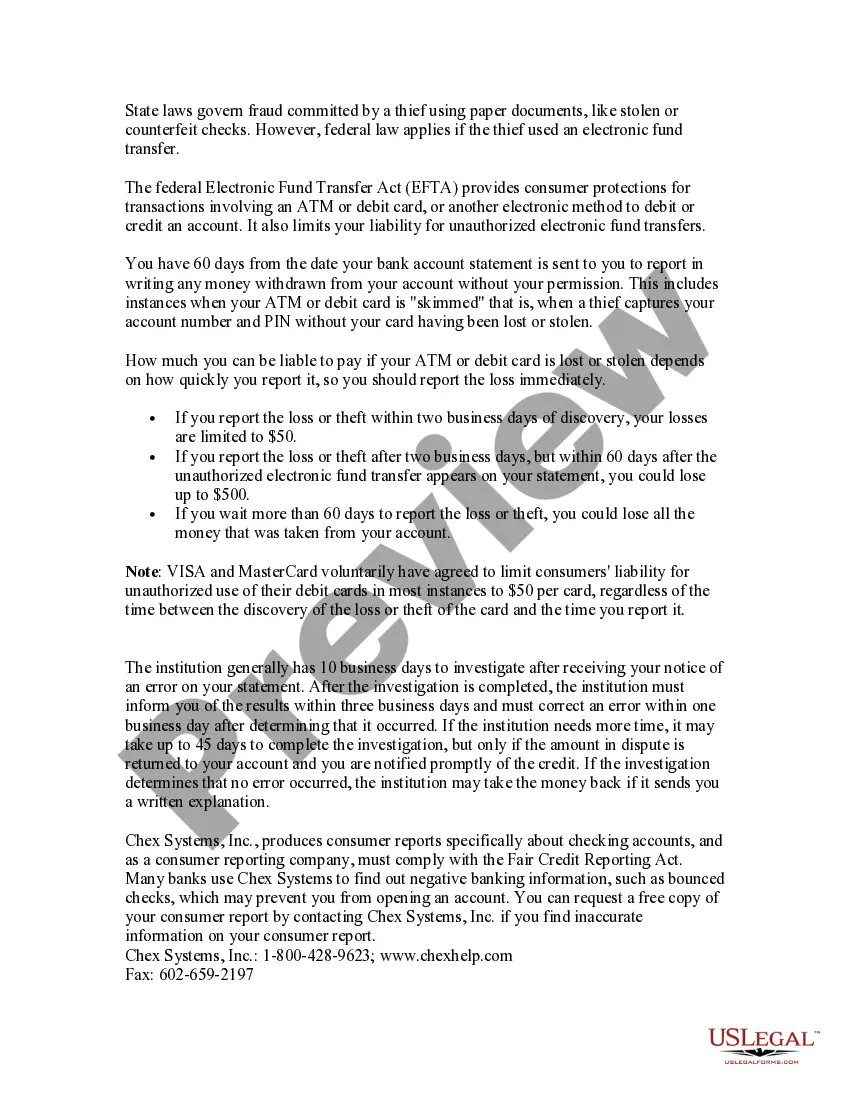

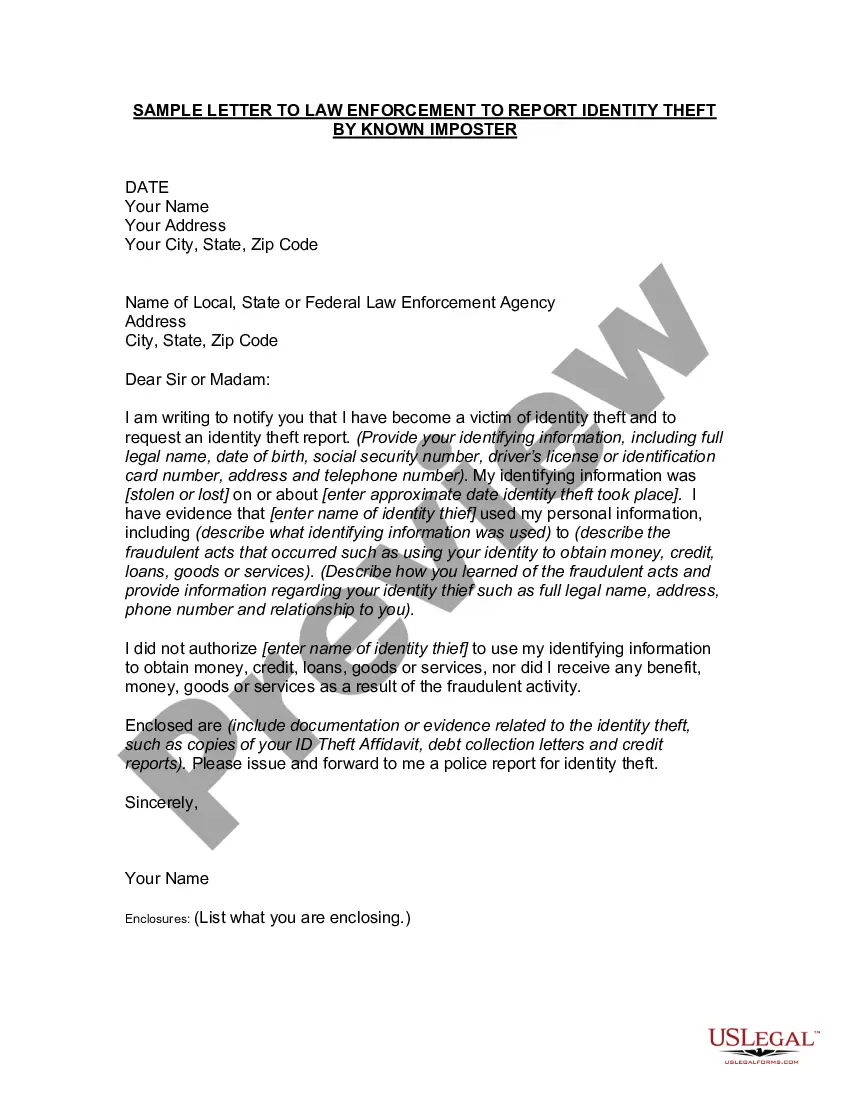
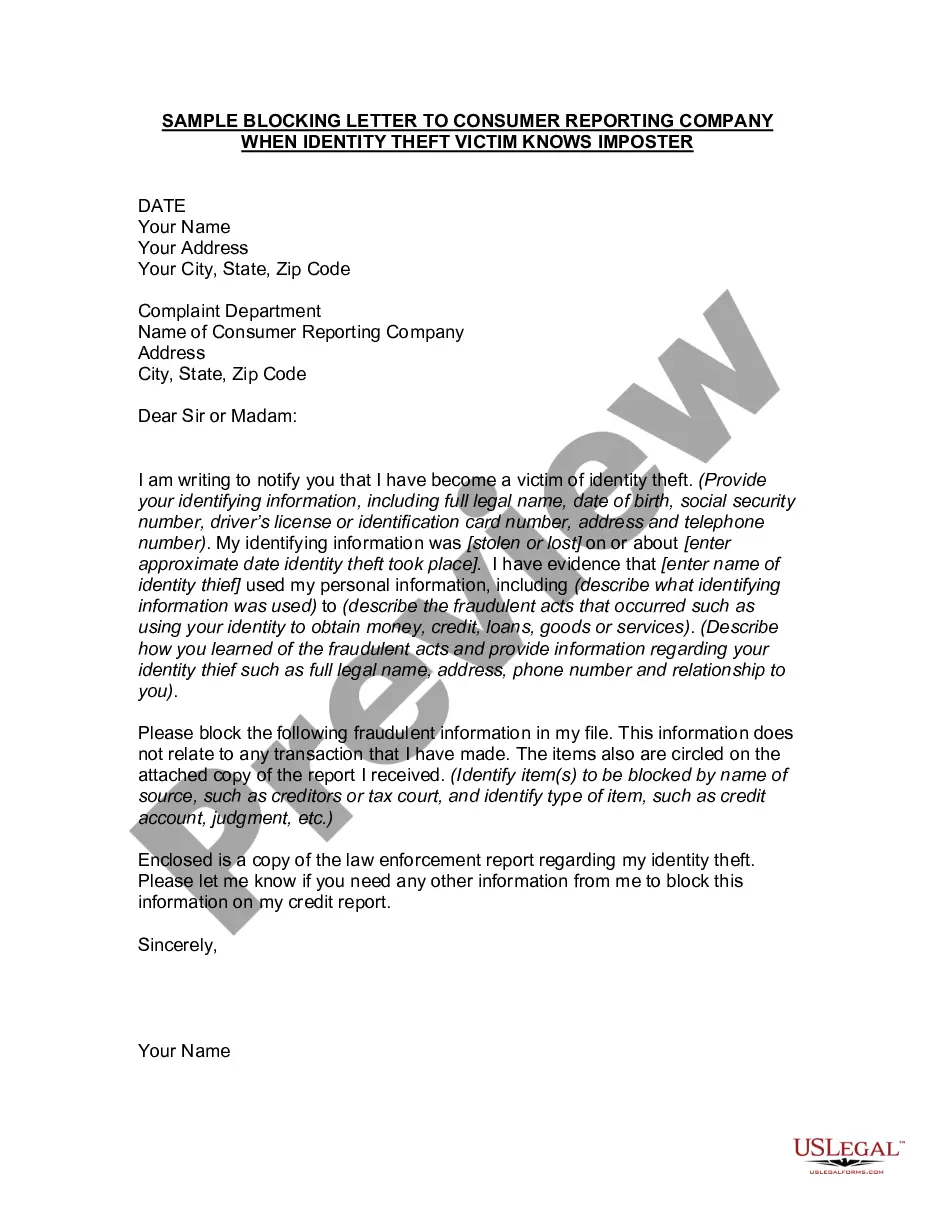
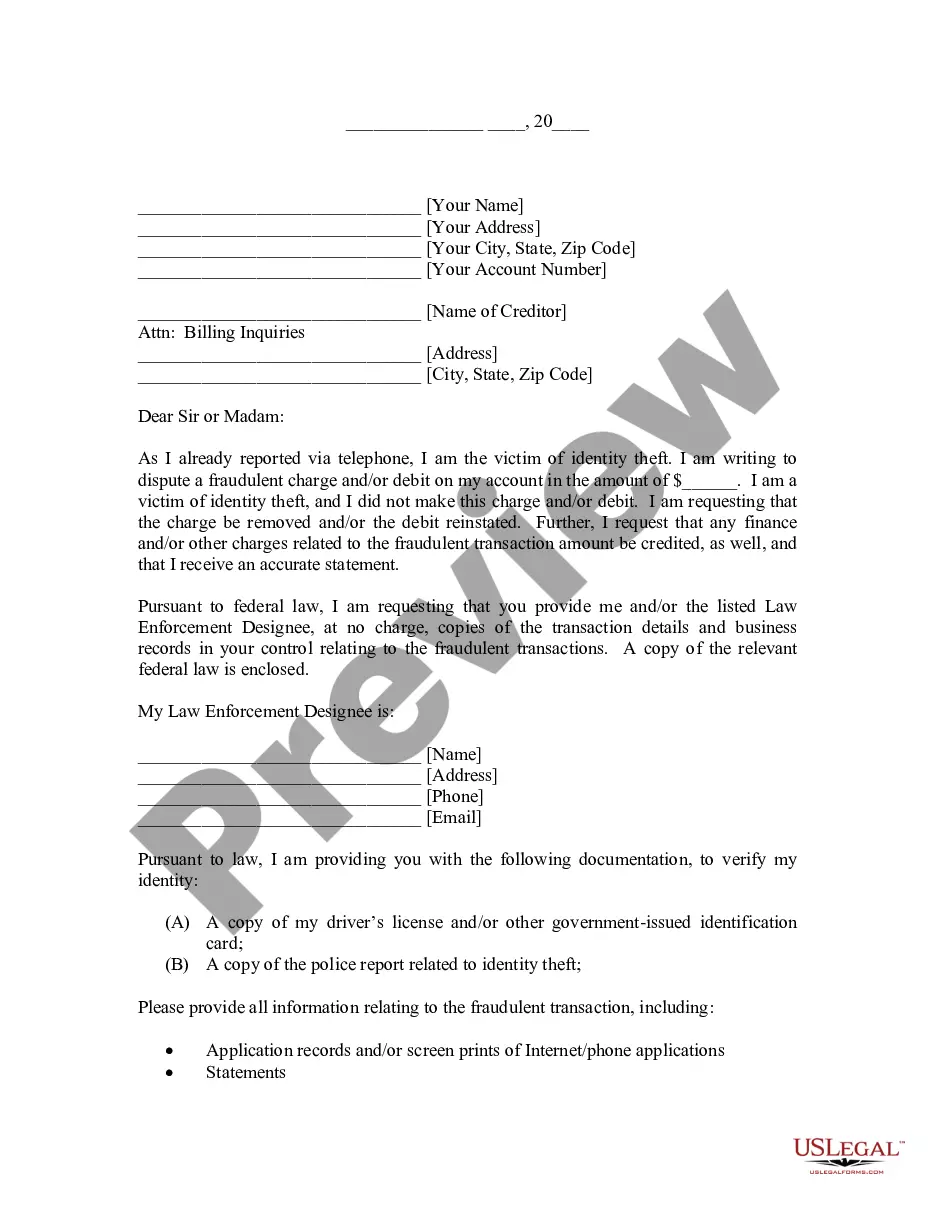
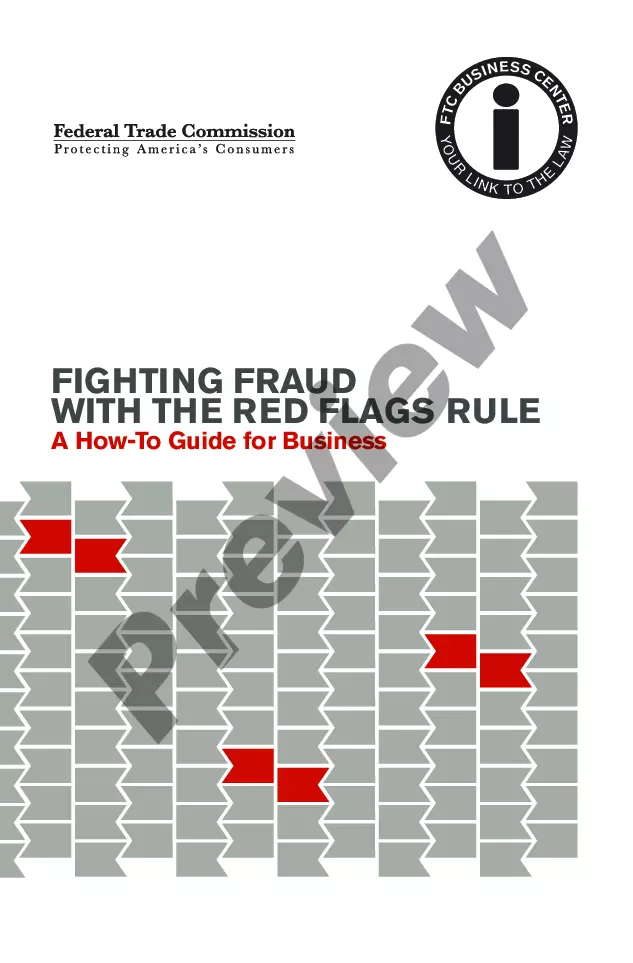
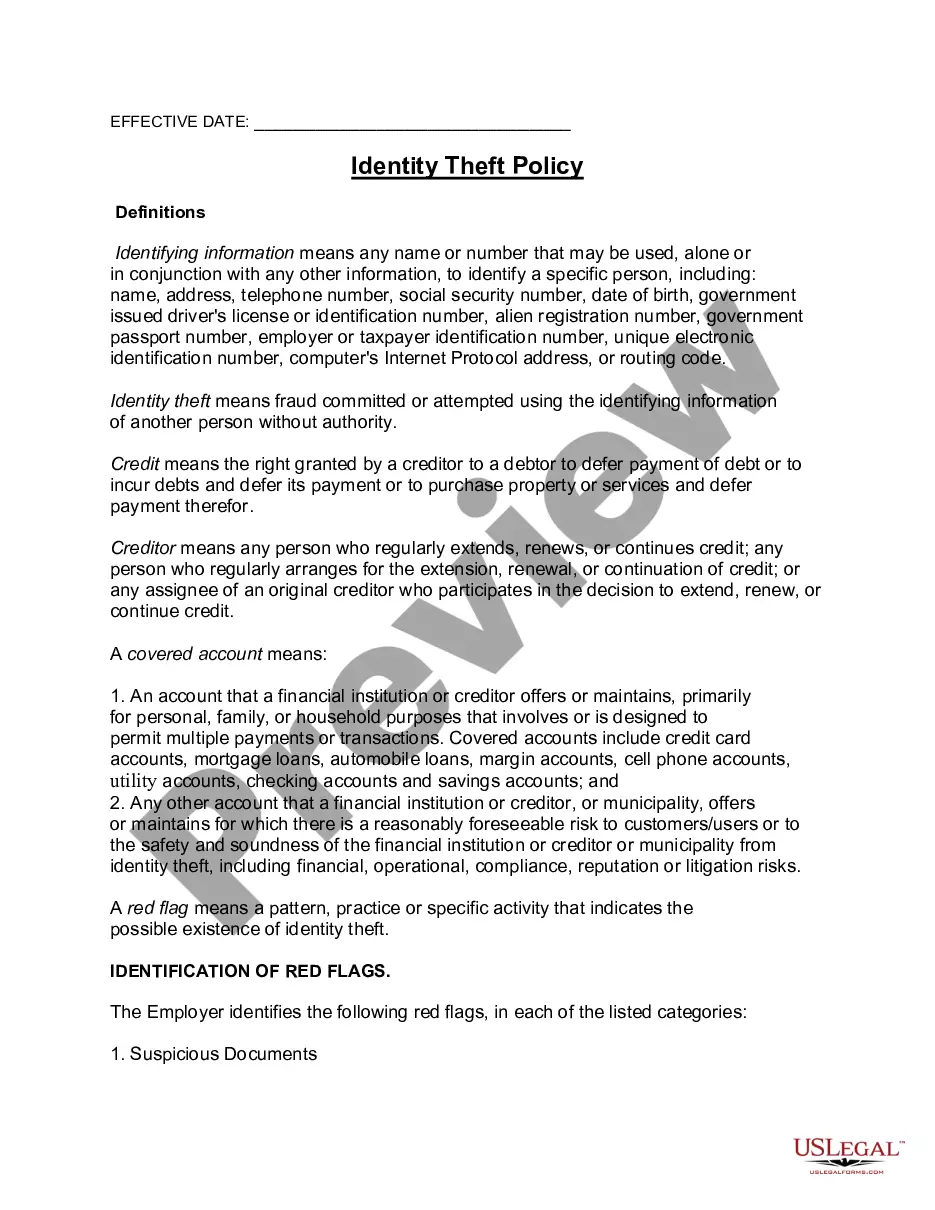
Get your form ready online
Our built-in tools help you complete, sign, share, and store your documents in one place.
Make edits, fill in missing information, and update formatting in US Legal Forms—just like you would in MS Word.
Download a copy, print it, send it by email, or mail it via USPS—whatever works best for your next step.
Sign and collect signatures with our SignNow integration. Send to multiple recipients, set reminders, and more. Go Premium to unlock E-Sign.
If this form requires notarization, complete it online through a secure video call—no need to meet a notary in person or wait for an appointment.
We protect your documents and personal data by following strict security and privacy standards.

Make edits, fill in missing information, and update formatting in US Legal Forms—just like you would in MS Word.

Download a copy, print it, send it by email, or mail it via USPS—whatever works best for your next step.

Sign and collect signatures with our SignNow integration. Send to multiple recipients, set reminders, and more. Go Premium to unlock E-Sign.

If this form requires notarization, complete it online through a secure video call—no need to meet a notary in person or wait for an appointment.

We protect your documents and personal data by following strict security and privacy standards.
Looking for another form?
How to fill out Guide For Identity Theft Victims Who Know Their Imposter?
US Legal Forms - one of the largest collections of legal documents in the United States - offers a wide variety of legal template documents that you can download or print. By using the website, you can access numerous forms for business and personal purposes, categorized by types, states, or keywords. You can find the latest versions of forms such as the Utah Guide for Identity Theft Victims Who Know Their Imposter in just a few minutes.
If you have a subscription, Log In and download the Utah Guide for Identity Theft Victims Who Know Their Imposter from the US Legal Forms library. The Download button will appear on every form you view. You can access all previously downloaded forms from the My documents tab in your account.
If you are using US Legal Forms for the first time, here are simple steps to get you started: Ensure you have selected the correct form for your area/region. Click the Review button to examine the form's content. Read the form description to confirm you have selected the correct one. If the form does not meet your requirements, use the Search field at the top of the screen to find one that does. When you are satisfied with the form, confirm your choice by clicking the Acquire now button. Then, select the pricing plan you prefer and provide your credentials to register for an account. Complete the transaction. Use your credit card or PayPal account to finalize the purchase. Choose the format and download the form to your device. Make adjustments. Fill out, modify, print, and sign the downloaded Utah Guide for Identity Theft Victims Who Know Their Imposter. Each template you added to your account has no expiration date and is yours indefinitely. Therefore, if you wish to download or print another copy, simply visit the My documents section and click on the form you need.
Access the Utah Guide for Identity Theft Victims Who Know Their Imposter with US Legal Forms, the most extensive collection of legal document templates. Utilize a multitude of professional and state-specific templates that fulfill your business or personal needs.
- US Legal Forms offers a vast library of legal documents.
- Easily download or print a variety of forms.
- Find the latest versions of important legal guides.
- Access previously downloaded forms easily.
- Simple steps for first-time users.
- No expiration date for downloaded templates.
Form popularity
FAQ
5 steps to take if you're a victim of credit card fraud Call your credit card company immediately. Check your credit card accounts and change your passwords. Notify the credit bureaus and call the police if necessary. Monitor your statements and credit reports. Check your online shopping accounts.
Steps for Victims of Identity Theft or Fraud Place a fraud alert on your credit report. Close out accounts that have been tampered with or opened fraudulently. Report the identity theft to the Federal Trade Commission. File a report with your local police department.
What to do. The Utah Attorney General's Office is responsible for investigating and prosecuting identity theft crimes in Utah. If you are a Utah victim of identity theft, visit the Attorney General's ID Theft Central website: .
Identity Theft Victim? Steps to Take Contact the company or companies where you believe the fraud occurred, and let them know you believe your identity may have been compromised. Check your credit reports. ... Consider placing an initial one-year fraud alert on your credit reports.
Warning signs of identity theft Bills for items you did not buy. Debt collection calls for accounts you did not open. Information on your credit report for accounts you did not open. Denials of loan applications. Mail stops coming to, or is missing from, your mailbox.
What should you do if you are a victim of identity theft or fraud? You should immediately notify the police, the bank, and the credit card holders.
Go to IdentityTheft.gov or call 1-877-438-4338. Based on information your enter, IdentityTheft.gov will create your Identity Theft Report and recovery plan. If your personal information was stolen, you might want to file an identity theft report with the police. Also, creditors might ask you to file a police report.
Penalties for an Identity Fraud Conviction in Utah If there is only financial damage less than $5,000, then a charge of identity fraud is a third degree felony. Under Utah law, a second degree felony is punishable by up to 15 years in prison and a $10,000 fine plus an additional 90% surcharge.