Utah Plumbing Contract for Contractor
What is this form?
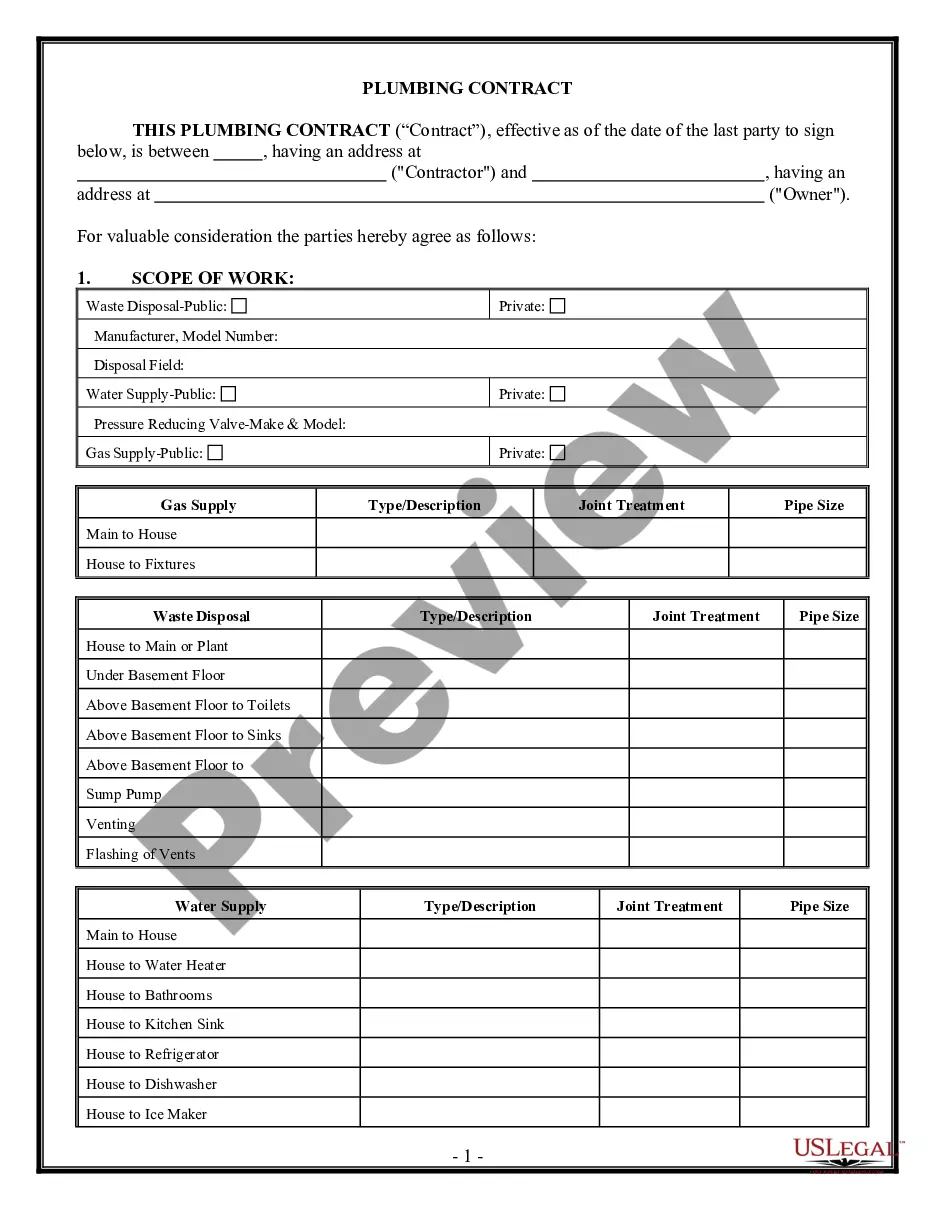
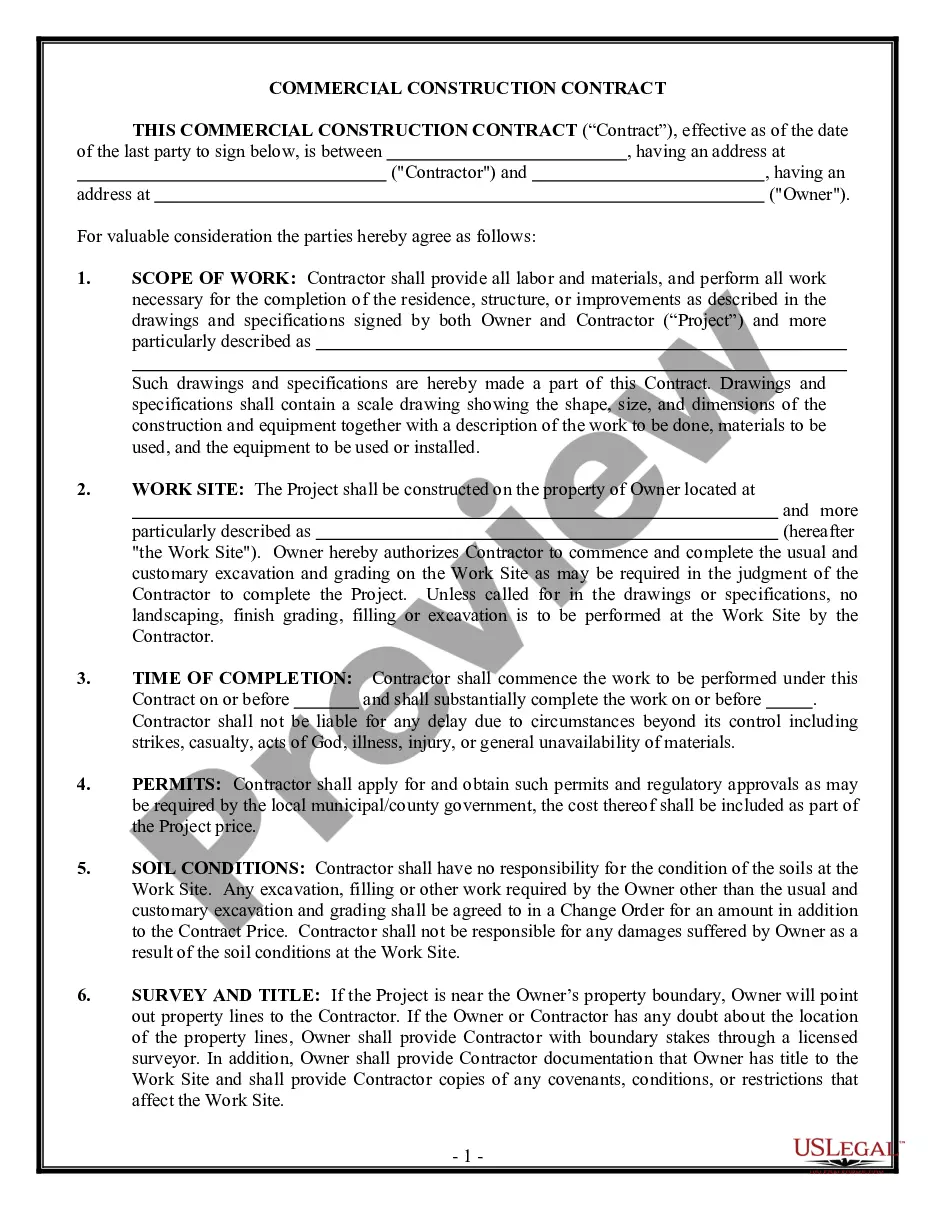
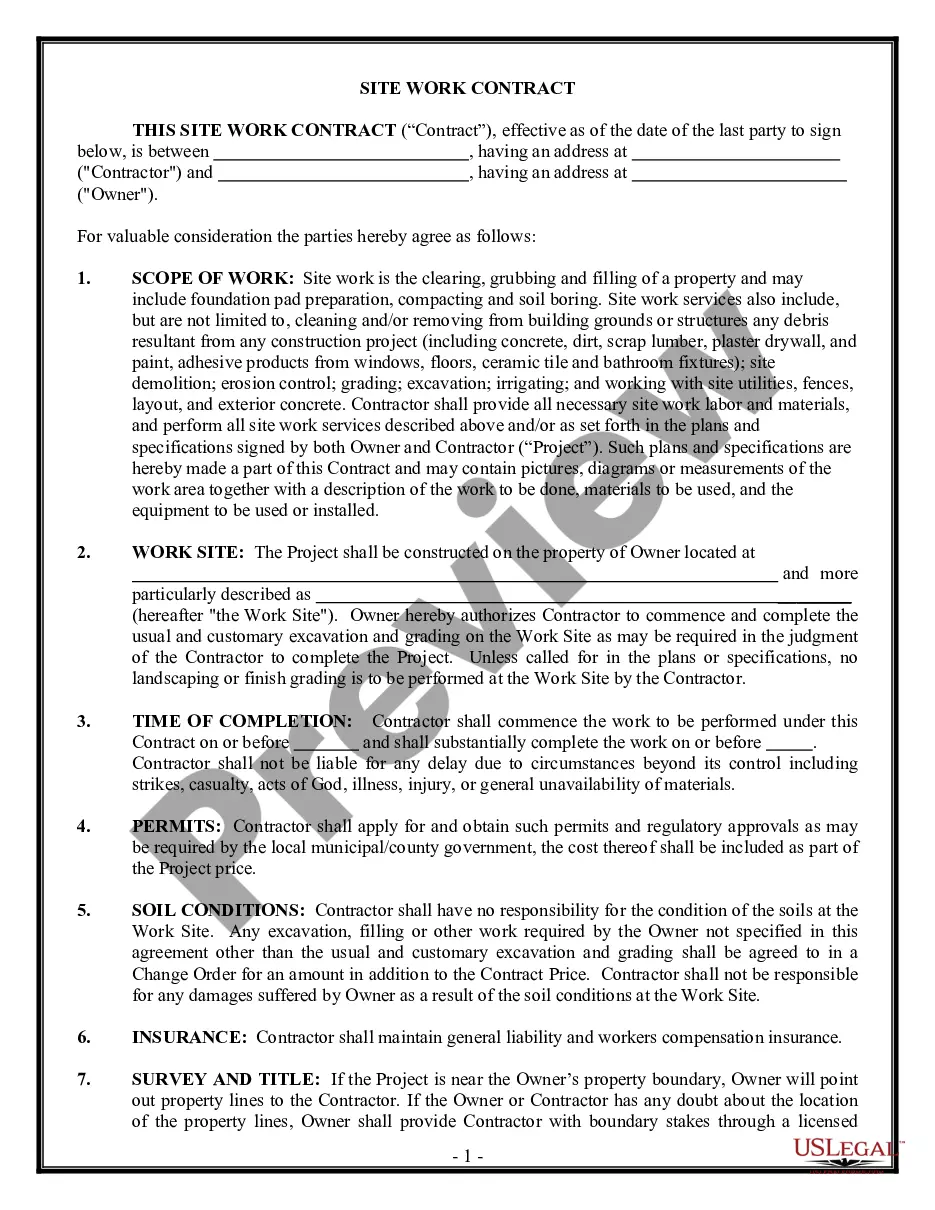
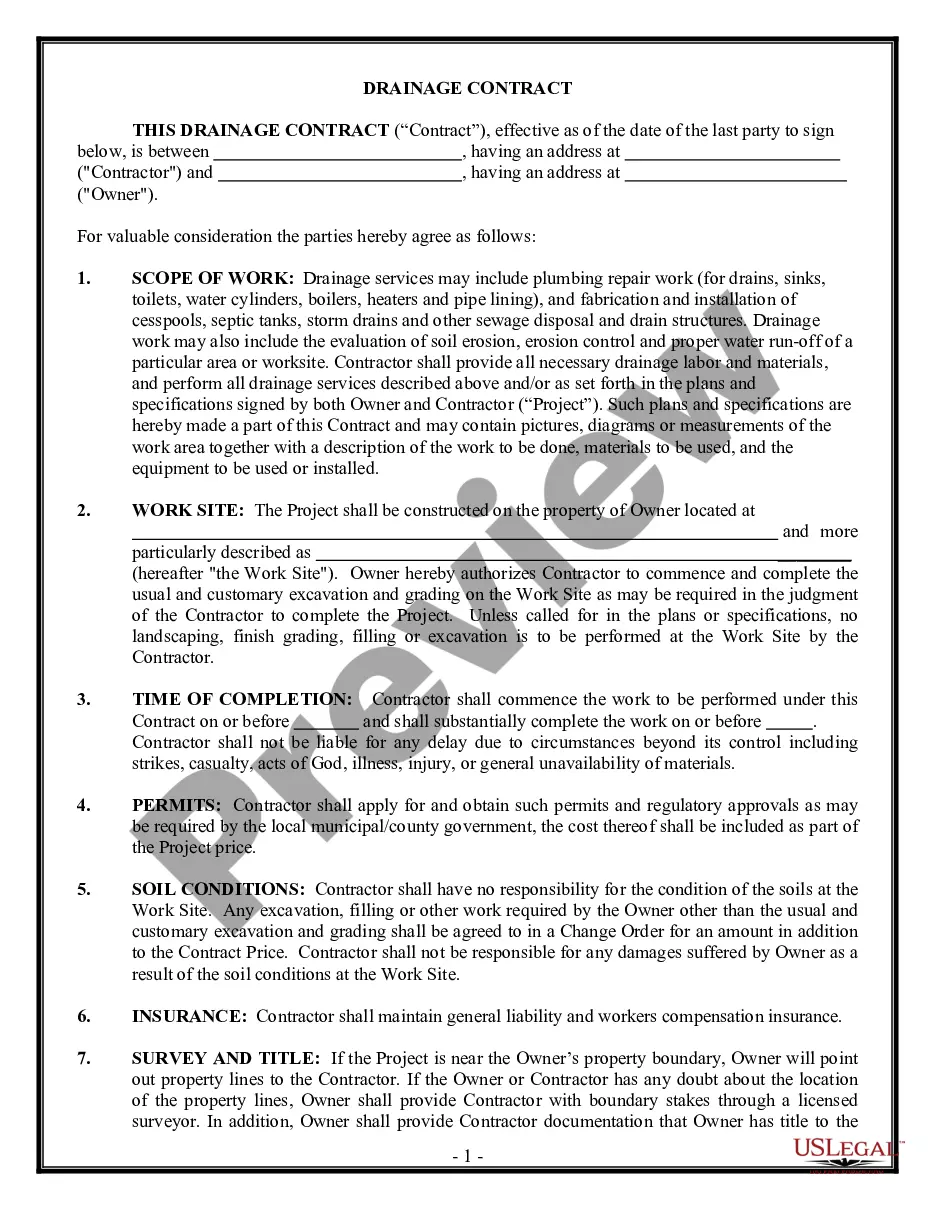
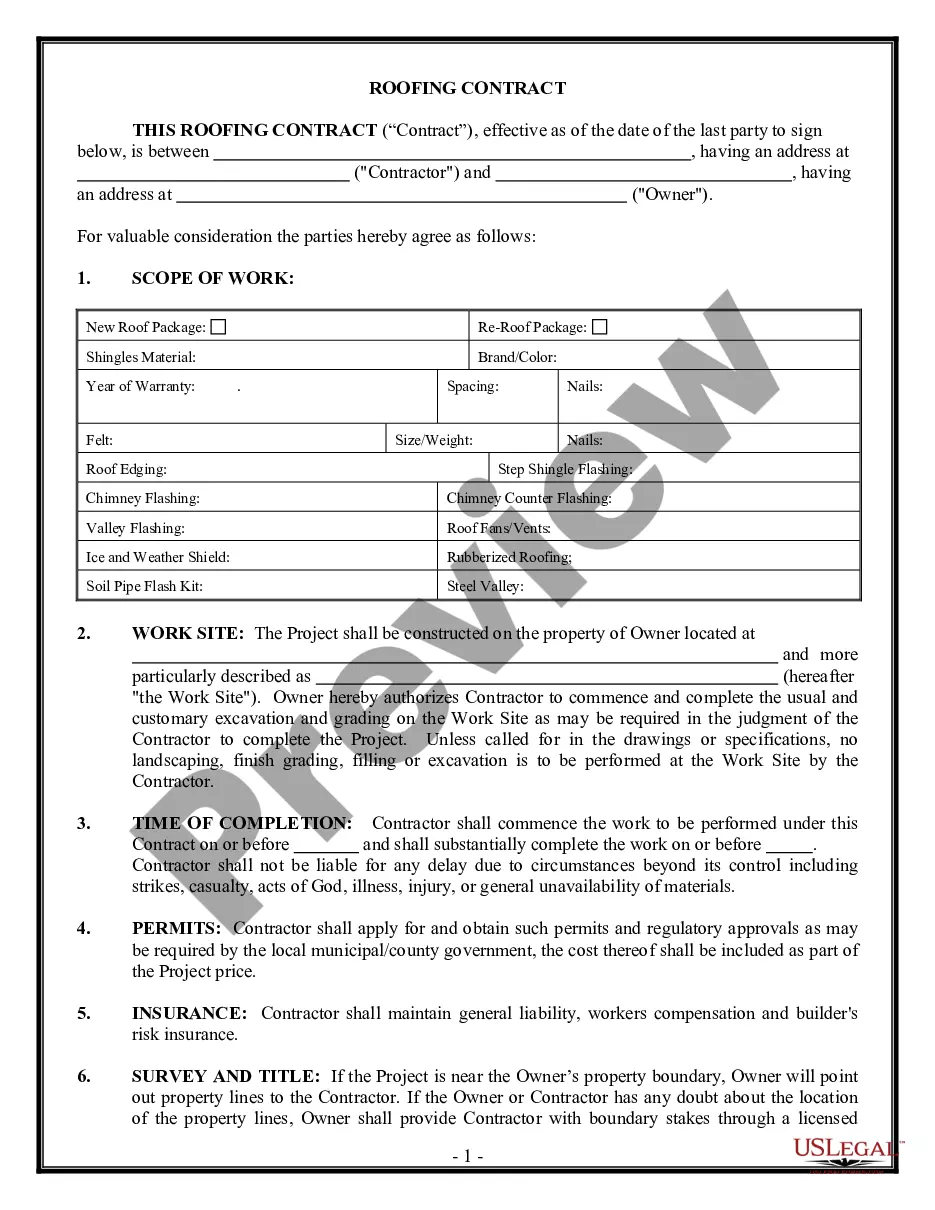
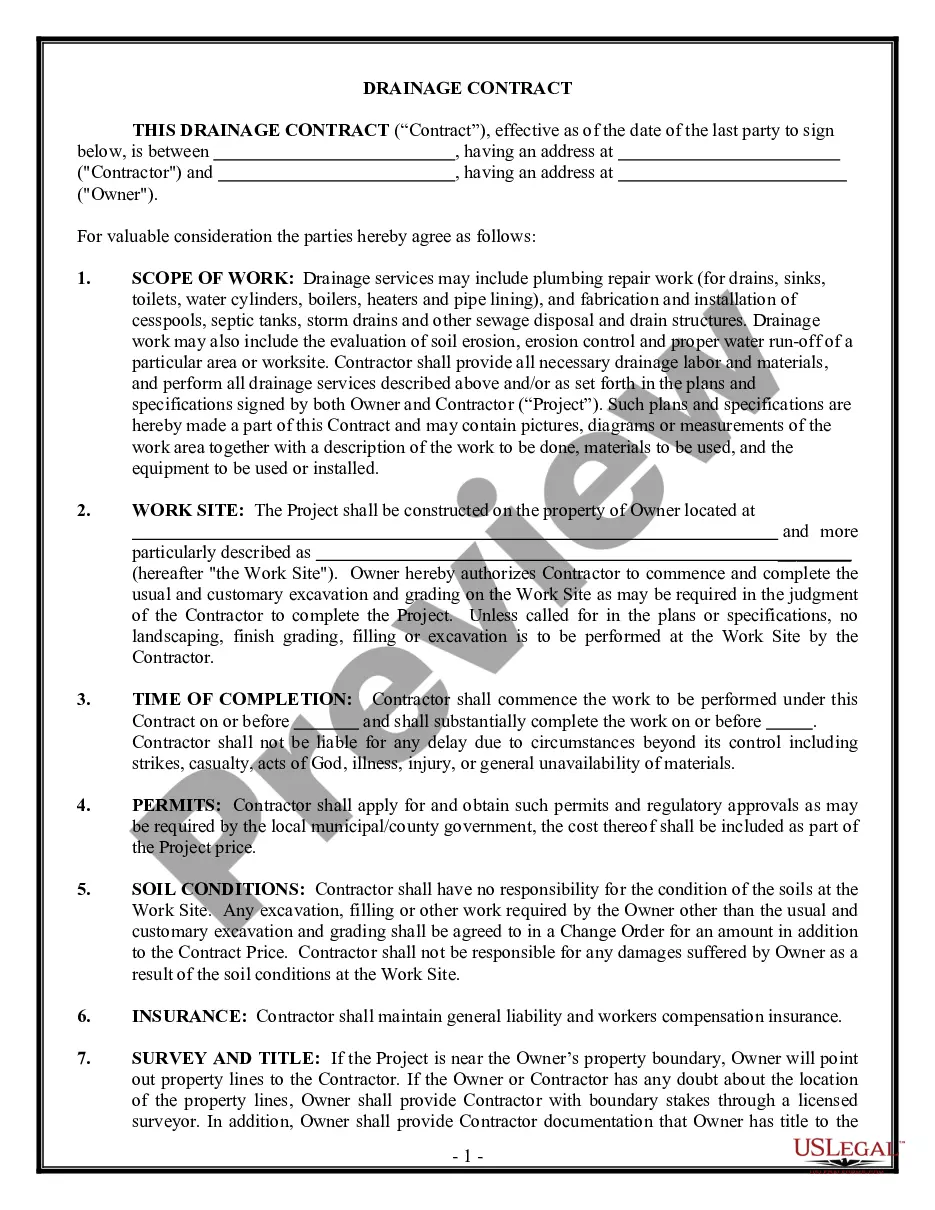
The Plumbing Contract for Contractor is a legal document used to formalize the agreement between plumbing contractors and property owners. This contract outlines the terms of the project, including payment arrangements, work scope, and obligations related to permits, insurance, and site conditions. It is specifically tailored to meet the legal requirements of Utah, ensuring clarity and protection for both parties involved.
Main sections of this form
- Permits: Responsibilities for obtaining necessary permits and approvals.
- Soil Conditions: Limitations on contractor liability for soil-related issues.
- Changes to Scope of Work: Procedures for making changes through written Change Orders.
- Insurance: Requirements for the contractor's insurance coverage.
- Payment Terms: Conditions regarding payment, including late fees for delays.
- Termination: Terms under which the contract may be terminated due to project damage or destruction.


Situations where this form applies
This plumbing contract should be used when a property owner wants to hire a plumbing contractor for repair, installation, or maintenance work. It is beneficial in situations where specific terms about project scope, timeline, and payment need to be clarified, particularly when the project involves significant costs or potential complexities.
Who can use this document
- Property owners looking to engage a plumbing contractor for services.
- Plumbing contractors providing services to residential or commercial clients.
- Businesses requiring plumbing work as part of construction or renovation projects.
Instructions for completing this form
- Identify the parties involved: Enter the names and addresses of the contractor and the property owner.
- Specify the project details: Clearly outline the scope of work, including descriptions of tasks and expectations.
- Include payment terms: State whether the payment structure is fixed fee or cost plus, and specify the total contract price.
- Address insurance and permits: Ensure the contractor's insurance details are noted and applicable permits are acknowledged.
- Sign and date the contract: Both parties must sign the contract and include the date to indicate agreement to the terms.
Does this form need to be notarized?
This form does not typically require notarization unless specified by local law. Ensure all parties have signed before commencing work on the project.
Get your form ready online
Our built-in tools help you complete, sign, share, and store your documents in one place.
Make edits, fill in missing information, and update formatting in US Legal Forms—just like you would in MS Word.
Download a copy, print it, send it by email, or mail it via USPS—whatever works best for your next step.
Sign and collect signatures with our SignNow integration. Send to multiple recipients, set reminders, and more. Go Premium to unlock E-Sign.
If this form requires notarization, complete it online through a secure video call—no need to meet a notary in person or wait for an appointment.
We protect your documents and personal data by following strict security and privacy standards.

Make edits, fill in missing information, and update formatting in US Legal Forms—just like you would in MS Word.

Download a copy, print it, send it by email, or mail it via USPS—whatever works best for your next step.

Sign and collect signatures with our SignNow integration. Send to multiple recipients, set reminders, and more. Go Premium to unlock E-Sign.

If this form requires notarization, complete it online through a secure video call—no need to meet a notary in person or wait for an appointment.

We protect your documents and personal data by following strict security and privacy standards.
Common mistakes to avoid
- Not specifying the scope of work in detail, leading to misunderstandings.
- Failing to obtain necessary permits before work begins.
- Neglecting to document changes in writing, which can cause disputes later.
- Forgetting to include payment timelines and late fees, potentially leading to payment issues.
Benefits of using this form online
- Convenience: Easily download and complete the form at your own pace.
- Editability: Customize the contract to fit your specific project needs.
- Reliability: Access professionally drafted forms that comply with legal standards.
Looking for another form?


Form popularity
FAQ
Complete a State approved 20-hour pre-licensure live education program. Pass the Business Law exam and the exam for the type of license you are seeking. Once you've passed the exam, send your passing score, license application, and work experience documentation to the State of Utah.
Do I need a Handyman License in Utah? The answer is quite simple: If you are doing jobs over $1,000 you must fill out a handyman application form and register with the state. If you are charging over $3,000 or performing work that requires pulling building permits, then you will need a contractor license.
Electrical. Plumbing. HVAC. Alarm Systems. Structural Framing. Mechanical Work. Radon and Soil Depressurization. Projects which significantly impact public health and Safety.
State law does allow a homeowner of a single family residence to do his or her electrical work.
A handyman, also known as a fixer, handyperson or handyworker, is a person skilled at a wide range of repairs, typically around the home. These tasks include trade skills, repair work, maintenance work, are both interior and exterior, and are sometimes described as "side work", "odd jobs" or "fix-up tasks".
All individuals or business entities intending to engage in construction work in Utah must obtain a state issued contractor license. At least one individual must be selected to act as the qualifier for the license, which requires the individual to pass the necessary tests prior to applying for the license.
The Utah Residence Lien Recovery Fund is an alternate payment source for contractors, laborers or suppliers whose liens are voided because a homeowner qualifies for protection under the Residence Lien Restriction and Lien Recovery Fund Act.
Statutory Limitations Unless you specifically spell out a different time period in a contract, Utah law permits contract and warranty claims to be filed within six years of the date of completion (or abandonment) of the improvement.