Living Trust for Individual Who Is Single, Divorced or Widow or Widower with Children
- Alabama
- Alaska
- Arizona
- Arkansas
- California
- Colorado
- Connecticut
- Delaware
- District of Columbia
- Florida
- Georgia
- Hawaii
- Idaho
- Illinois
- Indiana
- Iowa
- Kansas
- Kentucky
- Louisiana
- Maine
- Maryland
- Massachusetts
- Michigan
- Minnesota
- Mississippi
- Missouri
- Montana
- Nebraska
- Nevada
- New Hampshire
- New Jersey
- New Mexico
- New York
- North Carolina
- North Dakota
- Ohio
- Oklahoma
- Oregon
- Pennsylvania
- Rhode Island
- South Carolina
- South Dakota
- Tennessee
- Texas
- Utah
- Vermont
- Virginia
- Washington
- West Virginia
- Wisconsin
- Wyoming
-
No results found.
What is this form?
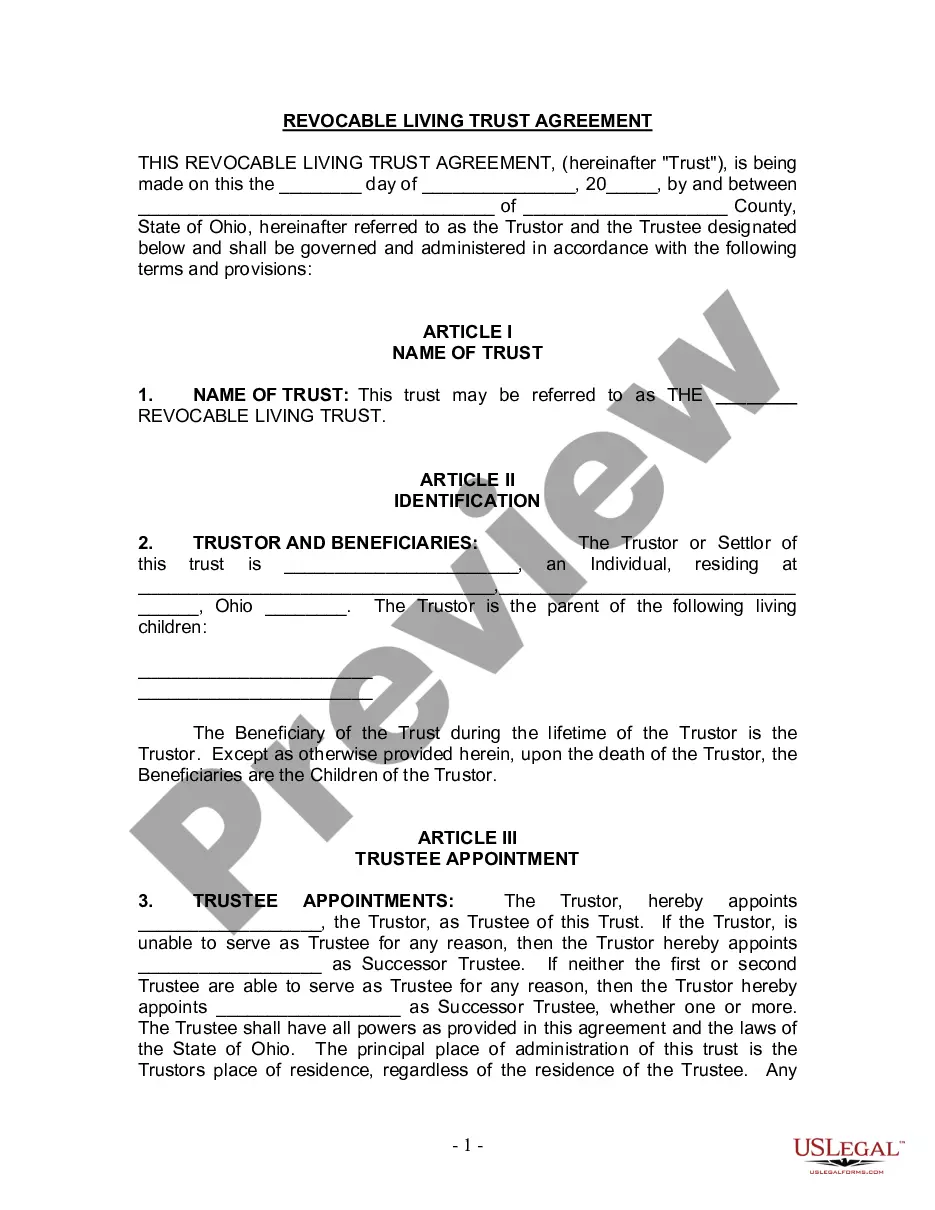
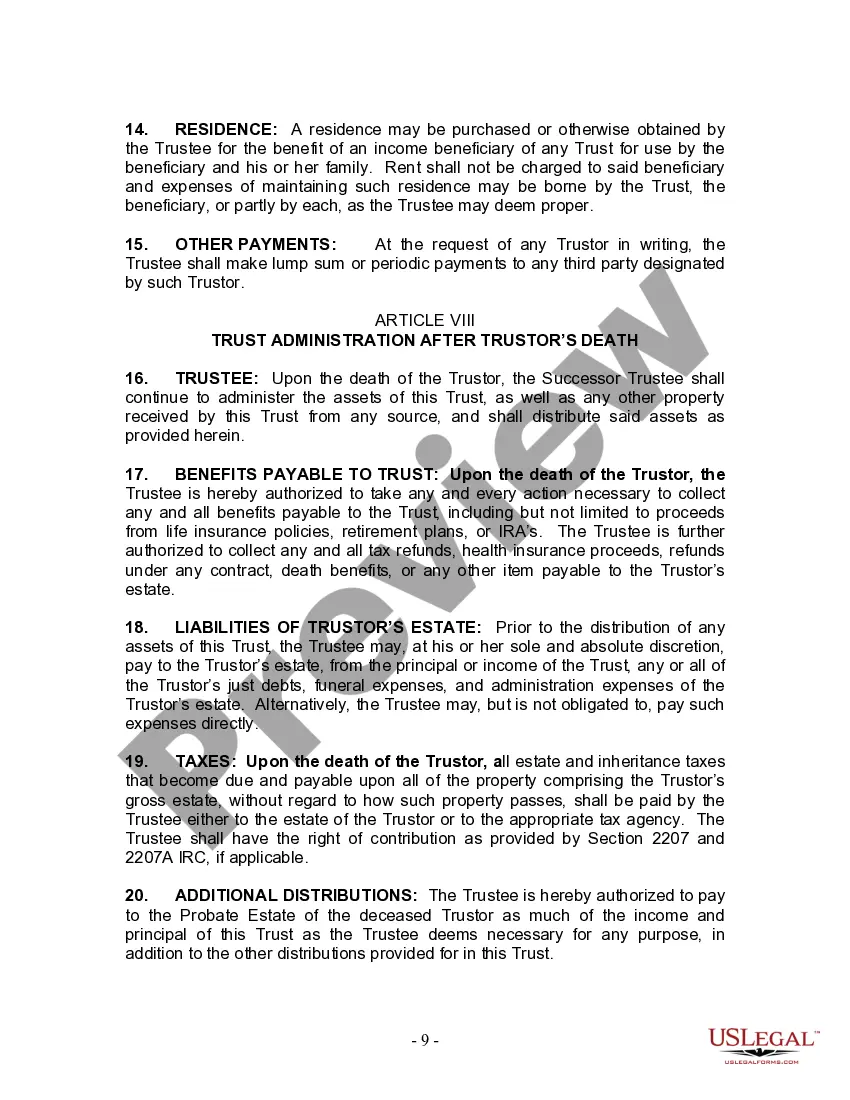
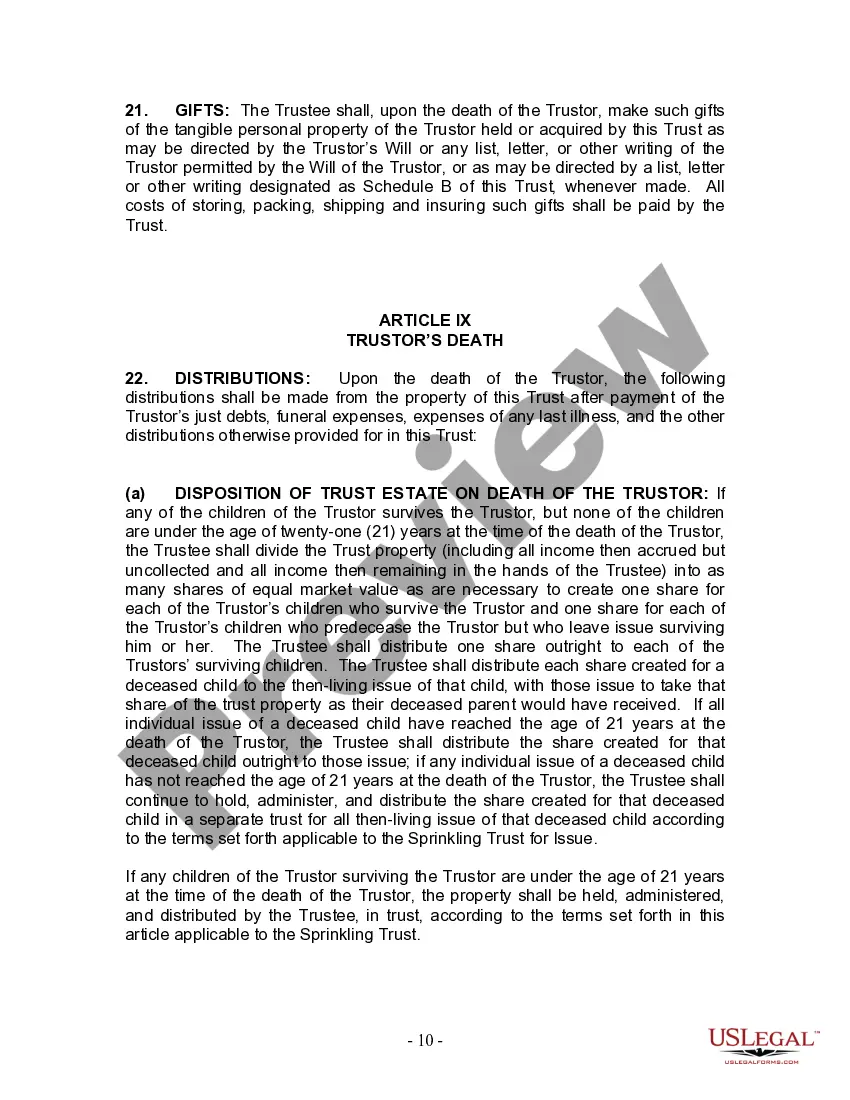
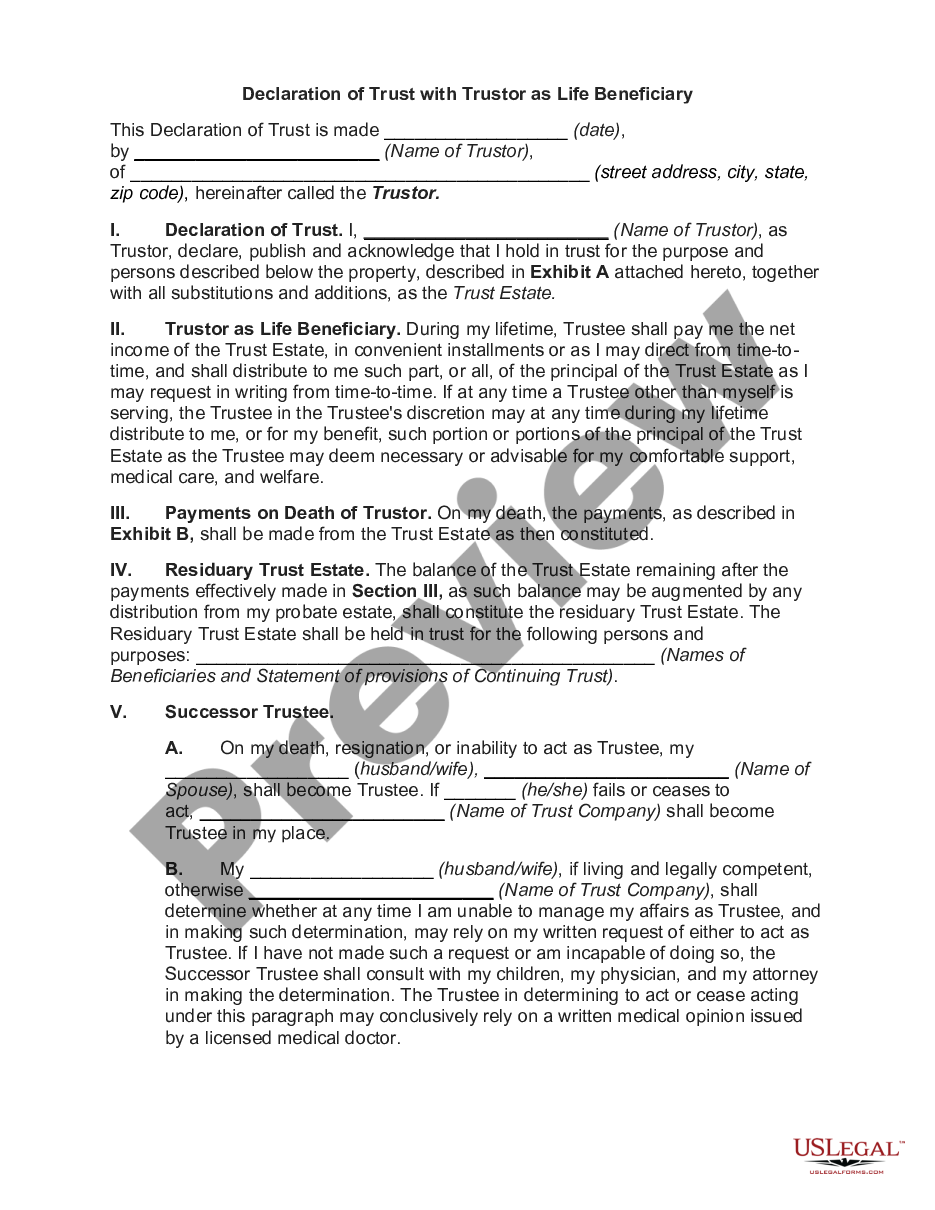
This Living Trust form establishes a revocable living trust tailored to individuals who are single, divorced, or widowed and have children. It lets you manage your assets during your lifetime - the Trustor can also serve as trustee and keep full control - and passes those assets to your heirs after your death without probate. Compared with a will, a living trust gives you more control while you are alive and a smoother, more private transition for your children afterward.
Key parts of this document
- Name of Trust: the title that identifies the trust.
- Trustor and Beneficiaries: the person creating the trust and the designated beneficiaries, typically the children.
- Trustee Appointment: who manages the trust, with a succession plan for successor trustees.
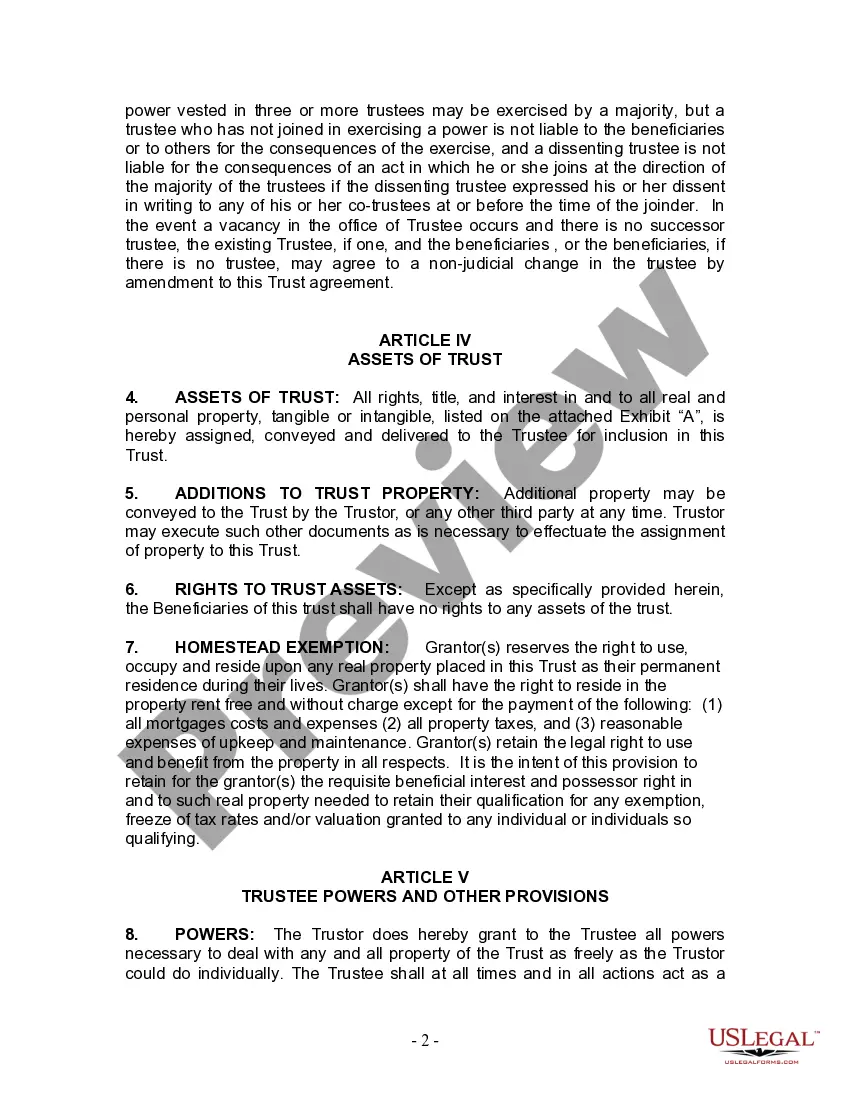
- Assets of Trust: the property held in the trust and the terms for adding more.
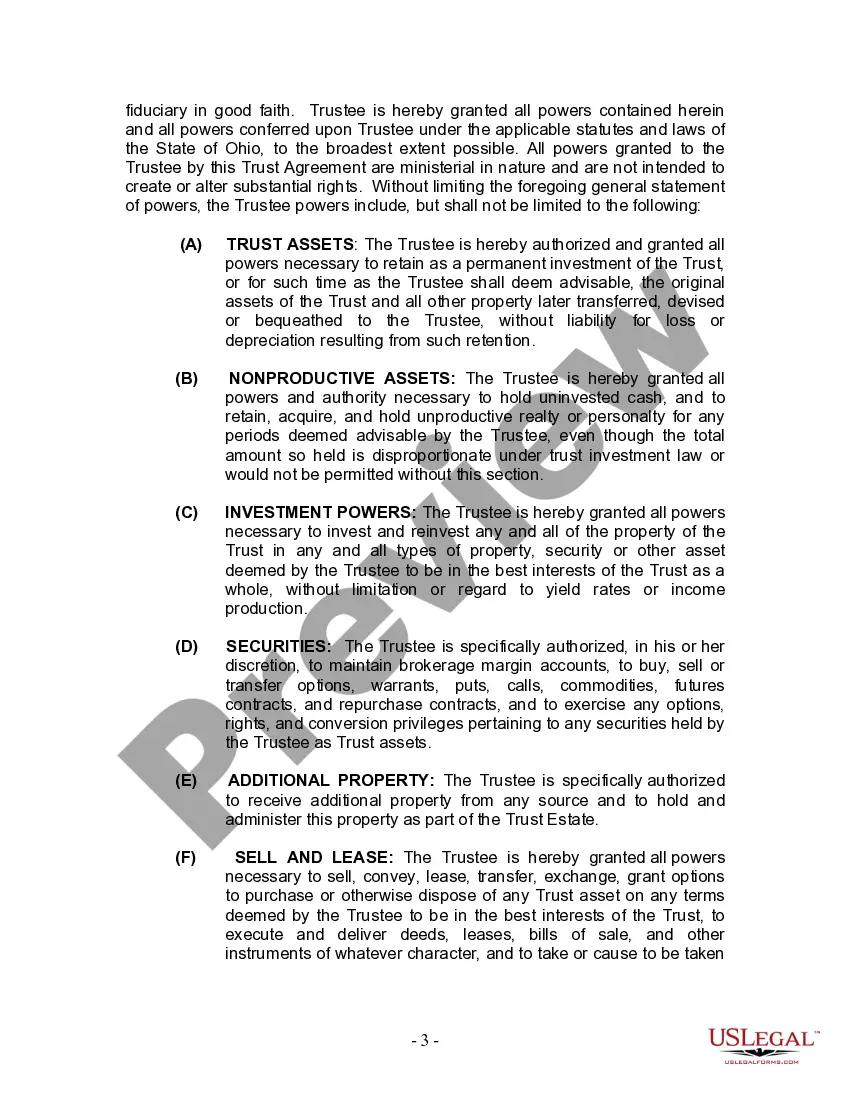
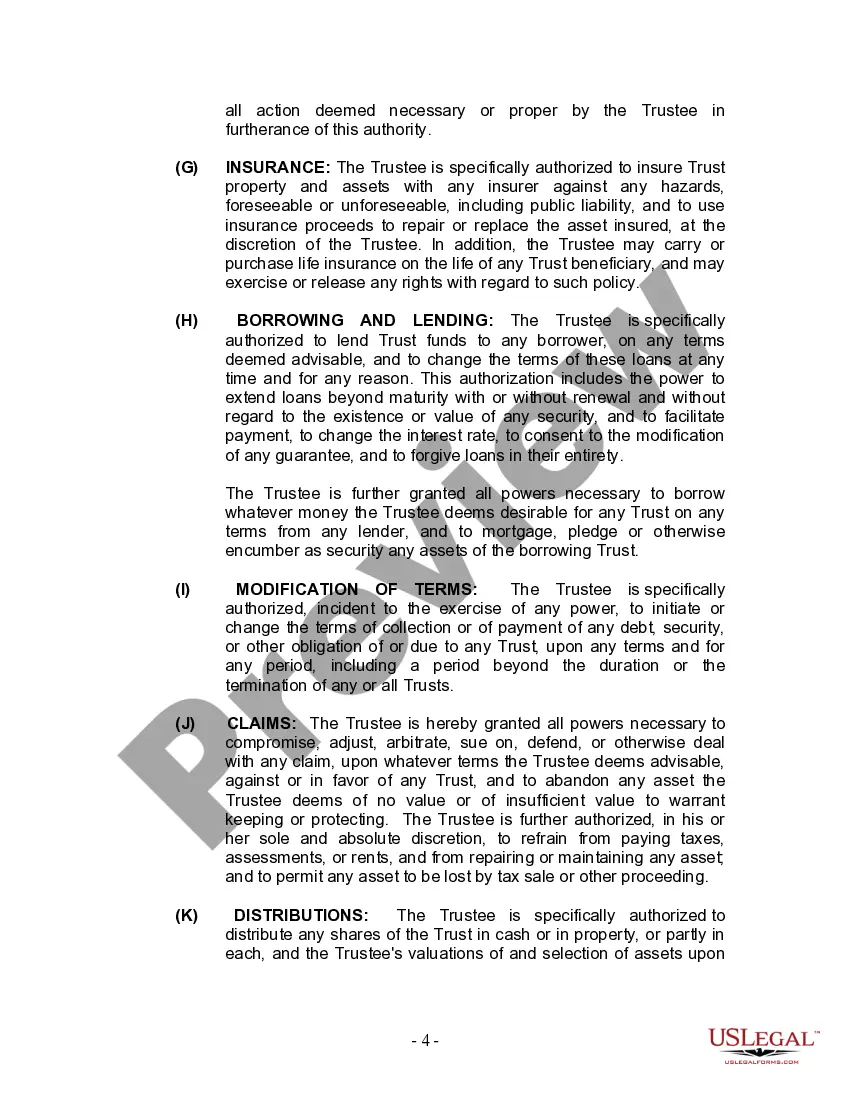
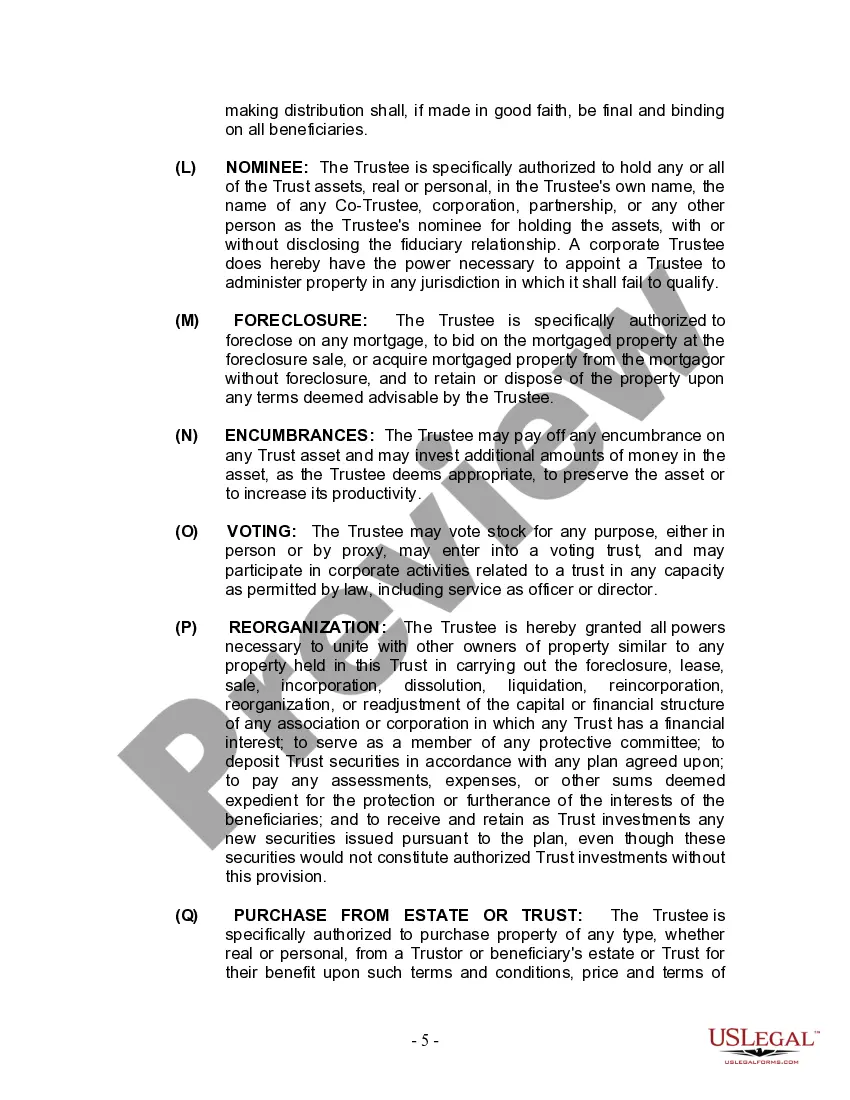
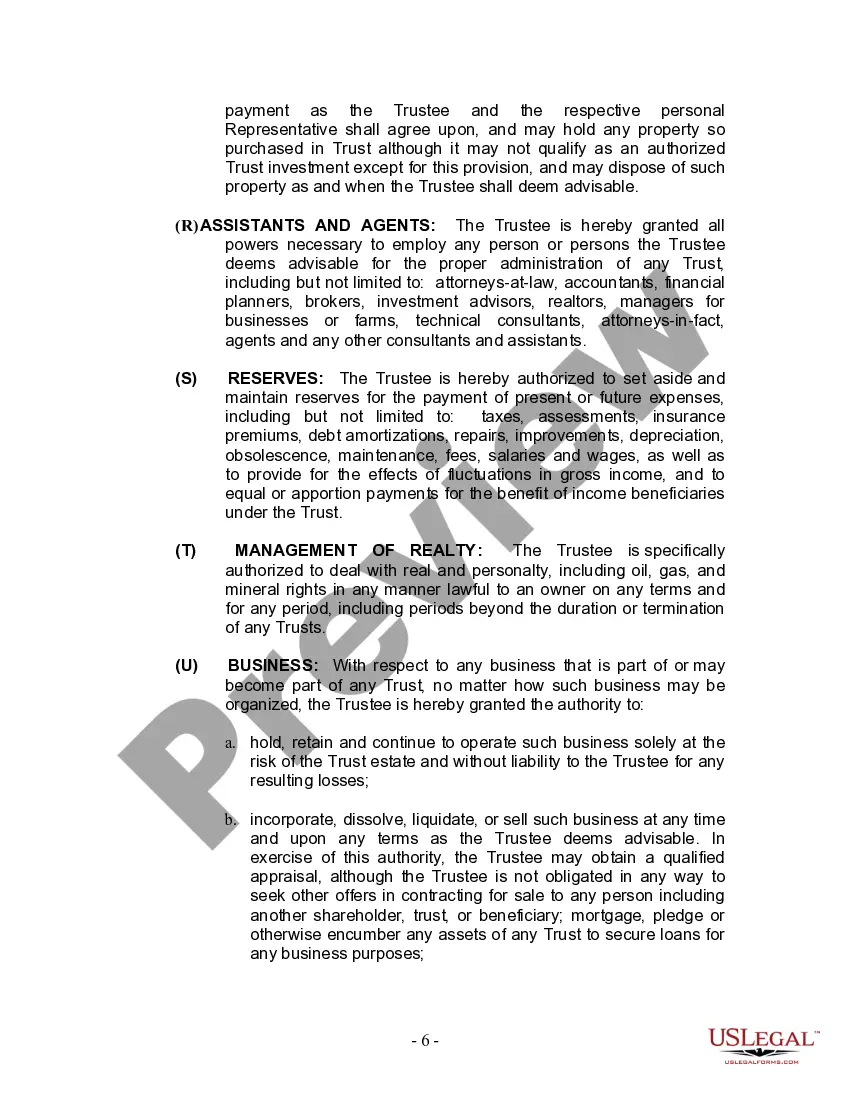
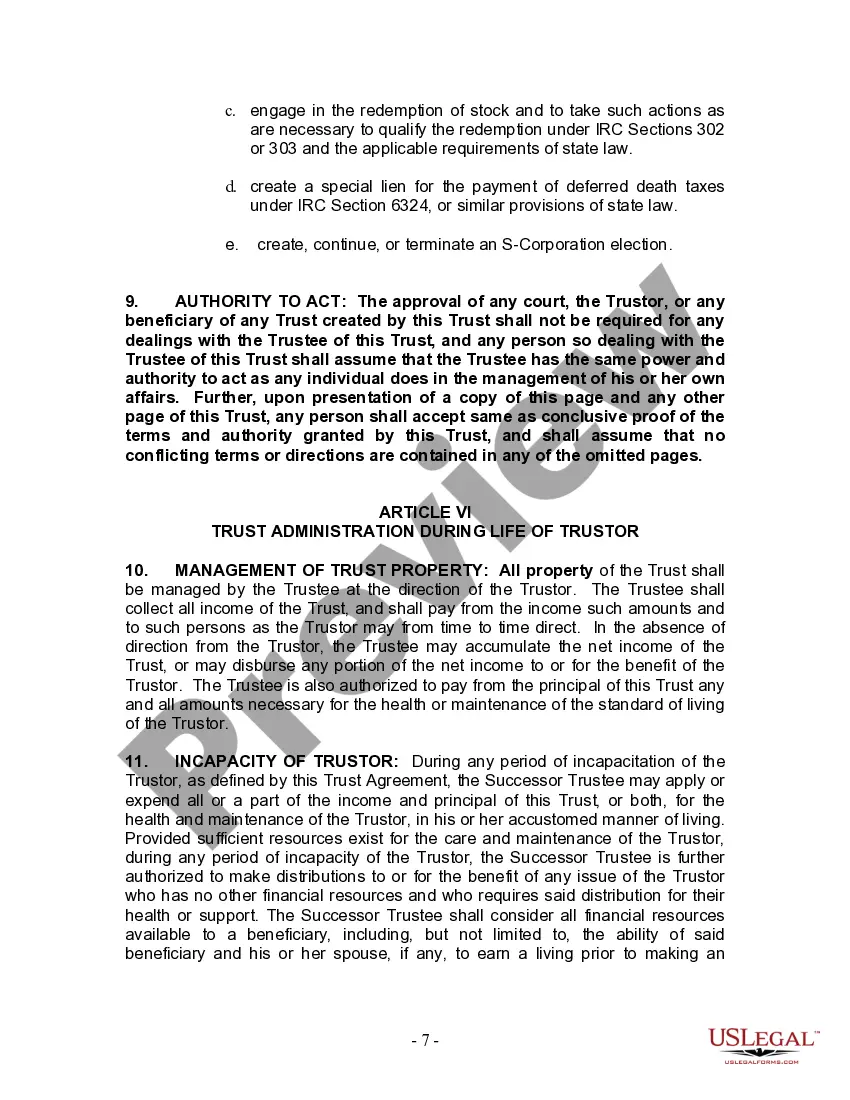
- Trustee Powers: the authority the trustee has to manage the trust assets.
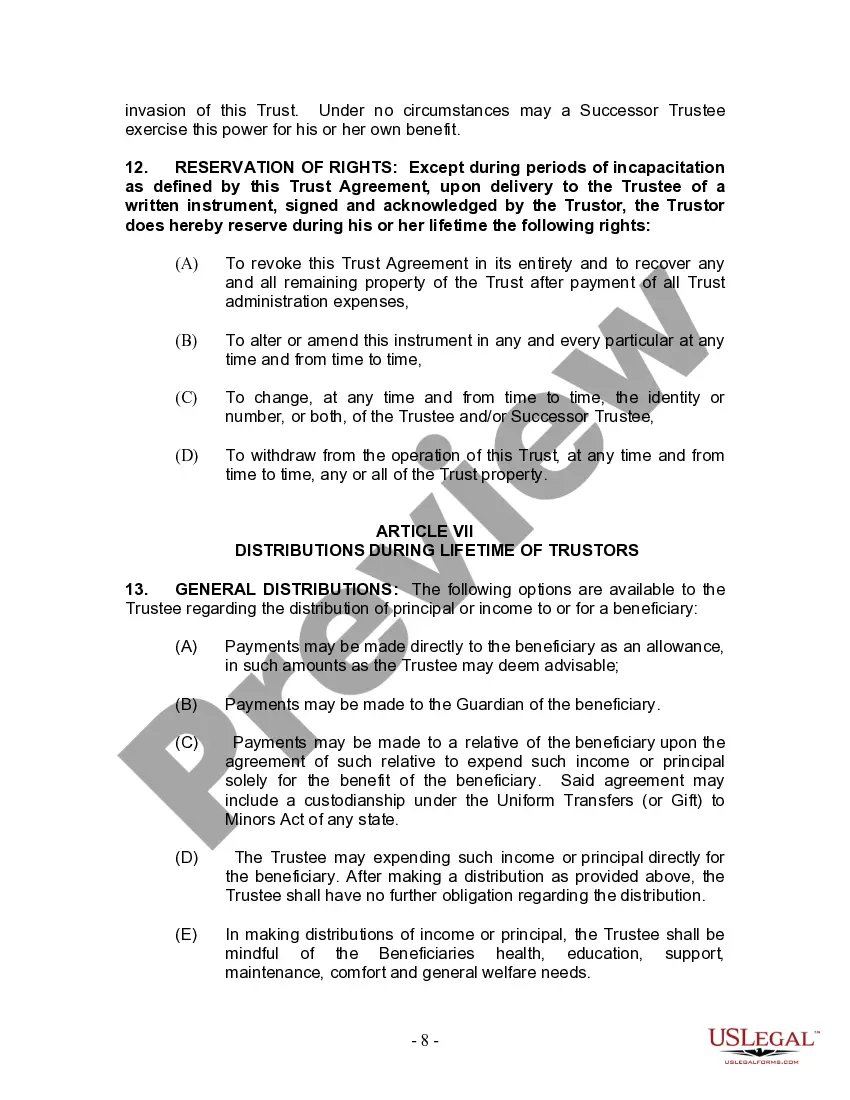
- Distributions: how and when assets pass to the beneficiaries.

When to use this form
Use this trust when you want your assets distributed on your own terms without the delays and publicity of probate. It fits individuals who want to keep managing their property during their lifetime, protect their children's inheritance - including if incapacity ever prevents them from handling their own affairs - and set clear conditions for how the children receive support.
Who should use this form
- Individuals who are single, divorced, or widowed.
- Parents with one or more children.
- Anyone who wants to manage their assets in life and pass them on smoothly after death.
- Those who want to avoid probate and disputes among heirs.
How to complete this form
- Identify the parties: enter the Trustor (you) and the Trustee - yourself or another person - plus a successor trustee.
- Name the trust: give your revocable living trust its title.
- List the beneficiaries: name your children within the trust.
- Assign the assets: describe the property being transferred into the trust.
- Sign and date the agreement, completing notarization where required.
Does this form need to be notarized?
Yes - this form must be notarized to be legally valid. US Legal Forms provides integrated online notarization, available 24/7, so you can complete your trust documentation securely through a video session.
Get your form ready online
Our built-in tools help you complete, sign, share, and store your documents in one place.
Make edits, fill in missing information, and update formatting in US Legal Forms—just like you would in MS Word.
Download a copy, print it, send it by email, or mail it via USPS—whatever works best for your next step.
Sign and collect signatures with our SignNow integration. Send to multiple recipients, set reminders, and more. Go Premium to unlock E-Sign.
If this form requires notarization, complete it online through a secure video call—no need to meet a notary in person or wait for an appointment.
We protect your documents and personal data by following strict security and privacy standards.

Make edits, fill in missing information, and update formatting in US Legal Forms—just like you would in MS Word.

Download a copy, print it, send it by email, or mail it via USPS—whatever works best for your next step.

Sign and collect signatures with our SignNow integration. Send to multiple recipients, set reminders, and more. Go Premium to unlock E-Sign.

If this form requires notarization, complete it online through a secure video call—no need to meet a notary in person or wait for an appointment.

We protect your documents and personal data by following strict security and privacy standards.
Common mistakes to avoid
- Leaving intended assets out of the trust, sending them through probate anyway.
- Not naming a successor trustee for incapacity or death.
- Failing to update the trust after major life changes such as marriage, divorce, or a new child.
- Never discussing the arrangement with the beneficiaries, which breeds confusion later.
Benefits of completing this form online
- Convenience: access and complete the form from home, at your own pace.
- Editability: adjust the document to your family's circumstances before finalizing.
- Reliability: attorney-drafted text keeps the trust legally sound and complete.
Legal use & context
- A living trust is a recognized estate planning tool that manages assets in life and directs their transfer after death.
- Trust assets bypass probate, which cuts costs and speeds up distribution to the beneficiaries.
- A properly executed trust is enforceable and keeps your instructions in control of the outcome.
Key takeaways
- A living trust manages your assets in life and distributes them after death on your terms.
- This form is tailored to single, divorced, or widowed individuals with children.
- Proper execution and notarization are crucial to its validity.
- The trust spares your family the complexities of probate court.
Looking for another form?
FAQ
Yes. Proper execution with notarization is crucial for the trust's legal validity - complete it before relying on the document.