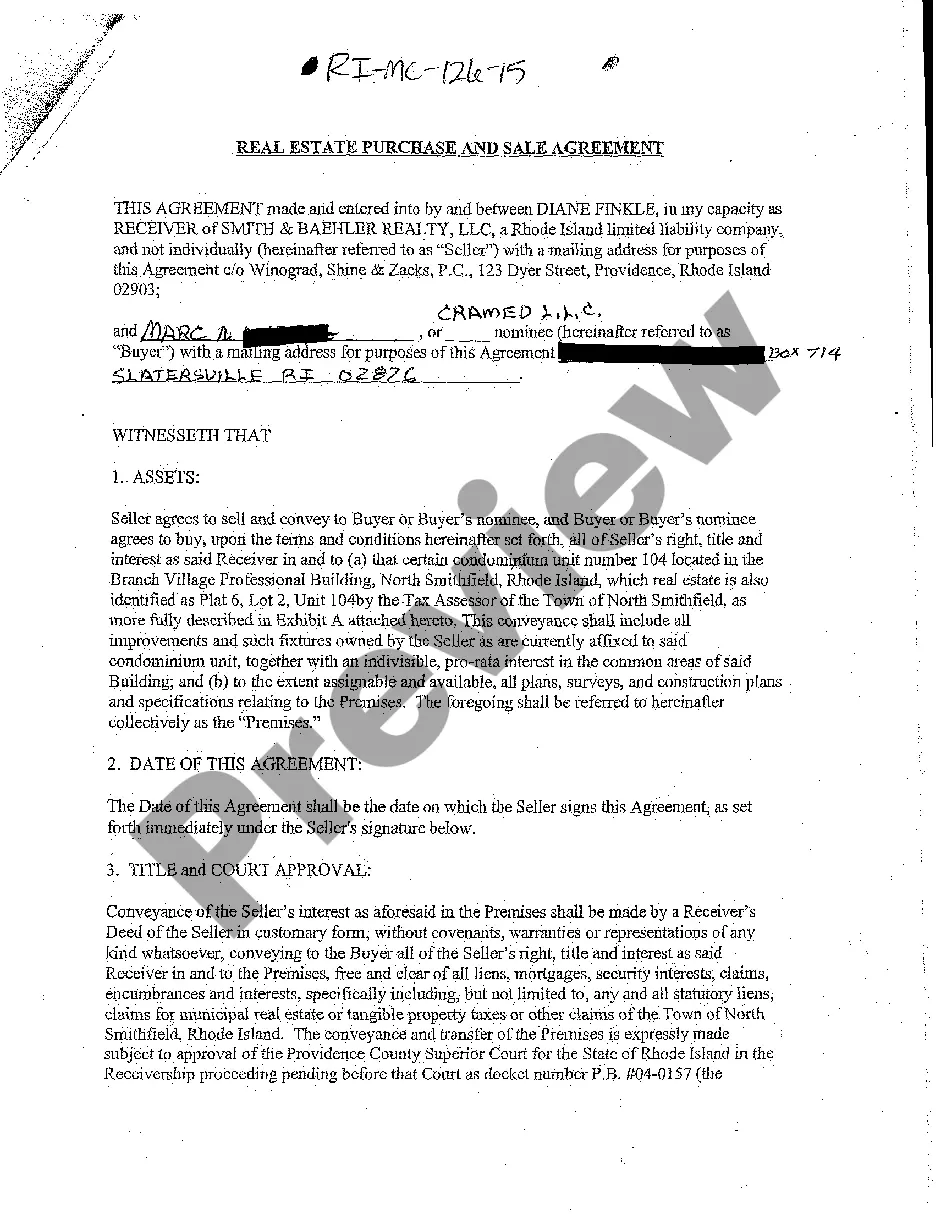
Commercial Lease Commission Assumption Agreement
Overview of this form
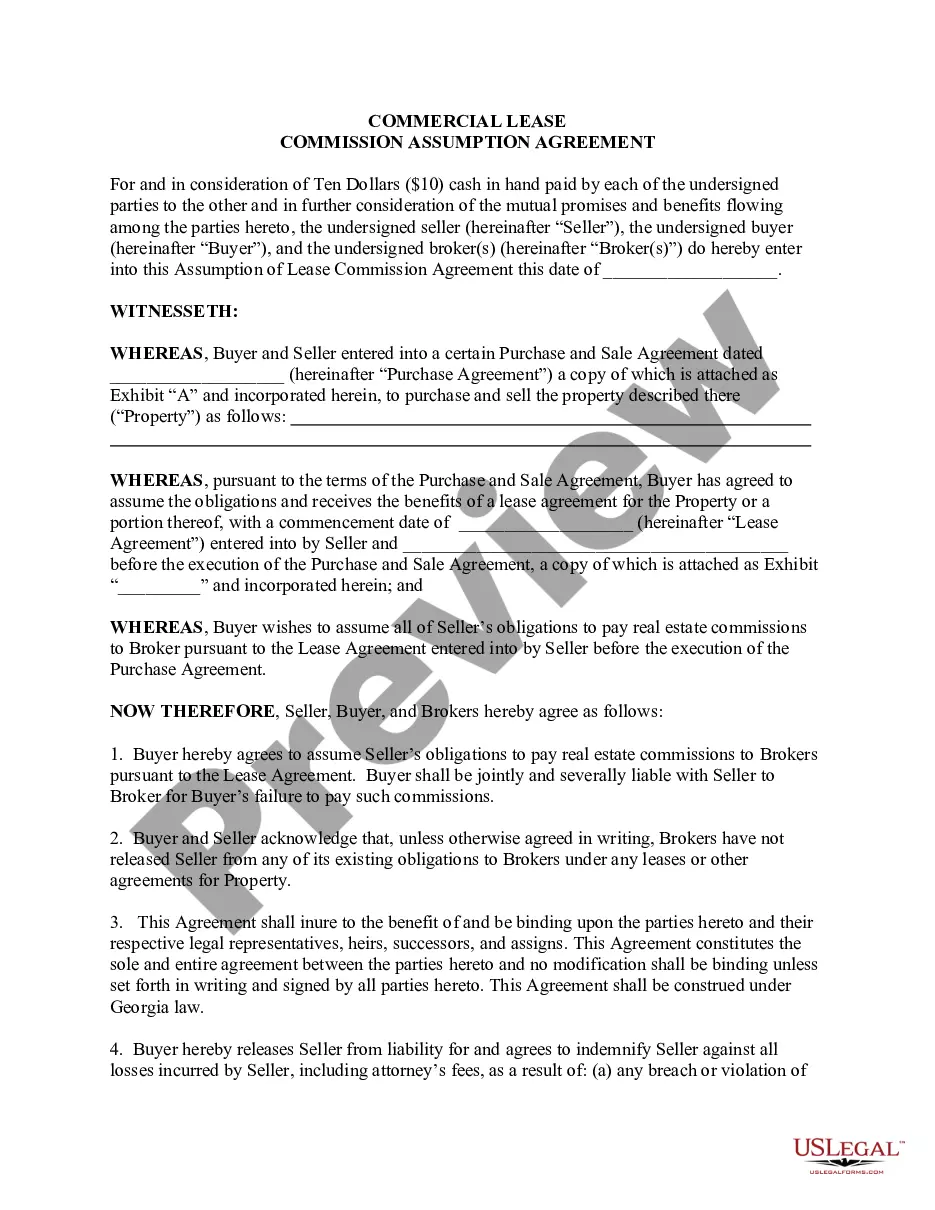
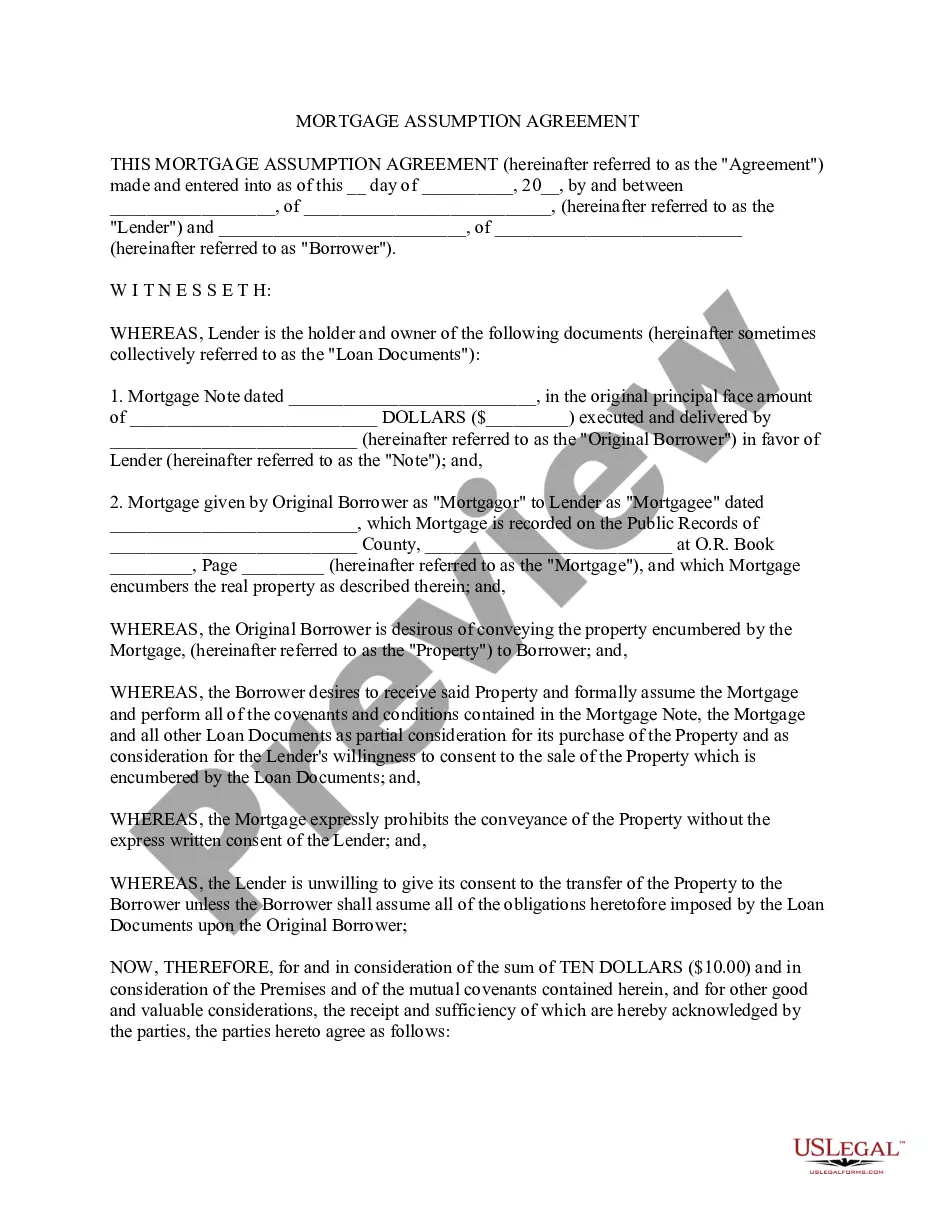
The Commercial Lease Commission Assumption Agreement is a legal document that facilitates the transfer of responsibility for paying real estate commissions from the seller to the buyer in a commercial property transaction. This form specifically addresses the obligations arising from a lease agreement, allowing the buyer to assume these responsibilities. It differs from other real estate forms by focusing specifically on lease commissions linked to a property sale rather than general sales or rental agreements.
Key parts of this document
- Identification of the parties involved: seller, buyer, and broker(s).
- Details of the original Purchase and Sale Agreement and the associated Lease Agreement.
- Buyer's assumption of Sellerâs obligations to pay real estate commissions.
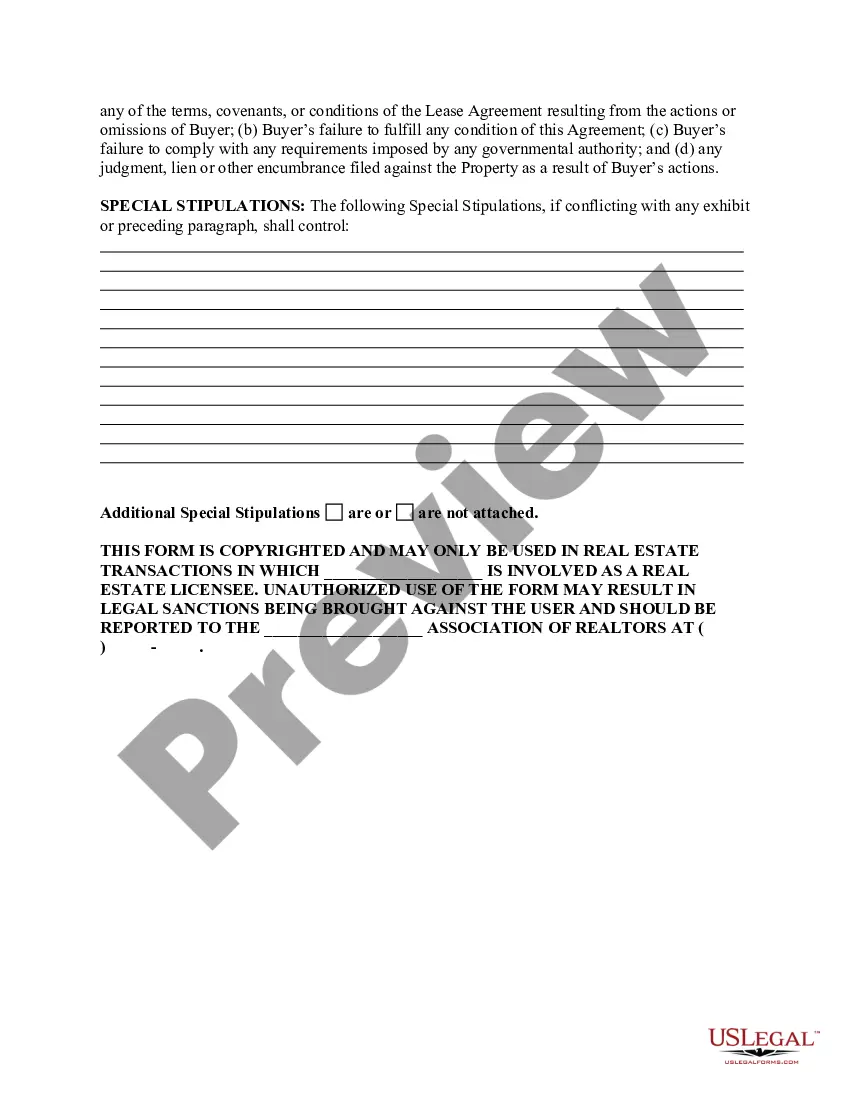
- Indemnification clause to protect the Seller against losses due to the Buyerâs actions.
- Conditions under which the agreement is binding and modifications may occur.
When this form is needed
This form should be used when a buyer enters into a purchase agreement for a property that includes an existing lease. It is particularly necessary when the buyer agrees to take over the commission obligations owed to brokers representing the seller. Scenarios may include commercial real estate transactions where the seller has entered into a lease before selling the property, and the buyer wishes to assume those responsibilities as part of the purchase.
Who can use this document
The following individuals or entities should consider using the Commercial Lease Commission Assumption Agreement:
- Real estate buyers purchasing commercial properties with existing lease agreements.
- Sellers of commercial properties who want to clarify commission obligations in the sale process.
- Brokers involved in transactions where commission responsibilities might shift between parties.
Steps to complete this form
- Identify all parties involved: clearly specify the seller, buyer, and brokers.
- Enter the date of the agreement and relevant details of the Purchase Agreement and Lease Agreement.
- Detail the specific obligations being assumed by the buyer regarding commission payments.
- Include indemnification clauses to protect the seller from potential losses due to buyer actions.
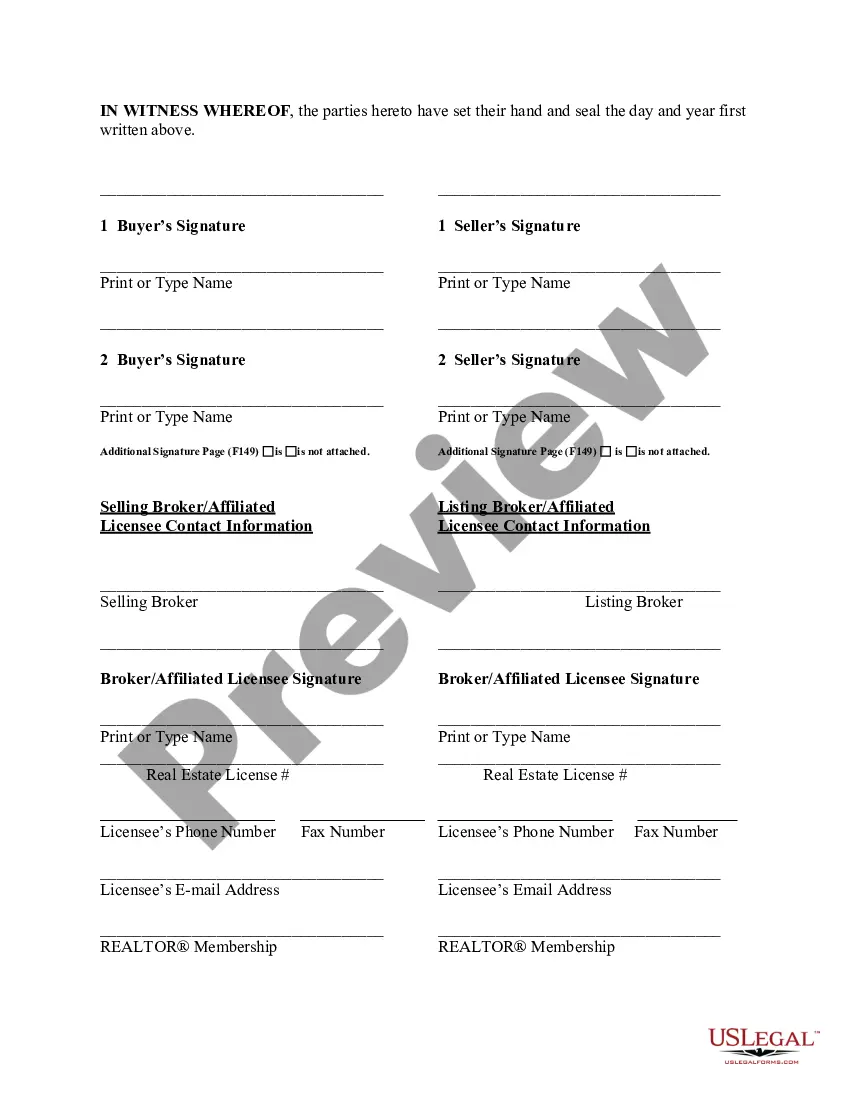
- Ensure all parties sign and date the agreement in the provided signature sections.
Is notarization required?
This form does not typically require notarization unless specified by state law. However, it is always advisable to verify local requirements to ensure full legal compliance.
Get your form ready online
Our built-in tools help you complete, sign, share, and store your documents in one place.
Make edits, fill in missing information, and update formatting in US Legal Forms—just like you would in MS Word.
Download a copy, print it, send it by email, or mail it via USPS—whatever works best for your next step.
Sign and collect signatures with our SignNow integration. Send to multiple recipients, set reminders, and more. Go Premium to unlock E-Sign.
If this form requires notarization, complete it online through a secure video call—no need to meet a notary in person or wait for an appointment.
We protect your documents and personal data by following strict security and privacy standards.

Make edits, fill in missing information, and update formatting in US Legal Forms—just like you would in MS Word.

Download a copy, print it, send it by email, or mail it via USPS—whatever works best for your next step.

Sign and collect signatures with our SignNow integration. Send to multiple recipients, set reminders, and more. Go Premium to unlock E-Sign.

If this form requires notarization, complete it online through a secure video call—no need to meet a notary in person or wait for an appointment.

We protect your documents and personal data by following strict security and privacy standards.
Common mistakes
- Failing to accurately identify all parties involved, which can lead to disputes.
- Not including the correct details of the Purchase Agreement and the Lease Agreement.
- Neglecting to include special stipulations, which can affect the understanding of obligations.
- Forgetting to have all parties sign the form, making it potentially unenforceable.
Benefits of using this form online
- Convenience of downloading and completing the form at your own pace.
- Editability allows for easy customization to meet specific needs.
- Access to reliable templates drafted by licensed attorneys ensuring legal compliance.
Legal use & context
- The Commercial Lease Commission Assumption Agreement is legally binding once signed by all parties.
- It is essential for clarifying obligations within real estate transactions, particularly for leases assumed by buyers.
- Failure to complete this form properly may result in unresolved commission disputes.
Main things to remember
- Understand the purpose of the Commercial Lease Commission Assumption Agreement and its necessity in property transactions.
- Accurately complete the form to reflect the details of the transaction and obligations.
- Consult local laws to ensure compliance and understand any specific requirements that may apply.
Looking for another form?

Form popularity
FAQ
How do I calculate the residential real estate commission? Determine the annual rent for the property.Divide this value by 12 to obtain the monthly rent: $12000 / 12 = $1000. Decide on the commission.Now, all you need to do is calculate the half month's rent.Voila ? you have just calculated your rental commission!
Leasing commissions are typically calculated as a percentage of the total base rent a tenant will pay over their lease term or as a dollar per square foot per year figure.
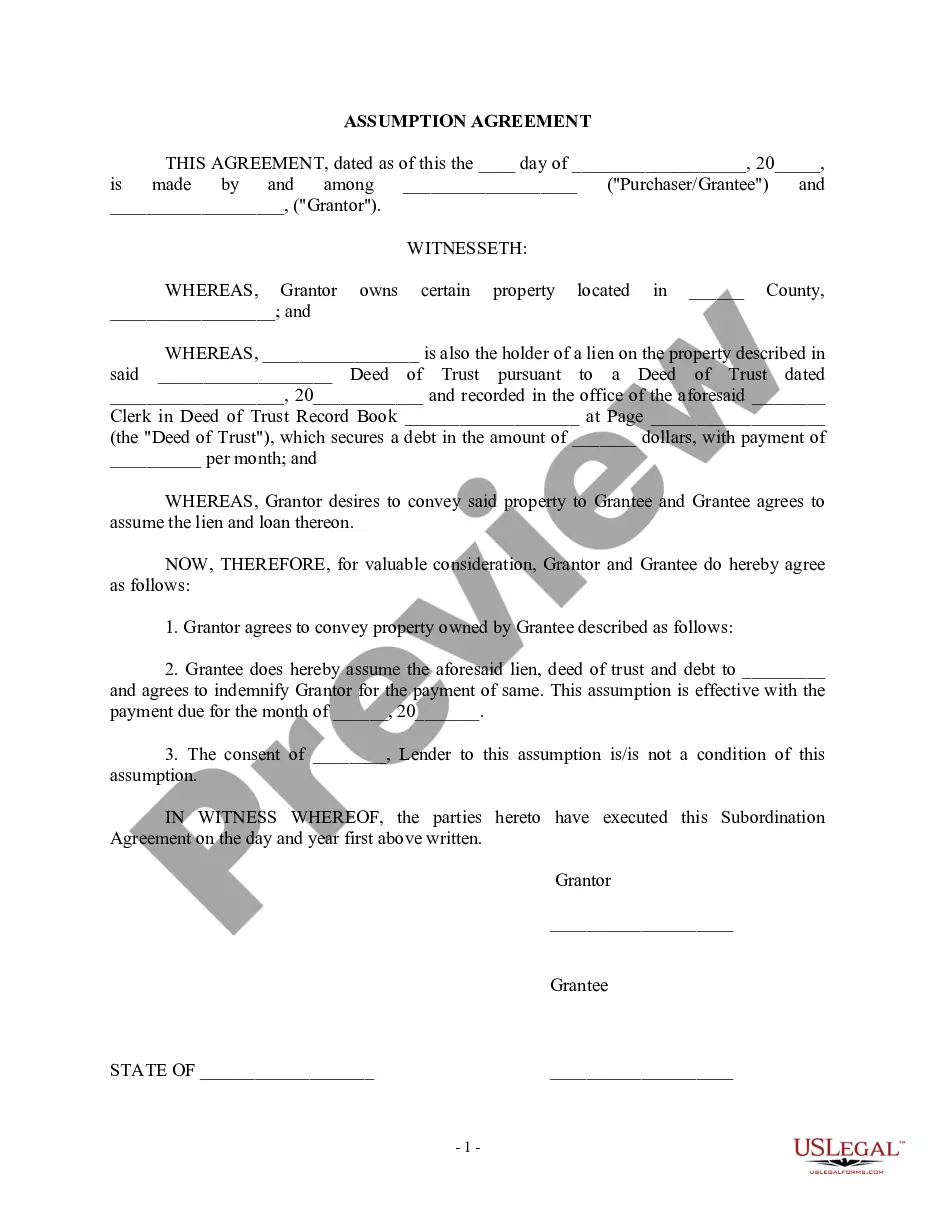
What is a Lease Assumption Agreement? If you need to leave a rental property before the lease is up, a Lease Assumption Agreement allows another tenant to assume your responsibilities under the lease.
What is not included in operating expenses? Capital expenses, debt service, commercial property marketing costs, leasing commissions, tenant improvement allowances, and capital reserves are typically not included.
Commission is calculated on a lease by the gross lease value paid to the landlord. If it's a multi-year lease, it is paid on the gross value of the multi-year lease. For example, if a lawyer signs a three year lease, pays $2,000 a month, the lawyer pays a $24,000 annual rent to the landlord.
The standard commission rate is usually between 4% and 6% of the total rent over the lease term. However, the commission rate can be negotiated between the parties, and some brokers or agents may charge higher or lower rates depending on the circumstances.
Leasing Commissions are another capital cost, just like Tenant Improvements. They don't affect Net Operating Income (NOI), but they do affect Cash Flow. And they represent what you have to pay to find new tenants or to keep existing tenants to negotiate with them, to offer them better terms.
Furthermore, certain legal clauses can threaten your future tenancy, including your ability to sell your business. Several potential red flags to look out for include: Use Clause Restrictions, Demolition Clauses, Relocation Clauses, and Non-disturbance Clauses.