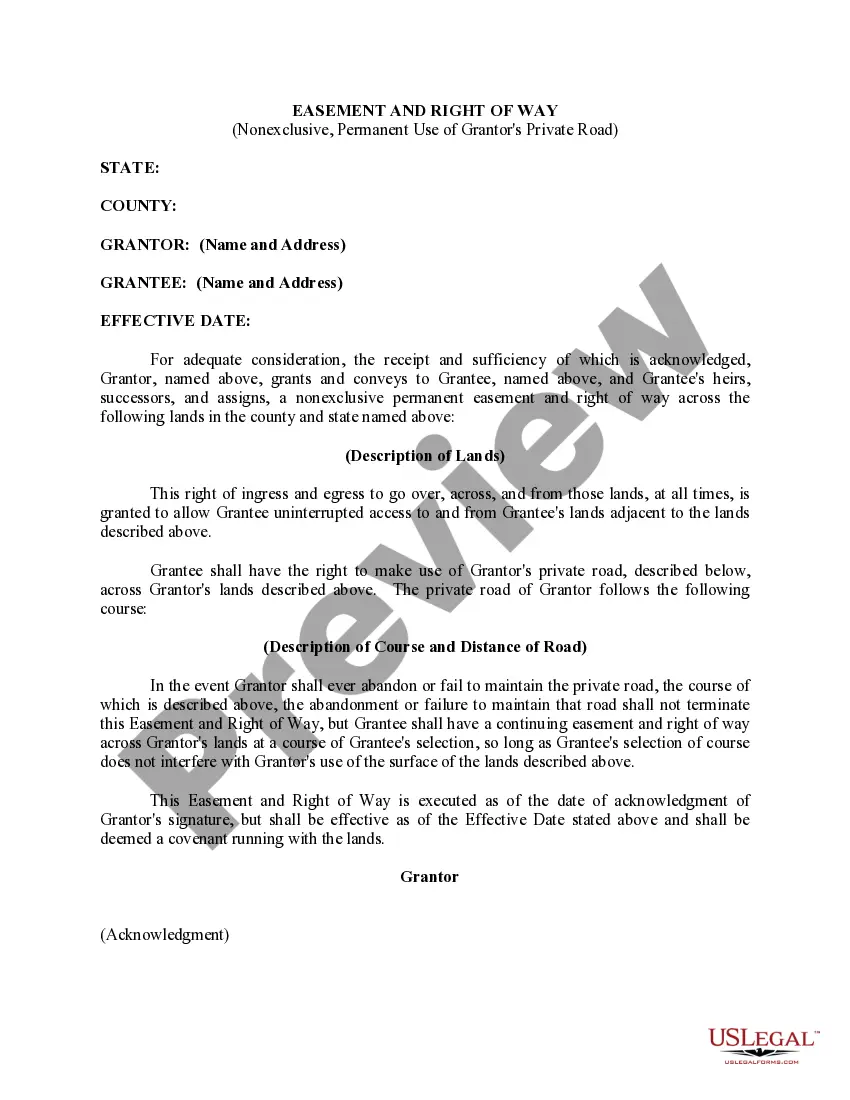
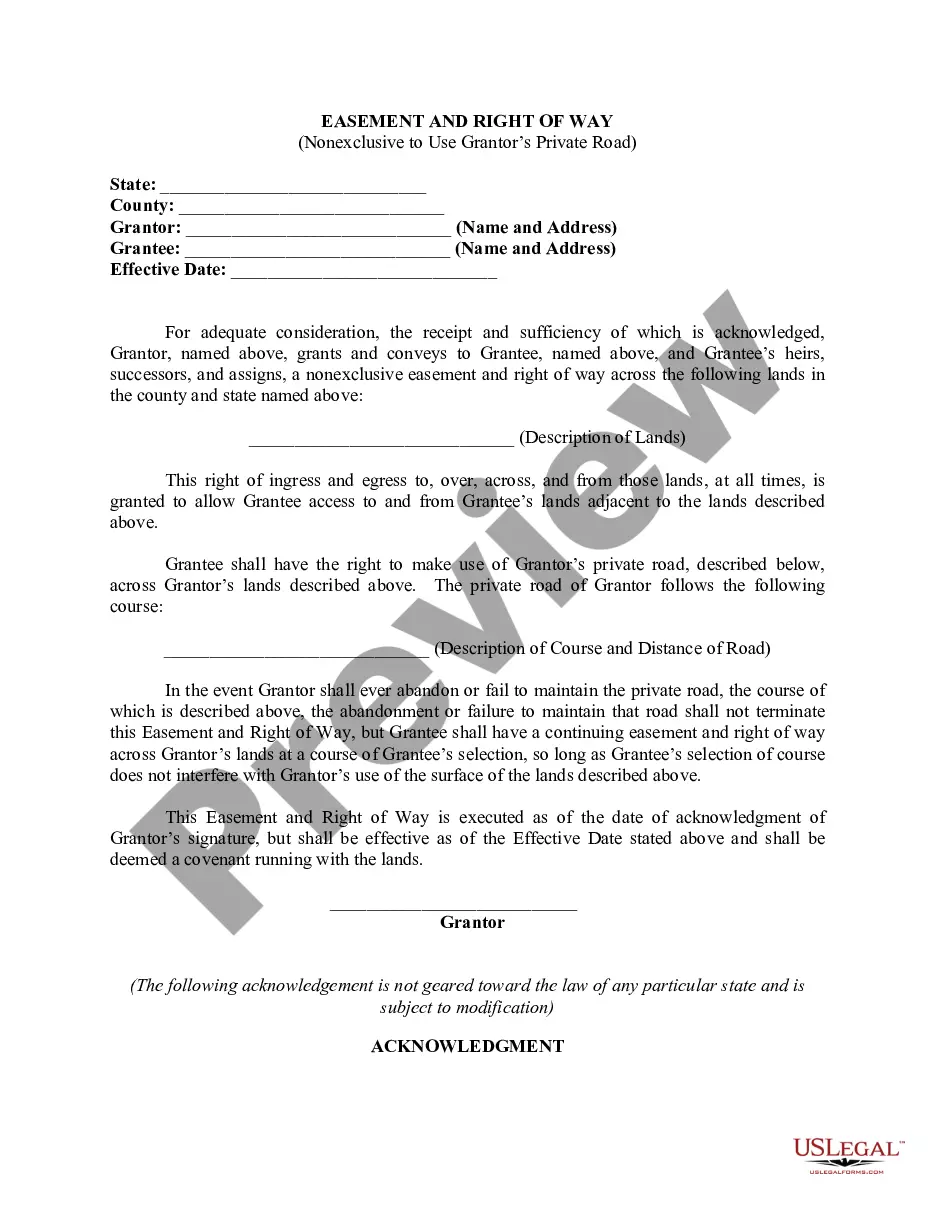
Easement and Right of Way (Nonexclusive, Permanent Use of Grantor's Private Road)
What is this form?
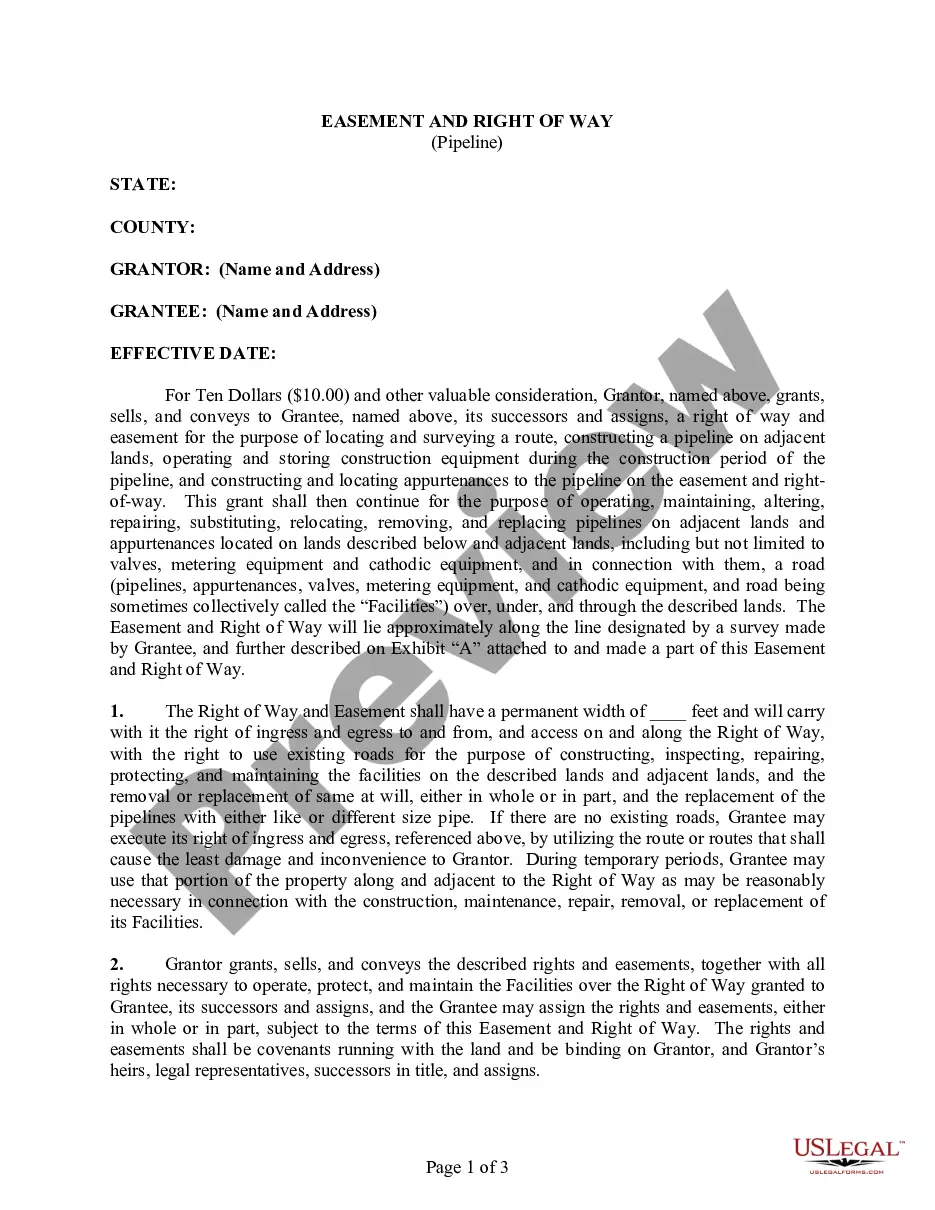
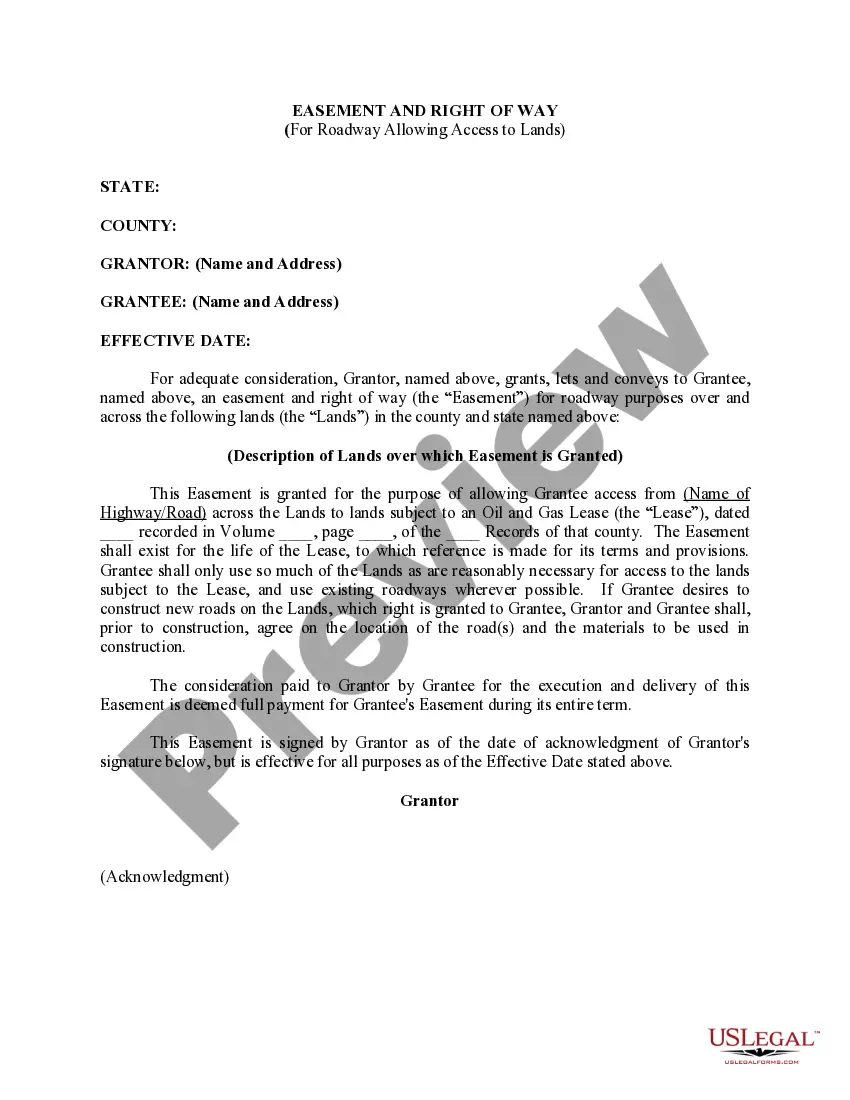
This Easement and Right of Way form establishes a nonexclusive and permanent right of access for the grantee over the grantor's private road. This legal document allows the grantee to use the specified private road while ensuring that the grantor retains ownership of the underlying property. Unlike other forms of easements, this one grants a permanent right for shared use without exclusive control, making it crucial for property owners who need reliable access to their lands.
Key parts of this document
- Grantor and Grantee Information: Names and addresses of both parties involved are required.
- Description of Lands: A detailed description of the property over which the easement is granted must be outlined.
- Defined Course of Road: The specific path of the private road, including its course and distance, should be noted.
- Continuing Rights: Stipulations regarding the grantee's rights in case the road is abandoned or not maintained by the grantor are included.
- Effective Date: The date when the easement becomes valid is clearly specified.
Common use cases
This form should be used in situations where a property owner (grantor) needs to allow another party (grantee) permanent access to a private road that crosses their land. Common scenarios include cases where a property is landlocked, where the grantee requires consistent access to their own property, or when properties are adjacent to one another, making road access necessary for development or maintenance.
Who should use this form
This form is intended for:
- Property owners looking to grant access over their land without transferring ownership.
- Individuals needing a legal way to use a private road that is critical for access to their adjacent property.
- Land developers who require permanent rights of way for the construction of roadways.
- Real estate professionals managing transactions involving shared access issues.
Completing this form step by step
- Identify the parties involved: Clearly write the names and addresses of the grantor and grantee.
- Describe the property: Provide a detailed description of the land that includes the location and boundaries.
- Specify the course of the road: Include the direction and distance of the private road to clarify the rights of passage.
- Enter the effective date: Indicate when the easement will take effect to provide clarity for both parties.
- Sign and date: Ensure both parties sign the document to validate the agreement.
Is notarization required?
This form needs to be notarized to ensure legal validity. US Legal Forms provides secure online notarization powered by Notarize, allowing you to complete the process through a verified video call, available anytime.
Get your form ready online
Our built-in tools help you complete, sign, share, and store your documents in one place.
Make edits, fill in missing information, and update formatting in US Legal Forms—just like you would in MS Word.
Download a copy, print it, send it by email, or mail it via USPS—whatever works best for your next step.
Sign and collect signatures with our SignNow integration. Send to multiple recipients, set reminders, and more. Go Premium to unlock E-Sign.
If this form requires notarization, complete it online through a secure video call—no need to meet a notary in person or wait for an appointment.
We protect your documents and personal data by following strict security and privacy standards.

Make edits, fill in missing information, and update formatting in US Legal Forms—just like you would in MS Word.

Download a copy, print it, send it by email, or mail it via USPS—whatever works best for your next step.

Sign and collect signatures with our SignNow integration. Send to multiple recipients, set reminders, and more. Go Premium to unlock E-Sign.

If this form requires notarization, complete it online through a secure video call—no need to meet a notary in person or wait for an appointment.

We protect your documents and personal data by following strict security and privacy standards.
Avoid these common issues
- Failing to accurately describe the course and distance of the road.
- Omitting the effective date or signing the form without specifying it.
- Not including complete names and addresses of both the grantor and grantee.
- Neglecting to clarify the rights in case of road abandonment.
Why complete this form online
- Immediate access to a legally vetted template that simplifies the process of granting an easement.
- Easy editing options to personalize the form for your specific situation.
- 24/7 availability, allowing users to complete necessary paperwork at their convenience.
- Secure storage ensures that your legal documents are protected and easily retrievable in the future.
Looking for another form?
Form popularity
FAQ
An easement may be created by means of an appropriate dealing registered in NSW LRS or by the inclusion in a Section 88B instrument lodged with a new deposited plan.
An easement is a nonpossessory right to use and/or enter onto the real property of another without possessing it. It is "best typified in the right of way which one landowner, A, may enjoy over the land of another, B".
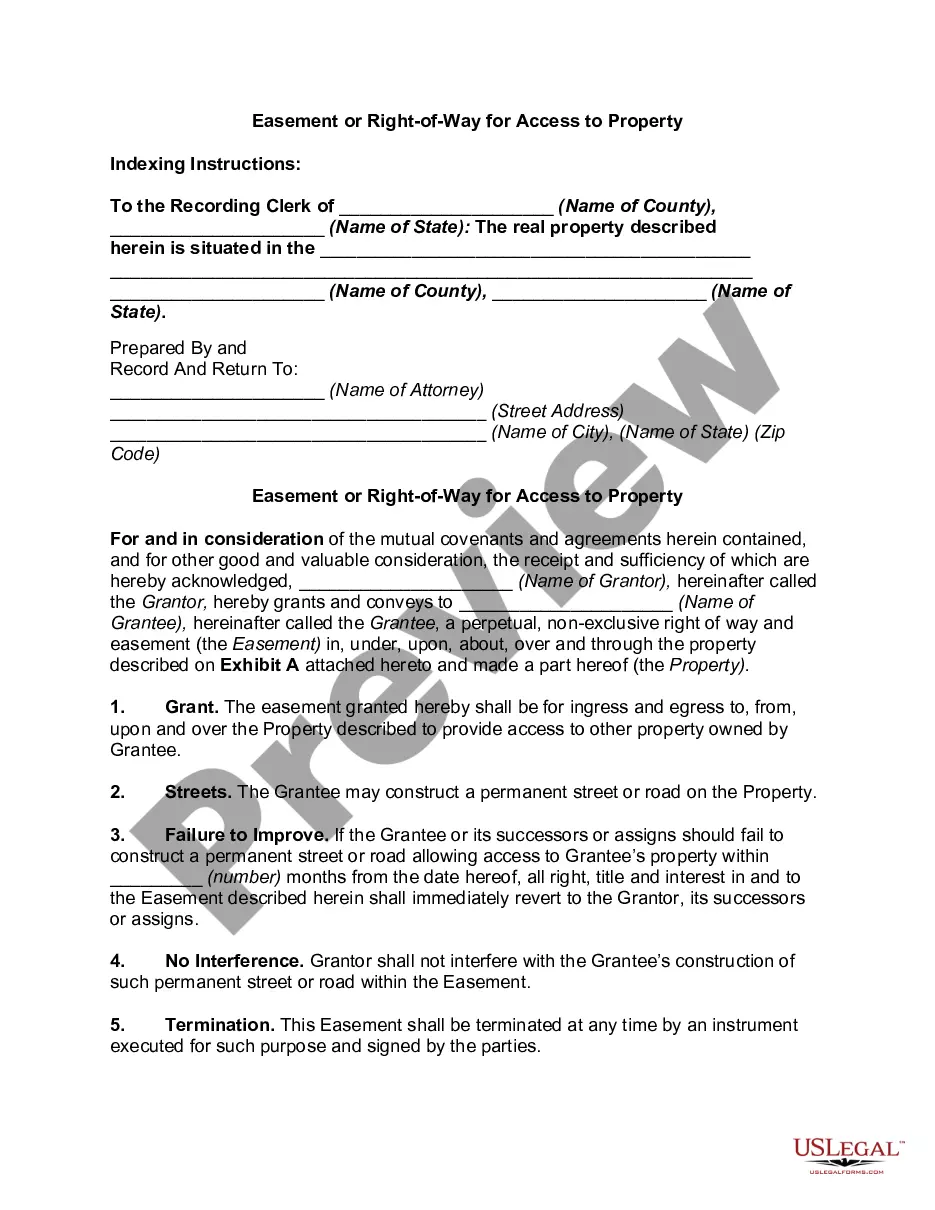
Give the document a simple title: Grant of Easement is sufficient. Identify the parties. You need to explain who the parties are to the agreement. The person granting the easement to his property is the Grantor and the person gaining access to the property is the Grantee.
Generally speaking, an easement is a more serious property right; it is the legal right to use someone else's land for a particular purpose. Easements are often recorded at the county clerk's office and encumber your property's title.Here, however, you probably do not need to take the step of granting an easement.
Definitions of permanent easement an easement (=the right that someone has to use the land belonging to another eg a right of way) that has been granted for an unlimited time.
The easiest way to gain access to a landlocked property is to obtain an express easement from the neighboring landowner. This easement should be in writing, signed by the grantor, specifically identify the property and details of the allowed easement use, and filed in the county deed records.
A property easement is generally written and recorded with the local assessor's office. The documented easement will show up when a title search is conducted and it stays there indefinitely, unless both parties agree to remove it.
An easement deed allows a party that is not the owner to use a portion of the land. It is a written agreement between two parties that spells out what part of the property is available for access and how it may be used. Since you are granting an easement to your land, you can set any terms and conditions you like.
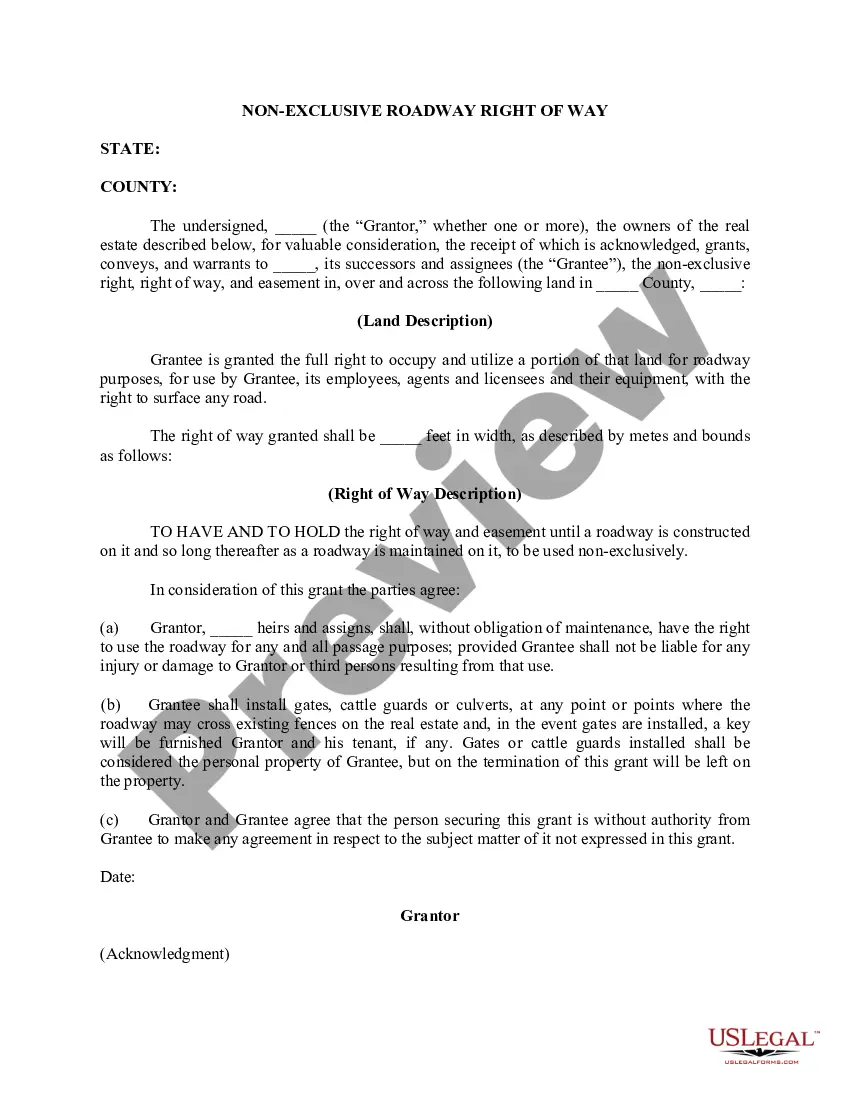
An easement is a limited right to use another person's land for a stated purpose. Examples of easements include the use of private roads and paths, or the use of a landowner's property to lay railroad tracks or electrical wires.