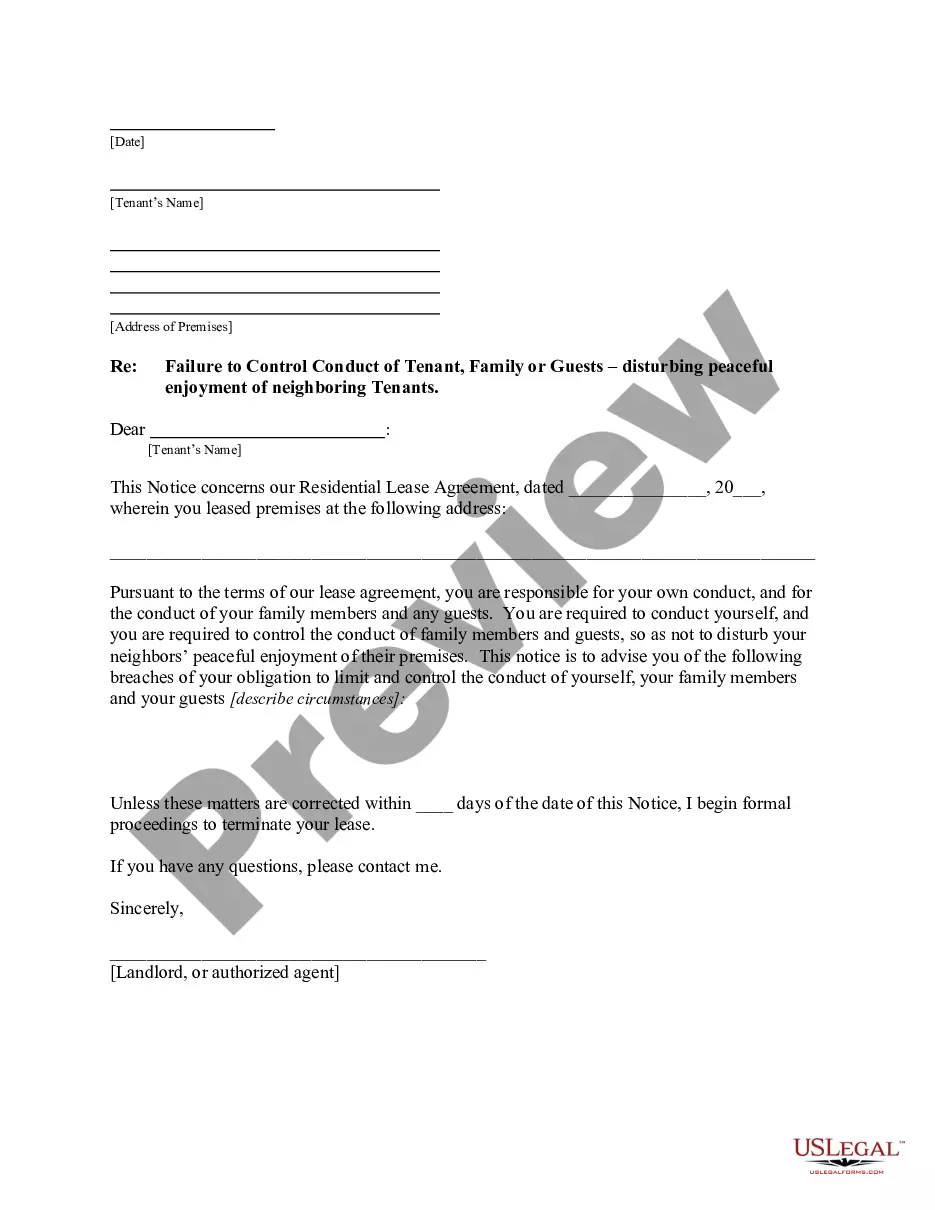
Confidentiality Agreement to Review A Prospect Proposal
Overview of this form
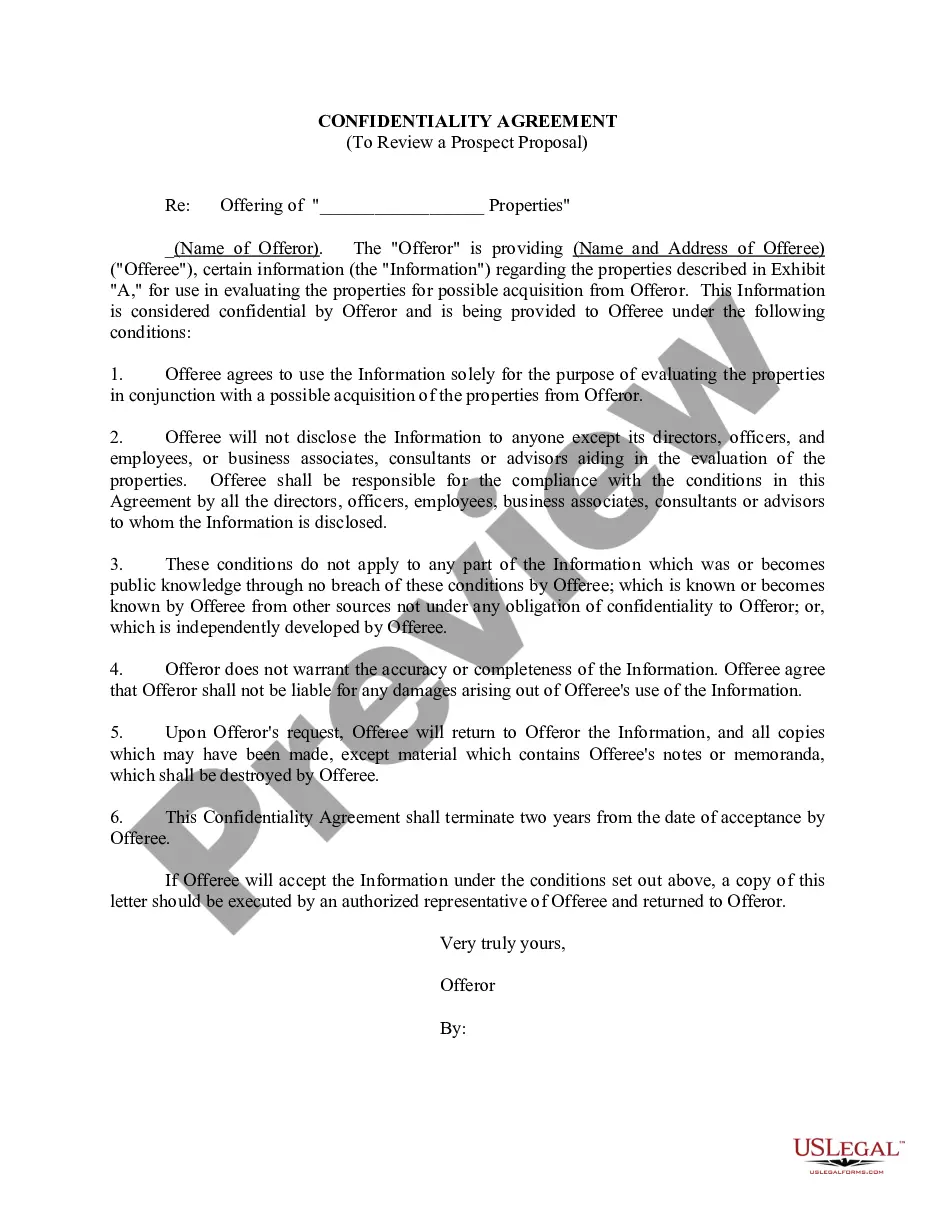
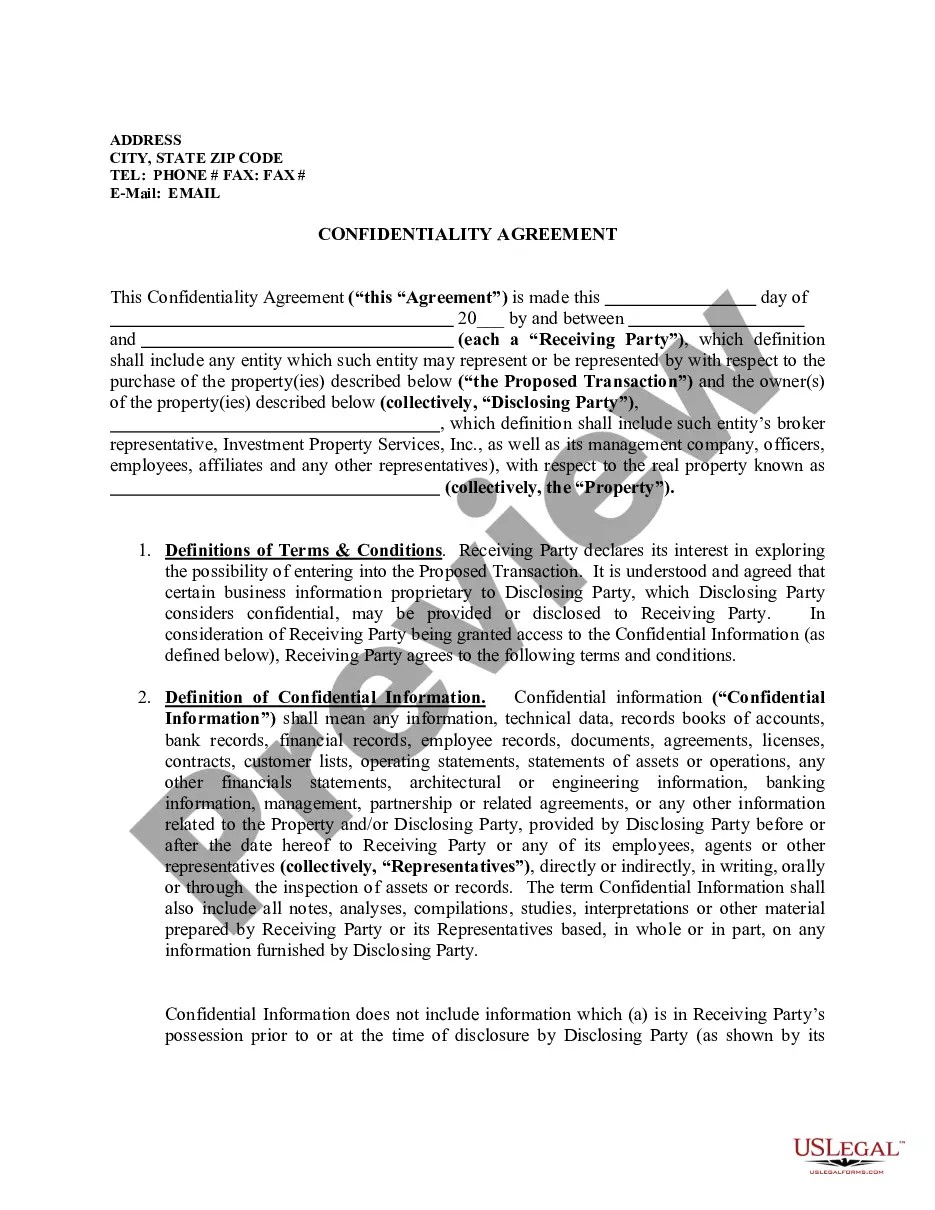
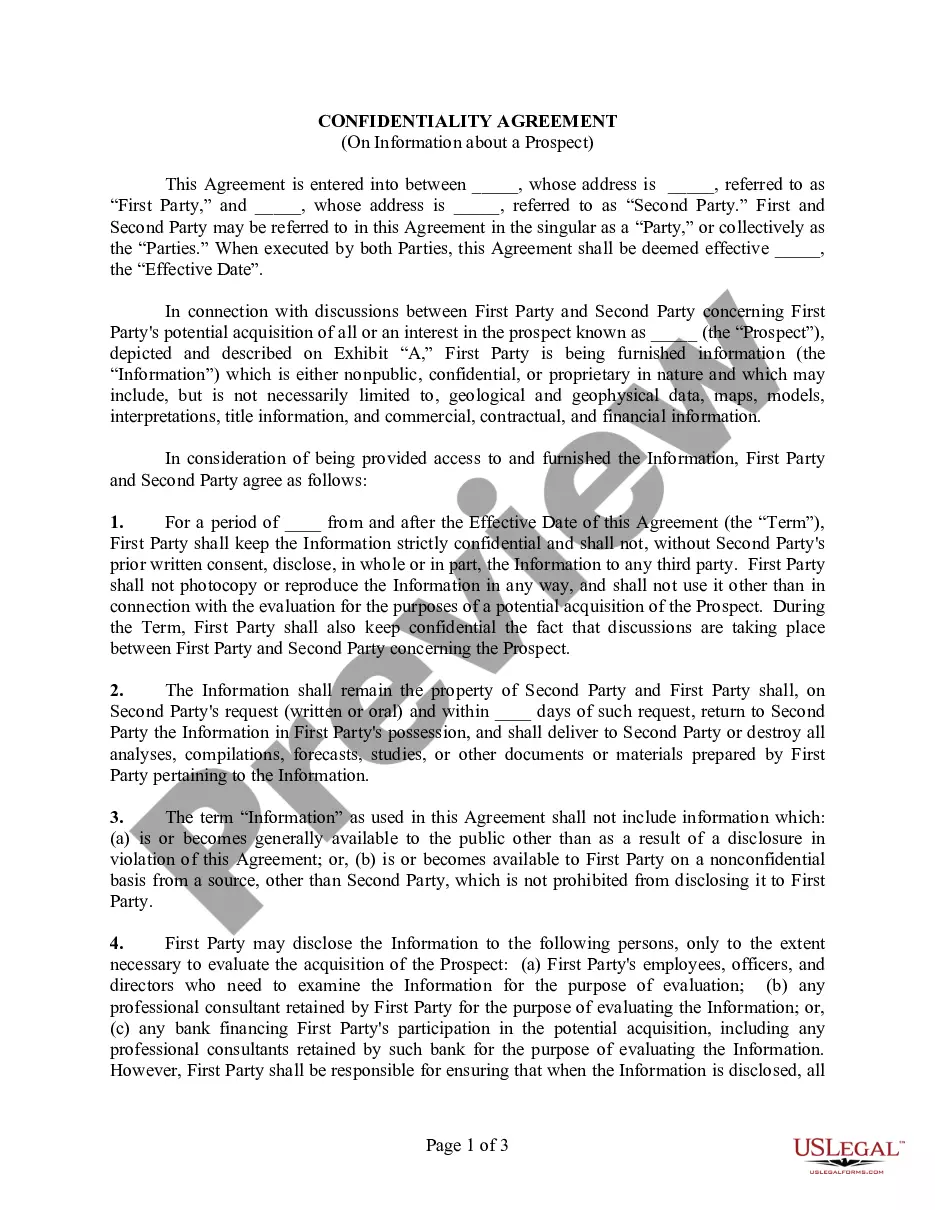
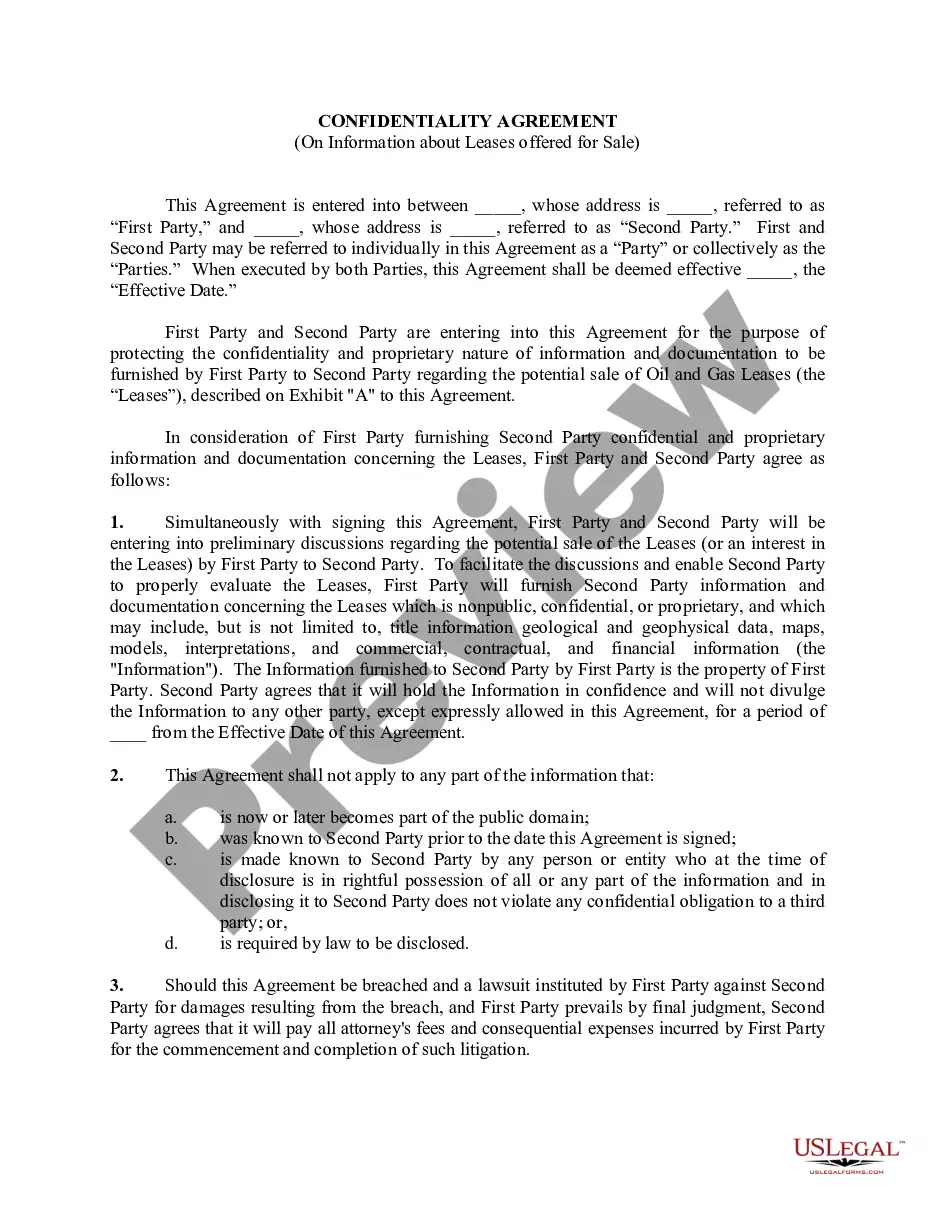
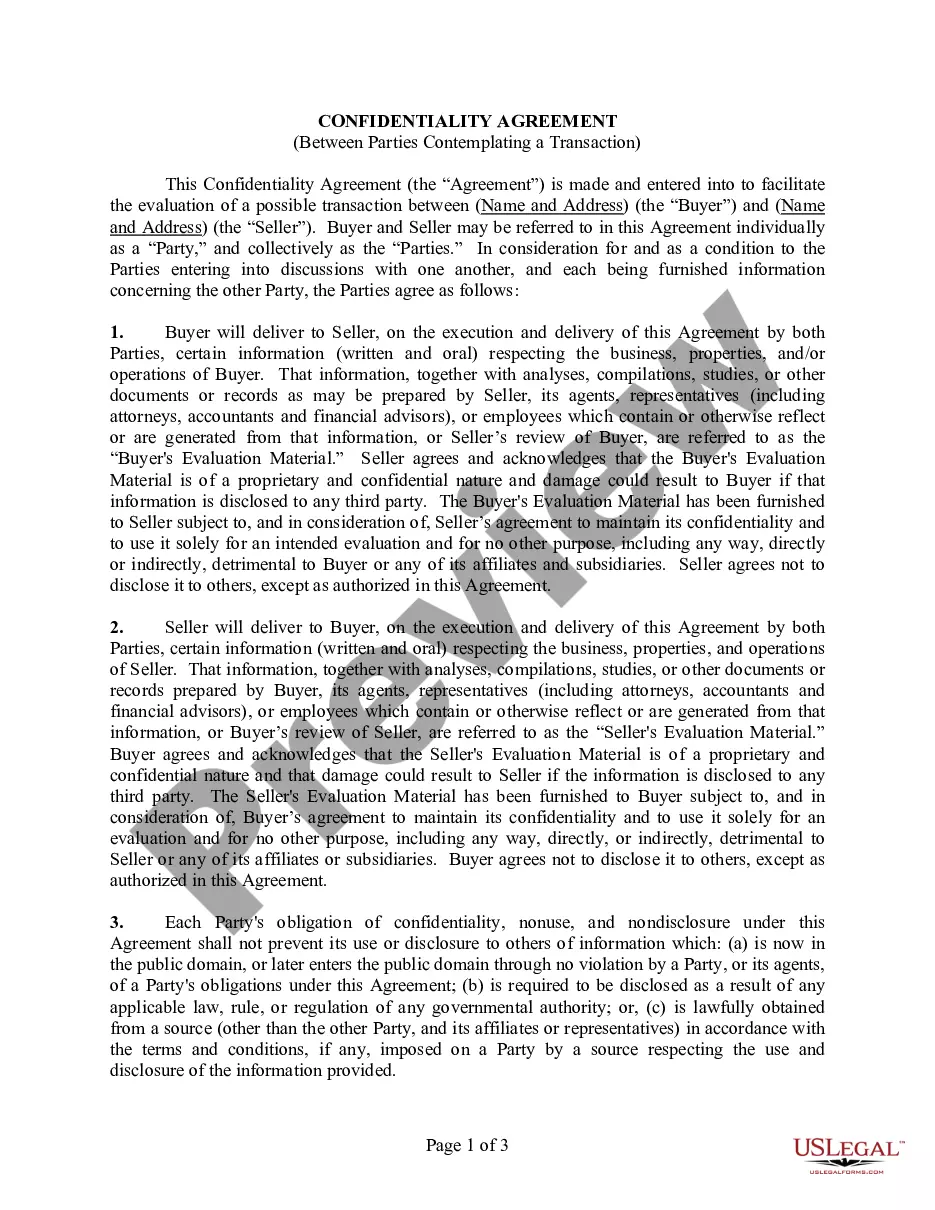
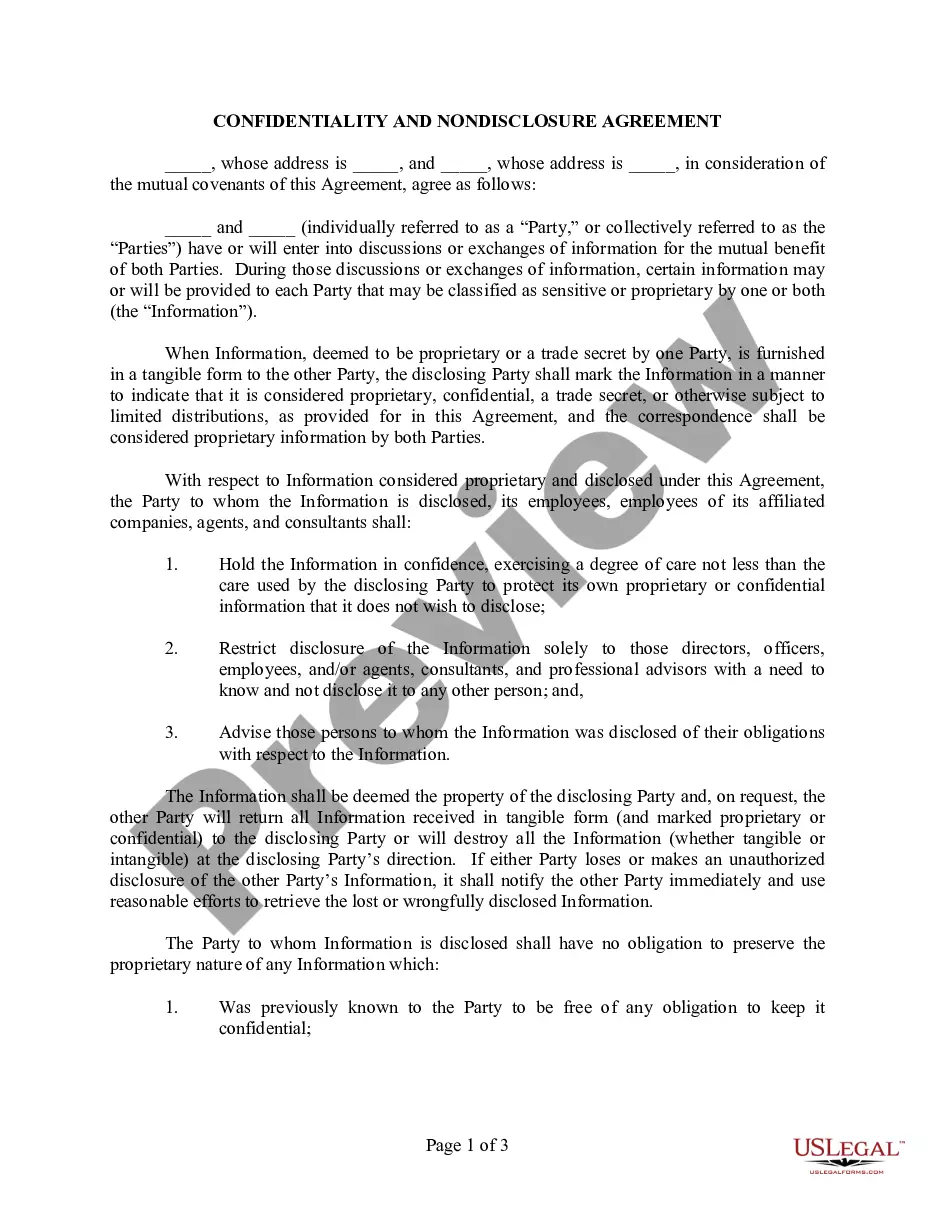
The Confidentiality Agreement to Review A Prospect Proposal is a legal document that ensures the protection of sensitive information shared between an offeror and an offeree during the evaluation of a potential property acquisition. This agreement establishes clear terms on how the information can be used and restricts disclosure, differentiating it from general non-disclosure agreements by focusing specifically on property acquisition scenarios. Its purpose is to protect confidential information from unauthorized disclosure while allowing for an informed decision-making process regarding the acquisition of properties.
What’s included in this form
- Identification of the Offeror and Offeree.
- Definition of the confidential information being shared.
- Terms and conditions for the use of the information.
- Obligations of the Offeree regarding non-disclosure.
- Exclusions from confidentiality obligations.
- Provisions on the return or destruction of information after evaluation.
- Duration of the confidentiality obligation.
Common use cases
This form should be used when an offeror wants to disclose sensitive information about properties to an offeree for the purpose of evaluation prior to a potential acquisition. It is applicable in scenarios where discussions about purchasing real estate occur and where protection of proprietary information is essential to ensure the offeror's interests are safeguarded.
Who needs this form
- Real estate developers looking to share property details with potential buyers.
- Investors evaluating properties for acquisition.
- Individuals or businesses seeking to acquire real estate and needing access to confidential information.
- Lawyers representing clients in property acquisition transactions.
How to complete this form
- Identify and enter the names and addresses of both the Offeror and Offeree.
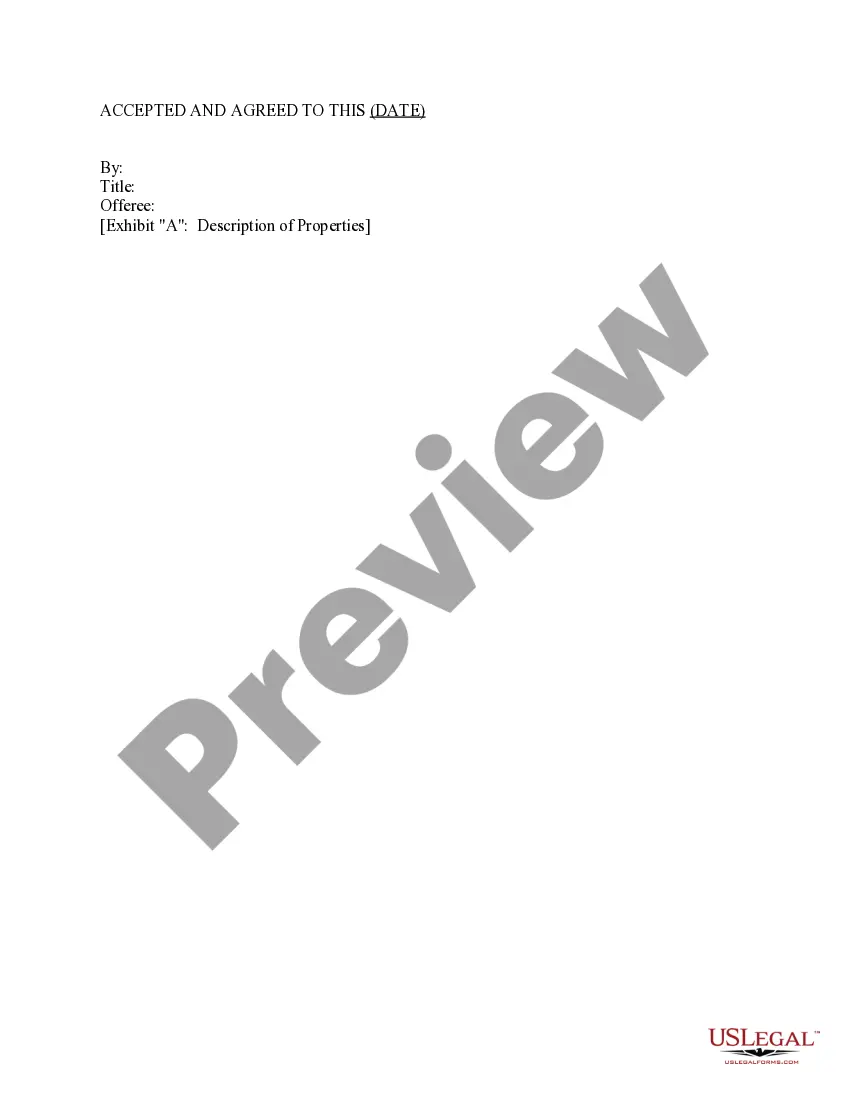
- Define the confidential information by specifying properties in Exhibit A.
- Review the terms and conditions and ensure all parties understand their obligations.
- Have an authorized representative of the Offeree sign and date the agreement.
- Return a signed copy to the Offeror, keeping a copy for your records.
Is notarization required?
In most cases, this form does not require notarization. However, some jurisdictions or signing circumstances might. US Legal Forms offers online notarization powered by Notarize, accessible 24/7 for a quick, remote process.
Get your form ready online
Our built-in tools help you complete, sign, share, and store your documents in one place.
Make edits, fill in missing information, and update formatting in US Legal Forms—just like you would in MS Word.
Download a copy, print it, send it by email, or mail it via USPS—whatever works best for your next step.
Sign and collect signatures with our SignNow integration. Send to multiple recipients, set reminders, and more. Go Premium to unlock E-Sign.
If this form requires notarization, complete it online through a secure video call—no need to meet a notary in person or wait for an appointment.
We protect your documents and personal data by following strict security and privacy standards.

Make edits, fill in missing information, and update formatting in US Legal Forms—just like you would in MS Word.

Download a copy, print it, send it by email, or mail it via USPS—whatever works best for your next step.

Sign and collect signatures with our SignNow integration. Send to multiple recipients, set reminders, and more. Go Premium to unlock E-Sign.

If this form requires notarization, complete it online through a secure video call—no need to meet a notary in person or wait for an appointment.

We protect your documents and personal data by following strict security and privacy standards.
Common mistakes
- Failing to specify the confidential information clearly.
- Not having the agreement signed by an authorized representative.
- Disclosing information beyond the agreed terms.
- Neglecting to return or destroy confidential information as required.
Benefits of completing this form online
- Convenience of downloading the form immediately.
- Ability to customize and edit the form to fit specific needs.
- Access to templates drafted by licensed attorneys for legal reliability.
- Ease of storing and managing documents digitally.
Main things to remember
- The Confidentiality Agreement protects sensitive information shared during property evaluations.
- It is crucial for both Offerors and Offerees to understand their obligations under this confidentiality agreement.
- Proper completion of the form ensures legal enforceability and clarity in the terms of information confidentiality.
Looking for another form?
Form popularity
FAQ
Understand the varying levels of confidentiality. Ask for client's permission. Find out the real value of that protected work. Ask for testimonials. Rewrite and adapt the information. Protect work with a password. 4) Create a case study or write a blog post.
Identify each party in the first section of the form. The NDA form will start by declaring it to be an agreement and identifying who the agreement is between. Whoever is disclosing the information to be protected is the "disclosing party"; write his or her name on this space.
A definition of confidential information. Who is involved. Why the recipient knows the information. Exclusions or limits on confidential information. Receiving party's obligations. Time frame or term. Discloser to the recipient.
Set the date of the agreement. Describe the two parties, sometimes called the Disclosing Party and the Receiving Party.7feff Include names and identification, so there can be no misunderstanding about who signed the agreement.
Look for broad and vague language: When analyzing an NDA, make sure the definitions of proprietary and confidential information are thoroughly defined. Be skeptical of broad and vague language that opts to unreasonably limit your ability to discuss and divulge information.
As with any contract, a nondisclosure agreement can be legally broken or ended. For example, the agreement might not be legally enforceable, in which case you can break it because you'll win a lawsuit. Alternately, you might negotiate with the other party to end the agreement early.
Look for language like the disclosing party and the receiving party or both parties as opposed to one-sided language with noticeably absent requirements from the other side. If the NDA is intended to bind only one party, you should walk into that arrangement with eyes wide open.
Employers must be prepared to terminate any employee who refuses to sign the agreement. If an employer allows even one employee to refuse and remain employed, the agreements signed by the other employees will not be legally binding.