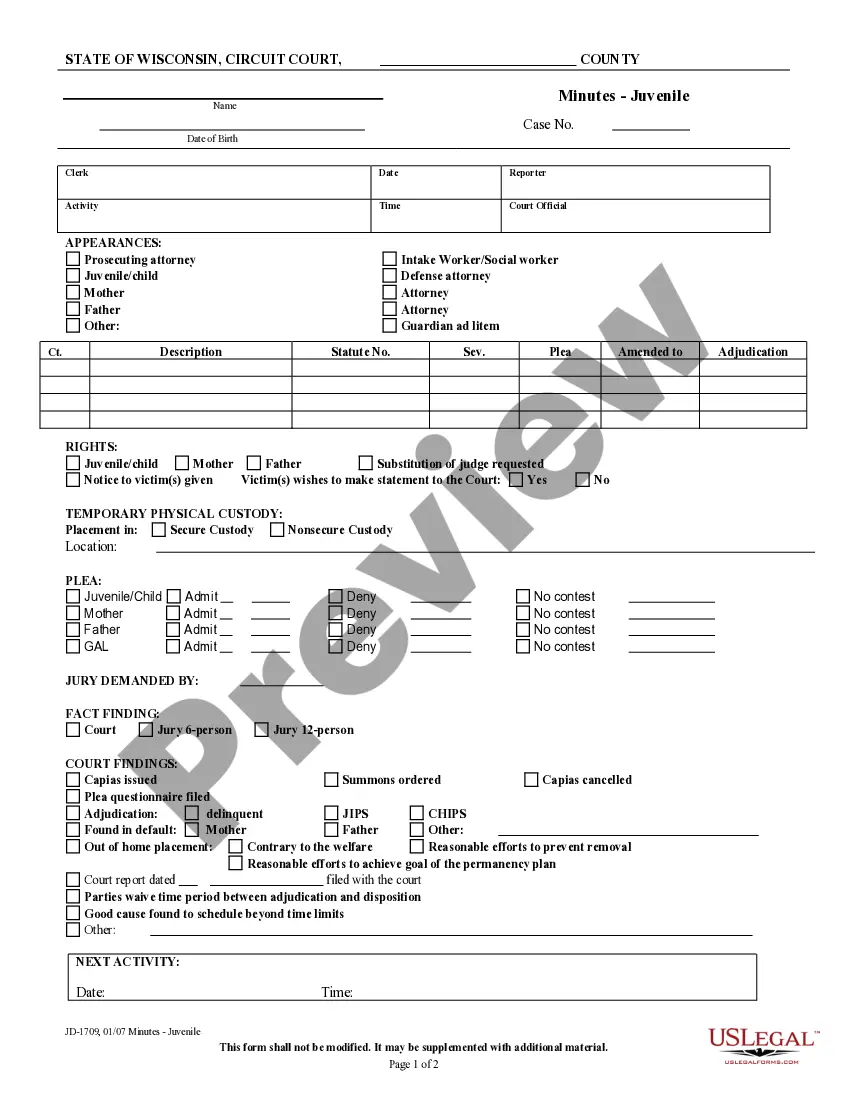
Joint Use Agreement (Powerline Easement for Fiber Optic Communications System)
About this form
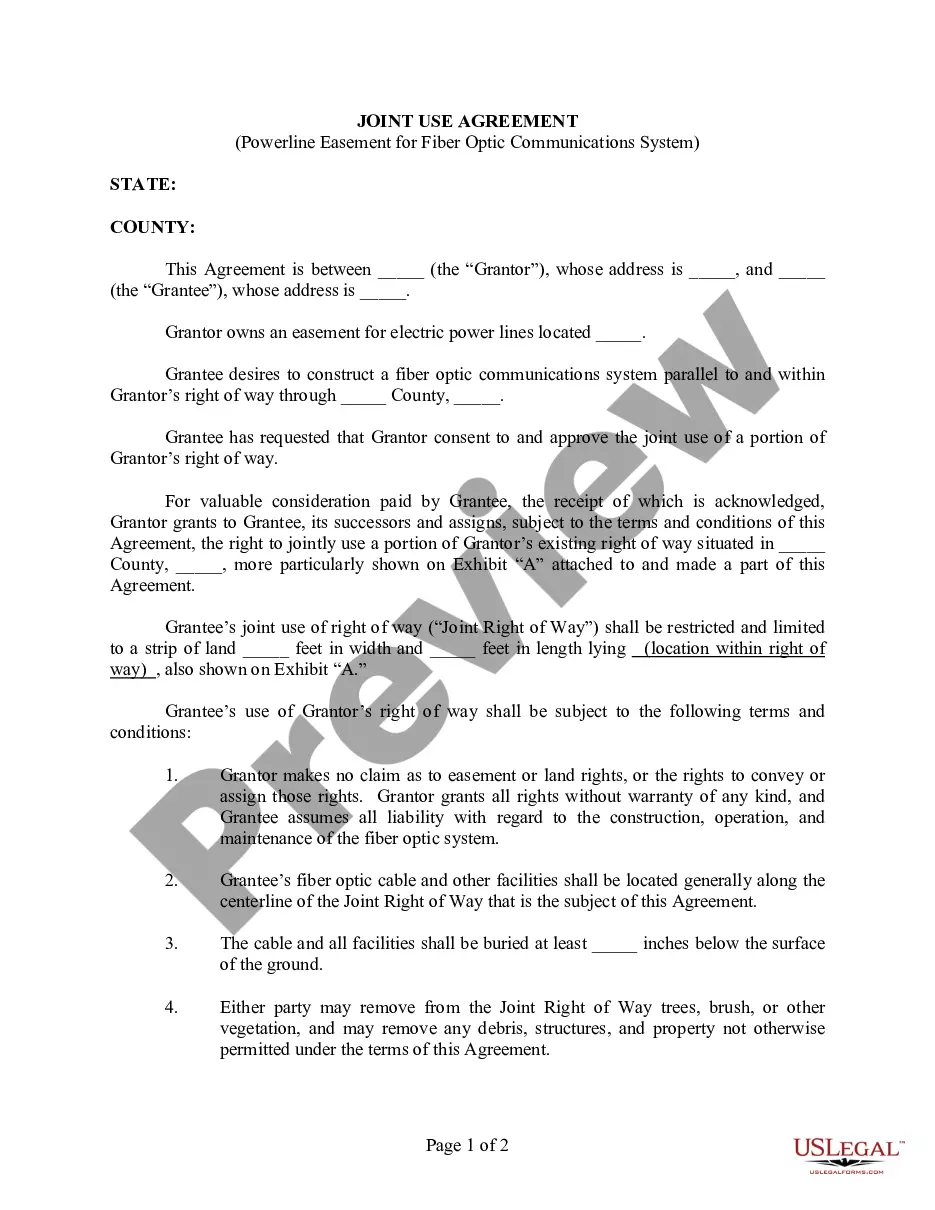
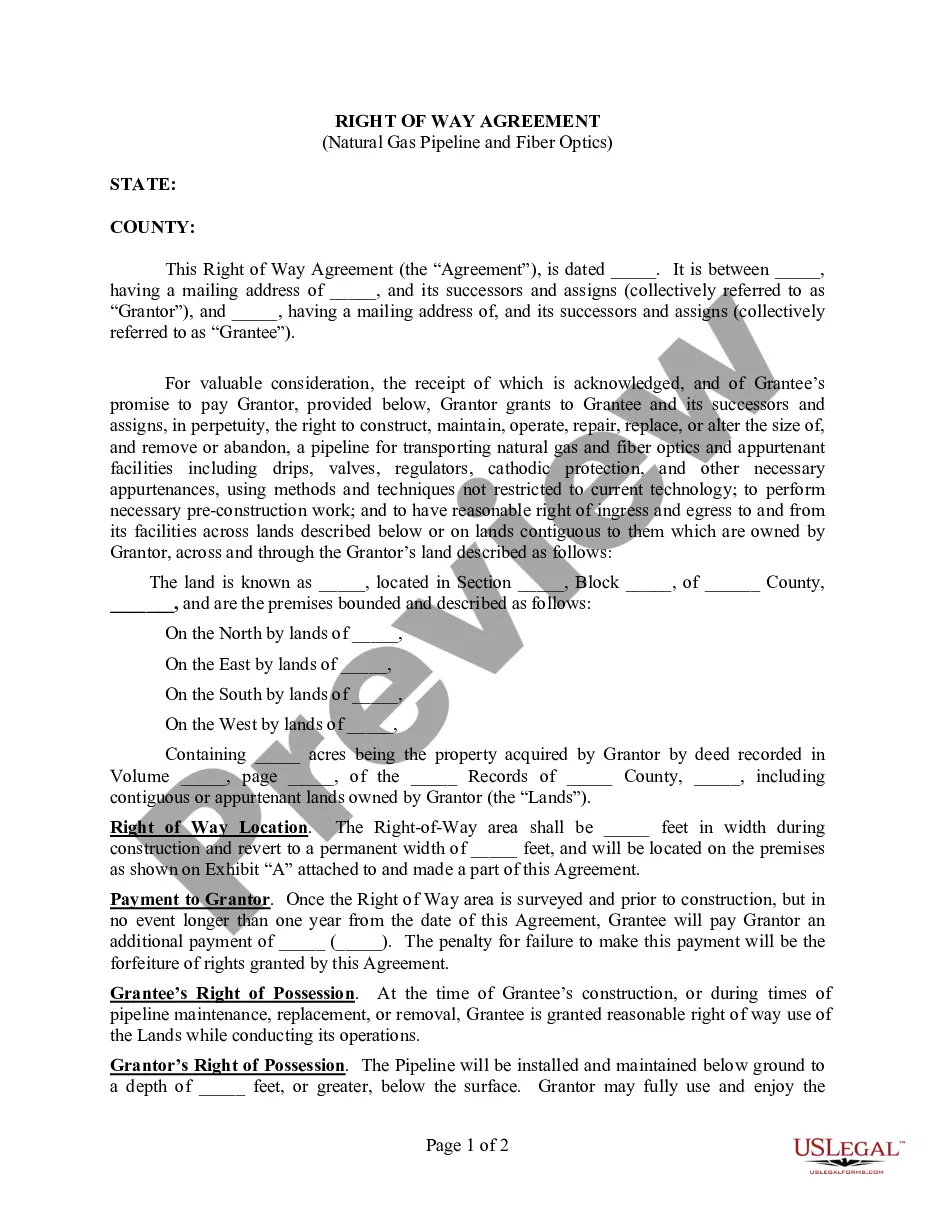
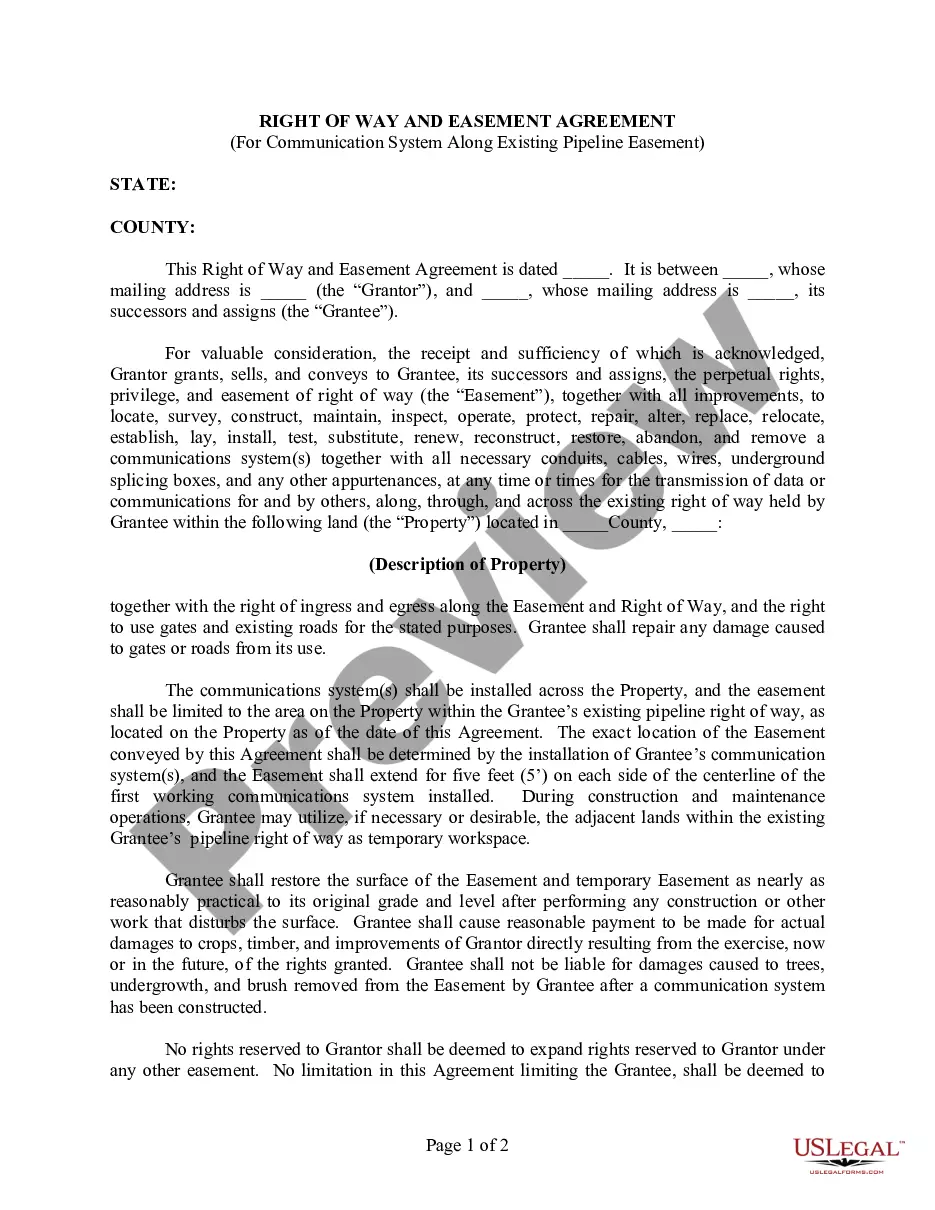
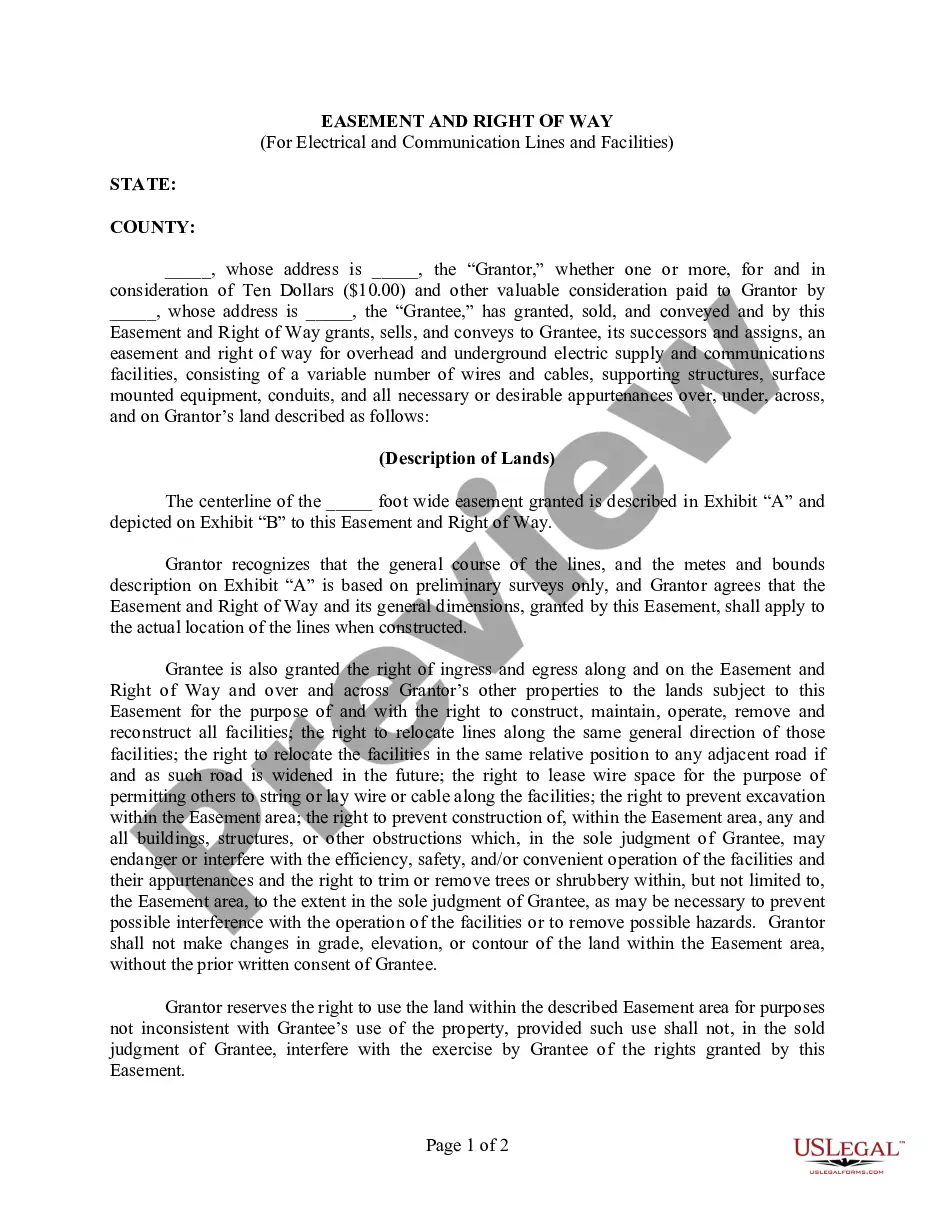
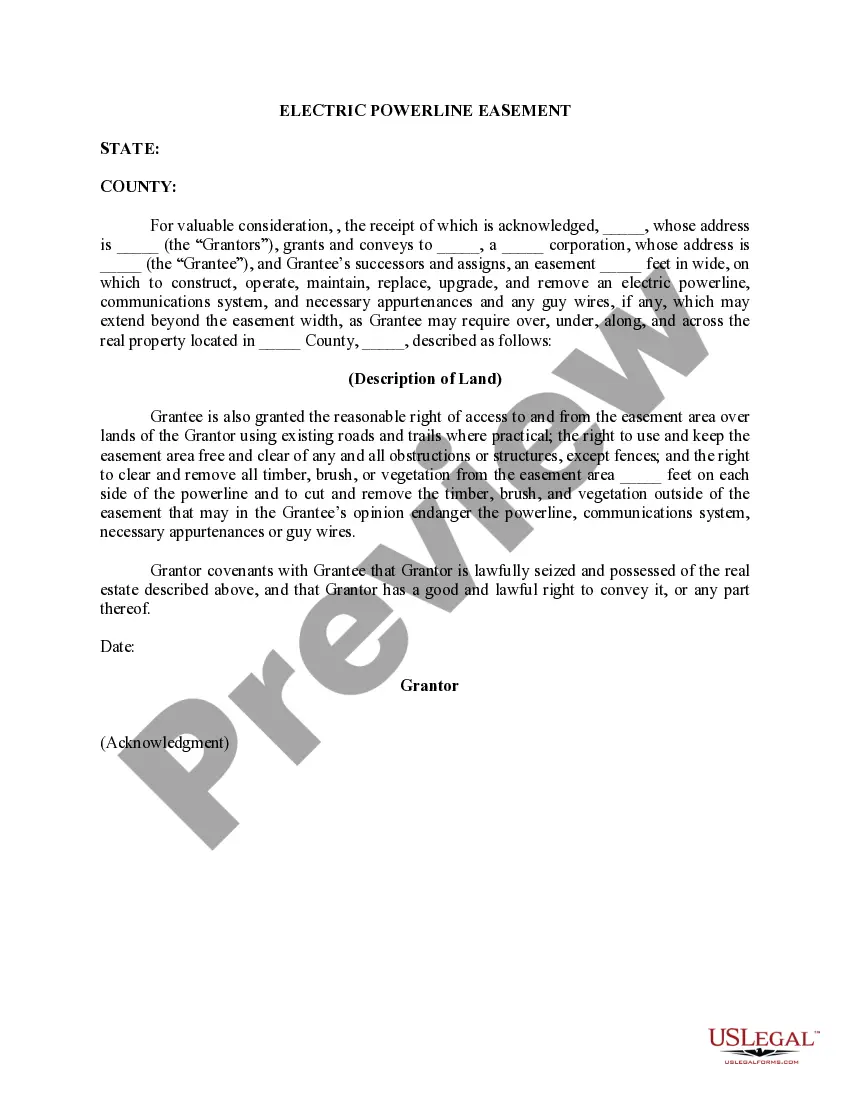
The Joint Use Agreement for Powerline Easement for Fiber Optic Communications System is a legal document that allows two partiesâthe Grantor and the Granteeâto share an easement. This agreement specifically permits the Grantee to install fiber optic communications systems within an existing powerline easement owned by the Grantor. It outlines each party's rights and responsibilities, distinguishing it from other easement agreements that may not involve joint use of property.
Form components explained
- Identification of Grantor and Grantee, including their respective rights.
- Details of the existing powerline easement location and dimensions.
- Terms regarding the use and maintenance of the joint right of way.
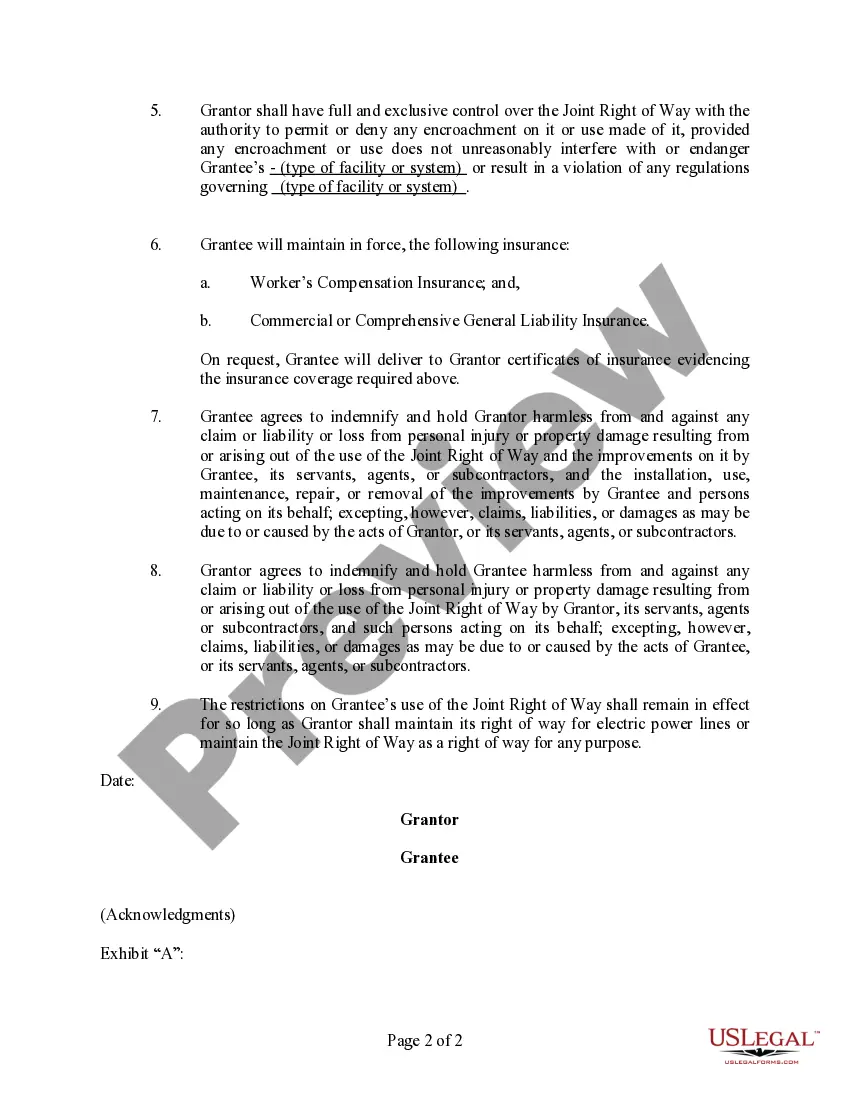
- Liability and indemnification clauses for both parties.
- Insurance requirements for the Grantee.
Situations where this form applies
This form is typically used when a property owner (Grantor) wants to allow another party (Grantee) to use a portion of their easement for installing fiber optic communication systems. It's applicable in scenarios where both parties wish to benefit from shared access to the easement without conflicting uses, ensuring legal clarity and protection.
Who can use this document
- Property owners (Grantors) who have an existing easement for powerlines.
- Telecommunications companies or service providers (Grantees) looking to install fiber optic systems.
- Land developers involved in infrastructure projects that utilize existing easements.
Instructions for completing this form
- Identify and fill in the names of the Grantor and Grantee.
- Describe the location and dimensions of the existing easement.
- Specify the exact area of the right of way that the Grantee will use.
- Complete the insurance requirements and liability clauses as per the agreement.
- Sign and date the document to validate the joint use agreement.
Notarization guidance
This form does not typically require notarization unless specified by local law. However, it is advisable to have it notarized to ensure added legal validity and recognition in case of future disputes.
Get your form ready online
Our built-in tools help you complete, sign, share, and store your documents in one place.
Make edits, fill in missing information, and update formatting in US Legal Forms—just like you would in MS Word.
Download a copy, print it, send it by email, or mail it via USPS—whatever works best for your next step.
Sign and collect signatures with our SignNow integration. Send to multiple recipients, set reminders, and more. Go Premium to unlock E-Sign.
If this form requires notarization, complete it online through a secure video call—no need to meet a notary in person or wait for an appointment.
We protect your documents and personal data by following strict security and privacy standards.

Make edits, fill in missing information, and update formatting in US Legal Forms—just like you would in MS Word.

Download a copy, print it, send it by email, or mail it via USPS—whatever works best for your next step.

Sign and collect signatures with our SignNow integration. Send to multiple recipients, set reminders, and more. Go Premium to unlock E-Sign.

If this form requires notarization, complete it online through a secure video call—no need to meet a notary in person or wait for an appointment.

We protect your documents and personal data by following strict security and privacy standards.
Mistakes to watch out for
- Failing to specify the exact location and dimensions of the right of way.
- Neglecting to include essential clauses related to liability and indemnity.
- Missing signatures from both parties, which invalidates the agreement.
Why complete this form online
- Convenience of accessing and downloading the form at any time.
- Easy to complete with clear instructions.
- Reliability of having a document drafted by licensed attorneys.
Looking for another form?
Form popularity
FAQ
Types of Easements An easement may be classified as either an easement appurtenant or an easement in gross. Easement Appurtenant. An easement appurtenant is an easement that benefits one parcel of land, known as the dominant tenement, to the detriment of another parcel of land, known as the servient tenement.
An easement appurtenant is an easement that benefits one parcel of land, known as the dominant tenement, to the detriment of another parcel of land, known as the servient tenement.Similarly, if Landowner B sells his property to another landowner, that landowner will be able to use the easement. Easement in Gross.
There are four types of easement Section. 5 of Easement Act deals with the types of easement. It provides that the easements are either continuous or discontinuous ,apparent or non apparent. A continuous easement is one whose enjoyment is, or may be, continual without the act of man.
Typically, reciprocal easement agreements ("REAs") are used when a property is owned by more than one person or entity, and the persons or entities wish to develop the property as an integrated shopping center.These contractual obligations will run with the land of the property that comprises the shopping center.
An easement is a "nonpossessory" property interest that allows the holder of the easement to have a right of way or use property that they do not own or possess.If the easement only benefits an individual personally, not as an owner of a particular piece of land, the easement is known as "in gross."
An agreement that: Provides for the rights and obligations of multiple owners of real property. Ensures harmony in the development, operations and maintenance of the affected real property.
Give the document a simple title: Grant of Easement is sufficient. Identify the parties. You need to explain who the parties are to the agreement. The person granting the easement to his property is the Grantor and the person gaining access to the property is the Grantee.
Cross easements are reciprocal easements created by contract, the one being granted in favor of premises of one party in consideration of a grant by such party in favor of premises of the other party.
An easement is a right which the owner or occupier of certain land possesses, as such, for the beneficial enjoyment of that land, to do and continue to do something, or to prevent and continue to prevent something being done, in or upon, or in respect of certain other land not his own. Kinds/ Types of Easement -