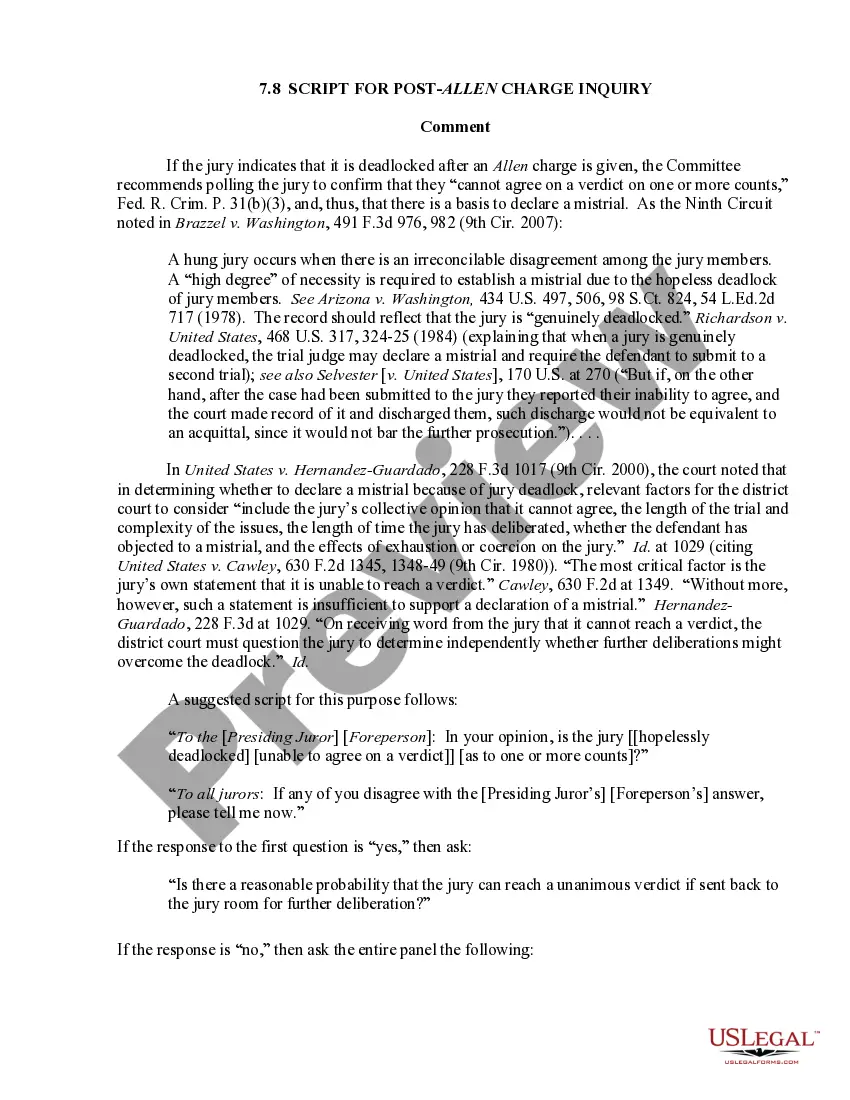
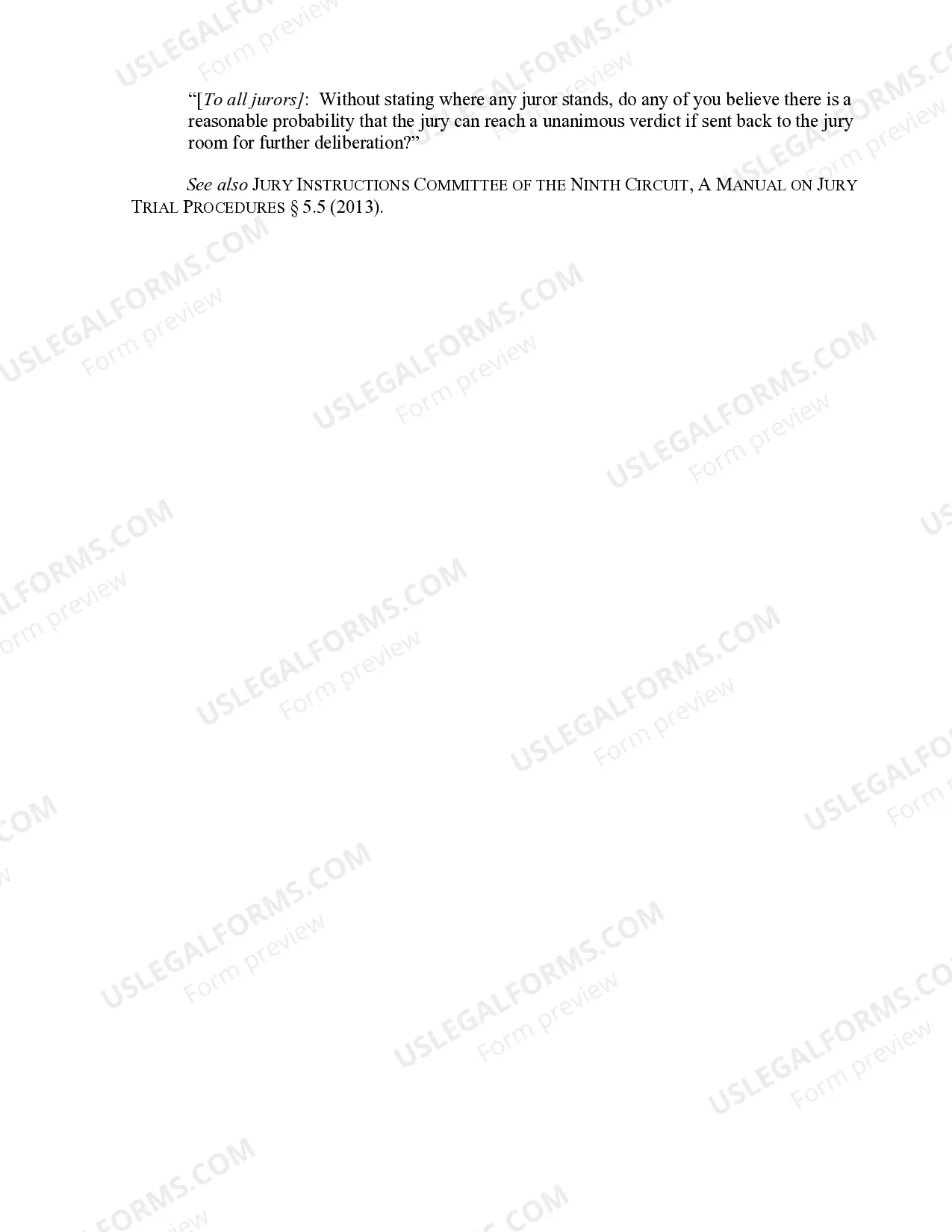
7.8 Script for Post-Allen Charge Inquiry
Does this document require notarization?
This form usually doesn’t need to be notarized. However, local laws or specific transactions may require it. Our online notarization service, powered by Notarize, lets you complete it remotely through a secure video session, available 24/7.
Get your form ready online
Our built-in tools help you complete, sign, share, and store your documents in one place.
Make edits, fill in missing information, and update formatting in US Legal Forms—just like you would in MS Word.
Download a copy, print it, send it by email, or mail it via USPS—whatever works best for your next step.
Sign and collect signatures with our SignNow integration. Send to multiple recipients, set reminders, and more. Go Premium to unlock E-Sign.
If this form requires notarization, complete it online through a secure video call—no need to meet a notary in person or wait for an appointment.
We protect your documents and personal data by following strict security and privacy standards.

Make edits, fill in missing information, and update formatting in US Legal Forms—just like you would in MS Word.

Download a copy, print it, send it by email, or mail it via USPS—whatever works best for your next step.

Sign and collect signatures with our SignNow integration. Send to multiple recipients, set reminders, and more. Go Premium to unlock E-Sign.

If this form requires notarization, complete it online through a secure video call—no need to meet a notary in person or wait for an appointment.

We protect your documents and personal data by following strict security and privacy standards.
Looking for another form?
Form popularity
FAQ
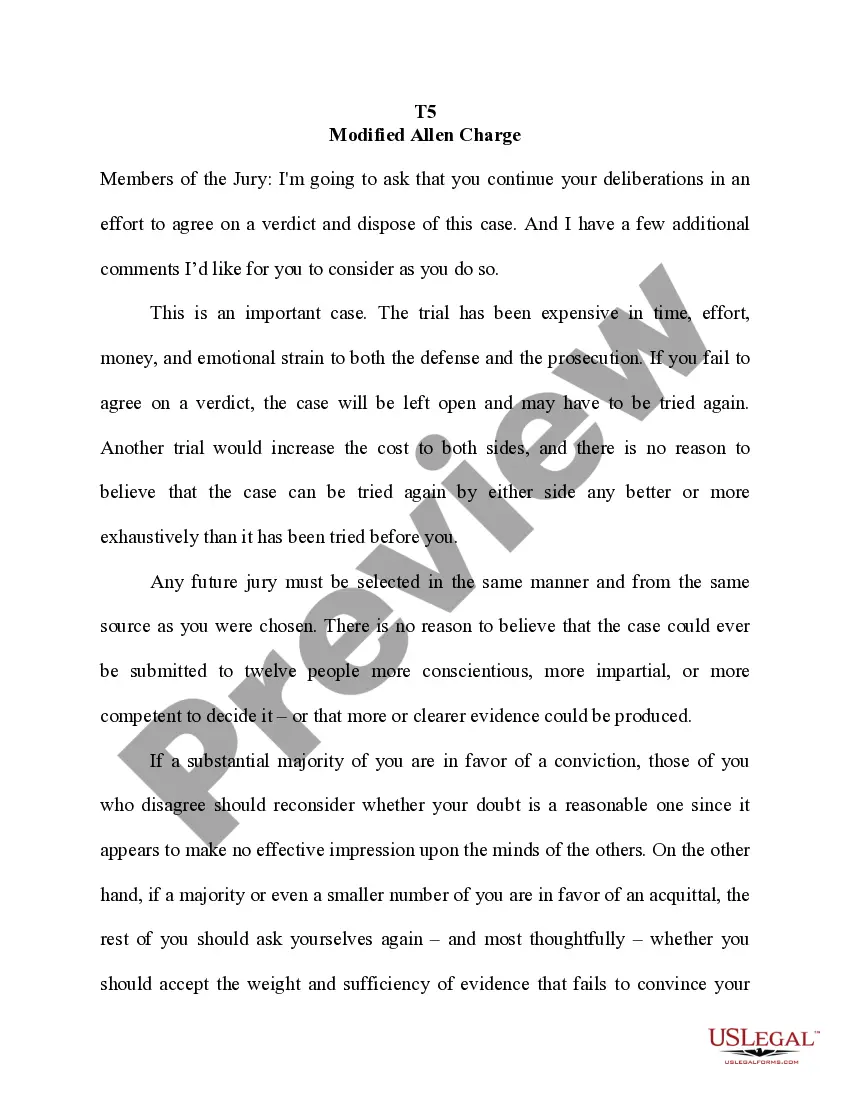
Allen charges (also referred to as dynamite, nitroglycerin, shotgun, or third-degree charges) refer to jury instructions given to a hung jury urging them to agree on a verdict.
Allen Charge refers to a set of instructions given to a jury when, after deliberation, it is unable to decide on a verdict.
Named after the case Allen vs. United States, 164 U.S. 492 (1896), an Allen charge is a supplemental jury instruction given by the court to encourage a dead-locked jury to try harder to reach a verdict.
Allen charges (also referred to as dynamite, nitroglycerin, shotgun, or third-degree charges) refer to jury instructions given to a hung jury urging them to agree on a verdict.
If jurors remain undecided on a verdict, additional Allen charges may be issued to the jury. However, if repeated Allen charges fail to bring a hung jury to consensus, the judge will eventually declare a mistrial.
When jurors cannot agree on a verdict and report this to a judge, the judge may issue further instruction to them to encourage those in the minority to reconsider their position. These instructions are known as an Allen charge or, more casually, as a dynamite charge.
When juries report they are deadlocked, judges may deliver a supplemental instruction known as the dynamite charge which urges jurors to reexamine their views in an effort to reach a unanimous verdict.
If there is a hung jury, the judge may order the jurors to deliberate further. This is known as an Allen charge and is generally only given once or twice. Often, juries will report that they are deadlocked after only deliberating for a short period of time.