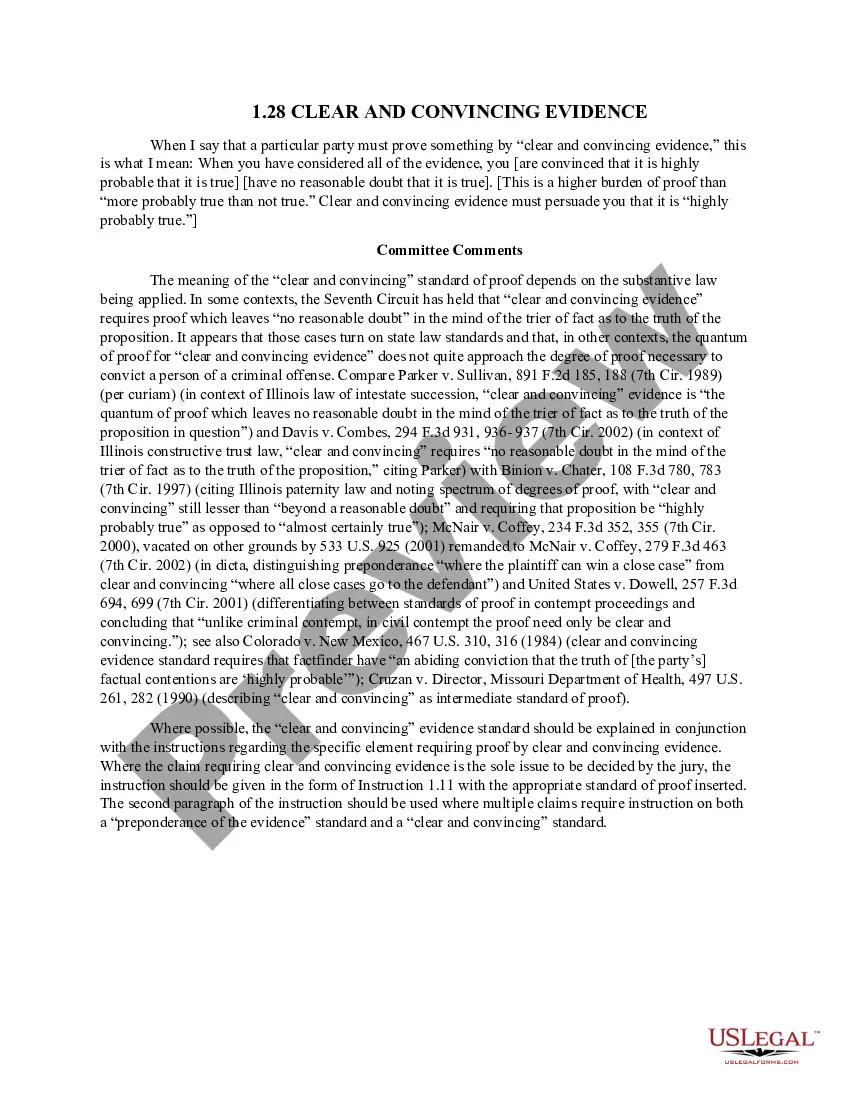
1.28 Clear and Convincing Evidence .
What this document covers
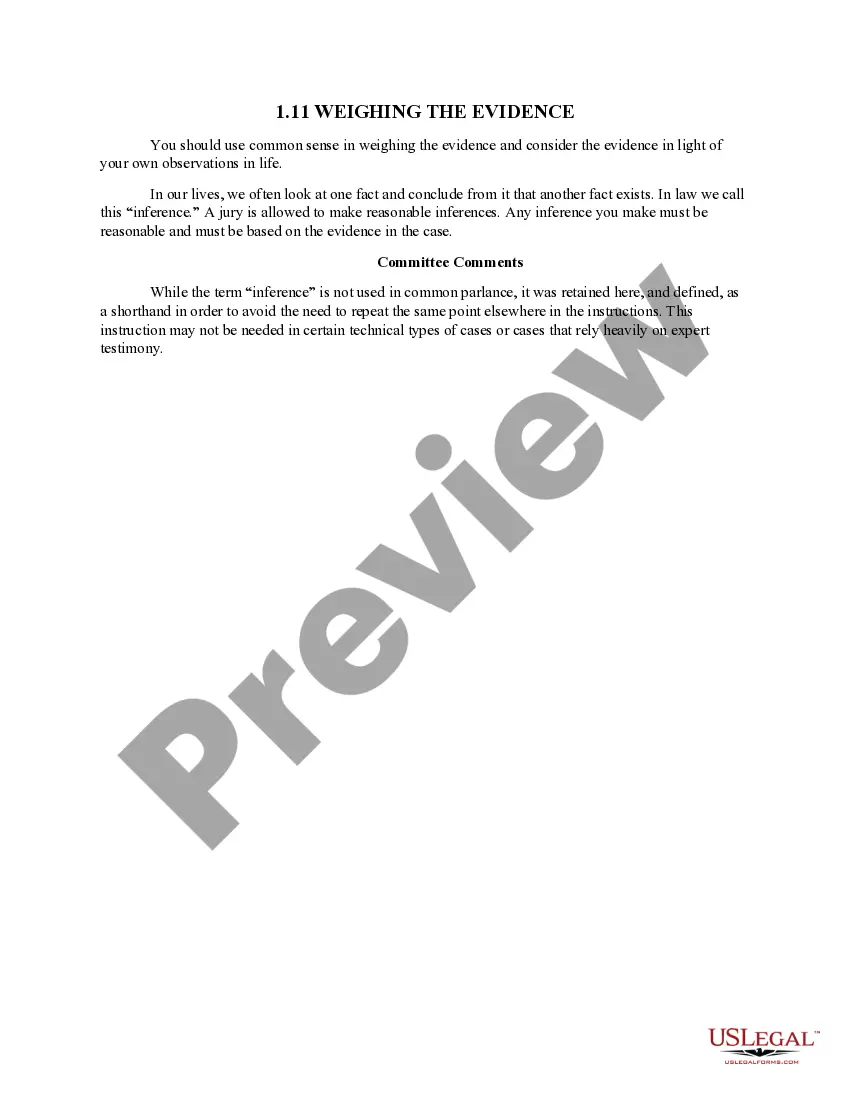
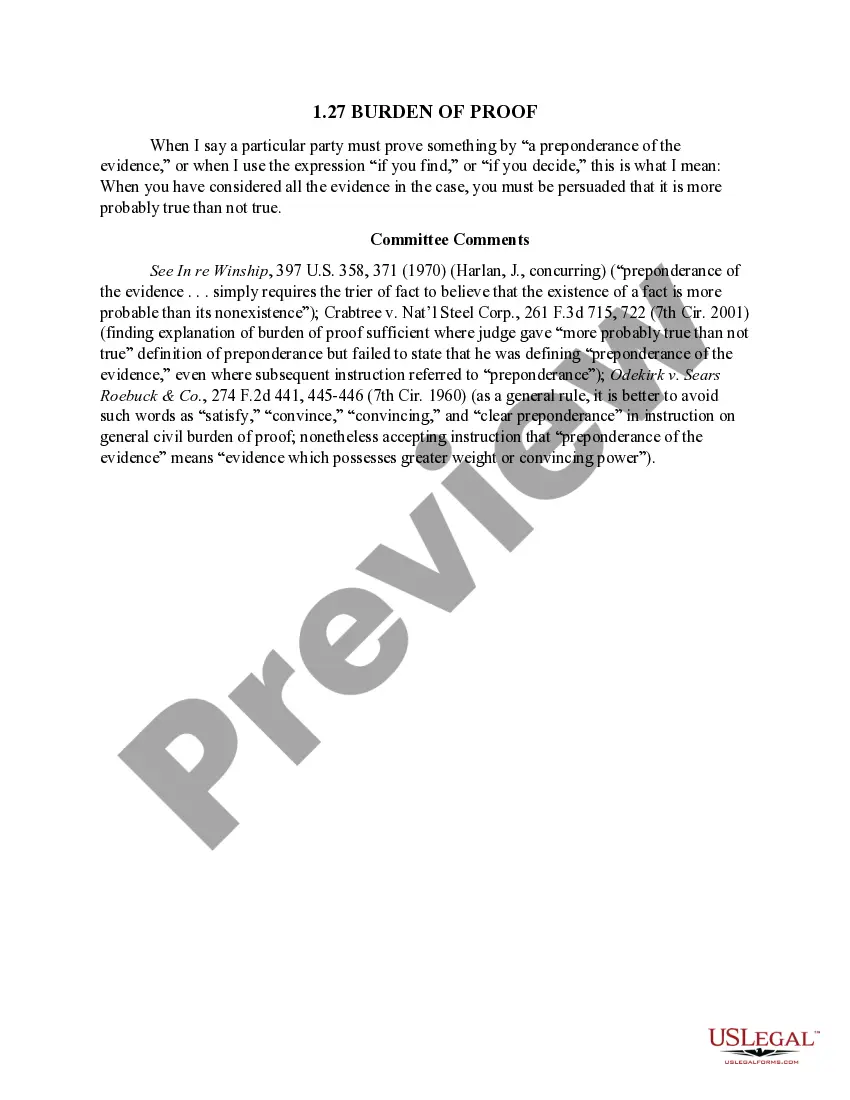
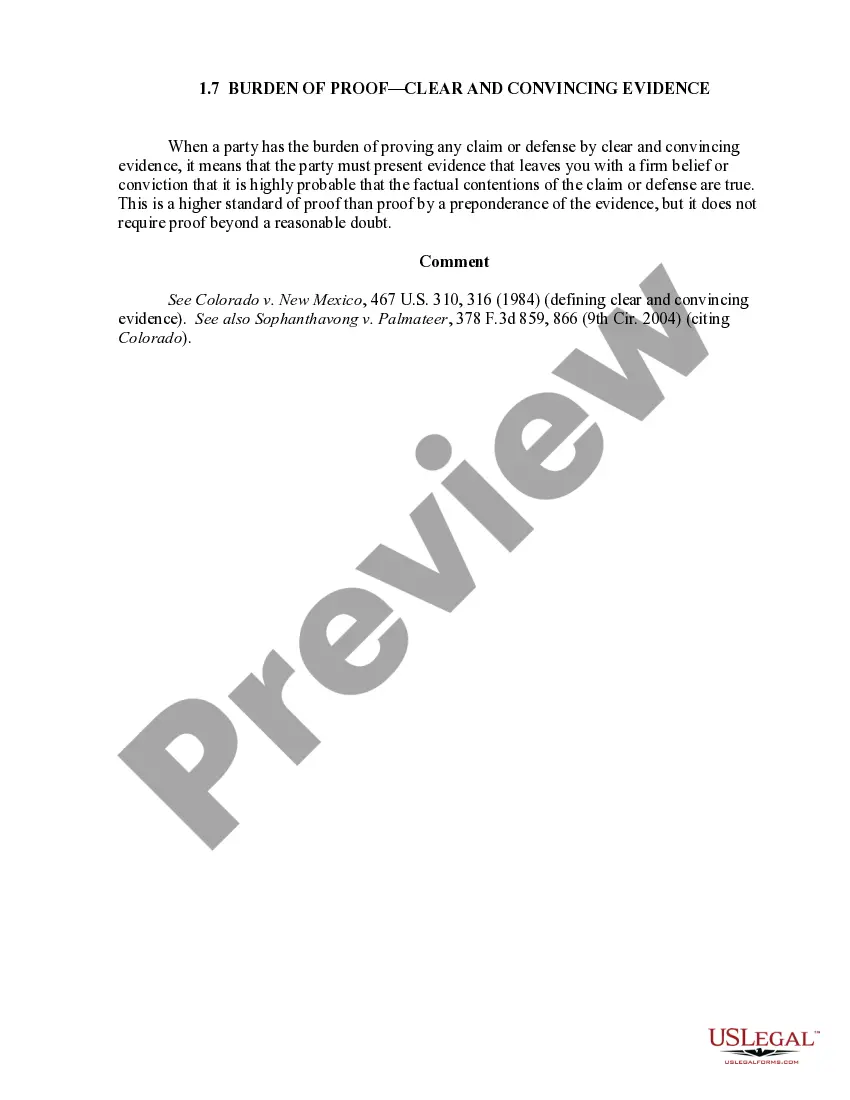
The 1.28 Clear and Convincing Evidence form is a legal instruction used in court proceedings, particularly within the jurisdiction of the Federal 7th Circuit Court. This form outlines the standard of proof required in certain cases, where a party must establish their claim with clear and convincing evidence, which is a higher threshold than simply proving something is more likely true than not. It serves to guide juries in understanding the level of certainty needed to reach a verdict in civil cases or specific legal contexts.
Main sections of this form
- Definition of "clear and convincing evidence" and its implications in legal proceedings.
- Committee Comments providing context on how this standard applies in various legal situations.
- Instructions on when to use the "clear and convincing" standard versus the "preponderance" standard.
- Guidance for jurors on assessing evidence and determining the required level of certainty.
When to use this document
This form is used in civil cases where the law requires a higher level of proof than the standard preponderance of the evidence. This may apply in situations such as disputes over wills, fraud cases, or claims involving trusts and other fiduciary responsibilities. If you find yourself in a legal situation where you need to establish that something is highly probable, this form is relevant.
Who needs this form
- Attorneys representing clients in civil litigation cases.
- Judges needing to provide clear instructions to juries on evidence standards.
- Parties involved in disputes that require a clear and convincing level of proof.
Completing this form step by step
- Read the complete instructions carefully to understand the context of "clear and convincing" evidence.
- Identify the specific claim or element in your case that requires this level of proof.
- Gather all relevant evidence that supports your position and assess its strength.
- Present your evidence in a manner that aligns with the definitions provided by the form.
- Consult with legal counsel to ensure that all procedural requirements are met before submission.
Does this form need to be notarized?
This form does not typically require notarization unless specified by local law. However, it is advisable to review the legal guidelines in your jurisdiction to ensure compliance with any necessary requirements.
Get your form ready online
Our built-in tools help you complete, sign, share, and store your documents in one place.
Make edits, fill in missing information, and update formatting in US Legal Forms—just like you would in MS Word.
Download a copy, print it, send it by email, or mail it via USPS—whatever works best for your next step.
Sign and collect signatures with our SignNow integration. Send to multiple recipients, set reminders, and more. Go Premium to unlock E-Sign.
If this form requires notarization, complete it online through a secure video call—no need to meet a notary in person or wait for an appointment.
We protect your documents and personal data by following strict security and privacy standards.

Make edits, fill in missing information, and update formatting in US Legal Forms—just like you would in MS Word.

Download a copy, print it, send it by email, or mail it via USPS—whatever works best for your next step.

Sign and collect signatures with our SignNow integration. Send to multiple recipients, set reminders, and more. Go Premium to unlock E-Sign.

If this form requires notarization, complete it online through a secure video call—no need to meet a notary in person or wait for an appointment.

We protect your documents and personal data by following strict security and privacy standards.
Common mistakes to avoid
- Failing to understand the difference between "clear and convincing" evidence and "preponderance" of the evidence.
- Presenting weak or irrelevant evidence that does not meet the higher standard.
- Not consulting relevant case law or statutes that might influence the interpretation of this standard.
- Assuming the jury will automatically understand the burden of proof without explicit instructions.
Why complete this form online
- Convenience of downloading and managing legal documents at your own pace.
- Access to templates drafted by licensed attorneys, ensuring legal accuracy.
- Ability to customize the form to fit your specific legal needs easily.
- Reduced need for in-person consultations, saving time and resources.
Legal use & context
- The "clear and convincing" evidence standard is commonly used in civil cases where more than just a preponderance of evidence is required.
- This form provides a structured approach to help juries assess whether the claims have been proven to a satisfactory level.
- Understanding this standard is crucial for practitioners in determining how to prepare their cases effectively.
Key takeaways
- The 1.28 Clear and Convincing Evidence form is essential for understanding proof standards in legal contexts.
- It serves as a guide for jurors assessing the credibility of evidence presented in court.
- Being informed about when and how to apply this standard can significantly impact the outcome of a case.
Looking for another form?
Form popularity
FAQ
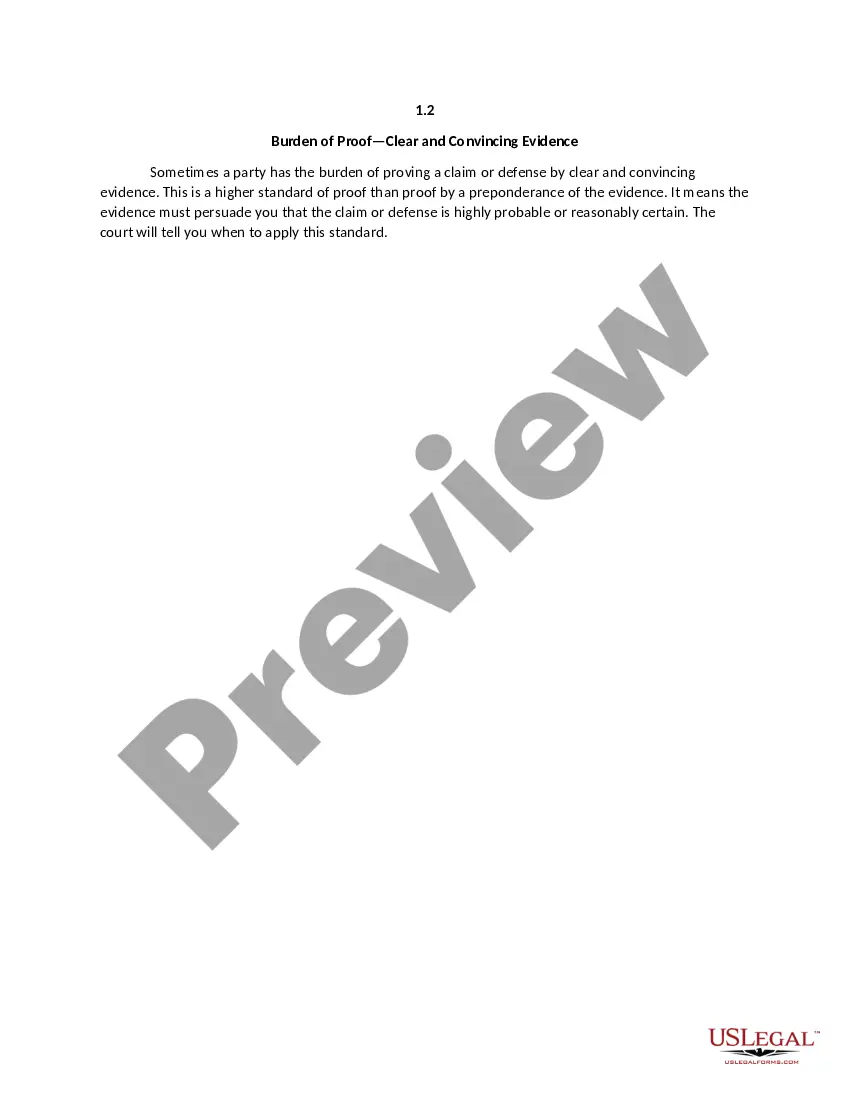
"Clear and convincing" evidence means evidence of such convincing force that it demonstrates, in contrast to the opposing evidence, a high probability of the truth of the facts for which it is offered as proof. Such evidence requires a higher standard of proof than proof by a preponderance of the evidence.
When a party has the burden of proving any claim or defense by clear and convincing evidence, it means that the party must present evidence that leaves you with a firm belief or conviction that it is highly probable that the factual contentions of the claim or defense are true.
The ?clear and convincing evidence? test requires a finding of high probability, based upon evidence so clear as to leave no substantial doubt and sufficiently strong as to command the unhesitating assent of every reasonable mind.
There are different standards of proof in different circumstances. The three primary standards of proof are proof beyond a reasonable doubt, preponderance of the evidence and clear and convincing evidence.
Where the preponderance of evidence only requires the plaintiff to 'tip the scales' towards demonstrating fault, the clear and convincing standard needs to demonstrate that fault is 'highly' and 'substantially' more probable to be true than not true.
Clear and convincing evidence is a showing that there is a high probability that a fact is true, as opposed to something simply being more likely than not. This standard is often used in California personal injury cases where the plaintiff seeks punitive damages in addition to compensatory damages.
The three burdens of proof for criminal cases are "beyond a reasonable doubt," "probable cause," and "reasonable suspicion."
The standard of proof known as clear and convincing evidence demands a degree of certainty greater than that involved with the preponderance standard, but less than what is required by the standard of proof beyond a reasonable doubt.