Ninety Day Probationary Evaluation of Employee
Understanding this form
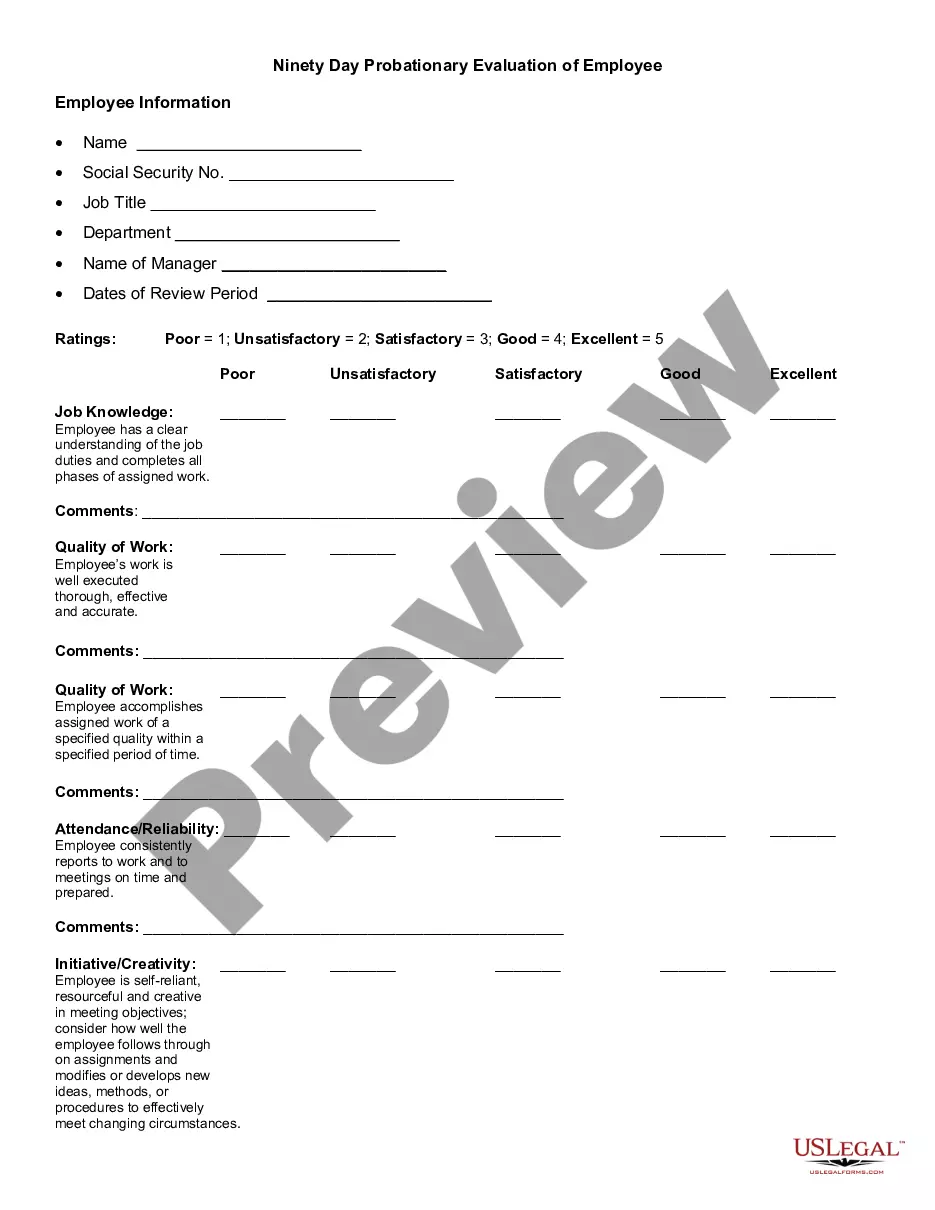
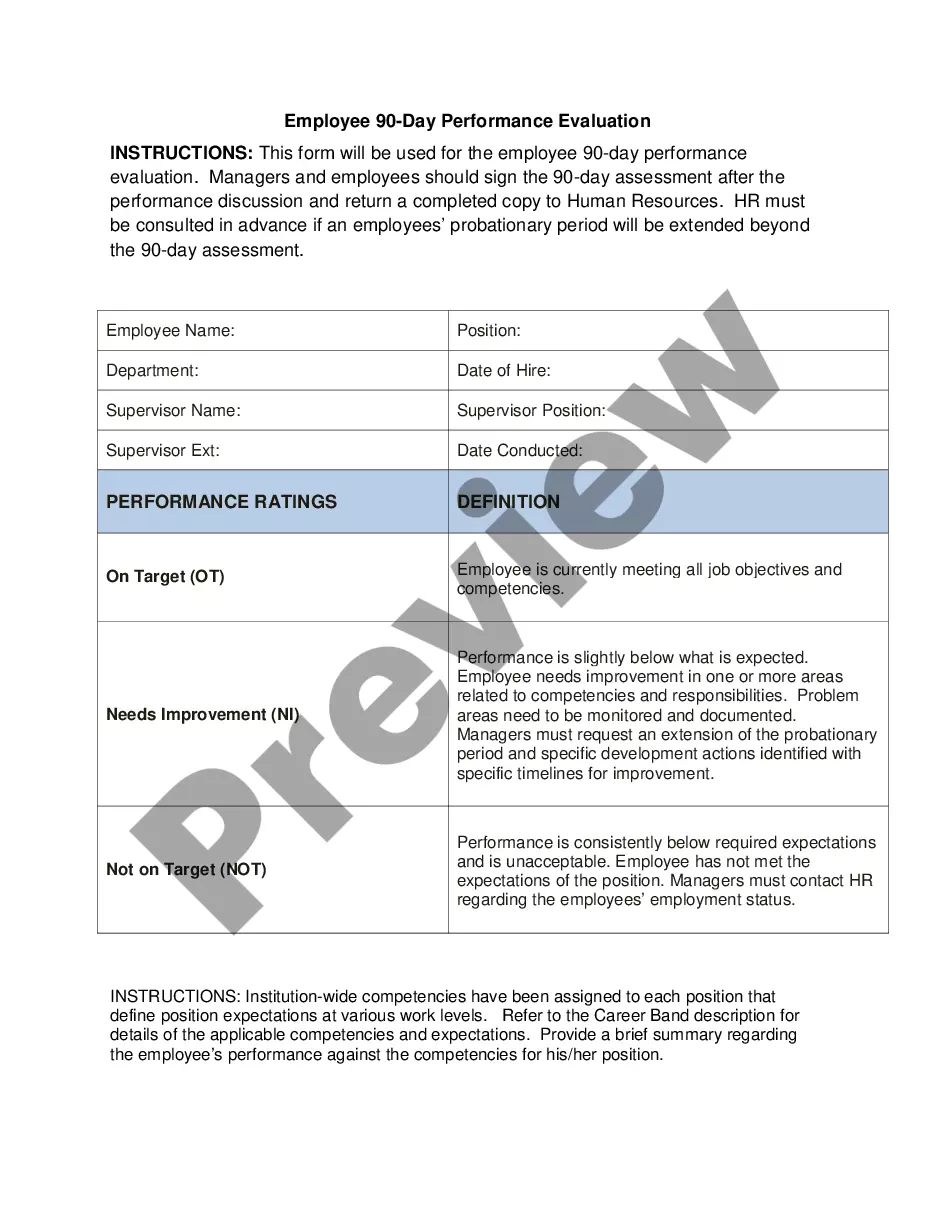
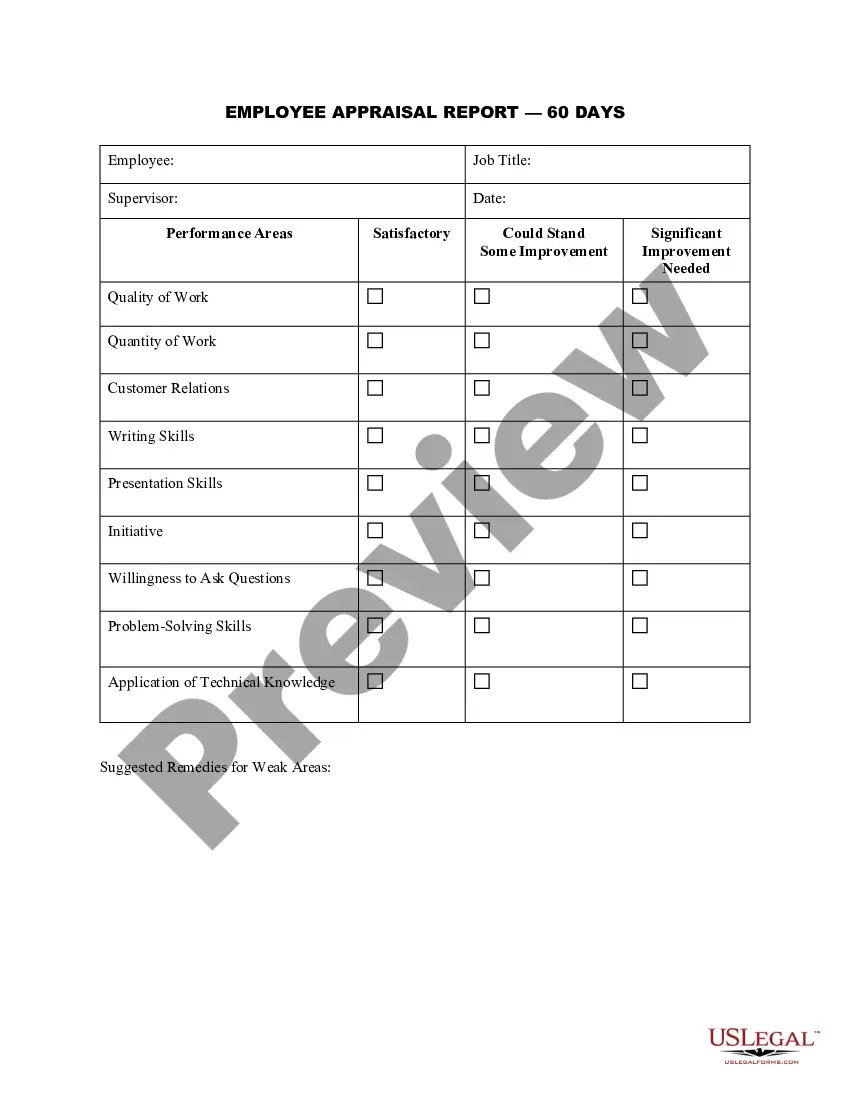
The Ninety Day Probationary Evaluation of Employee form is designed to assess a new employee's performance during their initial probationary period. This evaluation helps employers determine if the employee meets the required performance standards and can continue with their employment. Unlike other evaluation forms, this document specifically focuses on a structured review after ninety days, offering clear metrics and criteria for assessment.
Main sections of this form
- Employee Information: Basic details about the employee being evaluated, including name, job title, and department.
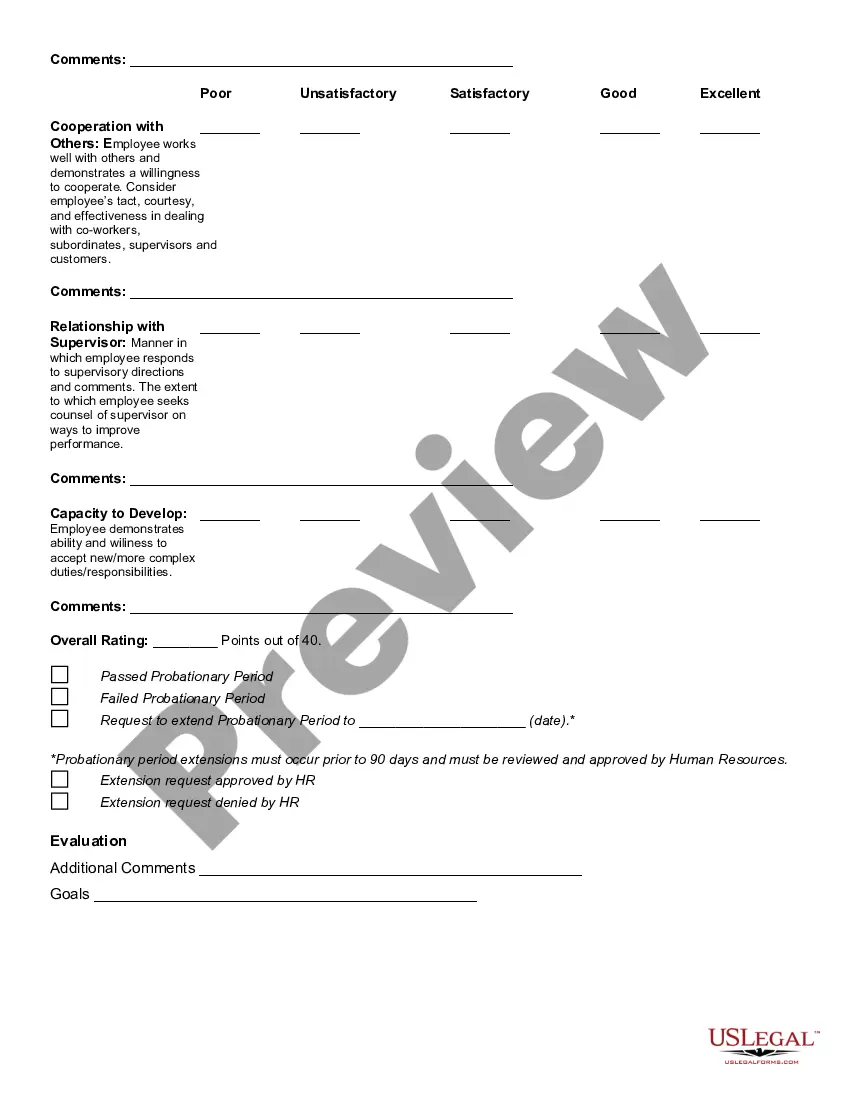
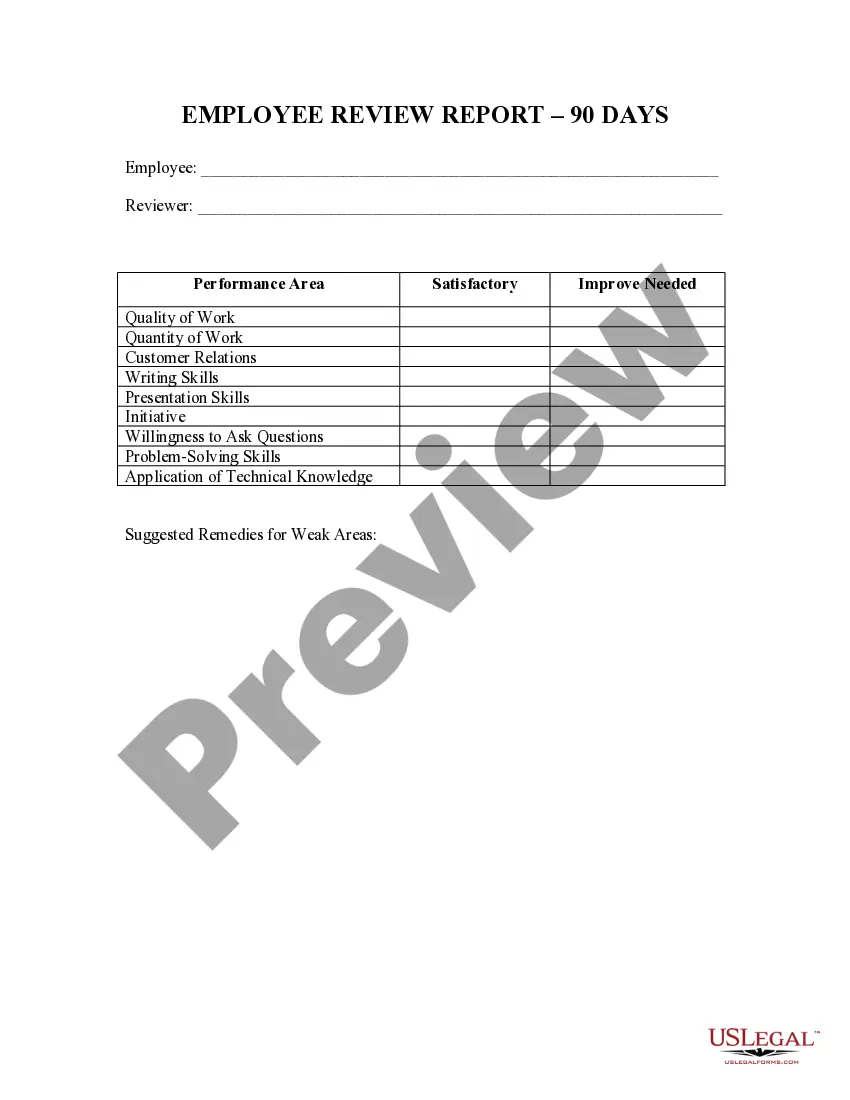
- Performance Ratings: A scale from one to five to evaluate various aspects of the employee's work performance.
- Comments Section: Areas for specific feedback in each evaluation category to provide context for the ratings given.
- Overall Rating: A summary score that indicates whether the employee has passed or failed their probationary period.
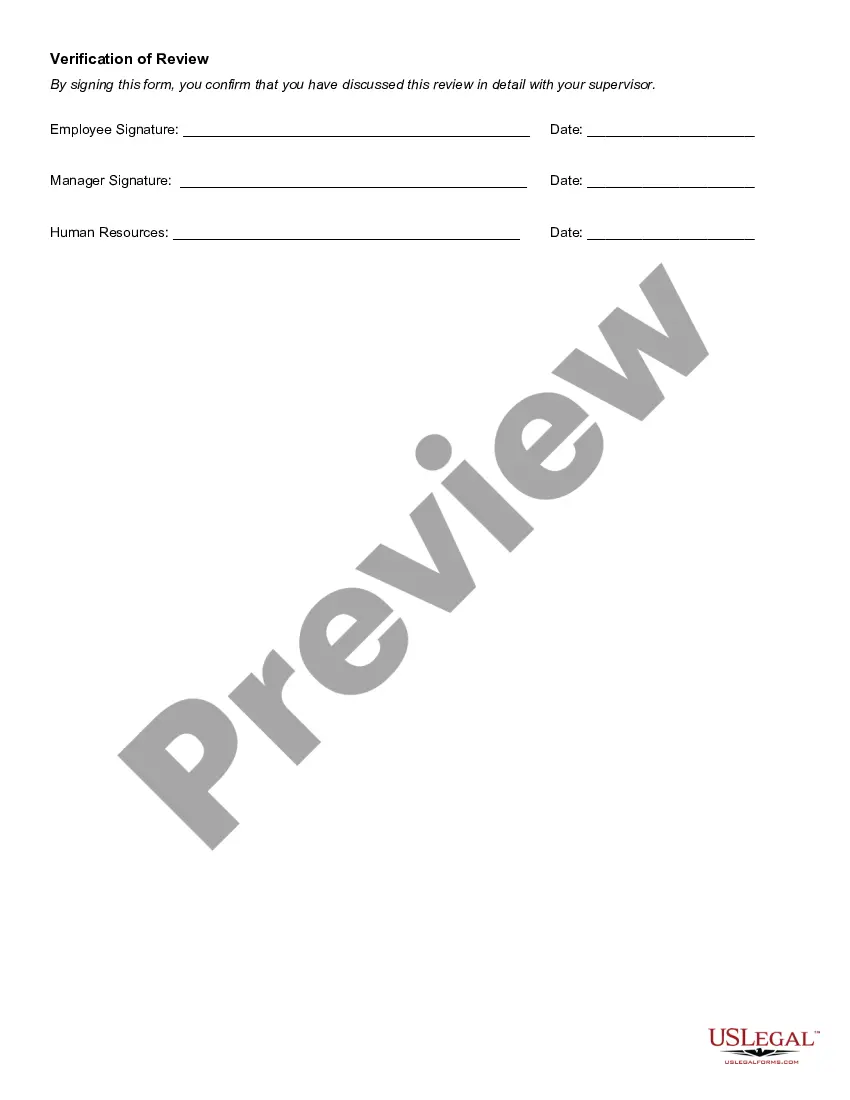
- Verification of Review: Signatures from both the employee and the manager to confirm the evaluation discussion.
Common use cases
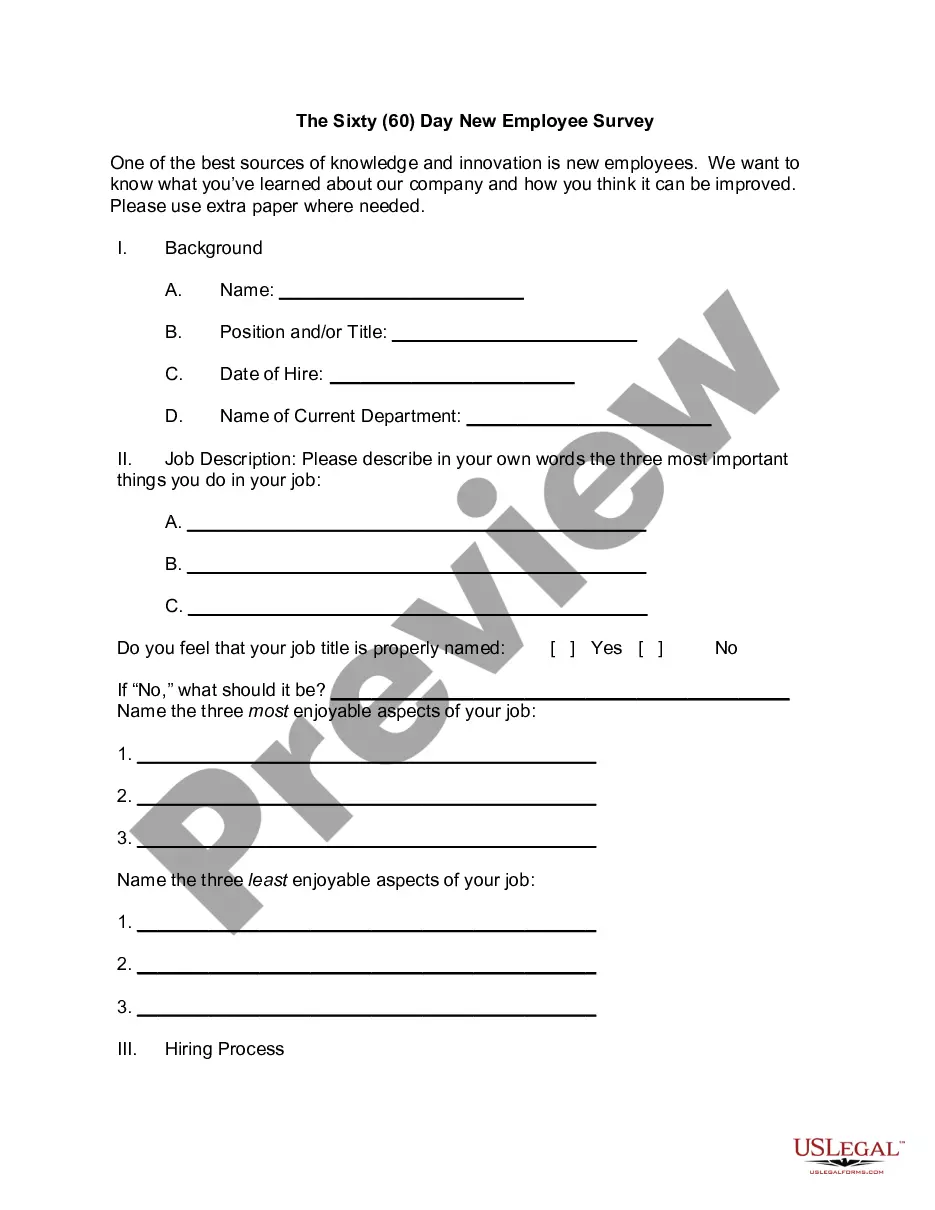
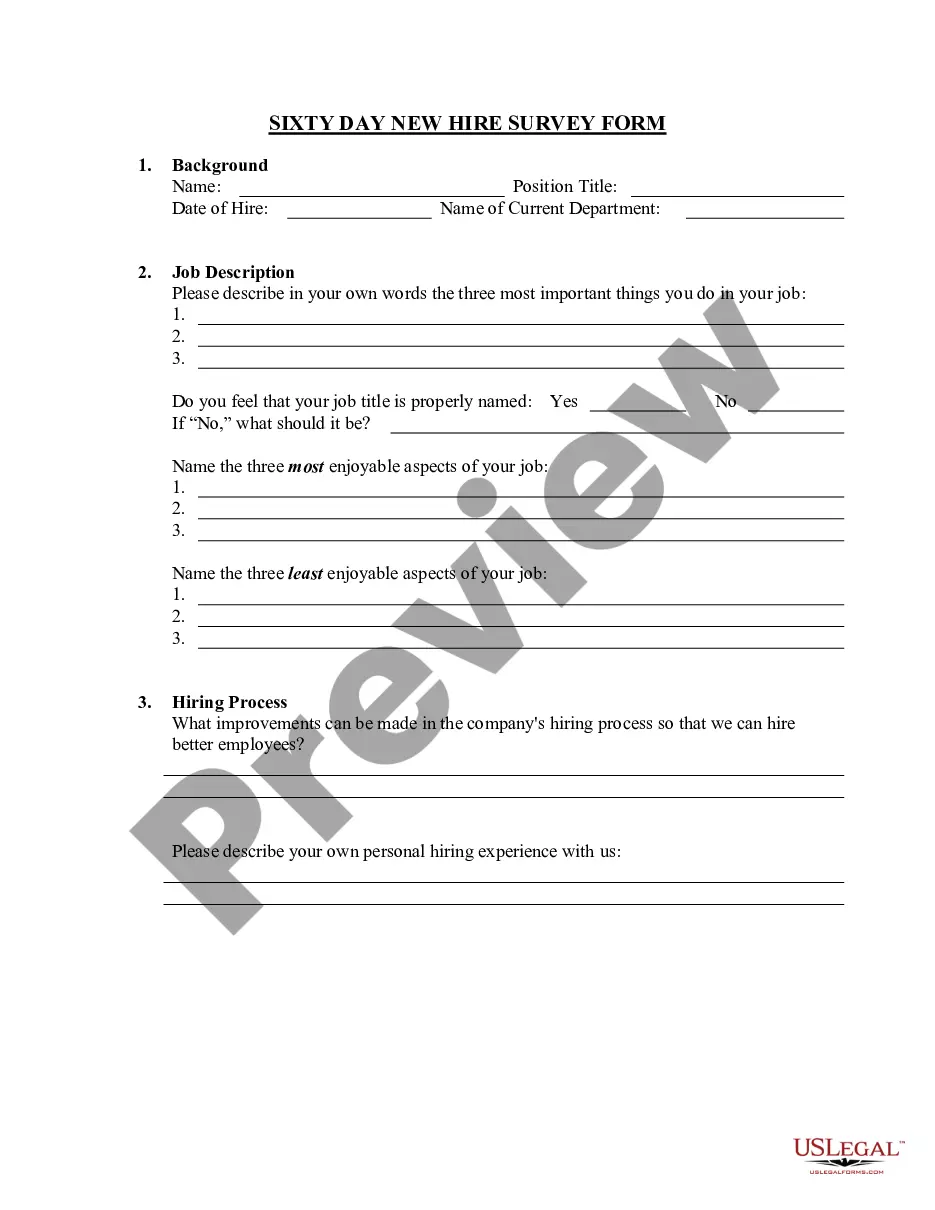
This evaluation form is utilized at the end of an employee's ninety-day probationary period. Employers should use it to objectively assess the employee's performance in key areas such as job knowledge, quality of work, attendance, and initiative. It is also useful when a probationary period extension is necessary, enabling HR to document the reasons for the extension request clearly.
Intended users of this form
- Human Resources personnel responsible for employee evaluations.
- Managers and supervisors who oversee new hires during their probationary period.
- Any business seeking to standardize its evaluation processes for newly hired employees.
How to prepare this document
- Provide the employee's personal details, including name, social security number, job title, and department.
- Rate the employee's performance in each category using the established rating scale.
- Include specific comments next to each rating to clarify the evaluation.
- Calculate the overall rating based on the individual scores.
- Both the employee and the manager must sign and date the form to confirm that the evaluation has been discussed.
Notarization requirements for this form
This form does not typically require notarization unless specified by local law. Always check with your HR department for specific compliance requirements.
Get your form ready online
Our built-in tools help you complete, sign, share, and store your documents in one place.
Make edits, fill in missing information, and update formatting in US Legal Forms—just like you would in MS Word.
Download a copy, print it, send it by email, or mail it via USPS—whatever works best for your next step.
Sign and collect signatures with our SignNow integration. Send to multiple recipients, set reminders, and more. Go Premium to unlock E-Sign.
If this form requires notarization, complete it online through a secure video call—no need to meet a notary in person or wait for an appointment.
We protect your documents and personal data by following strict security and privacy standards.

Make edits, fill in missing information, and update formatting in US Legal Forms—just like you would in MS Word.

Download a copy, print it, send it by email, or mail it via USPS—whatever works best for your next step.

Sign and collect signatures with our SignNow integration. Send to multiple recipients, set reminders, and more. Go Premium to unlock E-Sign.

If this form requires notarization, complete it online through a secure video call—no need to meet a notary in person or wait for an appointment.

We protect your documents and personal data by following strict security and privacy standards.
Common mistakes to avoid
- Failing to provide specific comments for performance ratings.
- Not having both signatures on the form.
- Using vague language that does not accurately reflect the employee's performance.
Benefits of using this form online
- Convenient access: Download and complete the form from anywhere.
- Editability: Easily modify the form as needed before final submission.
- Reliability: Ensure that you have the latest version drafted by licensed attorneys.
Legal use & context
- This evaluation form serves as a crucial document in the employee review process, supporting decisions on employment continuity.
- It is important for compliance with employment regulations and can protect against potential disputes related to termination during the probationary period.
Summary of main points
- The Ninety Day Probationary Evaluation of Employee is essential for assessing new hires.
- Performance ratings should be specific, objective, and backed by comments.
- Ensure all necessary signatures are collected to validate the review process.
Looking for another form?
Form popularity
FAQ
Communication. Collaboration and teamwork. Problem-solving. Quality and accuracy of work. Attendance, punctuality and reliability. The ability to accomplish goals and meet deadlines.
1) A benchmark for measuring performance. 2) An opportunity to ask questions. 3) A solid foundation for manager-employee relationships. 1) A probationary period. 2) A one-sided Q & A. 3) Post-poned or shrugged off.
Effectively Utilizing 90-Day Probationary Periods for New Employees. Urgent message: A 90-day probationary period suspends the standard employment rules for new employees, enabling them to learn the position, but providing an out before the employee becomes too entrenched.
Are you content with your current responsibilities? Do you understand the expectations of your job? How would you rate yourself at doing the job? What would help you improve your performance? Is there any additional training you feel you need right now? Who has been most helpful during the learning process?
When discussing this, you should be honest in stating anything you expected more or less of in the role. That way, you'll be able to determine how well the working arrangement benefits you and the employer. Also, revealing any qualms diplomatically means your company might be able to resolve these quickly.
Change your mindset. Don't wait until the last minute. Don't forget it's a conversation. Keep it objective. Refer to the job description. Set goals and expectations. Invite employee input. Don't be afraid, to be honest.
1) A benchmark for measuring performance. 2) An opportunity to ask questions. 3) A solid foundation for manager-employee relationships. 1) A probationary period. 2) A one-sided Q & A. 3) Post-poned or shrugged off.
Do the 90 days include work days, calendar days, or something else entirely?Under the law, the 90 days are just that 90 consecutive calendar days. That means weekends and holidays are swept up in the final count.