Theft Concerning a Program Receiving Federal Funds (18 U.S.C. Sec. 666(a)(1)(A)) (revised 2017)
What this document covers
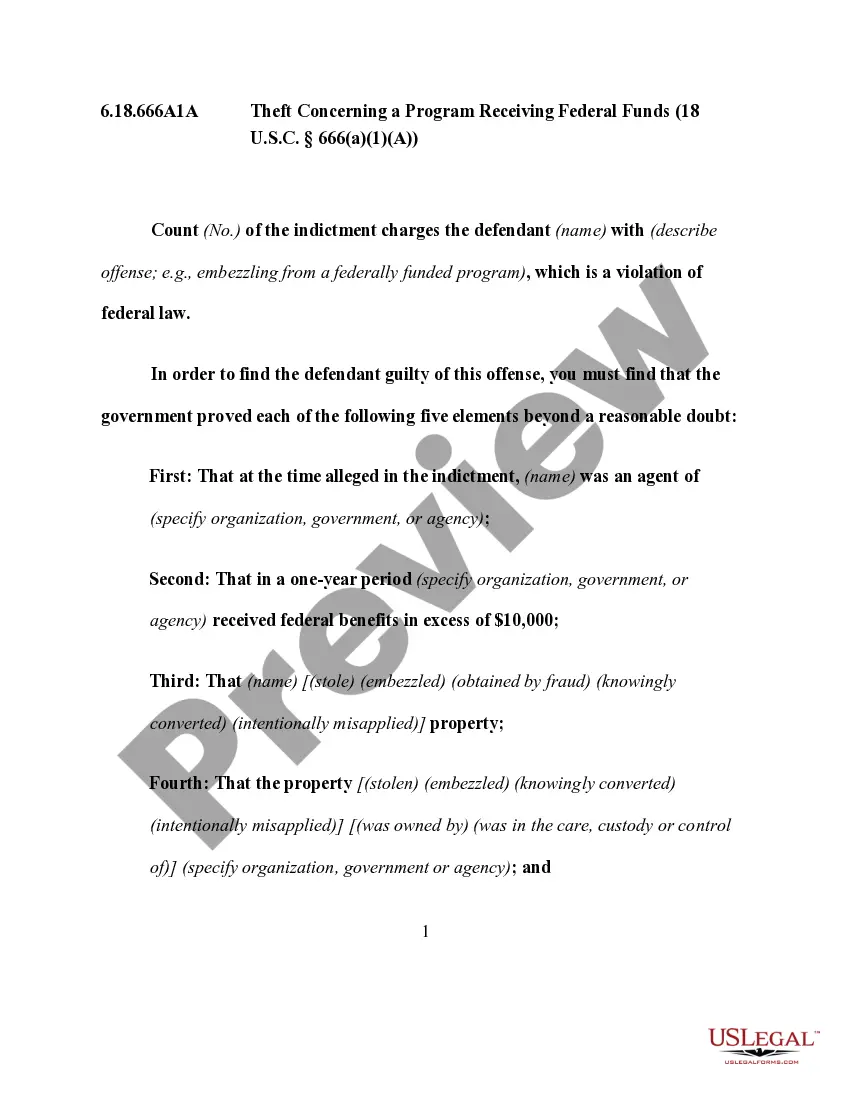
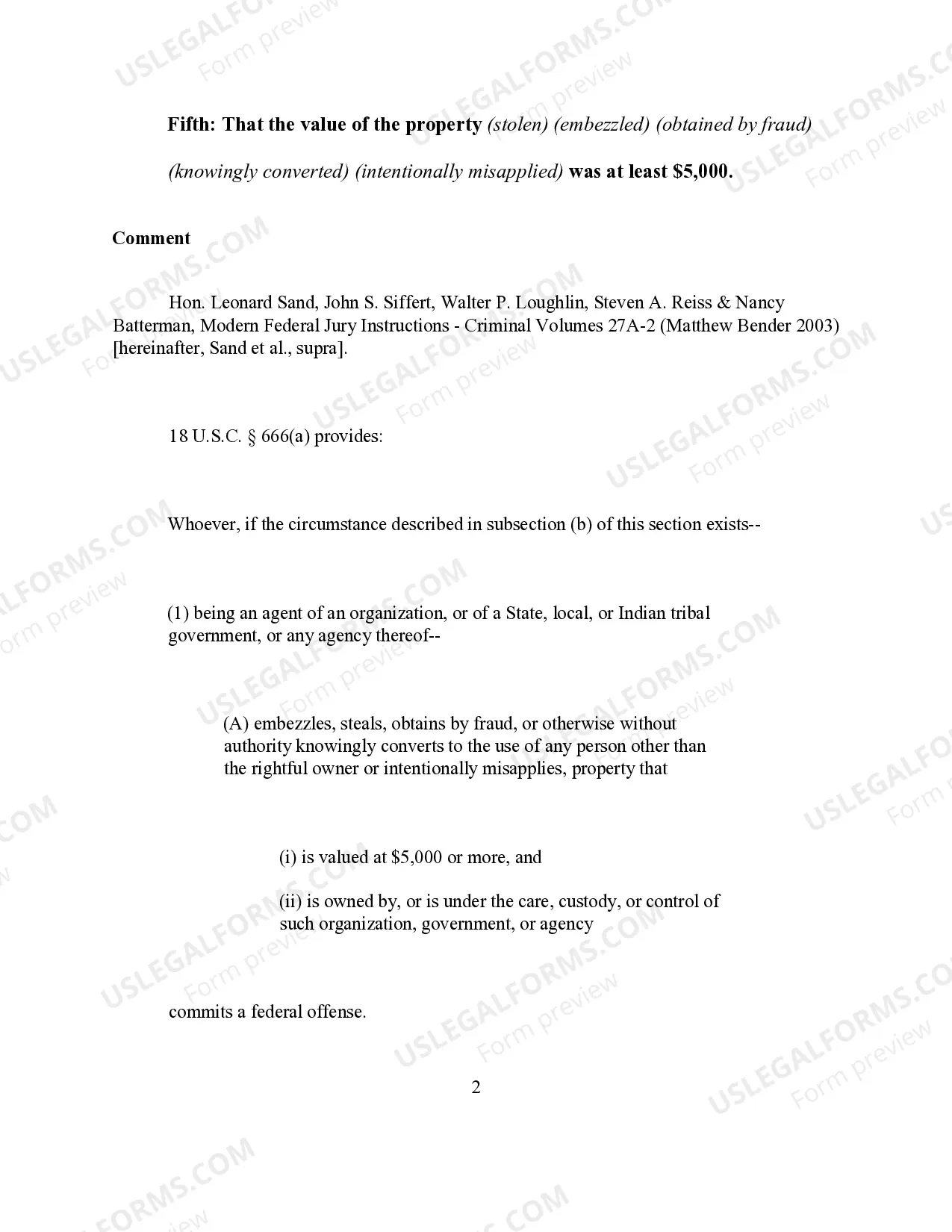
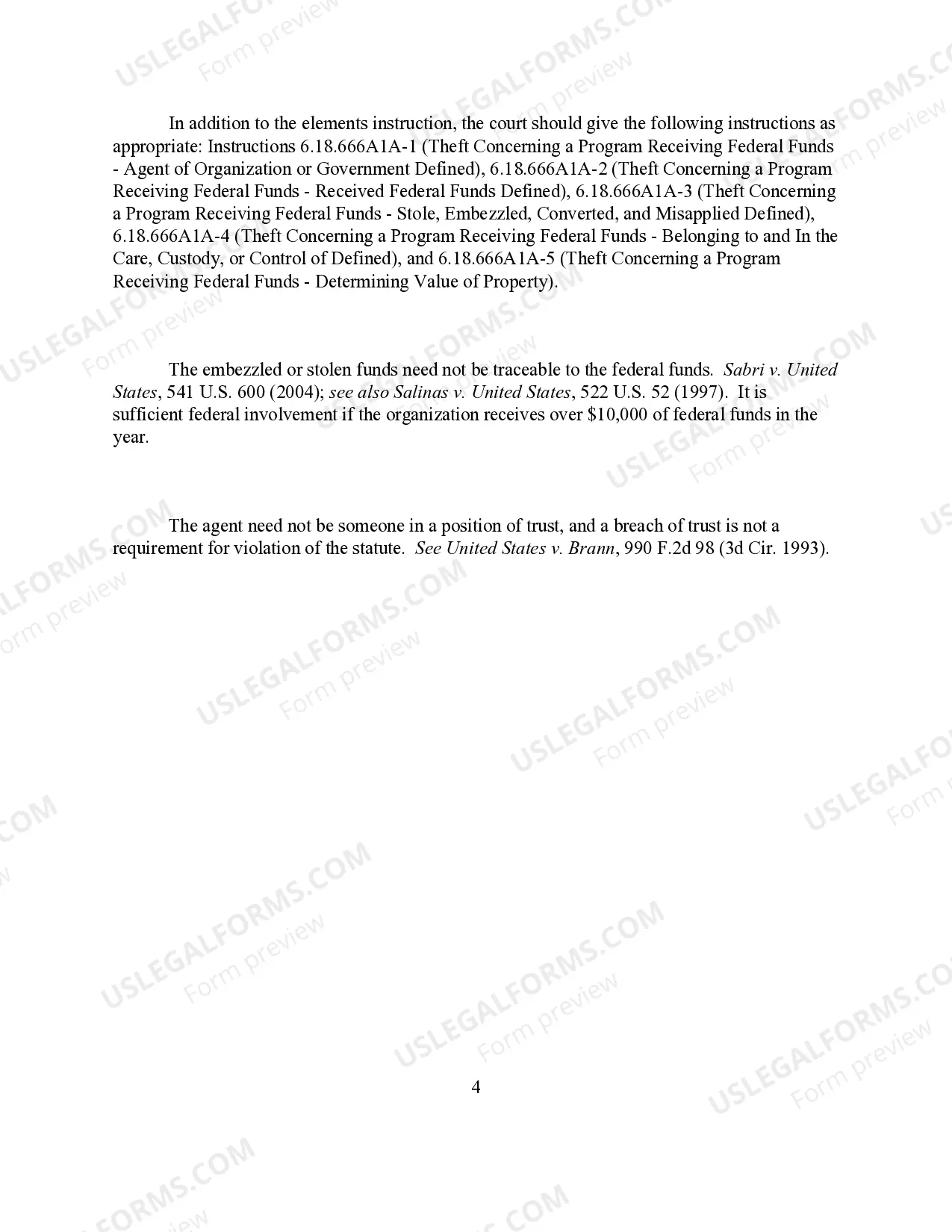
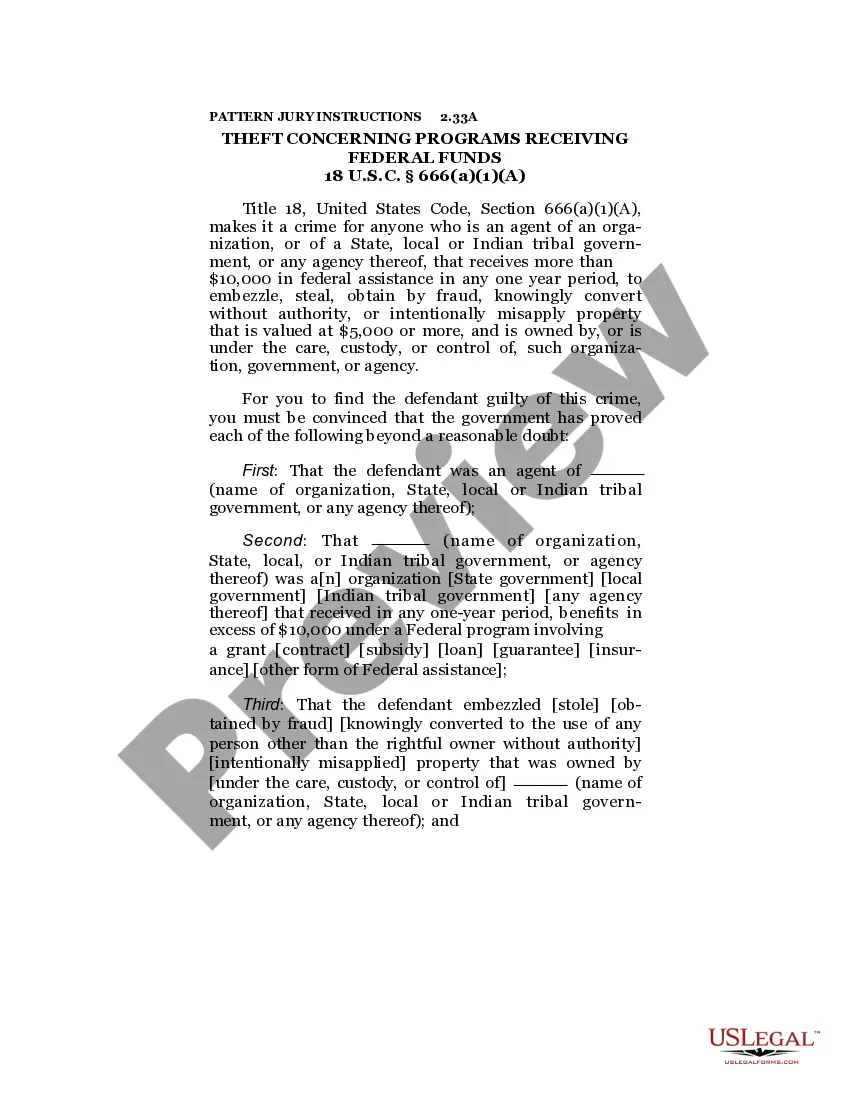
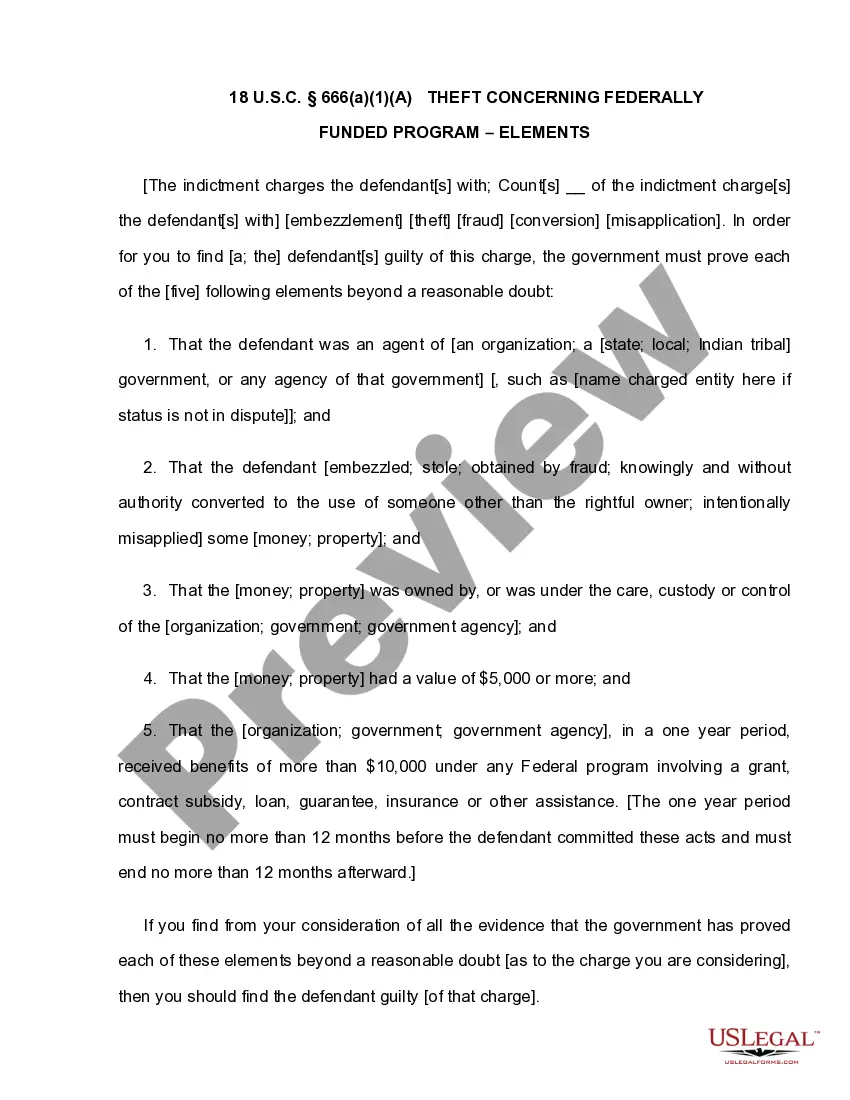
The Theft Concerning a Program Receiving Federal Funds form is used to charge individuals with federal offenses related to the misappropriation of property valued at $5,000 or more from organizations, governments, or agencies that receive federal funds. Under 18 U.S.C. Sec. 666(a)(1)(A), this form outlines the legal framework for prosecuting offenses such as embezzlement and theft concerning governmental programs that exceed $10,000 in federal benefits within a year. This form is specifically tailored for serious offenses affecting public resources and is distinct from other theft forms by its focus on federal funding regulations.
Main sections of this form
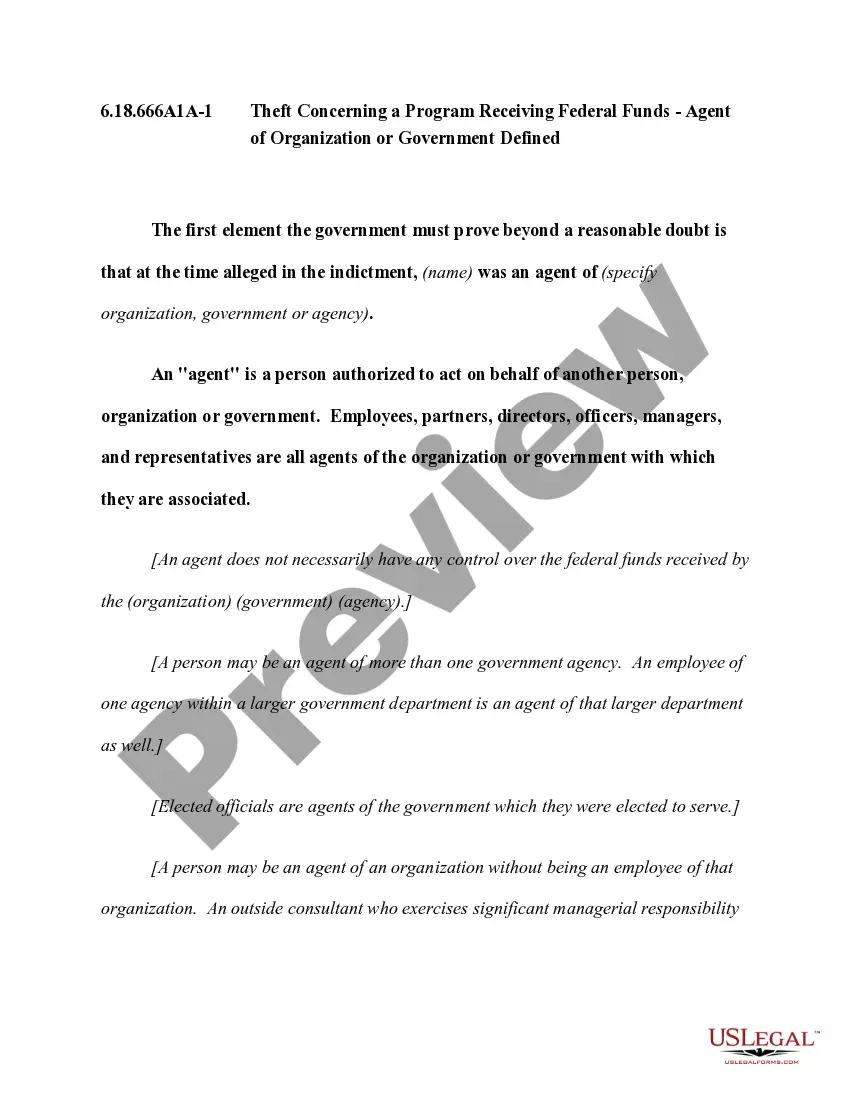
- Definition of the defendant's role as an agent of an organization or government.
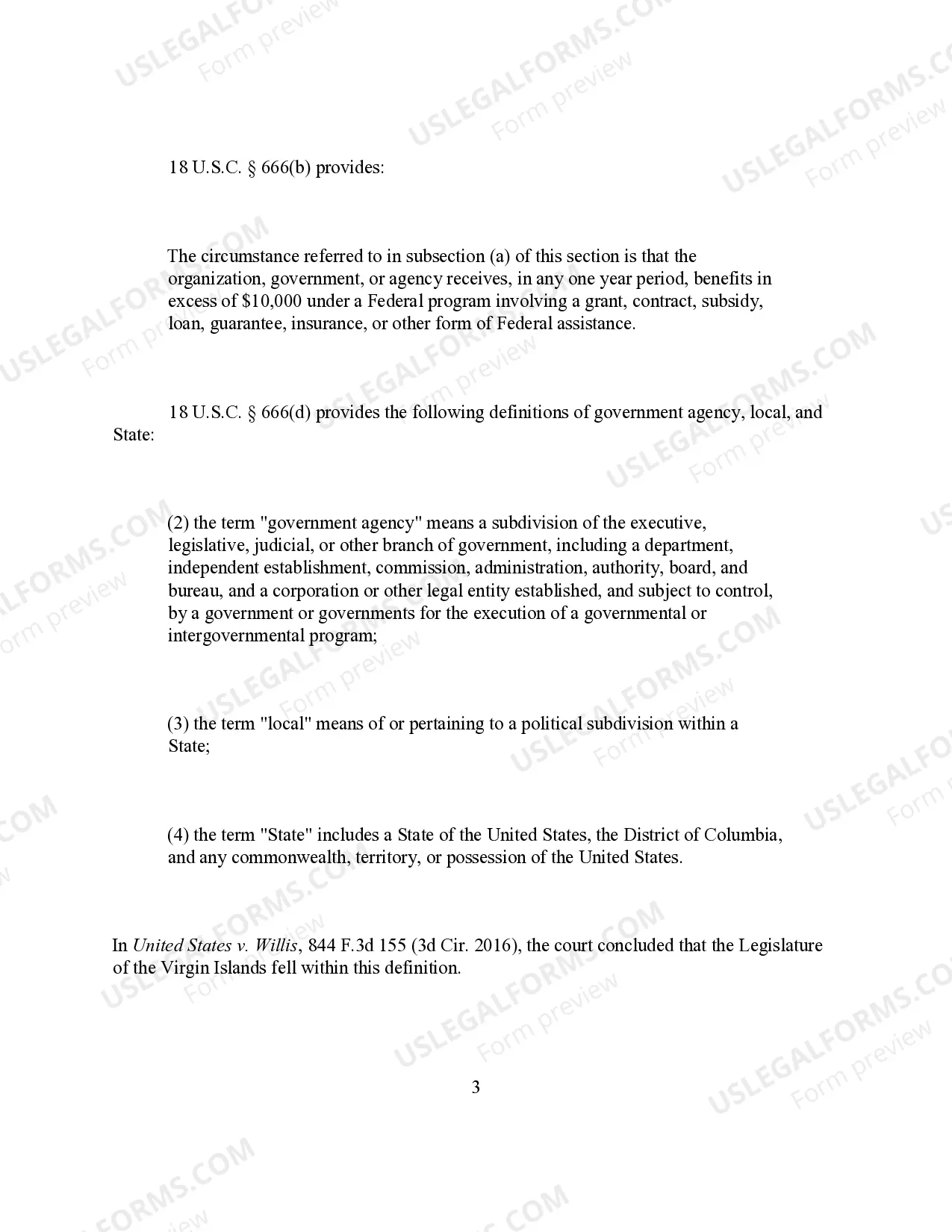
- Requirements for the organization to have received over $10,000 in federal funds within one year.
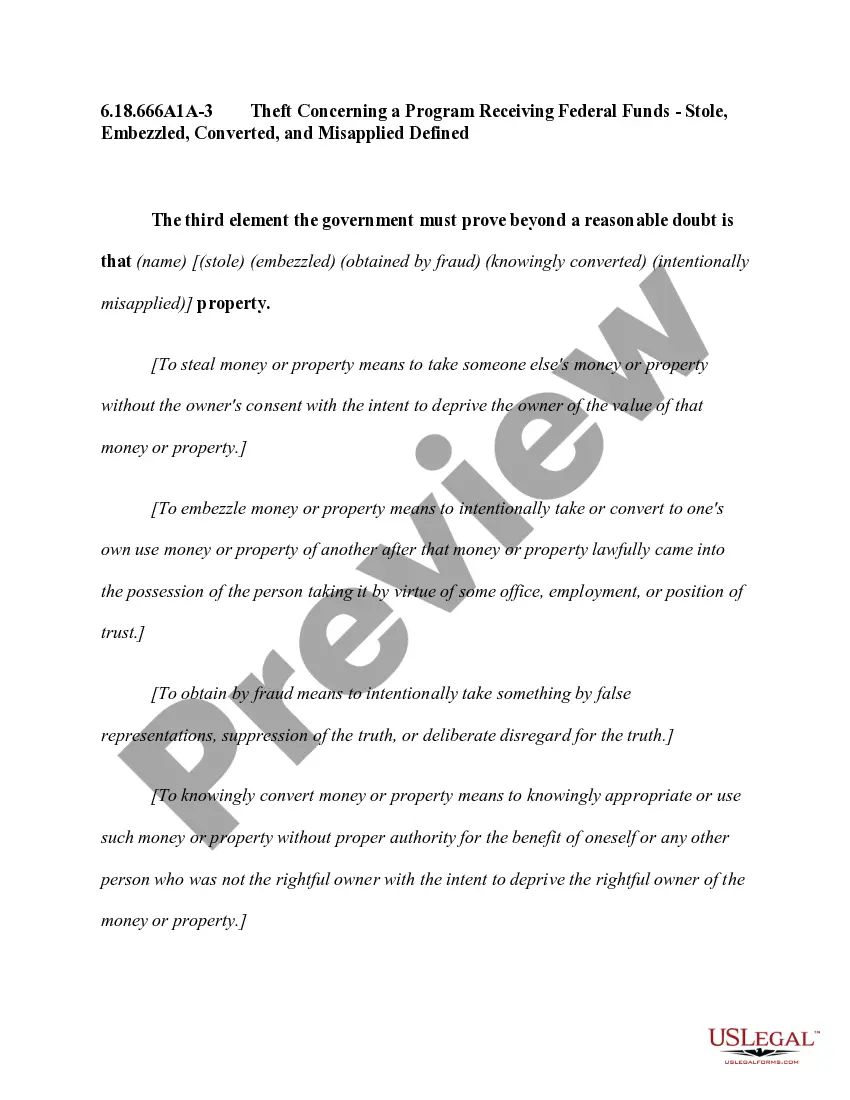
- Elements of theft or misappropriation including types of unlawful taking.
- Clarification on the ownership and control of the property involved.
- Value assessment, establishing a minimum threshold of $5,000 for the property in question.

When this form is needed
This form is utilized when an individual is charged with theft or embezzlement involving federally funded programs. It is applicable in scenarios where an agent of an organization, local or state government, is accused of unlawfully taking property that they had control over, and the organization received significant federal assistance within the specified timeframe. Situations could include public office holders misappropriating funds or employees of non-profit organizations leveraging their positions to illegally benefit from federal resources.
Who needs this form
- Federal prosecutors looking to file charges against individuals for theft related to federal funding.
- Legal representatives involved in cases concerning criminal theft or embezzlement.
- Government agencies engaged in protecting federal funds from misuse.
- Individuals accused of theft under this statute seeking to understand the charges against them.
How to complete this form
- Identify the defendant's name and their role as an agent of the relevant organization or government.
- State the name of the organization or agency and confirm the federal funds received in the previous year.
- Specify the nature of the theft or embezzlement (e.g., stolen, embezzled, converted).
- Clarify the ownership and control status of the property involved.
- Assess and state the value of the property in question, ensuring it meets the $5,000 threshold.
Notarization requirements for this form
This form does not typically require notarization unless specified by local law. Ensure to verify any jurisdiction-specific requirements regarding notarization.
Get your form ready online
Our built-in tools help you complete, sign, share, and store your documents in one place.
Make edits, fill in missing information, and update formatting in US Legal Forms—just like you would in MS Word.
Download a copy, print it, send it by email, or mail it via USPS—whatever works best for your next step.
Sign and collect signatures with our SignNow integration. Send to multiple recipients, set reminders, and more. Go Premium to unlock E-Sign.
If this form requires notarization, complete it online through a secure video call—no need to meet a notary in person or wait for an appointment.
We protect your documents and personal data by following strict security and privacy standards.

Make edits, fill in missing information, and update formatting in US Legal Forms—just like you would in MS Word.

Download a copy, print it, send it by email, or mail it via USPS—whatever works best for your next step.

Sign and collect signatures with our SignNow integration. Send to multiple recipients, set reminders, and more. Go Premium to unlock E-Sign.

If this form requires notarization, complete it online through a secure video call—no need to meet a notary in person or wait for an appointment.

We protect your documents and personal data by following strict security and privacy standards.
Avoid these common issues
- Failing to accurately identify the federal agency or organization involved.
- Omitting essential details about the property, such as its value or ownership status.
- Not providing sufficient evidence to confirm the amount of federal funds received.
Why complete this form online
- Convenience of downloading and completing the form from anywhere.
- Editable format allows for customization as needed.
- Access to legal expertise ensures the form meets federal requirements.
Legal use & context
- This form is used in federal criminal proceedings for prosecuting theft under the specified statute.
- Valid submission of this form is crucial for establishing legal grounds for the indictment.
- Involvement of federal funds adds layers of complexity regarding prosecution, making this form significant in federal law.
Summary of main points
- The Theft Concerning a Program Receiving Federal Funds form is essential for addressing allegations of theft affecting federally funded programs.
- Understanding the five key elements outlined in the statute is critical for successful prosecution.
- This form spans multiple jurisdictions but may have specific local law requirements.
Looking for another form?

Form popularity
FAQ
Theft of government property under 18 U.S.C. § 641 makes it a crime to steal, embezzle, or knowing convert with intent for your own personal gain the property, or to sell, convey, or dispose of any record, voucher, money, or something of value issued by a department of the United States government.
18 U.S. Code § 666 - Theft or bribery concerning programs receiving Federal funds U.S. Code US Law LII / Legal Information Institute.
Title 29 U.S.C. § 666(e) provides criminal penalties for any employer who willfully violates a safety standard prescribed pursuant to the Occupational Safety and Health Act, where that violation causes the death of any employee. Four elements must be proved in order to establish a criminal violation of 29 U.S.C.
The government aggressively prosecutes these fraud-related cases. 18 U.S.C. 666 is the primary federal statute used by prosecutors to indict somebody of theft or embezzlement over $5,000 of a program that receives federal funding and is under the control of a government entity.
The district court observed, and the government agrees, that the following elements comprise a violation of § 666(a)(1)(B): 1) corrupt solicitation; 2) of anything of value; 3) with the intention of being influenced in connection with any transaction of a local government or organization receiving at least $10,000 in
If you're convicted of violating 18 U.S.C. 666, you face up to 10 years in prison and a fine of up to $250,000 per count of embezzlement. While the agencies most often prosecute alleged fraud violations under 18 U.S. Code 666, they can also use other statutes, such as; 18 U.S.C.
The district court observed, and the government agrees, that the following elements comprise a violation of § 666(a)(1)(B): 1) corrupt solicitation; 2) of anything of value; 3) with the intention of being influenced in connection with any transaction of a local government or organization receiving at least $10,000 in