Commercial Partnership Agreement with Senior and Junior Partner
What this document covers
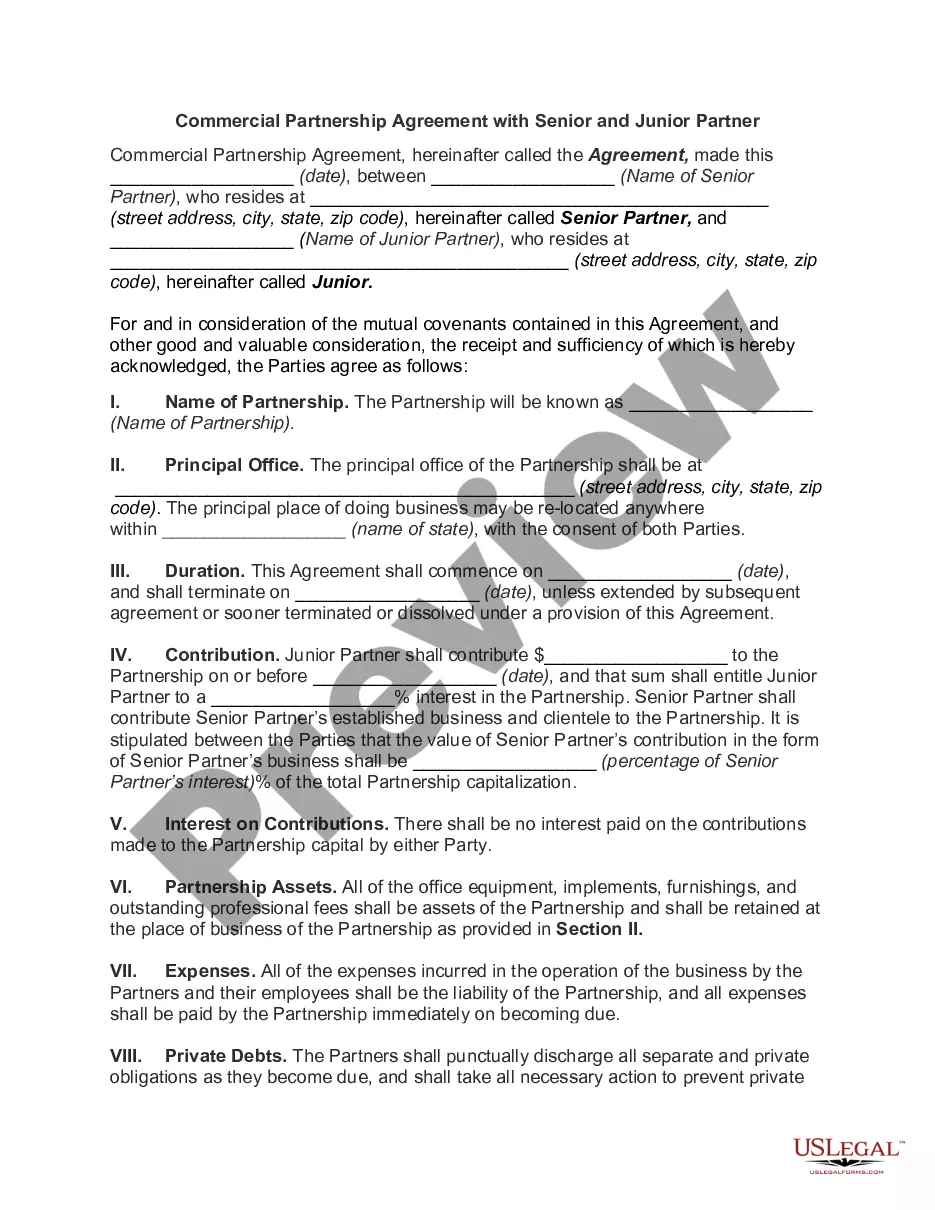
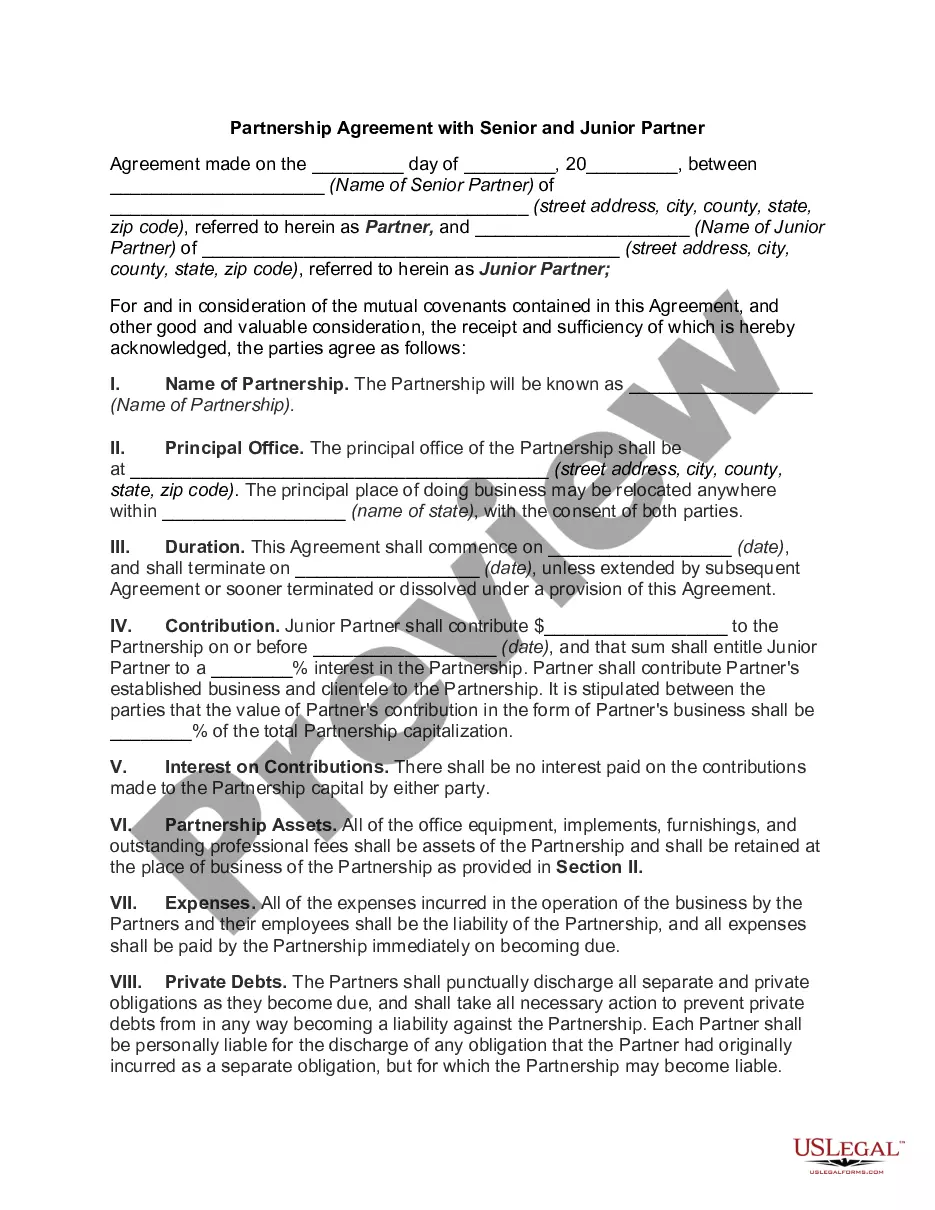
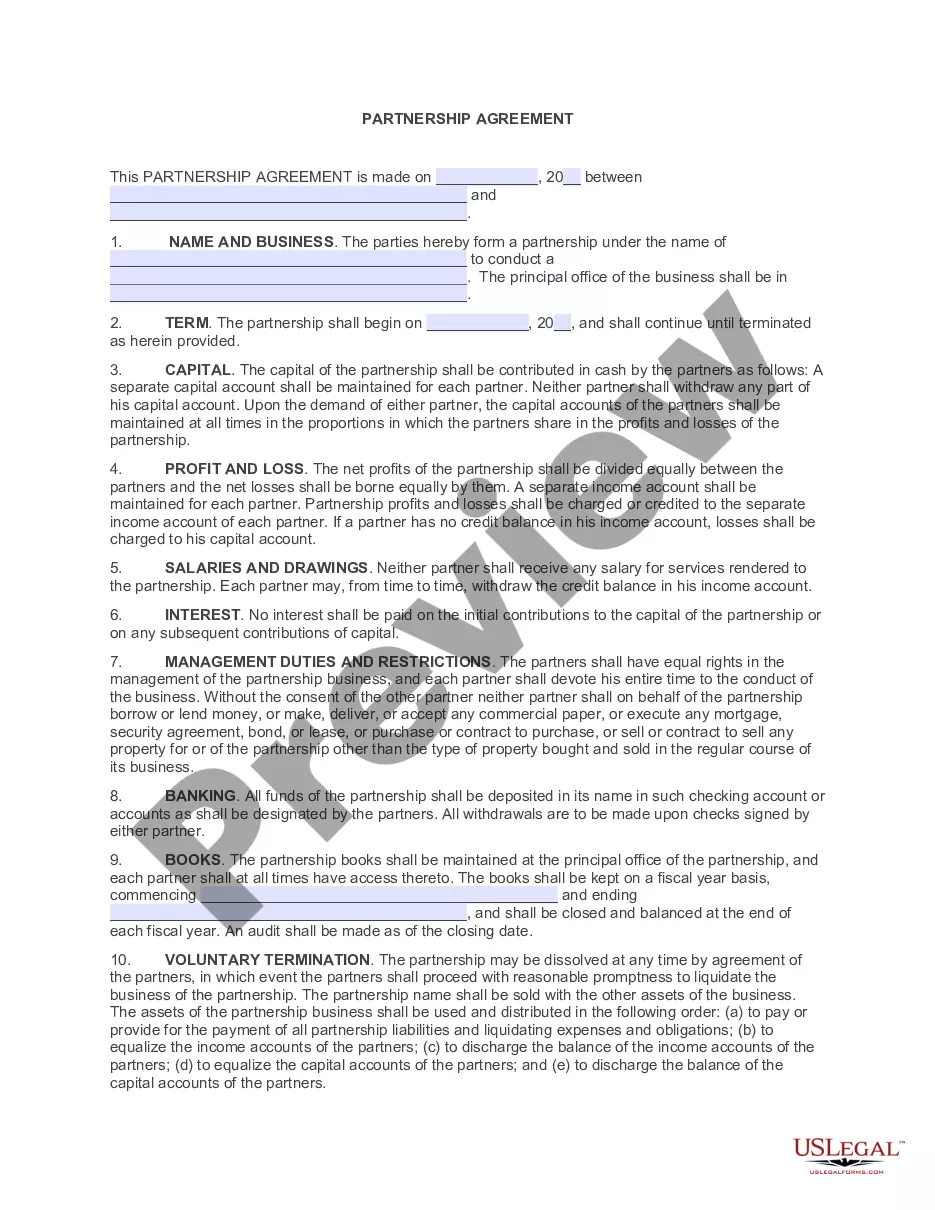
The Commercial Partnership Agreement with Senior and Junior Partner is a legal document that formalizes the relationship between a senior and junior partner in a business partnership. This agreement outlines the roles, contributions, and profit-sharing arrangements between the partners, differentiating it from other partnership agreements by explicitly defining the hierarchy and responsibilities between senior and junior partners. It is essential for establishing clear expectations and minimizing conflicts within the partnership.
Key parts of this document
- Name of the partnership and principal office location
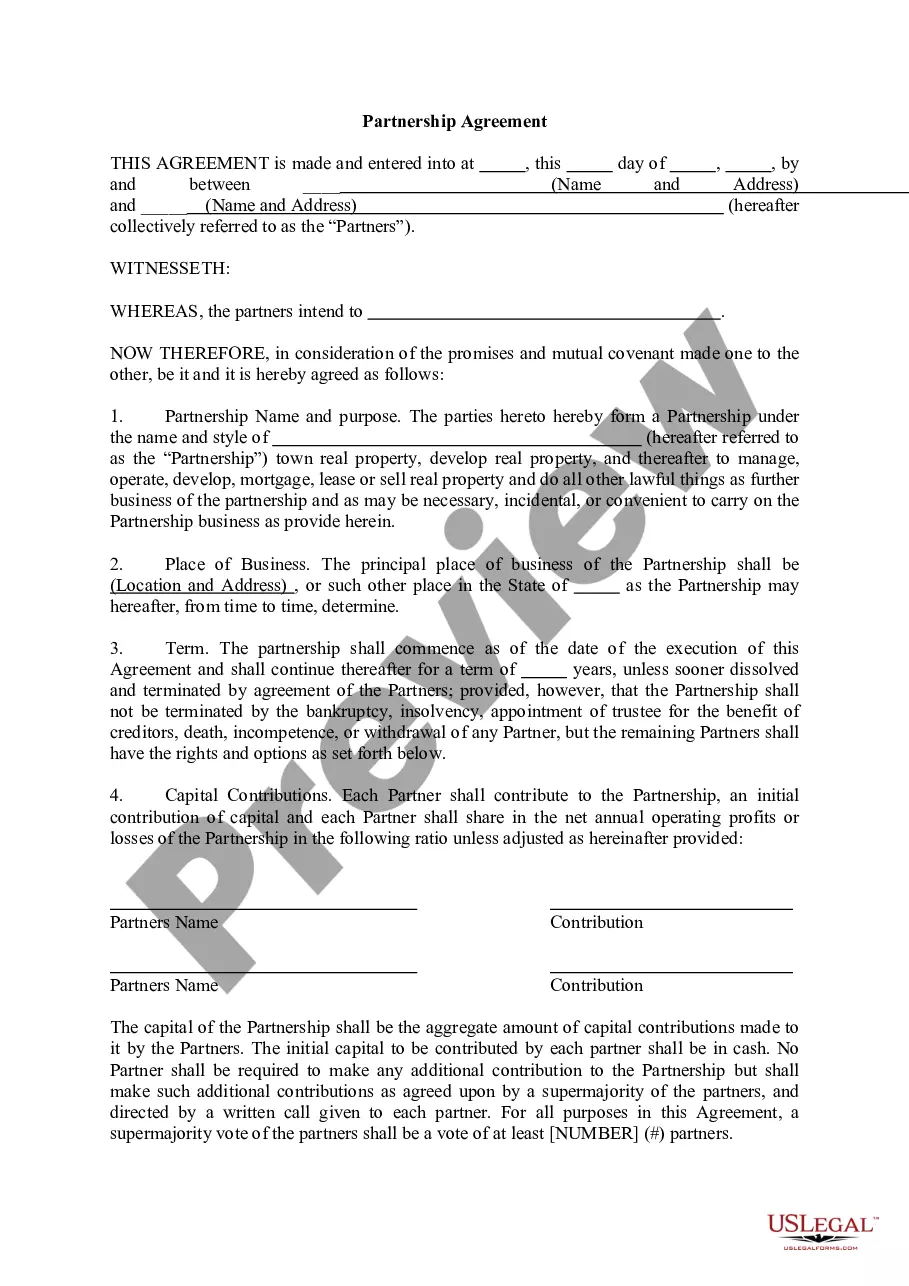
- Duration of the agreement and terms of termination
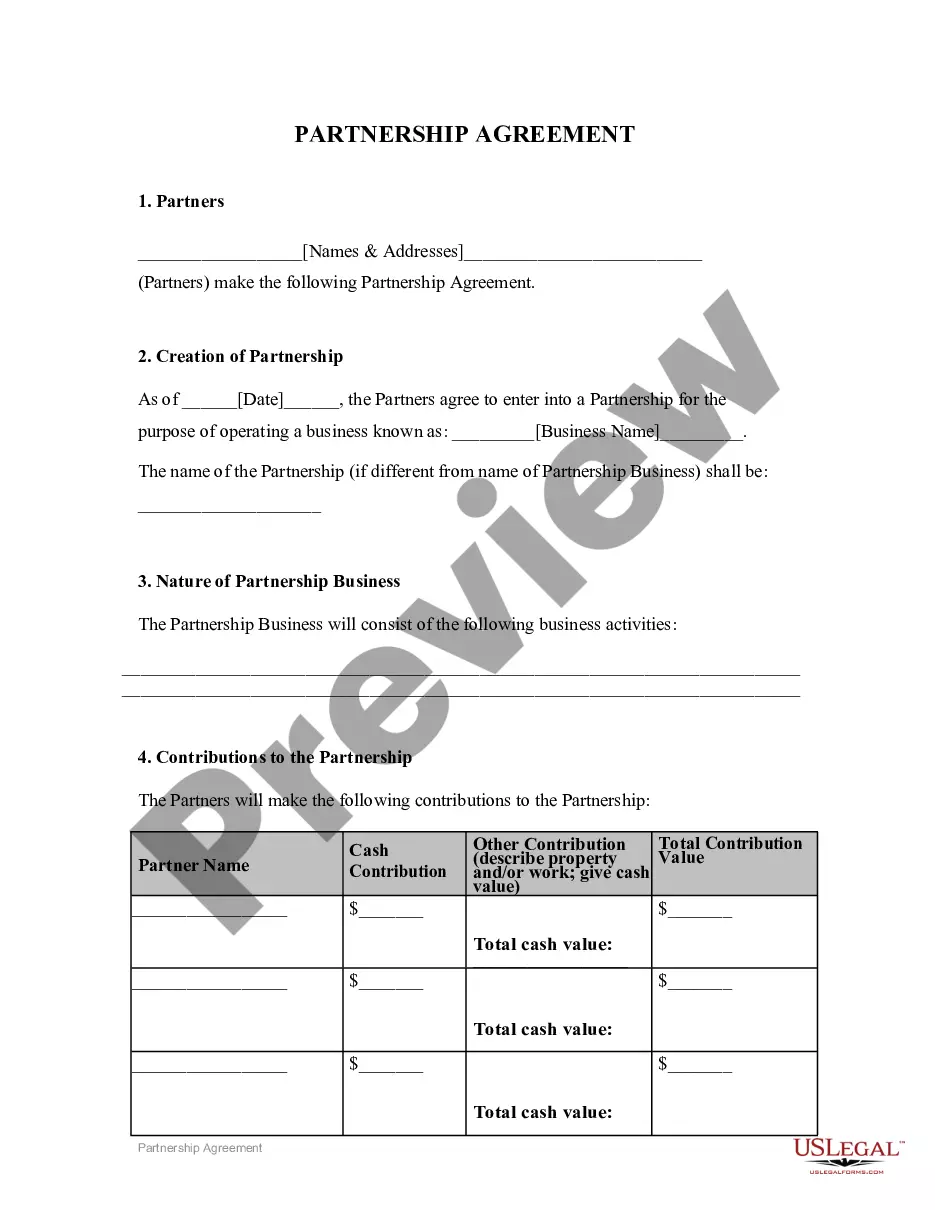
- Partner contributions and ownership percentages
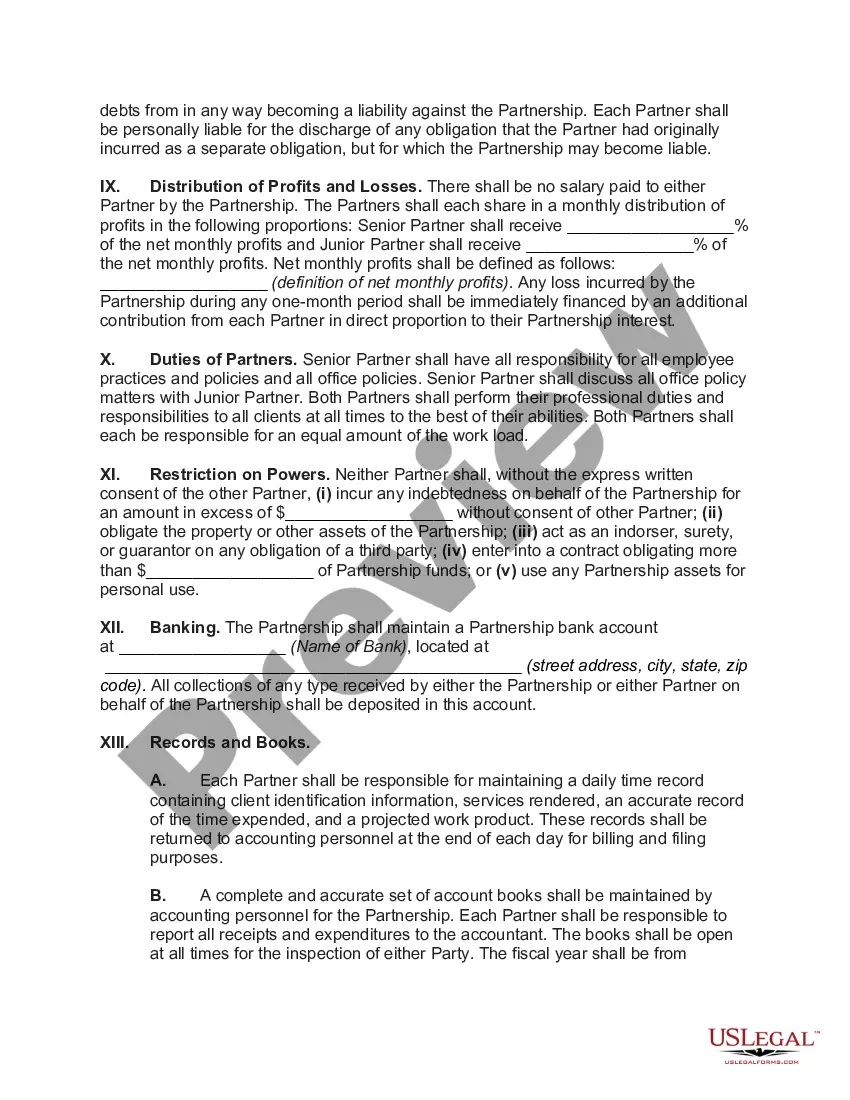
- Profit and loss distribution methods
- Roles and responsibilities of each partner
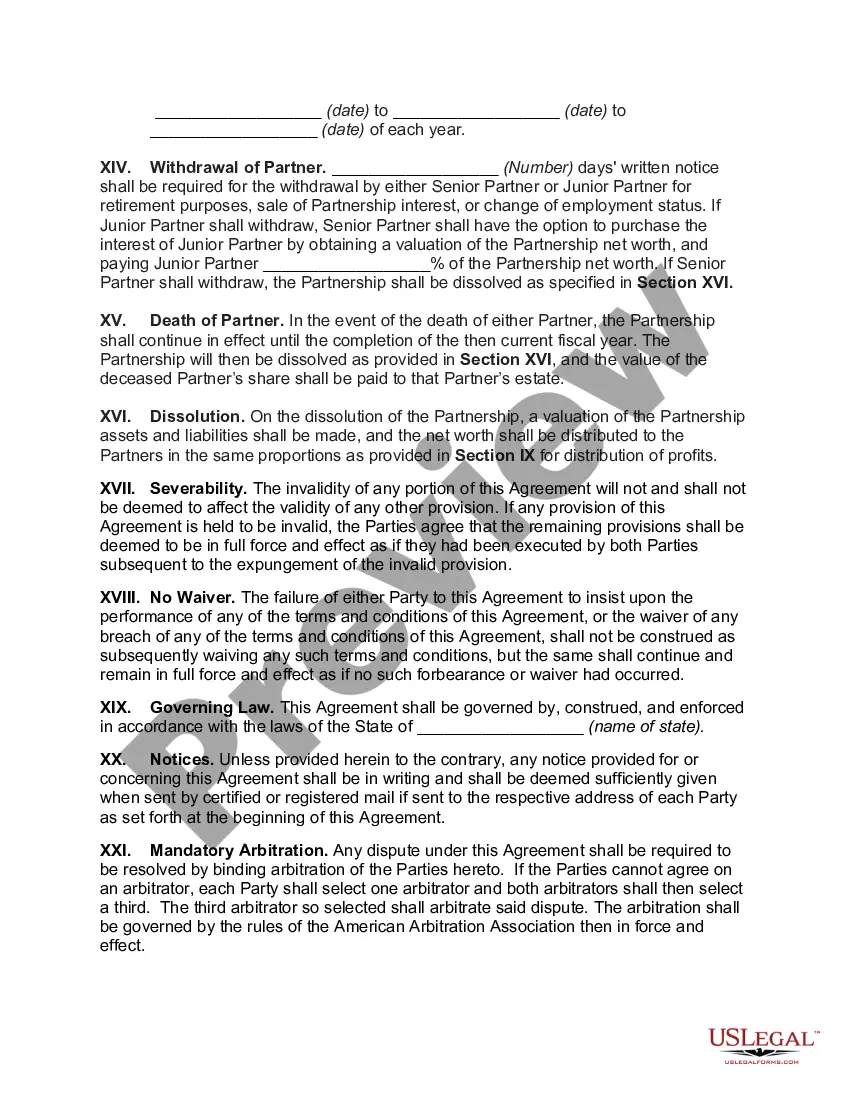
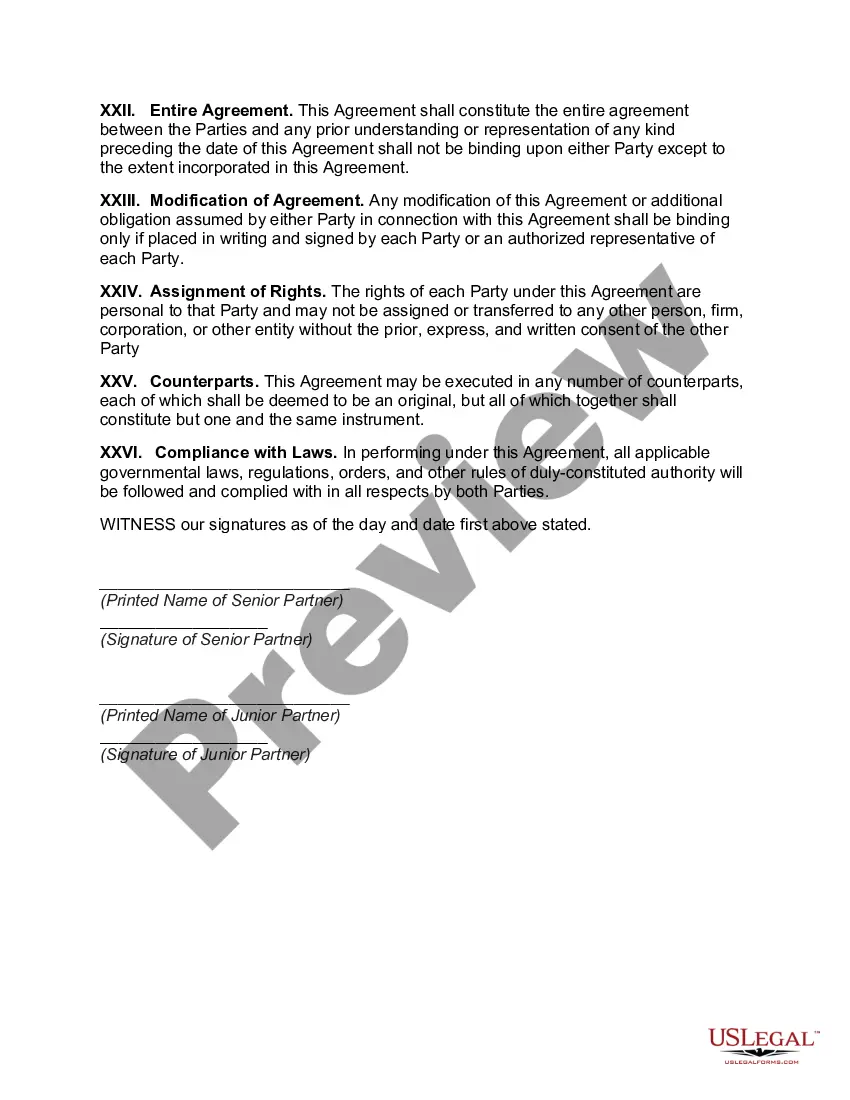
- Procedures for withdrawal and dissolution of the partnership
When to use this document
This form should be used when two individuals enter into a commercial partnership, particularly when there is a distinct difference in authority or investment between the two partners. It is relevant for new businesses requiring a partnership framework or existing partnerships looking to formalize their agreement. Using this agreement can help clarify roles and expectations, thereby reducing potential disputes in the future.
Who this form is for
- Small business owners forming a partnership
- Individuals seeking a structured partnership arrangement
- Partners wanting to clarify roles, contributions, and profit-sharing
- Any commercial enterprise with both a senior and junior partner
How to prepare this document
- Identify the names and addresses of both the senior and junior partners.
- Specify the name of the partnership and its principal office location.
- Enter the contribution amounts and ownership percentages for each partner.
- Define the profit distribution percentages and clarification of net profits.
- Insert provisions for withdrawal, death, and dissolution of the partnership.
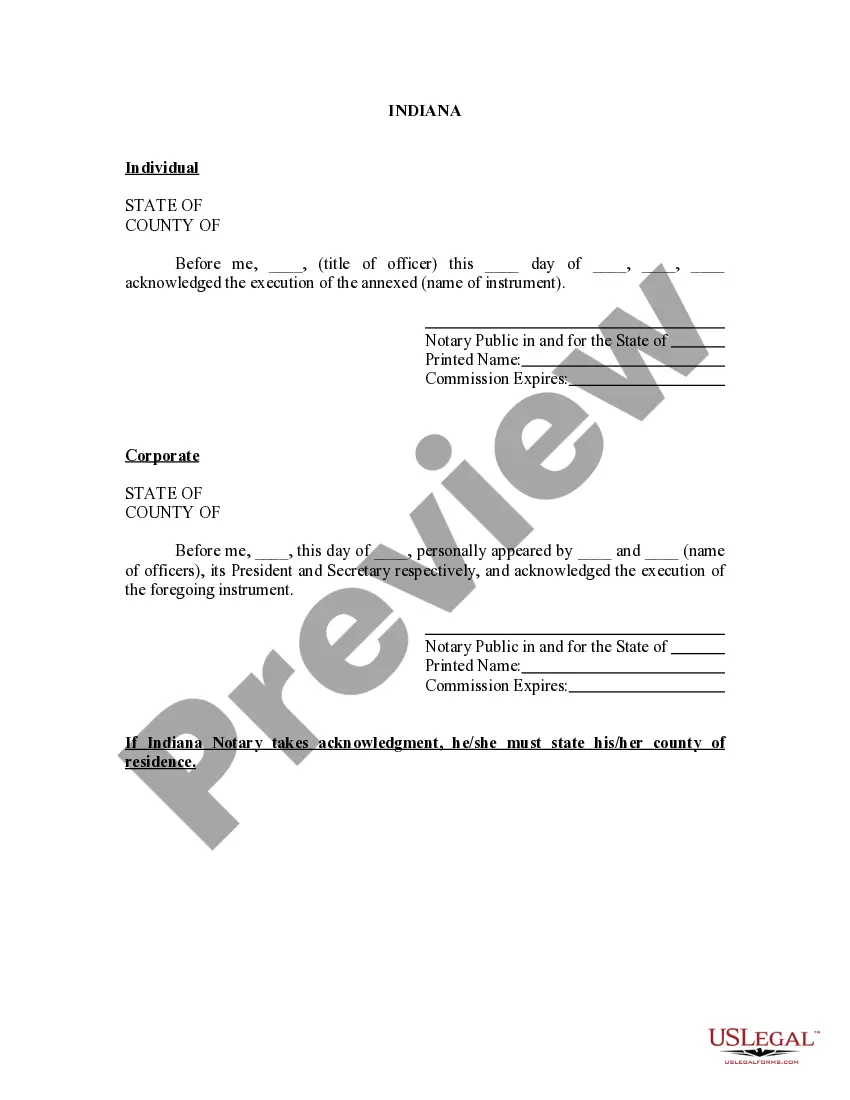
Notarization guidance
This form does not typically require notarization unless specified by local law. However, notarization can provide an added layer of authenticity and security for the agreement between partners.
Get your form ready online
Our built-in tools help you complete, sign, share, and store your documents in one place.
Make edits, fill in missing information, and update formatting in US Legal Forms—just like you would in MS Word.
Download a copy, print it, send it by email, or mail it via USPS—whatever works best for your next step.
Sign and collect signatures with our SignNow integration. Send to multiple recipients, set reminders, and more. Go Premium to unlock E-Sign.
If this form requires notarization, complete it online through a secure video call—no need to meet a notary in person or wait for an appointment.
We protect your documents and personal data by following strict security and privacy standards.

Make edits, fill in missing information, and update formatting in US Legal Forms—just like you would in MS Word.

Download a copy, print it, send it by email, or mail it via USPS—whatever works best for your next step.

Sign and collect signatures with our SignNow integration. Send to multiple recipients, set reminders, and more. Go Premium to unlock E-Sign.

If this form requires notarization, complete it online through a secure video call—no need to meet a notary in person or wait for an appointment.

We protect your documents and personal data by following strict security and privacy standards.
Mistakes to watch out for
- Failing to define profit distribution clearly, leading to confusion.
- Not including the duration of the partnership, causing uncertainty about the agreement's timeframe.
- Neglecting to specify the consequences of partner withdrawal or death.
- Omitting details about contributions and ownership percentages, which can create disputes.
Why complete this form online
- Convenience of downloading and customizing the form as needed.
- Access to legal language crafted by licensed attorneys, ensuring reliability.
- Time saved compared to drafting a partnership agreement from scratch.
- Availability of updates to reflect changes in laws or regulations.
Legal use & context
- This agreement serves as a legally binding contract outlining the terms of the partnership.
- Ensures partners are clear on their roles and responsibilities, reducing potential conflicts.
- Helps in protecting individual interests by clearly delineating contributions and profit-sharing.
Summary of main points
- Clearly define each partner's role to prevent future disputes.
- Specify the terms for contributions and profit distribution.
- Include mechanisms for withdrawal and dissolution of the partnership to protect all parties involved.
Looking for another form?


Form popularity
FAQ
Junior partners buy in to the firm and are entitled to a small share of the profits. Junior partners deal with medium to high profile cases. Senior Partner - Also buy in to the firm but get a much larger share of the profits.
A junior partner is a partner whose participation is limited with respect to both profits and management. In other words, a junior partner is a person whose level of involvement, responsibility, risks, and rewards are comparatively lesser than that of the senior partners.
This is all to say that, ultimately, what a junior partner makes in Biglaw can vary from as low as about $400-500k, which is just a bit more than a senior associate makes, to a couple million at a very profitable firm that has lockstep compensation, or potentially even more than that if the junior partner has a very
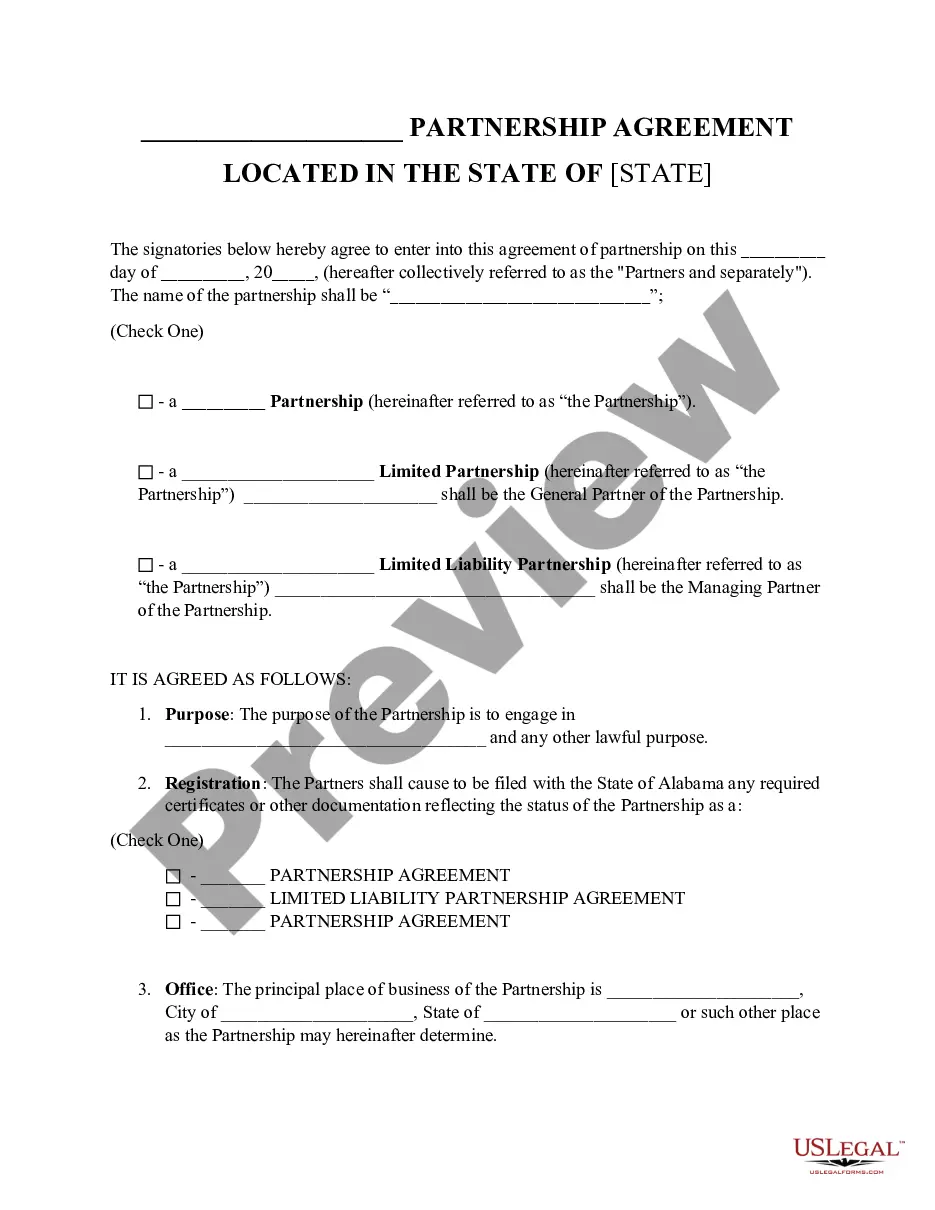
LLC partnership (also known as a multi-member LLC) Limited liability partnership (LLP) Limited partnership (LP) General partnership (GP)
Types of Partnership General Partnership, Limited Partnership, Limited Liability Partnership and Public Private Partnership.
General partnership. A general partnership is a company owned by two or more individuals who agree to run the business as partners or co-owners. Limited partnership. Limited partnerships are more structured than general partnerships and have both general and limited partners. Limited liability partnership. LLC partnership.
General Partnership: Limited Partnership: Limited Liability Partnership (L.L.P): Partnership at Will: Particular Partnership:
Senior Partner Partner of many years of service. Principal Partner who is not a CPA/CA.
A junior partner is a partner whose participation is limited with respect to both profits and management. In other words, a junior partner is a person whose level of involvement, responsibility, risks, and rewards are comparatively lesser than that of the senior partners.