Employment Confidentiality Agreement Regarding Work Product, Production Processes, Business Operations, Computer Software, Computer Technology, Proprietary and Trade Secret Technology
Overview of this form
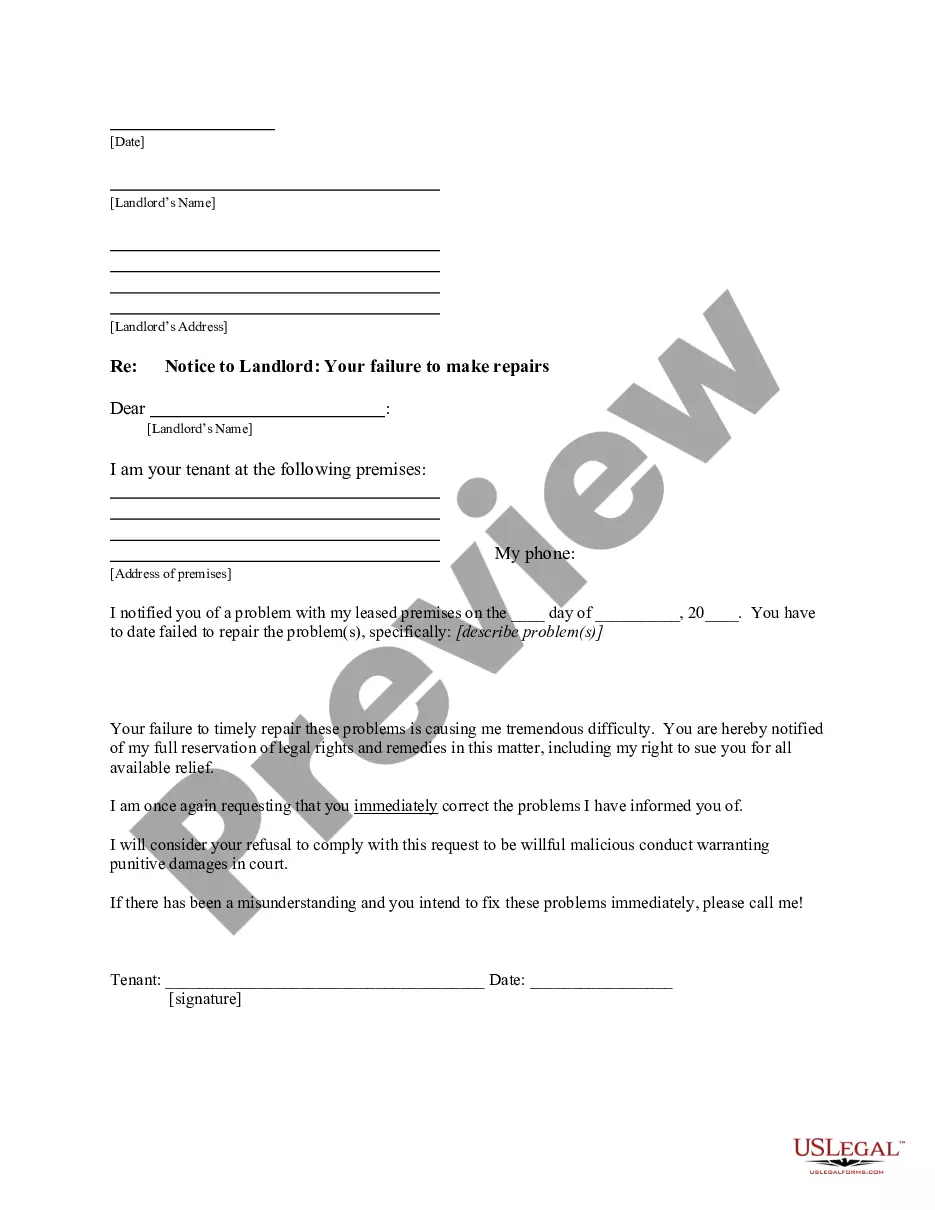
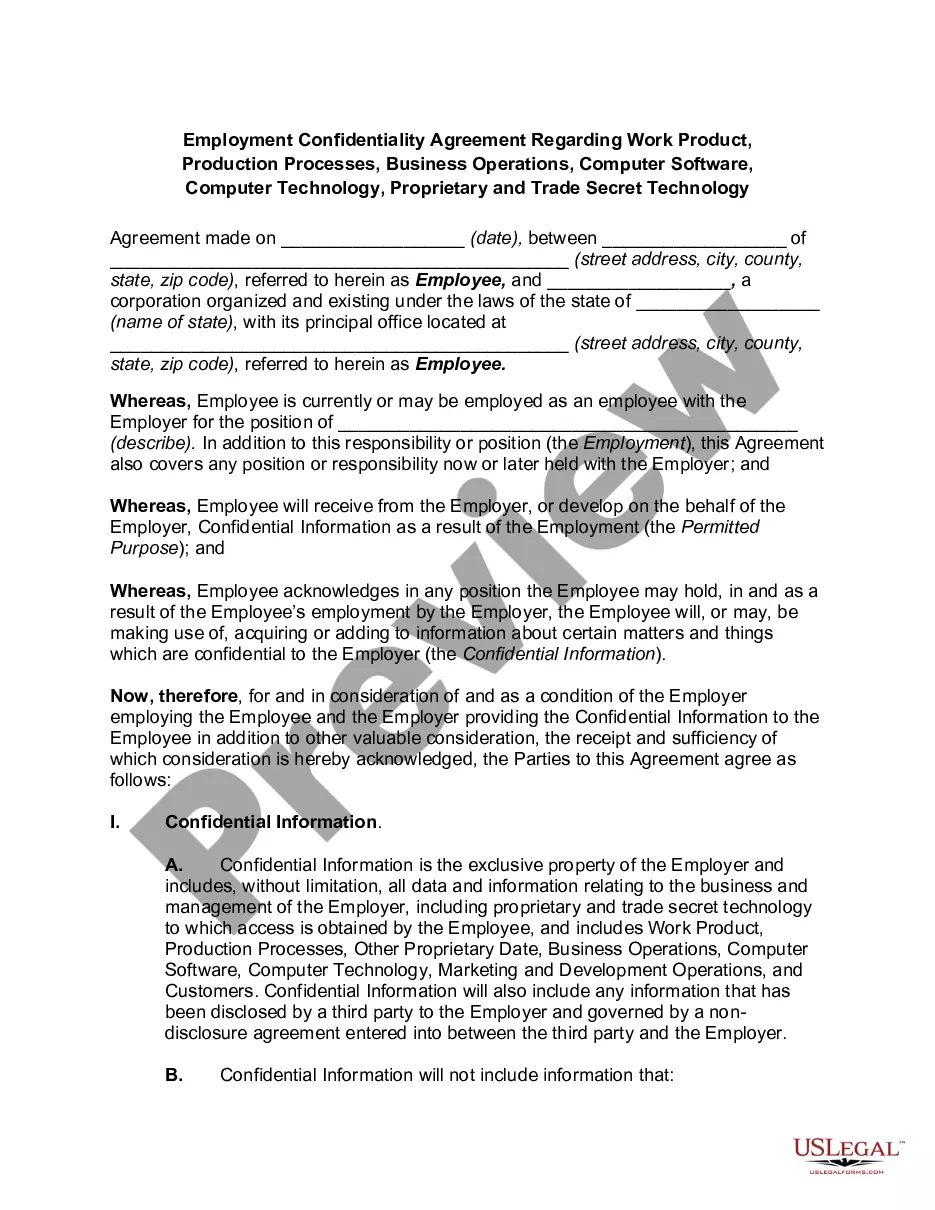
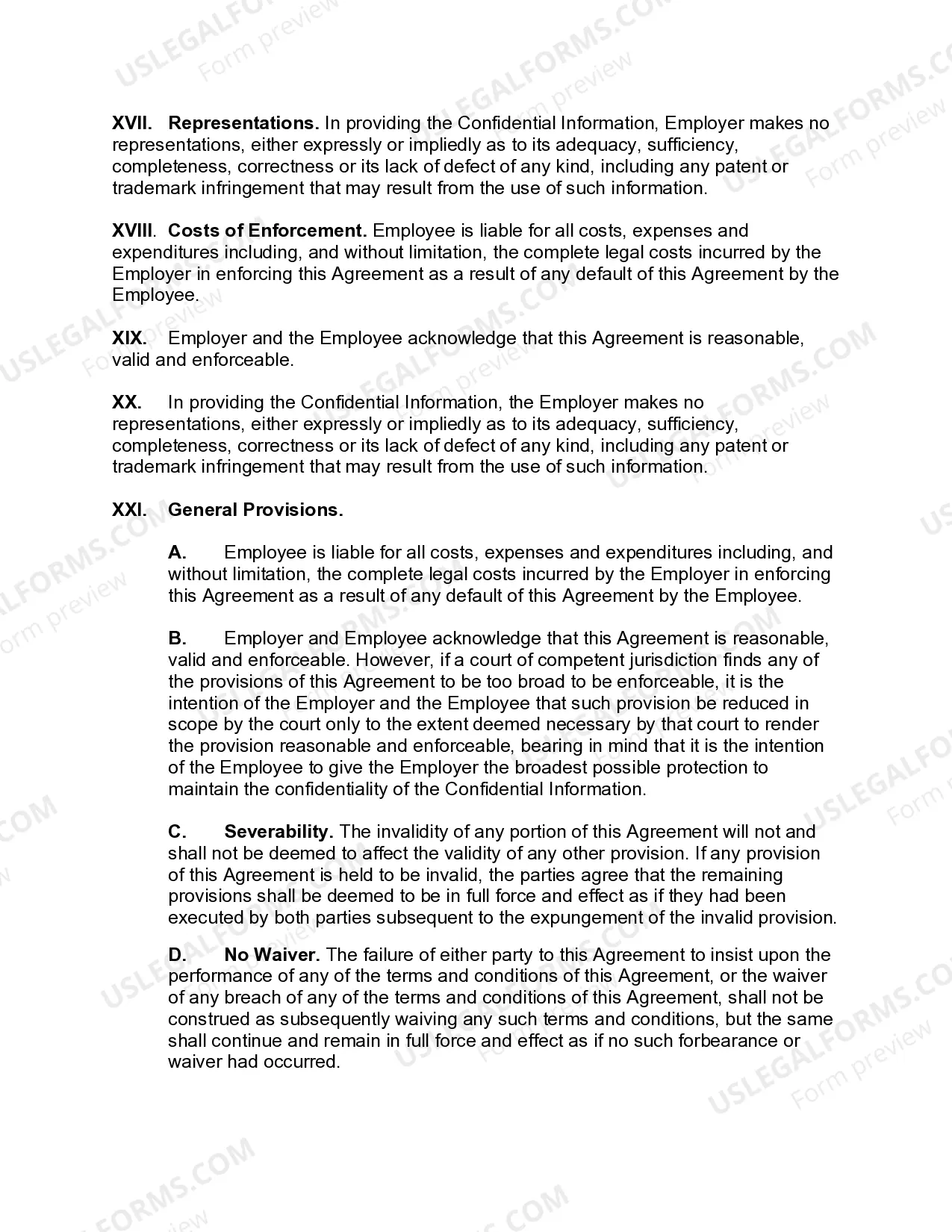
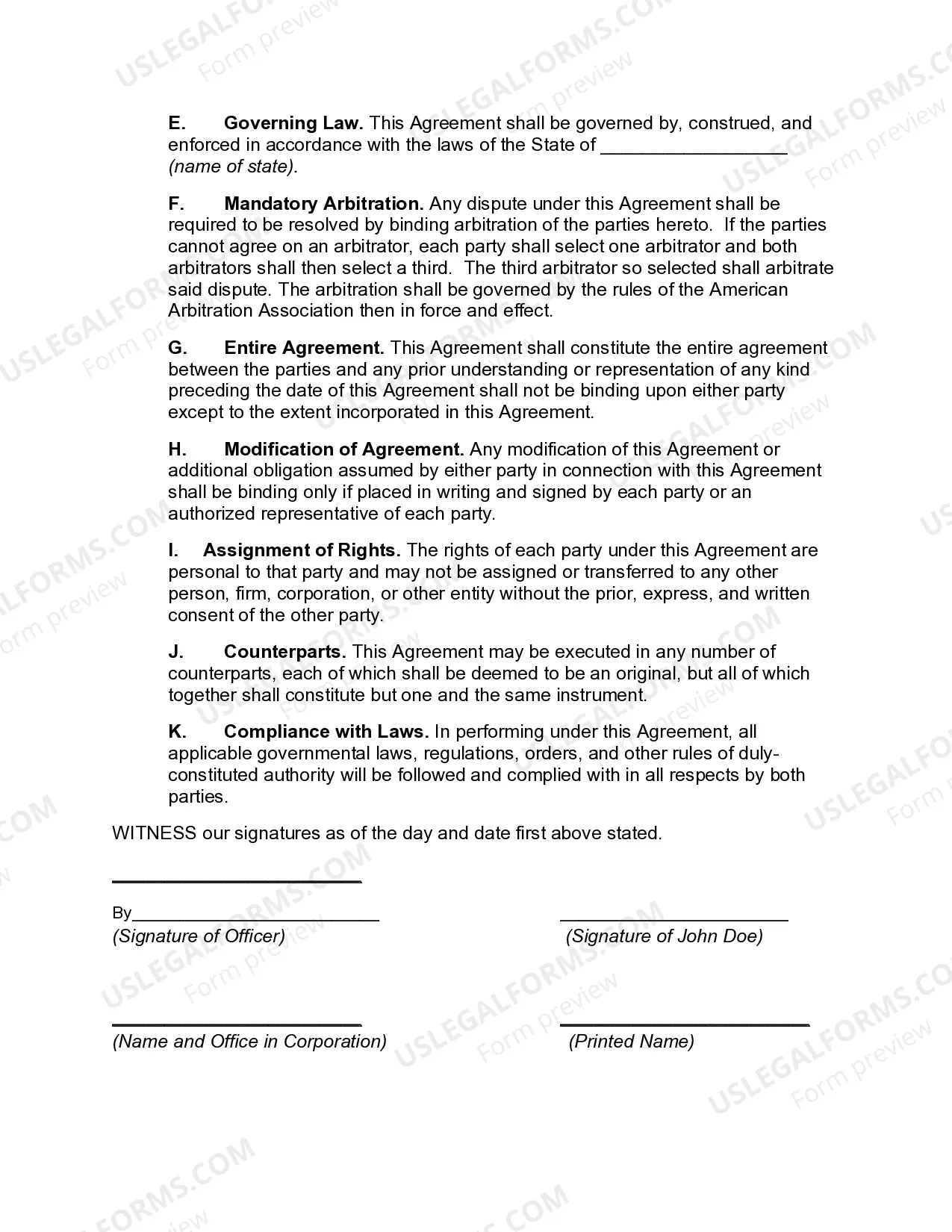
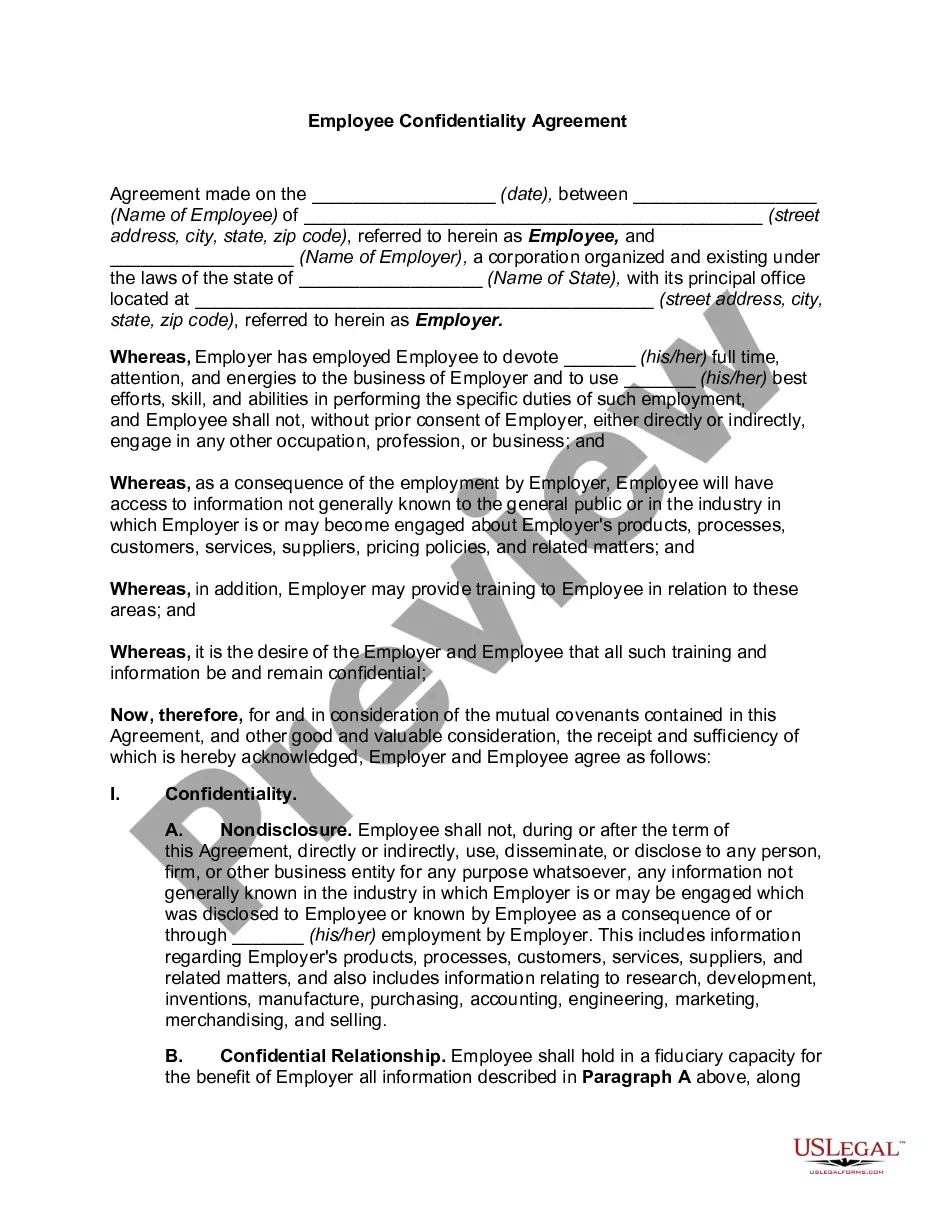
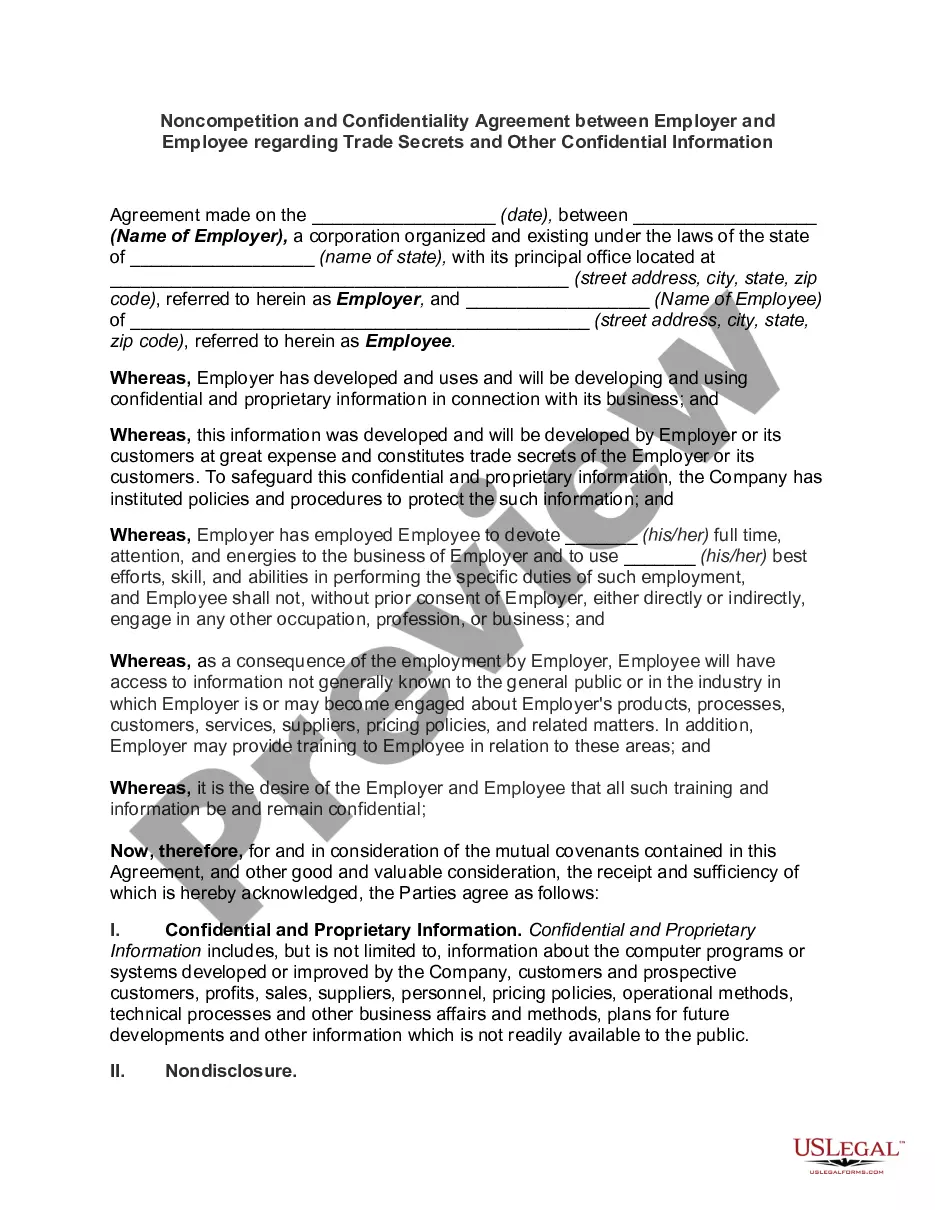
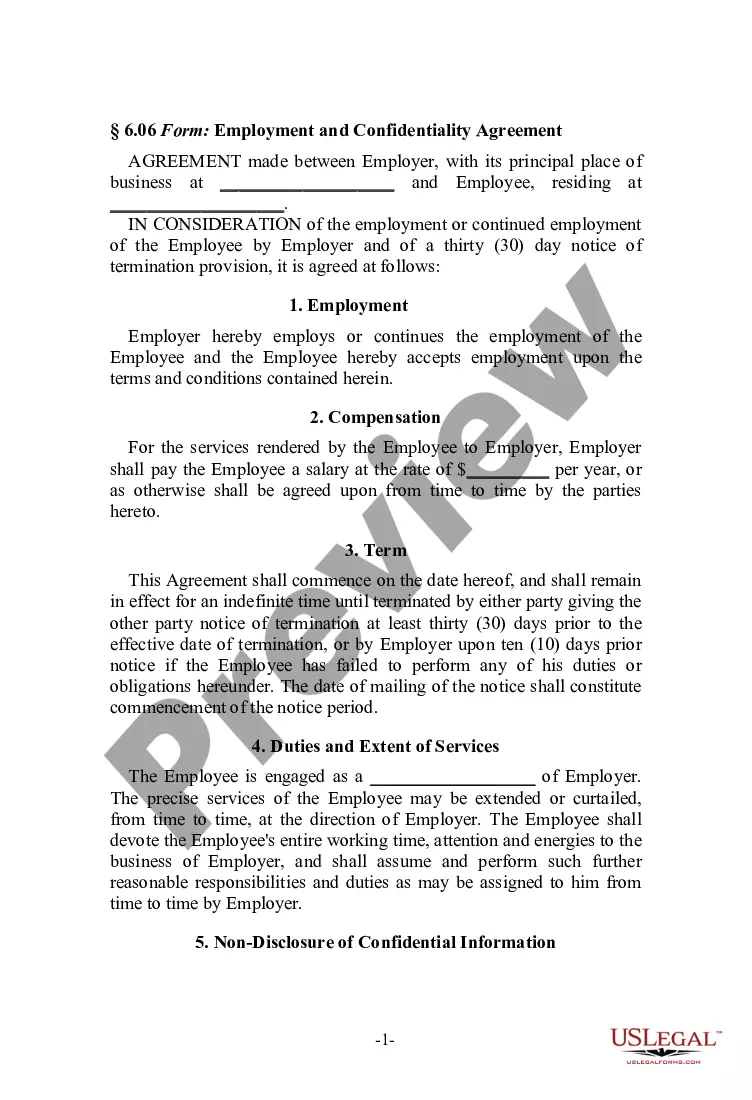
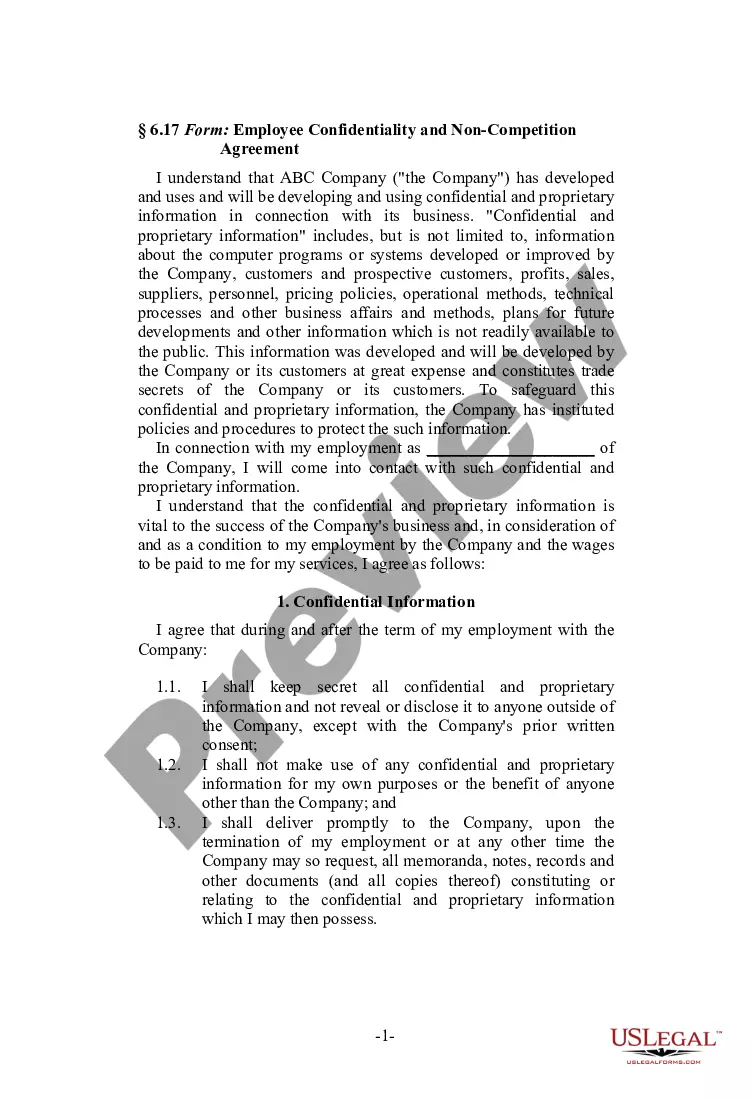
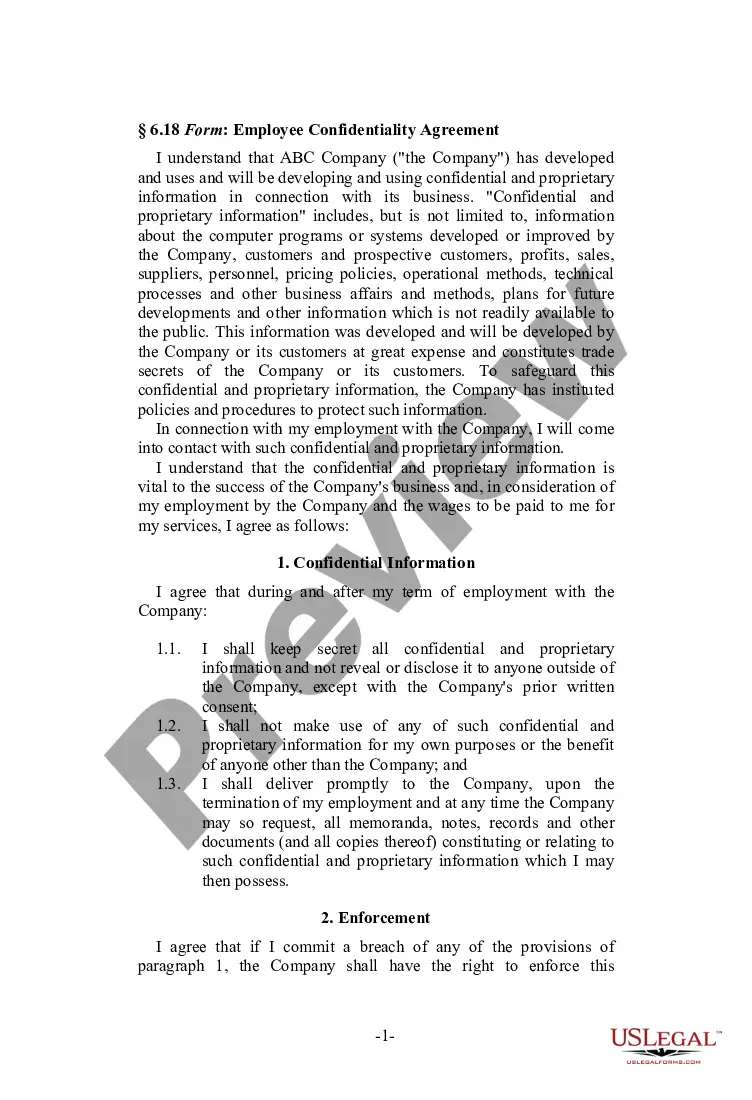
The Employment Confidentiality Agreement is a legal contract between an employer and employee, designed to protect confidential and proprietary information. This agreement specifies the terms under which the employee is prohibited from disclosing sensitive information related to the companyâs operations, business processes, and technology. Unlike a general non-disclosure agreement, this form is specifically tailored to address work product and other proprietary data unique to employment relationships.
Form components explained
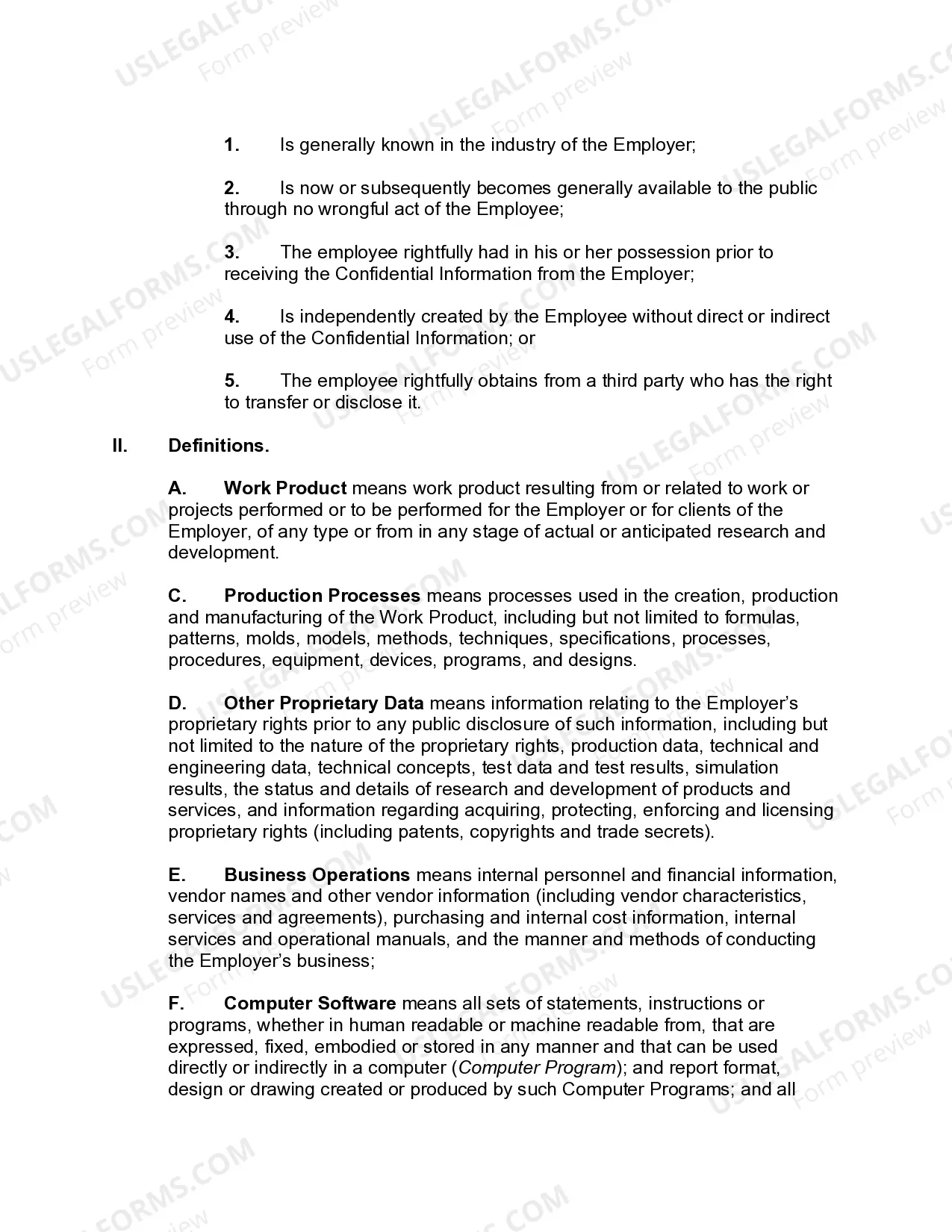
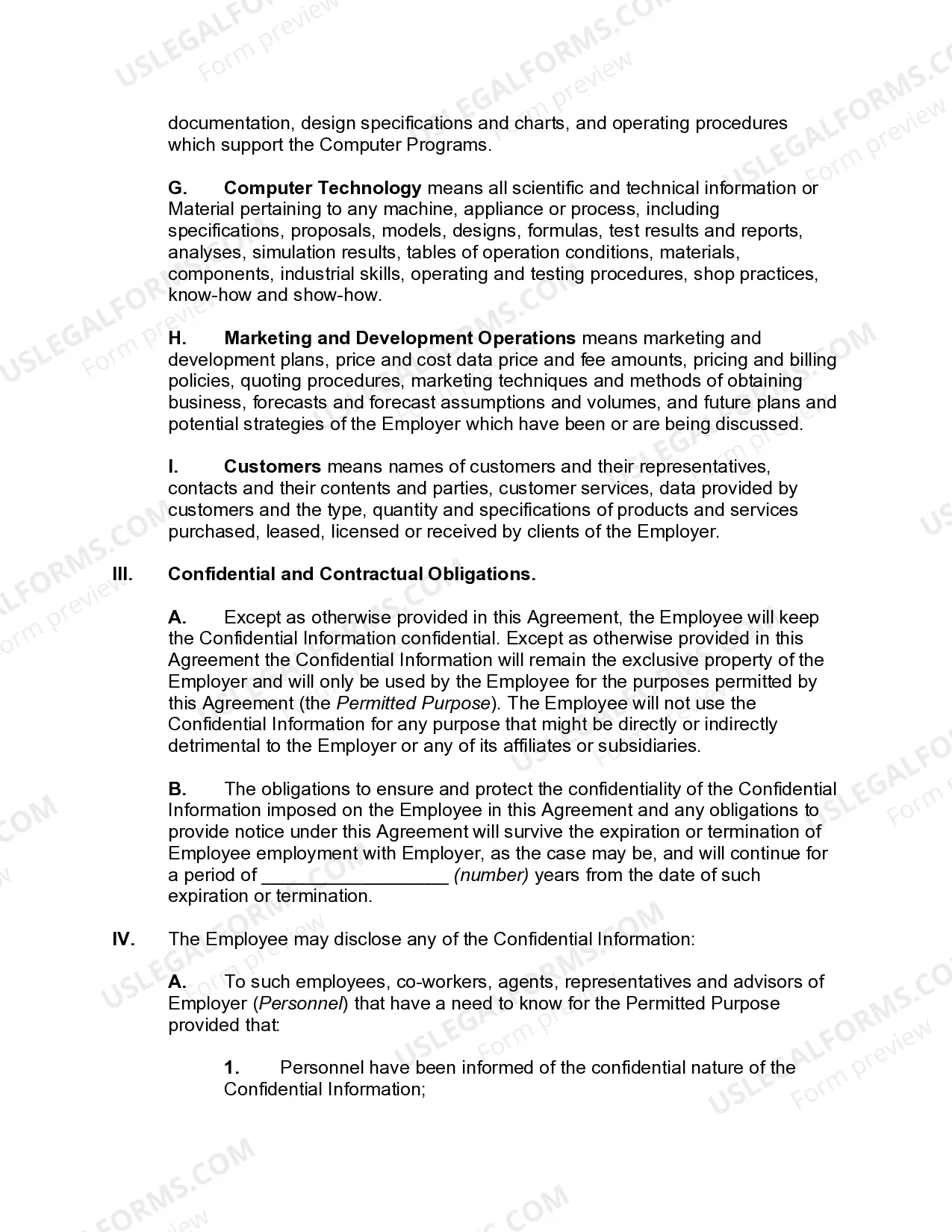
- Definition of Confidential Information and its exclusions.
- Obligations of the employee regarding confidentiality and the handling of proprietary data.
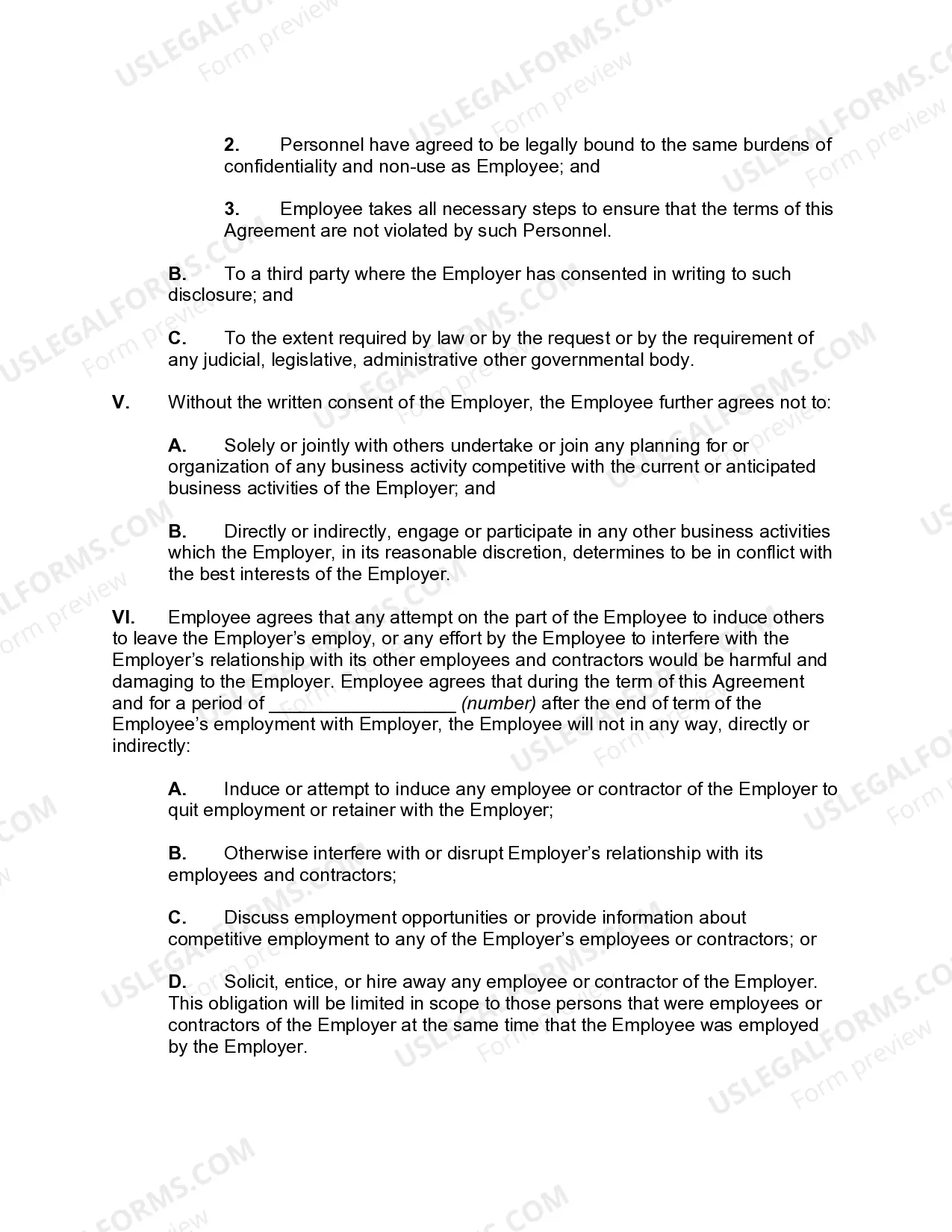
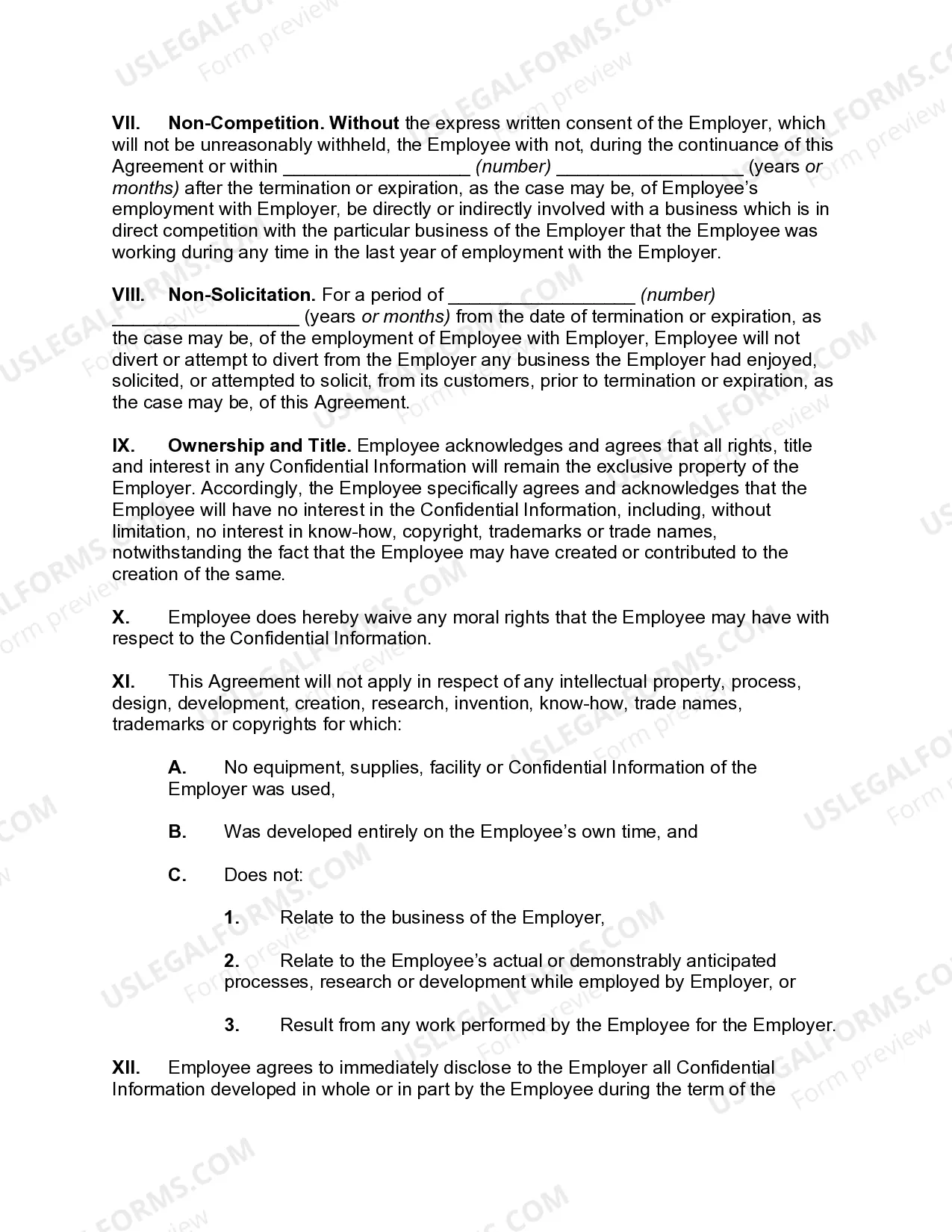
- Non-competition and non-solicitation clauses post-employment.
- Conditions for disclosure of confidential information, including legal requirements.
- Details on ownership of work products and technological developments made during employment.
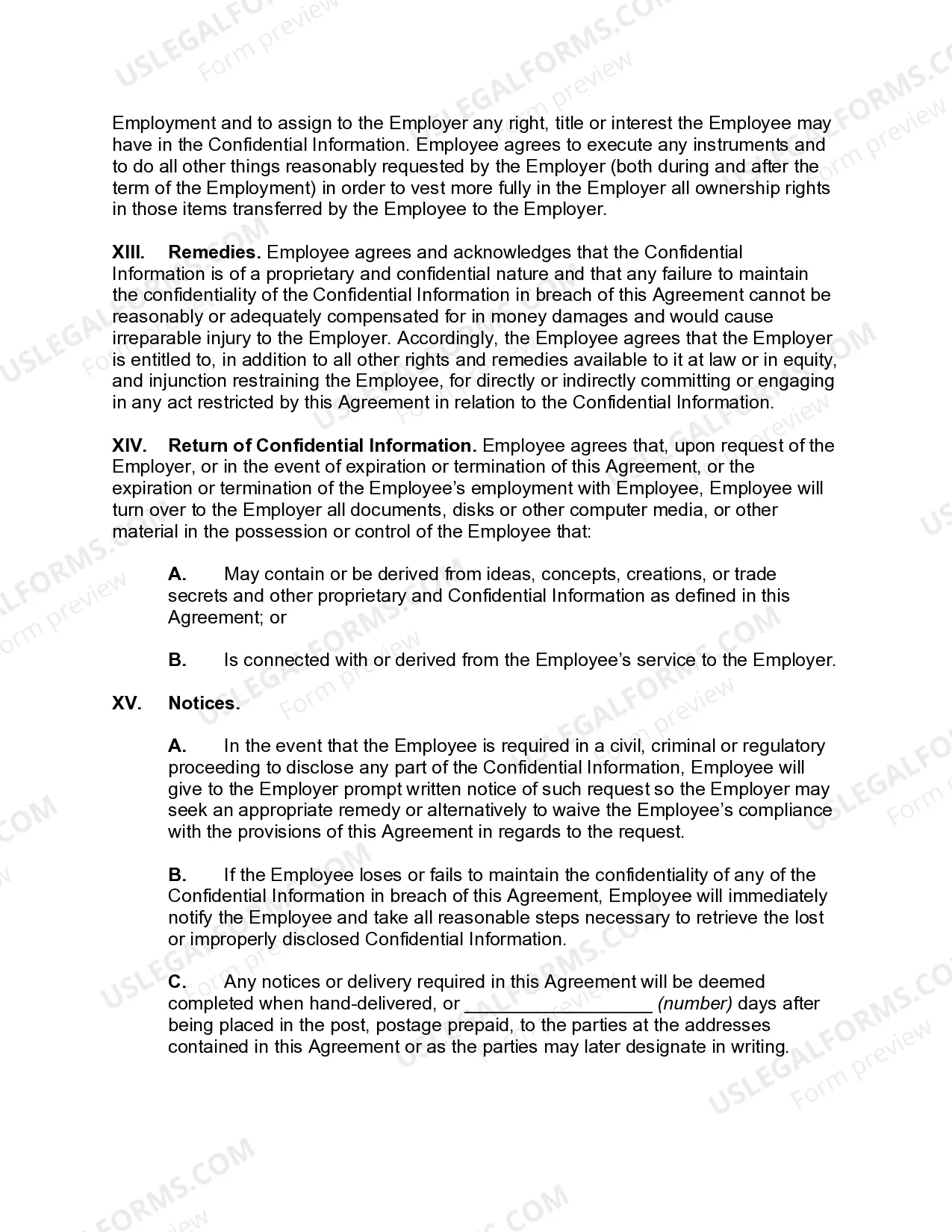
- Remedies available to the employer in case of a breach of the agreement.

Common use cases
This form should be used when hiring new employees who will have access to sensitive company information. It is particularly important in industries where proprietary technology, trade secrets, and operational processes are integral to maintaining a competitive advantage. Employers can utilize this form to ensure that employees understand their obligations related to confidentiality during and after their employment period.
Who this form is for
- Employers who wish to safeguard their confidential business information.
- HR managers involved in drafting employment contracts.
- Small business owners who want to protect proprietary methods and processes.
- Employees entering agreements in positions that require access to sensitive operational details.
How to complete this form
- Identify the parties involved by entering the names and addresses of the employer and employee.
- Specify the date of the agreement and the employee's position within the company.
- Define the scope of confidential information that will be covered under this agreement.
- Fill in the duration of the confidentiality obligations and any non-competition terms.
- Ensure all parties sign the agreement and provide printed names and titles as needed.
Notarization guidance
This form does not typically require notarization unless specified by local law. Ensure to check specific state requirements or consult with a legal professional for guidance on notarization needs.
Get your form ready online
Our built-in tools help you complete, sign, share, and store your documents in one place.
Make edits, fill in missing information, and update formatting in US Legal Forms—just like you would in MS Word.
Download a copy, print it, send it by email, or mail it via USPS—whatever works best for your next step.
Sign and collect signatures with our SignNow integration. Send to multiple recipients, set reminders, and more. Go Premium to unlock E-Sign.
If this form requires notarization, complete it online through a secure video call—no need to meet a notary in person or wait for an appointment.
We protect your documents and personal data by following strict security and privacy standards.

Make edits, fill in missing information, and update formatting in US Legal Forms—just like you would in MS Word.

Download a copy, print it, send it by email, or mail it via USPS—whatever works best for your next step.

Sign and collect signatures with our SignNow integration. Send to multiple recipients, set reminders, and more. Go Premium to unlock E-Sign.

If this form requires notarization, complete it online through a secure video call—no need to meet a notary in person or wait for an appointment.

We protect your documents and personal data by following strict security and privacy standards.
Avoid these common issues
- Failing to clearly define what constitutes confidential information.
- Not specifying the duration of the confidentiality obligations.
- Neglecting to include provisions for enforcing the agreement.
- Using vague language that may lead to misinterpretation of obligations.
- Forgetting to collect signatures from all parties involved.
Why complete this form online
- Instant access to professionally drafted legal language tailored to your needs.
- Easy editing capabilities allow customization to fit specific employment scenarios.
- Quick download and printing options for immediate use.
- Use of reliable templates ensures legal compliance and reduces legal risks.
Looking for another form?
Form popularity
FAQ
Proprietary information, also known as a trade secret, is information a company wishes to keep confidential. Proprietary information can include secret formulas, processes, and methods used in production.
Intellectual property is protected by law. These are trademarks, copyrights, and patents.Proprietary information is secret info that a business uses to gain an edge, but it's not protected by law. It's protected by secrecy instead, enforced by non-disclosure agreements that is part of an employee's contract.
A Proprietary Information Agreement is a legally binding contract stipulating a number of parties must not disclose confidential supplies, data, or information.
Confidential and Proprietary Information means all information, not generally known to the public, that relates to the business, technology, manner of operation, subscribers, customers, finances, employees, plans, proposals or practices of the Company or of any third parties doing business with the Company, and
Confidential information is provided by the patient to the health-care provider in the course of their confidential relationship. Nonconfidential information is provided by the patient without restriction, and is generally considered a matter of common knowledge.
Set the date of the agreement. Describe the two parties, sometimes called the Disclosing Party and the Receiving Party.7feff Include names and identification, so there can be no misunderstanding about who signed the agreement.
A definition of confidential information. Who is involved. Why the recipient knows the information. Exclusions or limits on confidential information. Receiving party's obligations. Time frame or term. Discloser to the recipient.
As adjectives the difference between confidential and proprietary. is that confidential is (meant to be) kept secret within a certain circle of persons; not intended to be known publicly while proprietary is of or relating to property or ownership, as proprietary rights .