Professional Limited Liability Partnership Agreement to Practice Medicine
Overview of this form
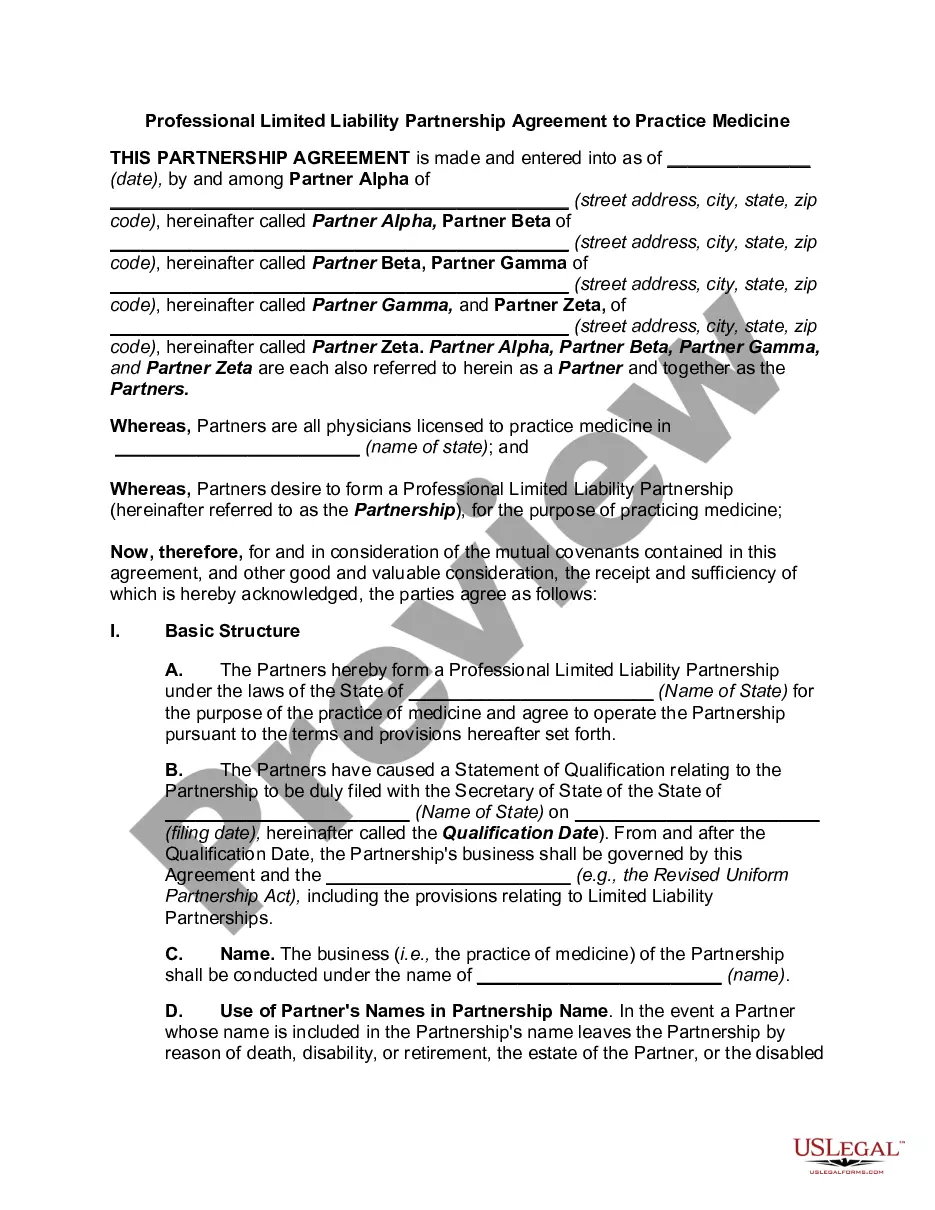
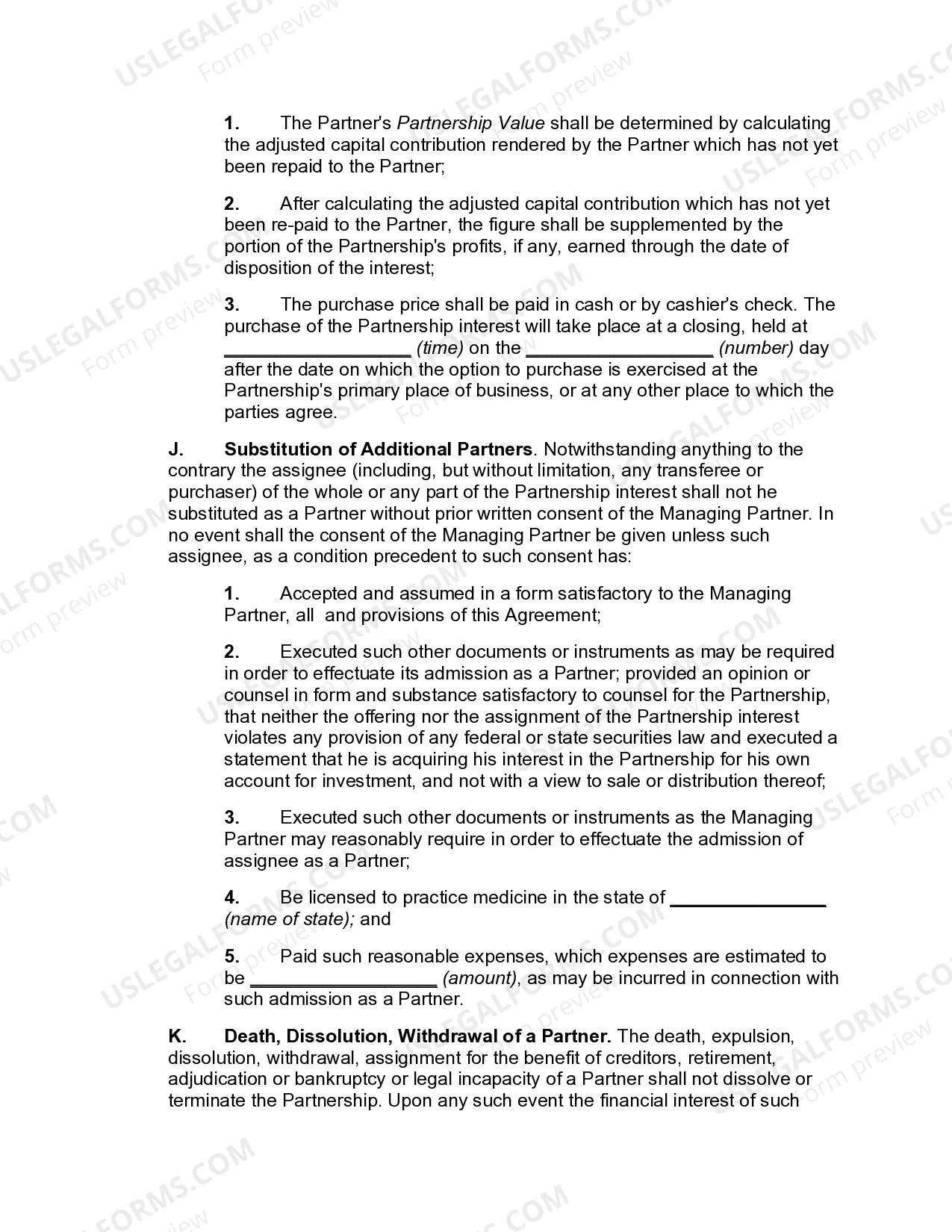
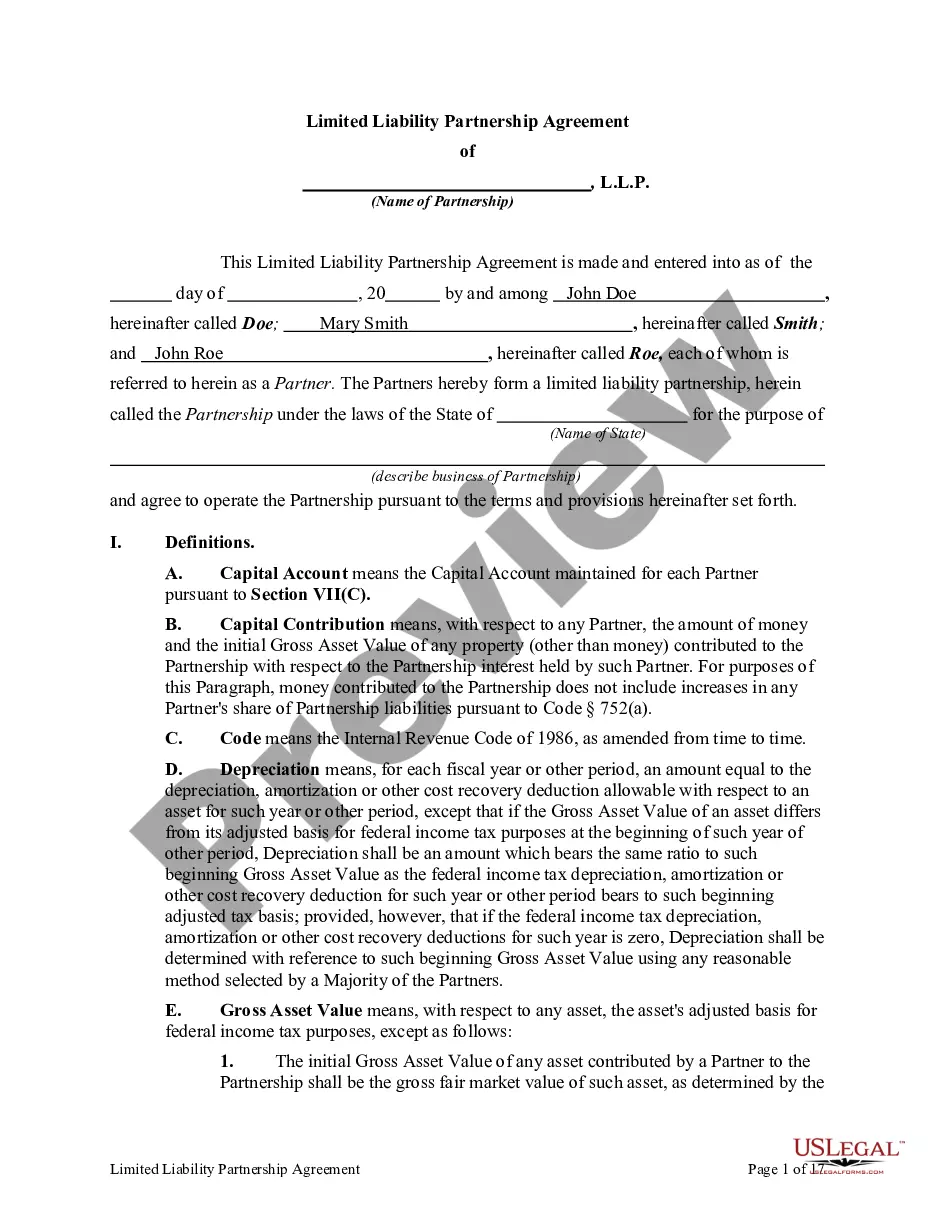
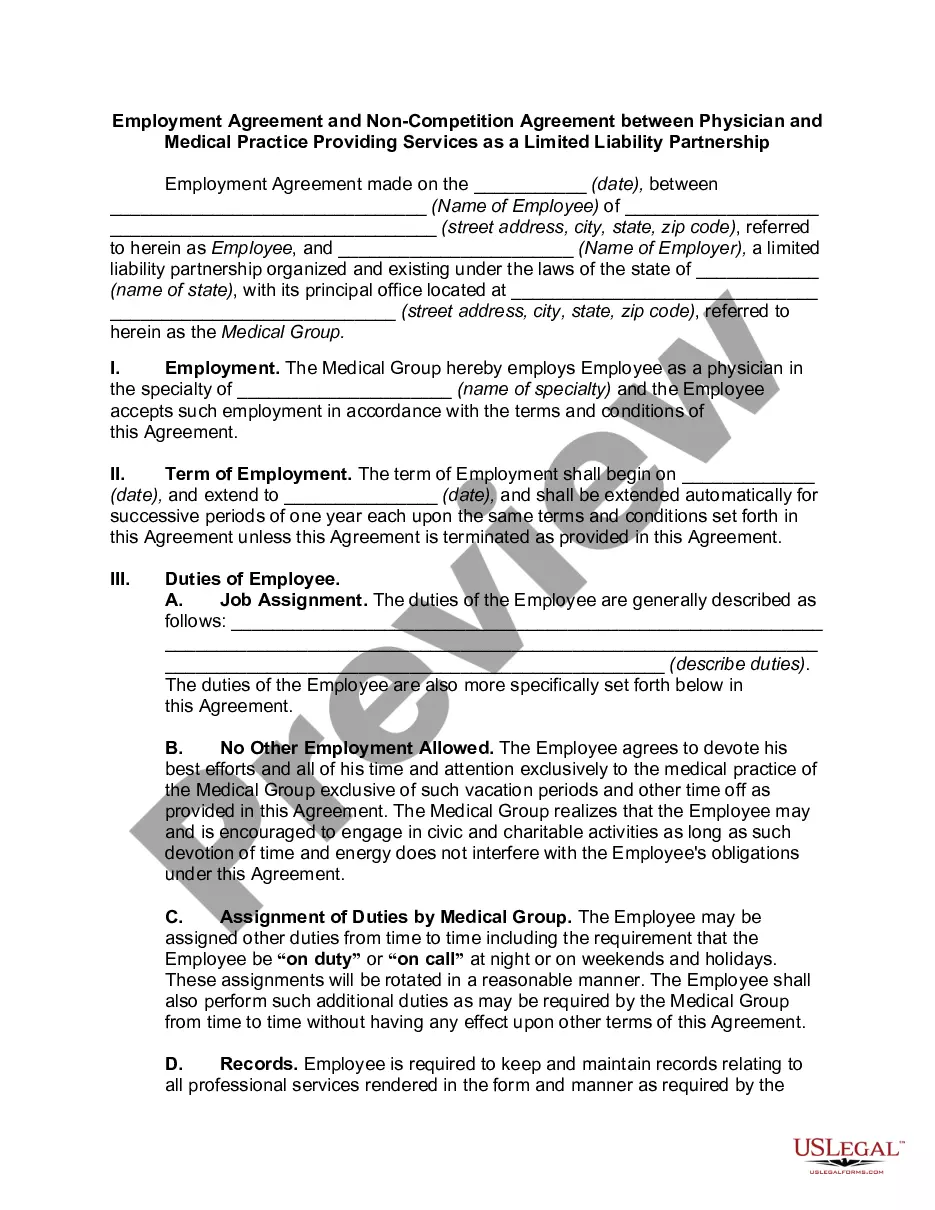
The Professional Limited Liability Partnership Agreement to Practice Medicine is a legal document that establishes a formal agreement among licensed medical professionals to form a professional limited liability partnership (PLLP). This type of partnership is specifically designed for licensed practitioners, allowing them to collaborate while limiting personal liability. Unlike a standard partnership, a PLLP provides additional protective measures against malpractice claims and financial debts incurred by the partnership, promoting shared responsibilities among partners while safeguarding their personal assets.
Key components of this form
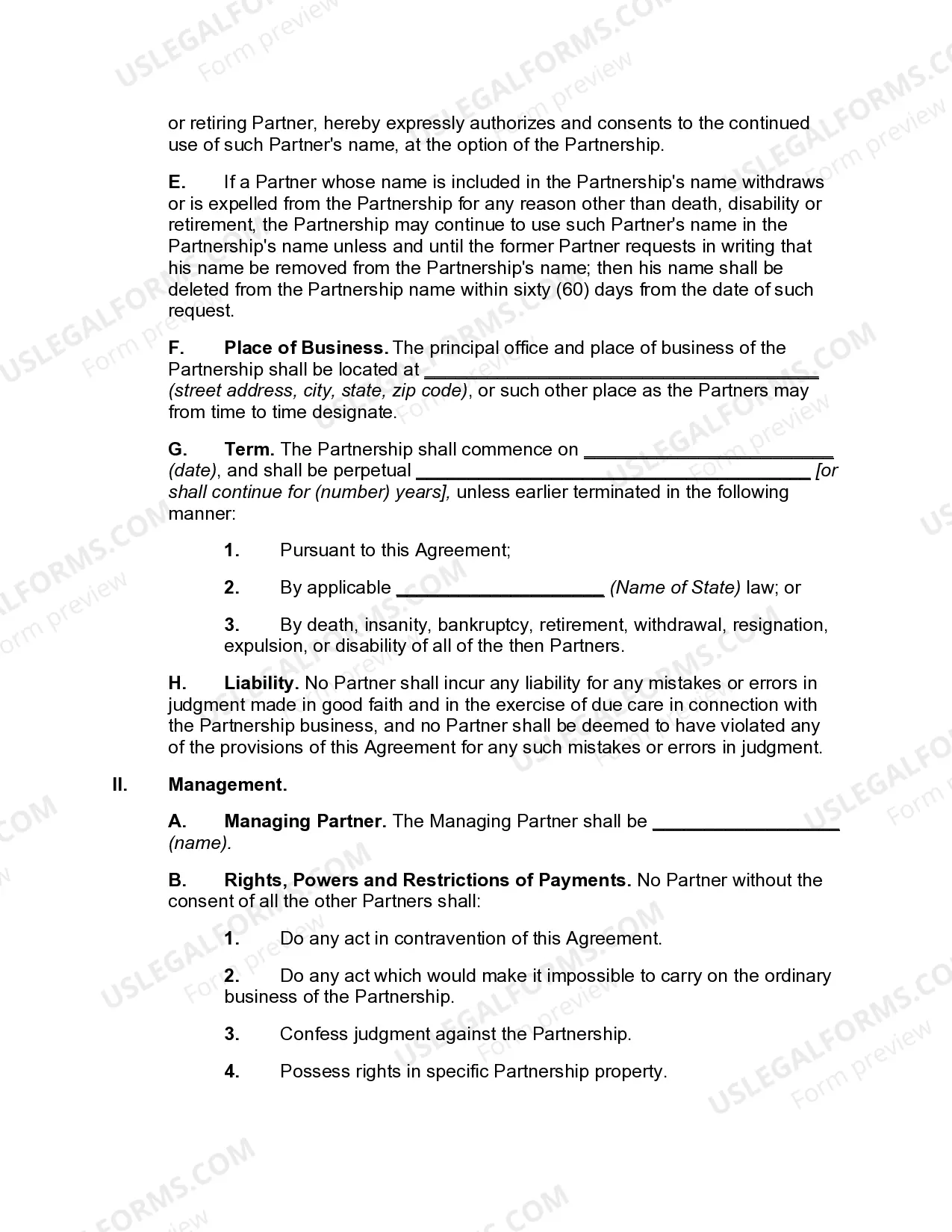
- Basic structure: Establishes the formation of the PLLP and outlines its operational framework.
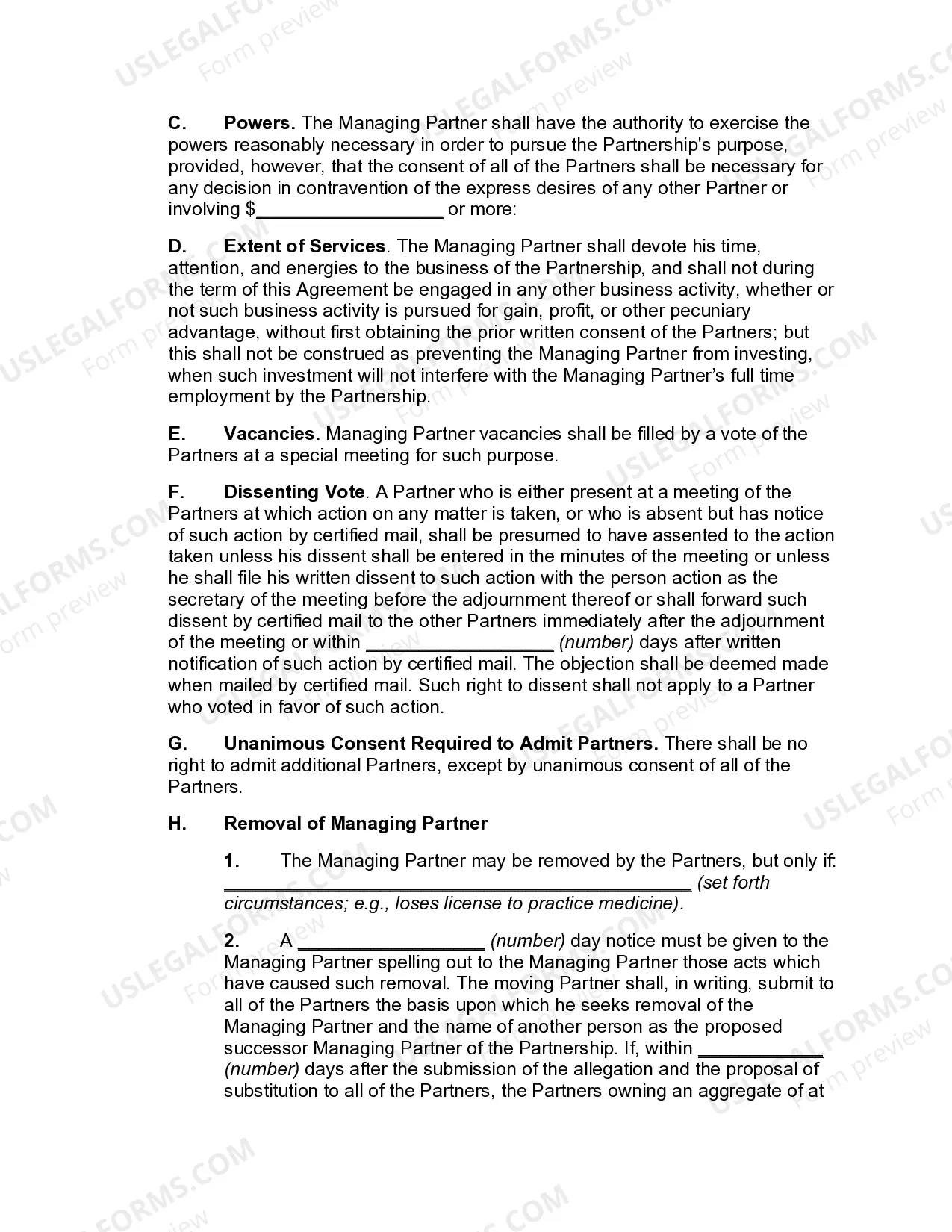
- Management provisions: Defines roles and responsibilities, including the designation of a managing partner.
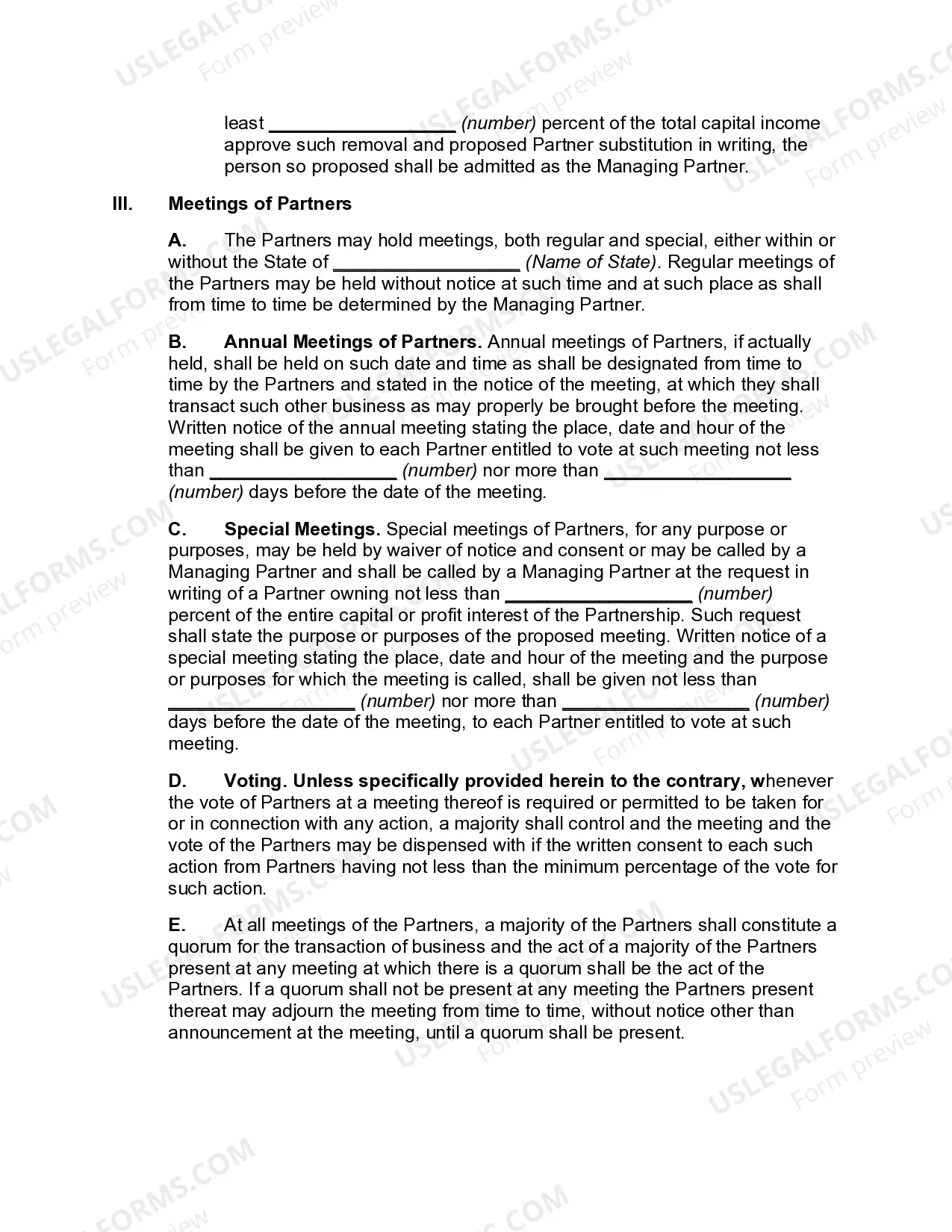
- Meetings of partners: Details protocols for holding regular and special meetings among partners.
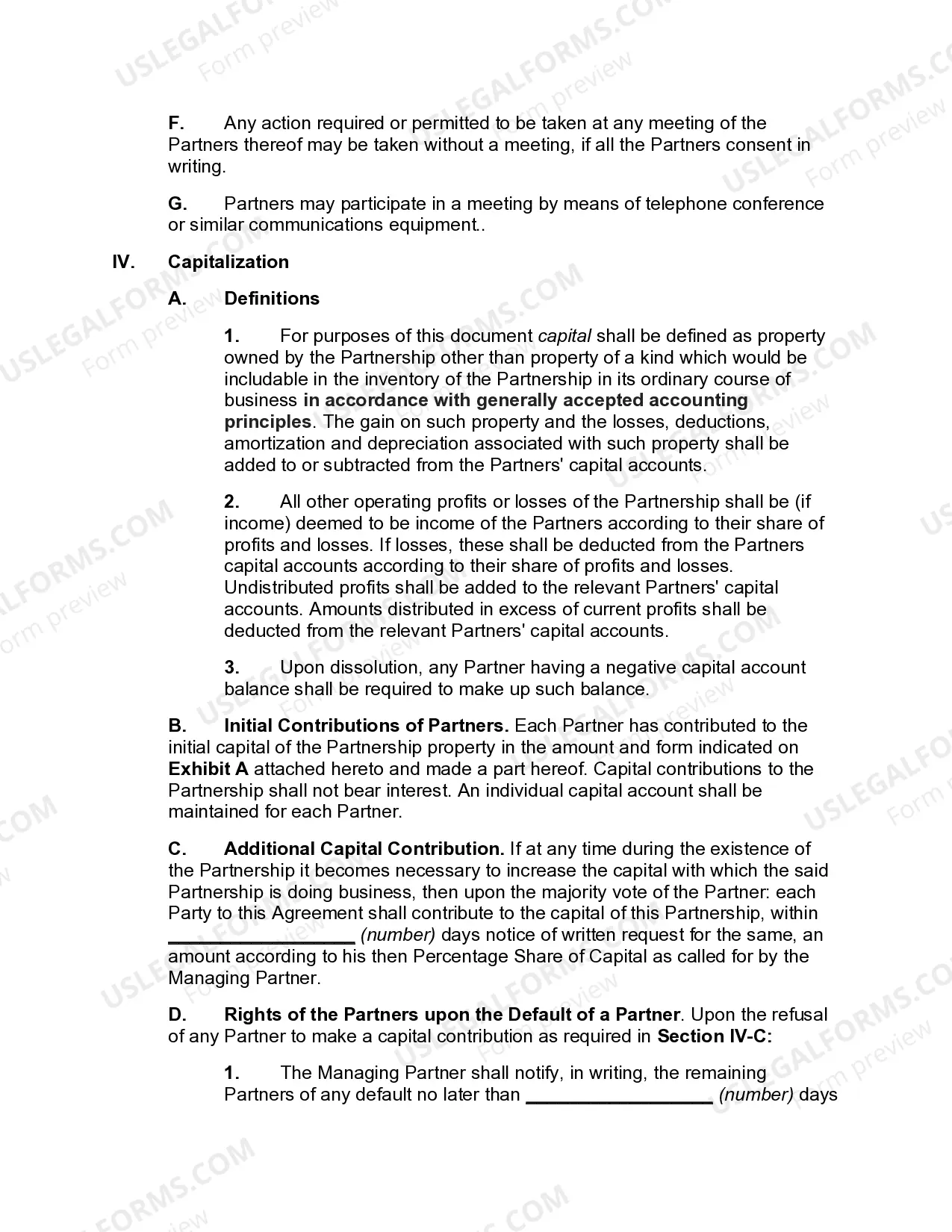
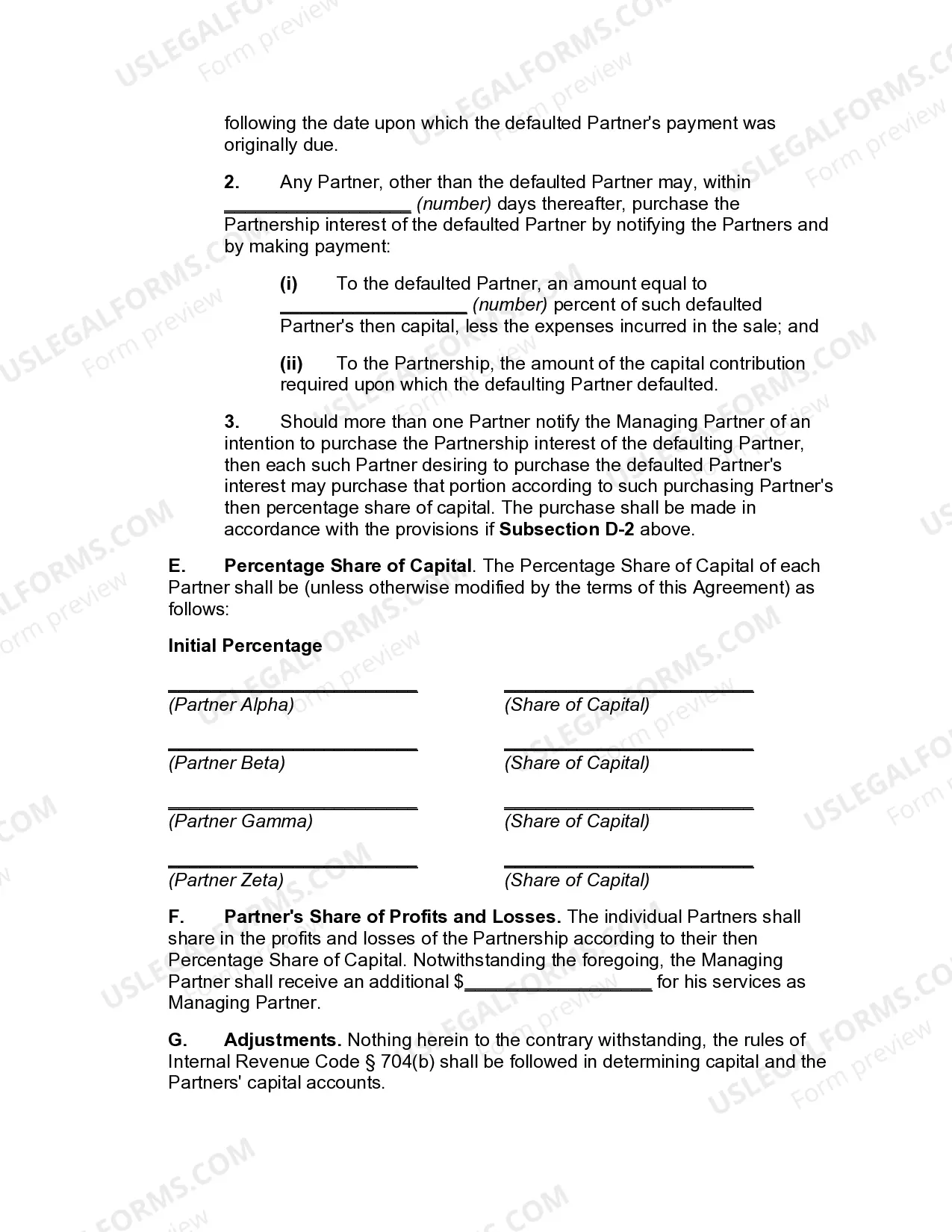
- Capitalization: Describes initial and additional capital contributions required from each partner.
- Patient and medical records management: Outlines responsibilities and ownership of patient records.
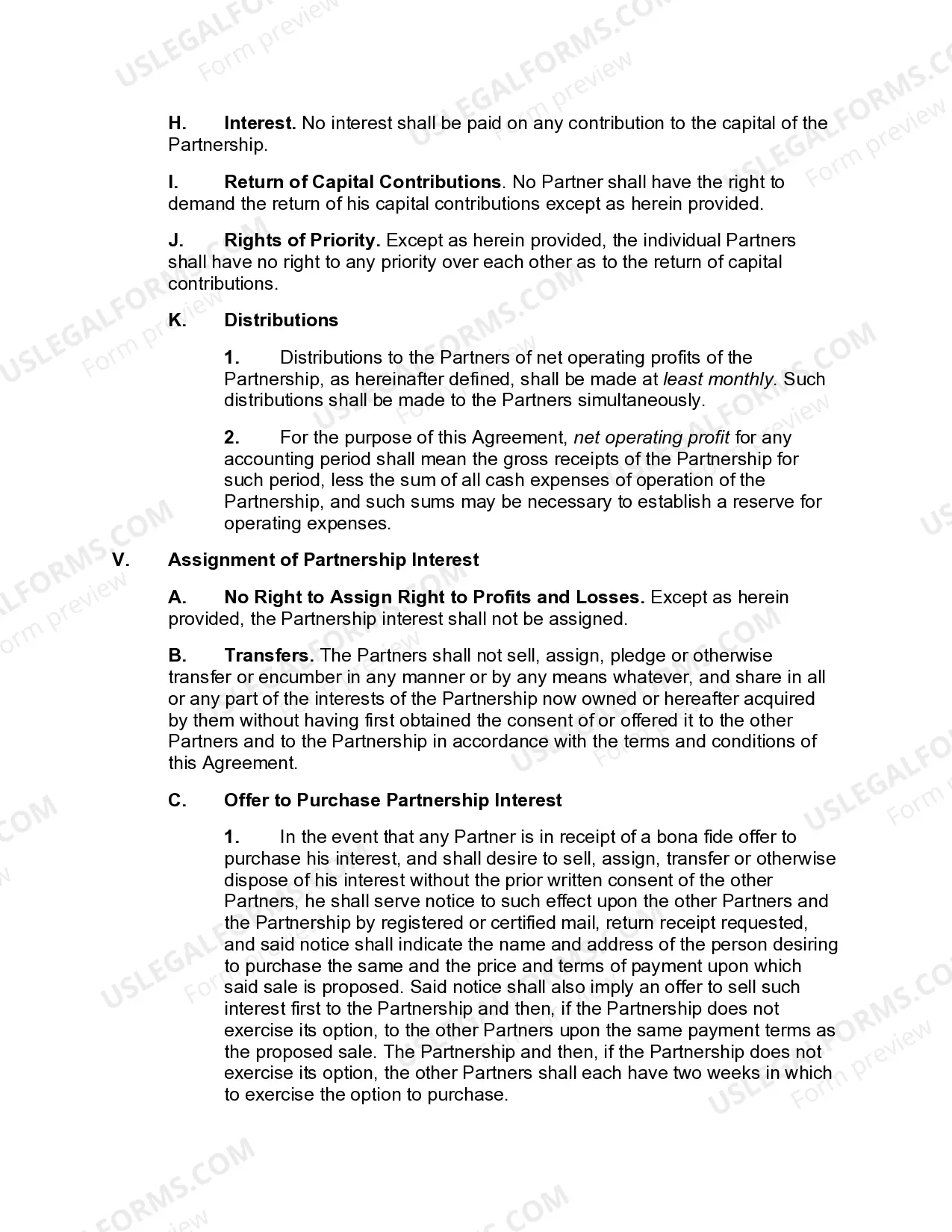
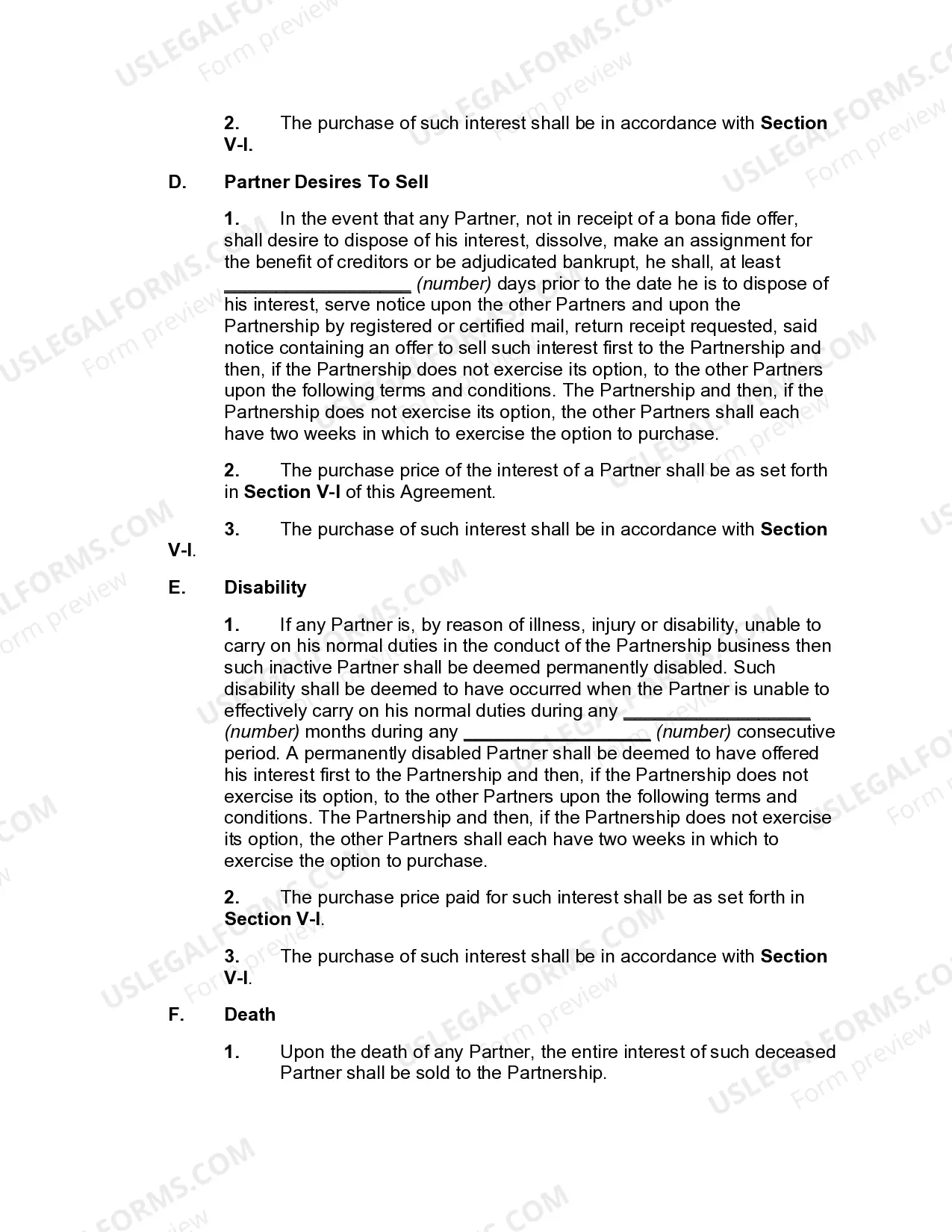
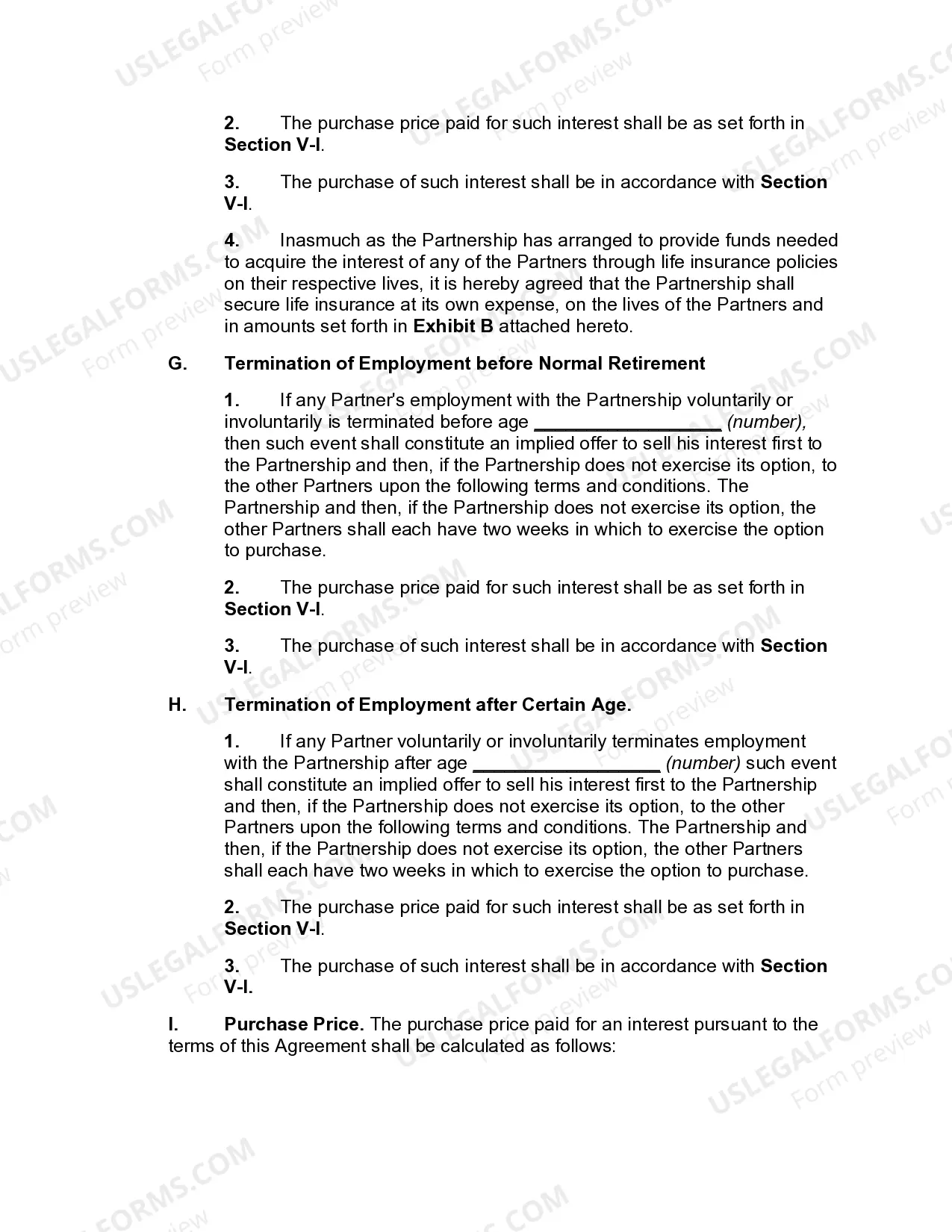
- Termination procedures: Specifies steps regarding the exit or expulsion of partners.

When this form is needed
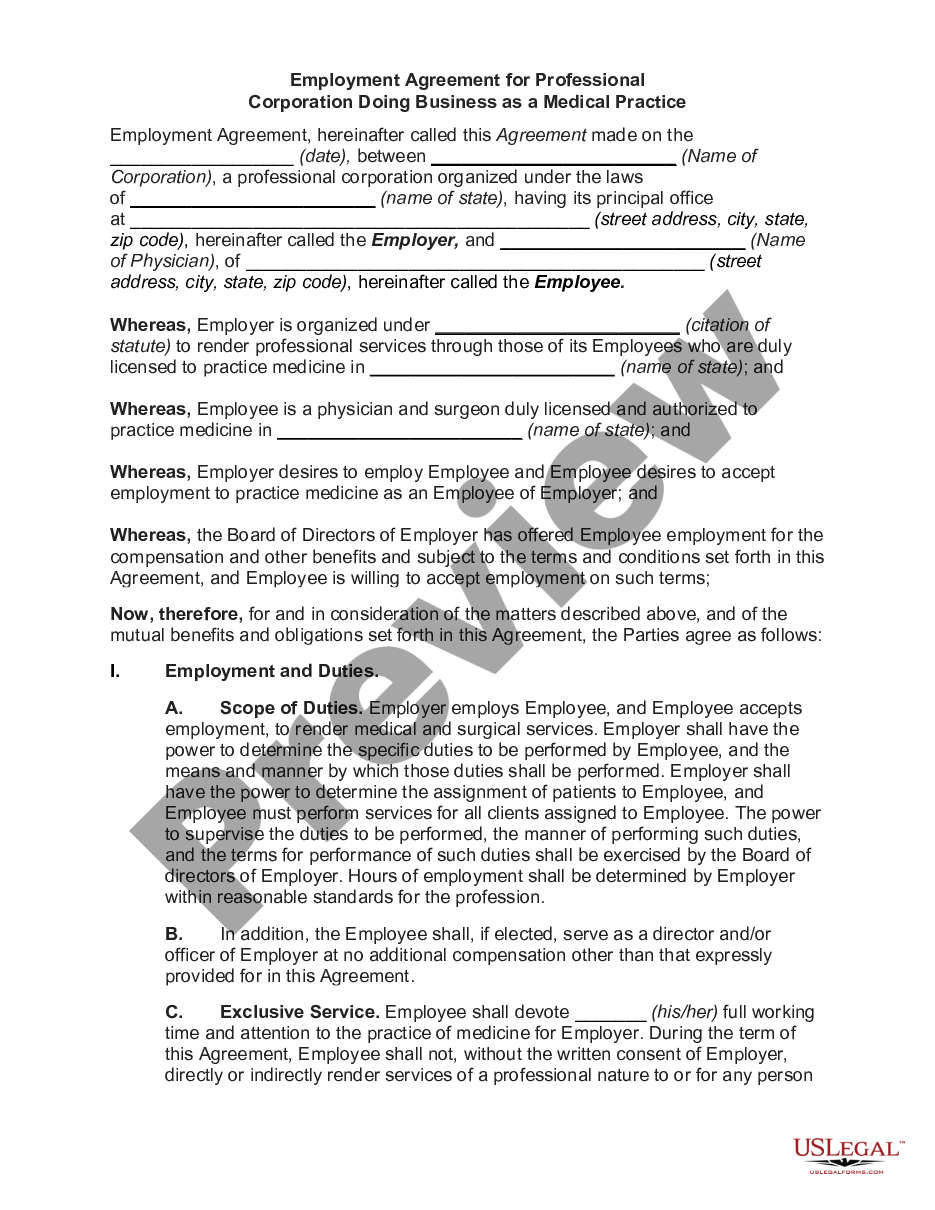
This form is essential when medical professionals decide to collaborate and share resources while practicing medicine. It is useful for physicians looking to limit personal liability, manage business operations, and establish clear governance among partners. Use this agreement when forming a new partnership or restructuring an existing one to ensure all partners are protected and responsibilities are clearly defined.
Who this form is for
This form is intended for:
- Licensed medical professionals, such as doctors and specialists, who wish to form a professional limited liability partnership.
- Existing partners seeking to formalize their partnership under PLLP regulations.
- Medical practitioners considering entering into collaborative practice agreements for enhanced operational efficiency and risk management.
Instructions for completing this form
- Identify the parties involved: Fill in the names and addresses of each partner.
- Specify the purpose: Clearly state that the partnership is formed for practicing medicine.
- Enter jurisdiction details: Indicate the state where the PLLP will operate.
- Define management structure: Appoint a managing partner and outline their responsibilities.
- Sign and date the agreement: Ensure all partners execute the document for it to be legally binding.
Is notarization required?
Notarization is generally not required for this form. However, certain states or situations might demand it. You can complete notarization online through US Legal Forms, powered by Notarize, using a verified video call available anytime.
Get your form ready online
Our built-in tools help you complete, sign, share, and store your documents in one place.
Make edits, fill in missing information, and update formatting in US Legal Forms—just like you would in MS Word.
Download a copy, print it, send it by email, or mail it via USPS—whatever works best for your next step.
Sign and collect signatures with our SignNow integration. Send to multiple recipients, set reminders, and more. Go Premium to unlock E-Sign.
If this form requires notarization, complete it online through a secure video call—no need to meet a notary in person or wait for an appointment.
We protect your documents and personal data by following strict security and privacy standards.

Make edits, fill in missing information, and update formatting in US Legal Forms—just like you would in MS Word.

Download a copy, print it, send it by email, or mail it via USPS—whatever works best for your next step.

Sign and collect signatures with our SignNow integration. Send to multiple recipients, set reminders, and more. Go Premium to unlock E-Sign.

If this form requires notarization, complete it online through a secure video call—no need to meet a notary in person or wait for an appointment.

We protect your documents and personal data by following strict security and privacy standards.
Avoid these common issues
- Failing to include all partners in the agreement.
- Not specifying the state of formation, which is crucial for compliance.
- Neglecting to detail management responsibilities, leading to potential conflicts.
- Overlooking patient record management provisions, which can violate privacy regulations.
Why use this form online
- Convenience: Download and complete the form from anywhere at any time.
- Editability: Easily customize the agreement to suit your partnership's specific needs.
- Reliability: Form templates are drafted by licensed attorneys to ensure legal validity and compliance.
Legal use & context
- This partnership agreement provides legal protection for individual partners while allowing for shared responsibility in medical practice.
- Enforceable in courts, it outlines the obligations and entitlements of each partner, reducing potential disputes.
- It is advisable to consult an attorney familiar with local laws to ensure compliance and resolve any specific legal issues related to medical practices.
Looking for another form?





Form popularity
FAQ
PLLC is an acronym of a legal term that stands for professional limited liability company.A PLLC is specifically for services that require professional licensure, including dental, medical, real estate, engineering, nursing, accounting, or law.
A partnership is an arrangement between two or more people to oversee business operations and share its profits and liabilities. In a general partnership company, all members share both profits and liabilities. Professionals like doctors and lawyers often form a limited liability partnership.
Regarding the management flexibility and taxation, a PLLC has the same advantages of an LLC. The difference between the two is that the PLLC has some restrictions on who may be a member of the PLLC and the limitation of liability of the members. With an LLC, anyone can be a member, or owner, of the business.
Learn some of the advantages of this type of partnership structure for professionals. Since the 1990s, a limited liability partnership (LLP) has become a popular form of business organization for many licensed professionals, such as lawyers, doctors, architects, dentists, and accountants.
General partnerships, the most common form.
There are three relatively common partnership types: general partnership (GP), limited partnership (LP) and limited liability partnership (LLP). A fourth, the limited liability limited partnership (LLLP), is not recognized in all states.
Not Everyone Can Operate a Limited Liability Business Attorneys, physicians, and tax preparers, for instance, cannot by law and ethics protect themselves by limiting their liability. They need to be personally responsible for their actions so that they make decisions carefully.
The legal forms of organization that a medical practice can consider are sole proprietorship, general partnership, limited partnership, C corporation (standard corporation), S corporation, limited liability company (LLC), and limited liability partnership (LLP).
Members of a PLLC aren't personally liable for the malpractice of any other member. PLLC members are not personally liable for business debts and lawsuits, such as unpaid office rent. The PLLC can choose to be taxed as a pass-through entity or as a corporation.