Notice of Resale
About this form
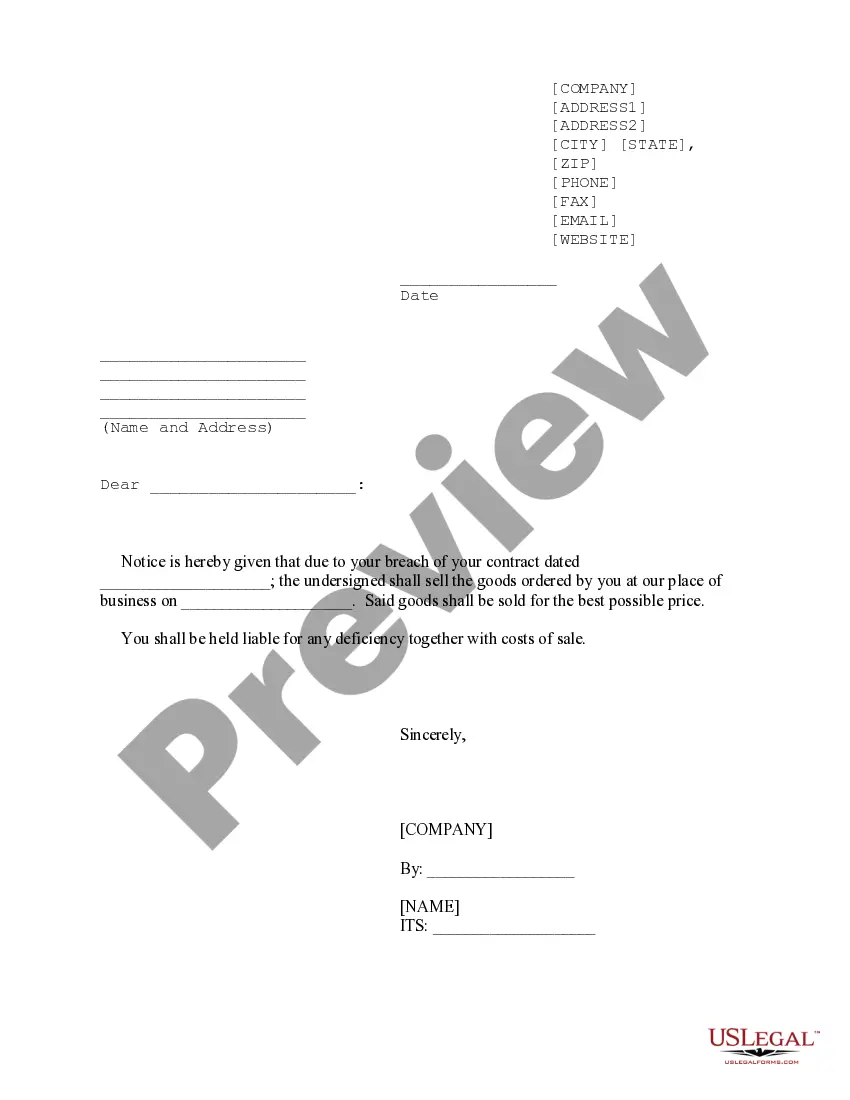
The Notice of Resale is a legal document used by a seller to inform a buyer of a pending sale of goods due to a breach of contract. This form communicates the seller's intention to resell items originally ordered by the buyer after the buyer has failed to fulfill their contractual obligations. It serves to protect the seller's rights and provides clarity regarding the upcoming sale process, differentiating it from other forms of notices related to sales transactions.
Main sections of this form
- Sender's name and contact information
- Recipient's name and address
- Date of the notice
- Details of the breached contract, including the date
- Date of the resale
- Statement of liability for any deficiency and costs of sale
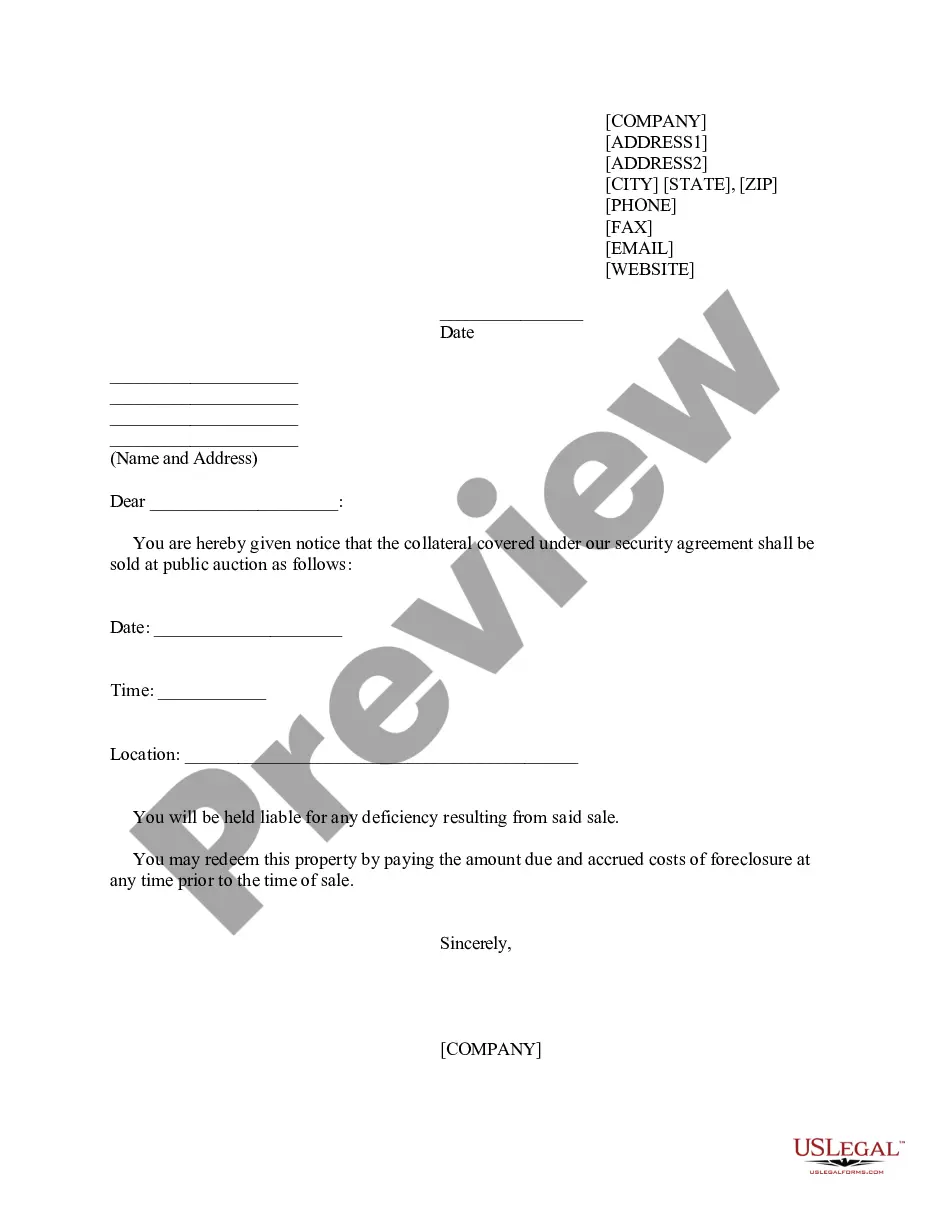
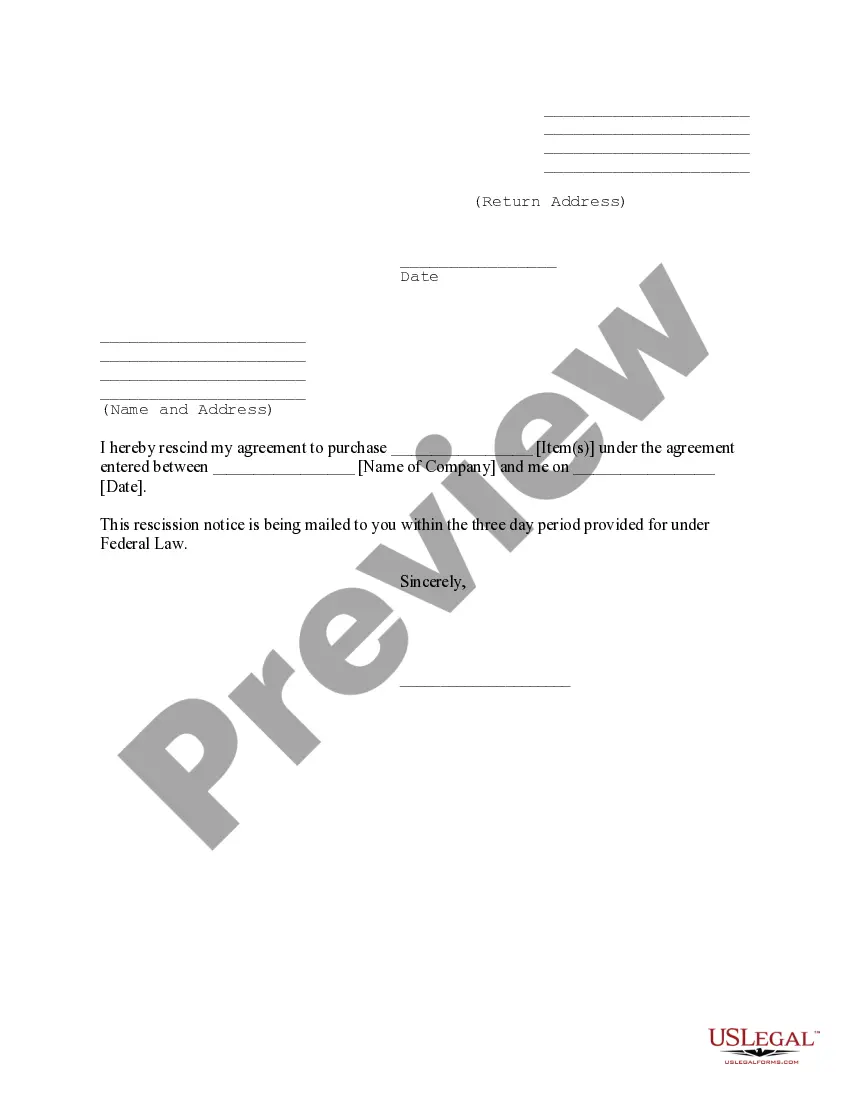
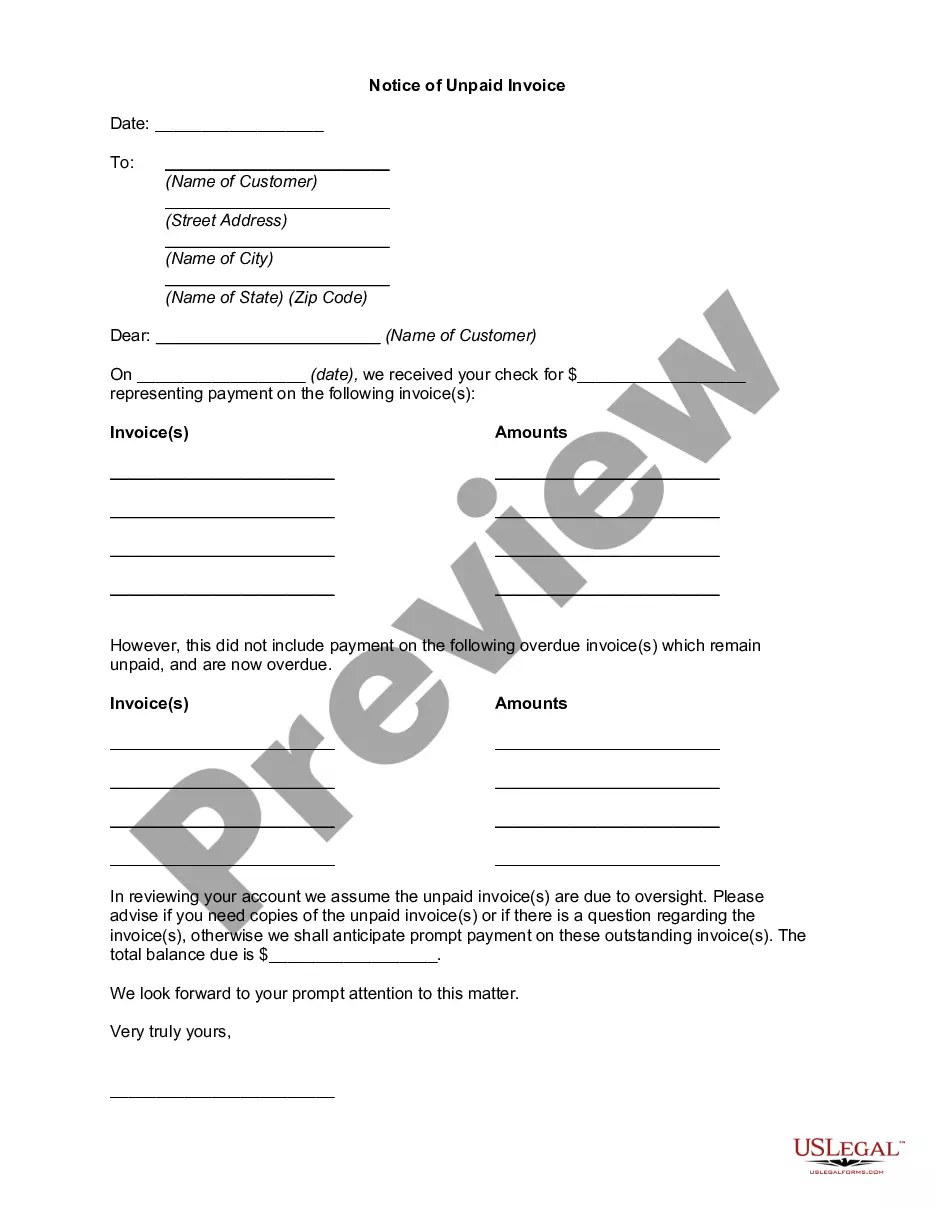
When to use this form
This form should be utilized when a buyer has breached a purchase agreement, and the seller intends to resell the goods. Common scenarios include non-payment for items, failure to collect goods, or any other breach of agreed terms. By issuing a Notice of Resale, the seller formally communicates their actions and prepares for potential legal recourse regarding any financial losses incurred.
Intended users of this form
This form is intended for:
- Businesses or individuals who have sold goods and experienced a breach of contract by the buyer
- Merchants seeking to mitigate potential losses after a buyer fails to comply with payment or collection terms
- Legal professionals representing clients involved in commercial sales disputes
How to complete this form
- Enter the sender's name and contact details at the top of the notice.
- Specify the recipient's name and address clearly.
- Indicate the date on which the notice is issued.
- Fill in the details of the breached contract, including the contract date.
- Write the proposed resale date for the goods.
- Include a signature from the authorized representative of the seller and print their name and title.
Notarization requirements for this form
This form does not typically require notarization unless specified by local law. However, having it notarized might add an extra layer of verification and could be useful in legal disputes.
Get your form ready online
Our built-in tools help you complete, sign, share, and store your documents in one place.
Make edits, fill in missing information, and update formatting in US Legal Forms—just like you would in MS Word.
Download a copy, print it, send it by email, or mail it via USPS—whatever works best for your next step.
Sign and collect signatures with our SignNow integration. Send to multiple recipients, set reminders, and more. Go Premium to unlock E-Sign.
If this form requires notarization, complete it online through a secure video call—no need to meet a notary in person or wait for an appointment.
We protect your documents and personal data by following strict security and privacy standards.

Make edits, fill in missing information, and update formatting in US Legal Forms—just like you would in MS Word.

Download a copy, print it, send it by email, or mail it via USPS—whatever works best for your next step.

Sign and collect signatures with our SignNow integration. Send to multiple recipients, set reminders, and more. Go Premium to unlock E-Sign.

If this form requires notarization, complete it online through a secure video call—no need to meet a notary in person or wait for an appointment.

We protect your documents and personal data by following strict security and privacy standards.
Common mistakes
- Failing to properly identify the recipientâs correct address.
- Omitting the contract date or details of the breach.
- Not specifying the resale date, which can lead to legal ambiguities.
- Forgetting to sign the notice or include the signer's title and role.
Why use this form online
- Convenient downloading to streamline the completion process.
- Editability allows customization to specific situations and needs.
- Access to professionally drafted templates ensures reliability and legal soundness.
- Immediate availability helps address urgent resale situations quickly.
Looking for another form?
Form popularity
FAQ
Can I transfer a title certificate that has a lien listed? You can transfer the title certificate and give the new owner the original proof that any lien listed on the title certificate was satisfied. Keep a copy of the proof for your records.
Non-titled vehicles The DMV must verify that the vehicle was registered to the current owner. The current owner must provide proof of identity (see proofs of identity). There is a fee $10 for form MV-353. The current owner can use form MV-353 and a bill of sale.
Send an Application for a Duplicate Certificate of Title (PDF) (MV-902) and the original proof that indicates that the lien is satisfied to the address above, or bring them to a DMV office. The DMV processes a duplicate title certificate that does not list the lien and mails the certificate to you. The fee is $20.00.
The owner and the settlor must complete Statement of Transaction- Sale or Gift of Motor Vehicle, Trailer, All-Terrain Vehicle (ATV), Vessel (Boat), or Snowmobile (PDF) (at NY State Department of Tax and Finance) (DTF-802). If the owner and the settlor are the same person, complete Part II of form DTF-802 for a gift.
To successfully transfer a vehicle's title in New York, you need to: Visit your local NY DMV office. Provide the completed and signed vehicle title by the seller. Provide proof of a valid NY insurance policy and identification. Complete a Vehicle Registration/Title Application (Form MV-82)
The Notice of Sale (NOS) generally states: the property address and legal description. a statement that the property will be sold at a public auction, and. the date, time, and location of the foreclosure sale.
Either way, a notice of sale indicates that the lender plans to sell the property because your account is overdue.