Sales Letter, Catalogue Sales
What this document covers
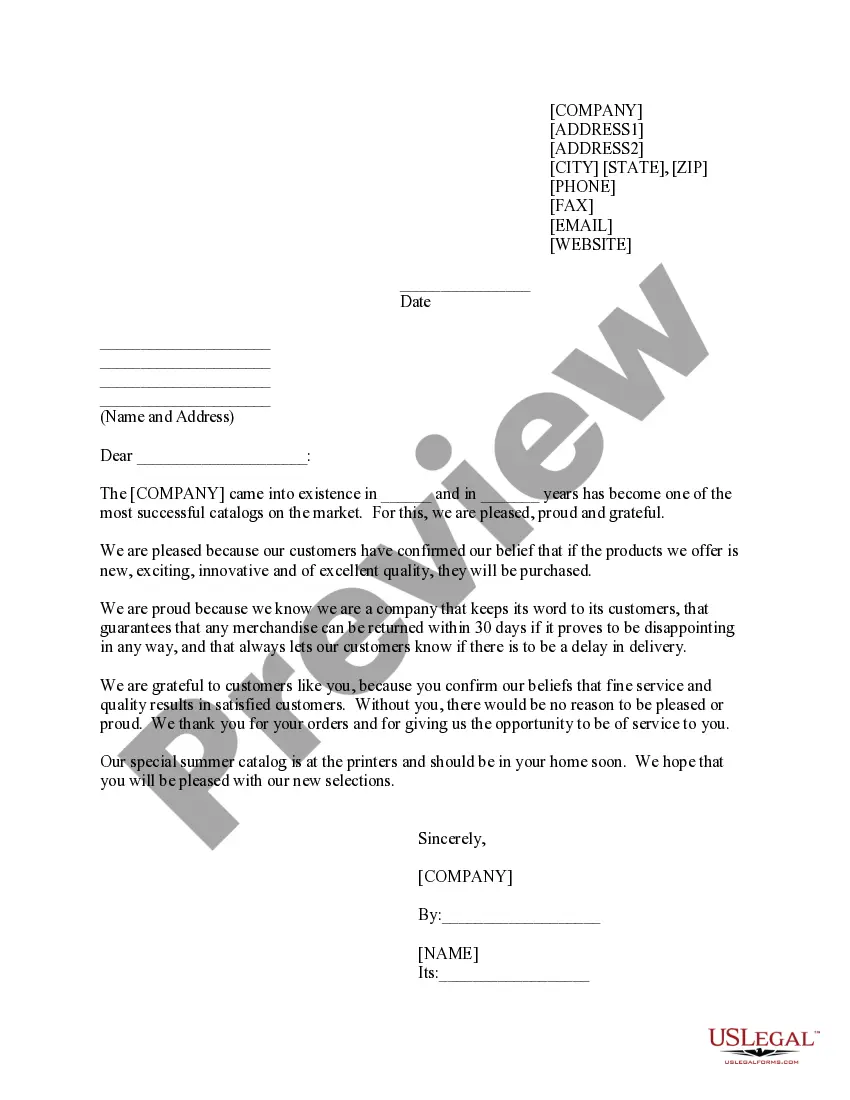
The Sales Letter for Catalogue Sales is a formal communication tool used by businesses to inform customers about new products and promotions. This type of letter is tailored to maintain customer relationships and encourage further purchases. It differs from general sales letters as it specifically targets individuals who have previously expressed interest in catalog offerings, enhancing the effectiveness of marketing efforts.
What’s included in this form
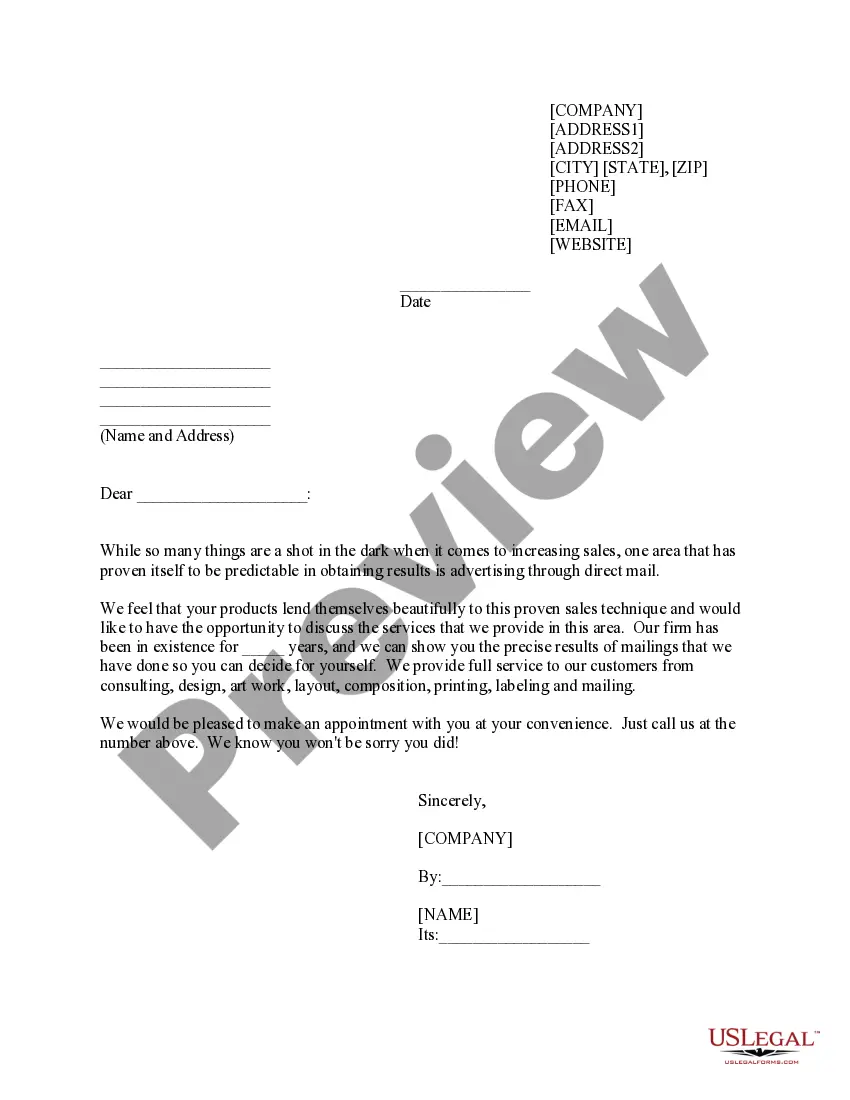
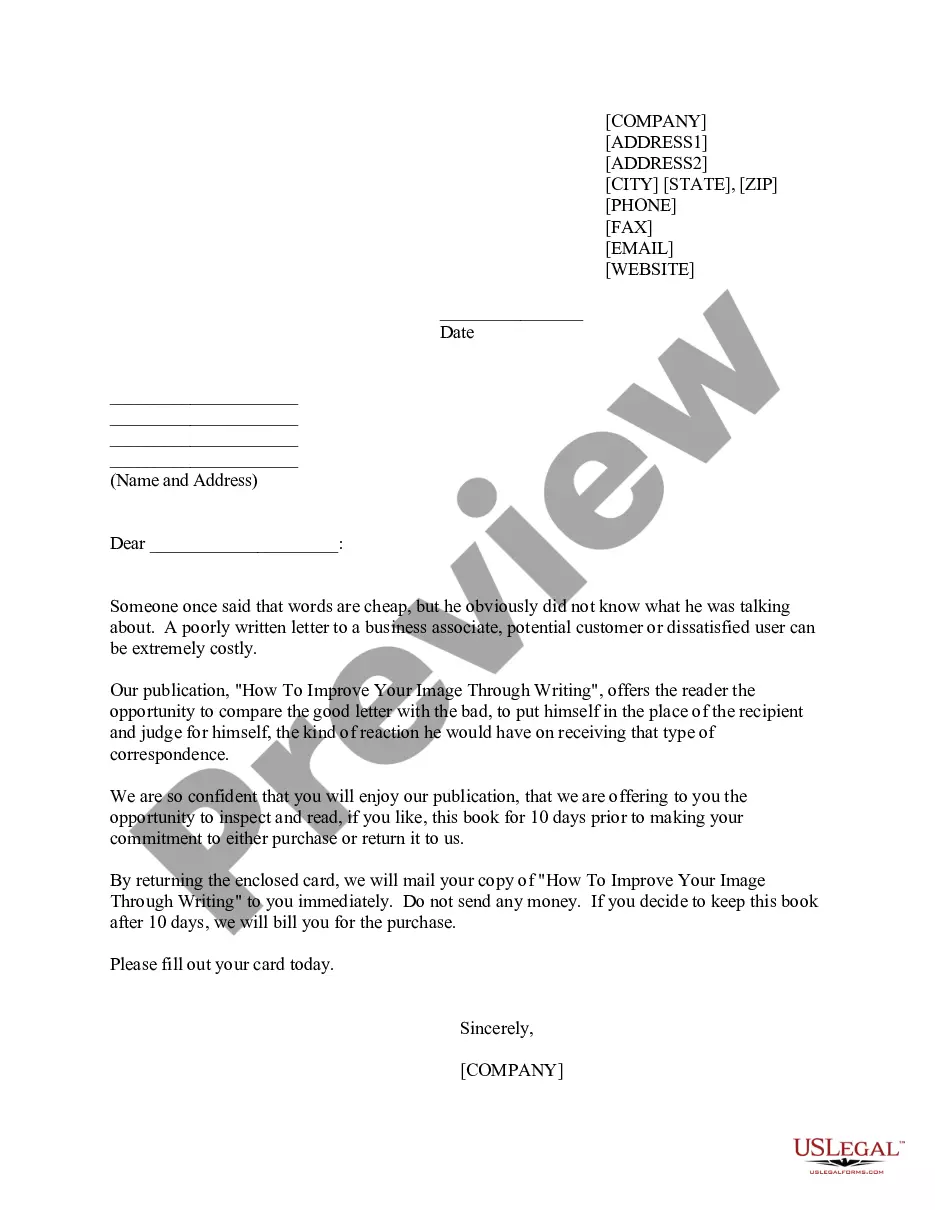
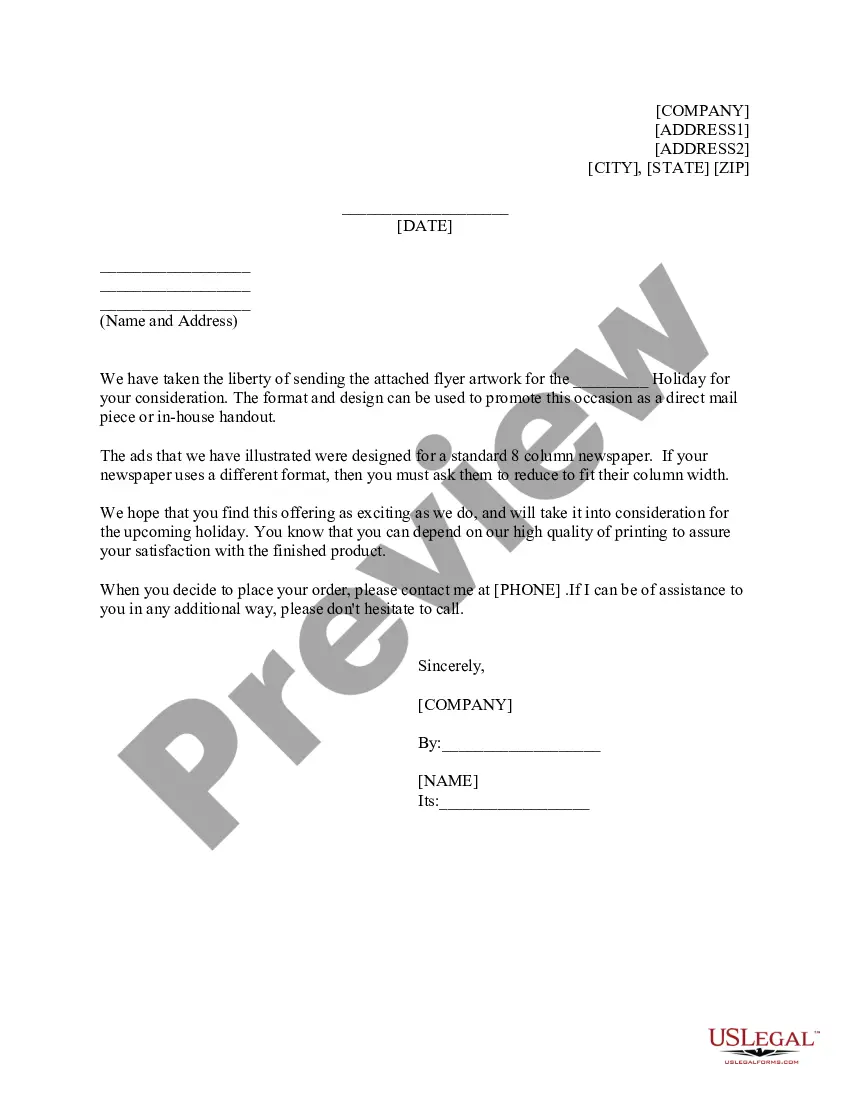
- Company information: Includes address, phone, email, and website.
- Recipient details: Space to input the customerâs name and address.
- Date: A field to record when the letter is sent.
- Introduction: Acknowledges the customer and the company's history in catalog sales.
- Customer appreciation: Expresses gratitude for the customer's loyalty and past orders.
- Upcoming products: Mentions the release of a new catalog and encourages future engagement.
Situations where this form applies
This sales letter should be used when a company wants to reach out to existing customers to update them about new catalog offerings or seasonal promotions. It is suitable for businesses that maintain ongoing relationships with their clientele, particularly in industries where repeat purchases are common, such as retail or e-commerce.
Who this form is for
- Retail businesses looking to inform customers about new products.
- E-commerce companies sending updates to their mailing list.
- Catalog sales companies wanting to maintain customer relationships.
- Marketers aiming to enhance customer engagement through personalized communication.
Completing this form step by step
- Enter your companyâs contact information at the top of the letter.
- Fill in the date the letter is being sent.
- Provide the customer's name and address in the designated section.
- Customize the introduction to reflect your company's achievements and customer value.
- Conclude with a personal touch, expressing gratitude and excitement about upcoming products.
Notarization guidance
This form does not typically require notarization unless specified by local law. It serves as a straightforward communication piece that does not have legal obligations necessitating notarization.
Get your form ready online
Our built-in tools help you complete, sign, share, and store your documents in one place.
Make edits, fill in missing information, and update formatting in US Legal Forms—just like you would in MS Word.
Download a copy, print it, send it by email, or mail it via USPS—whatever works best for your next step.
Sign and collect signatures with our SignNow integration. Send to multiple recipients, set reminders, and more. Go Premium to unlock E-Sign.
If this form requires notarization, complete it online through a secure video call—no need to meet a notary in person or wait for an appointment.
We protect your documents and personal data by following strict security and privacy standards.

Make edits, fill in missing information, and update formatting in US Legal Forms—just like you would in MS Word.

Download a copy, print it, send it by email, or mail it via USPS—whatever works best for your next step.

Sign and collect signatures with our SignNow integration. Send to multiple recipients, set reminders, and more. Go Premium to unlock E-Sign.

If this form requires notarization, complete it online through a secure video call—no need to meet a notary in person or wait for an appointment.

We protect your documents and personal data by following strict security and privacy standards.
Common mistakes to avoid
- Failing to personalize the letter for each recipient.
- Overlooking the inclusion of essential contact information.
- Not clearly stating the value of the new catalog offerings.
- Using overly complex language that may confuse the customer.
Advantages of online completion
- Provides a quick and easy template for consistent communication.
- Allows for immediate customization to match your company's branding.
- Facilitates efficient outreach to multiple customers simultaneously.
- Enables fast updates to content as new products become available.
Looking for another form?
Form popularity
FAQ
So yes, Sales letters are effective and still work in today's marketing world.
What are the four A's of a sales letter? These are attention, appeal, application, and action.
Sales letter must be arouse interest, sound convincing, create a desire and encourage the reader to take action. Write in a positive, convincing style but don't be aggressive. Present advantages and benefits to the reader. Encourage a response from to the reader- a phone call, a visit, a reply on an attached form etc.
How to write a sales letter Write a catchy headline that grabs your customer's attention.Hook the reader by identifying what they need and why.Include bullet points with key information.Use testimonials or statistics.Give readers a call to action.Offer something to the customer that is limited in time or quantity.
The "four A's" of sales letters are attention, appeal, application, and action. First, get the reader's attention. Next, highlight your product's appeal. Then, show the reader the product's application.
Objectives of Sales Letter A sales letter aims at reaching the reader to purchase the product. Introduction and marketing of new products and services. To reach potential customers. Expansion of the market.
The 6 Essential Components of Effective Sales Letters Make sure your sales letters include all six of these effective elements, and you'll watch your sales grow. The Opening.Related: How to Sell With Emotion. The Description or Explanation.The Motive or Reason Why.The Proof or Guarantee.The Snapper or Penalty.
Mention the advantage or benefit early in the letter. It is important to know what the selling points of the product/service are.Provide news of interest to the reader.Arouse interest/curiosity.Be relevant.Elaborate what the product can do.Customer-centredness.Positive expressions.Personal and informal tone.