Sales Letter, Antique Shop
About this form
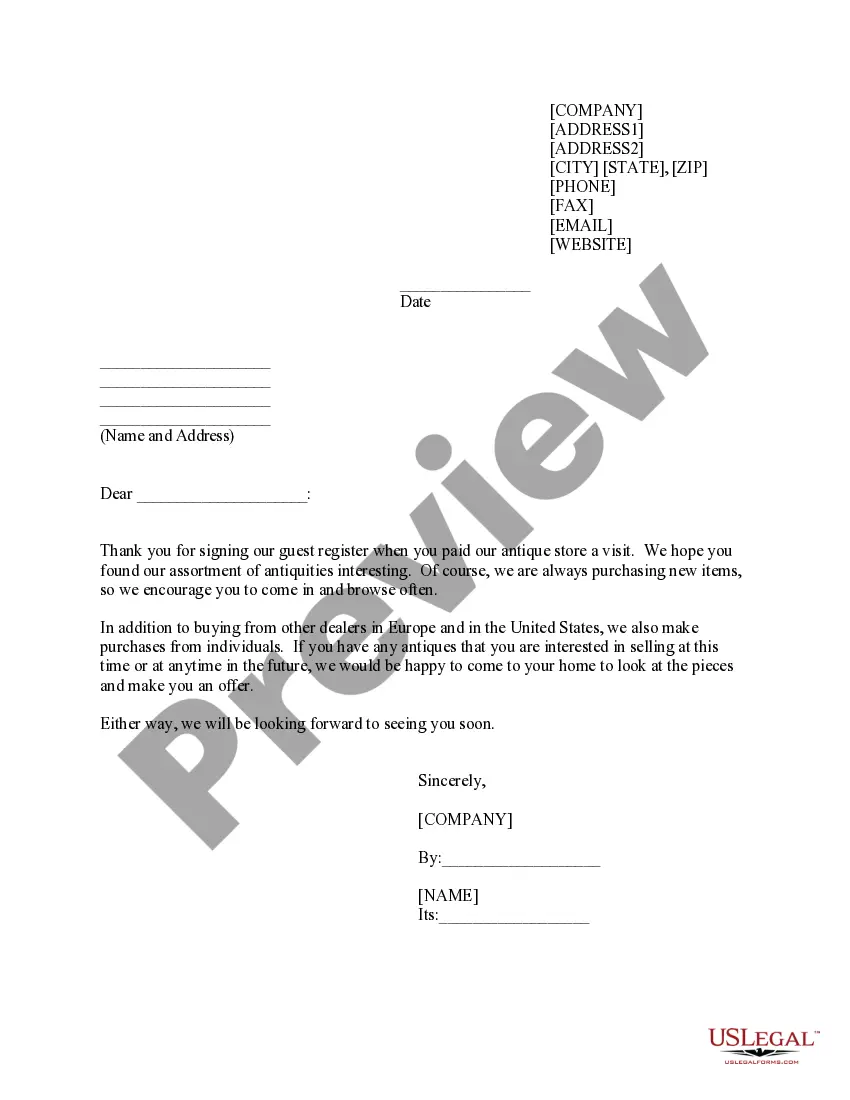
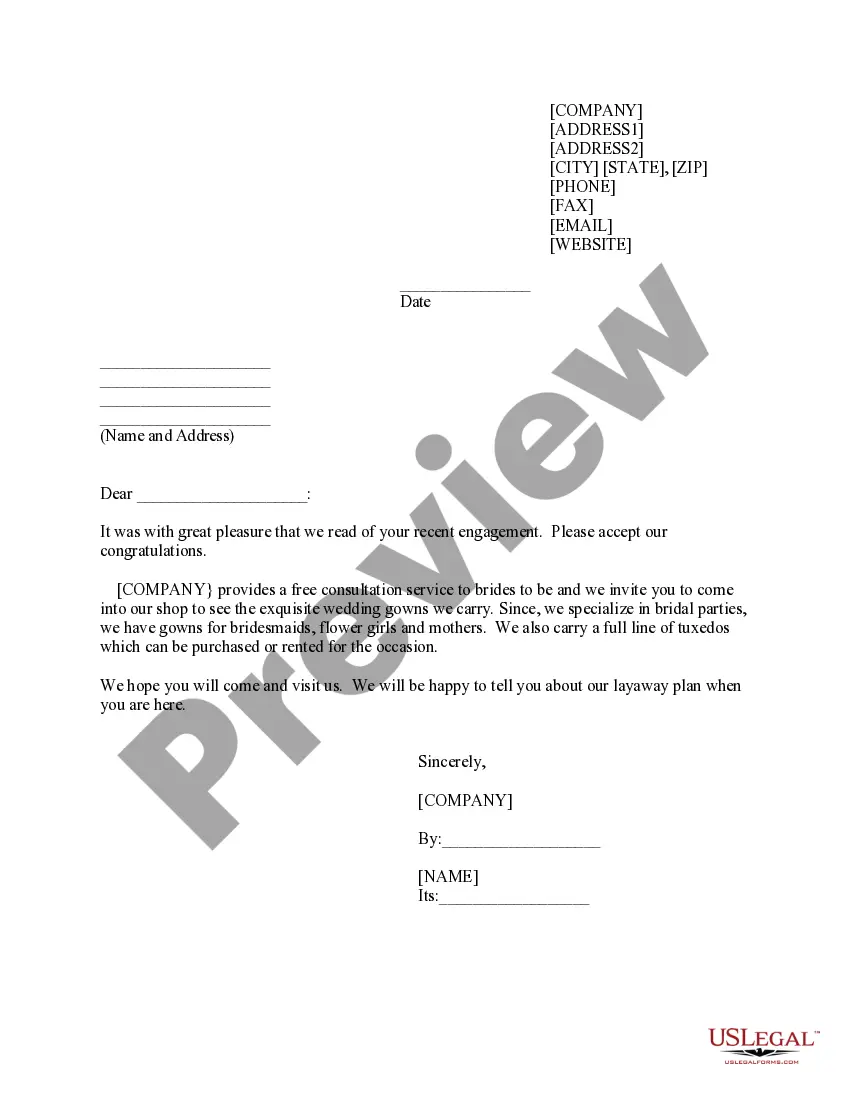
The Sales Letter for an Antique Shop is a professional correspondence template used to engage potential sellers and express gratitude to customers. This letter serves the dual purpose of acknowledging a visitor's presence at your antique store and opening a dialogue about potential sales of antiques. Unlike generic sales letters, this form is tailored specifically for antique shops, ensuring that your communication is relevant and effective.
What’s included in this form
- Sender's contact information including address, phone, fax, email, and website.
- Date of the letter.
- Recipient's name and address details.
- A personalized greeting to the recipient.
- Body text emphasizing the storeâs inventory and interest in purchasing antiques.
- Closing signature from the company representative, including their name and title.
Situations where this form applies
You should use this sales letter after a customer visits your antique shop and signs the guest register. It creates a personal connection and encourages further interaction. This form is especially useful when you want to reopen discussions about selling antiques the customer might own or to remind them of new items in your store.
Who this form is for
- Antique shop owners looking to maintain relationships with past customers.
- Businesses seeking to purchase antiques from individuals.
- Sales representatives aiming to increase customer engagement.
How to complete this form
- Fill in your antique shop's contact information at the top.
- Enter the date on which you are sending the letter.
- Add the recipient's name and address in the designated space.
- Write a personal greeting using the recipient's name.
- Customize the body of the letter to reflect specific items of interest or to inquire about their antiques.
- Sign the letter and include your name and title before sending it out.
Notarization requirements for this form
This form does not typically require notarization unless specified by local law. Ensure you check any state-specific requirements that may apply.
Get your form ready online
Our built-in tools help you complete, sign, share, and store your documents in one place.
Make edits, fill in missing information, and update formatting in US Legal Forms—just like you would in MS Word.
Download a copy, print it, send it by email, or mail it via USPS—whatever works best for your next step.
Sign and collect signatures with our SignNow integration. Send to multiple recipients, set reminders, and more. Go Premium to unlock E-Sign.
If this form requires notarization, complete it online through a secure video call—no need to meet a notary in person or wait for an appointment.
We protect your documents and personal data by following strict security and privacy standards.

Make edits, fill in missing information, and update formatting in US Legal Forms—just like you would in MS Word.

Download a copy, print it, send it by email, or mail it via USPS—whatever works best for your next step.

Sign and collect signatures with our SignNow integration. Send to multiple recipients, set reminders, and more. Go Premium to unlock E-Sign.

If this form requires notarization, complete it online through a secure video call—no need to meet a notary in person or wait for an appointment.

We protect your documents and personal data by following strict security and privacy standards.
Avoid these common issues
- Failing to personalize the greeting, which may appear impersonal.
- Neglecting to proofread for grammatical errors or typos.
- Not including a call to action, making it unclear what the recipient should do next.
Why use this form online
- Convenient access to a customizable template that saves time.
- Editable format allowing you to personalize content easily.
- Reliable, professionally drafted content ensuring legal compliance.
Looking for another form?
Form popularity
FAQ
The reason for keeping items like old letters and cards is because they mean something to you. So, store them where you can enjoy them on a regular basis and keep them safe.
What to Do With Old Cards & Letters Scan & store them on your computer.Tuck them in your scrapbook or journal.Keep them so you can one day give them back to the writer.Repurpose them into tags & gift cards.Repurpose them into scrapbook & journal embellishments.Repurpose card tops into postcards.Donate card tops.
Keep pages together in their original order by placing each letter with its envelope in an individual acid-free, lignin-free archival file folder. This type of storage material is available from a variety of archival suppliers, such as Hollinger Metal Edge and Archival Methods.
We should never simply throw away old letters. They are important pieces of history, and we can almost always find a good way to preserve them for the future, even if we don't want to keep them ourselves.
Consider placing your letters and documents in acid-free envelopes, crystal clear bags, or pocket pages, all of which will keep delicate papers from being exposed to harmful dust, moisture and household pollutants. You can place them in elegant three-ring binders and slipcases if they are in archival binder pages.
Light Crumpling. Crumpling paper is probably the most common and a very classic way to make a paper look old. To make a paper look slightly old, crumble the paper without forming it into a crumpled ball. Crumple each part of the paper lightly using both hands.
I would recommend keeping any fragile letters (I am guessing those from the late 19th and early 20th century) in their PVC-free sheet protectors and then storing them in an archival folder and then in a box. I usually like to limit fragile papers to about five per folder.