Stage Manager or Assistant Stage Manager Contract
Overview of this form
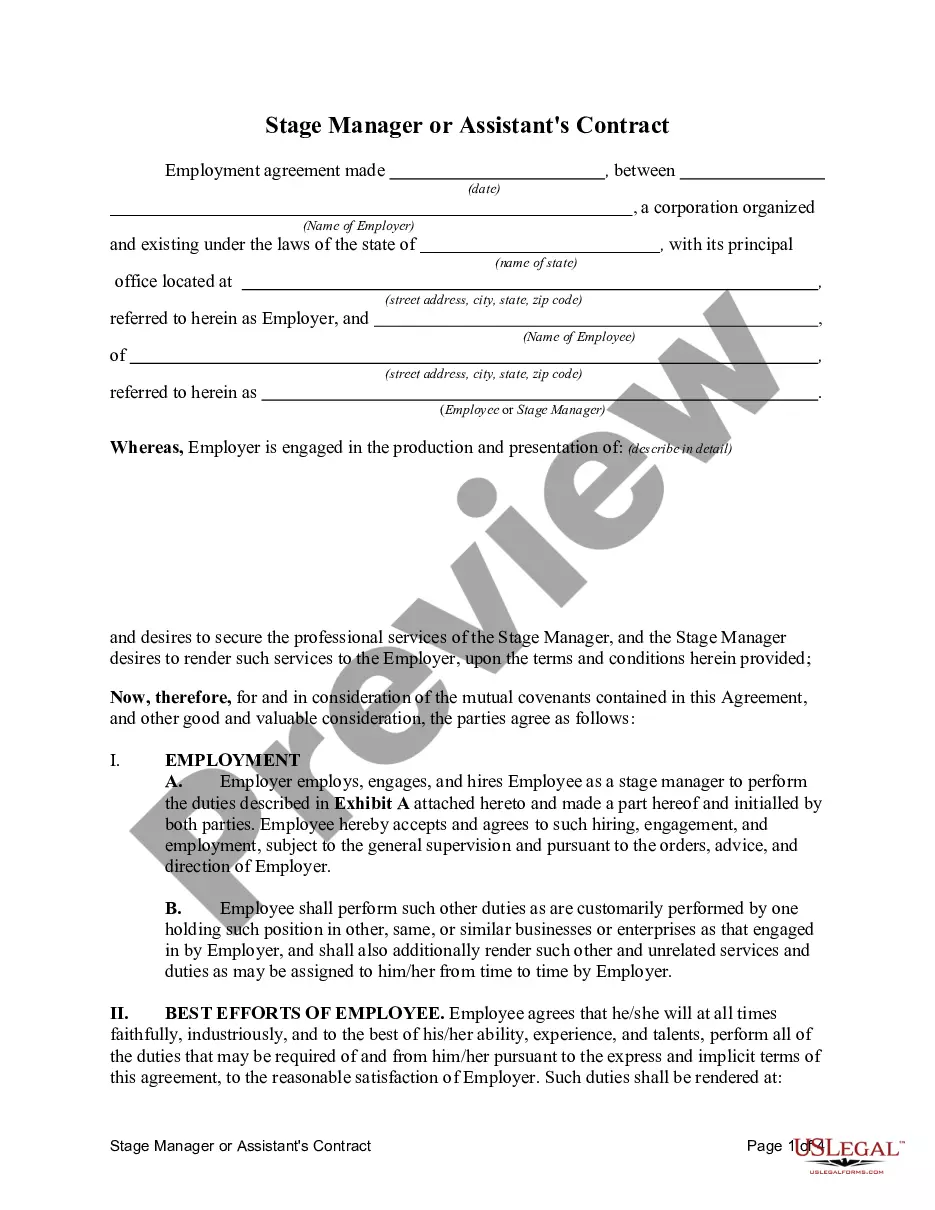
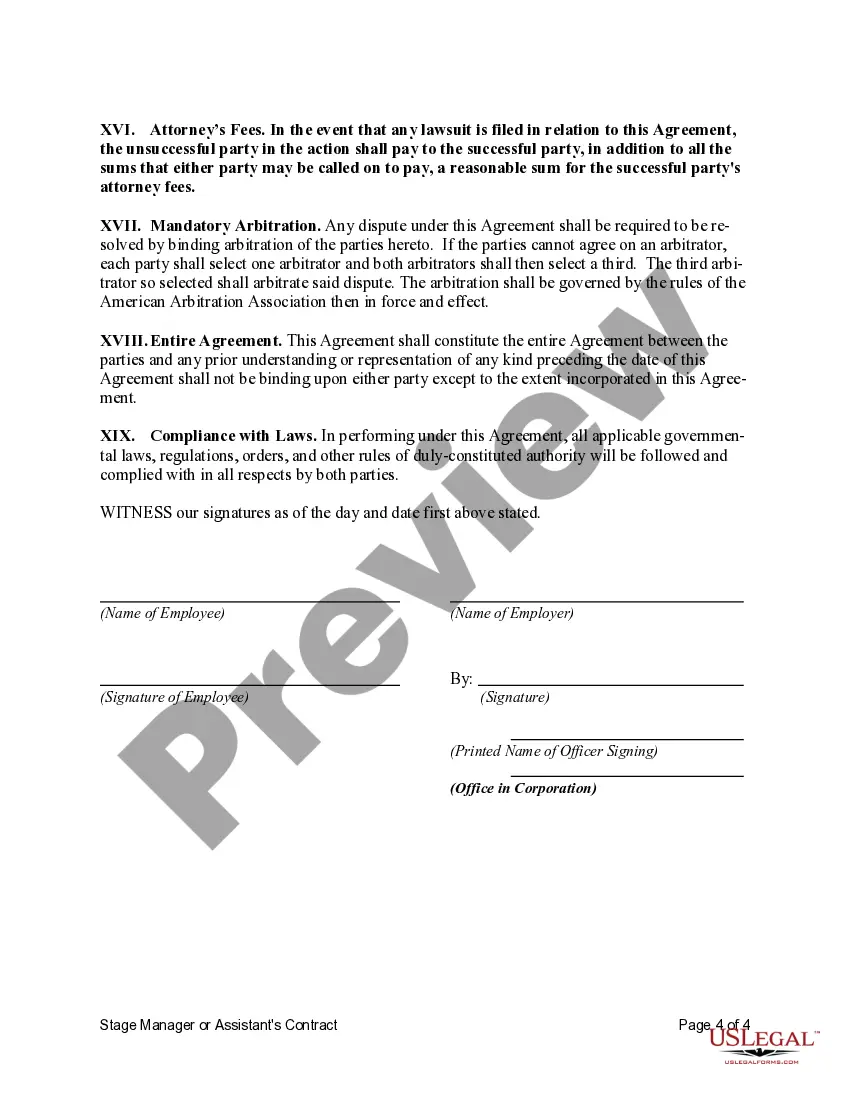
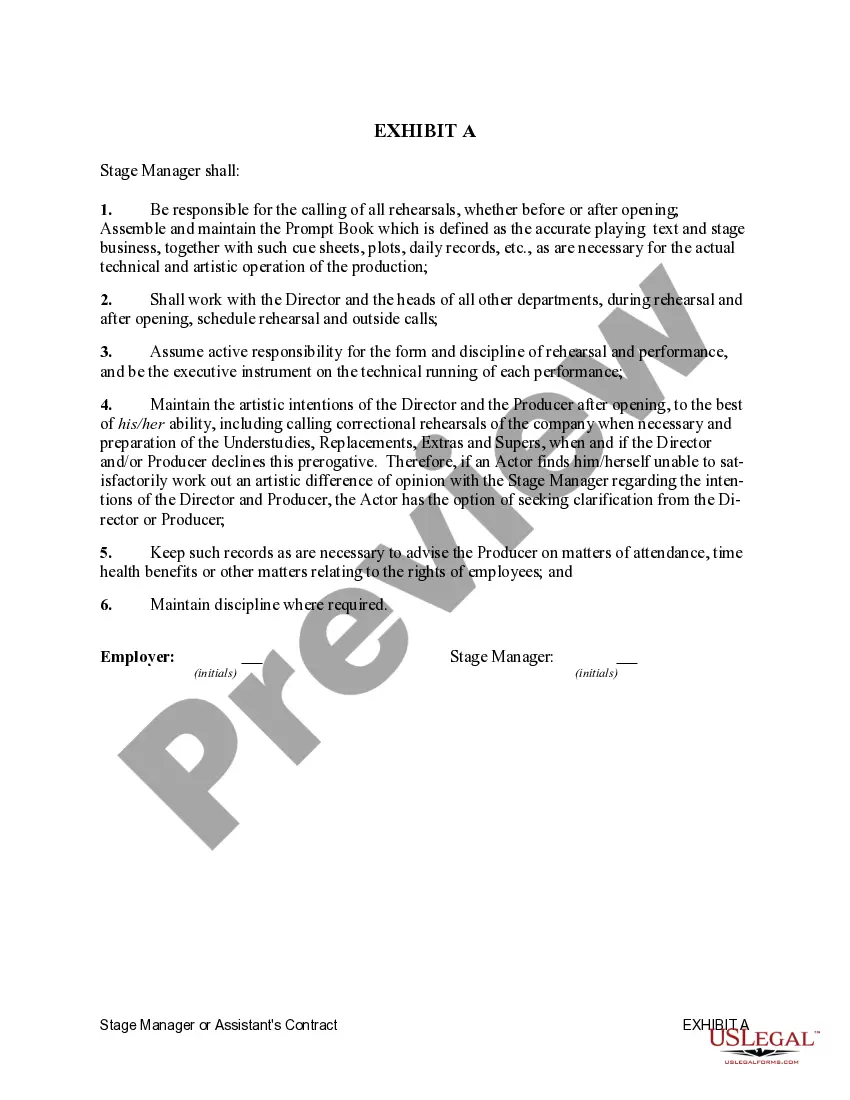
The Stage Manager or Assistant Stage Manager Contract is a legal employment agreement between an employer and a stage manager or assistant stage manager. This contract outlines the terms of employment, including the scope of duties, duration of the contract, and conditions for termination. It ensures that both parties understand their obligations and liabilities, making it distinct from other employment agreements by focusing specifically on roles within theater productions.
Key components of this form
- Employment terms detailing the role of the stage manager or assistant stage manager.
- Best efforts clause requiring the employee to perform duties to the best of their abilities.
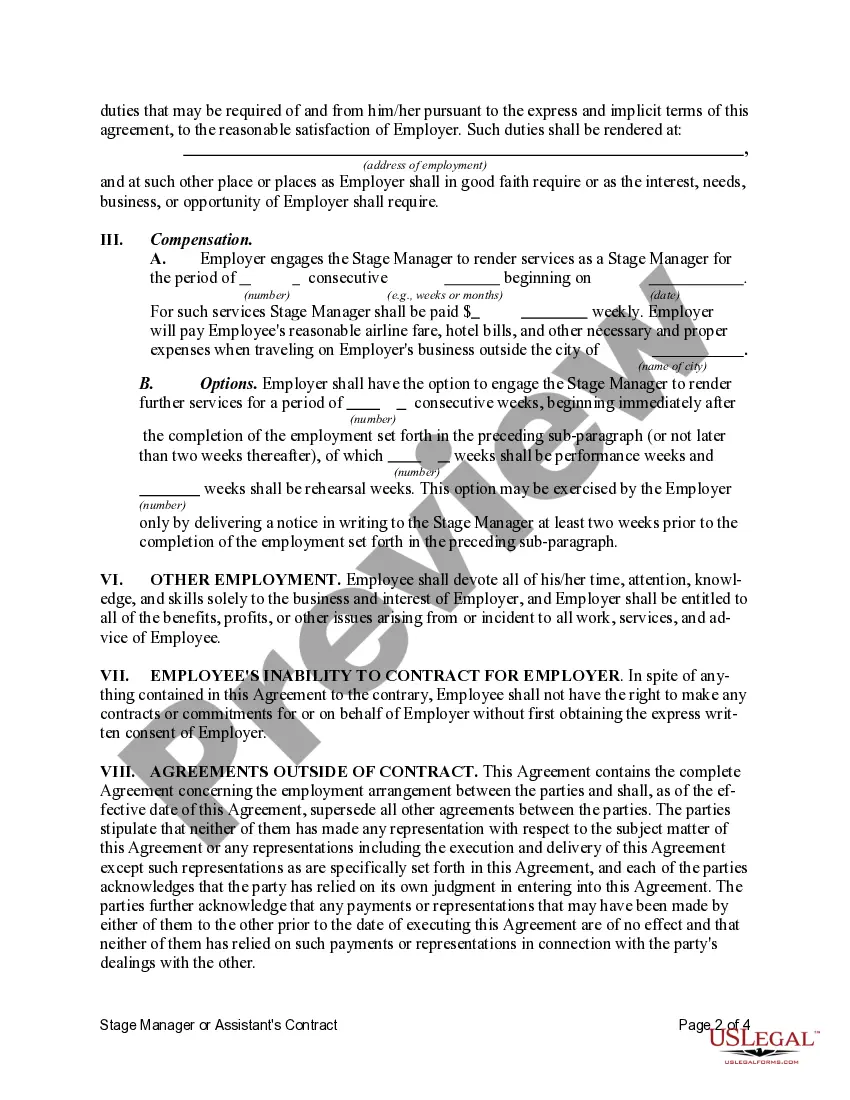
- Conditions regarding other employment and exclusivity obligations.
- Provision for modification of the agreement requiring written consent from both parties.
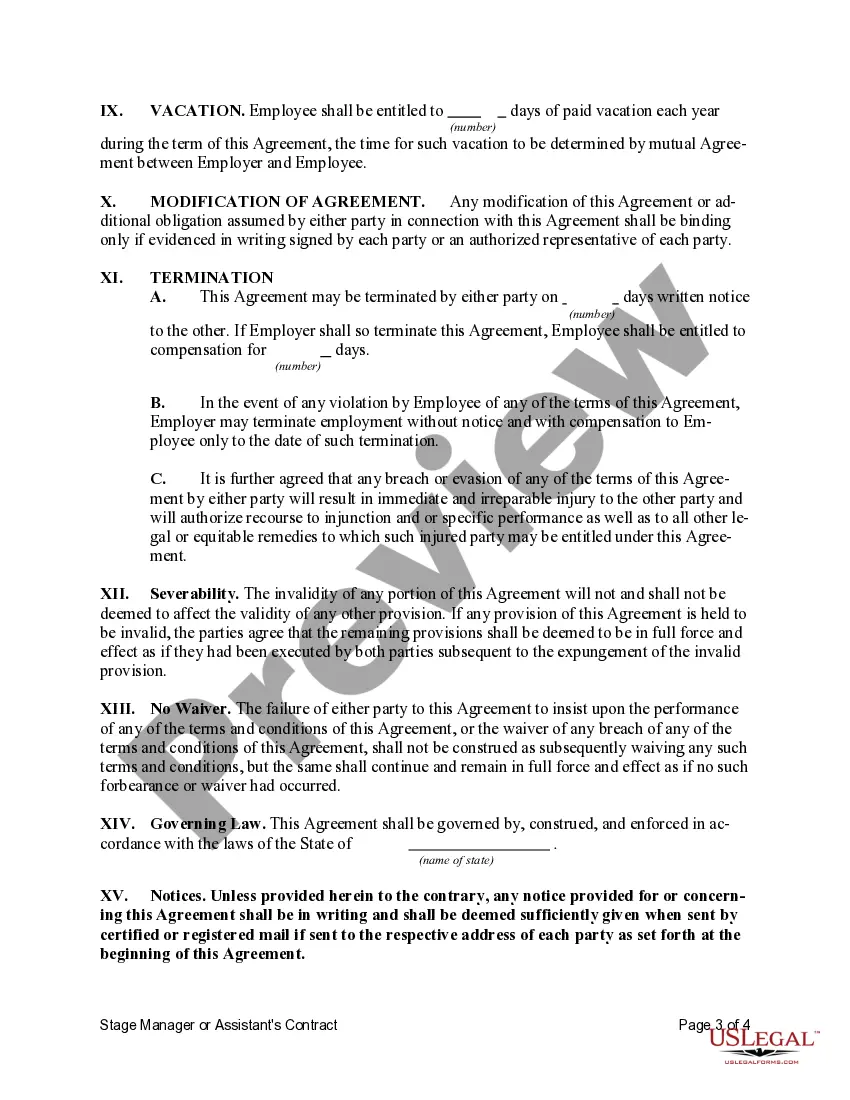
- Termination conditions stating the consequences of breaching the agreement.
- Compliance with relevant laws and regulations applicable to the employment.
When to use this document
This contract is essential when hiring a stage manager or assistant stage manager for a theater production. Use this form when you need to formalize the employment arrangement, ensuring clarity on responsibilities, duration, and conditions for resuming or terminating the employment. It is especially useful during theater productions where specific job functions and commitments must be adhered to.
Who needs this form
- Theater producers or production managers looking to hire stage managers.
- Stage managers or assistant stage managers accepting an offer of employment.
- Artistic directors managing productions requiring formal contracts with their staff.
- Employers in charge of theatrical or visual arts performances and requiring clear employment terms.
Instructions for completing this form
- Identify the parties involved: enter the names of the employer and employee.
- Specify the role: include the job title and detailed description of the duties in Exhibit A.
- Enter the duration of the employment term, including start and end dates, if applicable.
- State any terms regarding modifications, termination, and compliance with laws.
- Obtain signatures from both the employer and the employee to finalize the agreement.
Notarization requirements for this form
This form does not typically require notarization to be legally valid. However, some jurisdictions or document types may still require it. US Legal Forms provides secure online notarization powered by Notarize, available 24/7 for added convenience.
Get your form ready online
Our built-in tools help you complete, sign, share, and store your documents in one place.
Make edits, fill in missing information, and update formatting in US Legal Forms—just like you would in MS Word.
Download a copy, print it, send it by email, or mail it via USPS—whatever works best for your next step.
Sign and collect signatures with our SignNow integration. Send to multiple recipients, set reminders, and more. Go Premium to unlock E-Sign.
If this form requires notarization, complete it online through a secure video call—no need to meet a notary in person or wait for an appointment.
We protect your documents and personal data by following strict security and privacy standards.

Make edits, fill in missing information, and update formatting in US Legal Forms—just like you would in MS Word.

Download a copy, print it, send it by email, or mail it via USPS—whatever works best for your next step.

Sign and collect signatures with our SignNow integration. Send to multiple recipients, set reminders, and more. Go Premium to unlock E-Sign.

If this form requires notarization, complete it online through a secure video call—no need to meet a notary in person or wait for an appointment.

We protect your documents and personal data by following strict security and privacy standards.
Avoid these common issues
- Failing to include a detailed job description in Exhibit A.
- Not specifying the duration of the contract or terms for renewal.
- Leaving out signatures, which can invalidate the agreement.
- Assuming verbal agreements are sufficient; always require written modifications.
Benefits of completing this form online
- Convenience of instant access and downloads without the need for in-person meetings.
- Editability to customize the form to fit specific production needs.
- Reliability in terms of having legally validated templates drafted by licensed attorneys.
Looking for another form?


Form popularity
FAQ
Business management skills. leadership skills. customer service skills. the ability to use your initiative. the ability to accept criticism and work well under pressure. patience and the ability to remain calm in stressful situations. to be thorough and pay attention to detail. maths knowledge.
Create and set up rehearsal schedules. Managing furniture and props. Arrange costume and wig fittings. Liaise with all theatre departments and collate information. Liaise with Production Manager regarding budgets.
The average salary for a stage manager is about $30,000 to $40,000 per year, paid, normally, in an hourly wage. Stage managers can make anywhere from $26,000 to $49,000, depending on where they work and for whom they are working. Television stage managers typically make more than stage managers for live productions.
The Assistant Stage Manager assists the Stage manager in completing a wide number and variety of responsibilities, which can be broken down into three primary categories: handling the majority of the administrative duties related to a production, assisting the director during rehearsals, and being responsible for all
Being flexible and ready to take on any task is an important asset of an assistant stage manager. You never know what may arise on a particular day, and the ASM is a great person to help get those tasks done.
Create and set up rehearsal schedules. Managing furniture and props. Arrange costume and wig fittings. Liaise with all theatre departments and collate information. Liaise with Production Manager regarding budgets.
Spike Tape. A thin, colored fabric tape, spike tape is essential for tapingfffd out spike marks on the floor. Pencil Sharpener. Hair Ties. Measuring Tapes. Multi-tool. Headlamp. Safety Pins. Band Aids.
A Stage Manager supports and organises all the different teams involved in the day-to-day running of a theatre production from rehearsals right through to performances and then post-show. They liaise and communicate with the full company and organise each team to ensure the smooth running of a production.