Eviction Notice for Smoking
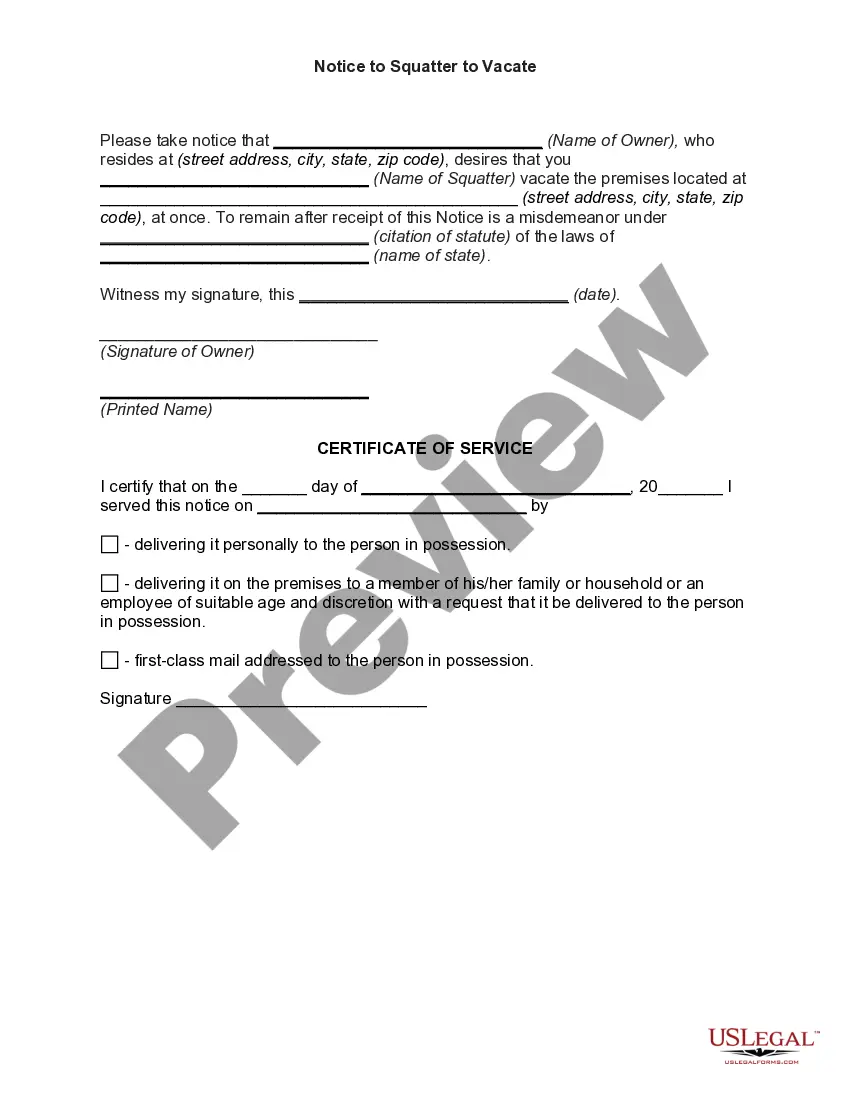
What is this form?
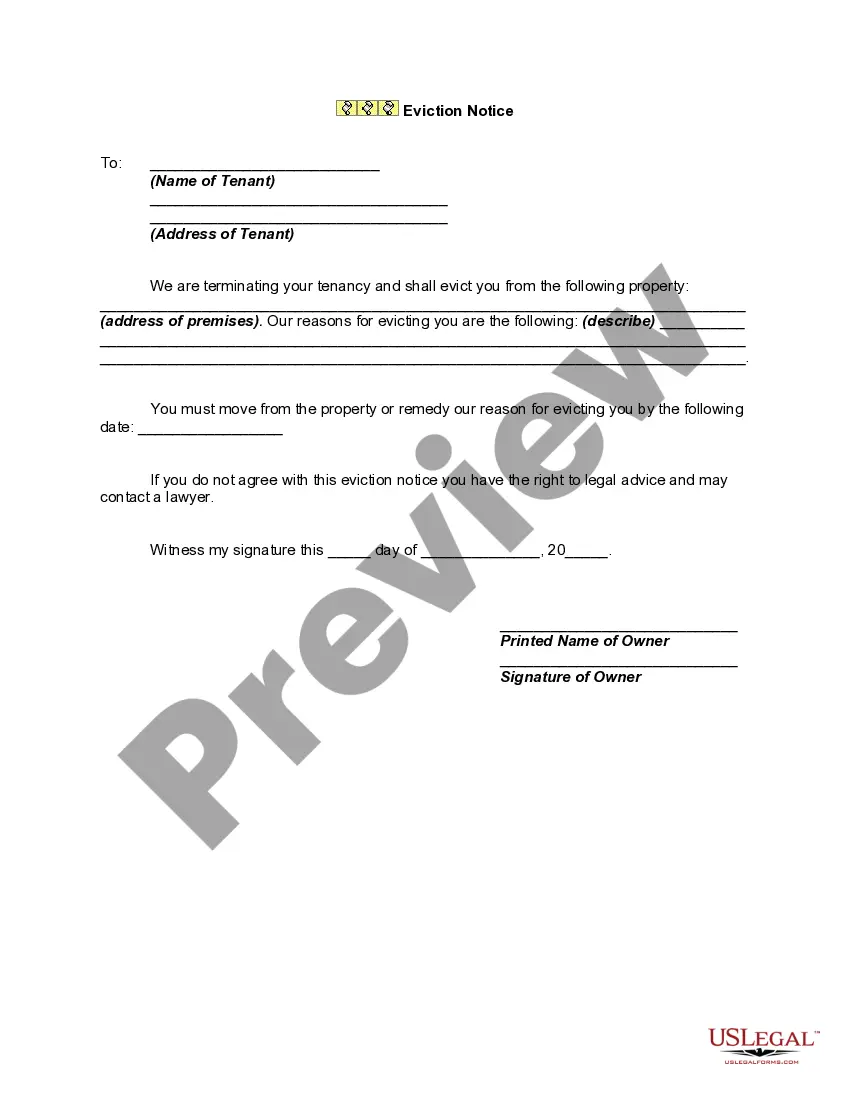
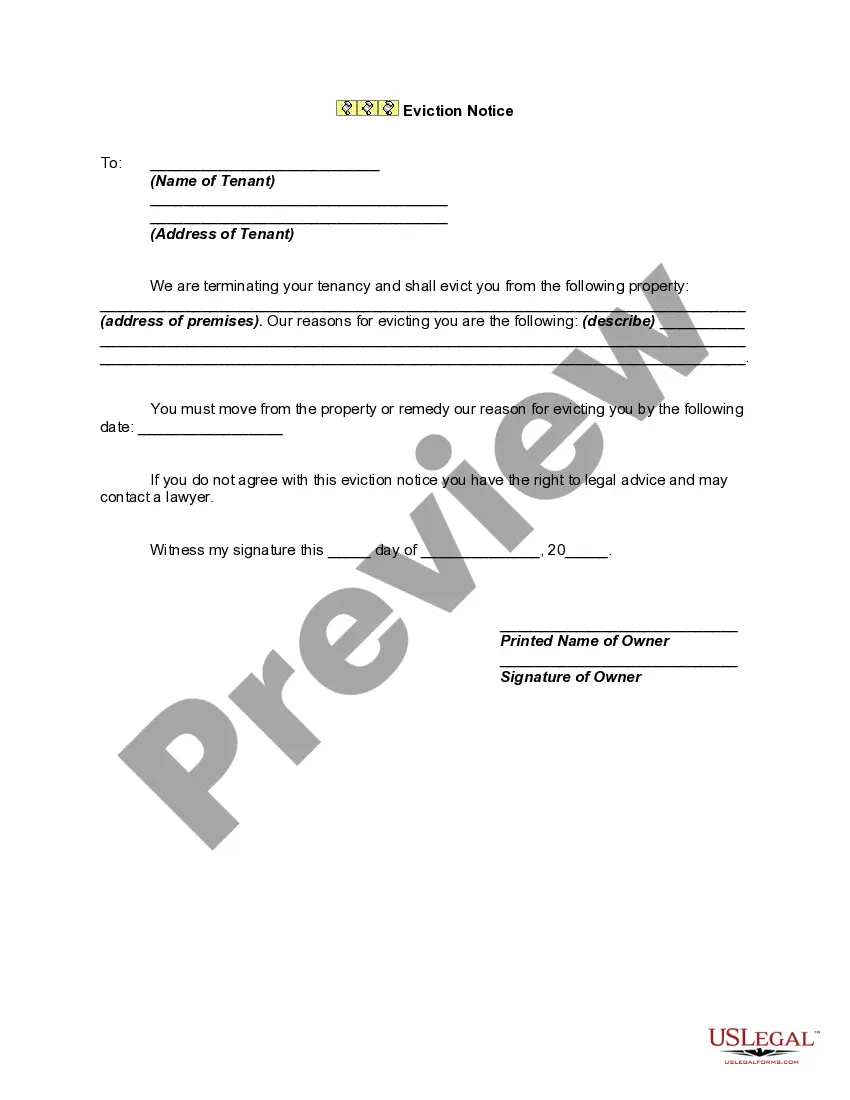
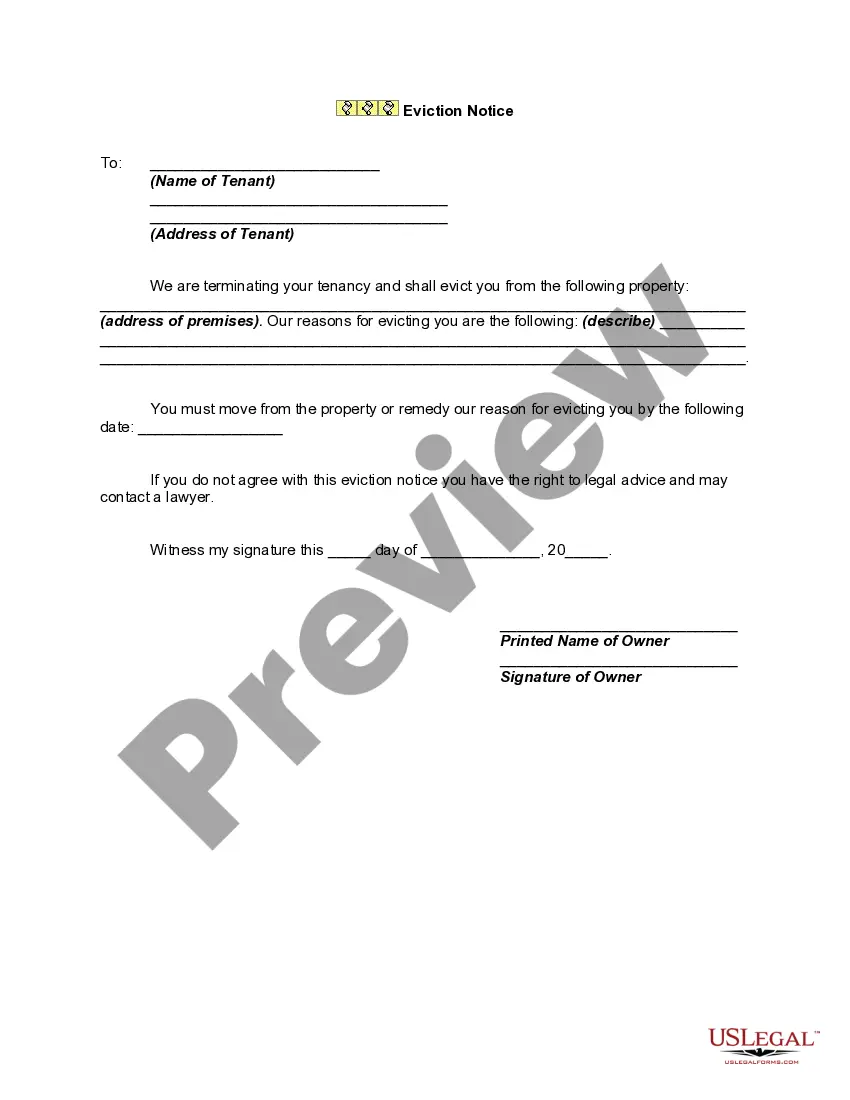
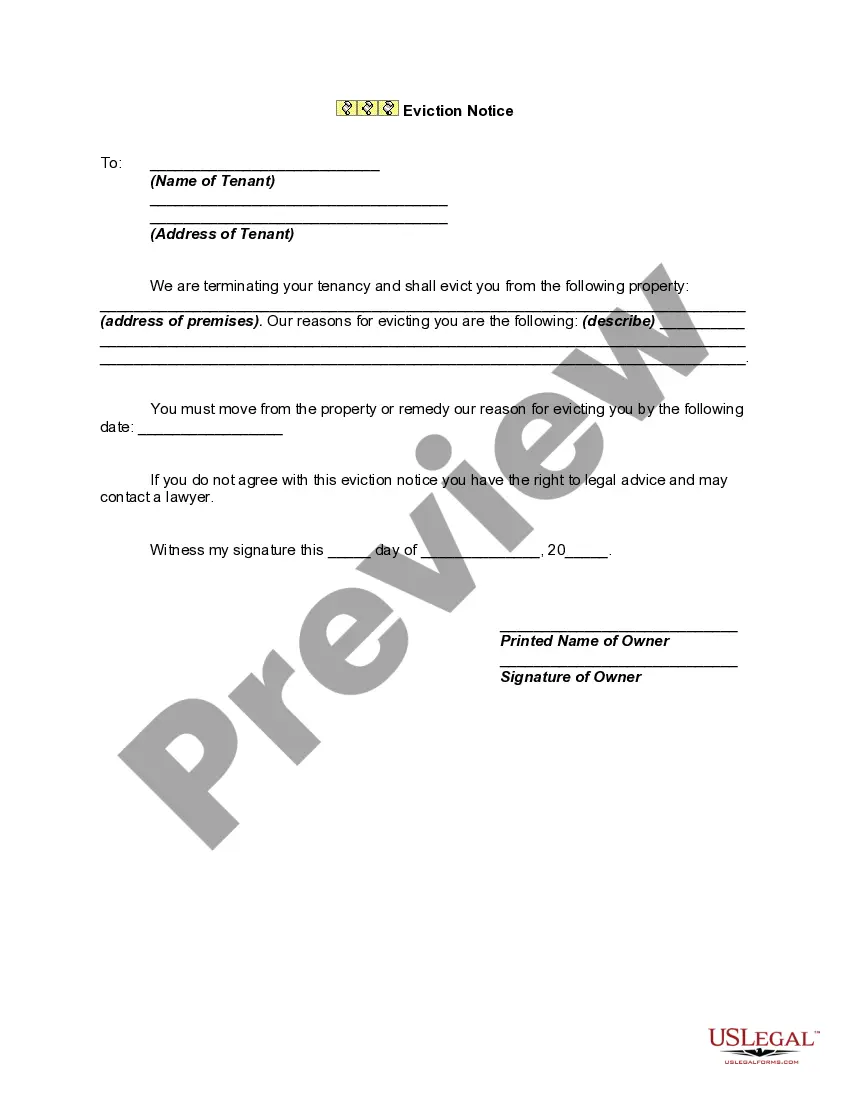
The Eviction Notice for Smoking is a formal document used by landlords to notify tenants that their lease is being terminated due to violations related to smoking on the premises. This notice serves as a crucial step in the eviction process, outlining the reasons for the eviction and providing the tenant with a set deadline to vacate or correct the issue. It is essential to understand that this form applies specifically to breaches of smoking regulations, distinguishing it from other eviction notices that may pertain to rental payment defaults or other lease violations.
Main sections of this form
- Name of tenant: The person who is being evicted.
- Tenant's address: The location where the tenant resides.
- Address of the premises: The property from which the tenant is being evicted.
- Reasons for eviction: A detailed description of the smoking-related violations.
- Deadline for remedy or move-out: The date by which the tenant must vacate the property.
- Owner's signature: The signature of the landlord or property owner to validate the notice.
When to use this form
This form is typically used when a tenant has violated smoking regulations stipulated in their lease agreement. Common scenarios include instances where tenants smoke in non-smoking areas or fail to comply with specific smoking policies. Landlords should use this eviction notice when they wish to formally terminate the tenancy due to these violations, providing the tenant a chance to either remedy the situation or vacate the premises by a specified date.
Who can use this document
- Landlords seeking to evict tenants for smoking-related violations.
- Property managers responsible for enforcing lease terms in rental properties.
- Individuals or businesses that own rental properties with smoking restrictions in place.
Completing this form step by step
- Identify the parties: Fill in the name and address of the tenant.
- Specify the property: Enter the address of the property involved in the eviction.
- Detail reasons: Clearly describe the smoking violations leading to the eviction.
- Set the deadline: Provide a specific date by which the tenant must comply.
- Sign the document: The landlord or property owner must sign and date the notice to validate it.
Notarization guidance
This form does not typically require notarization unless specified by local law. Landlords should verify local regulations to ensure compliance with any unique requirements, but generally, notarization is not a prerequisite for the validity of an eviction notice.
Get your form ready online
Our built-in tools help you complete, sign, share, and store your documents in one place.
Make edits, fill in missing information, and update formatting in US Legal Forms—just like you would in MS Word.
Download a copy, print it, send it by email, or mail it via USPS—whatever works best for your next step.
Sign and collect signatures with our SignNow integration. Send to multiple recipients, set reminders, and more. Go Premium to unlock E-Sign.
If this form requires notarization, complete it online through a secure video call—no need to meet a notary in person or wait for an appointment.
We protect your documents and personal data by following strict security and privacy standards.

Make edits, fill in missing information, and update formatting in US Legal Forms—just like you would in MS Word.

Download a copy, print it, send it by email, or mail it via USPS—whatever works best for your next step.

Sign and collect signatures with our SignNow integration. Send to multiple recipients, set reminders, and more. Go Premium to unlock E-Sign.

If this form requires notarization, complete it online through a secure video call—no need to meet a notary in person or wait for an appointment.

We protect your documents and personal data by following strict security and privacy standards.
Common mistakes
- Failing to provide a clear and specific reason for the eviction.
- Not including the correct dates for compliance or eviction.
- Neglecting to sign the notice, which could invalidate it.
- Using outdated or incorrect versions of the eviction notice.
Why use this form online
- Convenient accessibility for immediate use and customization.
- Editability allows landlords to personalize the form to their specific situation.
- Reliable format ensures compliance with legal standards.
- Quick download options to streamline the eviction process.
Summary of main points
- The eviction notice specifically addresses smoking violations as grounds for lease termination.
- It is crucial for landlords to provide a clear reason and deadline for compliance.
- This form must be tailored to meet local requirements based on jurisdiction.
- Confirm that the notice is properly signed to avoid potential disputes.
Looking for another form?
Form popularity
FAQ
Usually, tenant smoking is easy to detect by the distinctive smell on walls, in carpeting and furniture, signs of ash or cigarette butts, and yellow or brown discoloration on walls, counters, cabinets, doors and trim. Even with camouflage, you can usually find enough signs to prove indoor smoking.
More often than not, you will be able to tell if smoking has been taking place in a room it will be apparent on curtains, drapes, carpets, upholstered furniture and linen. The smell of smoke will cling to floors, walls and ceilings and is very hard to get rid of completely.
Individual flats are exempt from the regulations. They don't prevent leaseholders from smoking in the privacy of their own homes. But they must not smoke in the internal communal areas it's against the law.If you smoke inside the communal areas, you could be fined up to £200 by the local authority.
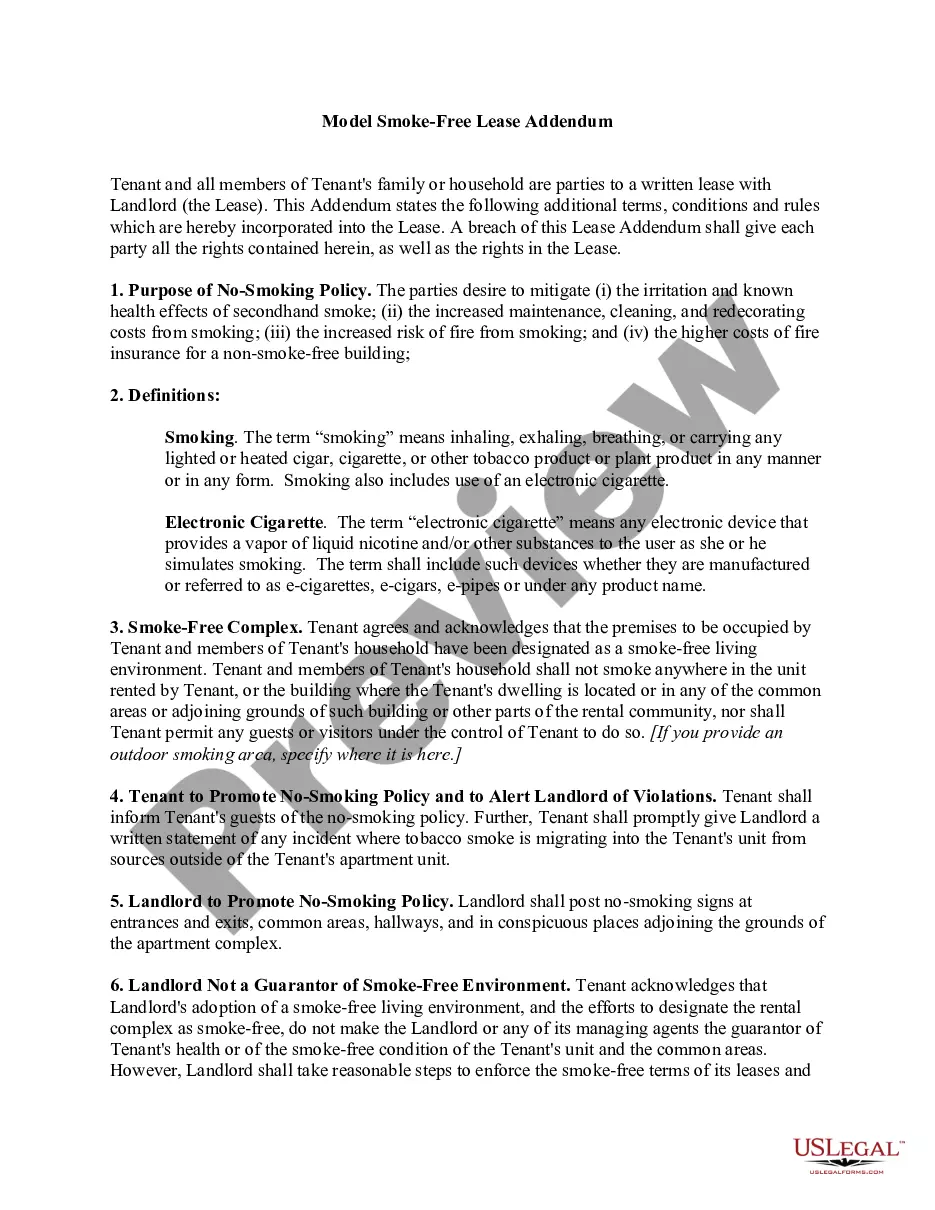
To make their properties smoke-free, Landlords have current tenants sign a No Smoking Lease Addendum when they renew their lease. New tenants sign the Addendum along with their lease. Smokers are welcome as long as they refrain from smoking while on the property.
Answer. Landlords have the right to prohibit or restrict smoking in their rental properties. Most of the time, a no-smoking policy is part of the lease or rental agreement. When tenants (or subtenants) sign a lease or rental agreement, they agree to be bound by its terms.
A landlord who has included a no-smoking policy in a lease or rental agreement can terminate the tenancy of or evict a tenant who smokes.Many judges won't evict when the tenant doesn't have a history of breaking the law and the illegal act is relatively minor (especially if marijuana is legal under state law).
You'll usually be able to tell which room someone has been smoking in if you're able to smell things like curtains, carpet, couches, or rugs. Thankfully for us landlords, we'll be able to tell someone is smoking by smelling the floors, ceiling, or walls.
Because smokers are not a protected class under federal or state law, as a landlord you can refuse to rent to smokers.So, if you are interested in keeping your rental property 100% smoke-free, it is not illegal for you to refuse smoking tenants.
Usually, tenant smoking is easy to detect by the distinctive smell on walls, in carpeting and furniture, signs of ash or cigarette butts, and yellow or brown discoloration on walls, counters, cabinets, doors and trim. Even with camouflage, you can usually find enough signs to prove indoor smoking.