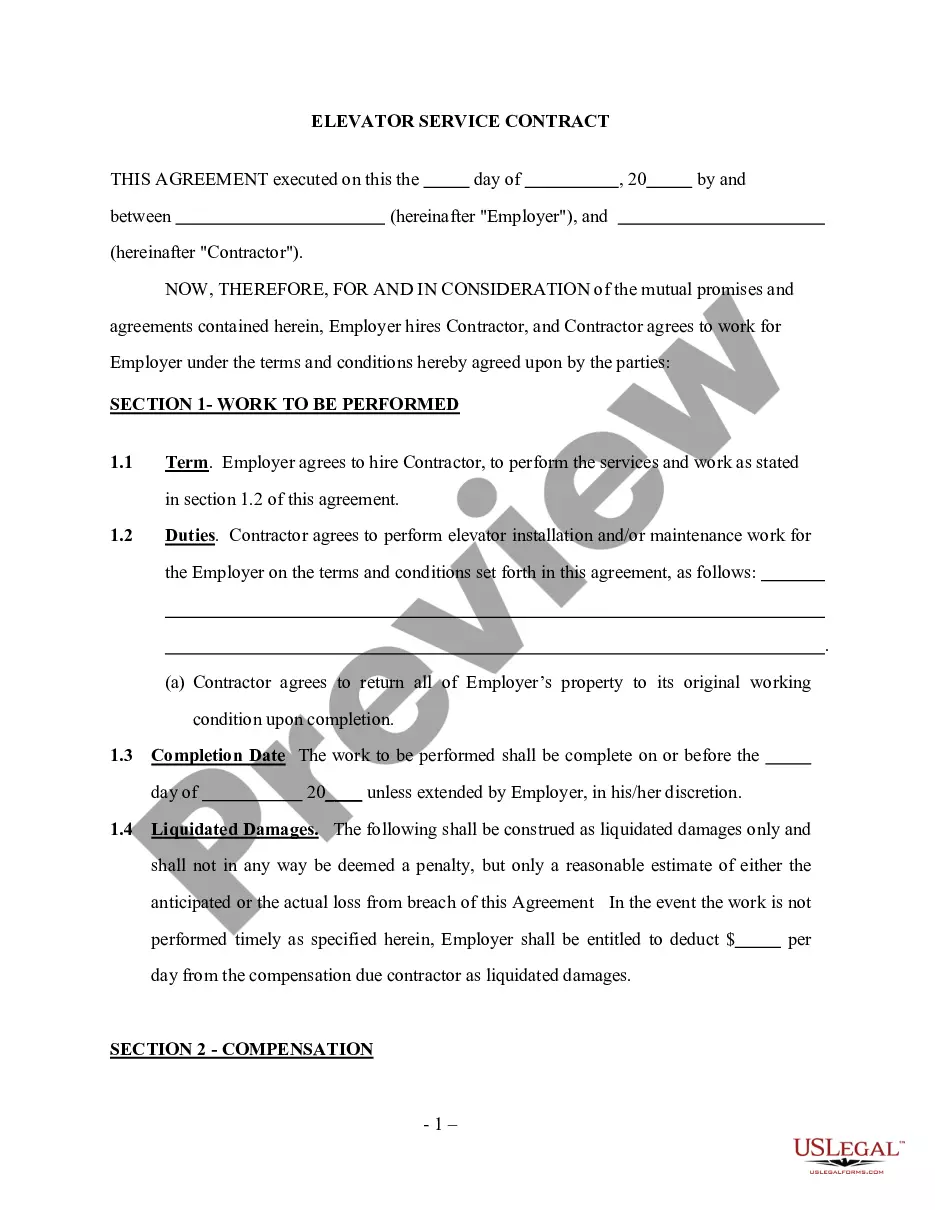
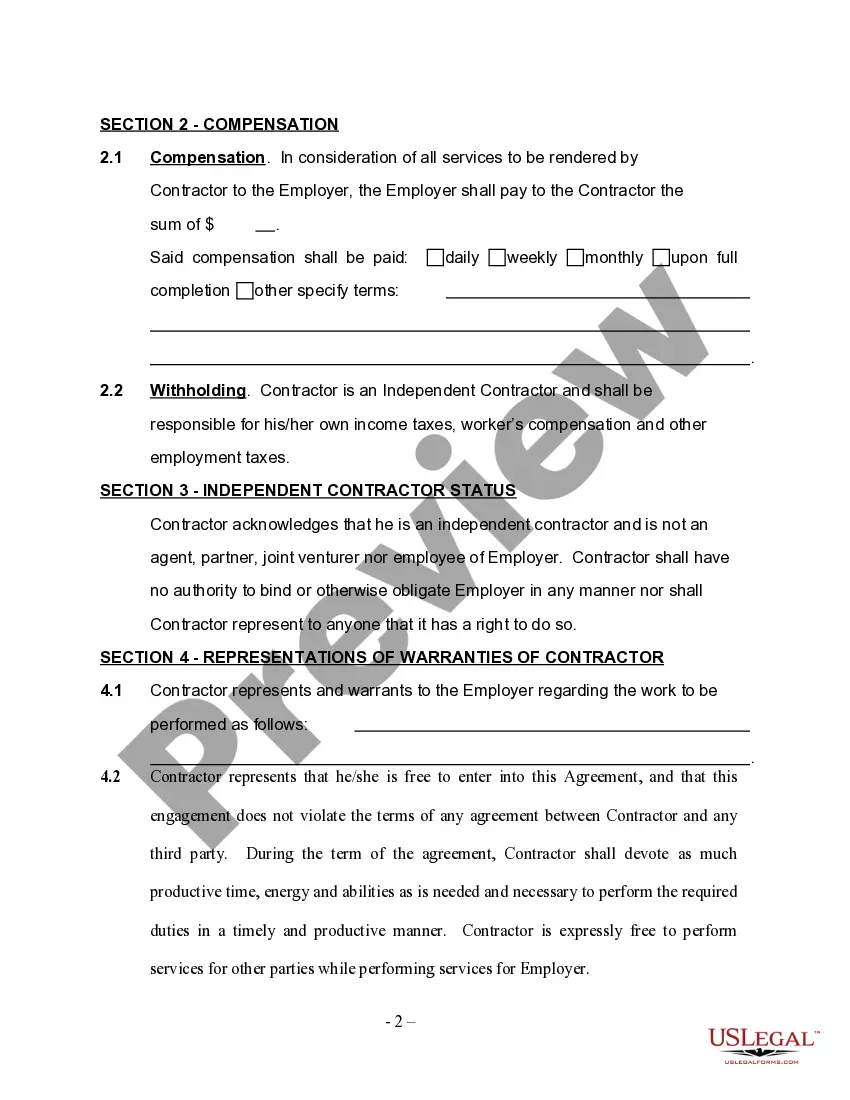
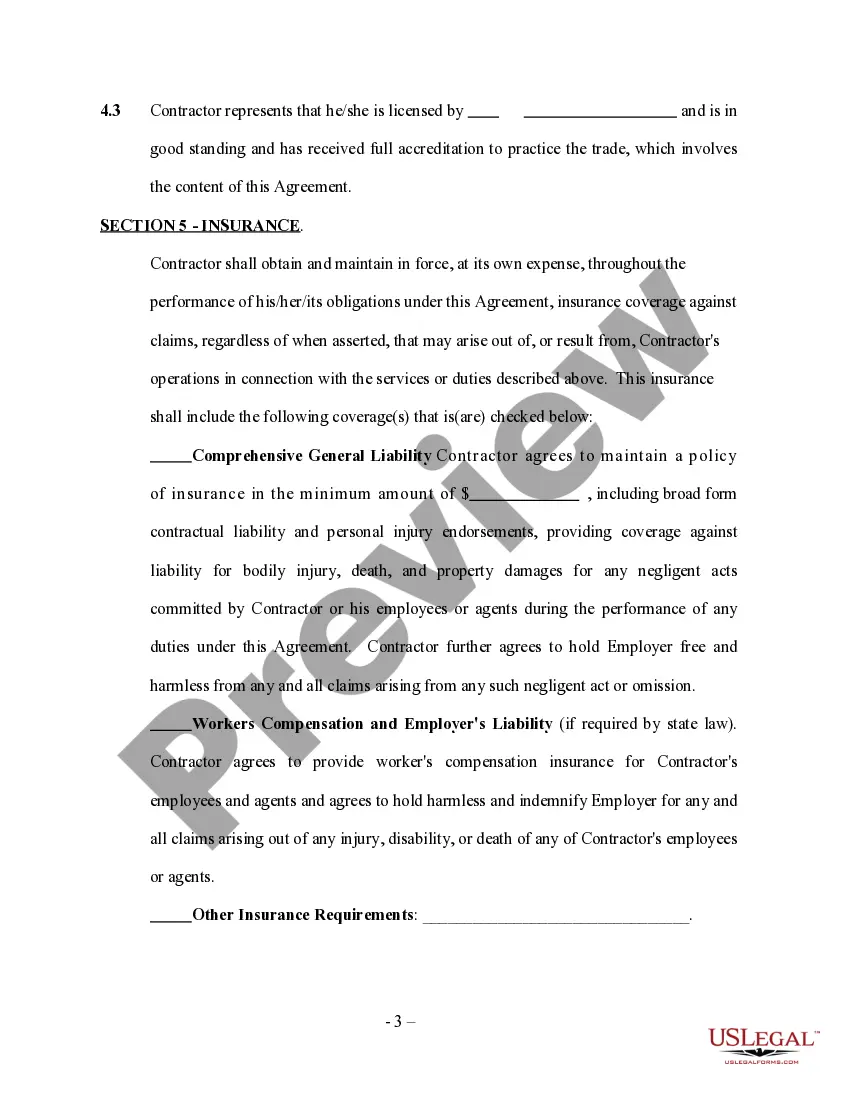
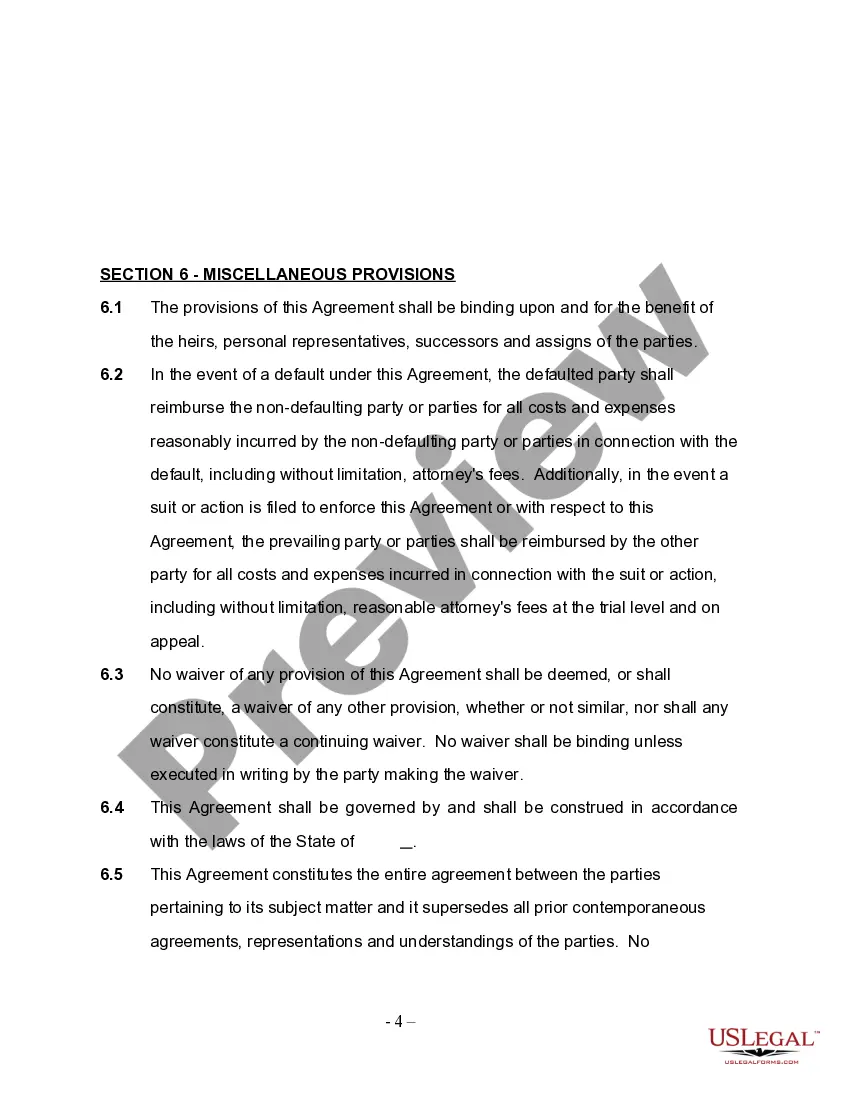
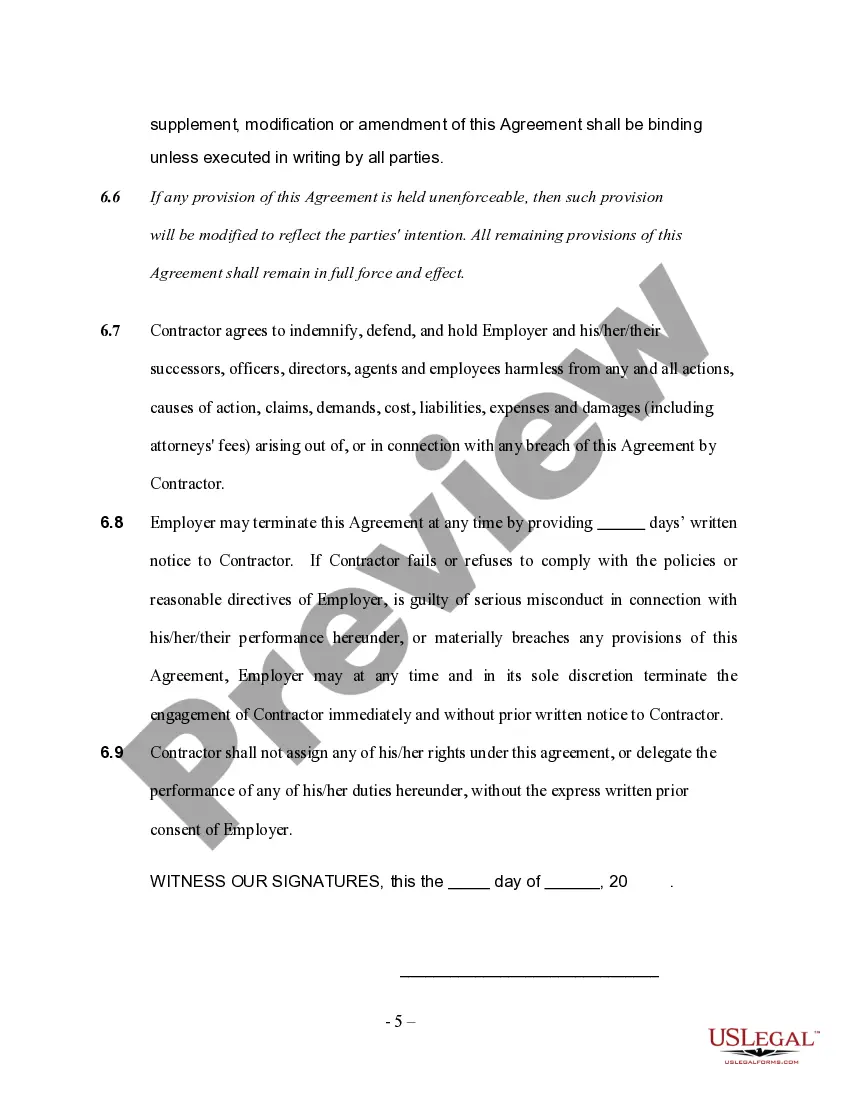
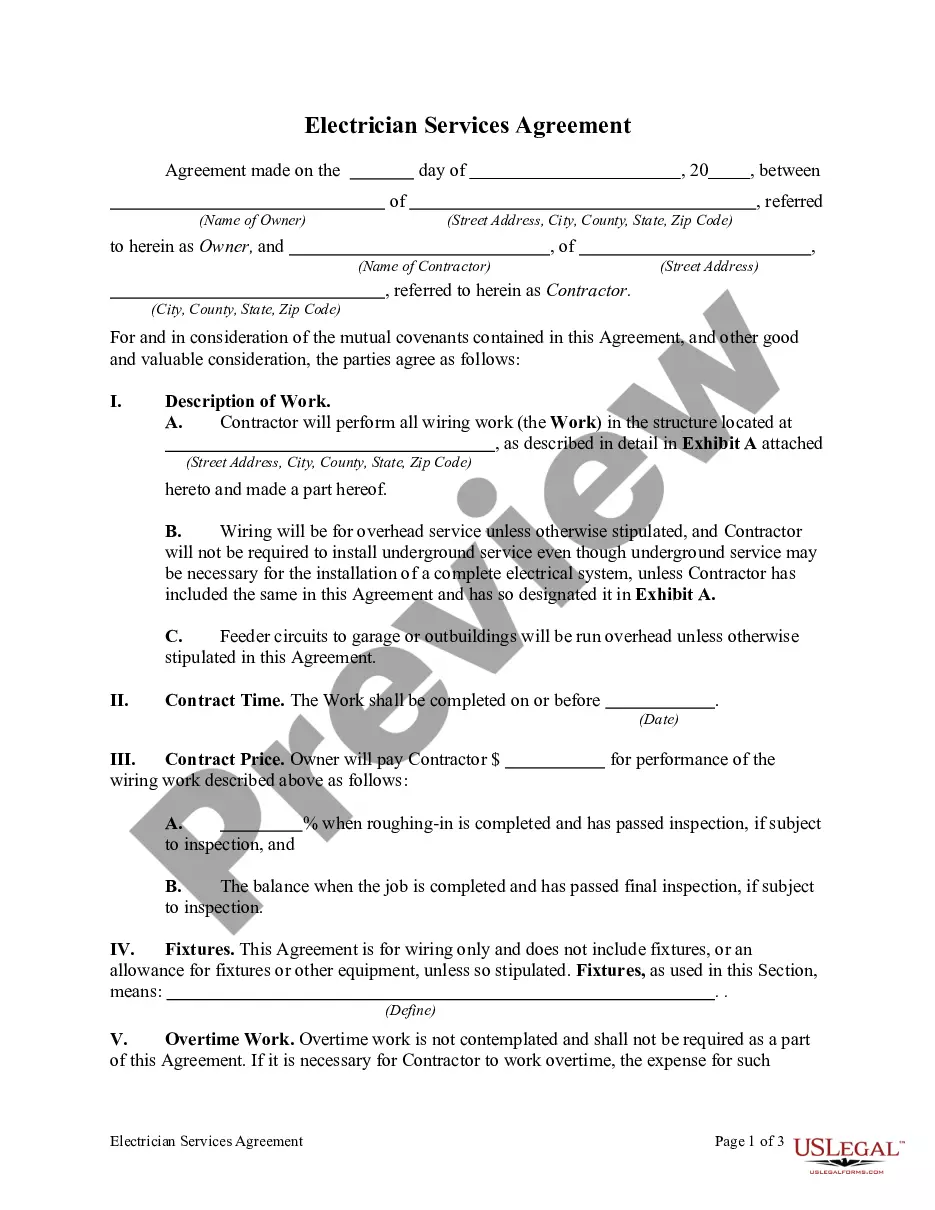
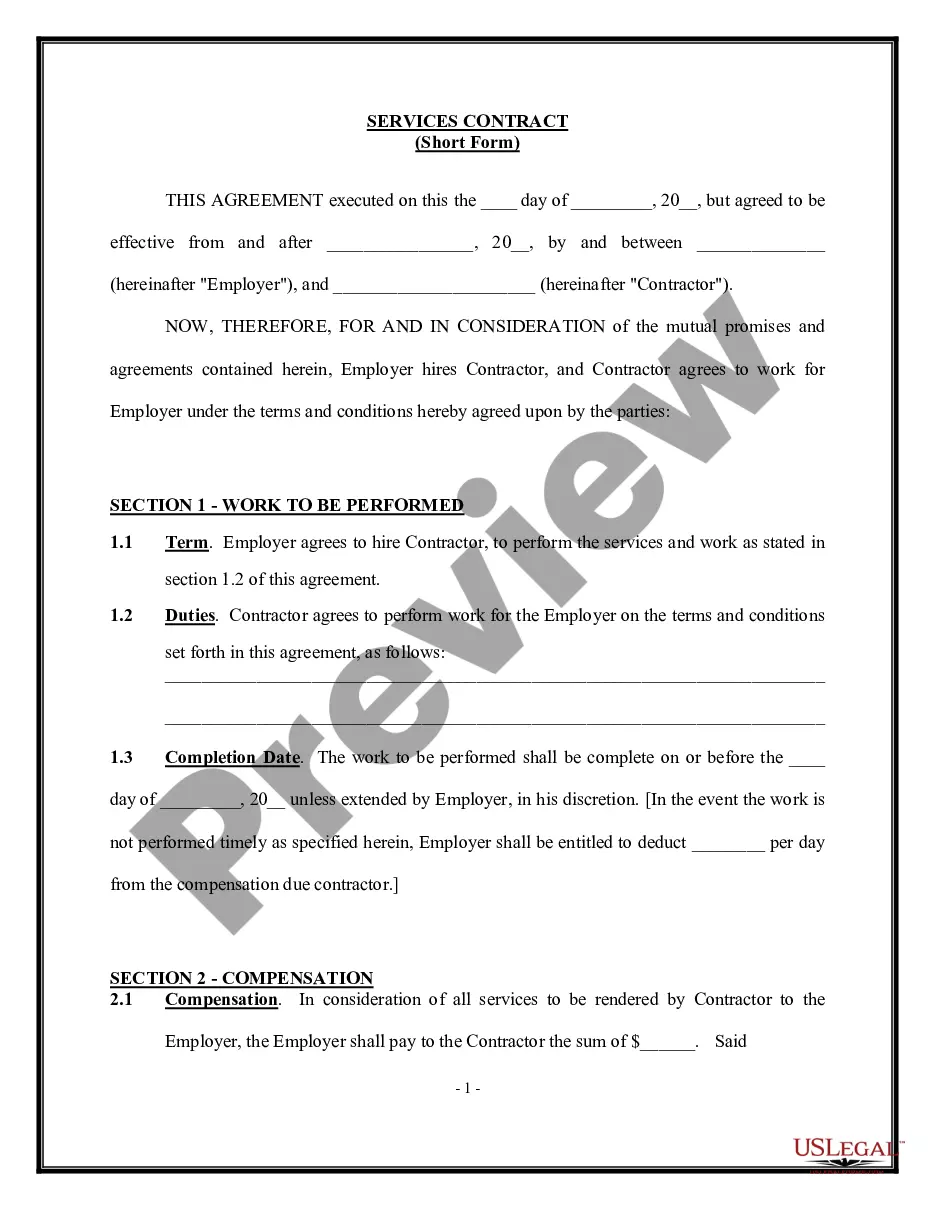
Employer contracts with an independent contractor to install and service an elevator as specified and agreed upon in the contract.
Texas Self-Employed Elevator Services Contract
State:
Multi-State
Control #:
US-INDC-93
Format:
Word;
Rich Text
Instant download
Description
Free preview
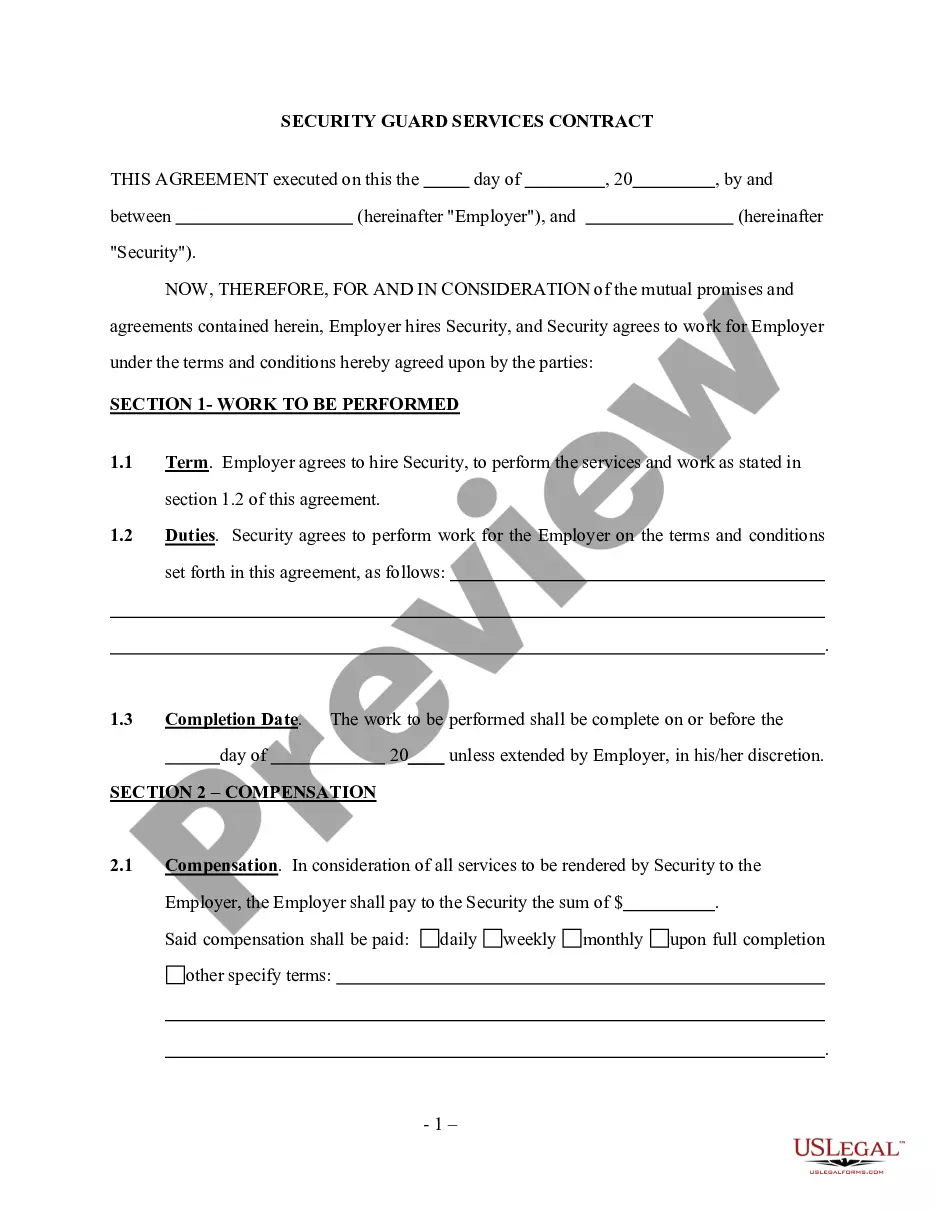
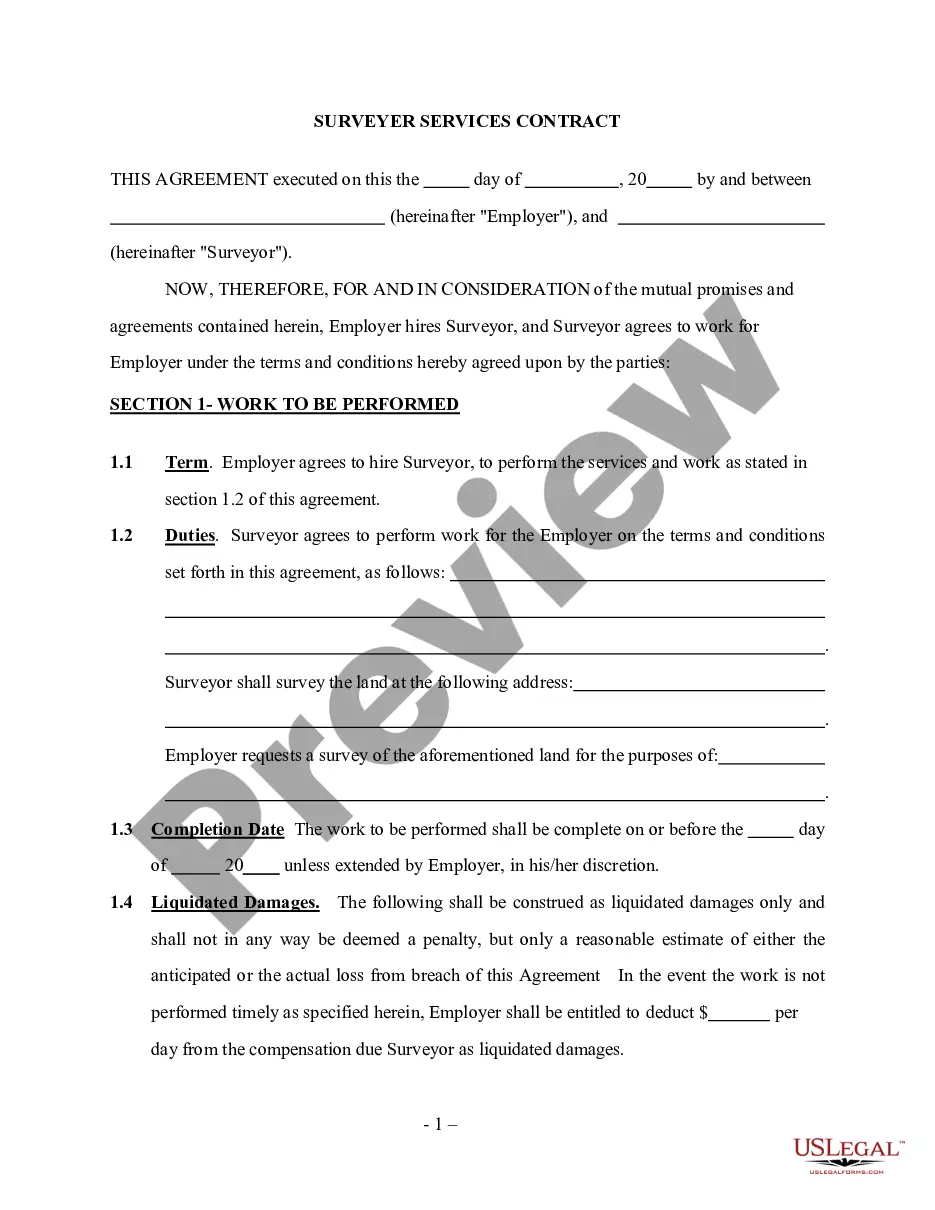
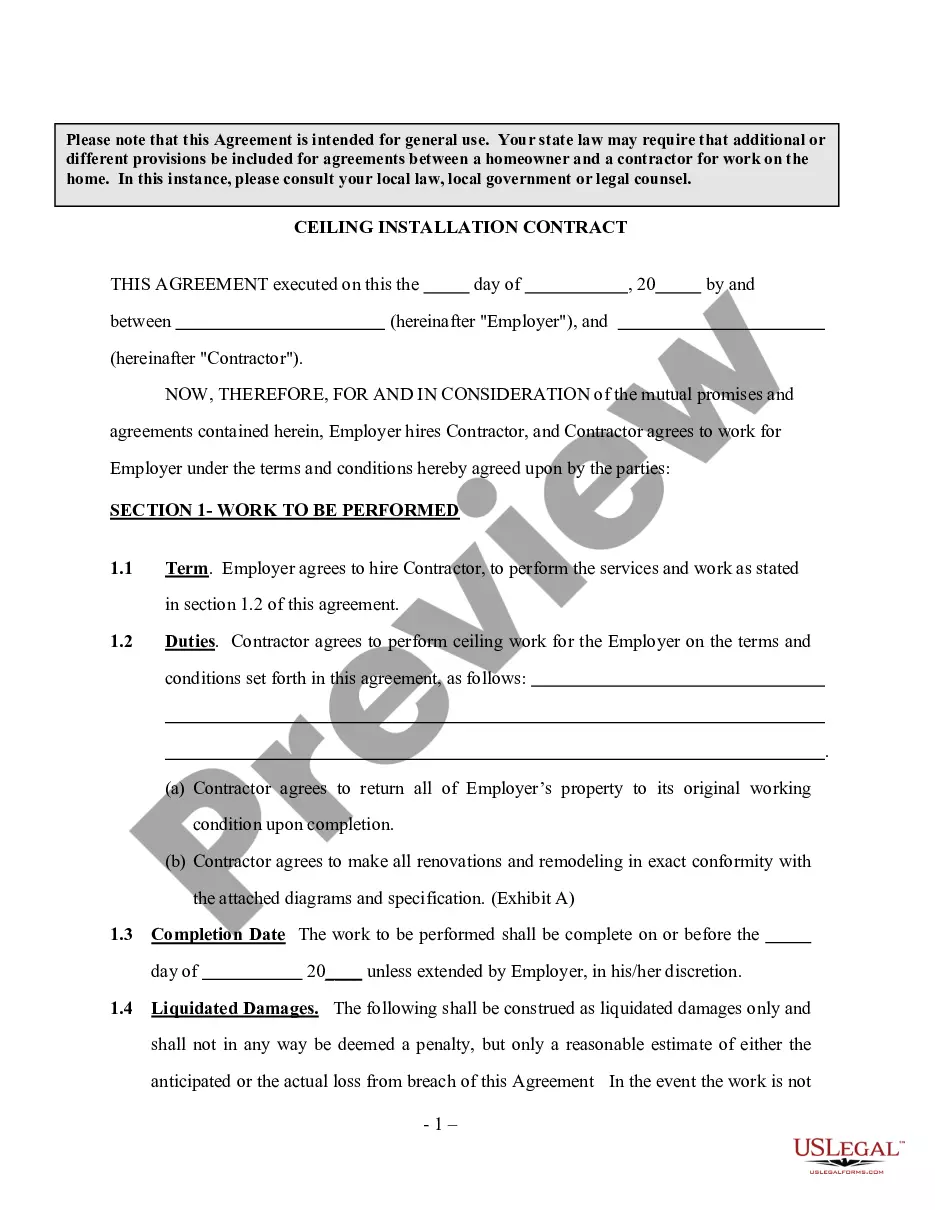
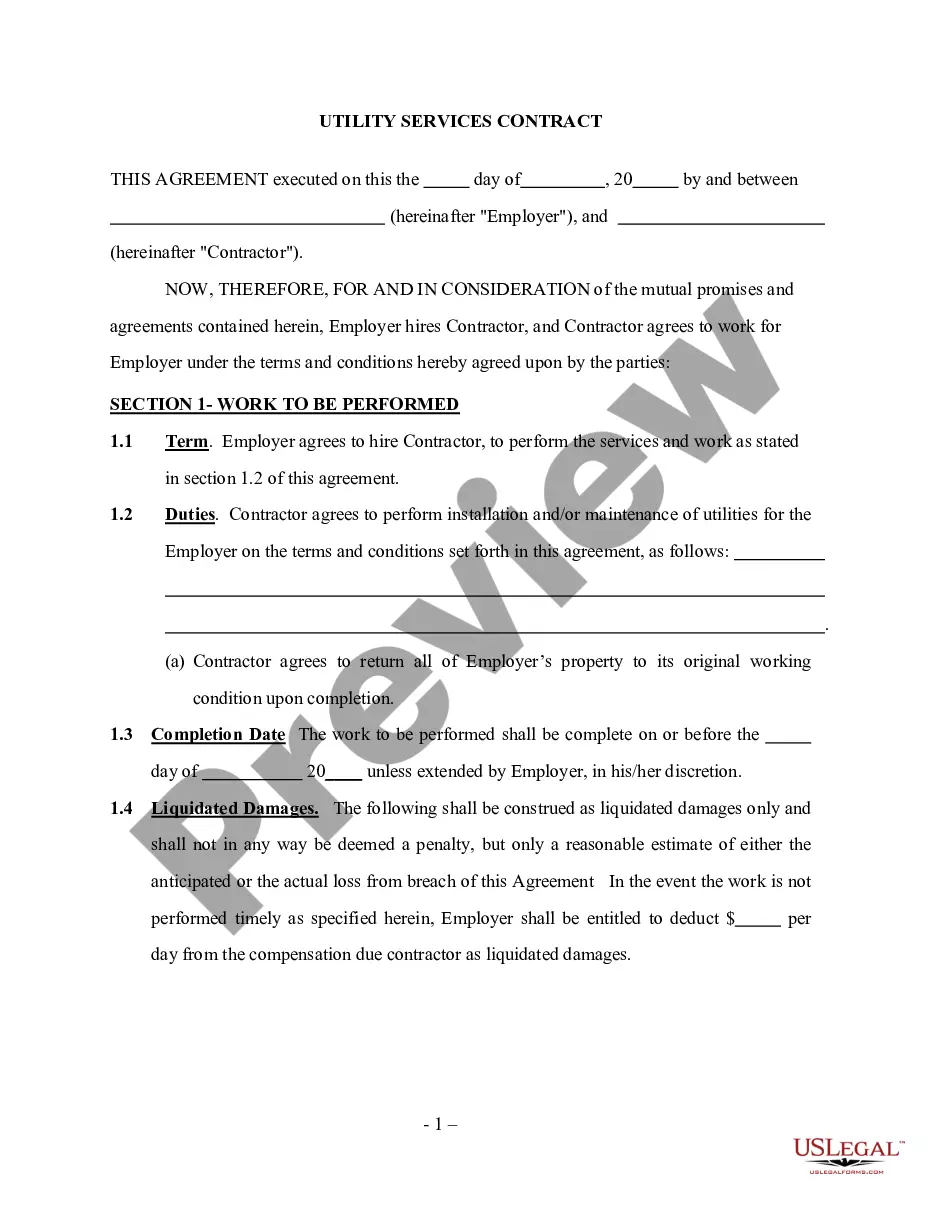
Get your form ready online
Our built-in tools help you complete, sign, share, and store your documents in one place.
Built-in online Word editor
Make edits, fill in missing information, and update formatting in US Legal Forms—just like you would in MS Word.
Export easily
Download a copy, print it, send it by email, or mail it via USPS—whatever works best for your next step.
E-sign your document
Sign and collect signatures with our SignNow integration. Send to multiple recipients, set reminders, and more. Go Premium to unlock E-Sign.
Notarize online 24/7
If this form requires notarization, complete it online through a secure video call—no need to meet a notary in person or wait for an appointment.
Store your document securely
We protect your documents and personal data by following strict security and privacy standards.

Make edits, fill in missing information, and update formatting in US Legal Forms—just like you would in MS Word.

Download a copy, print it, send it by email, or mail it via USPS—whatever works best for your next step.

Sign and collect signatures with our SignNow integration. Send to multiple recipients, set reminders, and more. Go Premium to unlock E-Sign.

If this form requires notarization, complete it online through a secure video call—no need to meet a notary in person or wait for an appointment.

We protect your documents and personal data by following strict security and privacy standards.
Looking for another form?



How to fill out Self-Employed Elevator Services Contract?
US Legal Forms - one of the largest collections of legal documents in the United States - provides a variety of legal form templates that you can download or print. By using the website, you can discover thousands of forms for business and personal purposes, categorized by type, state, or keywords. You can find the latest versions of forms like the Texas Self-Employed Elevator Services Contract in moments.
If you already have a membership, Log In and retrieve the Texas Self-Employed Elevator Services Contract from your US Legal Forms library. The Download button will appear on every form you view. You have access to all previously downloaded forms in the My documents section of your account.
If you wish to use US Legal Forms for the first time, here are simple steps to help you get started: Make sure you have selected the correct form for your city/state. Click the Review button to examine the form’s details. Read the form summary to confirm that you have chosen the right form. If the form doesn’t meet your requirements, utilize the Search area at the top of the screen to find one that does. If you are satisfied with the form, confirm your choice by clicking the Get now button. Then, choose your preferred pricing plan and provide your information to create an account. Complete the transaction. Use your Visa or Mastercard or PayPal account to finalize the transaction. Locate the format and download the form to your device. Make modifications. Fill out, edit, print, and sign the downloaded Texas Self-Employed Elevator Services Contract. Each template you add to your account has no expiration date and is yours indefinitely. Therefore, if you wish to download or print another copy, simply navigate to the My documents section and click on the form you need.
- Access the Texas Self-Employed Elevator Services Contract with US Legal Forms, one of the most extensive libraries of legal document templates.
- Utilize thousands of professional and state-specific templates that cater to your business or individual requirements.
Form popularity
FAQ
In Texas, buildings with fewer than three stories generally do not require elevators. However, local codes may vary, so it's important to research specific regulations in your area. If you are creating a Texas Self-Employed Elevator Services Contract, ensure you understand these guidelines to determine when an elevator is necessary.
Elevator inspections in Texas are typically conducted by licensed professionals who are certified by the TDLR. These inspectors evaluate the safety and functionality of elevators to ensure they comply with state regulations. When drafting your Texas Self-Employed Elevator Services Contract, consider including provisions for hiring qualified inspectors to maintain compliance.
In Texas, elevators must be inspected at least once a year to ensure they meet safety standards. Regular inspections help prevent accidents and ensure smooth operation. When you include inspection terms in your Texas Self-Employed Elevator Services Contract, you can outline the schedule and responsibilities for maintaining compliance.
Elevators are required in Texas for buildings that exceed a certain height or number of stories, typically three or more. The requirement ensures safety and accessibility for all building occupants. If you are preparing a Texas Self-Employed Elevator Services Contract, take note of these regulations to ensure your project meets state standards.
In Texas, contractors are regulated by the Texas Department of Licensing and Regulation (TDLR). This organization oversees licensing, inspections, and compliance for all contractors, including those offering elevator services. Understanding these regulations is vital when drafting your Texas Self-Employed Elevator Services Contract to ensure you meet all legal obligations.
Elevators must meet specific safety and operational standards set by the state and local codes. These requirements include having appropriate weight limits, emergency features, and regular maintenance schedules. When creating a Texas Self-Employed Elevator Services Contract, ensure that all necessary specifications and compliance measures are clearly outlined.
The 3 4 rule for elevators refers to the requirement that an elevator must serve every third floor in a building with four or more stories. This guideline ensures accessibility and convenience for building occupants. If you are drafting a Texas Self-Employed Elevator Services Contract, it's essential to understand this regulation to comply with state codes.
Elevator service contracts outline the responsibilities of both the service provider and the building owner. These contracts typically cover regular maintenance, emergency repairs, and inspections to ensure compliance with safety regulations. When you enter into a Texas Self-Employed Elevator Services Contract, you secure a reliable partner who will help maintain your elevator's performance and safety.
A lift maintenance service level agreement (SLA) defines the expected standards of service between you and the elevator service provider. This agreement typically covers response times, maintenance schedules, and performance metrics to ensure your elevator operates efficiently. Understanding the terms outlined in your Texas Self-Employed Elevator Services Contract will help you hold your service provider accountable.
There are several types of elevator service contracts, including full maintenance, limited maintenance, and repair-only contracts. A full maintenance contract typically covers all aspects of elevator upkeep, ensuring smooth operation and safety compliance. On the other hand, a limited maintenance contract may focus on specific services or repairs, which can be beneficial for budget-conscious clients. When drafting a Texas Self-Employed Elevator Services Contract, it's essential to choose the type that best meets the needs of your business and clients.