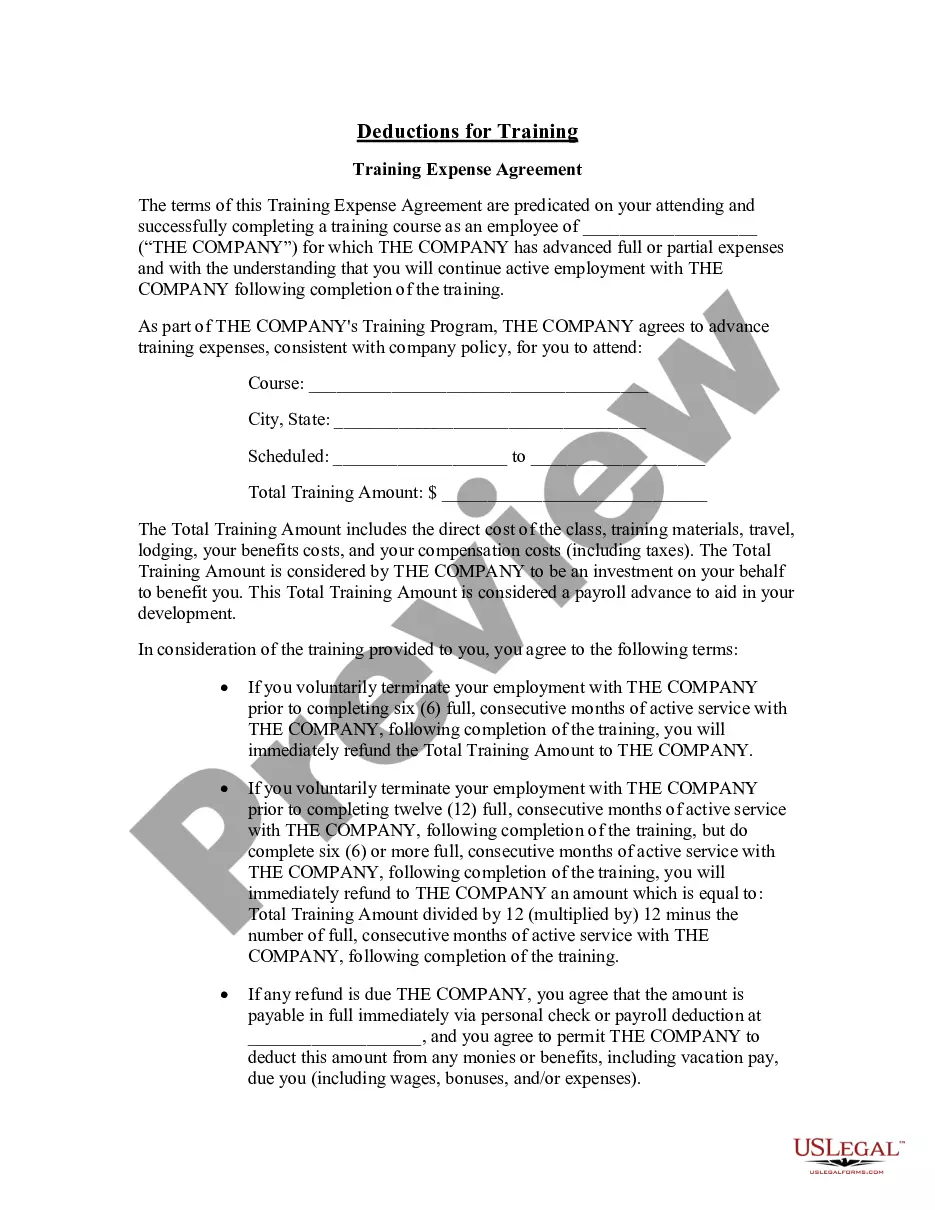
Texas Training Expense Agreement
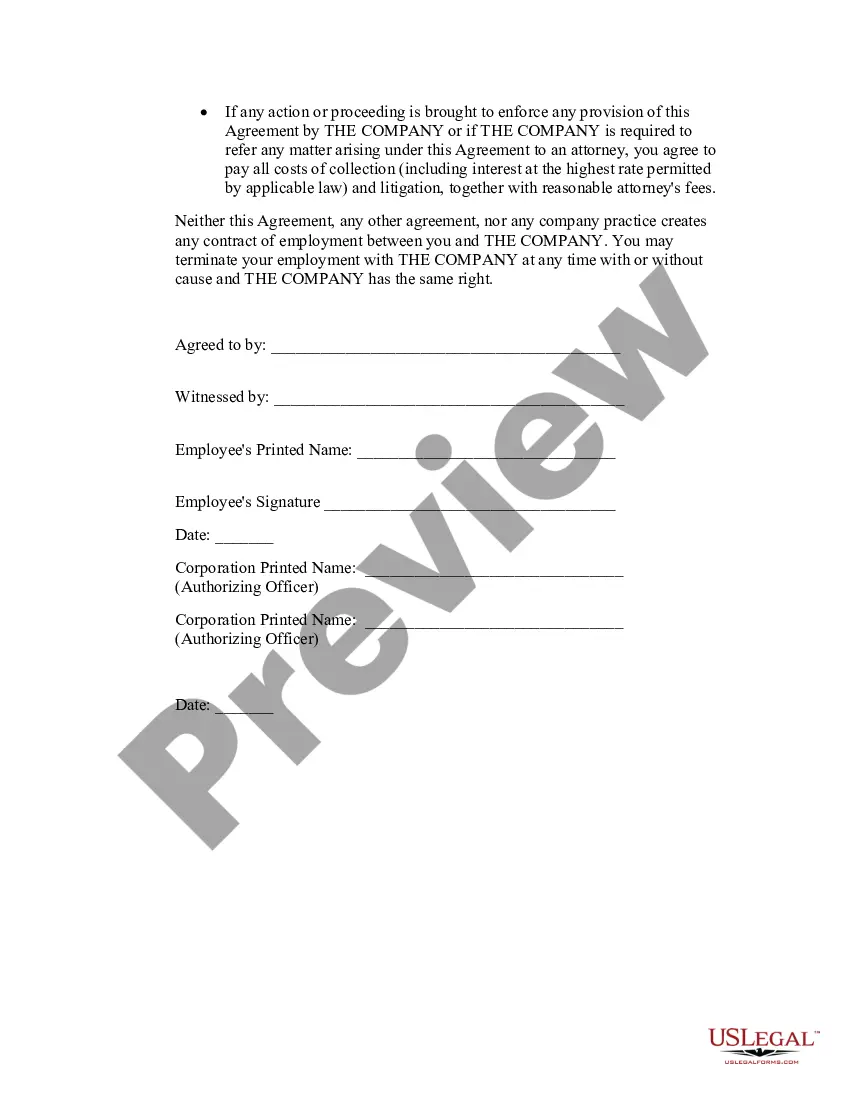
Description
Get your form ready online
Our built-in tools help you complete, sign, share, and store your documents in one place.
Make edits, fill in missing information, and update formatting in US Legal Forms—just like you would in MS Word.
Download a copy, print it, send it by email, or mail it via USPS—whatever works best for your next step.
Sign and collect signatures with our SignNow integration. Send to multiple recipients, set reminders, and more. Go Premium to unlock E-Sign.
If this form requires notarization, complete it online through a secure video call—no need to meet a notary in person or wait for an appointment.
We protect your documents and personal data by following strict security and privacy standards.

Make edits, fill in missing information, and update formatting in US Legal Forms—just like you would in MS Word.

Download a copy, print it, send it by email, or mail it via USPS—whatever works best for your next step.

Sign and collect signatures with our SignNow integration. Send to multiple recipients, set reminders, and more. Go Premium to unlock E-Sign.

If this form requires notarization, complete it online through a secure video call—no need to meet a notary in person or wait for an appointment.

We protect your documents and personal data by following strict security and privacy standards.
Looking for another form?

How to fill out Training Expense Agreement?
Are you in a scenario where you frequently require documents for business or specific reasons almost every day? There are numerous legal document templates accessible online, but locating versions you can rely on is not simple.
US Legal Forms offers thousands of form templates, such as the Texas Training Expense Agreement, that are designed to meet federal and state standards.
If you are already familiar with the US Legal Forms website and possess an account, simply Log In. Subsequently, you can download the Texas Training Expense Agreement template.
Access all the document templates you have purchased in the My documents menu. You can retrieve another copy of the Texas Training Expense Agreement anytime if necessary. Just select the desired form to download or print the document template.
Utilize US Legal Forms, one of the most extensive selections of legal forms, to save time and minimize errors. The service offers professionally created legal document templates that can be used for various purposes. Create your account on US Legal Forms and start simplifying your life.
- Find the document you need and ensure it is for the correct city/area.
- Use the Review option to view the document.
- Check the details to ensure you have selected the right form.
- If the document isn't what you are looking for, utilize the Search field to find the form that meets your needs and requirements.
- Once you locate the appropriate document, click Get now.
- Choose the payment plan you prefer, fill in the necessary information to create your account, and pay for the order using your PayPal or credit card.
- Select a convenient file format and download your copy.
Form popularity
FAQ
Can employers deduct your pay for training? If the employer is relying on a contract provision or written consent from the employee, the answer is Yes. If the deduction for training occurred without such authority, then the deduction would be illegal and the employee may have a potential employment claim.
In California, Employment contracts are legally binding agreements that create the employer-employee relationship. An employment contract can either be created by writing, verbal agreement, or because of implied circumstances.
Before taking any action to deduct pay for training or require repayment from an employee, an employer must demonstrate that there is a legal basis to deduct money for the repayment of training course costs.
A training agreement is a legally enforceable contract that sets out the terms and conditions of any training that you provide your employees. It establishes the cost of undertaking training, and who is responsible for paying.
In essence, a training contract is an agreement between an employer, such as a manager or supervisor, and an employee. It outlines all of the key skills or knowledge employees must acquire, how they will acquire it, and how the outcome will be assessed.
The short answer is yes, a properly drafted training bond is enforceable. When looking at training bond agreements, there are certain things you need to consider.
So, here's the takeaway: employers can require employees to pay back educational costs if the employee quits early, so long as the educational program was both voluntary and not specific to the employer's operations.
Employers can only deduct money for training courses if it was agreed in the contract or in writing beforehand. For example, an employer could ask someone to agree in writing before a training course to pay back costs if they leave within 6 months.
Pay for Meetings or TrainingThe Payday Law requires that employees be paid for all time worked. While state law does not specifically address pay for meetings or training, the DOL does address the issue of compensable time.