Texas Employee Code of Conduct for Business
Description
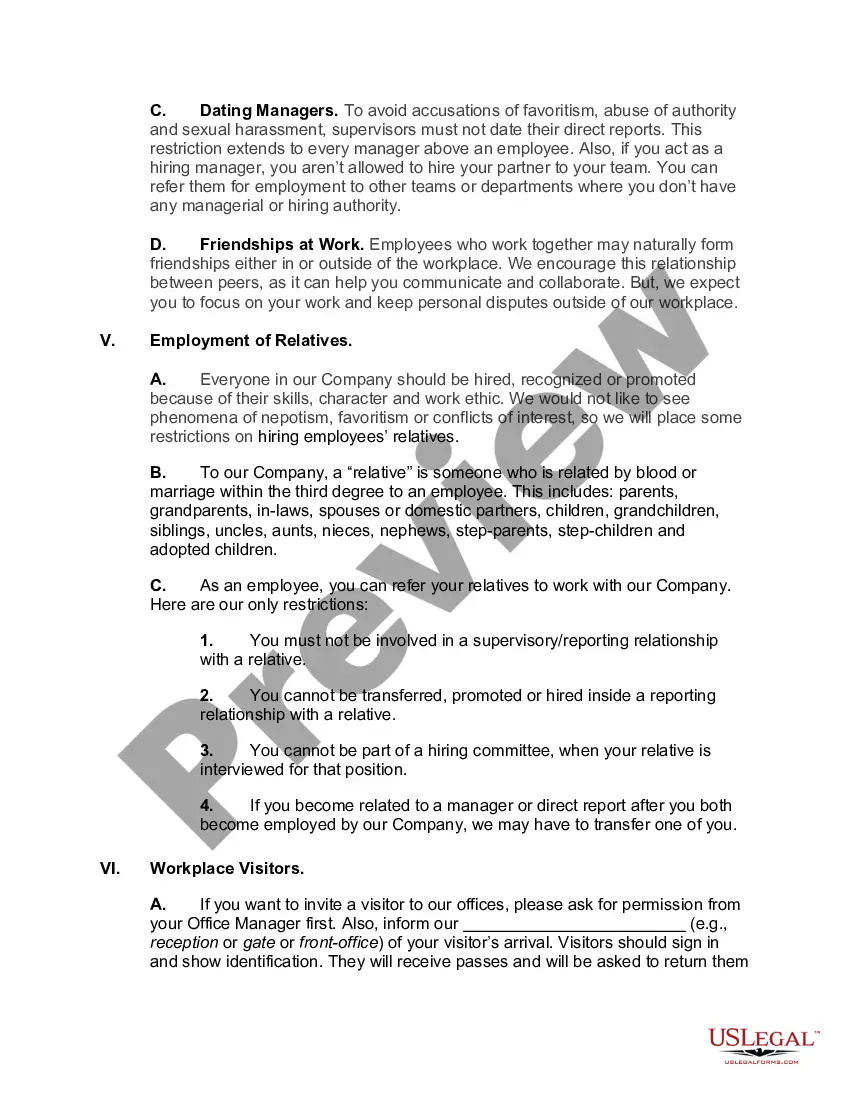
Get your form ready online
Our built-in tools help you complete, sign, share, and store your documents in one place.
Make edits, fill in missing information, and update formatting in US Legal Forms—just like you would in MS Word.
Download a copy, print it, send it by email, or mail it via USPS—whatever works best for your next step.
Sign and collect signatures with our SignNow integration. Send to multiple recipients, set reminders, and more. Go Premium to unlock E-Sign.
If this form requires notarization, complete it online through a secure video call—no need to meet a notary in person or wait for an appointment.
We protect your documents and personal data by following strict security and privacy standards.

Make edits, fill in missing information, and update formatting in US Legal Forms—just like you would in MS Word.

Download a copy, print it, send it by email, or mail it via USPS—whatever works best for your next step.

Sign and collect signatures with our SignNow integration. Send to multiple recipients, set reminders, and more. Go Premium to unlock E-Sign.

If this form requires notarization, complete it online through a secure video call—no need to meet a notary in person or wait for an appointment.

We protect your documents and personal data by following strict security and privacy standards.
Looking for another form?

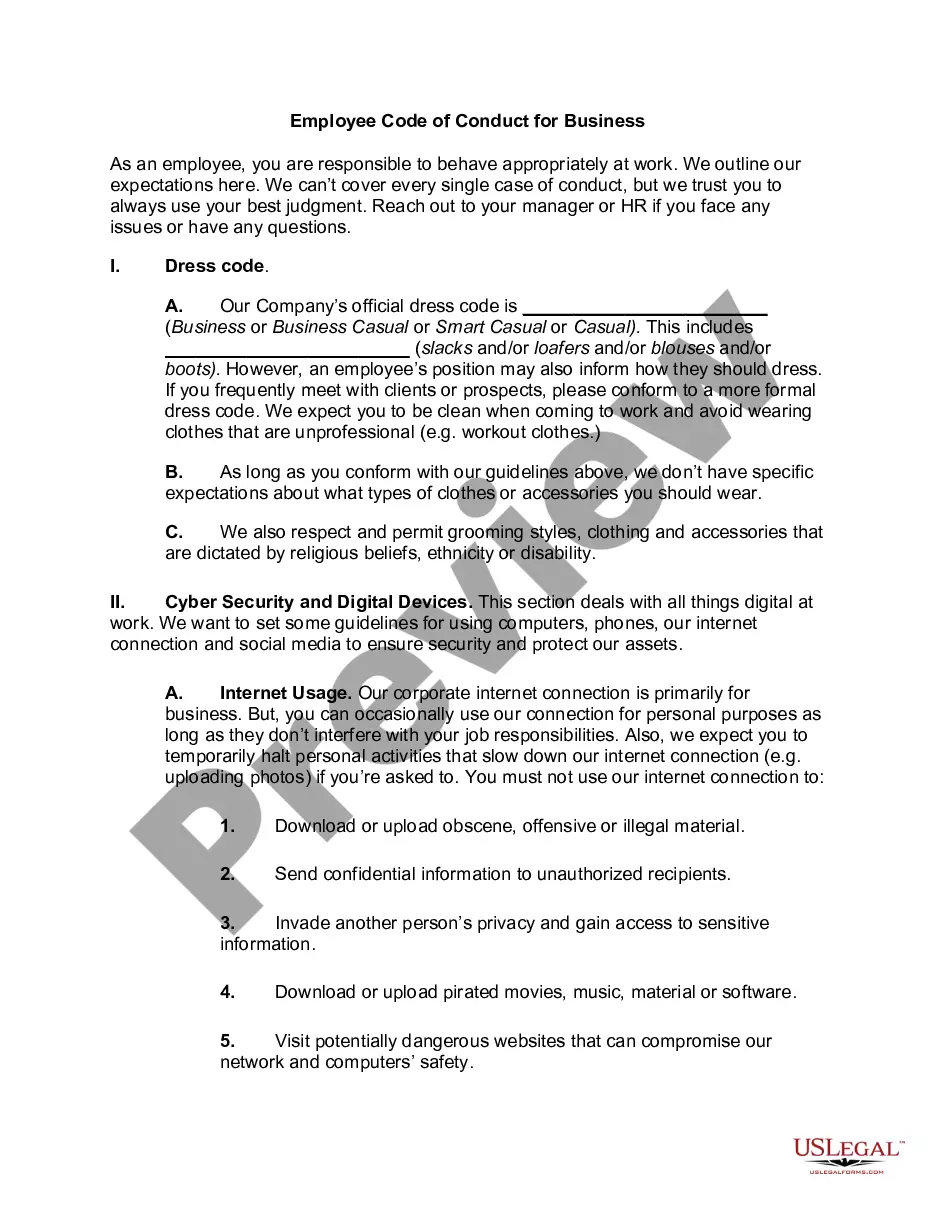
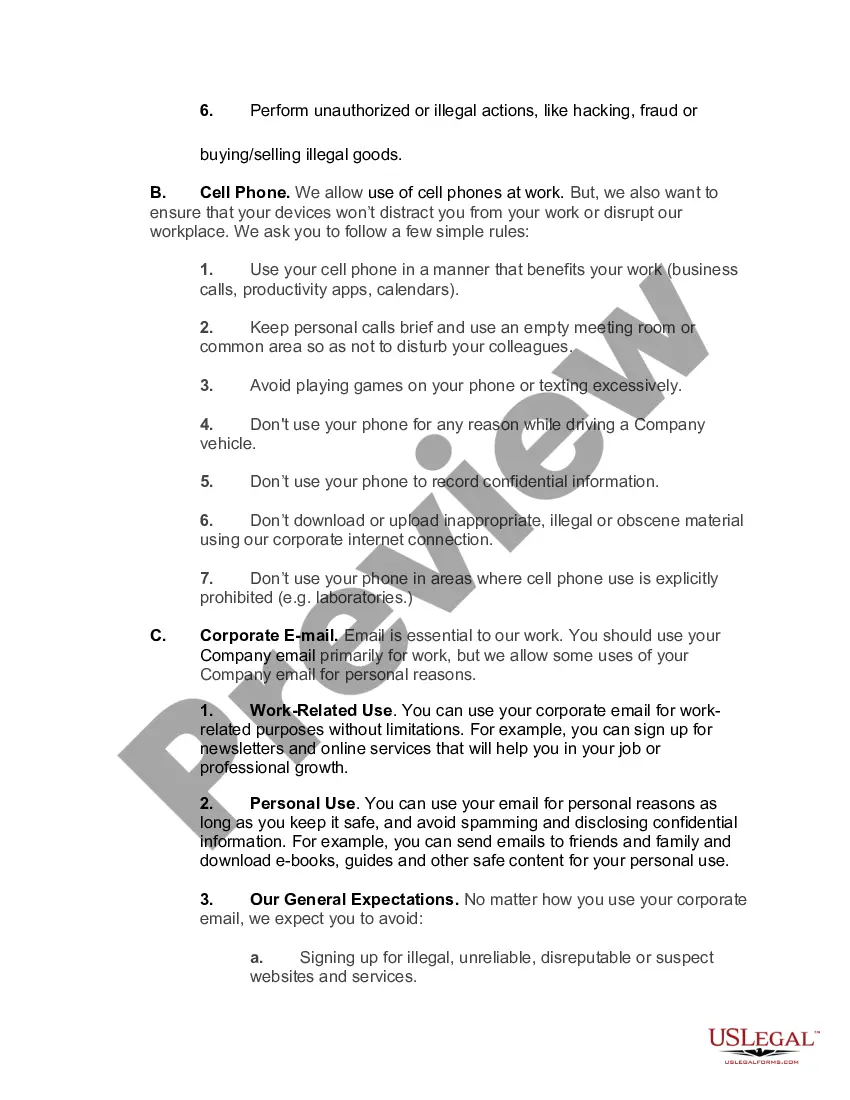
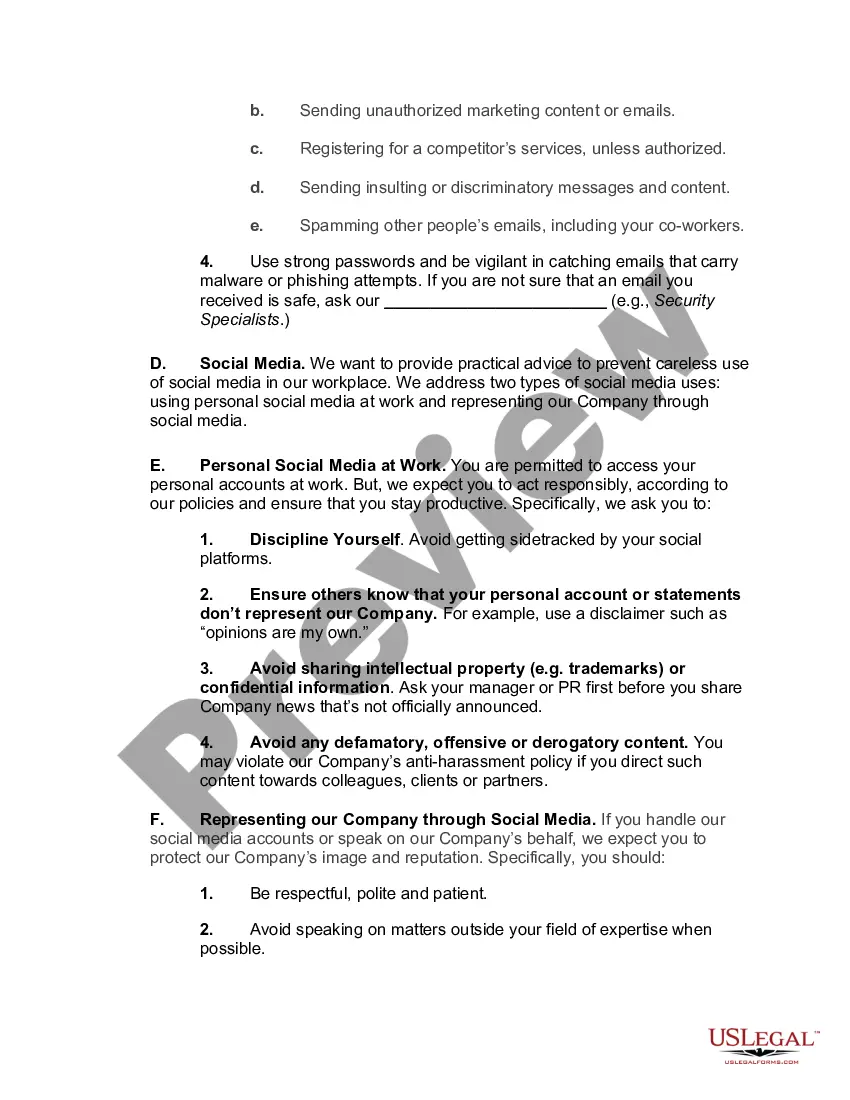
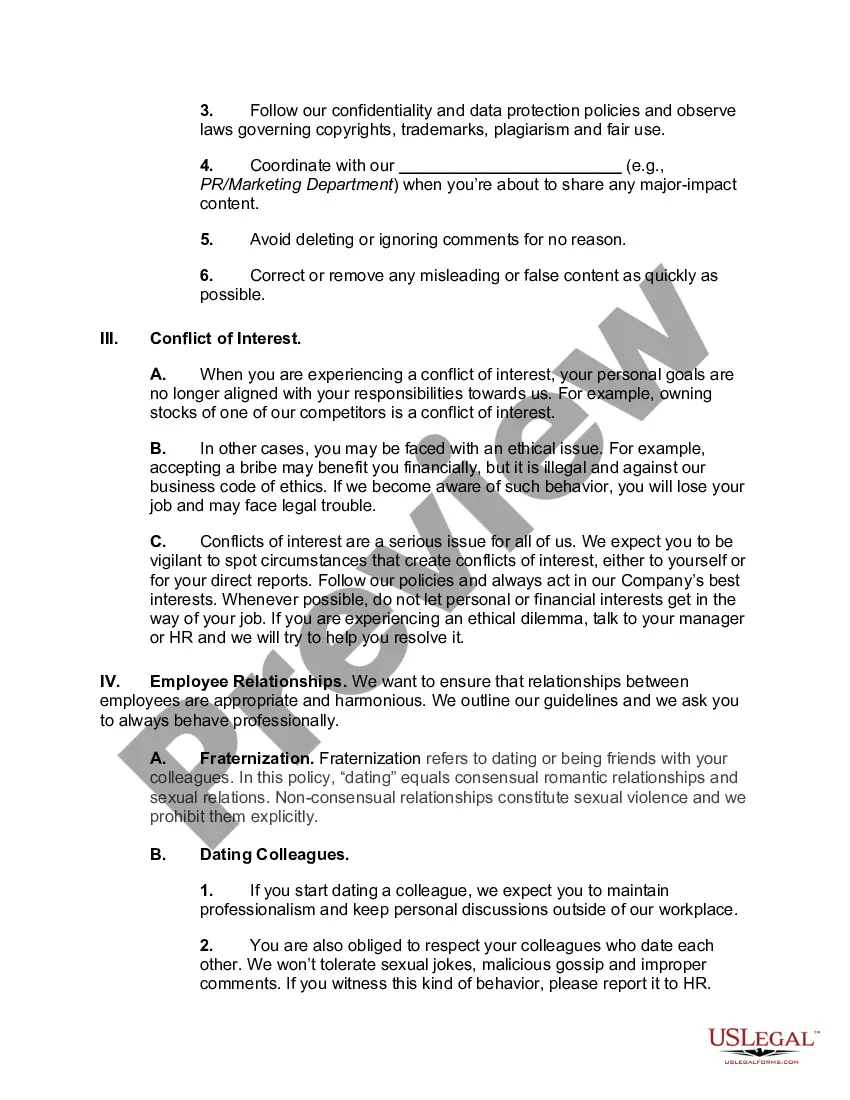
How to fill out Employee Code Of Conduct For Business?
If you wish to gather, acquire, or create legal document templates, utilize US Legal Forms, the largest selection of legal forms available online.
Take advantage of the site's straightforward and user-friendly search to find the documents you need.
Numerous templates for business and personal uses are organized by categories and states, or keywords. Use US Legal Forms to access the Texas Employee Code of Conduct for Business with just a few clicks.
Every legal document template you purchase is yours permanently. You can access every form you saved in your account. Visit the My documents section and select a form to print or download again.
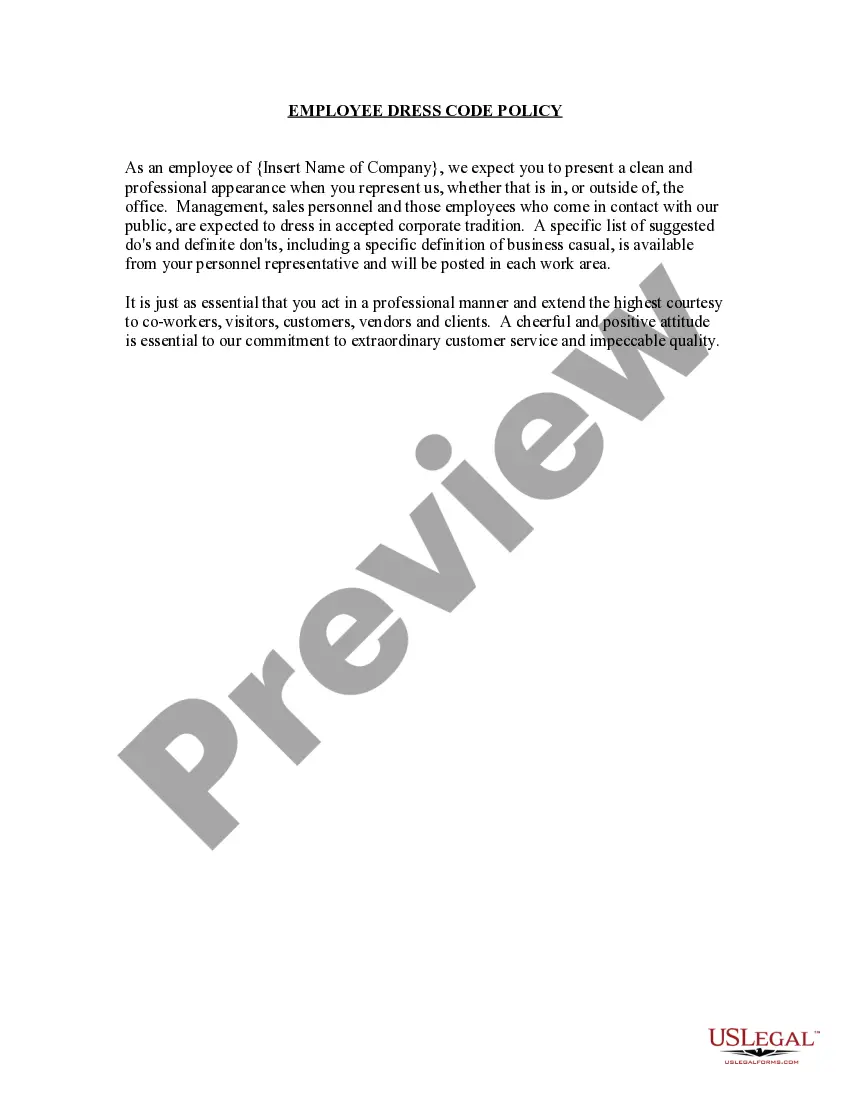
Complete and obtain the Texas Employee Code of Conduct for Business with US Legal Forms. There are many professional and state-specific forms you can use for your business or personal needs.
- If you are already a US Legal Forms client, Log In to your account and click the Download button to obtain the Texas Employee Code of Conduct for Business.
- You can also access forms you previously saved in the My documents section of your account.
- If you are using US Legal Forms for the first time, follow these instructions.
- Step 1. Ensure you have selected the form for the correct city/area.
- Step 2. Use the Preview option to review the form's details. Remember to read the description.
- Step 3. If you are dissatisfied with the form, use the Search field at the top of the screen to find alternative versions of the legal form template.
- Step 4. Once you have located the form you need, select the Get now button. Choose your preferred pricing plan and enter your information to register for the account.
- Step 5. Complete the transaction. You can use your credit card or PayPal account to finalize the purchase.
- Step 6. Choose the format of your legal form and download it to your device.
- Step 7. Complete, modify, and print or sign the Texas Employee Code of Conduct for Business.
Form popularity
FAQ
What are the five codes of ethics?Integrity.Objectivity.Professional competence.Confidentiality.Professional behavior.
There are many types of code of conduct that an employer should include in their employee handbook....Here are some of the most important areas an employer should address:Company's values.Employee behaviors.Dress code.Tardiness/absenteeism.Leave policy.Employee break policy.Conflicts of interest.Communication.More items...?
An employer code of conduct outlines the company policy with regard to situations that put the company at risk in ethical matters. In addition, it details expected behavior to encourage employees to devote their on-the-clock hours to company business and information on how to properly treat the company's customers.
Basically, the law says that you must do something purposefully to harm or potentially harm your employer. For example, if you purposefully break a rule or if you acted carelessly many times, you may be found to have been discharged for misconduct. The law specifically lists certain actions to be misconduct.
A code of conduct is the most common policy within an organization. This policy lays out the company's principles, standards, and the moral and ethical expectations that employees and third parties are held to as they interact with the organization.
The official definition in Section 201.012 of the Texas Labor Code is as follows: "'Misconduct' means mismanagement of a position of employment by action or inaction, neglect that jeopardizes the life or property of another, intentional wrongdoing or malfeasance, intentional violation of a law, or violation of a policy
The employee code of conduct defines acceptable behavior and social norms that individuals in an organization should adopt on a day-to-day basis. It should reflect a company's vision, core values and the overall culture of a company.
An employee code of conduct can create a contract for how employees conduct themselves and live your organisation's values in their day-to-day work.
Misconduct Defined. The courts have held that willful disregard exists where the employee: (1) is aware of the employer's interest; (2) knows or should know that certain conduct jeopardizes that interest; and (3) nonetheless intentionally performs the act, willfully disregarding its consequences.
A code of conduct states the rules, values, ethical principles and vision for your business. Having a code of conduct in your workplace provides staff with clear standards and expectations of how to do their job.