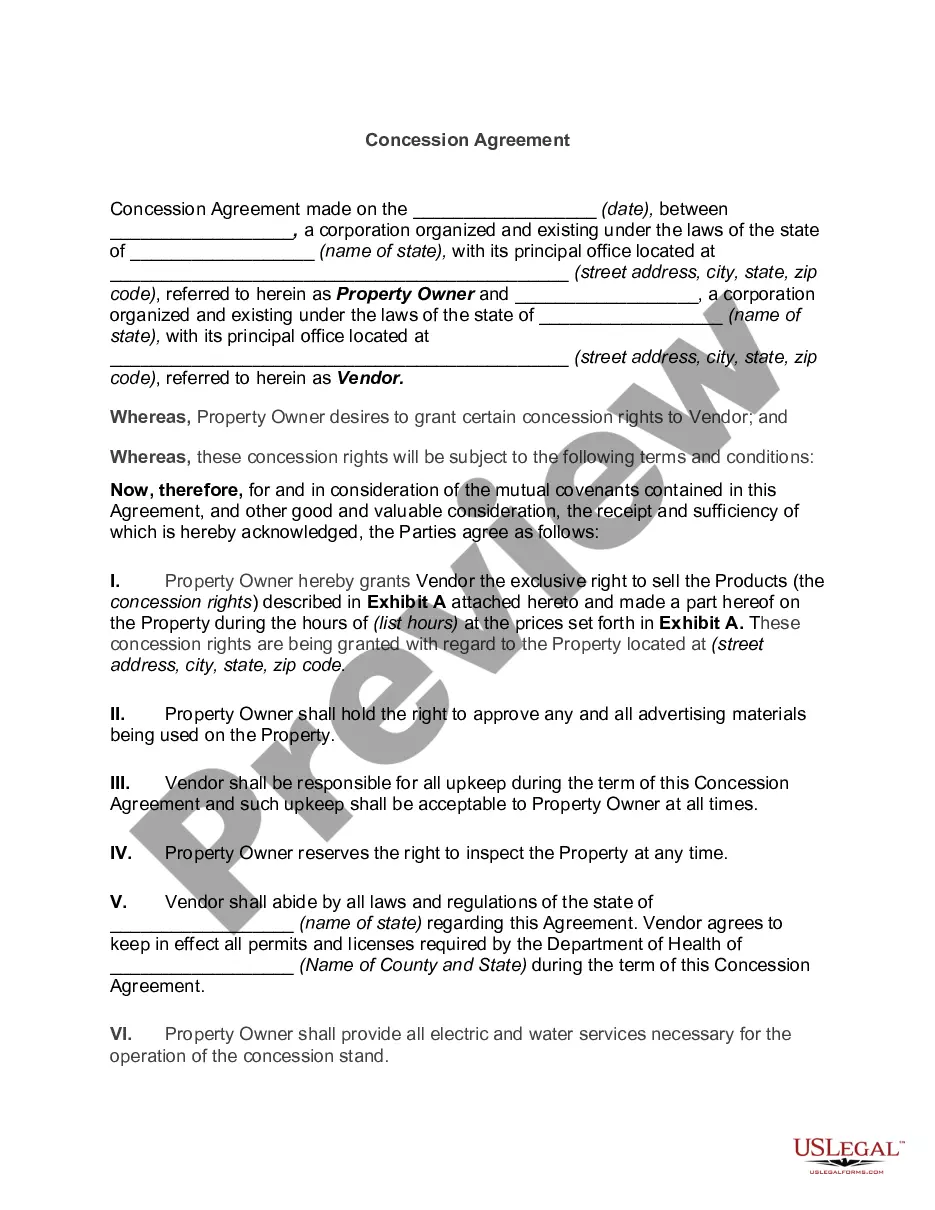
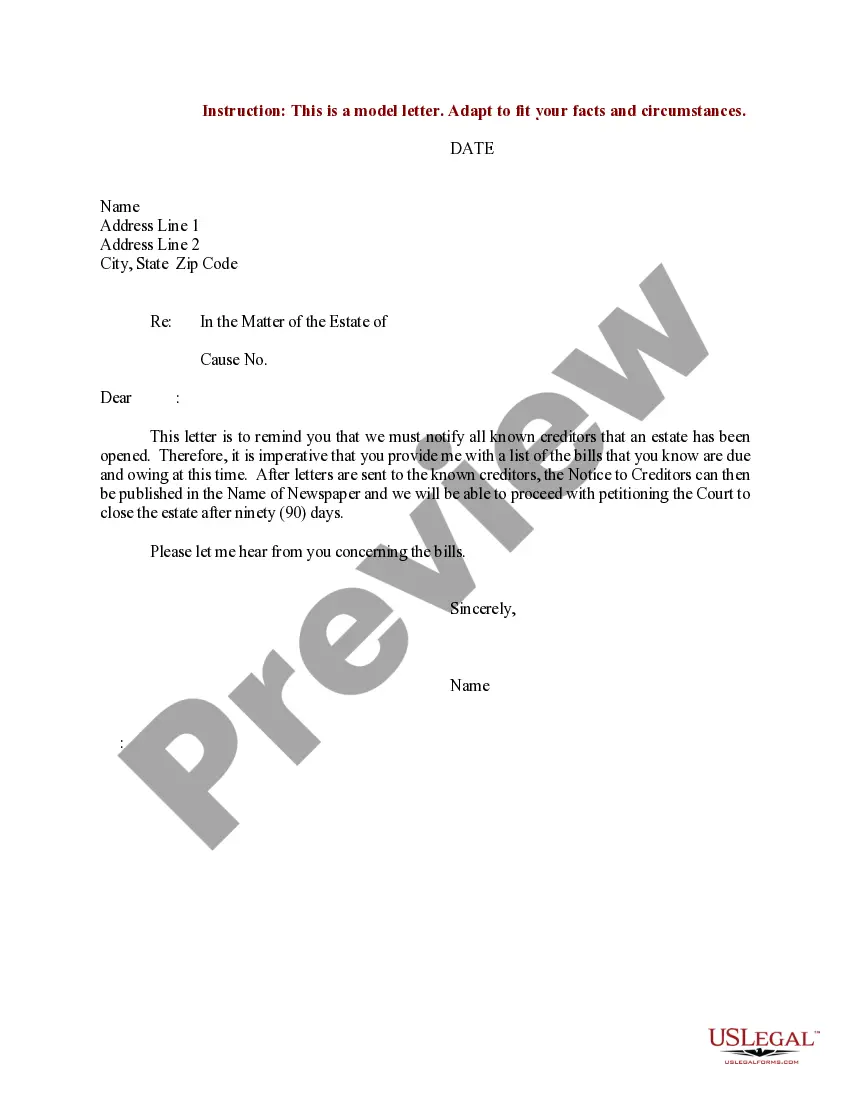
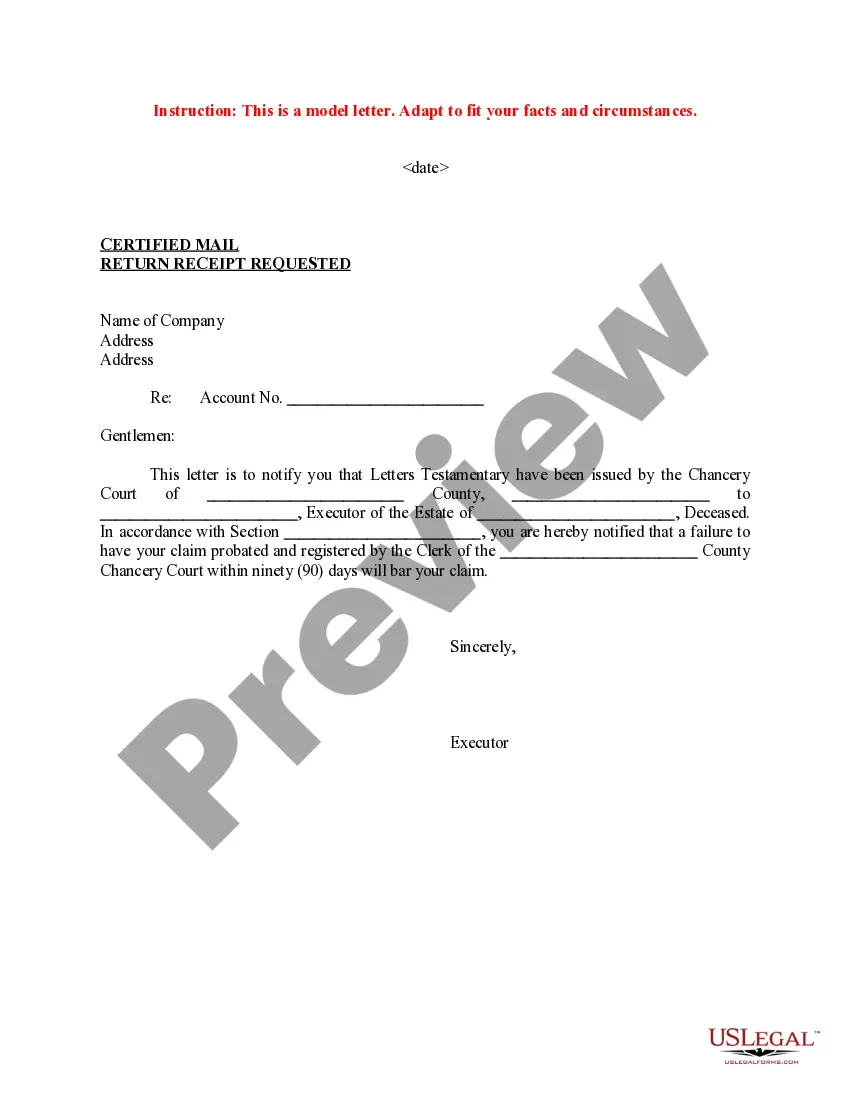
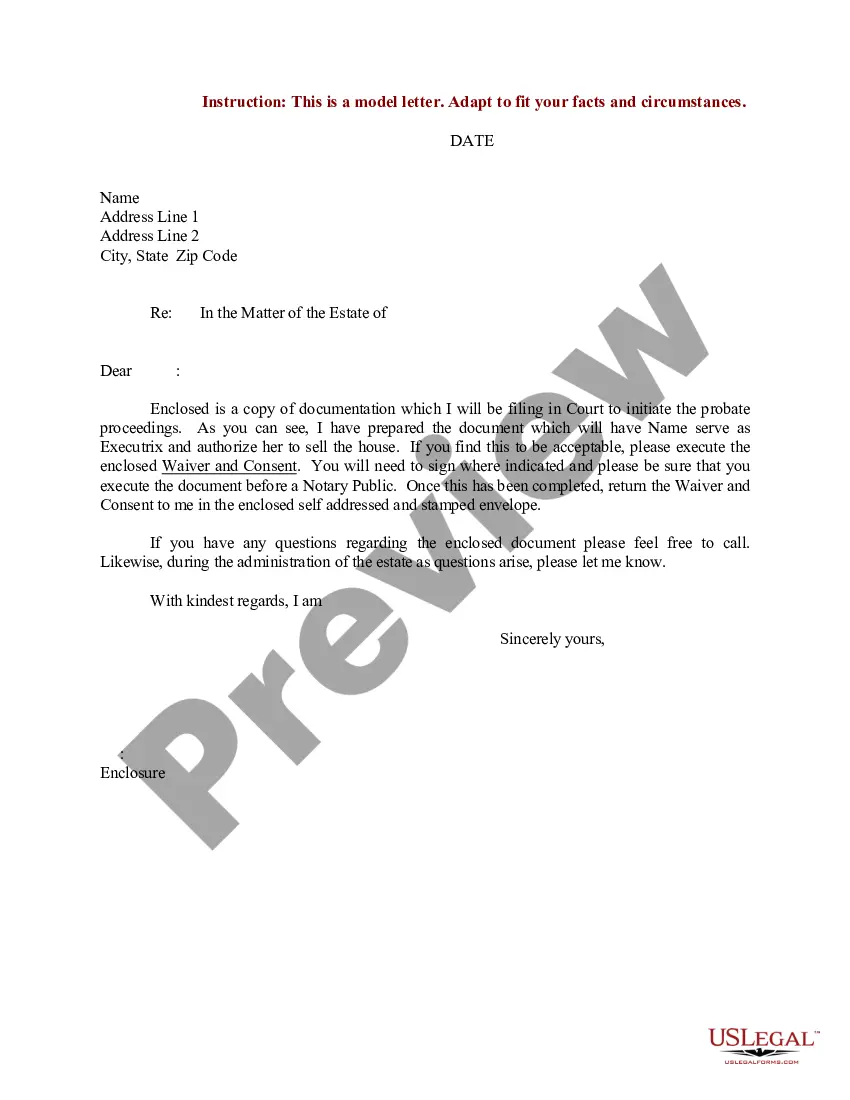
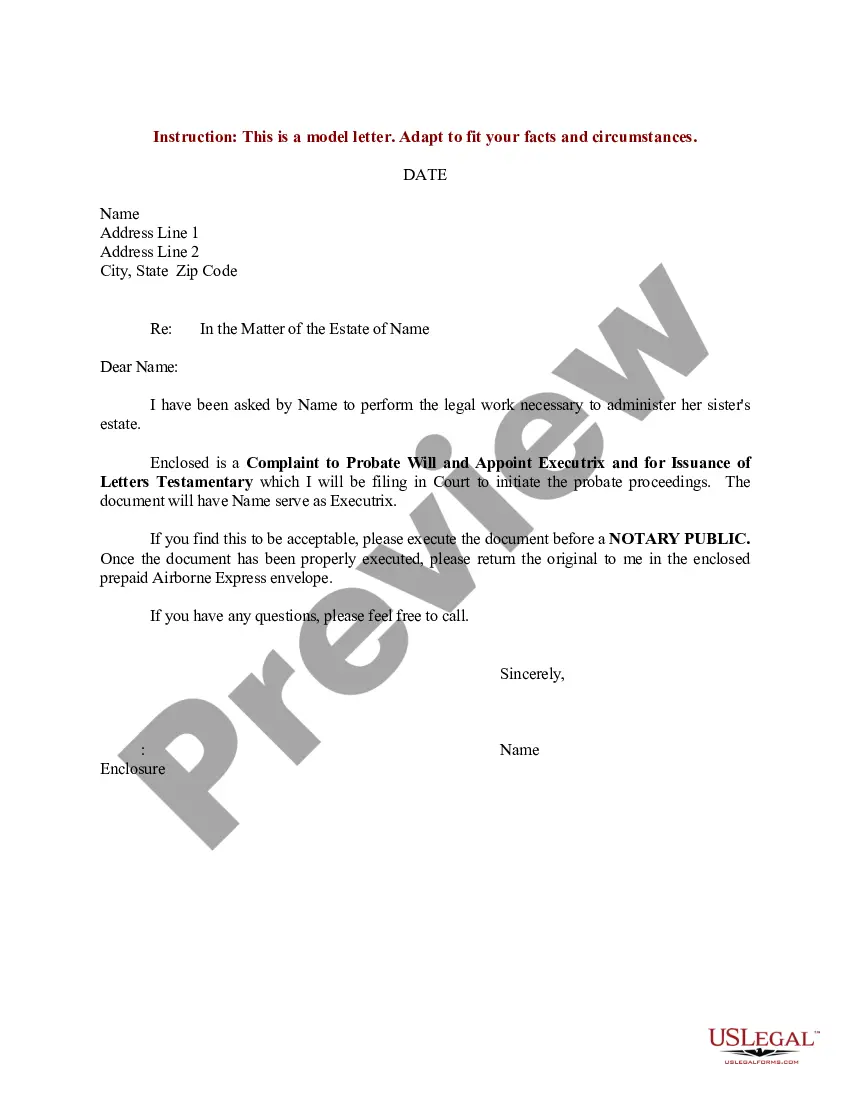
Texas Sample Letter for Creditor Notification of Estate Opening
Description
Get your form ready online
Our built-in tools help you complete, sign, share, and store your documents in one place.
Make edits, fill in missing information, and update formatting in US Legal Forms—just like you would in MS Word.
Download a copy, print it, send it by email, or mail it via USPS—whatever works best for your next step.
Sign and collect signatures with our SignNow integration. Send to multiple recipients, set reminders, and more. Go Premium to unlock E-Sign.
If this form requires notarization, complete it online through a secure video call—no need to meet a notary in person or wait for an appointment.
We protect your documents and personal data by following strict security and privacy standards.
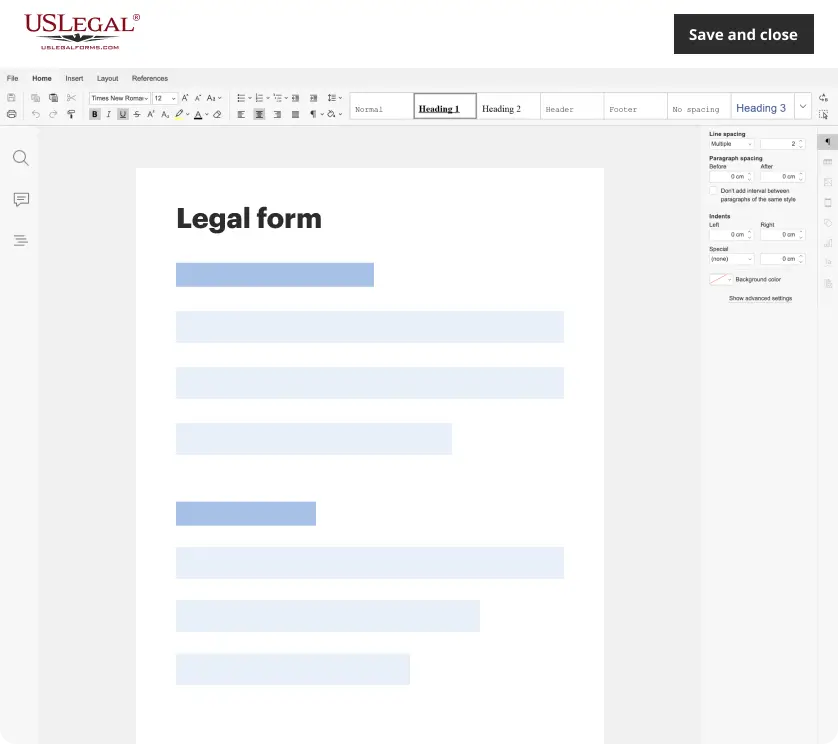
Make edits, fill in missing information, and update formatting in US Legal Forms—just like you would in MS Word.
Download a copy, print it, send it by email, or mail it via USPS—whatever works best for your next step.
Sign and collect signatures with our SignNow integration. Send to multiple recipients, set reminders, and more. Go Premium to unlock E-Sign.

If this form requires notarization, complete it online through a secure video call—no need to meet a notary in person or wait for an appointment.
We protect your documents and personal data by following strict security and privacy standards.
Looking for another form?


How to fill out Sample Letter For Creditor Notification Of Estate Opening?
It is possible to devote hours on-line searching for the legitimate file template that meets the state and federal needs you want. US Legal Forms supplies 1000s of legitimate forms that happen to be examined by specialists. It is simple to obtain or produce the Texas Sample Letter for Creditor Notification of Estate Opening from the services.
If you have a US Legal Forms accounts, it is possible to log in and click on the Down load switch. Afterward, it is possible to comprehensive, edit, produce, or indicator the Texas Sample Letter for Creditor Notification of Estate Opening. Each legitimate file template you purchase is your own permanently. To have an additional backup of any obtained form, go to the My Forms tab and click on the corresponding switch.
If you use the US Legal Forms web site the very first time, stick to the simple guidelines listed below:
- Initial, be sure that you have chosen the correct file template for the region/city of your liking. Read the form explanation to ensure you have picked out the proper form. If readily available, utilize the Review switch to search with the file template as well.
- If you would like get an additional edition of your form, utilize the Lookup industry to find the template that suits you and needs.
- When you have identified the template you desire, simply click Acquire now to proceed.
- Choose the costs prepare you desire, key in your qualifications, and register for your account on US Legal Forms.
- Total the deal. You can utilize your Visa or Mastercard or PayPal accounts to cover the legitimate form.
- Choose the formatting of your file and obtain it to the gadget.
- Make modifications to the file if required. It is possible to comprehensive, edit and indicator and produce Texas Sample Letter for Creditor Notification of Estate Opening.
Down load and produce 1000s of file templates while using US Legal Forms site, that offers the most important variety of legitimate forms. Use specialist and condition-distinct templates to handle your business or specific needs.
Form popularity
FAQ
A notice to creditors is a public notice filed by the appointed estate executor and is used to facilitate probate proceedings. The court appoints the executor named in the will, and the individual acts as the personal representative of the deceased's estate.
Your loved ones or the executor of your will should notify creditors of your death as soon as possible. To do so, they'll need to send each creditor a copy of your death certificate. Creditors generally pause efforts to collect on unpaid debts while your estate is being settled.
General Information: A creditor of an estate is a person or entity (business or organization) to whom the decedent owed money. ?Decedent? is the term used to refer to the person who died.
A notice will contain the name of the person who passed away, the deadline for creditors to make claims, and the address they should contact. After the deadline has passed, the executor can begin distributing assets, and so creditors may lose out.
It's not a legal requirement to place a deceased estates notice, but it is advisable, and most solicitors place them as a matter of course (in a 2016 Gazette survey, 80 per cent of probate professionals always placed one if acting as professional executor).
Unfortunately, ?(Detail Deceased's name) ?passed away on ?(Detail Date)?. I enclose a copy of their death certificate. They didn't leave behind any assets and there is no money to pay what they owe. Please consider writing off this debt because there is no prospect of you ever recovering any money towards it.
Notice to Creditors of the Estate: Within two months after your qualification, you must mail a registered or certified letter, return receipt requested, to each secured creditor of the estate. A secured creditor is one who holds a claim secured by a deed of trust, a mortgage, or some other lien upon property.