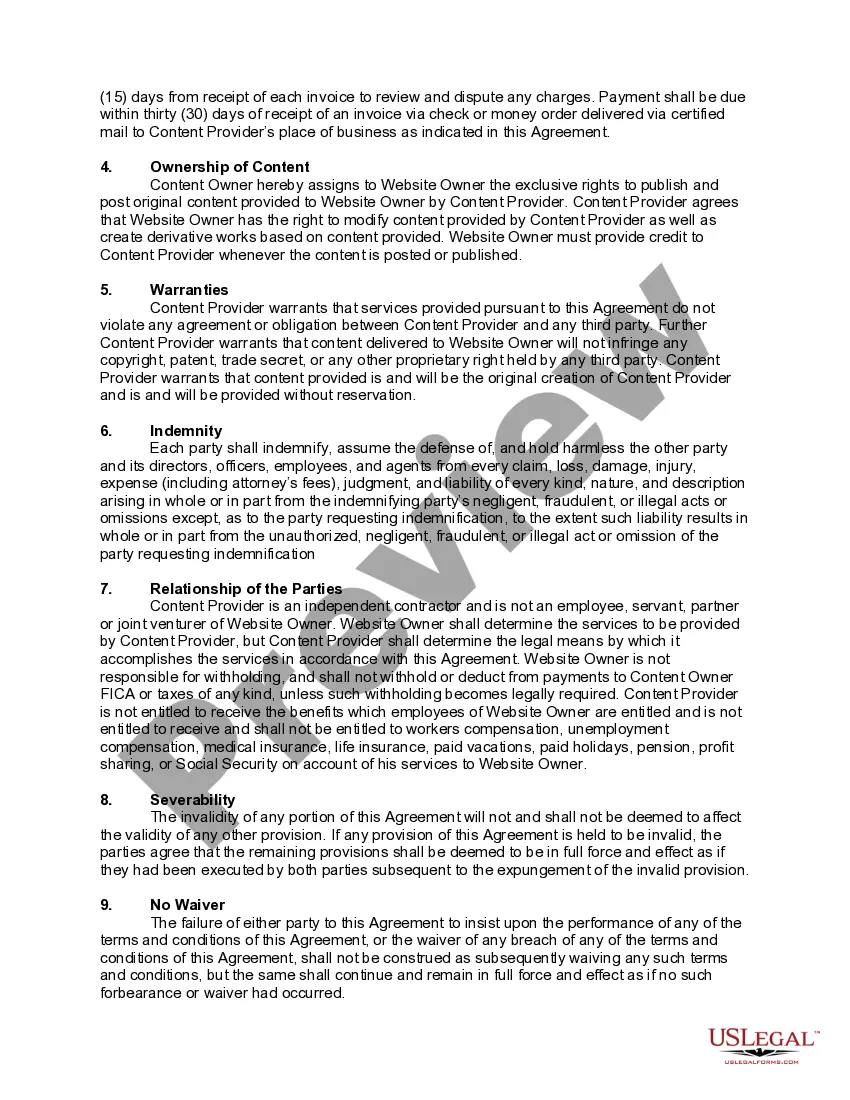
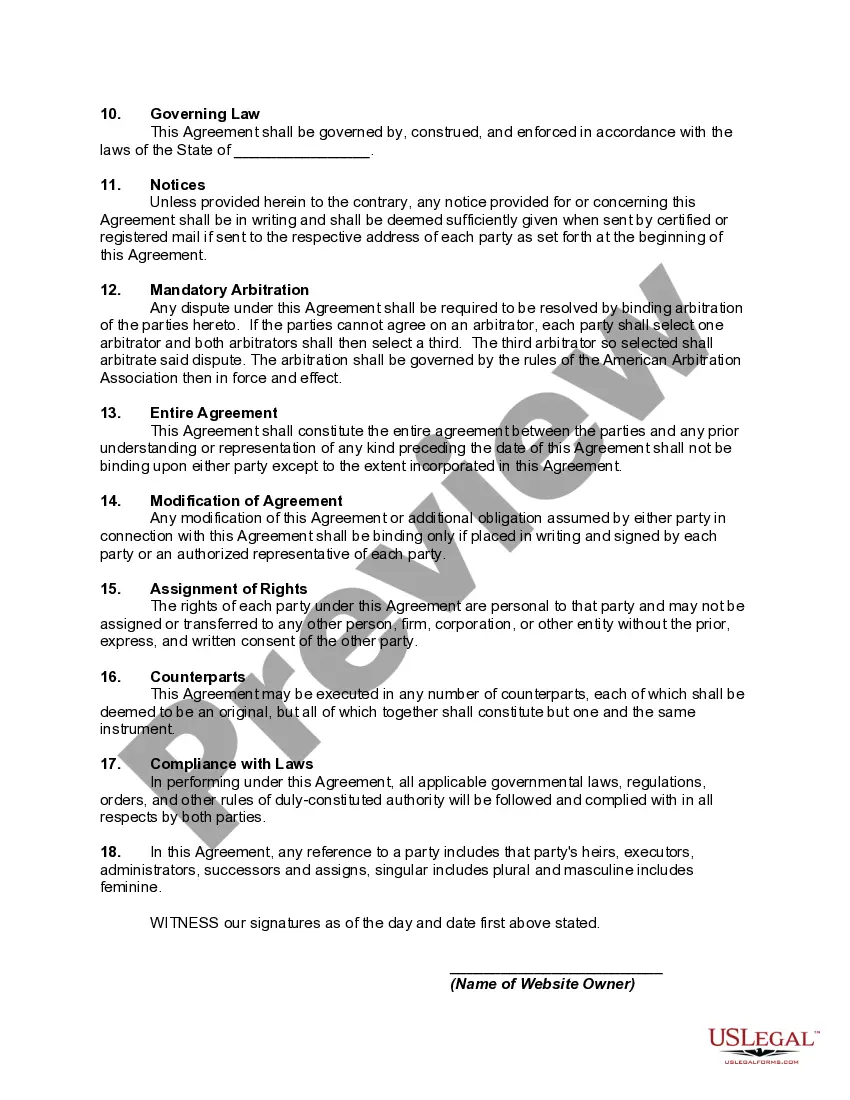
Texas Web Content Partnership Agreement
Description
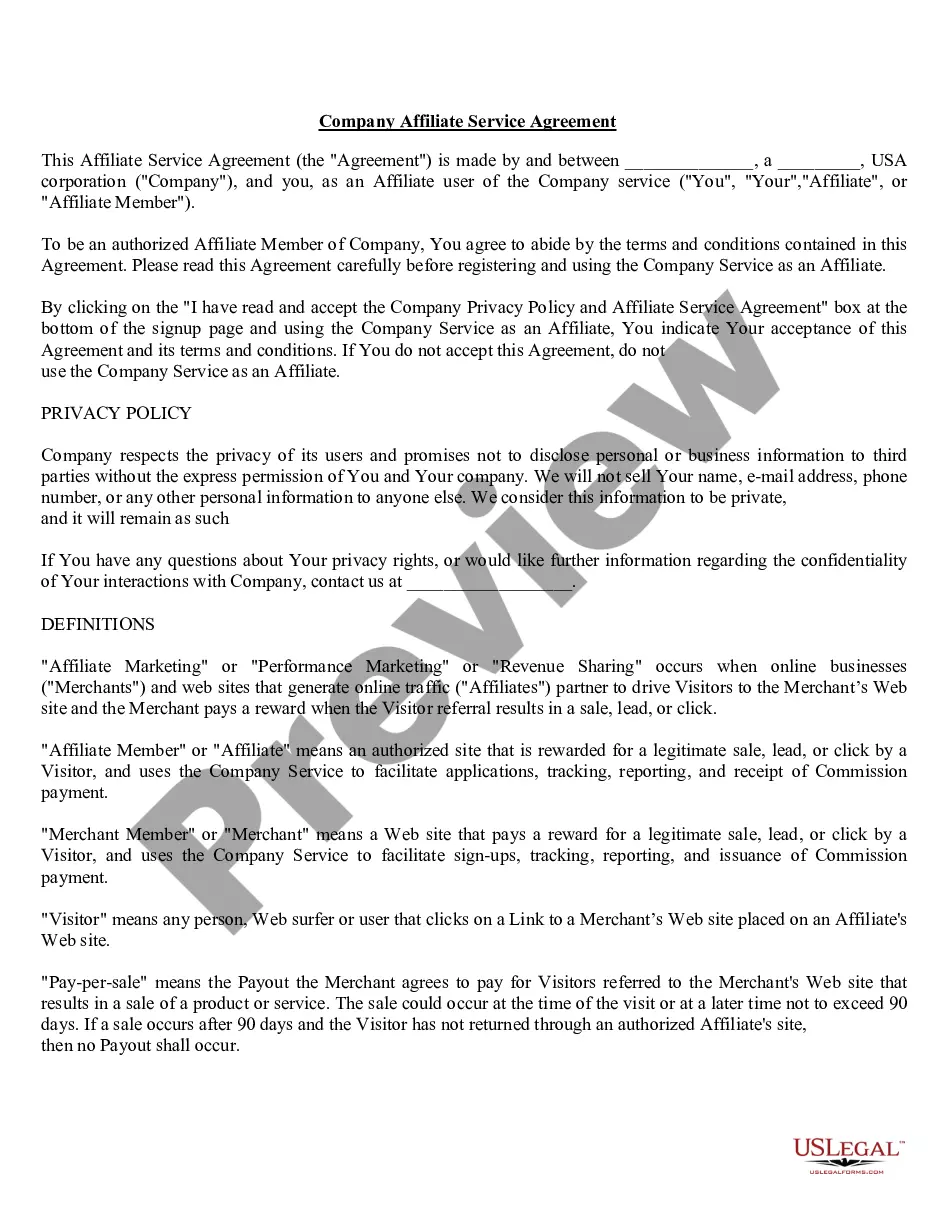
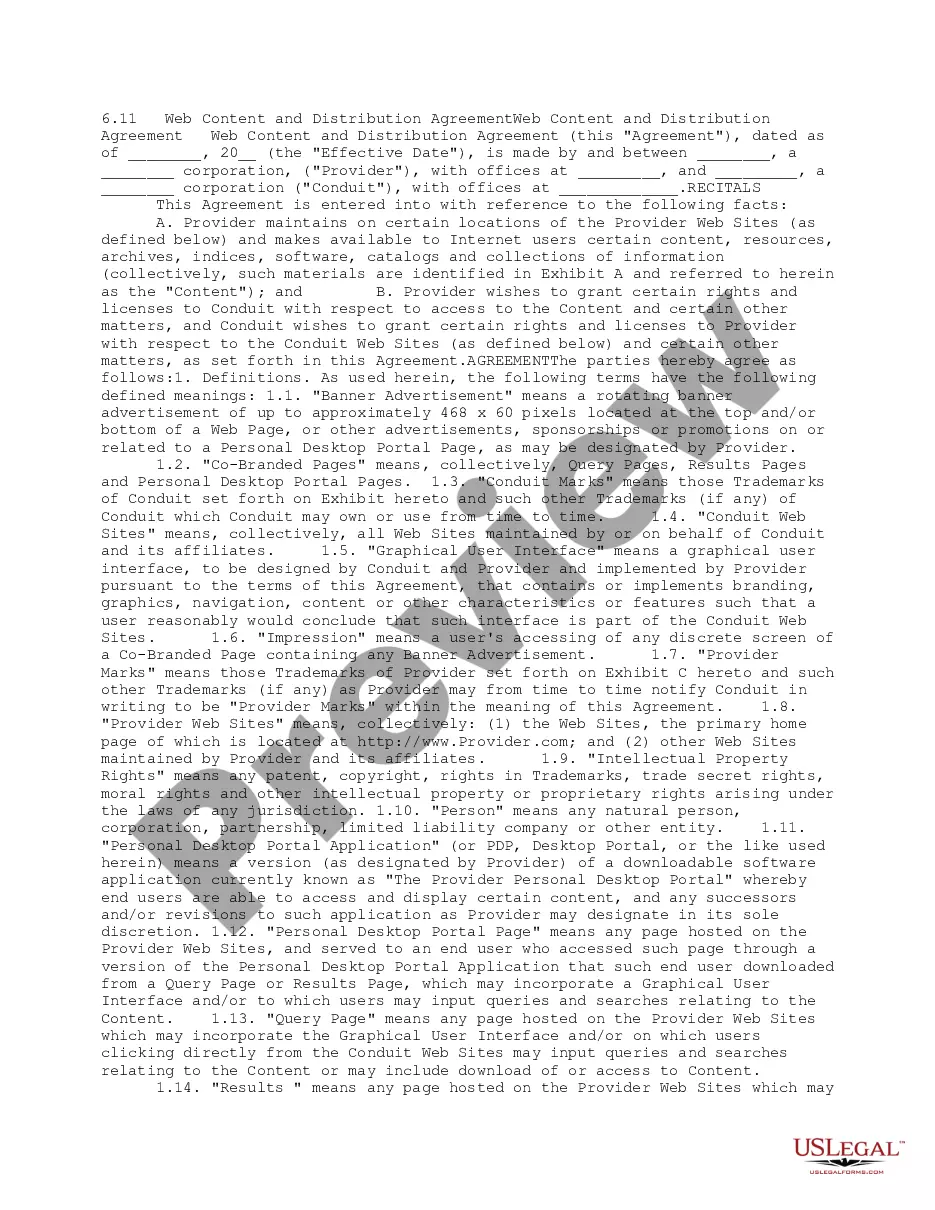
Get your form ready online
Our built-in tools help you complete, sign, share, and store your documents in one place.
Make edits, fill in missing information, and update formatting in US Legal Forms—just like you would in MS Word.
Download a copy, print it, send it by email, or mail it via USPS—whatever works best for your next step.
Sign and collect signatures with our SignNow integration. Send to multiple recipients, set reminders, and more. Go Premium to unlock E-Sign.
If this form requires notarization, complete it online through a secure video call—no need to meet a notary in person or wait for an appointment.
We protect your documents and personal data by following strict security and privacy standards.

Make edits, fill in missing information, and update formatting in US Legal Forms—just like you would in MS Word.

Download a copy, print it, send it by email, or mail it via USPS—whatever works best for your next step.

Sign and collect signatures with our SignNow integration. Send to multiple recipients, set reminders, and more. Go Premium to unlock E-Sign.

If this form requires notarization, complete it online through a secure video call—no need to meet a notary in person or wait for an appointment.

We protect your documents and personal data by following strict security and privacy standards.
Looking for another form?

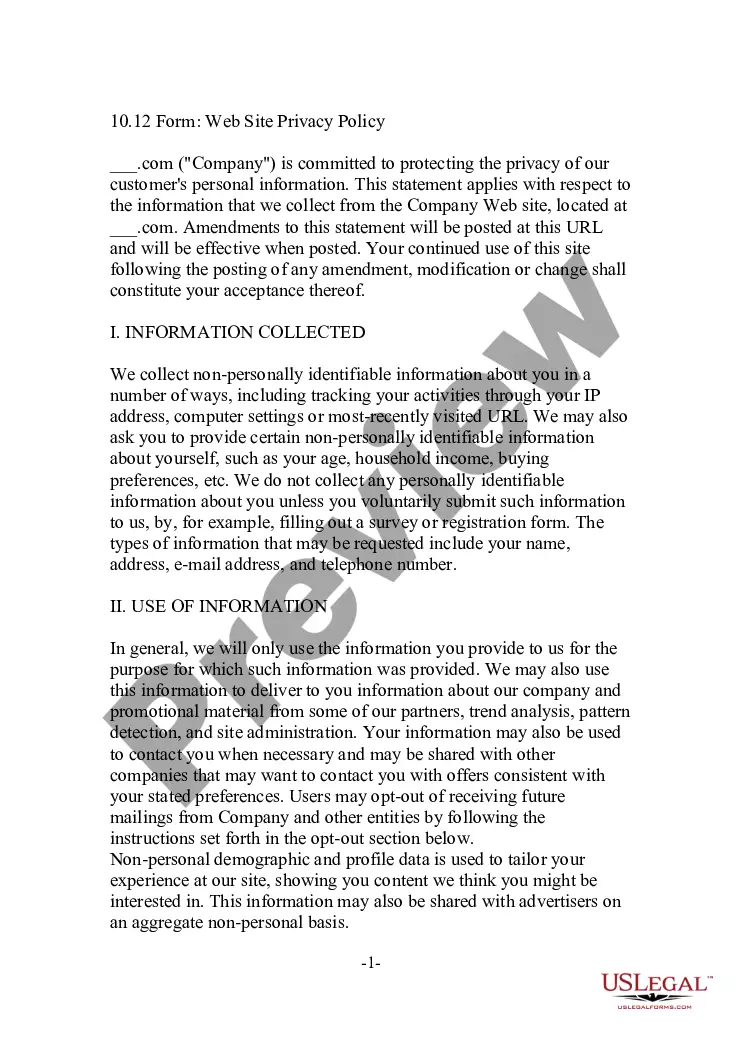
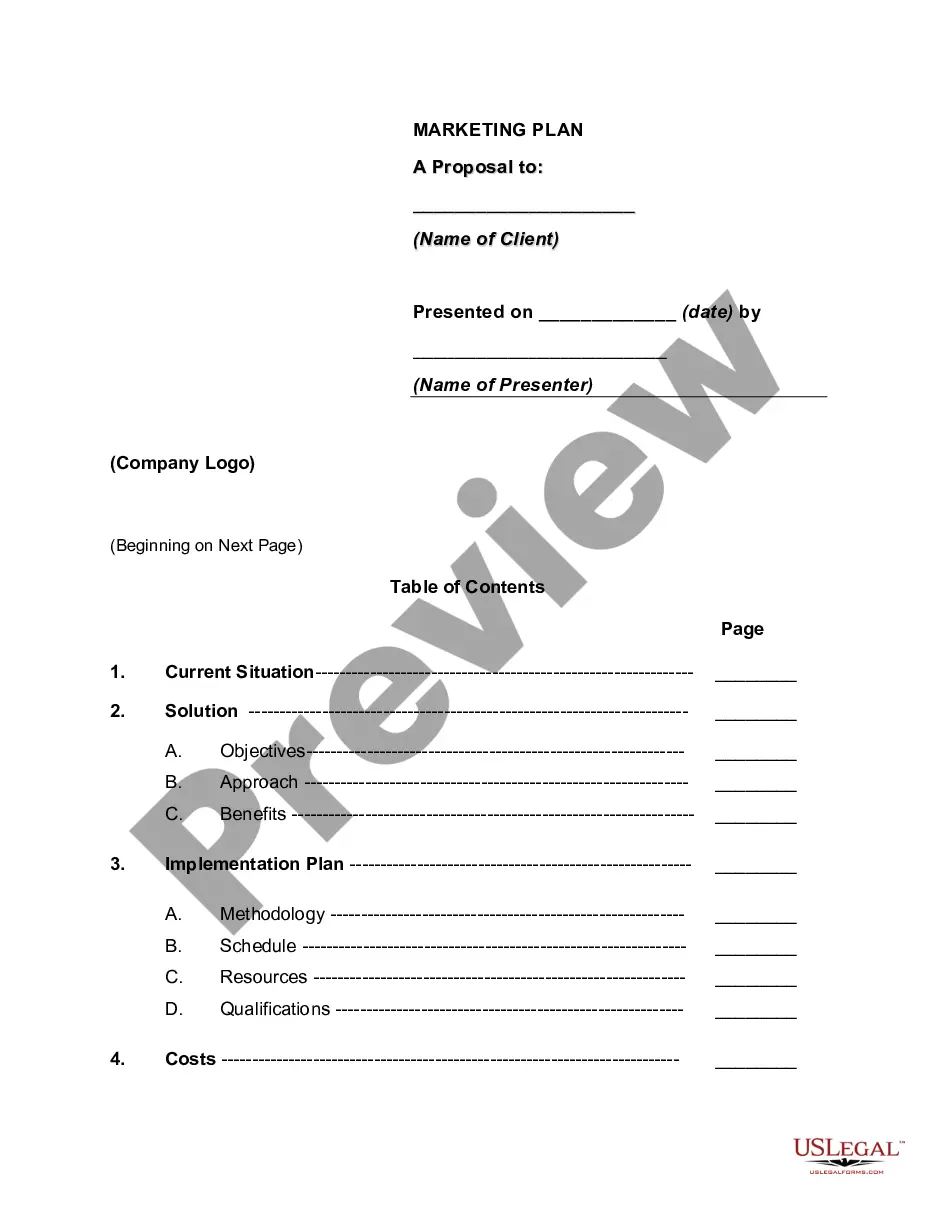


How to fill out Web Content Partnership Agreement?
You can allocate time online investigating the legal document template that matches the state and federal requirements you will require.
US Legal Forms offers a vast array of legal forms that are reviewed by experts.
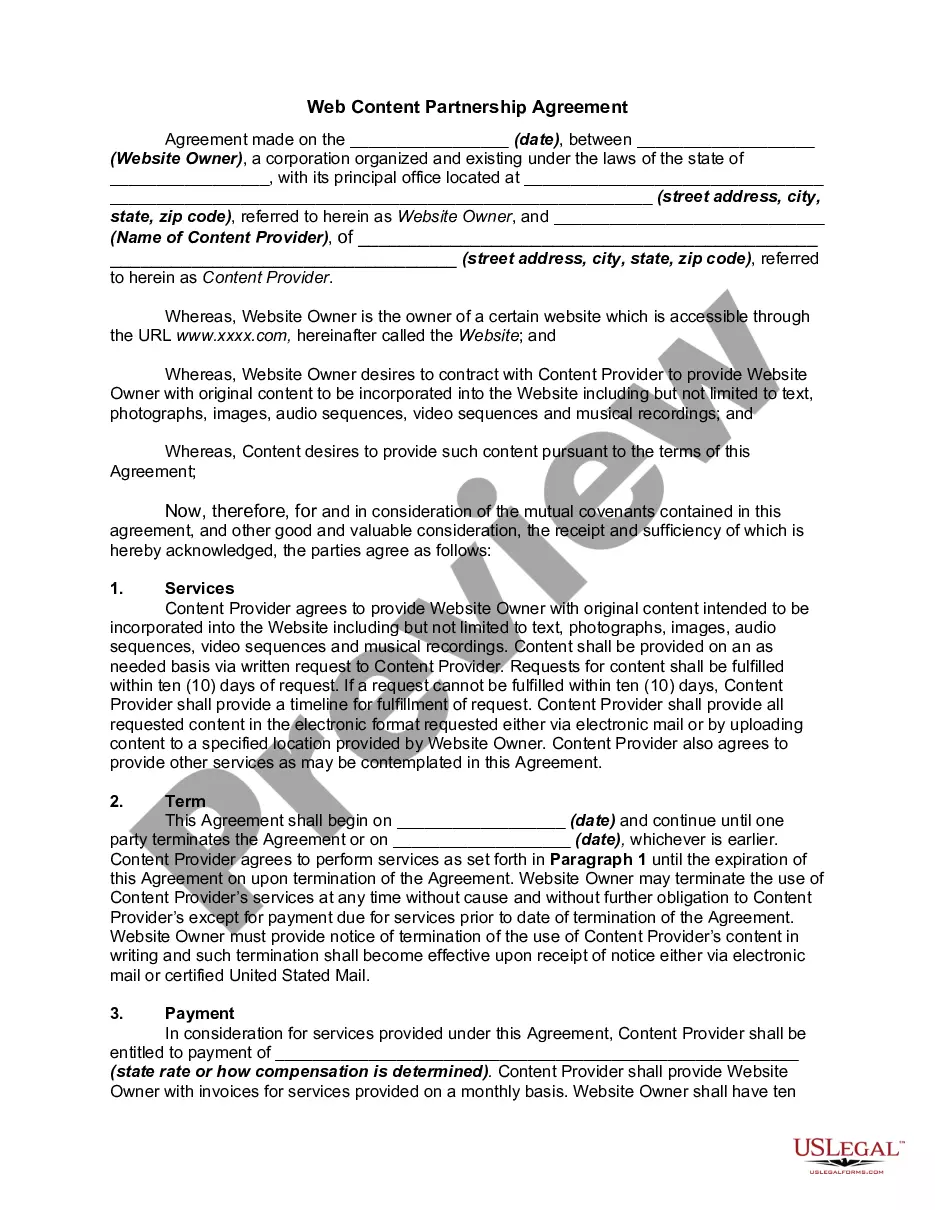
You can effortlessly download or print the Texas Web Content Partnership Agreement from the service.
Review the form details to confirm you have chosen the right template. If available, utilize the Review button to examine the document template as well.
- If you already have a US Legal Forms account, you can sign in and click the Obtain button.
- Afterward, you can complete, edit, print, or sign the Texas Web Content Partnership Agreement.
- Every legal document template you obtain is yours permanently.
- To get an additional copy of a purchased form, go to the My documents tab and click the corresponding button.
- If you're using the US Legal Forms website for the first time, follow the simple directions below.
- First, ensure you have selected the correct document template for the county/city of your choice.
Form popularity
FAQ
The four different types of partnerships are general partnerships, limited partnerships, limited liability partnerships, and joint ventures. Each varies significantly in terms of liability exposure and operational flexibility. When drafting a Texas Web Content Partnership Agreement, it's vital to choose the kind of partnership that matches your business needs and risk tolerance.
The content of a partnership agreement typically includes the nature of the business, partner contributions, management roles, taxation details, and procedures for dissolution. By outlining these points in a Texas Web Content Partnership Agreement, you ensure transparency in operations and responsibilities. This agreement serves as a critical reference to guide the partnership.
The four stages of developing a partnership involve identification, negotiation, formation, and ongoing management. First, you identify potential partners who align with your business goals. Next, you negotiate terms and finalize the agreement, ideally through a Texas Web Content Partnership Agreement that outlines all aspects. Ongoing management ensures the partnership evolves and remains productive.
A comprehensive partnership agreement should include the names and responsibilities of each partner, profit-sharing ratios, mechanisms for resolving disputes, and procedures for adding or removing partners. It’s essential to address these areas in your Texas Web Content Partnership Agreement to foster collaboration and reduce conflicts. Clarity in these terms can greatly enhance your partnership's effectiveness.
Key partnerships can be categorized into equity partnerships, joint ventures, strategic alliances, and supplier partnerships. Each type serves a different purpose and offers unique benefits. When structuring any key partnership, a Texas Web Content Partnership Agreement can ensure all parties are aligned and expectations are clearly defined.
The four types of partnerships are general partnerships, limited partnerships, limited liability partnerships, and professional partnerships. Each type varies in terms of liability, management structure, and regulatory requirements. Identifying which type best suits your business needs is crucial, and a Texas Web Content Partnership Agreement can help outline the specifics.
The four key elements of a partnership are mutual consent, sharing of profits and losses, joint management, and limited liability. Each partner must agree to the terms and actively participate in managing the business. A Texas Web Content Partnership Agreement can clearly define these elements, ensuring each partner is aware of their roles and responsibilities.
A partnership agreement typically includes the names of the partners, the purpose of the partnership, the duration of the agreement, and the terms of profit and loss distributions. Additionally, the agreement should outline decision-making processes and exit strategies. By establishing these components in your Texas Web Content Partnership Agreement, you can minimize misunderstandings and lay a solid foundation for your partnership.
In Texas, partners should follow specific rules defined by the Texas Business Organizations Code. These rules highlight that a partnership requires at least two individuals and emphasizes fiduciary duties among partners. Each partner shares responsibility for management, profits, and liabilities unless stated otherwise in a Texas Web Content Partnership Agreement. It’s crucial to understand these guidelines to create a functioning partnership.
A partnership agreement is not legally required, but it is highly beneficial for establishing clear expectations and guidelines. Without it, ambiguity can lead to disputes and financial losses, as partners may not agree on important decisions. Creating a Texas Web Content Partnership Agreement is a proactive step that can safeguard your partnership and clarify each partner's role.