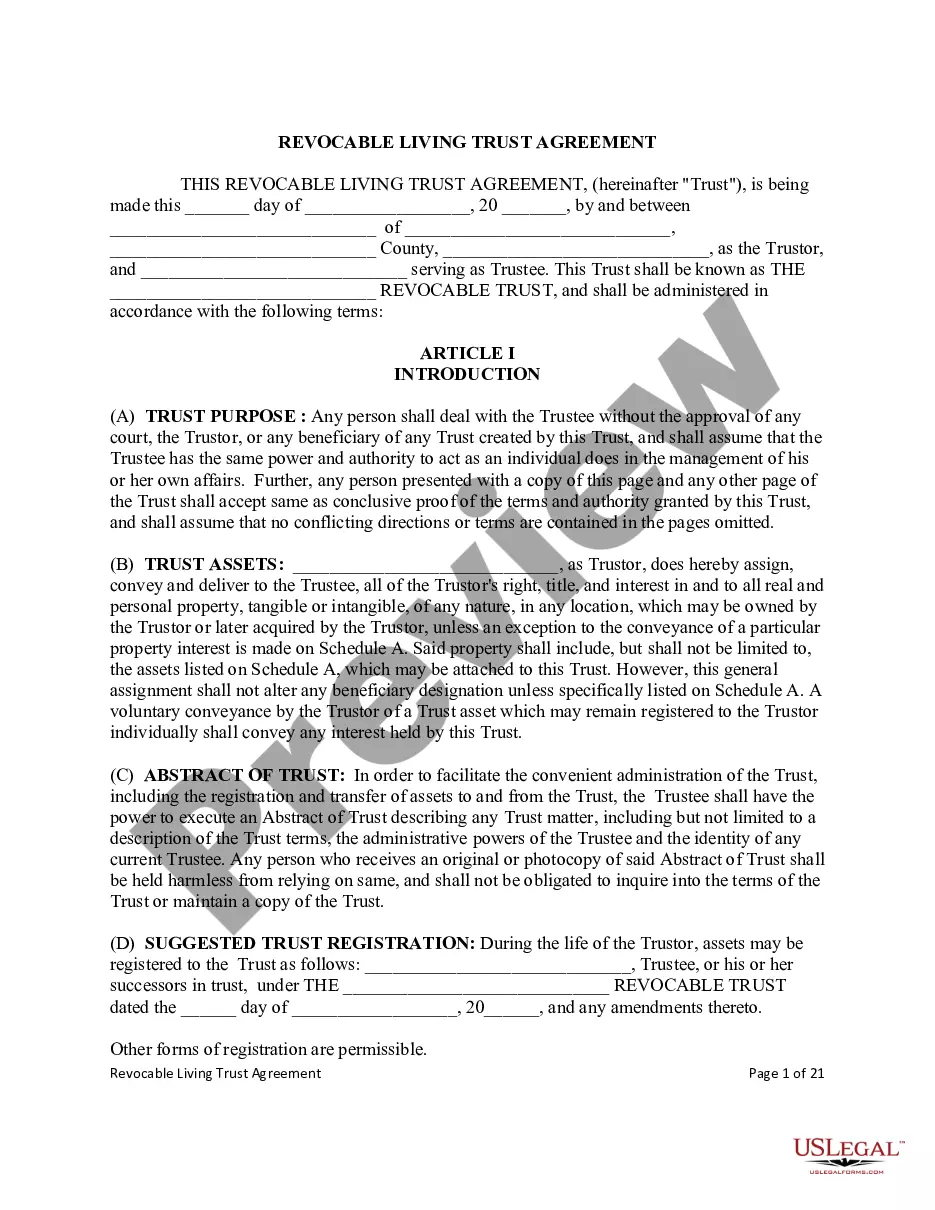
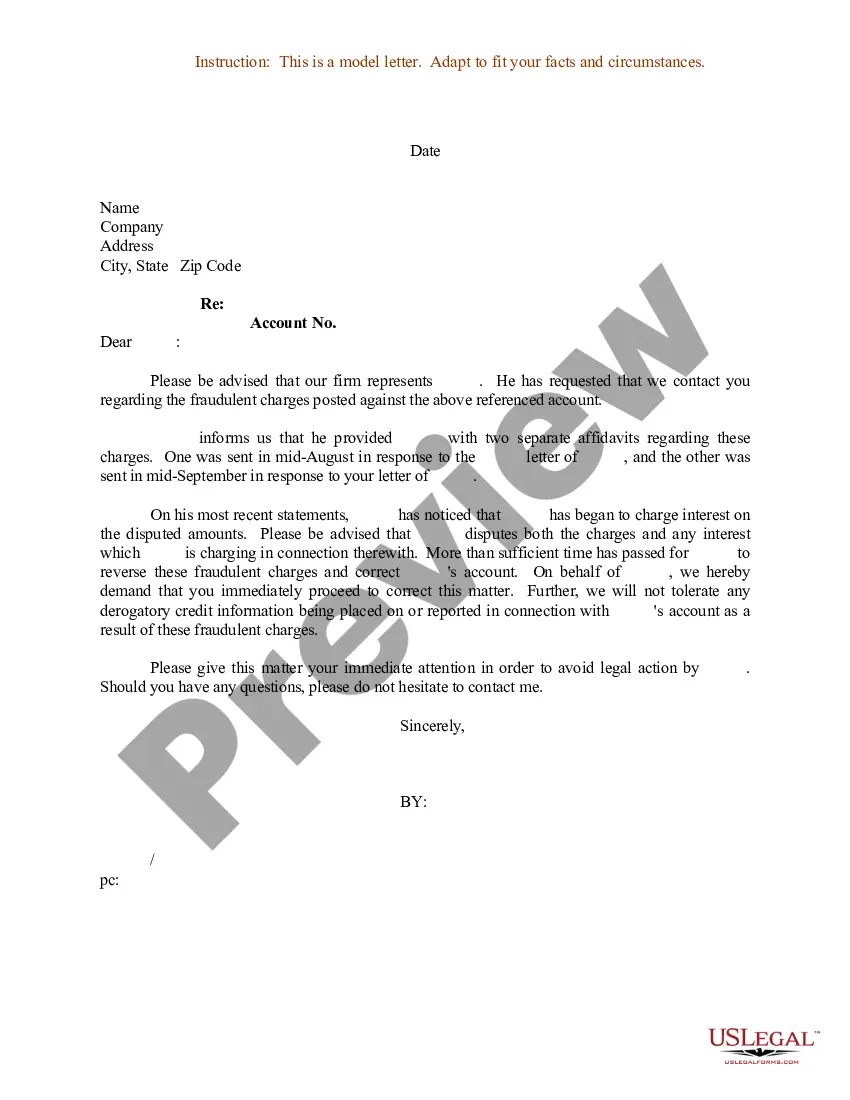
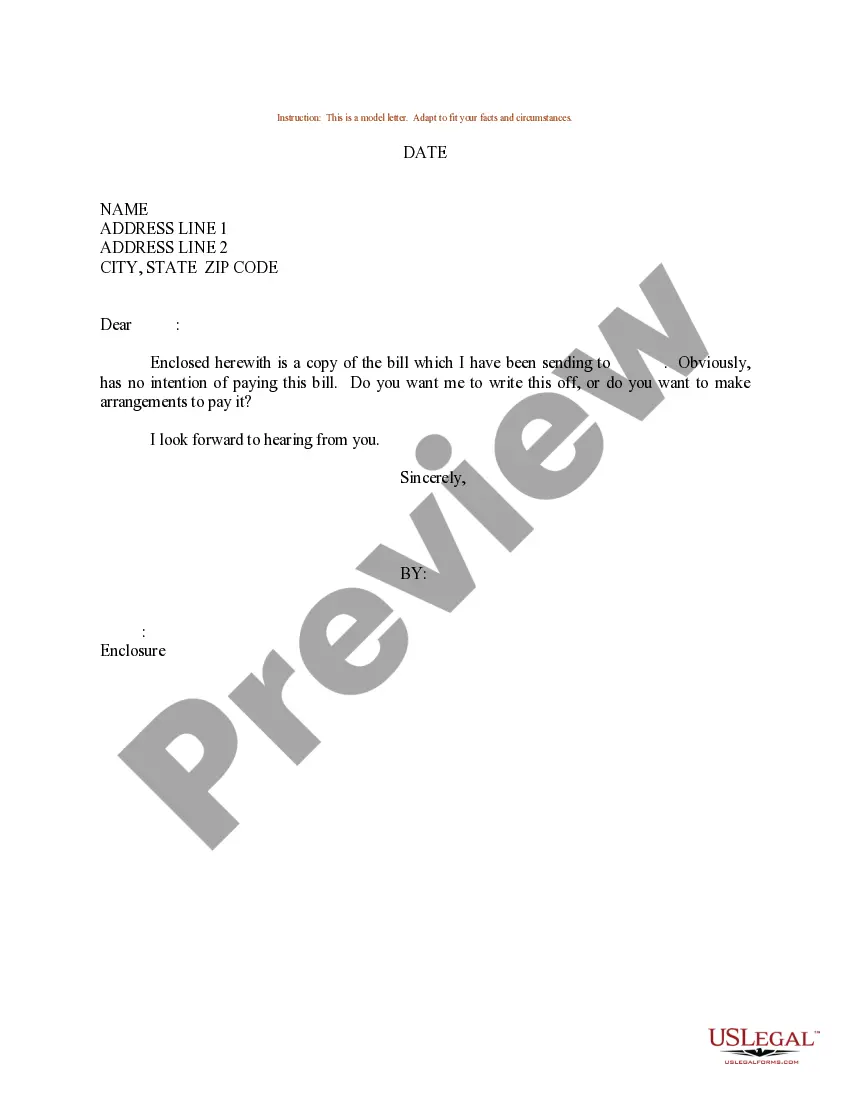
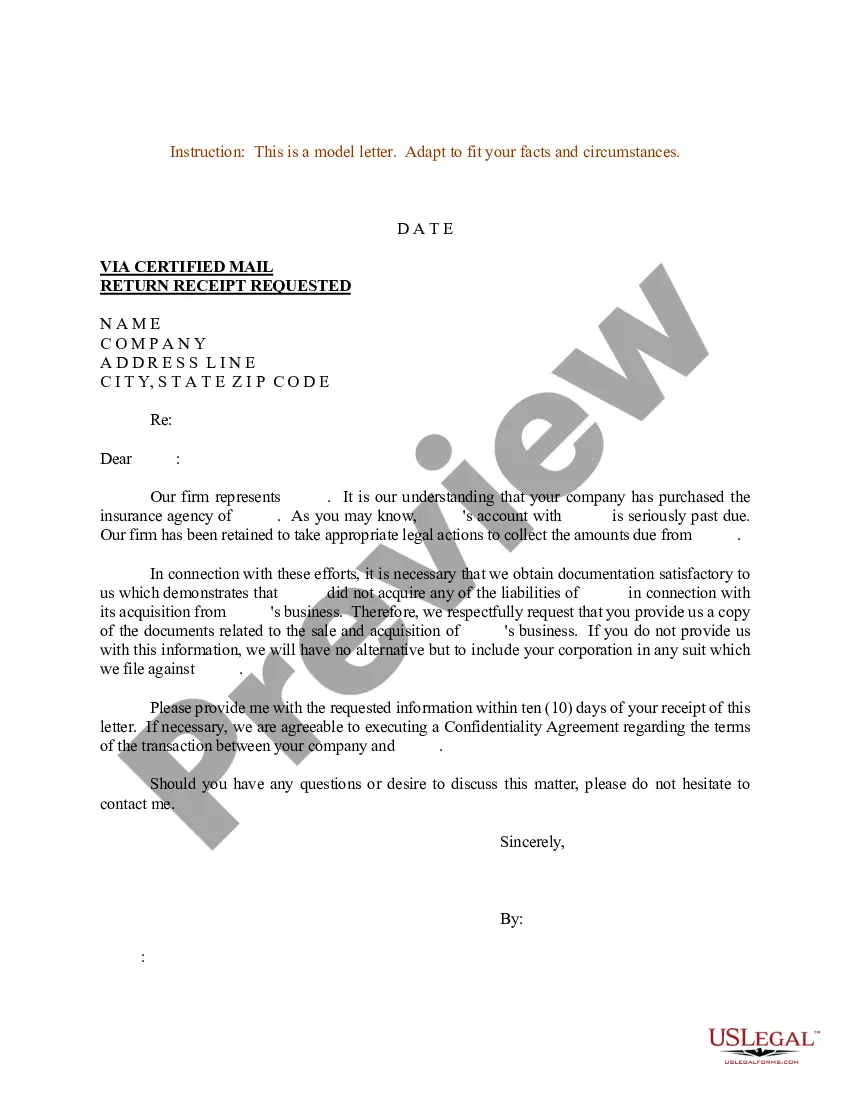
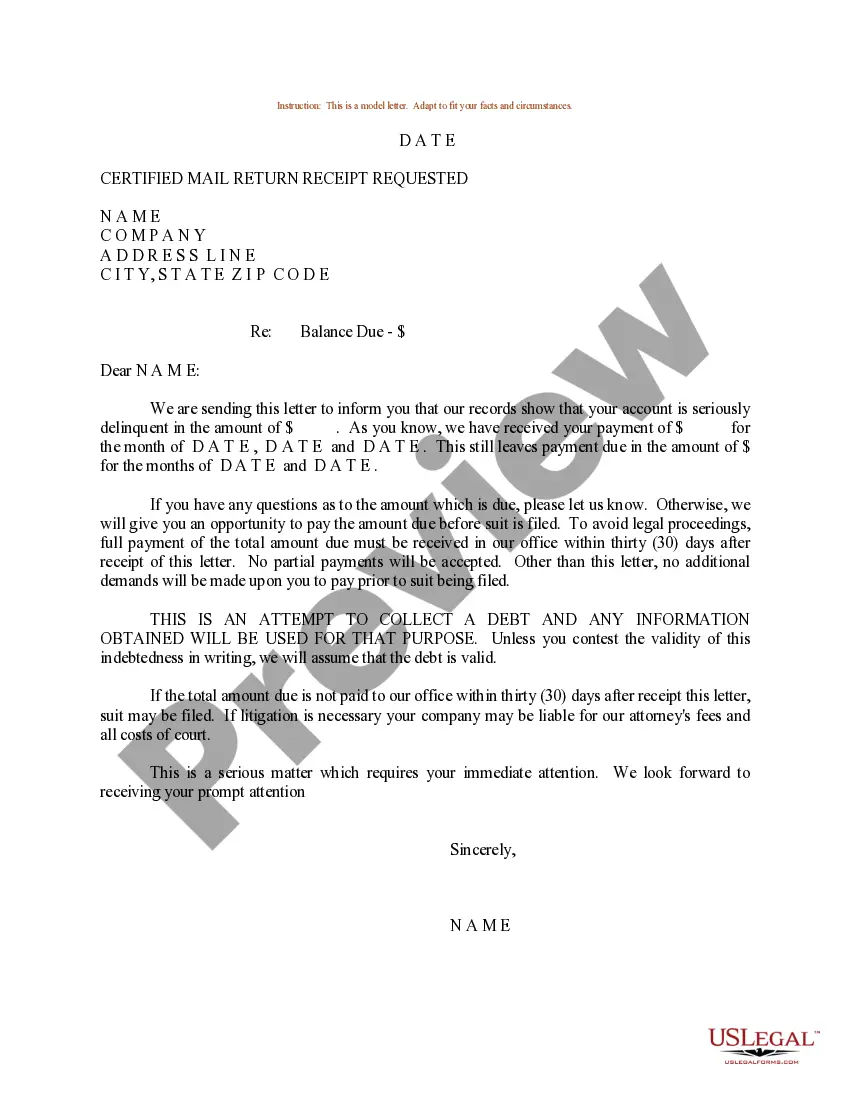
Texas Sample Letter for Fraudulent Charges against Client's Account
Description
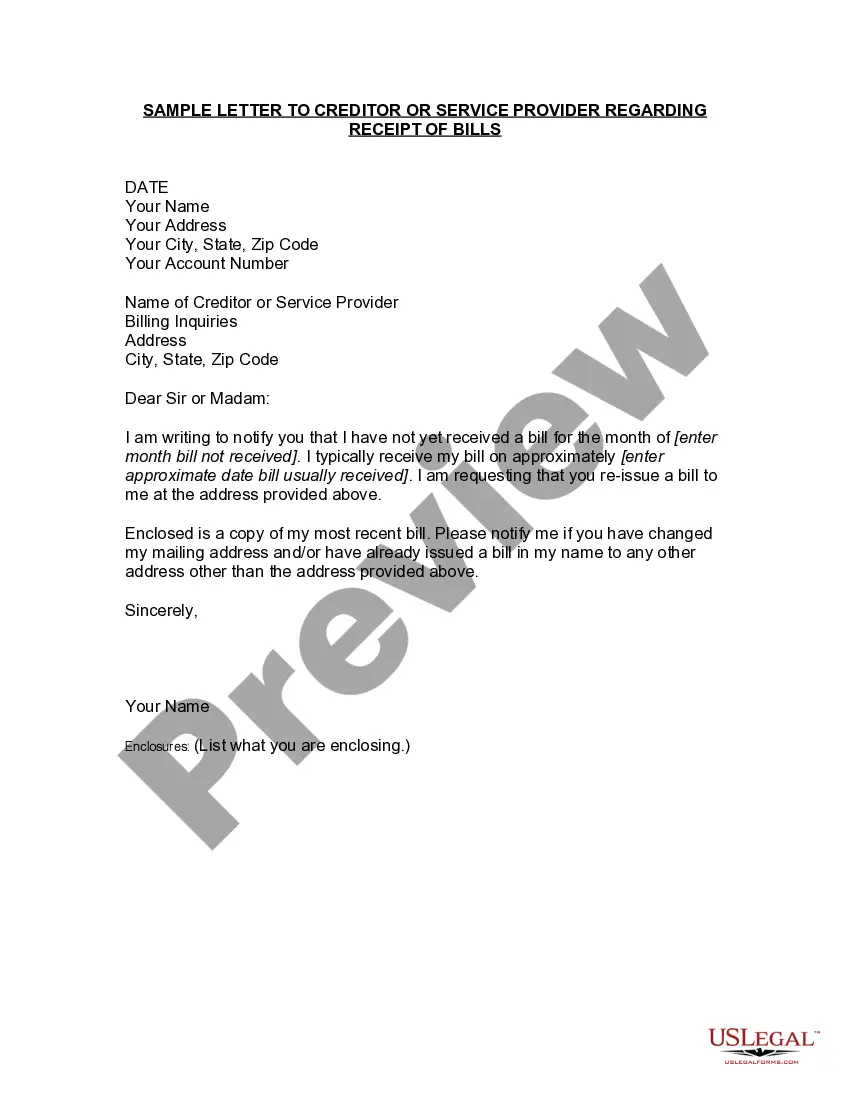
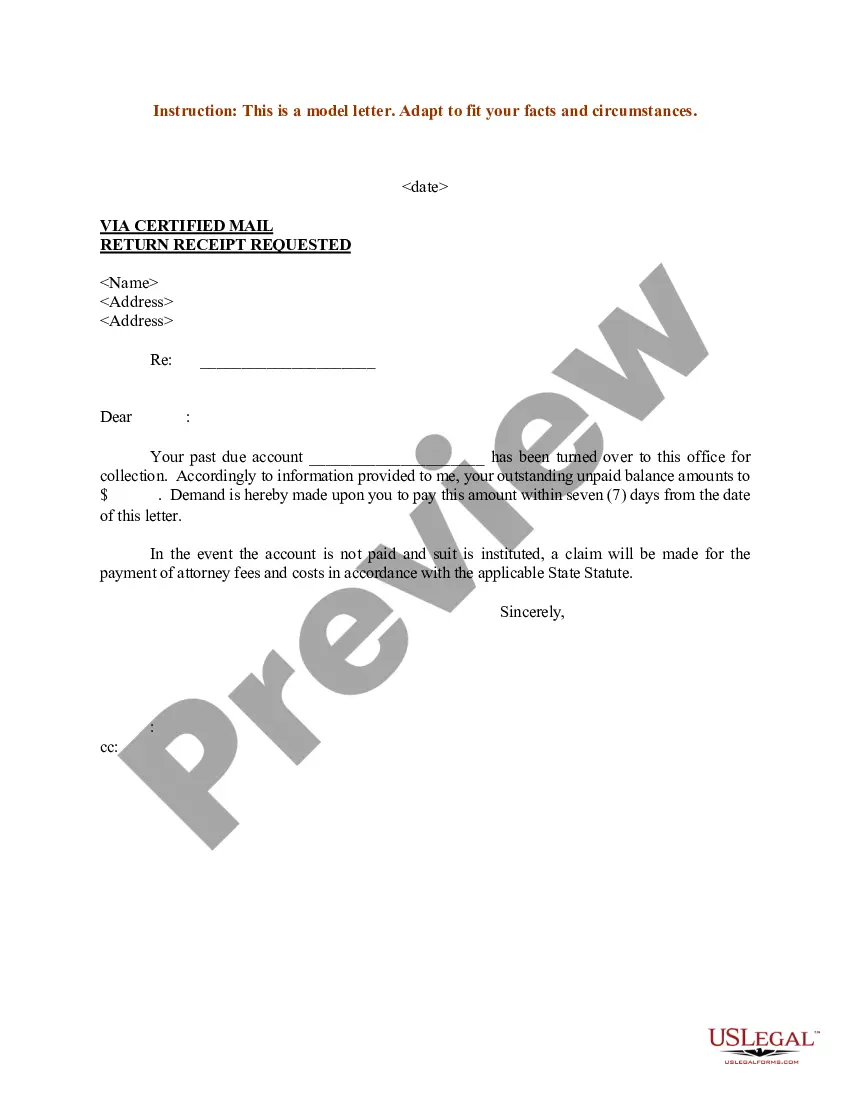
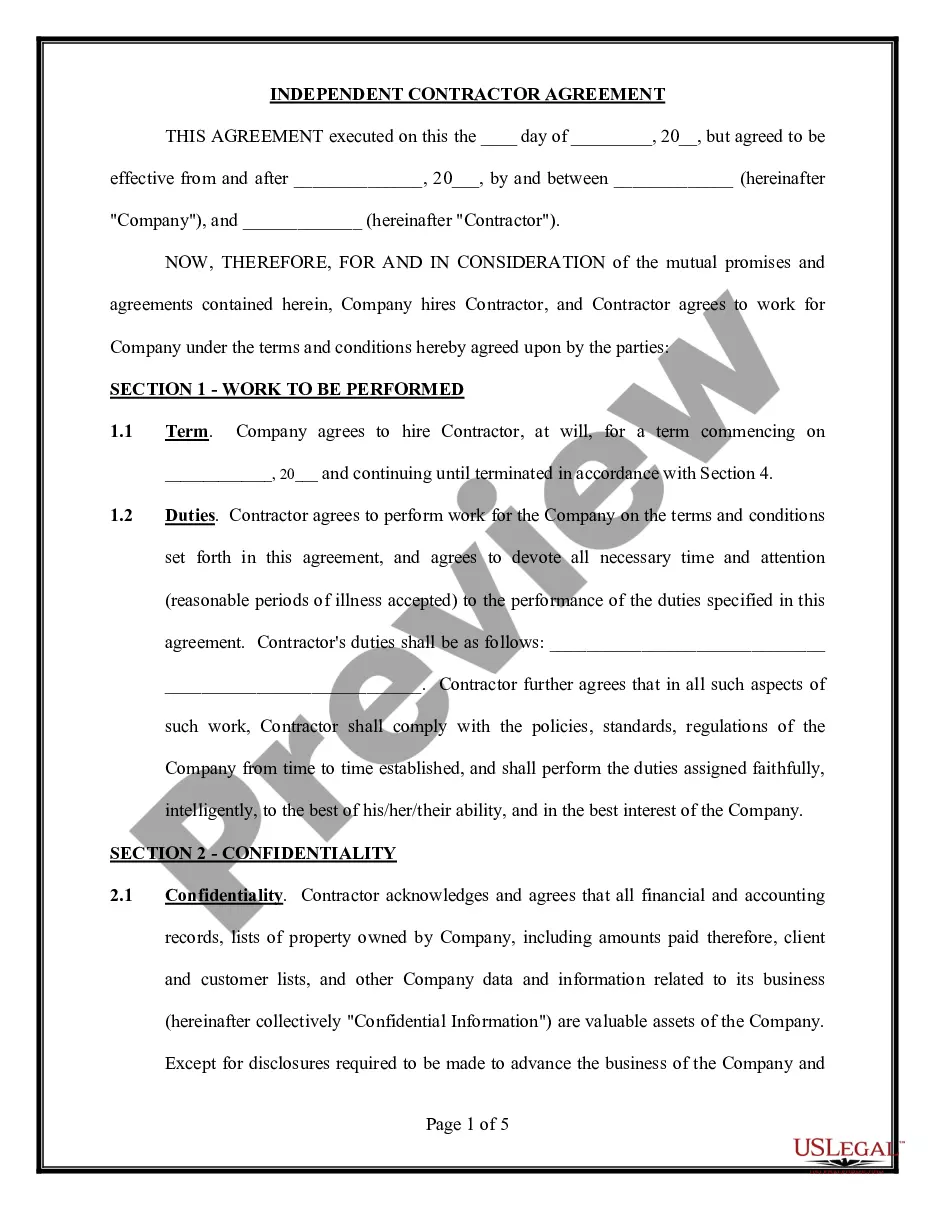
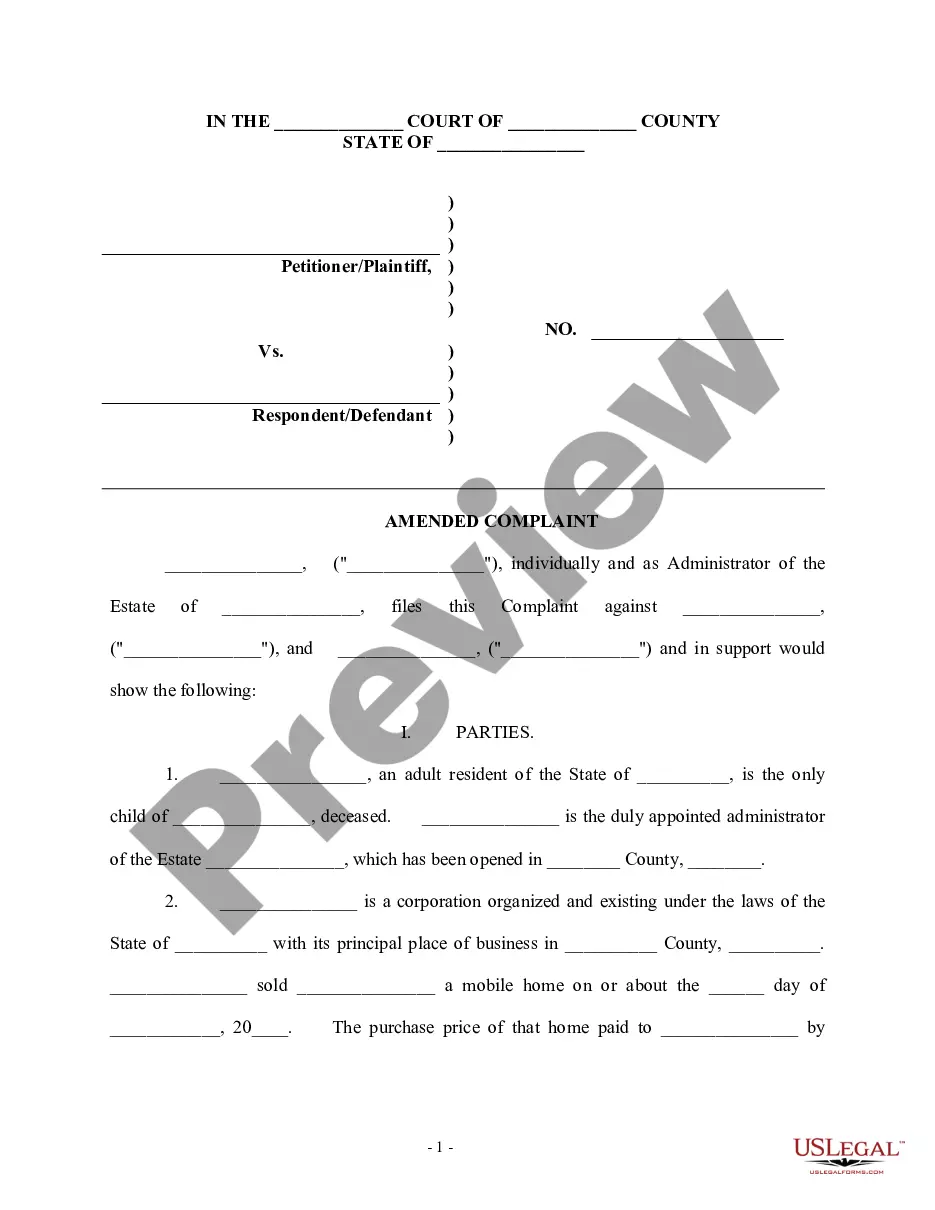

How to fill out Sample Letter For Fraudulent Charges Against Client's Account?
US Legal Forms - one of the most significant libraries of legal kinds in the United States - offers a wide array of legal file templates you are able to obtain or print. Making use of the internet site, you can find 1000s of kinds for company and individual functions, categorized by classes, claims, or keywords and phrases.You will discover the latest types of kinds just like the Texas Sample Letter for Fraudulent Charges against Client's Account within minutes.
If you already have a membership, log in and obtain Texas Sample Letter for Fraudulent Charges against Client's Account from your US Legal Forms local library. The Acquire option can look on each and every kind you perspective. You have access to all previously downloaded kinds within the My Forms tab of your account.
If you wish to use US Legal Forms the very first time, listed below are straightforward instructions to help you get started off:
- Ensure you have picked out the correct kind to your metropolis/county. Select the Preview option to examine the form`s content material. See the kind outline to ensure that you have chosen the appropriate kind.
- In the event the kind doesn`t match your demands, take advantage of the Research field near the top of the screen to find the one which does.
- If you are satisfied with the form, affirm your option by simply clicking the Get now option. Then, choose the pricing strategy you want and give your references to sign up to have an account.
- Approach the financial transaction. Utilize your charge card or PayPal account to finish the financial transaction.
- Pick the structure and obtain the form on your product.
- Make alterations. Load, change and print and sign the downloaded Texas Sample Letter for Fraudulent Charges against Client's Account.
Each template you put into your bank account lacks an expiration time which is your own property eternally. So, if you want to obtain or print another version, just proceed to the My Forms area and click on on the kind you want.
Obtain access to the Texas Sample Letter for Fraudulent Charges against Client's Account with US Legal Forms, probably the most considerable local library of legal file templates. Use 1000s of skilled and status-distinct templates that satisfy your organization or individual requires and demands.
Form popularity
FAQ
If you report a fraudulent charge within two days, you can't be held responsible for more than $50 in charges. Keep in mind that you have 60 days to dispute the transaction or else you could be stuck paying for it.
Under Section 611, a credit reporting agency is not required to provide consumers with the verification method or send them any written result of the dispute if it is sent electronically. A 611 credit disputing letter is sent after a credit agency confirms that the information mentioned in the letter has been verified.
If you gave the fraudster your bank account number or routing number, contact your bank or credit union immediately. You may need to close the account and open a new one. Social security number. Go ahead with a fraud alert or credit freeze and report your information stolen at the FTC's identitytheft.gov website.
In short, consumers are rarely liable for credit card fraud. The merchant that processed the transaction or the bank that issued the card is usually liable for the charge.
What should I do if there are unauthorized charges on my credit card account? Contact your bank right away. To limit your liability, it is important to notify the bank promptly upon discovering any unauthorized charge(s). You may notify the bank in person, by telephone, or in writing.
Transactions not made by you or anyone authorized to use your account are fraudulent, and federal law protects your money. Banks must refund you in certain circumstances, but the longer you wait to notify them, the more likely your bank won't refund stolen money.
Fortunately, most major card networks have a ?zero liability? policy that ensures you will not be held responsible for fraudulent charges. And federal law limits your losses for unauthorized credit card use to $50.
Include your personal information and details concerning the charge-off in your letter. If you have evidence proving that the charge-off is inaccurate, you should provide it. Make sure to give the credit bureau clear information concerning your debt, including the creditor's name and account number.