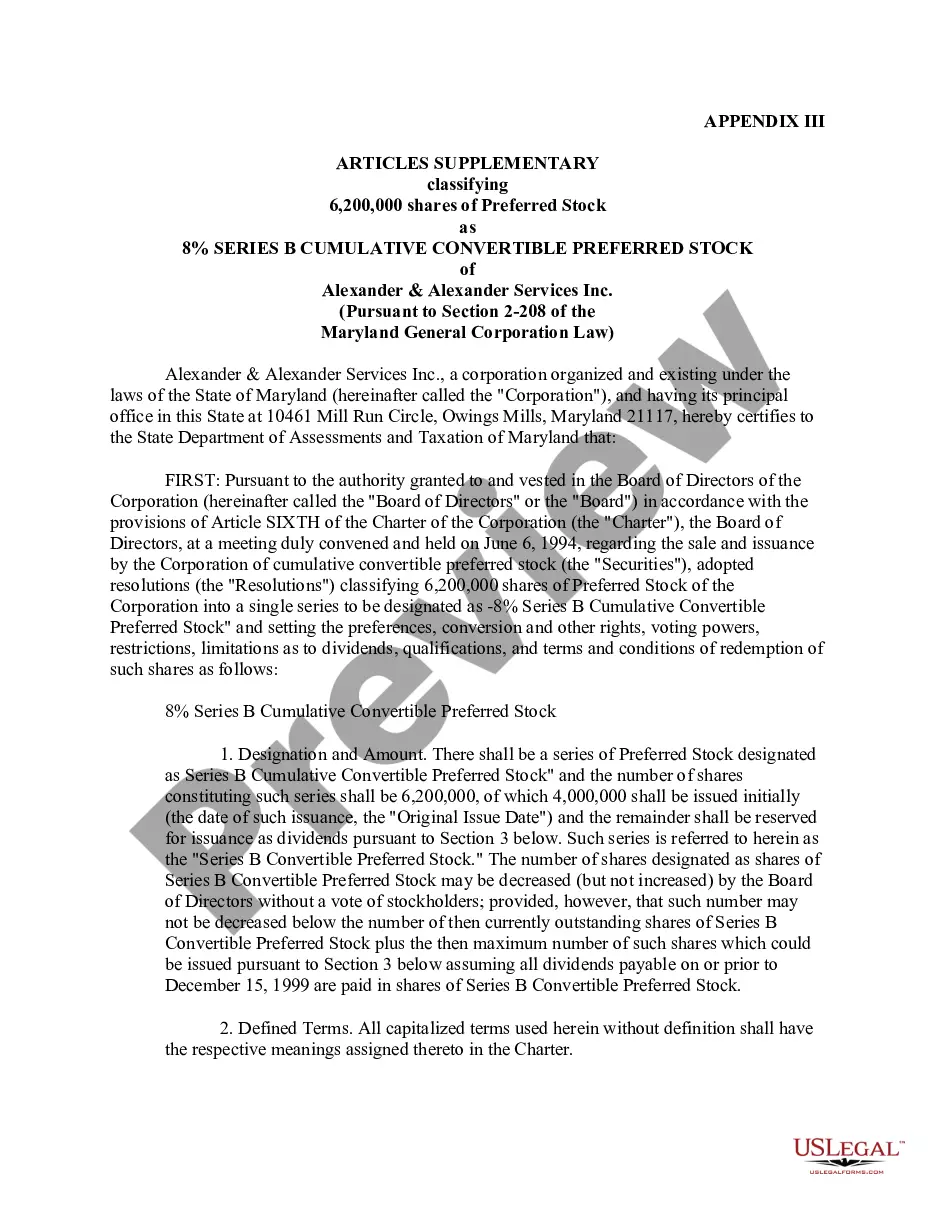
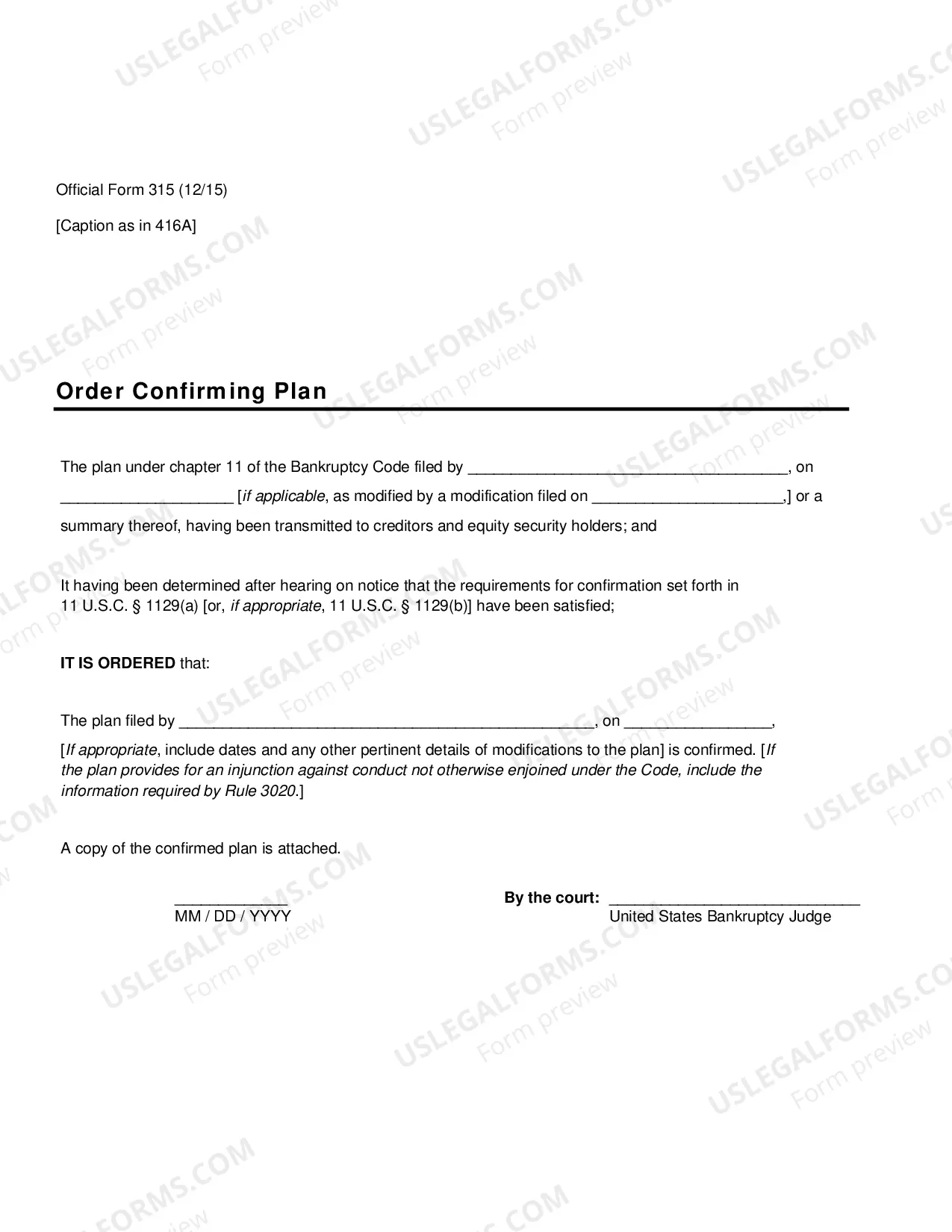
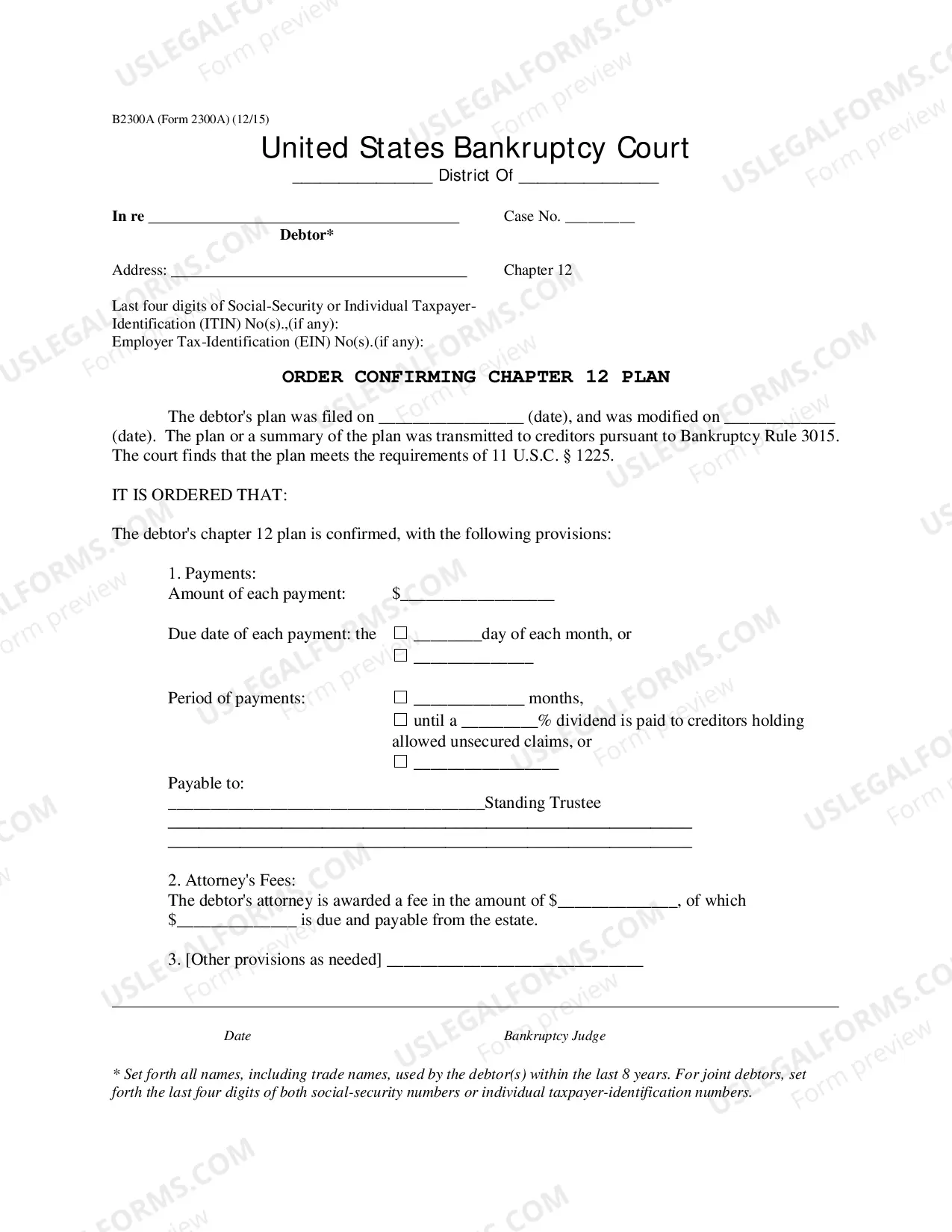
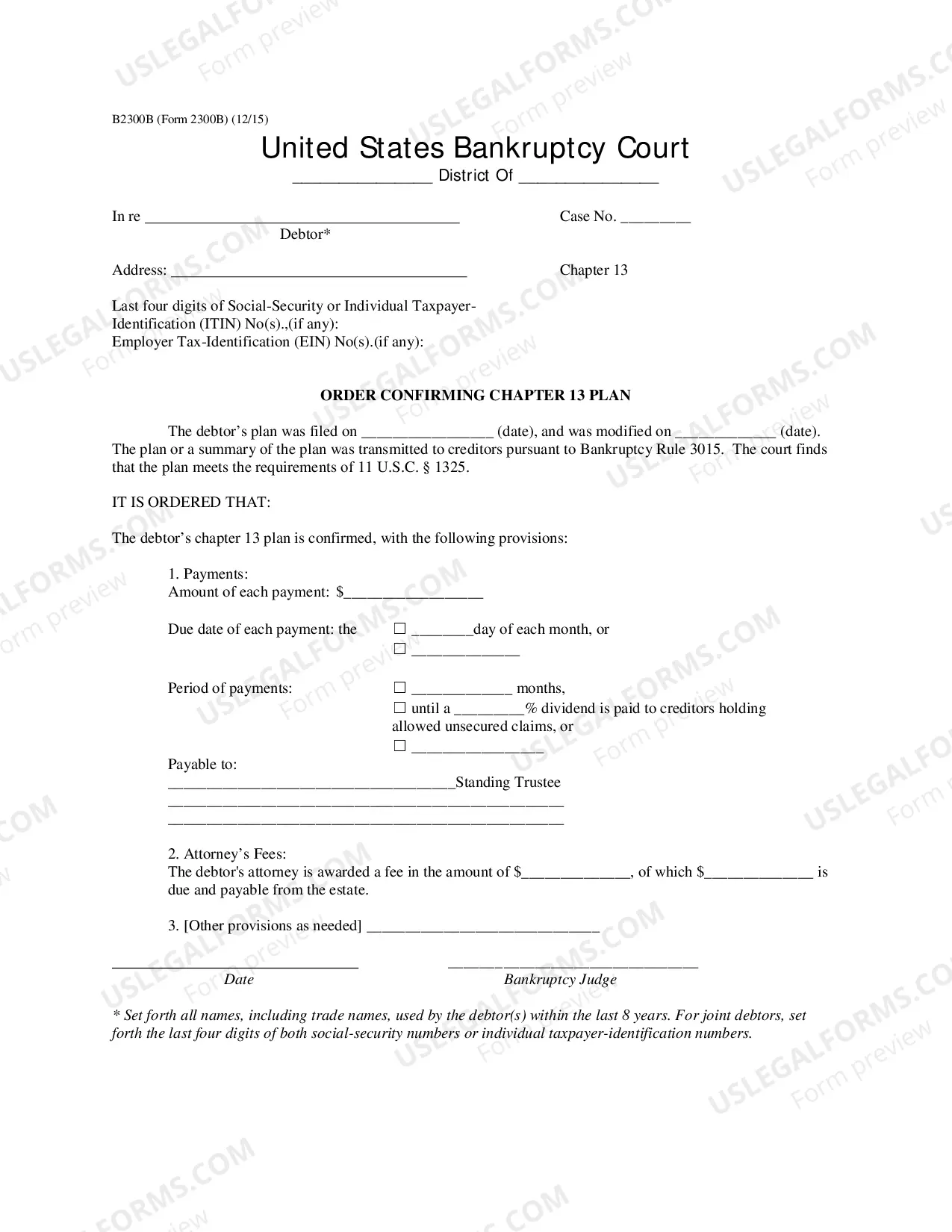
Texas Order Confirming Plan
Description
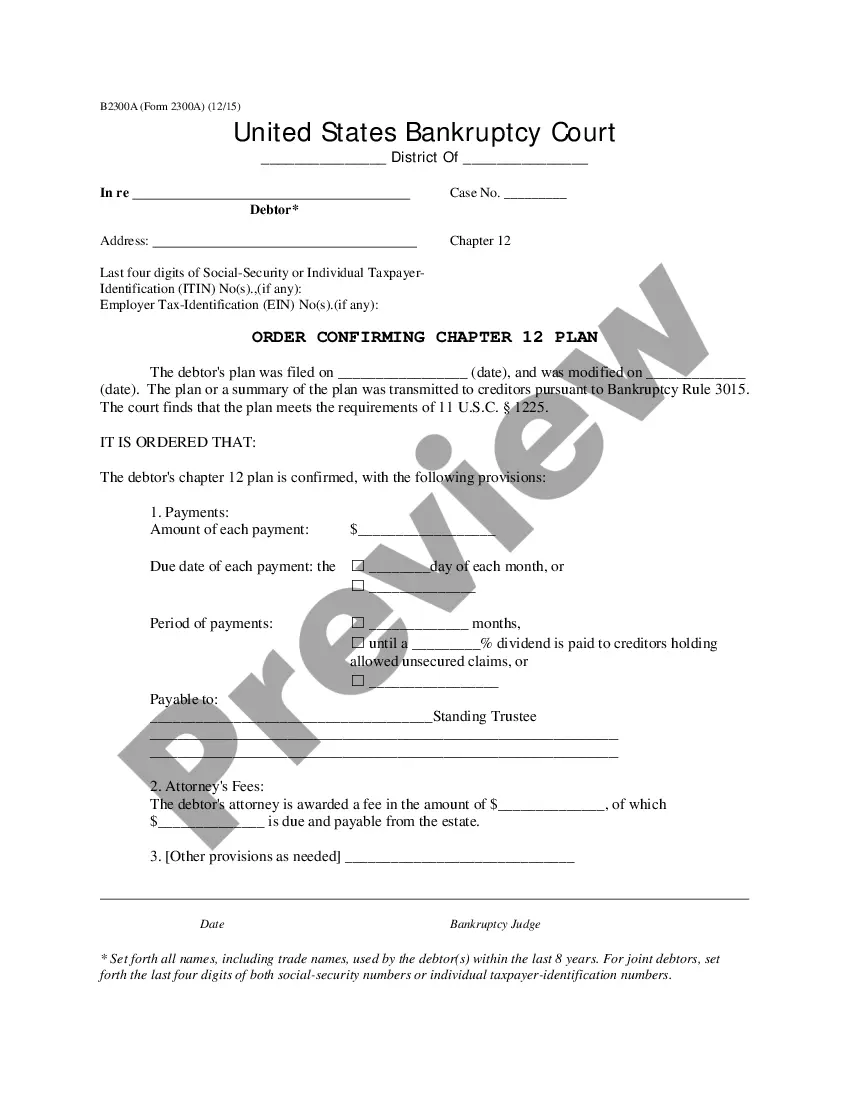
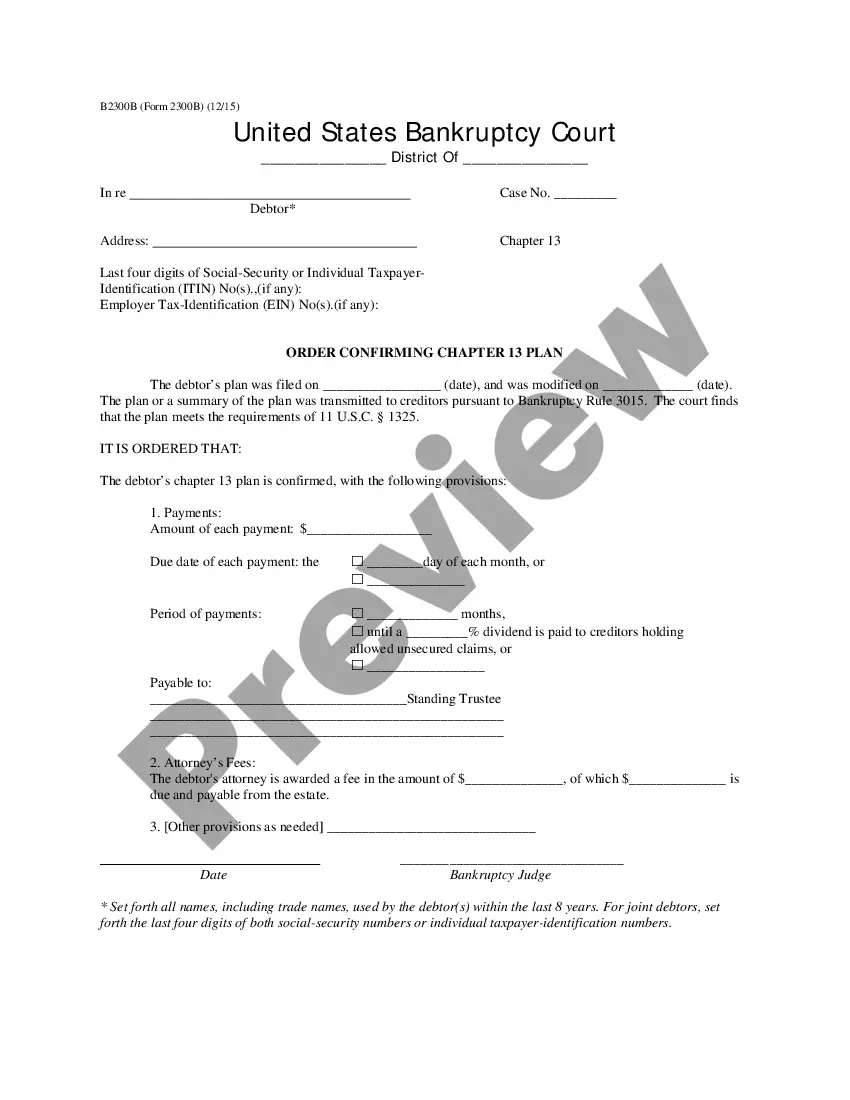
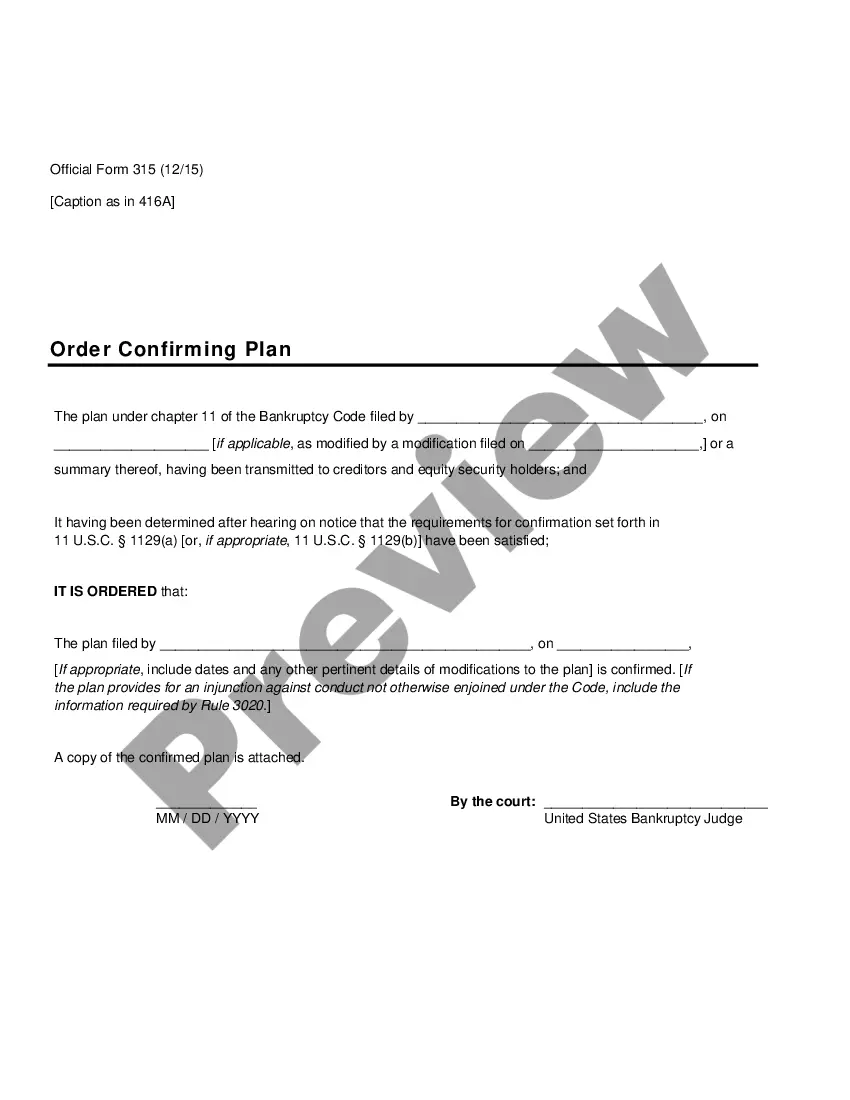
Get your form ready online
Our built-in tools help you complete, sign, share, and store your documents in one place.
Make edits, fill in missing information, and update formatting in US Legal Forms—just like you would in MS Word.
Download a copy, print it, send it by email, or mail it via USPS—whatever works best for your next step.
Sign and collect signatures with our SignNow integration. Send to multiple recipients, set reminders, and more. Go Premium to unlock E-Sign.
If this form requires notarization, complete it online through a secure video call—no need to meet a notary in person or wait for an appointment.
We protect your documents and personal data by following strict security and privacy standards.

Make edits, fill in missing information, and update formatting in US Legal Forms—just like you would in MS Word.

Download a copy, print it, send it by email, or mail it via USPS—whatever works best for your next step.

Sign and collect signatures with our SignNow integration. Send to multiple recipients, set reminders, and more. Go Premium to unlock E-Sign.

If this form requires notarization, complete it online through a secure video call—no need to meet a notary in person or wait for an appointment.

We protect your documents and personal data by following strict security and privacy standards.
Looking for another form?
How to fill out Texas Order Confirming Plan?
Handling legal paperwork requires attention, precision, and using properly-drafted templates. US Legal Forms has been helping people nationwide do just that for 25 years, so when you pick your Texas Order Confirming Plan template from our library, you can be certain it meets federal and state regulations.
Working with our service is simple and fast. To obtain the necessary document, all you’ll need is an account with a valid subscription. Here’s a quick guideline for you to get your Texas Order Confirming Plan within minutes:
- Remember to attentively look through the form content and its correspondence with general and legal requirements by previewing it or reading its description.
- Look for an alternative official blank if the previously opened one doesn’t suit your situation or state regulations (the tab for that is on the top page corner).
- Log in to your account and save the Texas Order Confirming Plan in the format you need. If it’s your first experience with our website, click Buy now to proceed.
- Create an account, choose your subscription plan, and pay with your credit card or PayPal account.
- Choose in what format you want to save your form and click Download. Print the blank or add it to a professional PDF editor to prepare it paper-free.
All documents are created for multi-usage, like the Texas Order Confirming Plan you see on this page. If you need them one more time, you can fill them out without re-payment - just open the My Forms tab in your profile and complete your document whenever you need it. Try US Legal Forms and accomplish your business and personal paperwork rapidly and in full legal compliance!
Form popularity
FAQ
Once your repayment plan gets confirmed, you must continue to make timely payments to the bankruptcy trustee each month for the duration of your plan. You must also continue to make payments on debts, such as your mortgage or car payment, which you proposed to pay outside of bankruptcy.
The chapter 13 confirmation order is, in essence, a final judgment that binds each creditor to the terms stated in the chapter 13 plan. Once the bankruptcy judge issues an order confirming the plan, the creditors are just as bound by the terms of the confirmation plan as the debtor is.
A Chapter 13 confirmation hearing is a court proceeding at which a bankruptcy judge decides whether someone has sufficient income to qualify for Chapter 13 bankruptcy. At the confirmation hearing, the judge reviews the filer's proposed plan to repay creditors.
Here, a confirmation hearing is a court proceeding wherein a judge either approves or rejects a proposed debtor repayment plan, based on its feasibility and other legal requirements. At this hearing, a judge will also hear argument and rule on objections filed by creditors to elements of a debtor's repayment plan.
About 45 days after you've received your discharge, you will receive a document called a Final Decree. It's the document that officially closes your case. Once this document is received, you are no longer in bankruptcy.
An objection to confirmation is a response filed in a chapter 13 bankruptcy to an original or amended plan that is filed in the case. When you file a chapter 13 bankruptcy you fill out a petition, schedules and a number of related documents. These are really disclosure documents.
In a Chapter 13, an objection to confirmation is basically a written statement from the Chapter 13 Trustee or a creditor of the debtor that there is something wrong with the case that needs to be fixed before the confirmation hearing.
Once you've completed your Chapter 13 repayment plan, most remaining nonpriority unsecured debt balances will get discharged. Student loan balances are a notable exception?you'll remain responsible for those (at least for the present). Student loans fall into the category of nonpriority unsecured debts.