Annual Minutes for a Texas Professional Corporation
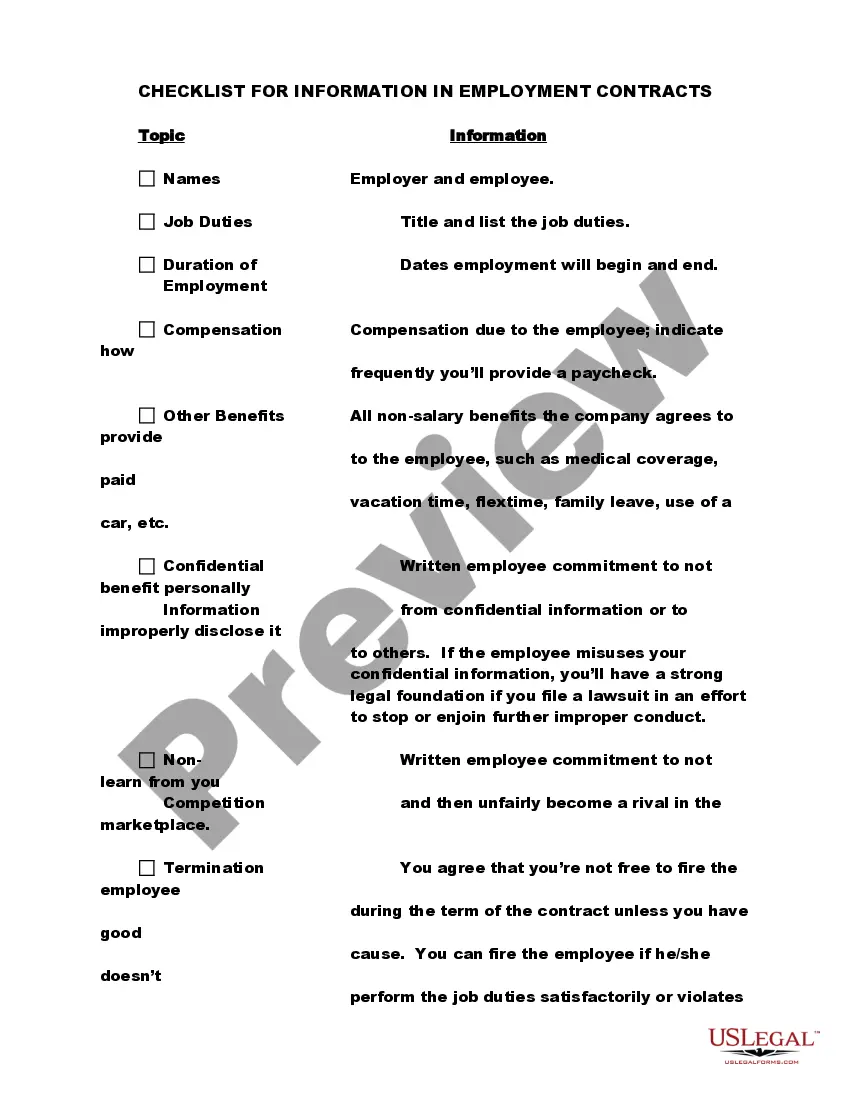
About this form
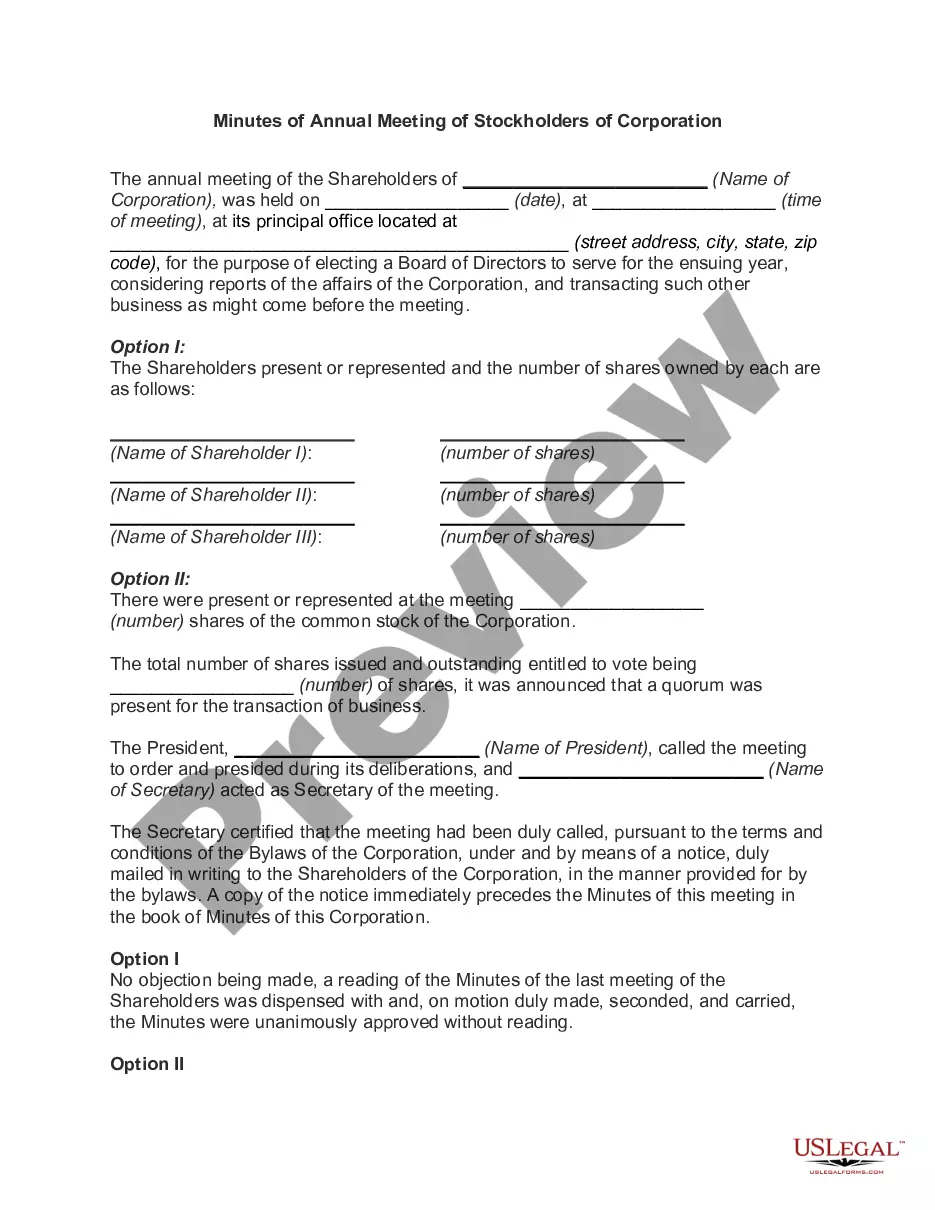
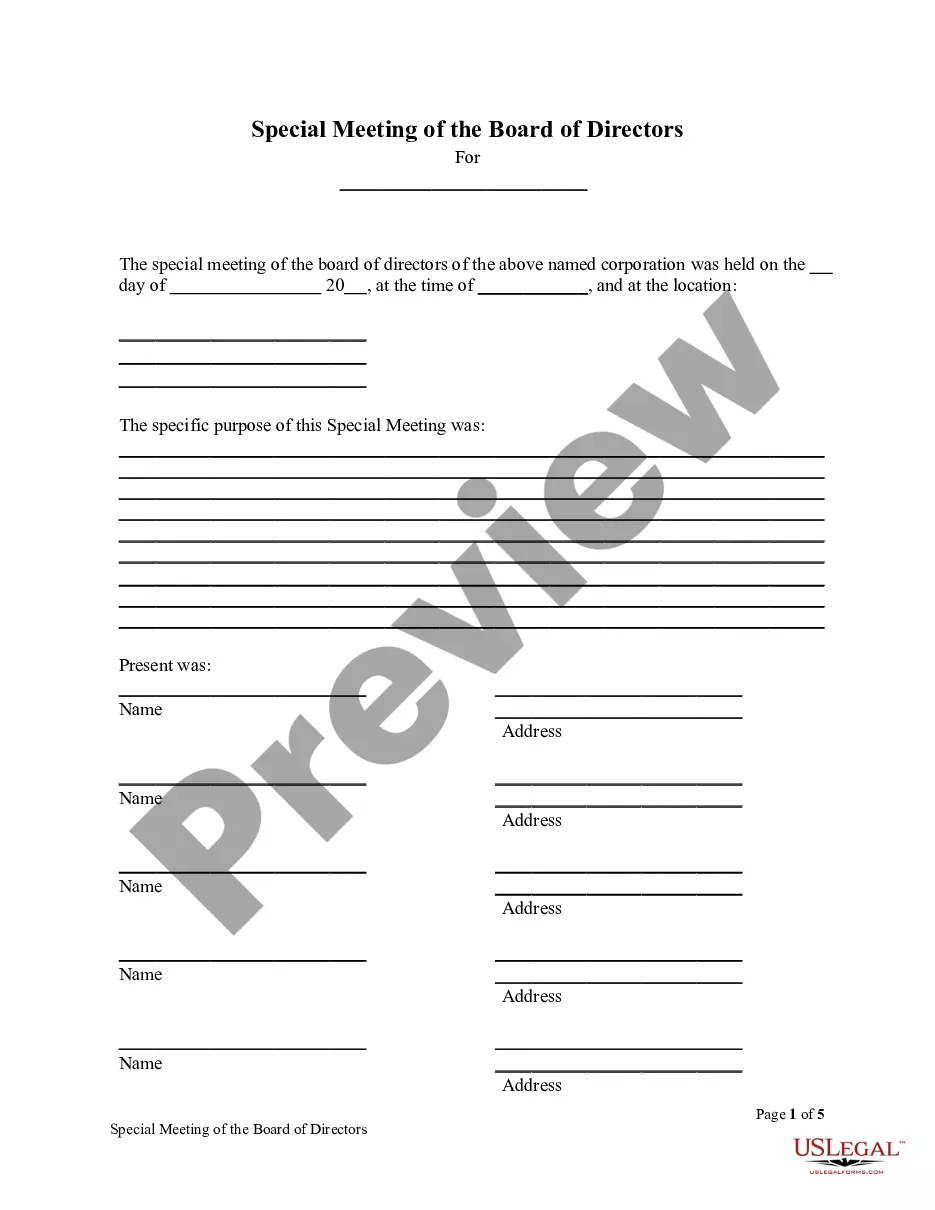
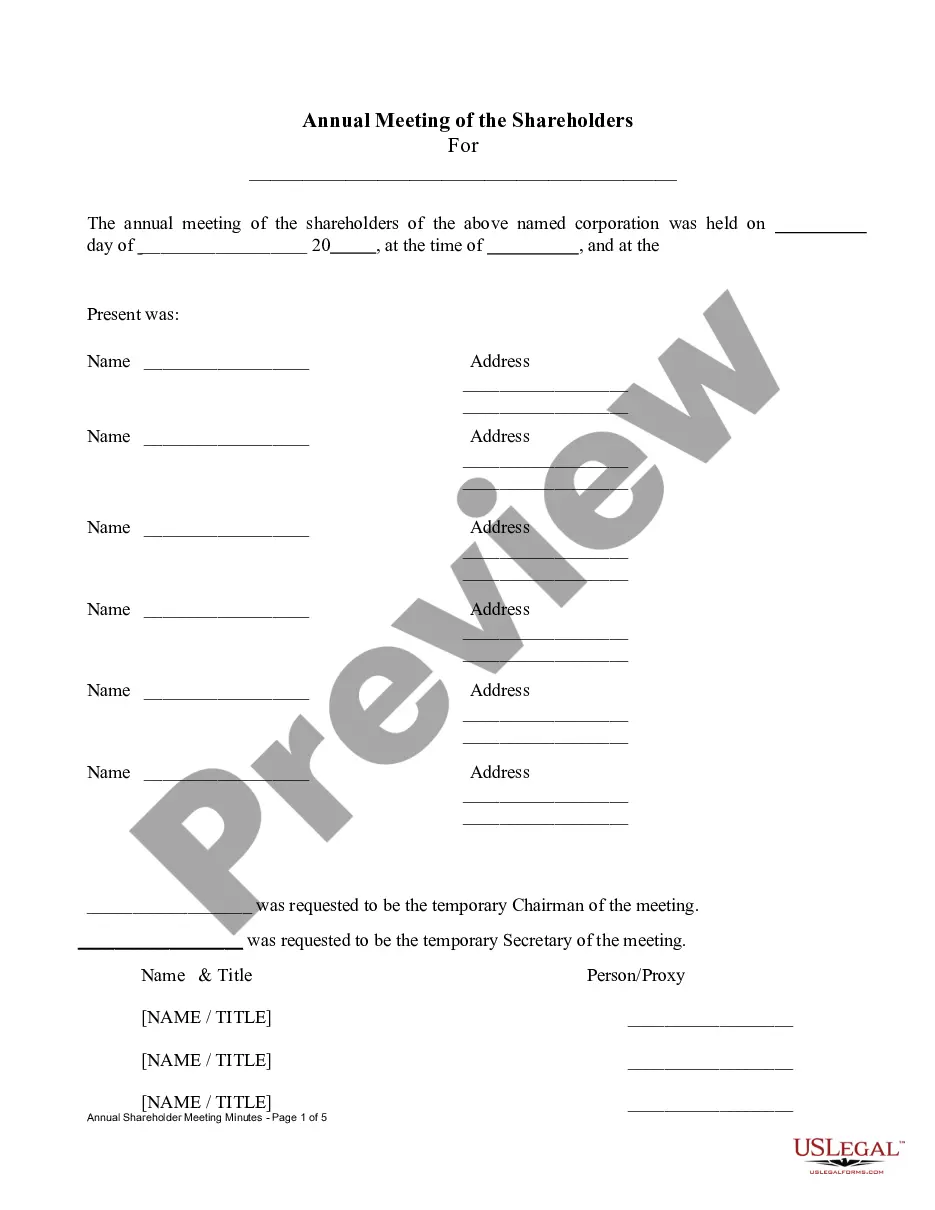
The Annual Minutes for a Texas Professional Corporation is a legal document that records important organizational actions and changes within a professional corporation over the course of a year. This form is essential for maintaining compliance with Texas business laws by formalizing decisions made by shareholders and directors without necessitating a physical annual meeting, distinguishing it from other corporate documentation like bylaws or resolutions.
Form components explained
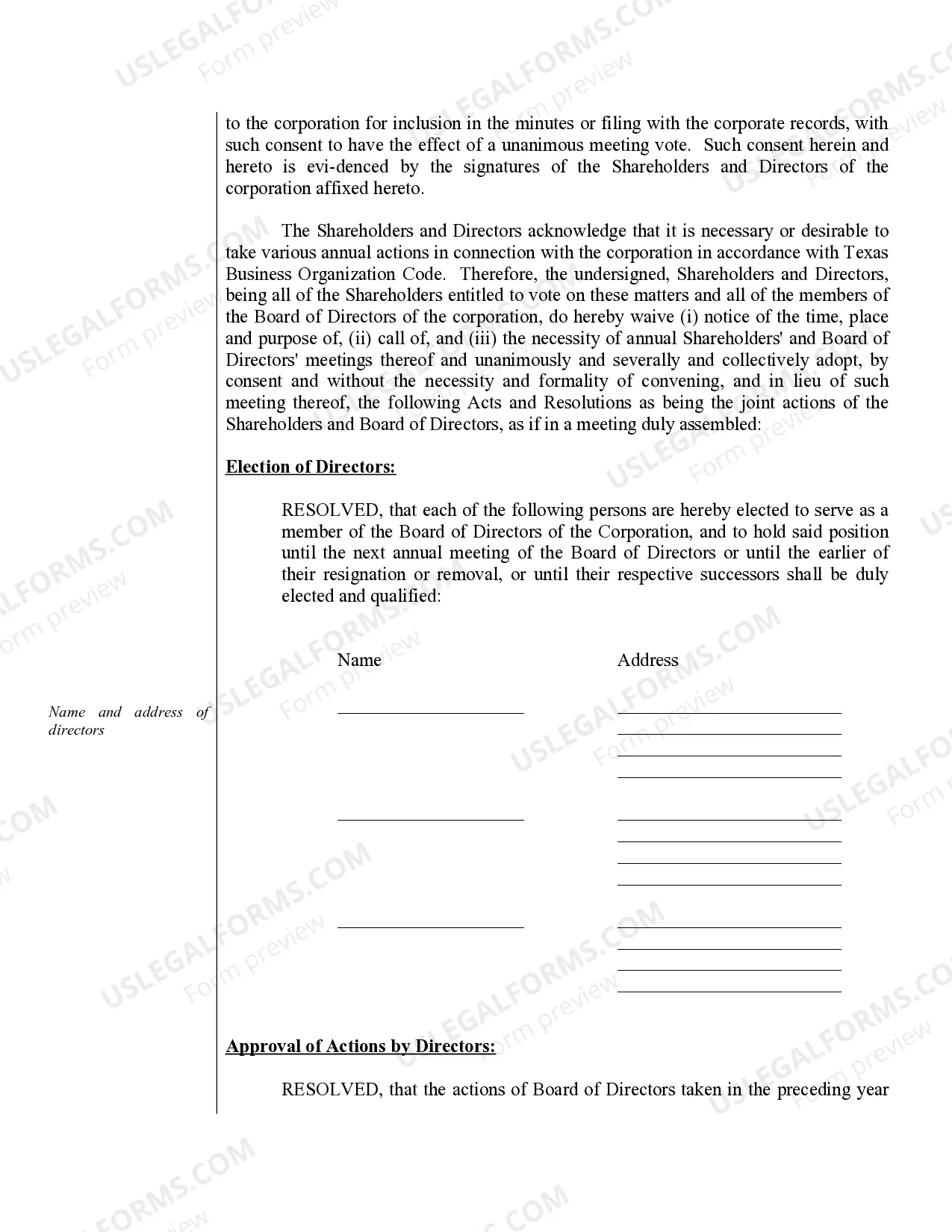
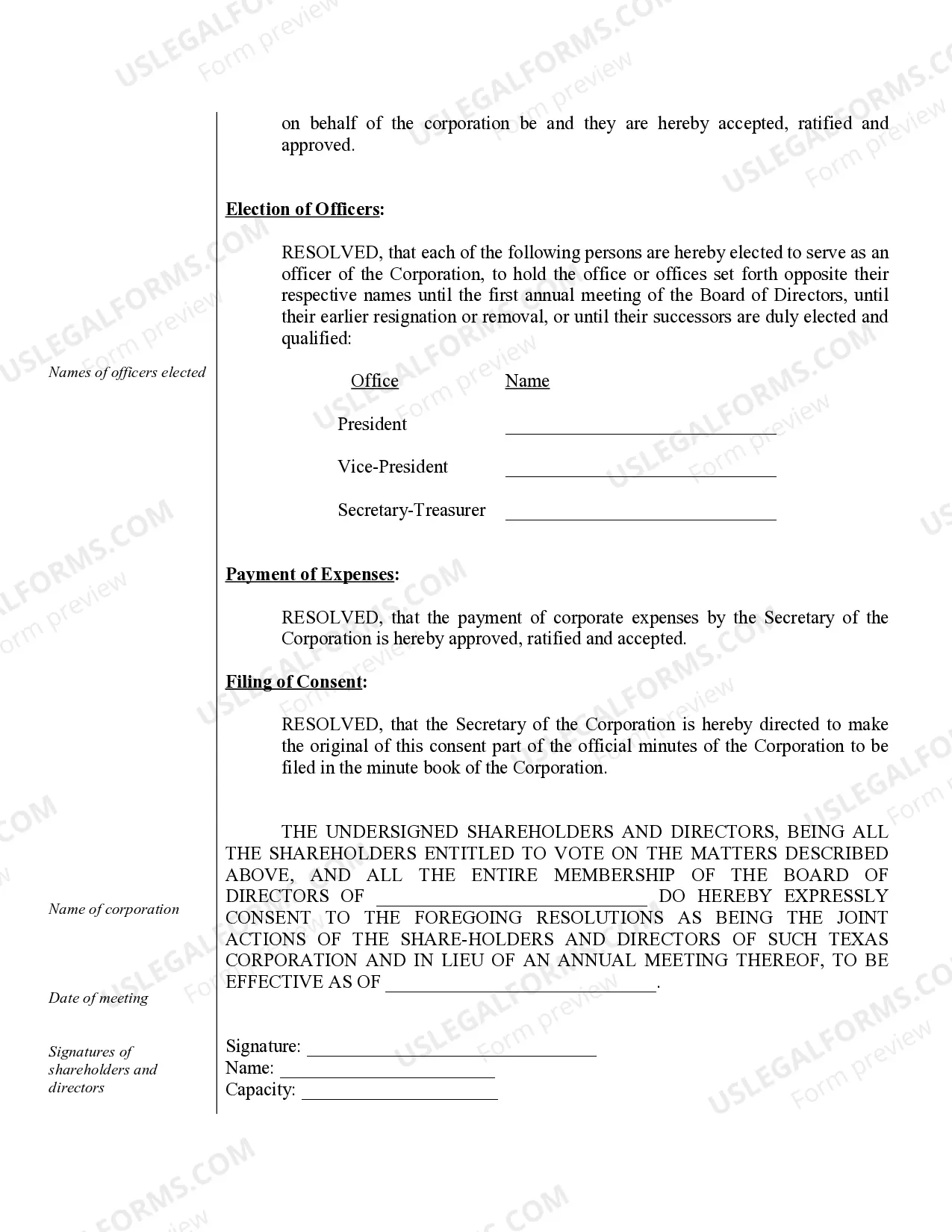
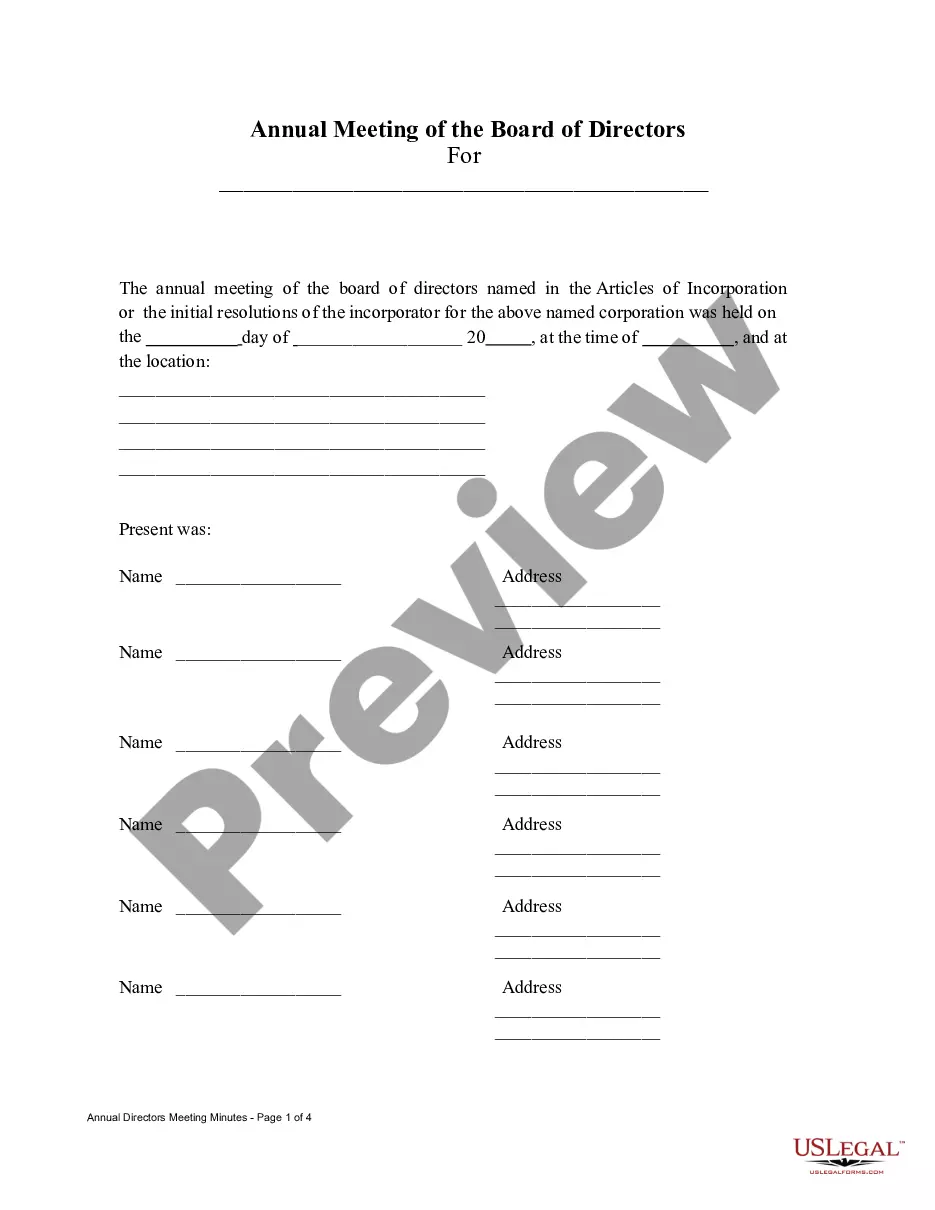
- Name of corporation
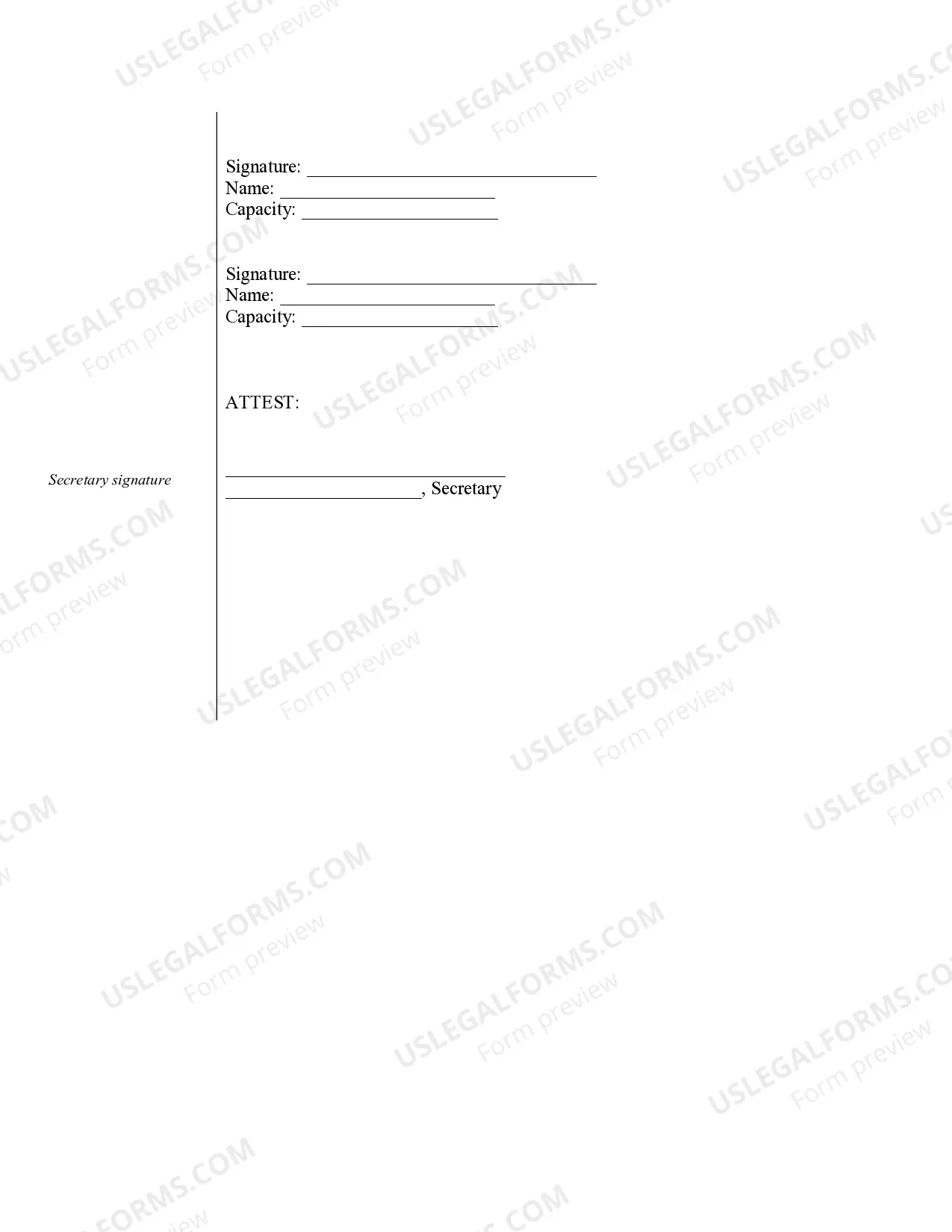
- Names and addresses of directors
- Names of elected officers
- Date of the meeting
- Signatures of shareholders and directors
- Approval of annual actions and resolutions
When to use this document
This form should be used annually by a Texas professional corporation to document formal actions taken by its shareholders and board of directors. It is particularly useful when decisions need to be made or approved without conducting a traditional in-person meeting. The Annual Minutes serve as a record for compliance with state laws and can be beneficial during audits or legal inquiries.
Intended users of this form
This form is intended for:
- Directors and shareholders of Texas professional corporations
- Corporate secretaries responsible for maintaining corporate records
- Business owners seeking legal compliance for their corporation's activities
How to complete this form
- Identify and enter the name of the corporation at the top of the document.
- List the names and addresses of all directors and the elected officers.
- Specify the date the annual minutes are recorded as well as the date of the action taken.
- Gather signatures from all shareholders and directors to validate the minutes.
- File the completed document in the corporation's minute book to maintain proper records.
Notarization requirements for this form
This form does not typically require notarization unless specified by local law. It is essential, however, to gather all necessary signatures from shareholders and directors to ensure its validity.
Get your form ready online
Our built-in tools help you complete, sign, share, and store your documents in one place.
Make edits, fill in missing information, and update formatting in US Legal Forms—just like you would in MS Word.
Download a copy, print it, send it by email, or mail it via USPS—whatever works best for your next step.
Sign and collect signatures with our SignNow integration. Send to multiple recipients, set reminders, and more. Go Premium to unlock E-Sign.
If this form requires notarization, complete it online through a secure video call—no need to meet a notary in person or wait for an appointment.
We protect your documents and personal data by following strict security and privacy standards.

Make edits, fill in missing information, and update formatting in US Legal Forms—just like you would in MS Word.

Download a copy, print it, send it by email, or mail it via USPS—whatever works best for your next step.

Sign and collect signatures with our SignNow integration. Send to multiple recipients, set reminders, and more. Go Premium to unlock E-Sign.

If this form requires notarization, complete it online through a secure video call—no need to meet a notary in person or wait for an appointment.

We protect your documents and personal data by following strict security and privacy standards.
Typical mistakes to avoid
- Failing to include all necessary signatures from shareholders and directors.
- Not recording the minutes in a timely manner after the action takes place.
- Omitting the corporation's name or date of the meeting.
Why complete this form online
- Convenience of downloading and customizing the form to suit specific needs.
- Immediate access to legal templates prepared by licensed attorneys.
- Easy record-keeping and filing with secure electronic storage options.
Legal use & context
- The form serves as a formal record of corporate decisions, which may be essential for legal and tax purposes.
- Proper documentation protects shareholders and directors from liability by demonstrating compliance with statutory obligations.
Summary of main points
- Annual Minutes are crucial for compliance and accurate corporate record-keeping.
- All relevant parties must sign for the document to be valid.
- Utilizing this form online eases the process of annual documentation for Texas professional corporations.
Looking for another form?

Form popularity
FAQ
If tax due is more than $1,000, but annualized total revenue is less than the no-tax-due threshold amount, do I owe the tax?A franchise tax report supporting the amount of tax due (Form 05-158, Texas Franchise Tax Report (PDF), or Form 05-169, Texas Franchise Tax EZ Computation Report (PDF)) must be filed.
A Texas annual report is included when a company files their taxes with the Texas Comptroller of Public Accounts. For example, Texas limited liability companies and corporations must include a Public Information Report when submitting their franchise taxes to the state.
Visit our Webfile eSystems Login webpage. Sign in and select "WebFile/Pay Franchise Tax." Select the taxpayer number from the list.
Annual reports became a regulatory requirement for public companies following the stock market crash of 1929, when lawmakers mandated standardized corporate financial reporting. The intent of the required annual report is to provide public disclosure of a company's operating and financial activities over the past year.
A business should keep its minutes for at least seven years, and make them available to members of the corporation (e.g., shareholders, directors, and officers) who make a reasonable request to review them. There is no requirement to file annual stockholder meeting minutes with the state or other government agency.
Annual Report Unlike most states, Texas does not require LLCs to file annual reports with the Secretary of State. However, LLCs must file annual franchise tax reports (see below).
Public information reports are due annually unless the organization has been granted exemption from the Texas Comptroller. File two copies. An officer, director, manager, member, partner, or agent must file.
Choose a corporate name. File Certificate of Formation. Appoint a registered agent. Prepare an corporate bylaws. Appoint directors and hold first meeting. Issue stock. Comply with other tax and regulatory requirements.