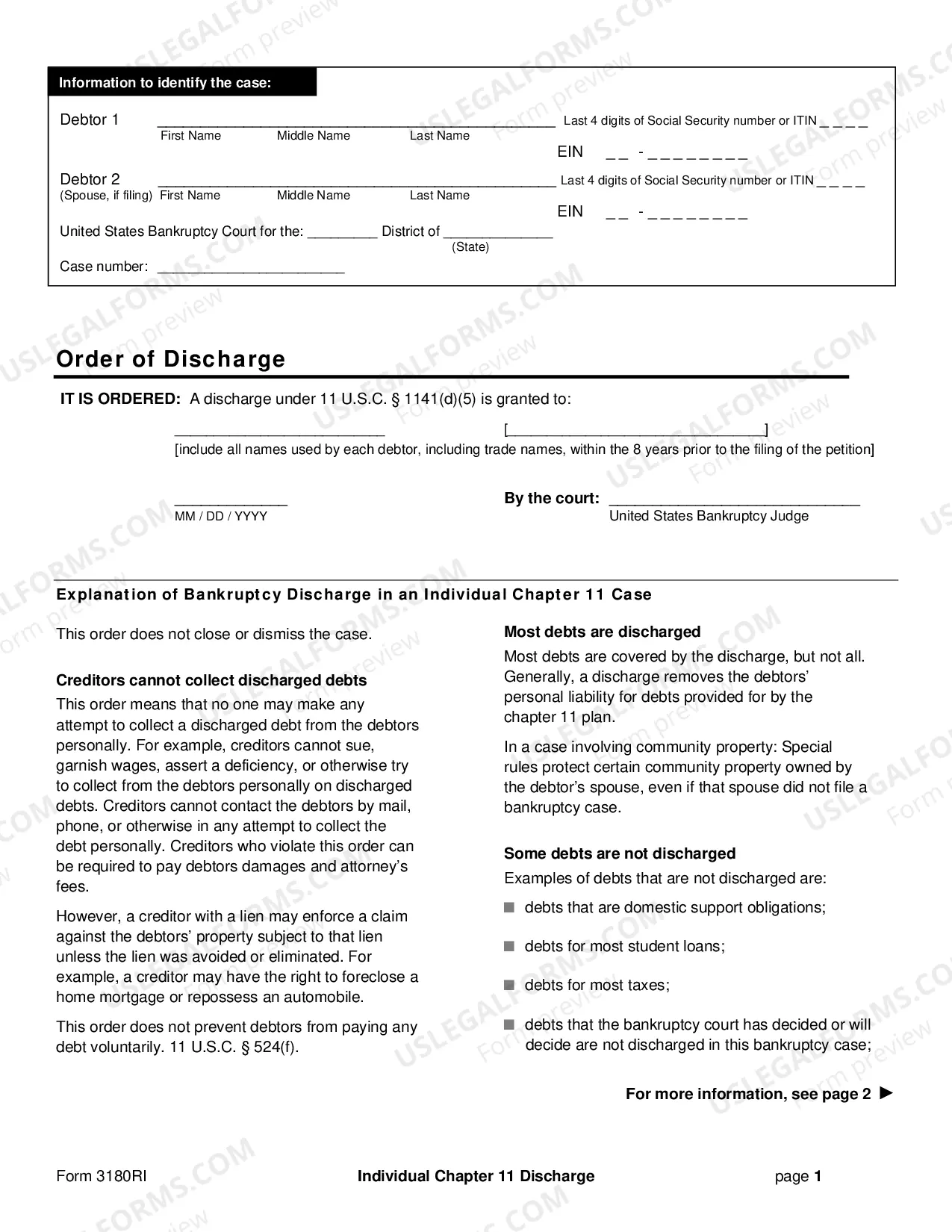
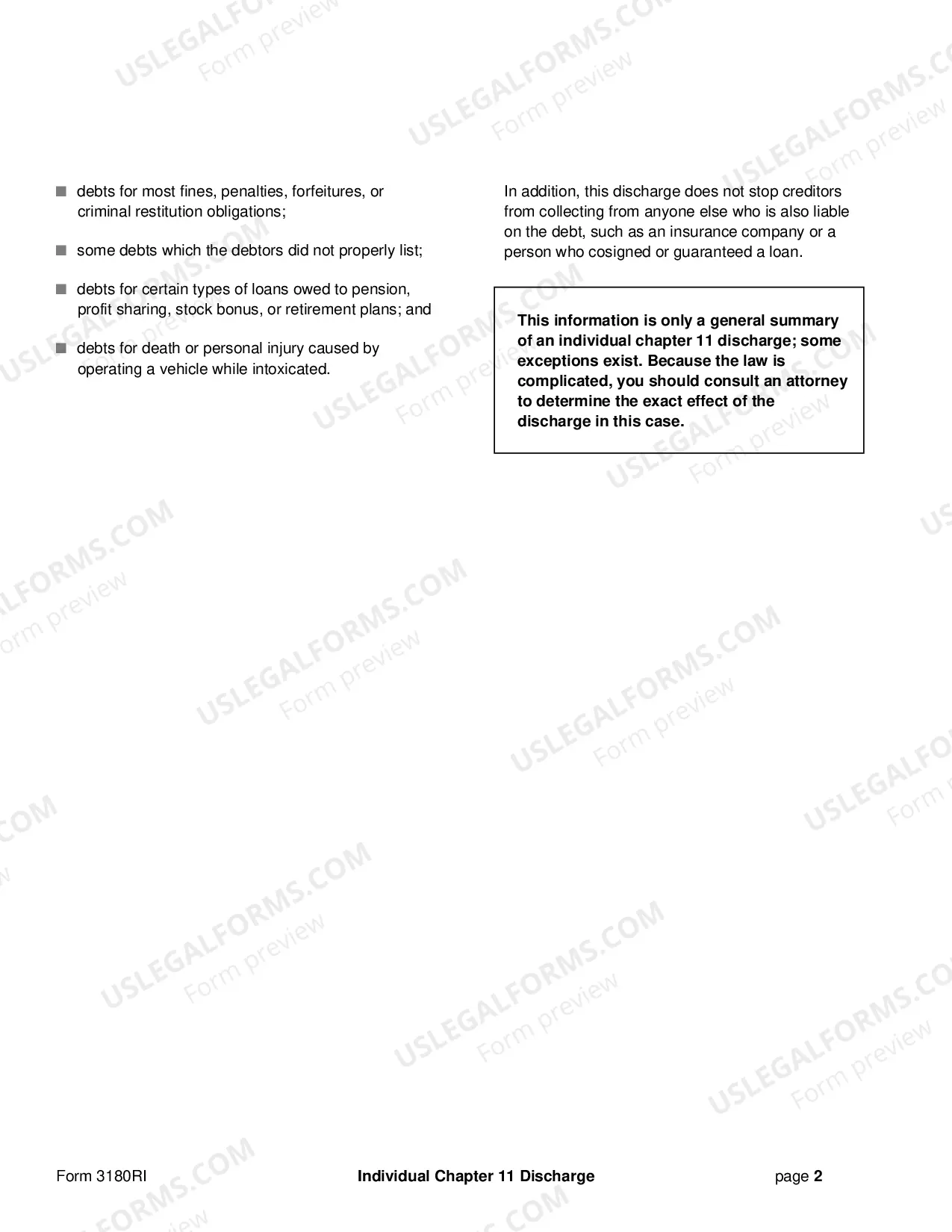
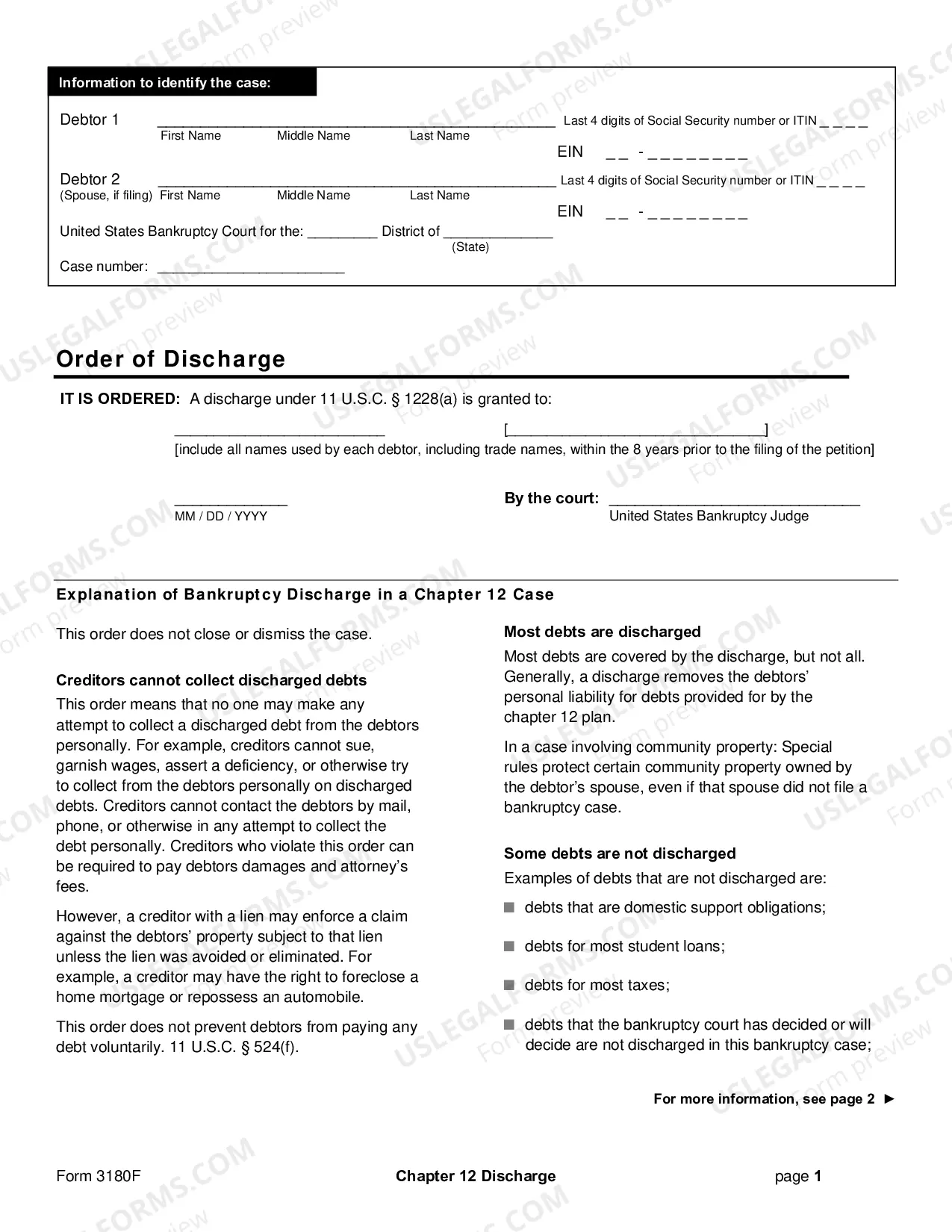
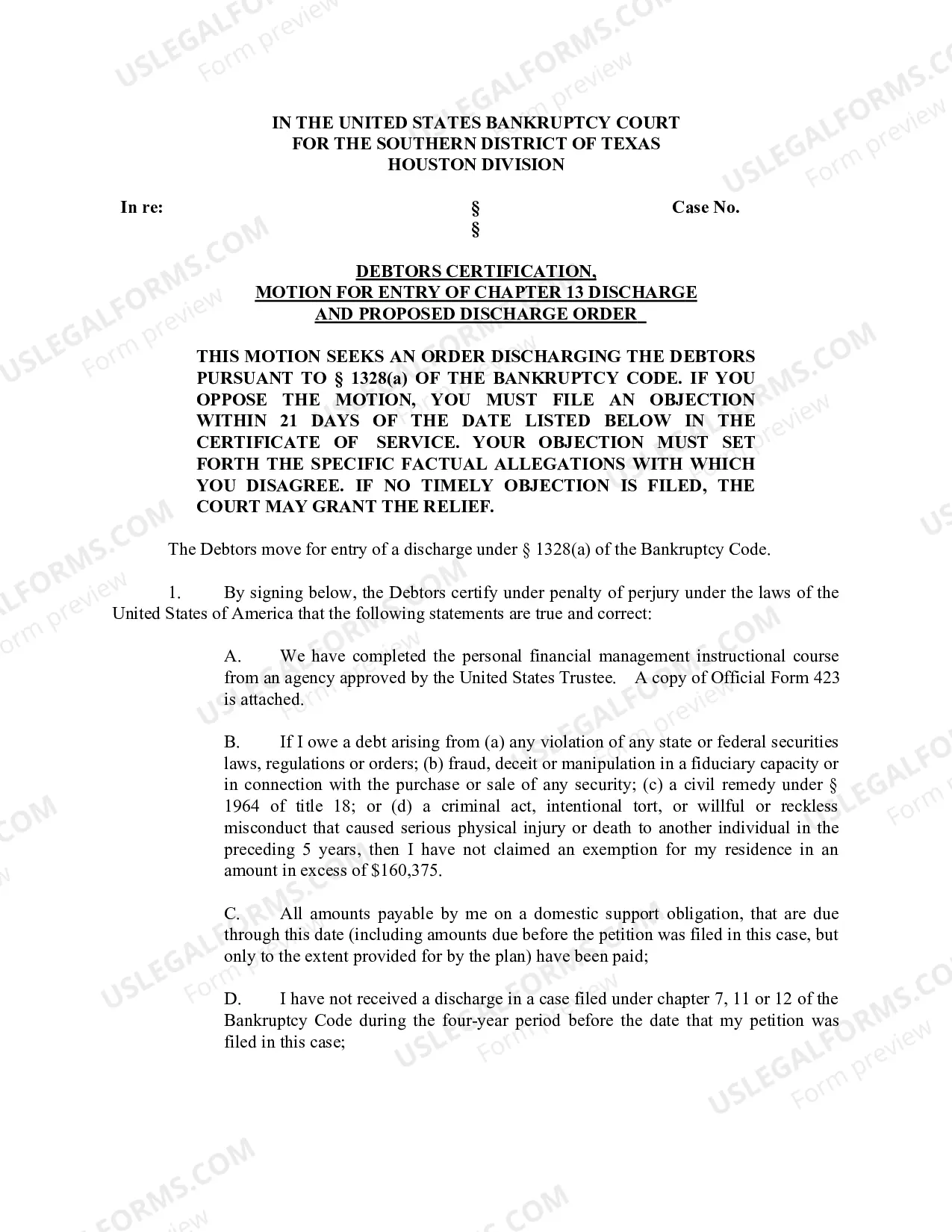
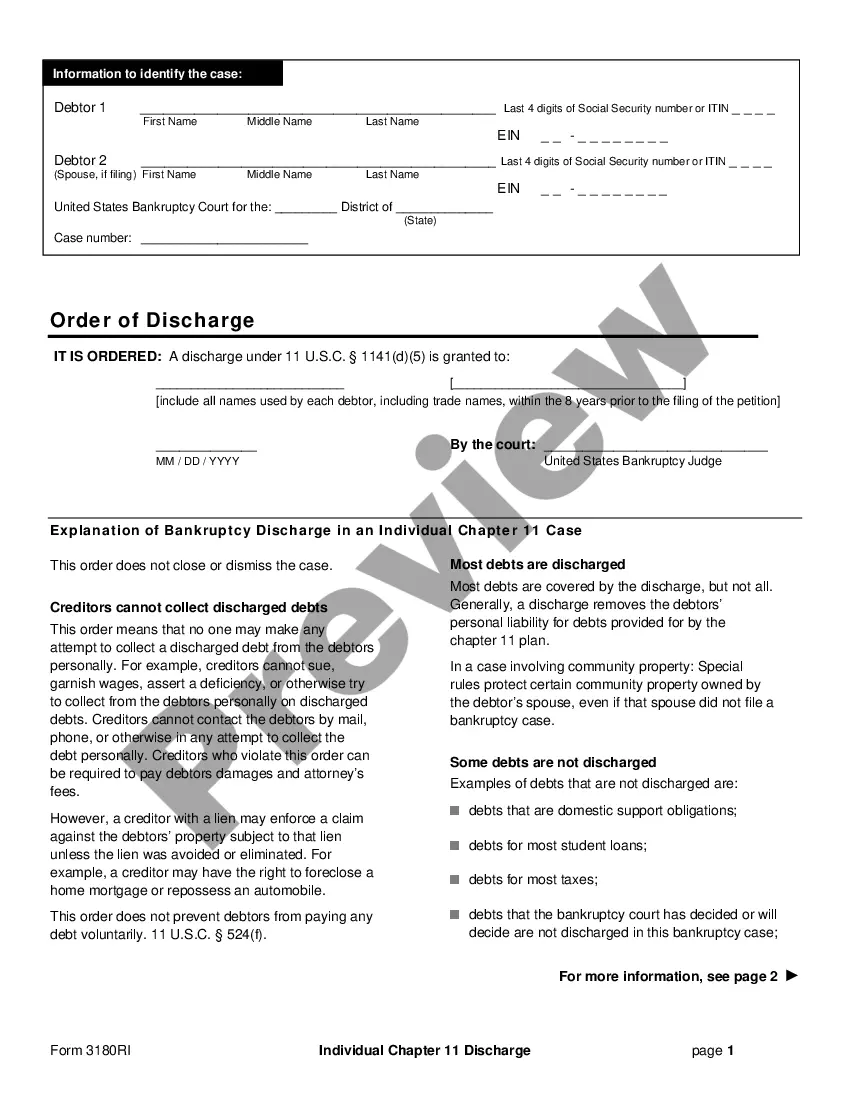
Texas Individual Chapter 11 Discharge
Description
Get your form ready online
Our built-in tools help you complete, sign, share, and store your documents in one place.
Make edits, fill in missing information, and update formatting in US Legal Forms—just like you would in MS Word.
Download a copy, print it, send it by email, or mail it via USPS—whatever works best for your next step.
Sign and collect signatures with our SignNow integration. Send to multiple recipients, set reminders, and more. Go Premium to unlock E-Sign.
If this form requires notarization, complete it online through a secure video call—no need to meet a notary in person or wait for an appointment.
We protect your documents and personal data by following strict security and privacy standards.

Make edits, fill in missing information, and update formatting in US Legal Forms—just like you would in MS Word.

Download a copy, print it, send it by email, or mail it via USPS—whatever works best for your next step.

Sign and collect signatures with our SignNow integration. Send to multiple recipients, set reminders, and more. Go Premium to unlock E-Sign.

If this form requires notarization, complete it online through a secure video call—no need to meet a notary in person or wait for an appointment.

We protect your documents and personal data by following strict security and privacy standards.
Looking for another form?

How to fill out Texas Individual Chapter 11 Discharge?
US Legal Forms is the most straightforward and cost-effective way to find suitable formal templates. It’s the most extensive web-based library of business and personal legal paperwork drafted and checked by legal professionals. Here, you can find printable and fillable blanks that comply with federal and local regulations - just like your Texas Individual Chapter 11 Discharge.
Obtaining your template requires only a few simple steps. Users that already have an account with a valid subscription only need to log in to the website and download the document on their device. Later, they can find it in their profile in the My Forms tab.
And here’s how you can get a properly drafted Texas Individual Chapter 11 Discharge if you are using US Legal Forms for the first time:
- Read the form description or preview the document to make sure you’ve found the one corresponding to your requirements, or locate another one using the search tab above.
- Click Buy now when you’re sure of its compatibility with all the requirements, and choose the subscription plan you like most.
- Register for an account with our service, log in, and purchase your subscription using PayPal or you credit card.
- Decide on the preferred file format for your Texas Individual Chapter 11 Discharge and download it on your device with the appropriate button.
Once you save a template, you can reaccess it whenever you want - simply find it in your profile, re-download it for printing and manual completion or upload it to an online editor to fill it out and sign more effectively.
Take full advantage of US Legal Forms, your trustworthy assistant in obtaining the required official paperwork. Give it a try!
Form popularity
FAQ
In a Chapter 11 case filed by an individual (i.e., a natural person), a discharge is granted by the court separately, after the completion of payments under the plan. A discharge is a court order relieving the debtor from liability for certain debts.
Secured creditors are first in line, as their claims over assets are often secured by collateral and a contract.
The principle of bankruptcy law requiring the claims of a dissenting class of creditors to be paid in full before any class of creditors junior to such dissenting class may receive or retain any property in satisfaction of their claims (§ 1129(b)(2), Bankruptcy Code).
A case filed under chapter 11 of the United States Bankruptcy Code is frequently referred to as a "reorganization" bankruptcy. Usually, the debtor remains ?in possession,? has the powers and duties of a trustee, may continue to operate its business, and may, with court approval, borrow new money.
In individual chapter 11 cases, and in cases under chapter 12 (adjustment of debts of a family farmer or fisherman) and 13 (adjustment of debts of an individual with regular income), the court generally grants the discharge as soon as practicable after the debtor completes all payments under the plan.
In a Chapter 11 bankruptcy proceeding, if a company or individual filer (the ?debtor?) is unable to pay its creditors in full, the absolute priority rule bars owners from retaining their interests unless the owners contribute ?new value? to the business.
Subchapter V departs from the Absolute Priority Rule and allows a court to confirm a Plan even if a lower priority class of creditors receives a distribution despite a higher priority class not being paid in full.




