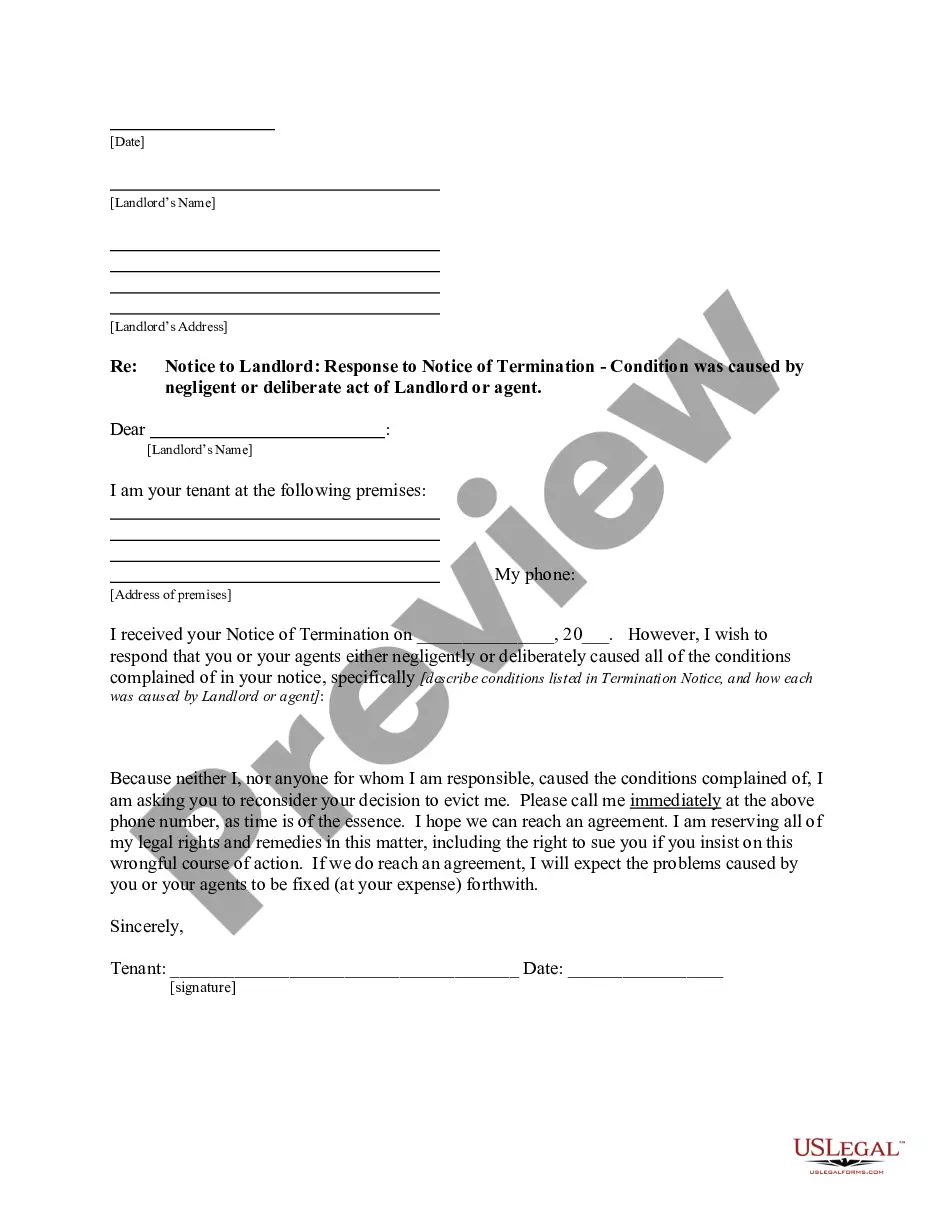
Texas Letter from Tenant to Landlord responding to Notice to Terminate for Noncompliance - Noncompliant condition caused by Landlord's own deliberate or negligent act
What is this form?
This form is a Letter from Tenant to Landlord responding to a Notice to Terminate for Noncompliance. It allows tenants to formally assert that the conditions leading to the eviction notice are a result of the landlord's own actions, whether deliberate or negligent. Unlike general eviction responses, this letter specifically addresses situations where the landlord is at fault, allowing tenants to request necessary repairs and assert their legal rights against eviction.
Form components explained
- Tenant identification: Name and contact information of the tenant.
- Landlord identification: Name and address of the landlord or their authorized agent.
- Date of the letter: The date when the tenant fills out and signs the letter.
- Signature: Tenant's signature, acknowledging the assertions made in the letter.
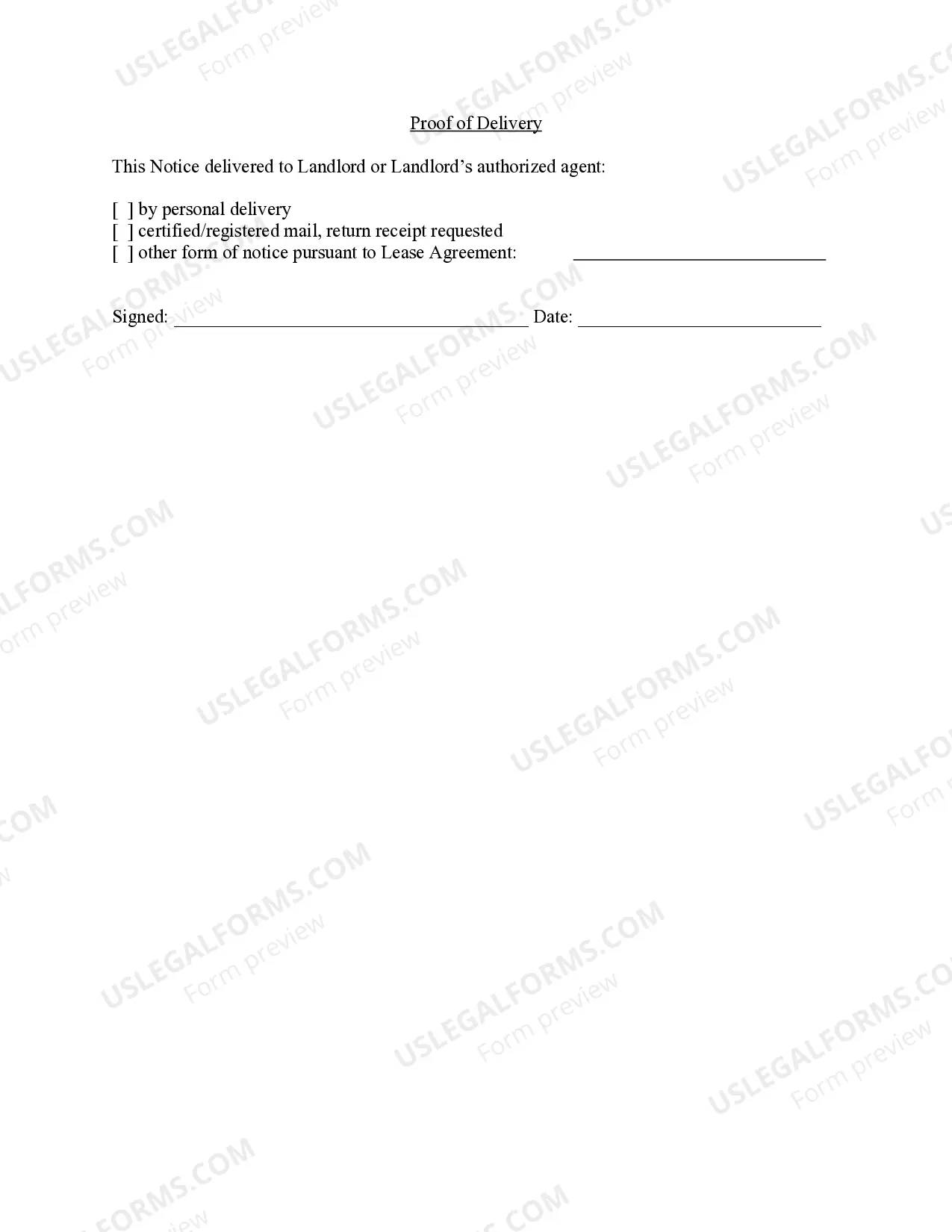
- Proof of delivery: Method of how the notice is delivered to the landlord, such as personal delivery or certified mail.




When this form is needed
This form should be used by tenants who have received a Notice to Terminate from their landlord due to noncompliance. If the tenant believes that the reason for eviction is attributable to the landlordâs own actionsâsuch as failure to maintain the property or making it hazardousâthis letter is a vital tool to document the issue and request that the landlord address the problem while preventing eviction.
Who needs this form
- Tenants who have received a notice of eviction for noncompliance.
- Individuals whose eviction is based on conditions caused by the landlordâs actions.
- Tenants seeking to assert their rights regarding property repairs and living conditions.
Completing this form step by step
- Identify the parties: Fill in your name and contact information as the tenant, and the landlord's name and address.
- State the date of the letter: Enter the date when you are completing the form.
- Sign the letter: Provide your signature to confirm the statements made in the letter.
- Choose proof of delivery: Indicate how you will deliver this notice to the landlord (personal delivery or certified mail).
Does this form need to be notarized?
This form does not typically require notarization to be legally valid. However, some jurisdictions or document types may still require it. US Legal Forms provides secure online notarization powered by Notarize, available 24/7 for added convenience.
Get your form ready online
Our built-in tools help you complete, sign, share, and store your documents in one place.
Make edits, fill in missing information, and update formatting in US Legal Forms—just like you would in MS Word.
Download a copy, print it, send it by email, or mail it via USPS—whatever works best for your next step.
Sign and collect signatures with our SignNow integration. Send to multiple recipients, set reminders, and more. Go Premium to unlock E-Sign.
If this form requires notarization, complete it online through a secure video call—no need to meet a notary in person or wait for an appointment.
We protect your documents and personal data by following strict security and privacy standards.

Make edits, fill in missing information, and update formatting in US Legal Forms—just like you would in MS Word.

Download a copy, print it, send it by email, or mail it via USPS—whatever works best for your next step.

Sign and collect signatures with our SignNow integration. Send to multiple recipients, set reminders, and more. Go Premium to unlock E-Sign.

If this form requires notarization, complete it online through a secure video call—no need to meet a notary in person or wait for an appointment.

We protect your documents and personal data by following strict security and privacy standards.
Typical mistakes to avoid
- Failing to include complete and accurate contact information for both the tenant and landlord.
- Not signing the letter, which can make it unenforceable.
- Neglecting to specify the reason why the landlord is responsible for the noncompliant conditions.
- Using informal language instead of maintaining a professional tone.
Why use this form online
- Easy access: Download the form immediately without the need for in-person visits.
- Editable: Customize the content to fit your specific situation and legal needs.
- Reliable: Use templates drafted by licensed attorneys, ensuring legal compliance.
Looking for another form?

Form popularity
FAQ
Health Issues When the environment in a unit becomes hazardous to one's health, the rental is considered to be uninhabitable.Other health risks such as mold and asbestos can make a unit uninhabitable, by causing respiratory problems and serious illnesses.
What is the Law? In California, there is no legal definition for unsafe living conditions. Generally, the rule of thumb is that if your living environment affects your health or safety, then it can be considered an unsafe living condition.
If the tenant refuses, you are permitted to send them a notice to agree or quit the property. The tenant refusing you access constitutes a breach in the lease agreement, so they could be evicted if they continue to deny access.
Filing a complaint with state or local health or building inspectors (who may fine a landlord who fails to correct the problem within a set amount of time, or actually condemn the property in severe cases) suing the landlord for the difference between the monthly rent and the value of the unit with defects, or.
In California, habitability includes the following specific warranties: A dwelling also may be considered uninhabitable (unlivable) if it substantially lacks any of the following: Effective waterproofing and weather protection of roof and exterior walls, including unbroken windows and doors.
Uninhabitable conditions can include dangerous ones, such as holes in the floor, unsafe or exposed wiring, or non-working air conditioning in dangerously hot summer months. Gross infestations of roaches, fleas or other pests are also uninhabitable conditions.
Pay any delinquent rent that is due to the landlord within the allotted time of the notice. Move out of the premises within the allotted time of the notice. File an answer with the judicial court. File a motion to stay with the court.
Contact us at (888) 700-9995.