Texas General Warranty Deed with Vendor's Lien - Individual to Individual
Understanding this form
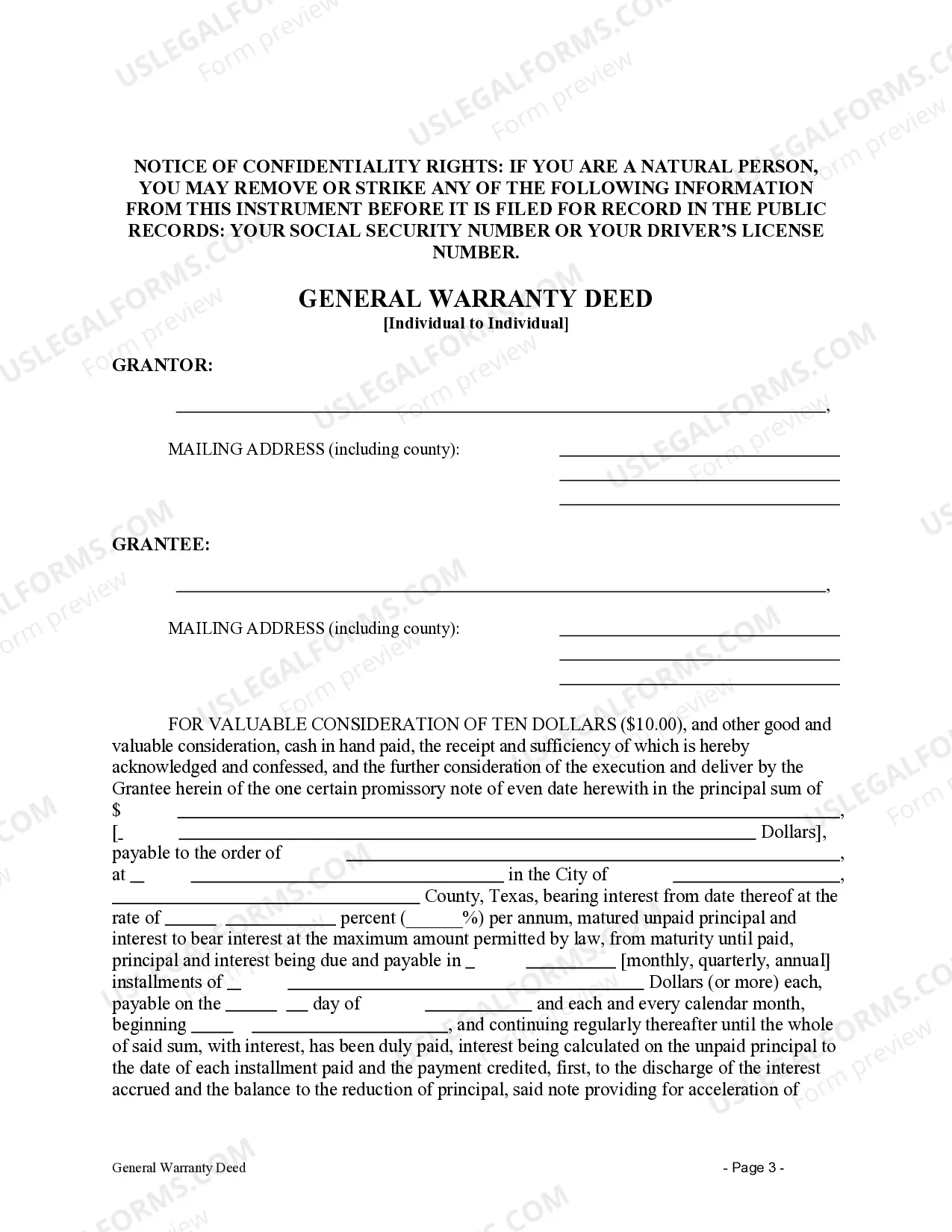
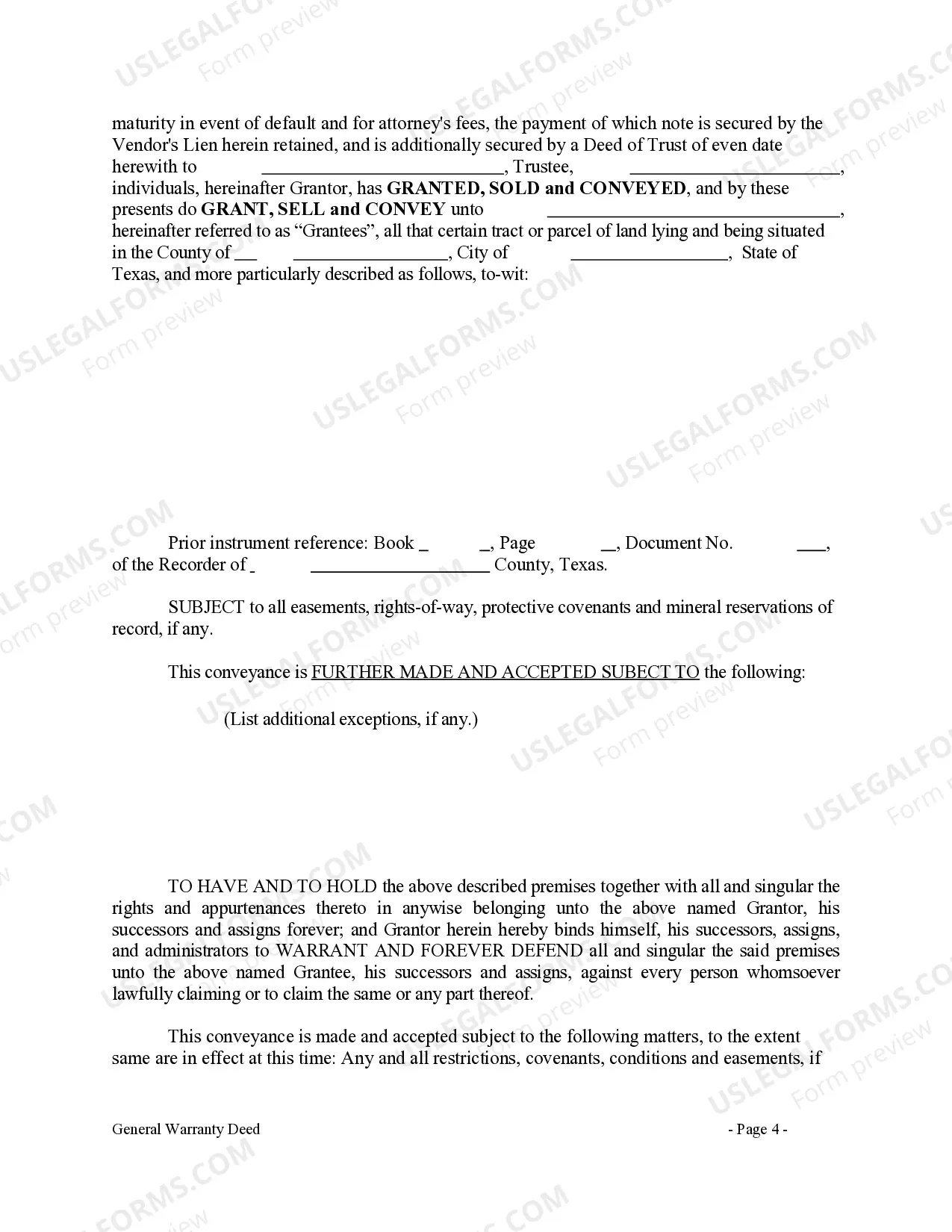
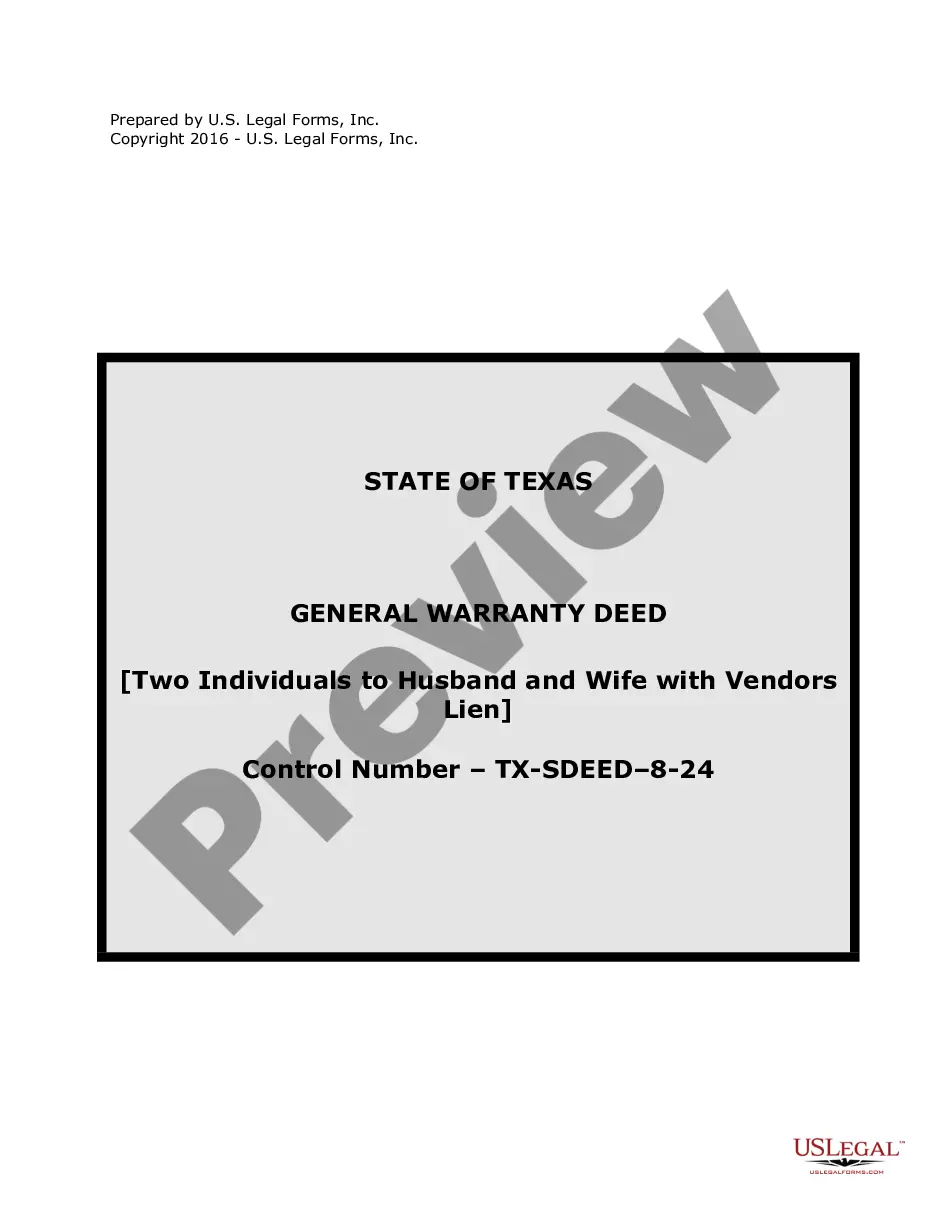
The General Warranty Deed with Vendor's Lien is a legal document used to transfer real property from one individual (the Grantor) to another individual (the Grantee). This type of deed provides the highest level of protection for the Grantee, as the Grantor guarantees that they hold clear title to the property and have the right to transfer it. Unlike other types of deeds, this document also includes a vendor's lien, ensuring that the seller retains a claim on the property until the agreed-upon purchase price is fully paid.
What’s included in this form
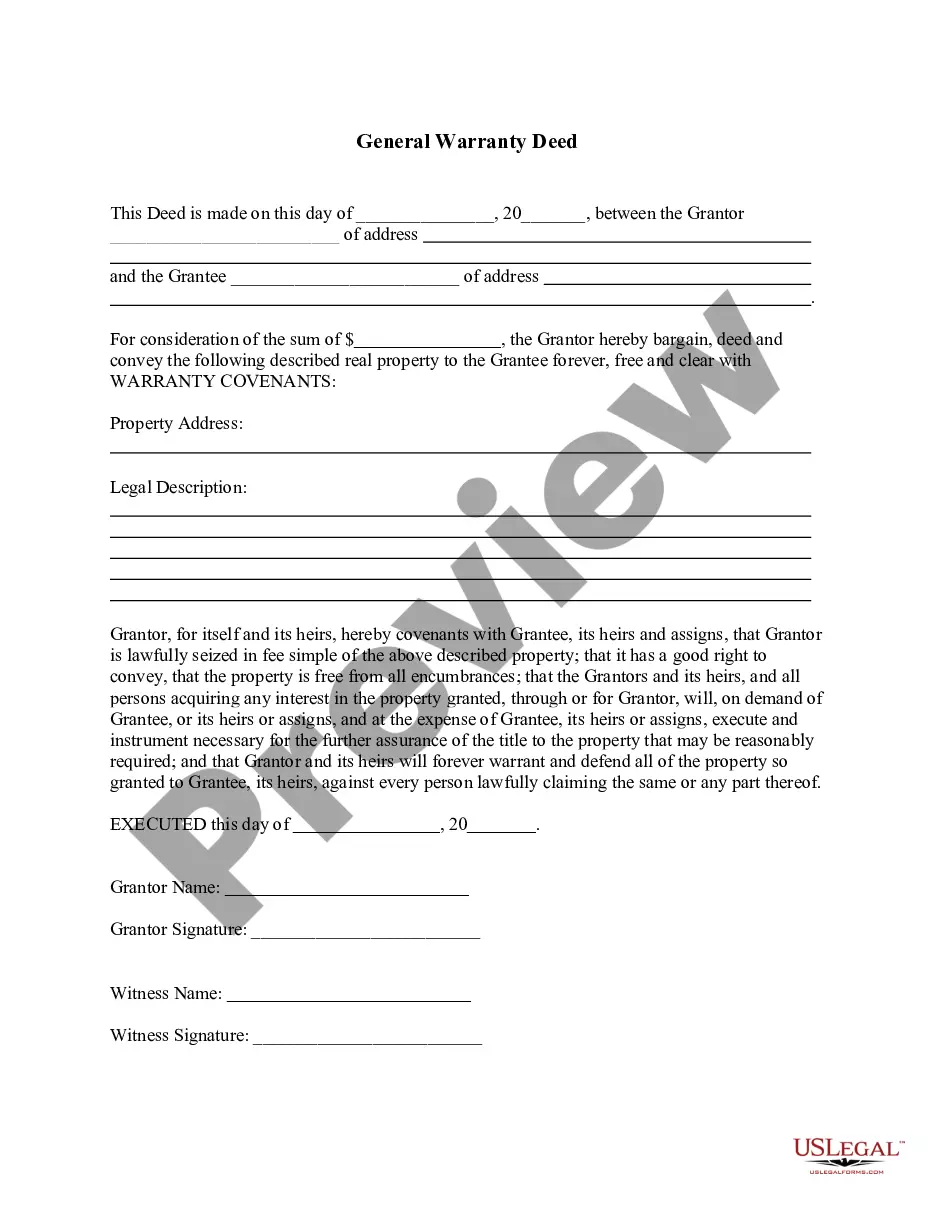
- Details of the Grantor and Grantee, including their names and addresses.
- Description of the property being transferred, often including legal descriptions.
- Terms that outline the vendor's lien provisions to protect the seller's financial interests.
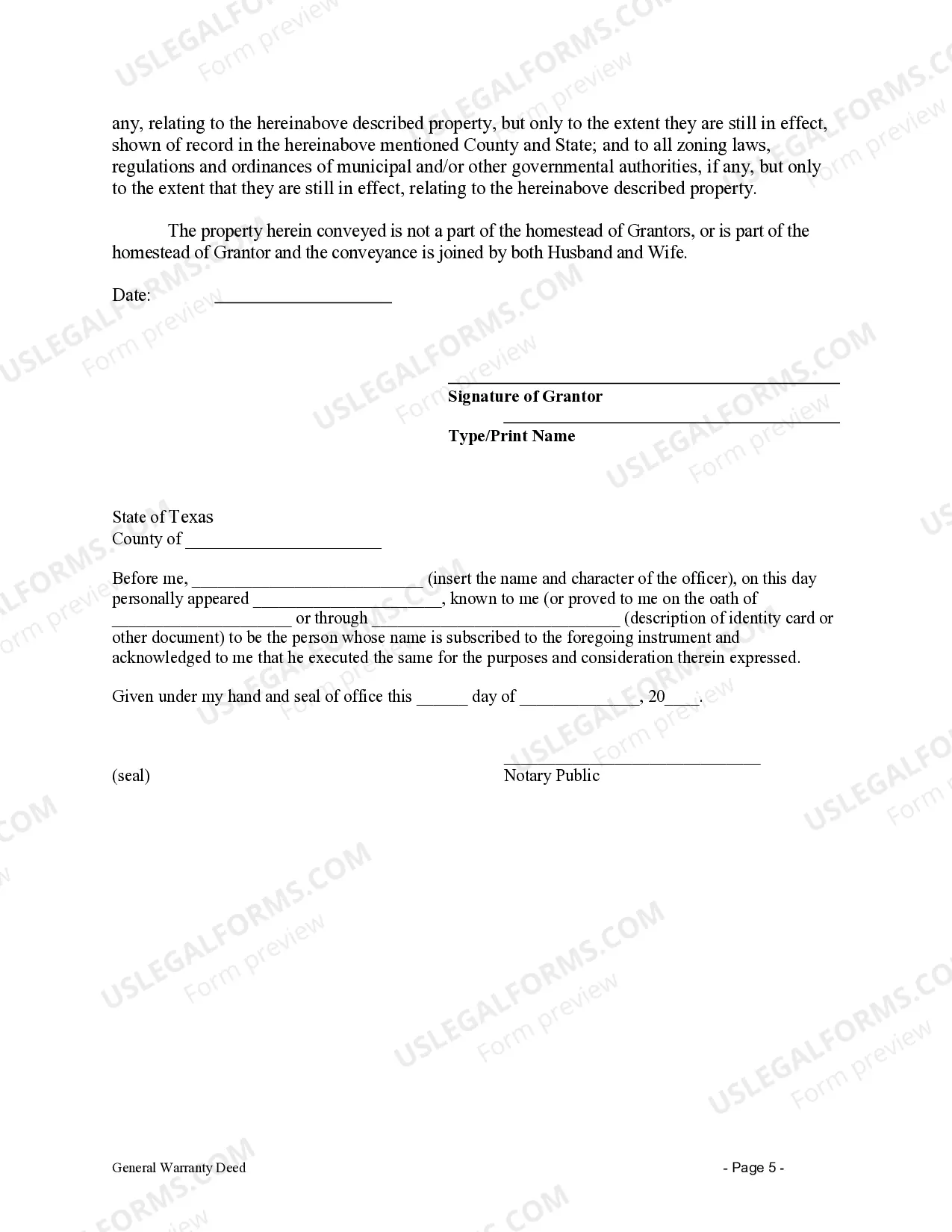
- Signatures of the Grantor and a witness or notary to validate the deed.

Common use cases
This General Warranty Deed should be used when an individual is selling or transferring property to another individual and wishes to provide maximum assurance regarding the title. It is essential in scenarios such as private property sales, gift transfers of real estate, or when settling an estate where property is being distributed to beneficiaries.
Who can use this document
This form is intended for:
- Individuals selling real estate to another individual.
- Property owners seeking formal documentation of a property transfer.
- Heirs dealing with real estate as part of an estate settlement.
Completing this form step by step
- Identify the parties involved in the transaction, including the Grantor and Grantee.
- Provide a legal description of the property being transferred.
- Fill in the terms of the vendor's lien, detailing any payment obligations.
- Review the document for accuracy, ensuring all necessary details are included.
- Sign the deed in the presence of a witness or notary as required.
Notarization requirements for this form
Yes, this form must be notarized to be legally valid in most jurisdictions. Notarization provides a layer of authentication for the transaction. US Legal Forms offers integrated online notarization, allowing you to complete the process securely via video call, 24/7, from the comfort of your home.
Get your form ready online
Our built-in tools help you complete, sign, share, and store your documents in one place.
Make edits, fill in missing information, and update formatting in US Legal Forms—just like you would in MS Word.
Download a copy, print it, send it by email, or mail it via USPS—whatever works best for your next step.
Sign and collect signatures with our SignNow integration. Send to multiple recipients, set reminders, and more. Go Premium to unlock E-Sign.
If this form requires notarization, complete it online through a secure video call—no need to meet a notary in person or wait for an appointment.
We protect your documents and personal data by following strict security and privacy standards.

Make edits, fill in missing information, and update formatting in US Legal Forms—just like you would in MS Word.

Download a copy, print it, send it by email, or mail it via USPS—whatever works best for your next step.

Sign and collect signatures with our SignNow integration. Send to multiple recipients, set reminders, and more. Go Premium to unlock E-Sign.

If this form requires notarization, complete it online through a secure video call—no need to meet a notary in person or wait for an appointment.

We protect your documents and personal data by following strict security and privacy standards.
Mistakes to watch out for
- Failing to provide a complete legal description of the property.
- Not signing the deed in front of a notary or witness.
- Omitting the vendor's lien details, which could lead to future disputes.
- Not clearly identifying the Grantor and Grantee, which may cause legal complications.
Why complete this form online
- Convenience of downloading and completing the form at your own pace.
- Editability allows you to make changes easily before finalizing the document.
- Access to pre-drafted templates that comply with state laws, reducing legal complexities.
Legal use & context
- This form legally transfers ownership of the property and includes substantial warranties from the Grantor.
- It may be enforced in court if issues concerning the property title arise, as it provides assurances against claims from third parties.
- The vendor's lien allows the seller to maintain a security interest in the property until the buyer complies with the payment terms.
Quick recap
- The General Warranty Deed with Vendor's Lien offers strong protection to the buyer.
- It is essential for transferring property between individuals.
- Notarization is typically required to ensure legal validity.
Looking for another form?
Form popularity
FAQ
When a warranty deed contains a vendor's lien, the buyer agrees to allow the seller to seize the property until the property is paid for in full.So, if a warranty deed includes a vendor's lien, it means the seller keeps the right to take possession of the property until the buyer finishes making payments.
A special warranty deed is the answer for a grantor who does not feel comfortable granting a general warranty deed. A special warranty deed is more limited than a general warranty deed, and it only warrants that title is free and clear from other claims during the time period of the grantor's ownership.
They are (1) covenant for seisin; (2) covenant of the right to convey; (3) covenant against encumbrances; (4) covenant for QUIET ENJOYMENT; (5) covenant of general WARRANTY; and (6) covenant for further assurances.
The legal right a seller has to retain the title and possession of goods that are sold until the full price is paid.
A property deed, or house deed, is a legal document that transfers ownership of real estate from the grantor (seller) to the grantee (buyer). Property deeds are the legal tool of defining ownership. When a property or house is sold, the buyer and seller sign the deed to transfer ownership.
A "lien" is a notice that attaches to your property, telling the world that a creditor claims you owe it some money. A lien is typically a public record.A lien on your house, mobile home, car, or other property makes your title unclear. To clear up the title, you must pay off the lien.
A vendor's lien is the right of a seller to repossess the property sold until the buyer makes all payments for the full purchase price. The property is the collateral given as security to the seller for the purchase price. It is sometimes used in connection with a purchase money mortgage on real estate.
This release of mortgage is recorded or filed and gives notice to the world that the lien is no more. On the other hand, when you have a trust deed or deed of trust, the lender files a release deed.When you call the lender, ask for the release of lien department.
It's important to note that a warranty deed does not actually prove the grantor has ownership (a title search is the best way to prove that), but it is a promise by the grantor that they are transferring ownership and if it turns out they don't actually own the property, the grantor will be responsible for compensating