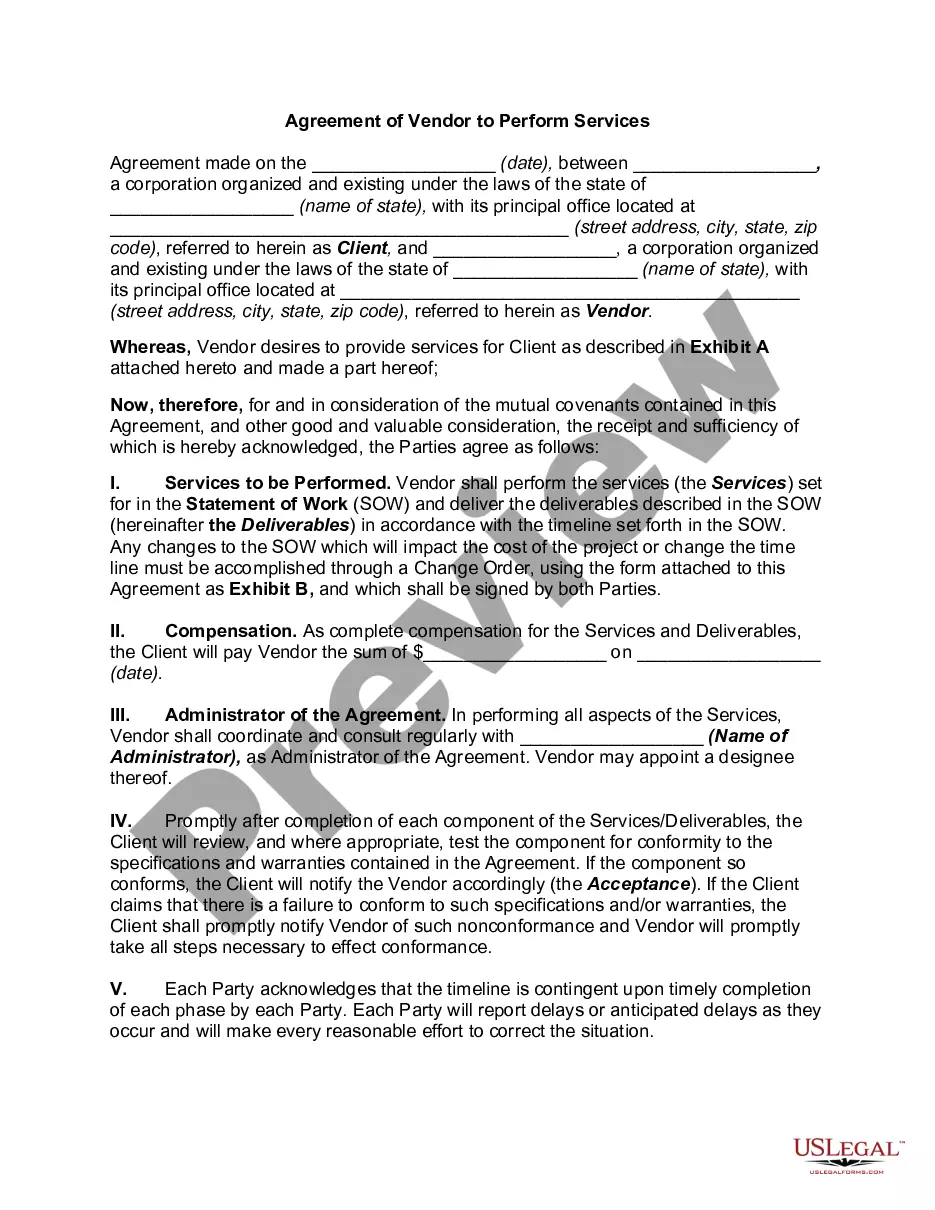
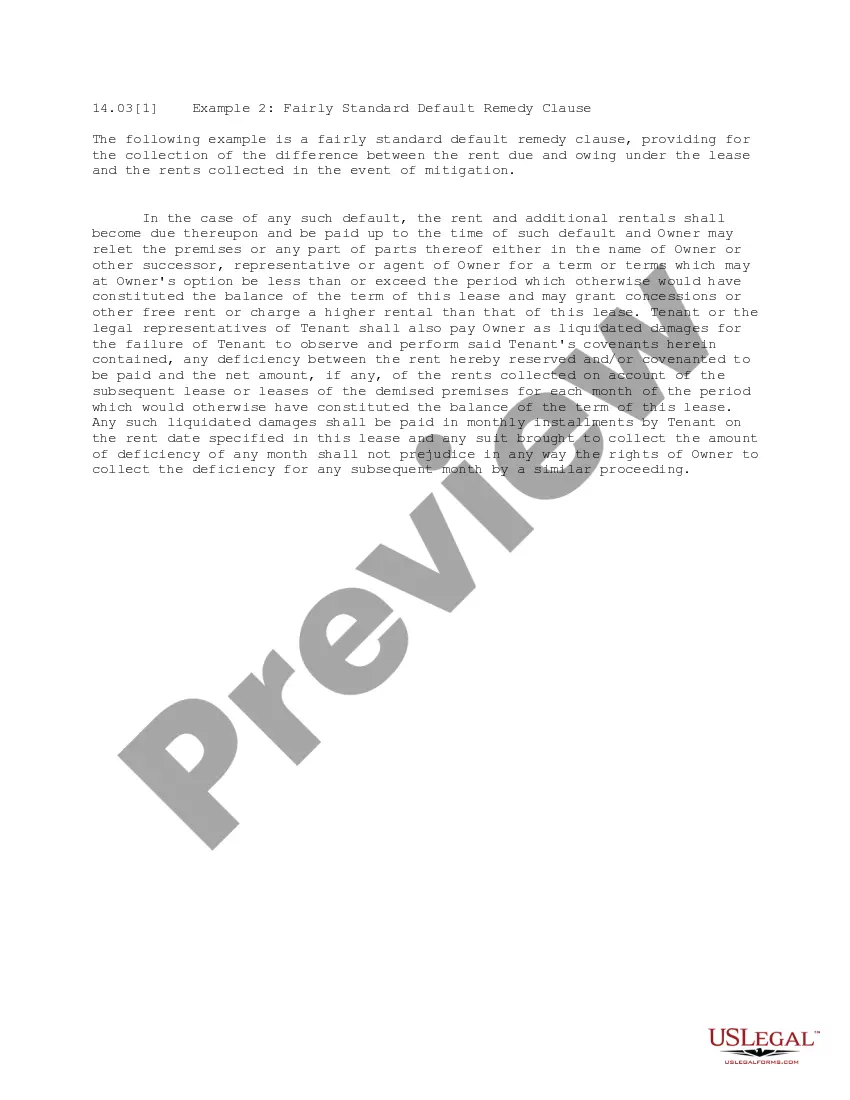
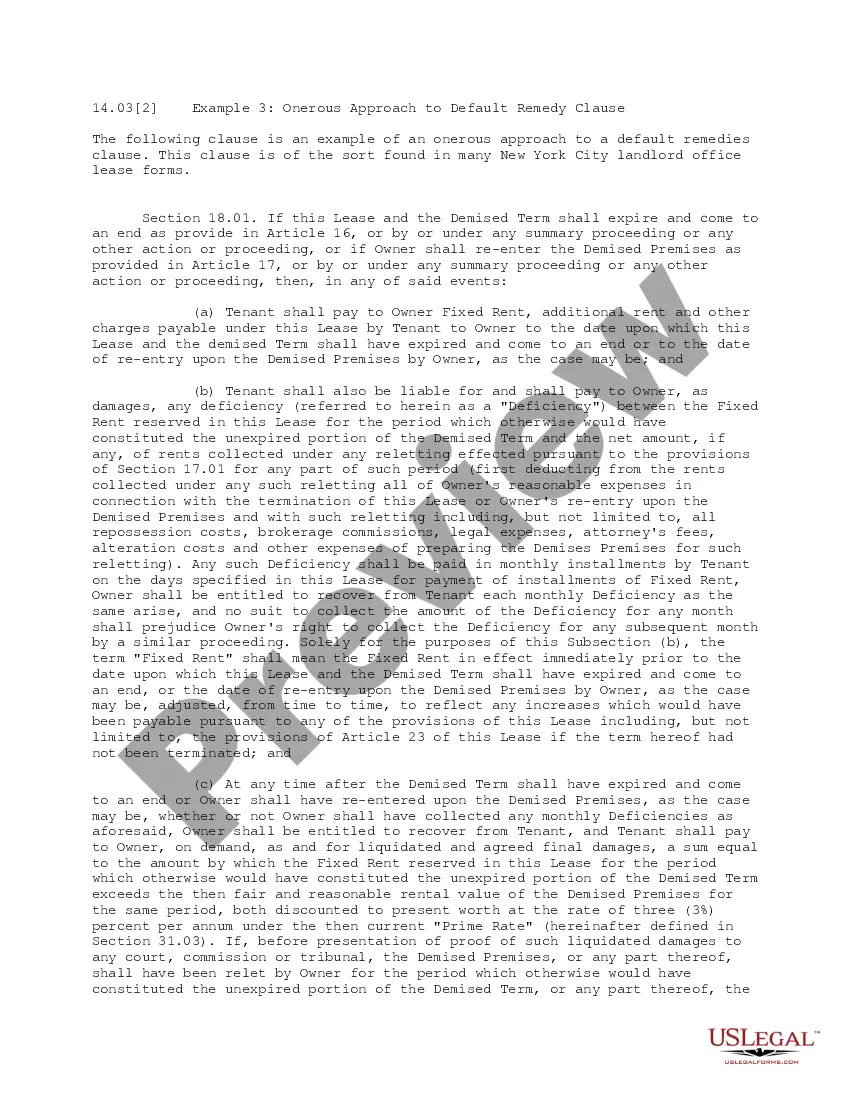
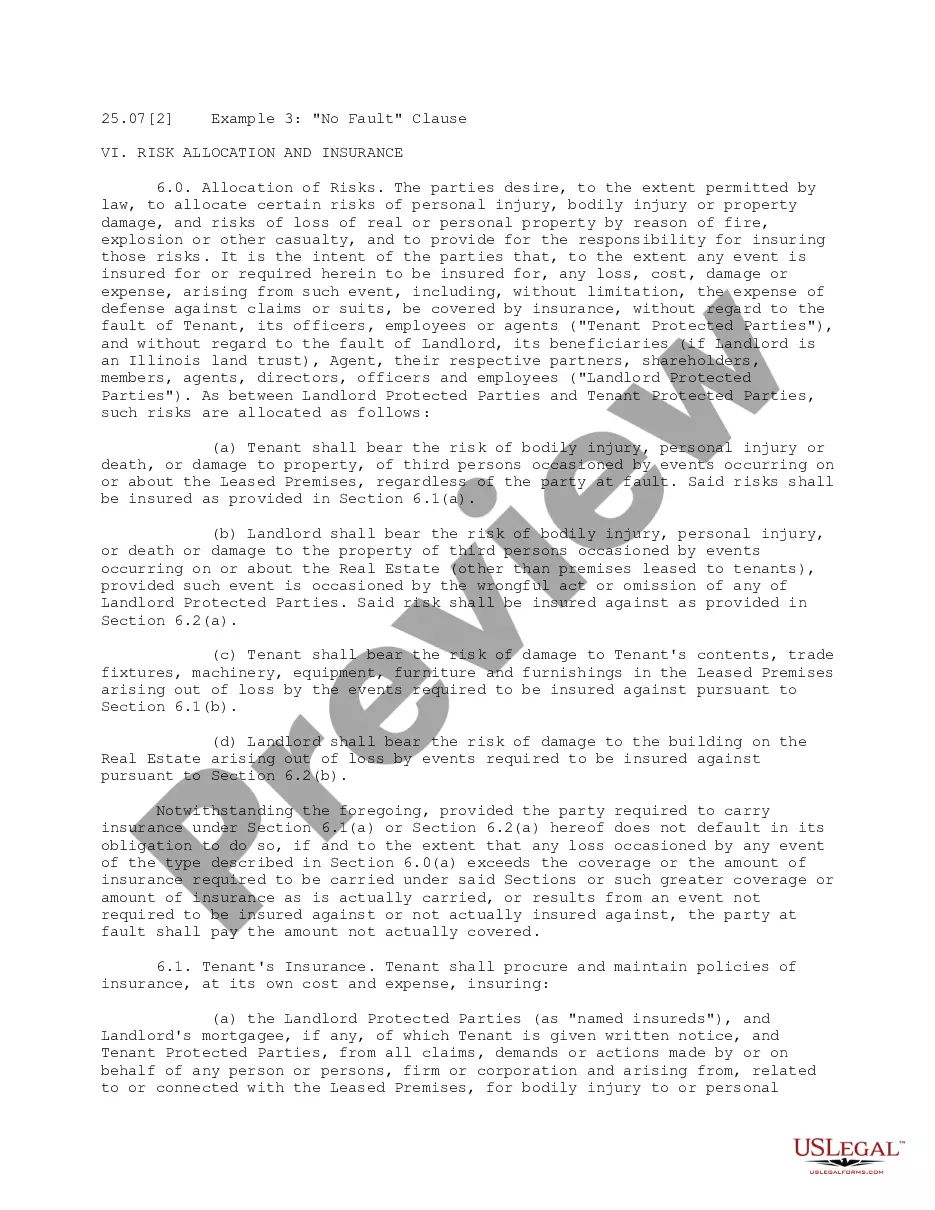
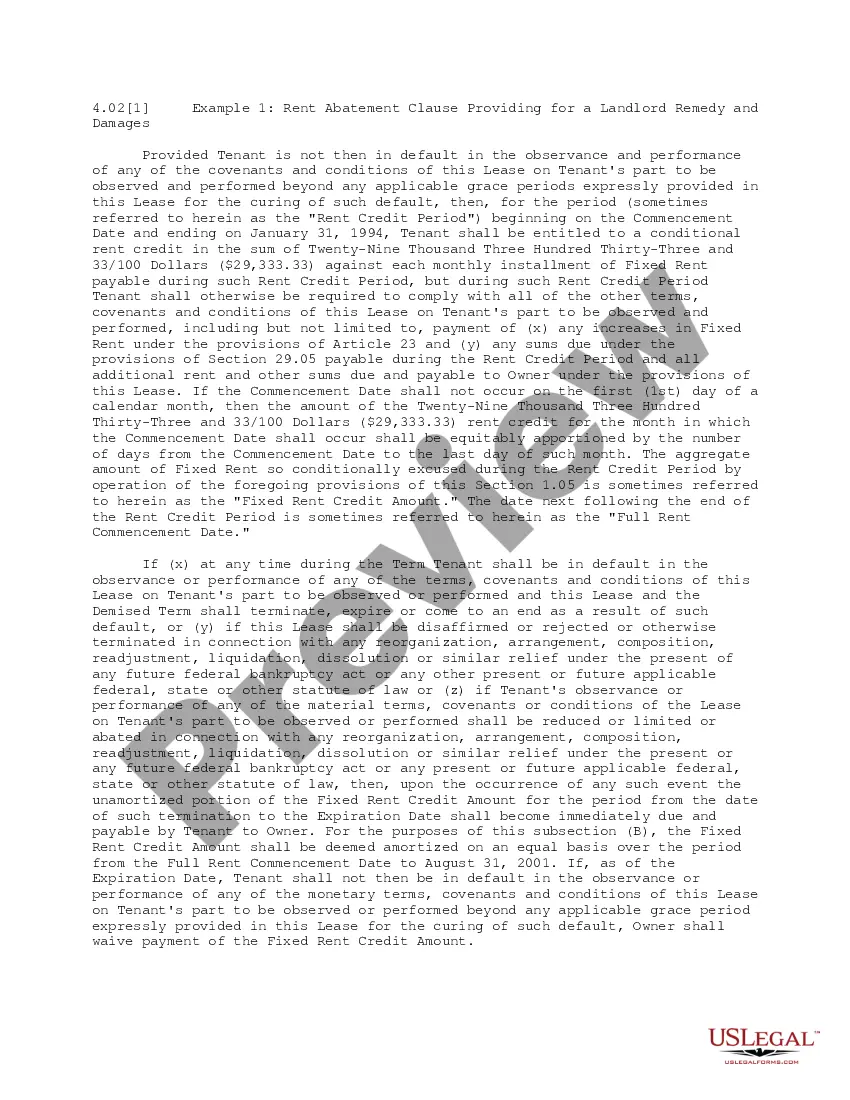
This office lease form is a standard default remedy clause, providing for the collection of the difference between the rent due and owing under the lease and the rents collected in the event of mitigation.
Tennessee Default Remedy Clause
Category:
State:
Multi-State
Control #:
US-OL14031
Format:
Word;
PDF
Instant download
Description
Get your form ready online
Our built-in tools help you complete, sign, share, and store your documents in one place.
Built-in online Word editor
Make edits, fill in missing information, and update formatting in US Legal Forms—just like you would in MS Word.
Export easily
Download a copy, print it, send it by email, or mail it via USPS—whatever works best for your next step.
E-sign your document
Sign and collect signatures with our SignNow integration. Send to multiple recipients, set reminders, and more. Go Premium to unlock E-Sign.
Notarize online 24/7
If this form requires notarization, complete it online through a secure video call—no need to meet a notary in person or wait for an appointment.
Store your document securely
We protect your documents and personal data by following strict security and privacy standards.

Make edits, fill in missing information, and update formatting in US Legal Forms—just like you would in MS Word.

Download a copy, print it, send it by email, or mail it via USPS—whatever works best for your next step.

Sign and collect signatures with our SignNow integration. Send to multiple recipients, set reminders, and more. Go Premium to unlock E-Sign.

If this form requires notarization, complete it online through a secure video call—no need to meet a notary in person or wait for an appointment.

We protect your documents and personal data by following strict security and privacy standards.
Looking for another form?




How to fill out Default Remedy Clause?
Are you in the place the place you require documents for both organization or person purposes almost every time? There are a lot of authorized file layouts available on the net, but locating types you can rely on is not effortless. US Legal Forms delivers a huge number of type layouts, such as the Tennessee Default Remedy Clause, which are published to satisfy state and federal requirements.
If you are currently informed about US Legal Forms website and get a free account, basically log in. Following that, you are able to download the Tennessee Default Remedy Clause design.
Should you not offer an profile and want to start using US Legal Forms, abide by these steps:
- Discover the type you want and ensure it is to the appropriate area/area.
- Make use of the Preview switch to analyze the form.
- Look at the explanation to actually have chosen the correct type.
- In case the type is not what you`re looking for, make use of the Research field to obtain the type that meets your needs and requirements.
- Once you obtain the appropriate type, just click Get now.
- Opt for the prices strategy you want, complete the necessary info to make your bank account, and pay money for the order using your PayPal or credit card.
- Select a handy document formatting and download your version.
Get each of the file layouts you possess purchased in the My Forms food list. You may get a more version of Tennessee Default Remedy Clause at any time, if needed. Just select the required type to download or produce the file design.
Use US Legal Forms, by far the most extensive variety of authorized types, to conserve time as well as avoid faults. The assistance delivers skillfully manufactured authorized file layouts that can be used for a variety of purposes. Make a free account on US Legal Forms and start making your way of life a little easier.
Form popularity
FAQ
TIPA is also the first state privacy law to feature an entity-level carve-out for insurance companies, entirely exempting all insurance companies licensed under Tennessee law (though insurance companies are often using the GLBA exemption of the other comprehensive state privacy laws to achieve similar exemptions).
In Tennessee, construction defect cases are subject to a statute of repose of four years. Generally speaking, except in cases of fraudulent concealment, a construction defect claim is barred, regardless of when the defect is discovered, if not brought within four years of substantial completion of the improvement.
Related Documents A Tennessee 30-Day Notice to Cure or Vacate is a formal document that explains to the renter that they have 14 days to remedy the issue that has caused them to receive the notice OR to vacate the property within the next 30 days.
Your notice or cancellation must be sent in by midnight of the third business day after signing the contract. If you mail the cancellation, it must be postmarked by the third business day.
The attorney general's office must provide a covered company with the "opportunity to cure" any alleged violation within 60 days of receiving the notice of violation. This cure period is notably longer than those under other privacy laws, including Virginia, Utah and Indiana (which have 30-day cure periods).
Before beginning work on any project, the Truth in Construction and Consumer Protection Act previously required a contractor to deliver a written notice to the owner it was about to begin improvements and there would be a lien on the property to secure payment.
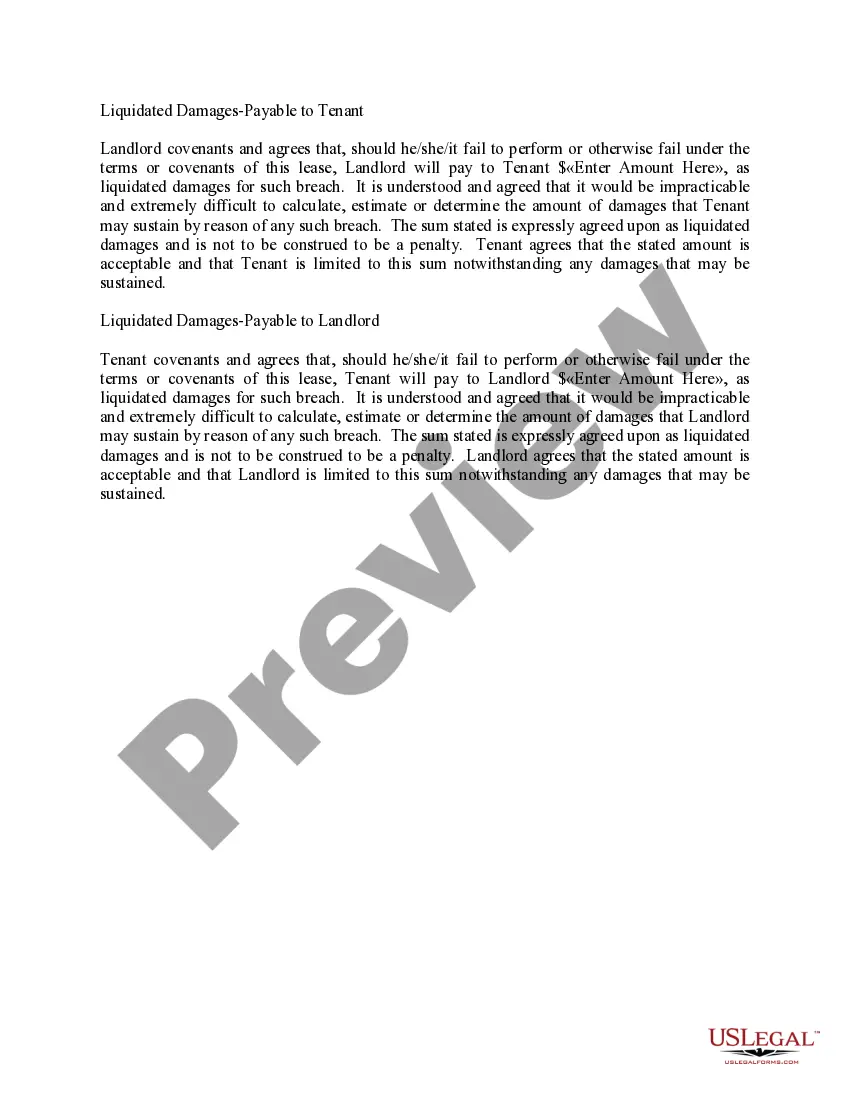
Standard Clause under Tennessee law requiring the breaching party to pay a predetermined amount to the non-breaching party as exclusive compensation for the breaching party's failure to perform a specific task or comply with a particular obligation.
Petition. The application to change the name or to correct an error in a birth certificate shall be by petition, in writing, signed by the applicant and verified by affidavit, stating that the applicant is a resident of the county, and giving the applicant's reasons for desiring the change or correction.