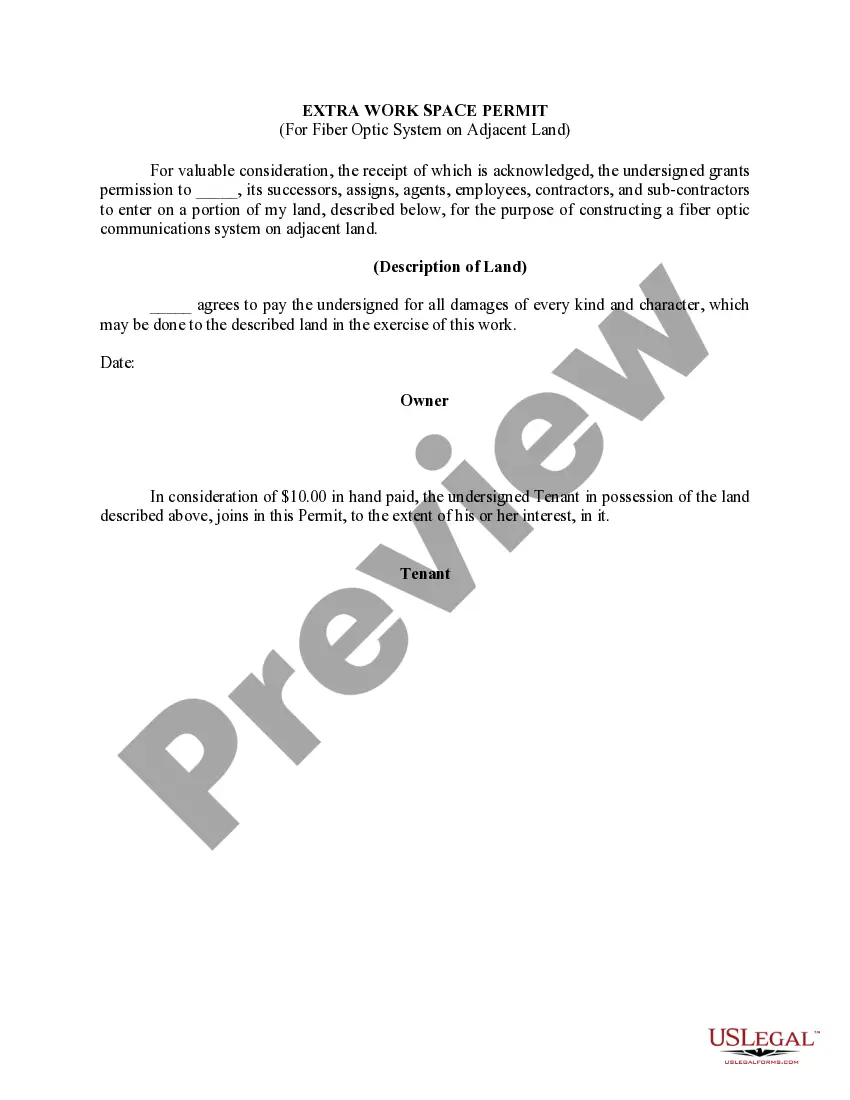
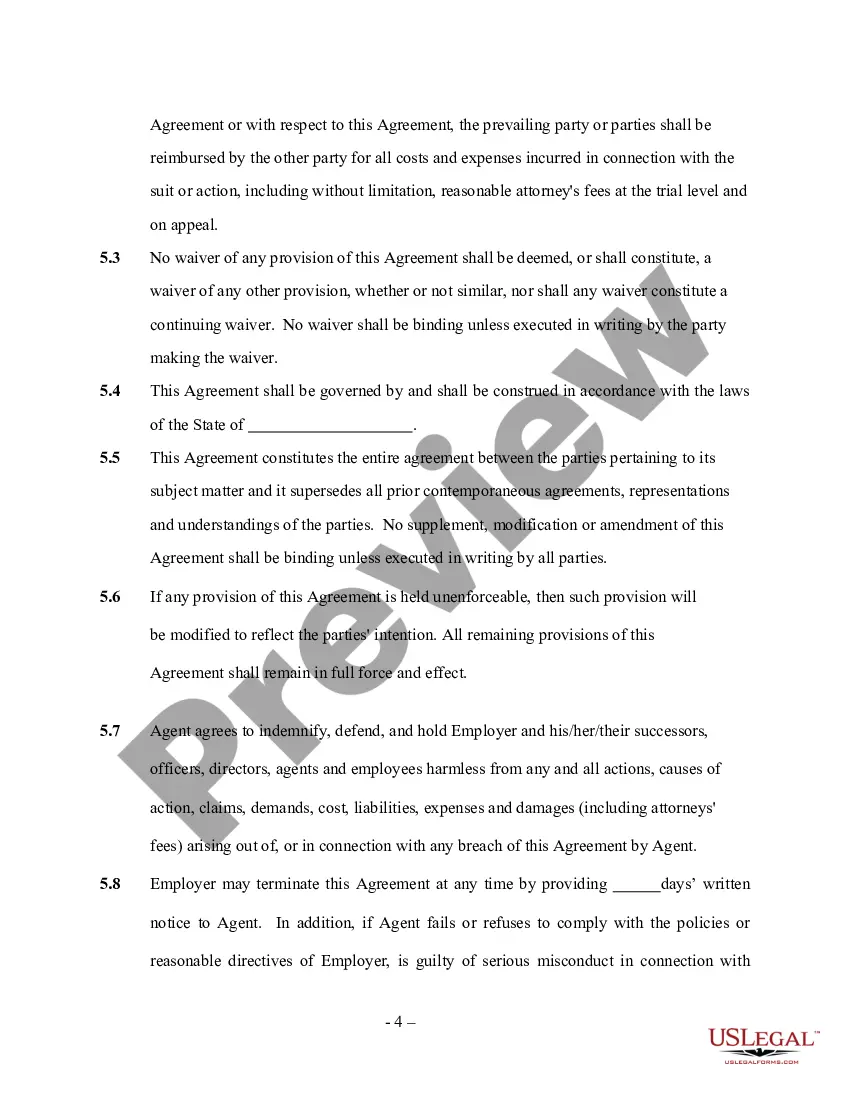
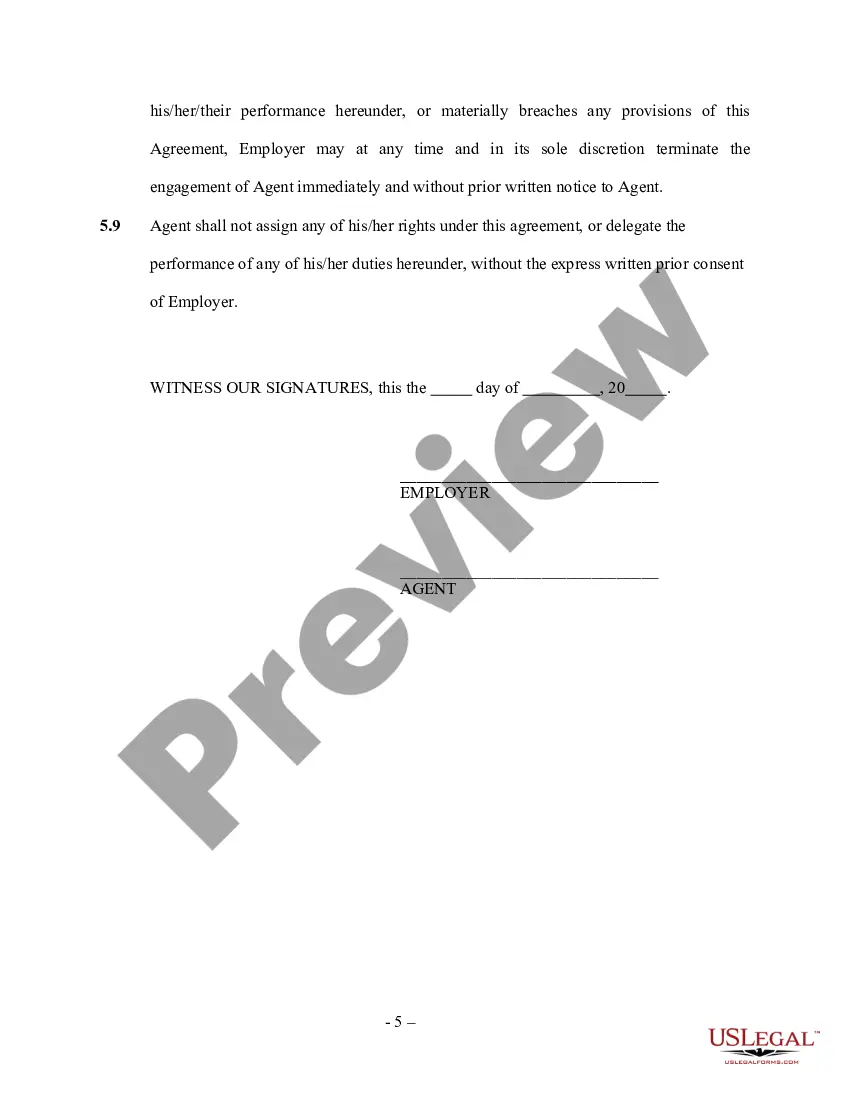
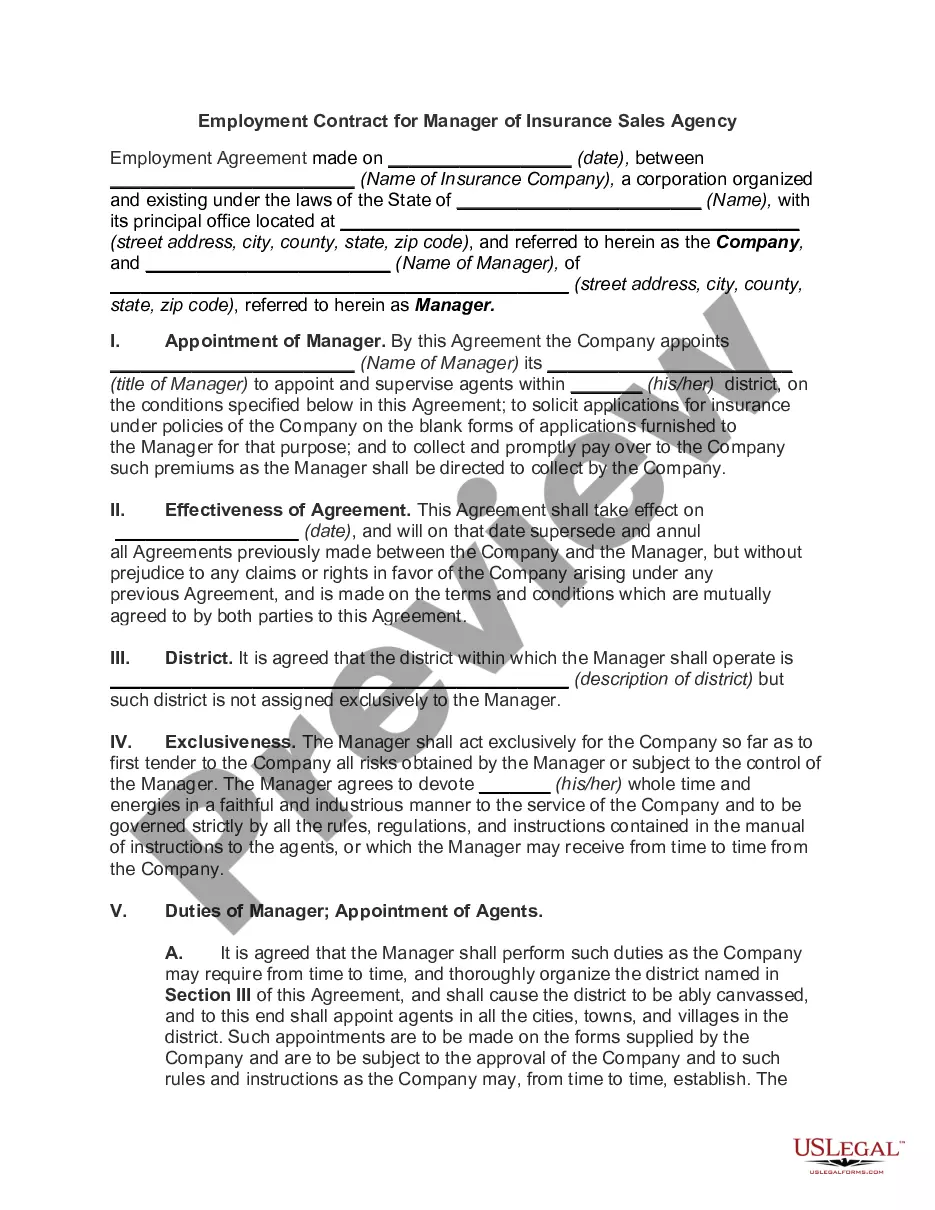
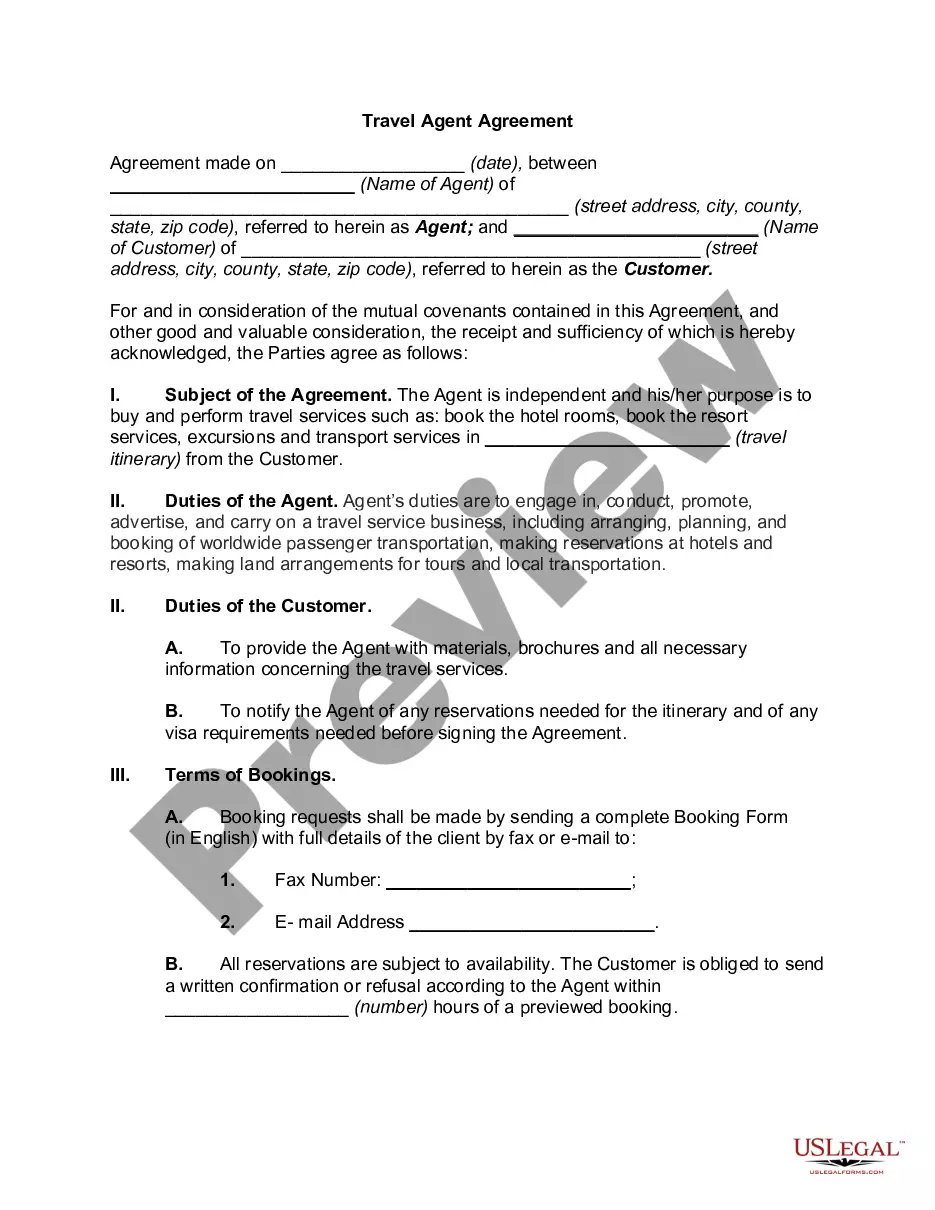
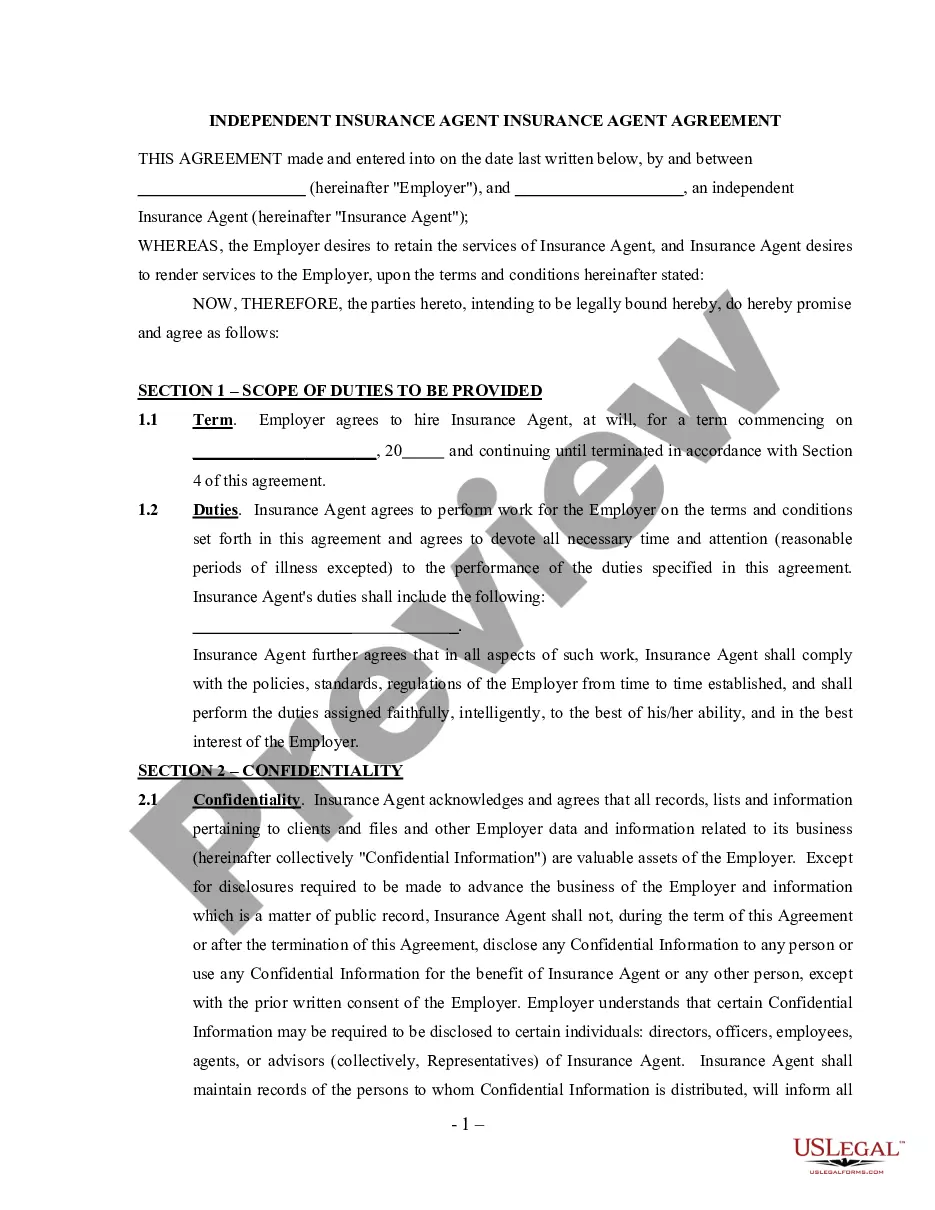
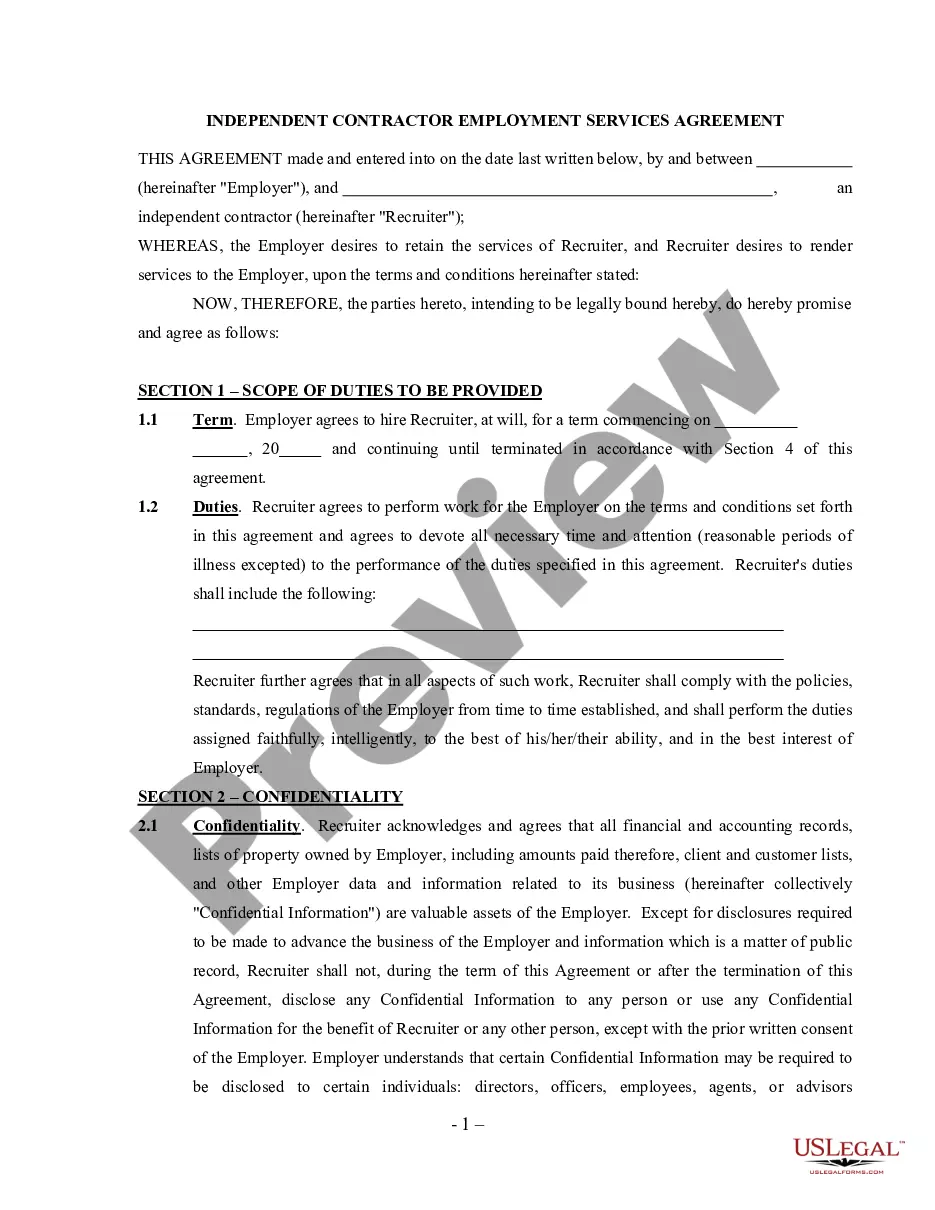
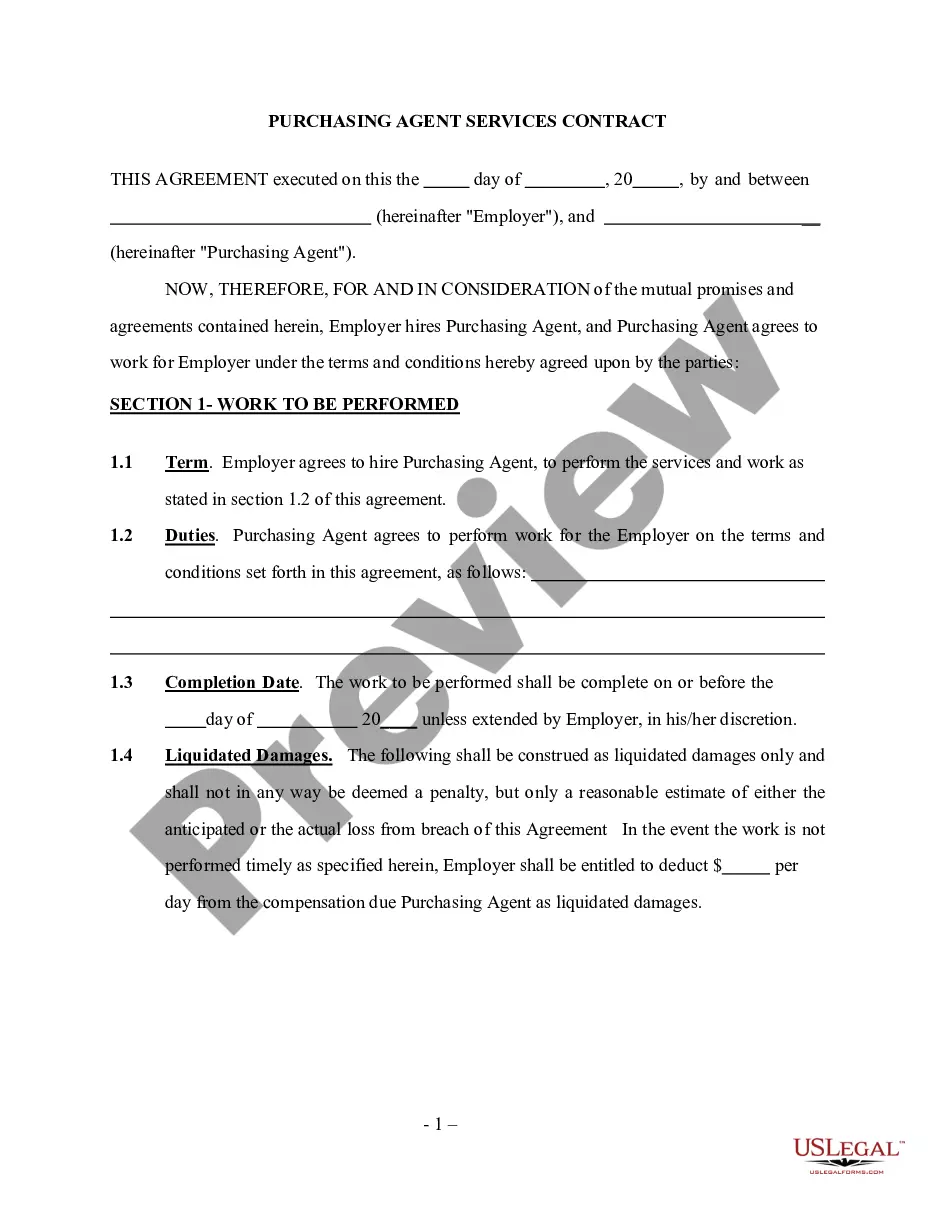
Travel Agency hires travel agent as an independent contractor to provide travel services to Travel Agency customers. Agents may not bind Travel Agency outside the scope of the contract.
Tennessee Self-Employed Travel Agent Employment Contract
State:
Multi-State
Control #:
US-INDC-68
Format:
Word;
Rich Text
Instant download
Description
Free preview
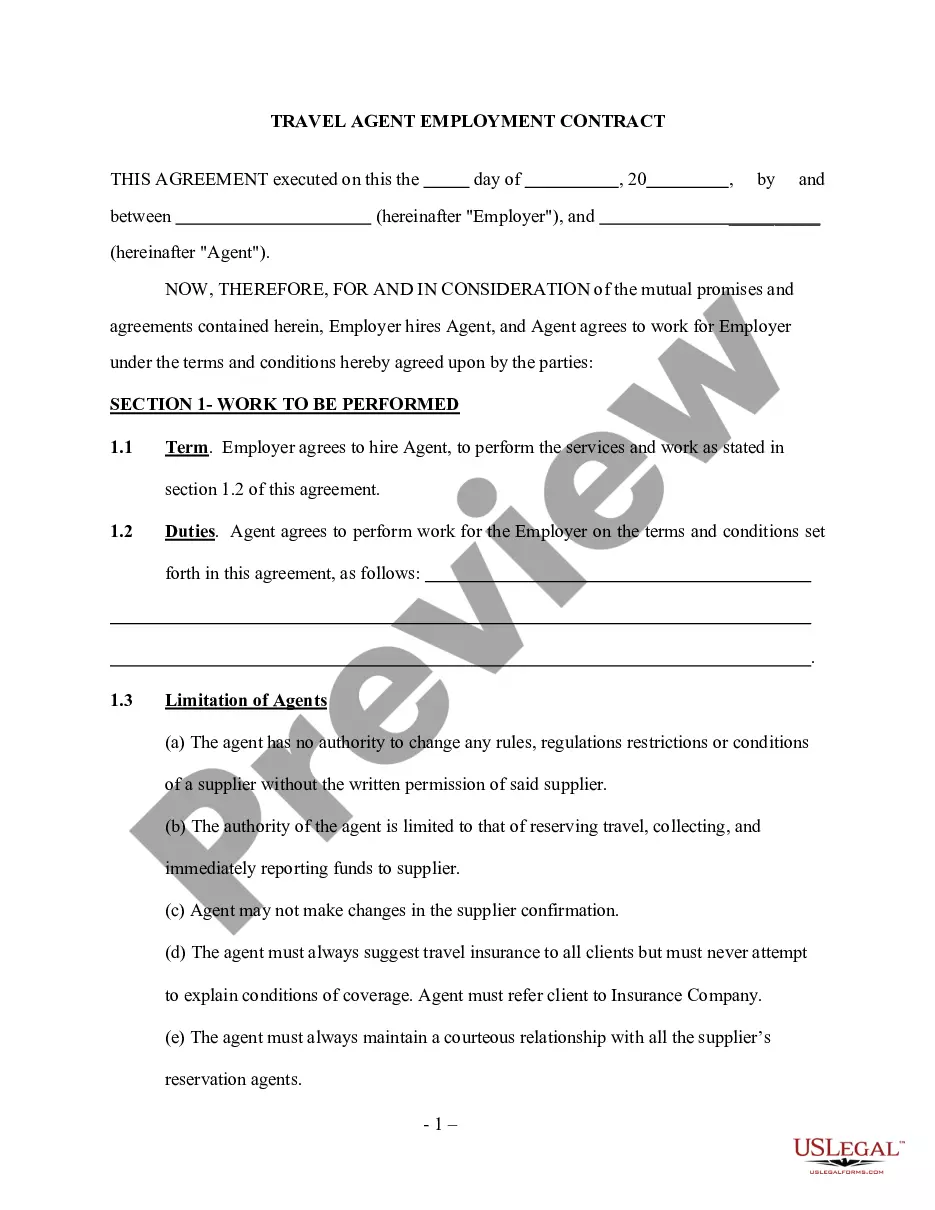
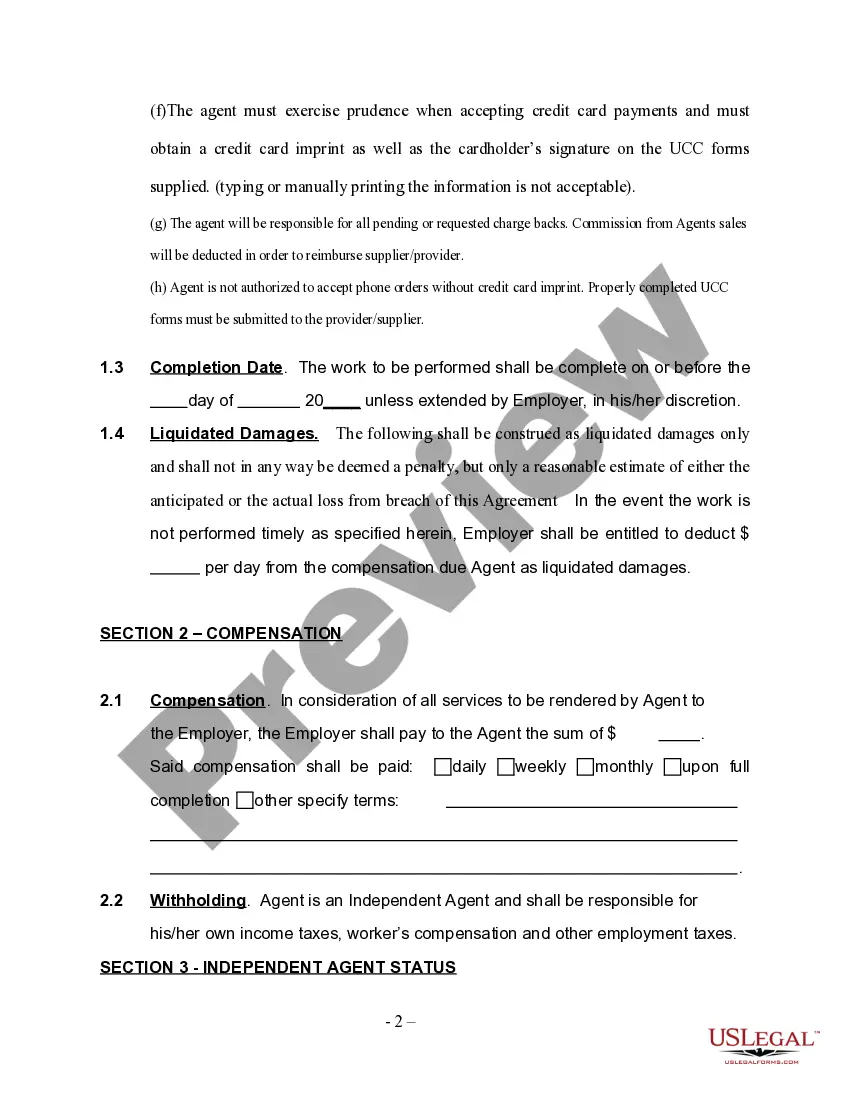
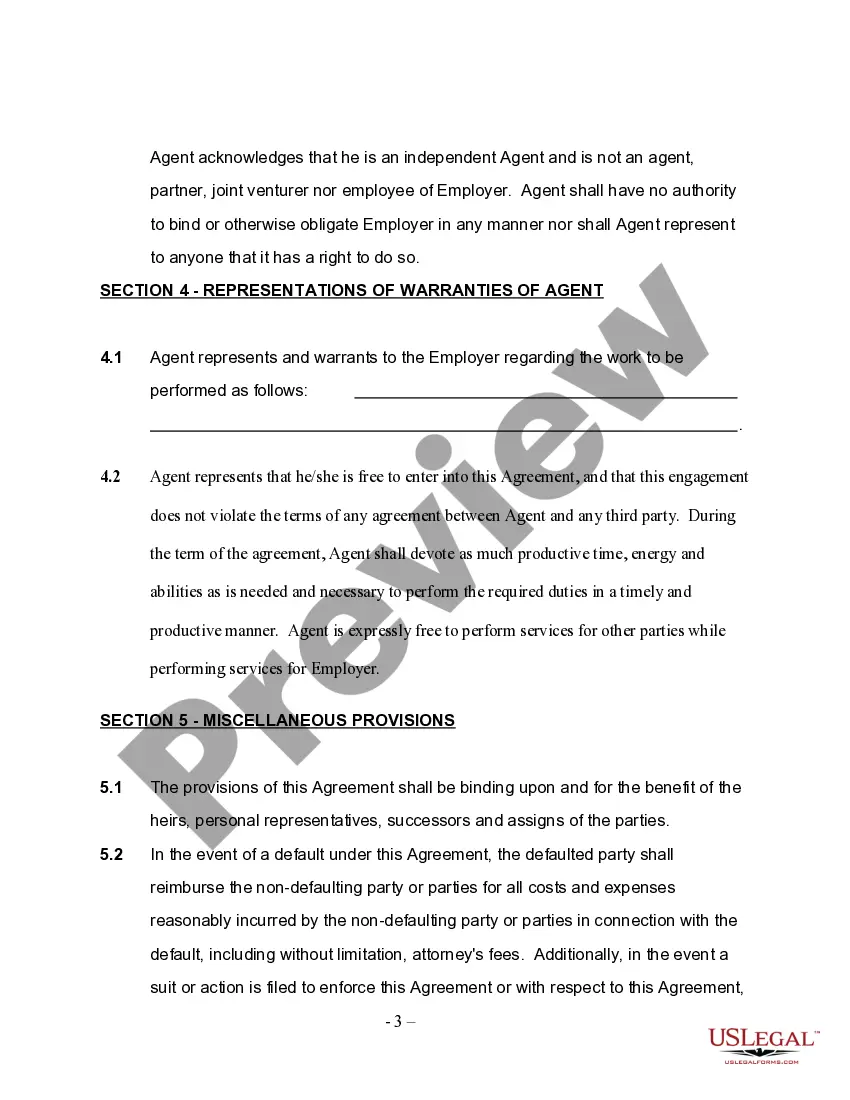
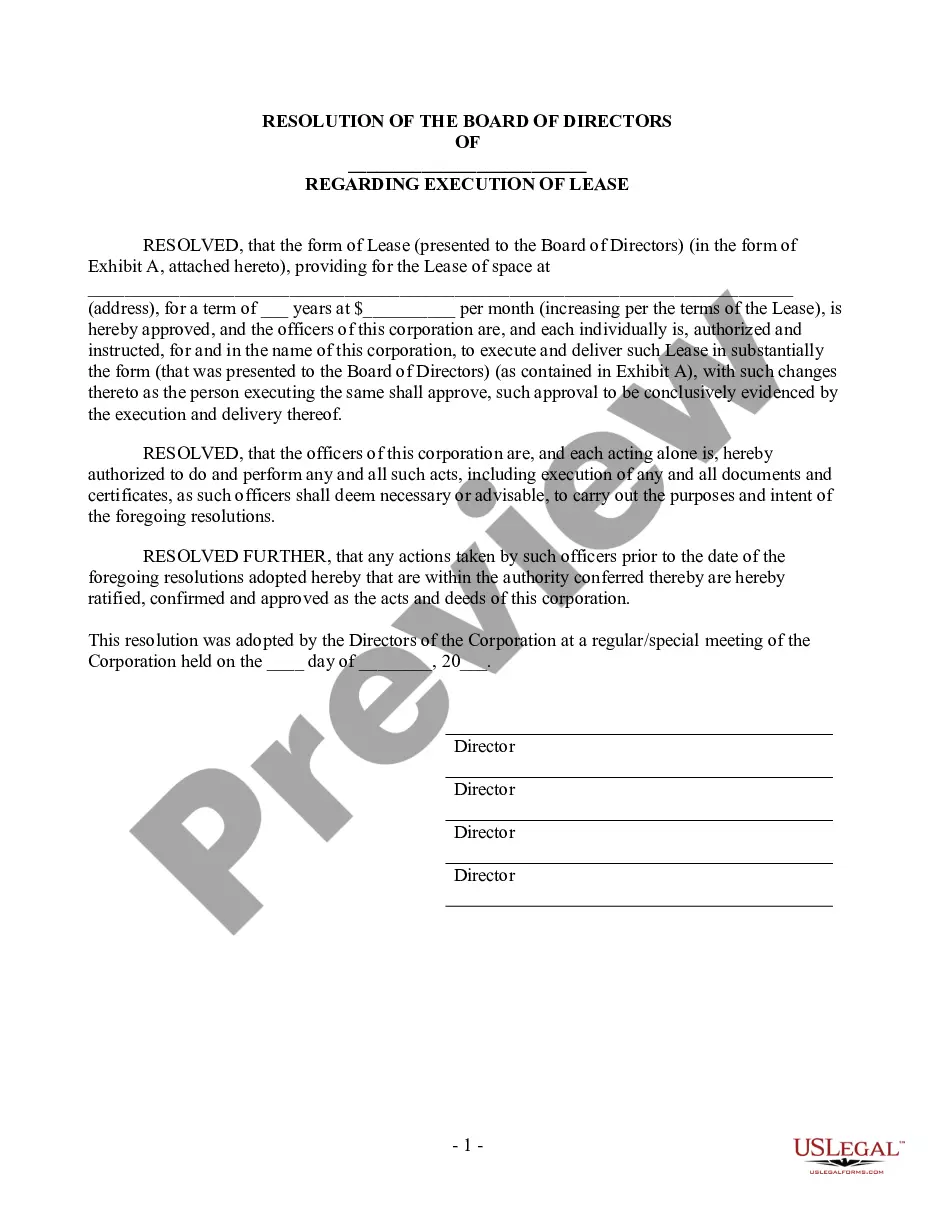
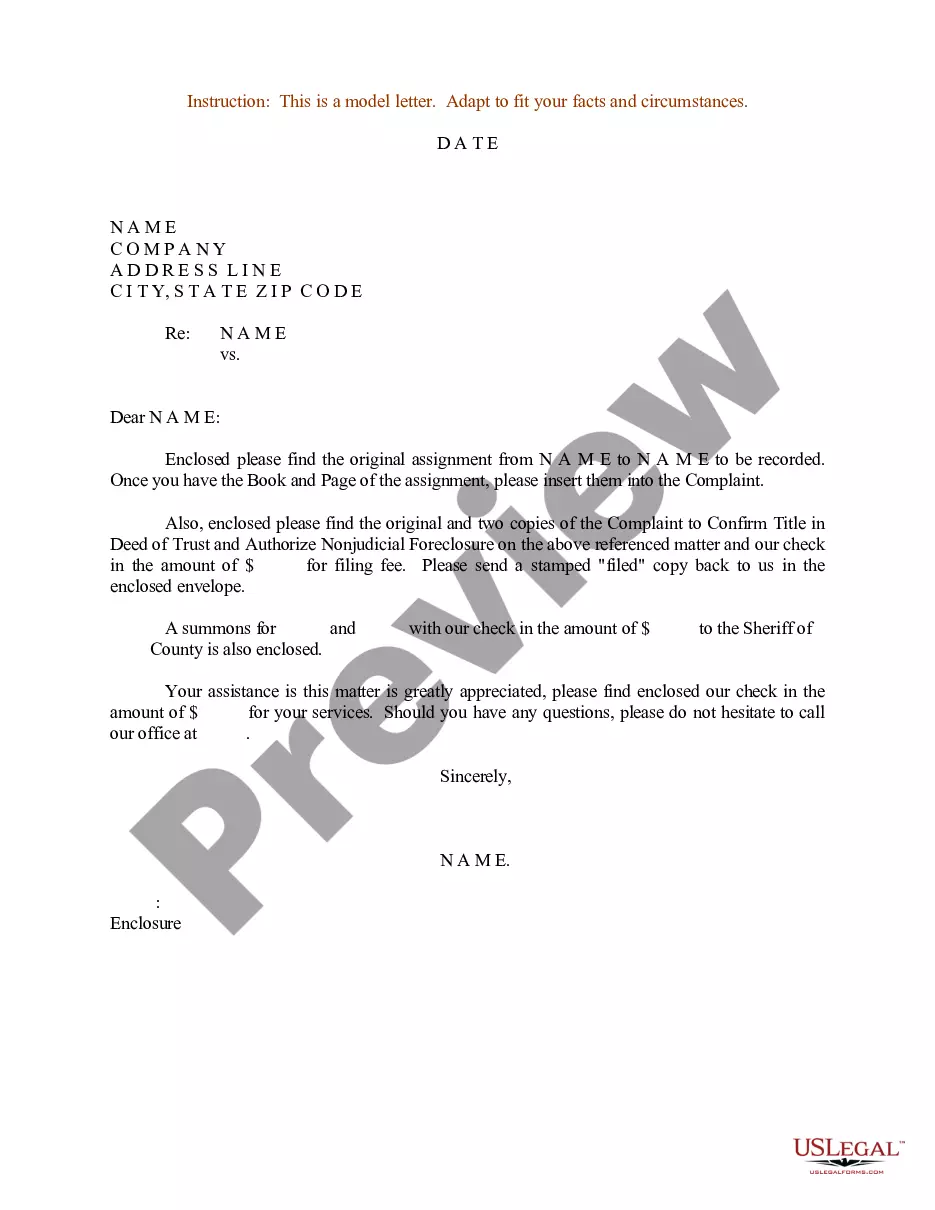
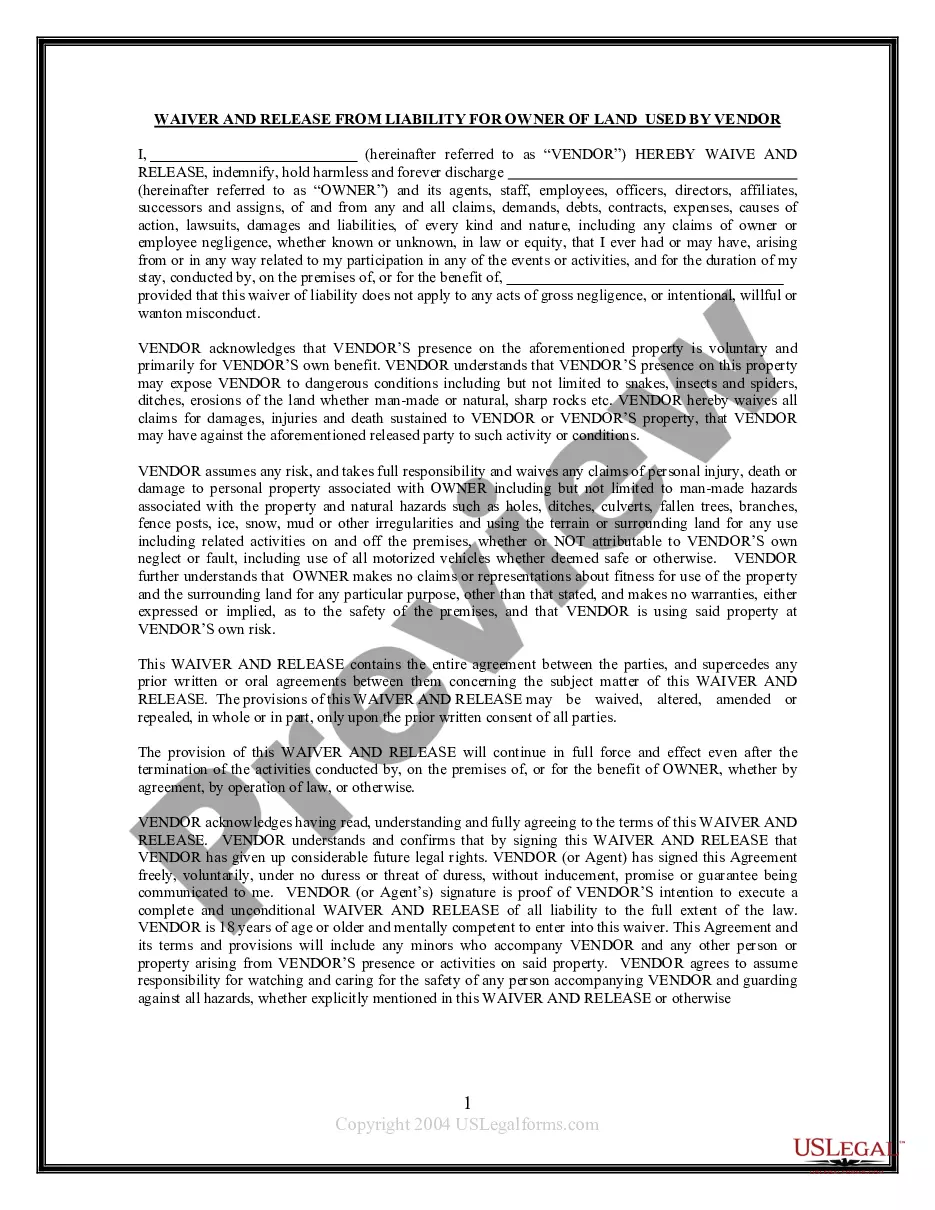

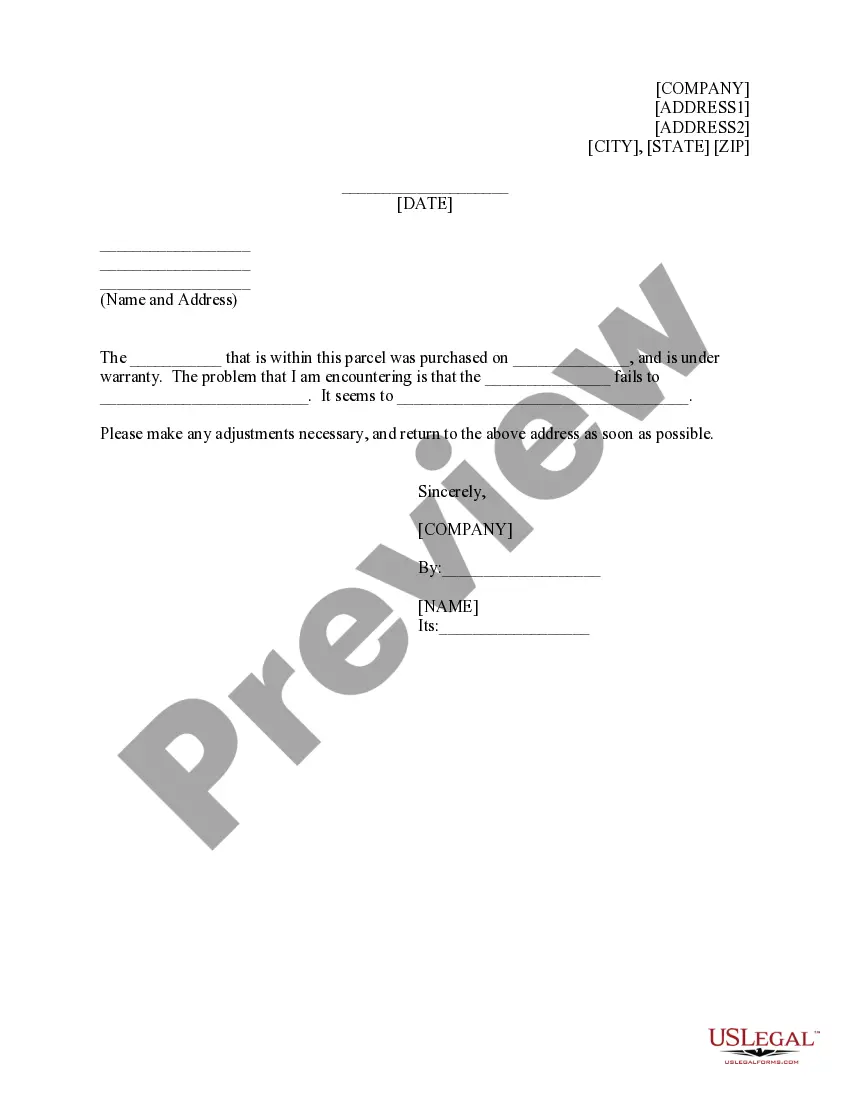
How to fill out Self-Employed Travel Agent Employment Contract?
Locating the appropriate legal document template can be a challenge.
Clearly, there are numerous templates accessible online, but how do you find the legal form you need.
Utilize the US Legal Forms site.
First, ensure you have selected the correct form for the city/state. You can review the form using the Preview button and read the form description to ensure it is suitable for you. If the form does not meet your requirements, use the Search field to find the correct form. Once you are confident that the form is appropriate, click the Download now button to obtain the form. Select the pricing plan you desire and enter the required information. Create your account and pay for your order using your PayPal account or credit card. Choose the format and download the legal document template to your device. Finally, complete, modify, print, and sign the received Tennessee Self-Employed Travel Agent Employment Contract. US Legal Forms is the largest repository of legal forms where you can find numerous document templates. Utilize the service to obtain professionally crafted documents that adhere to state requirements.
- The platform offers thousands of templates, including the Tennessee Self-Employed Travel Agent Employment Contract, which you can use for both business and personal purposes.
- All forms are verified by experts and comply with state and federal regulations.
- If you are already registered, Log In to your account and click the Download button to retrieve the Tennessee Self-Employed Travel Agent Employment Contract.
- Use your account to browse the legal forms you have previously acquired.
- Navigate to the My documents section of your account and download another copy of the document you need.
- If you are a new user of US Legal Forms, here are simple instructions for you to follow.
Form popularity
FAQ
To become a travel agent in Tennessee, begin by researching the industry and completing any necessary training or certifications. Next, consider gaining experience through internships or working with established agencies. Finally, when you’re ready to start your own business, make sure to secure a well-drafted Tennessee Self-Employed Travel Agent Employment Contract to protect your interests.
You can easily download a Tennessee Self-Employed Travel Agent Employment Contract from platforms like USLegalForms. This site provides a variety of customizable templates tailored to meet your specific needs. By using a reliable resource, you can ensure that your employment contract covers all necessary aspects of your business relationship.
To become a travel agent, you typically need a high school diploma or equivalent, along with strong communication and organizational skills. While formal education in travel and tourism can be beneficial, many successful agents gain experience through internships or entry-level positions. Additionally, understanding the industry and having a passion for travel can help you succeed, especially when negotiating a Tennessee Self-Employed Travel Agent Employment Contract.
In Tennessee, you do not need a specific license to operate as a travel agent. However, obtaining a Tennessee Self-Employed Travel Agent Employment Contract can help outline the terms of your business operations. While licensing is not mandatory, having a solid contract is essential for establishing credibility and professionalism. You can find templates and guidance on uslegalforms to set up your business correctly.
Yes, employment contracts are enforceable in Tennessee as long as they comply with state laws. A Tennessee Self-Employed Travel Agent Employment Contract is a valid agreement that can protect both the agent and the employer. Having a well-drafted contract ensures that expectations are met and rights are upheld. If you need assistance, consider using platforms like uslegalforms to create comprehensive contracts.
Yes, an employment agreement is legally binding when it meets specific criteria. It must include an offer, acceptance, and consideration. In the context of a Tennessee Self-Employed Travel Agent Employment Contract, both parties must clearly understand their responsibilities and the terms of the agreement. This clarity helps ensure that the contract can be enforced if disputes arise.
A travel agent makes money by charging fees for separate elements of travel. For example, instead of charging a commission for booking tickets with airlines or hotel rooms, travel agents earn money by charging a service fee for each booked part.
In truth, most of the time, travel agents don't get free travel although they sometimes get discounts or a chance to keep the commission they would get on their own travel plans.
You may not get a deduction for a home officeThe home office deduction is available to travel advisors that qualify as self-employed and those working as ICs as long as the taxpayer used a portion of the home exclusively for conducting business and the home is the taxpayer's principal place of business.
Simply put, being an independent contractor is one way to be self-employed. Being self-employed means that you earn money but don't work as an employee for someone else.