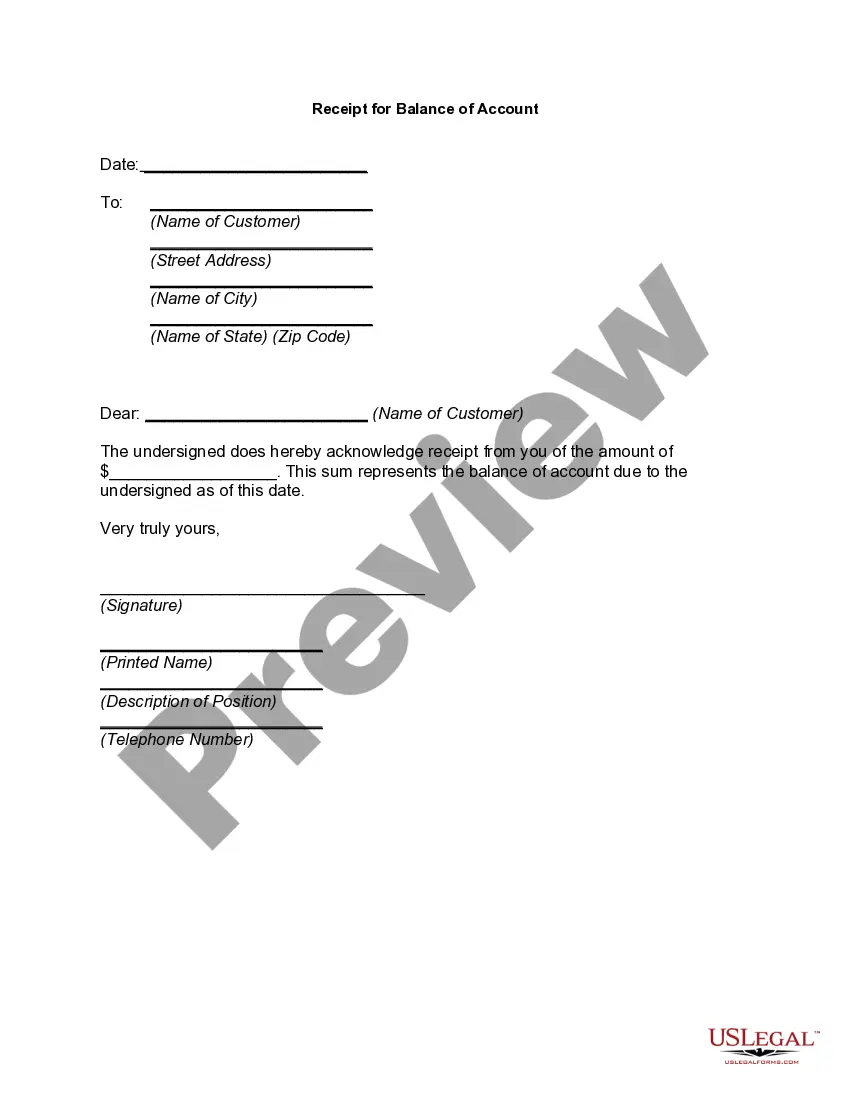
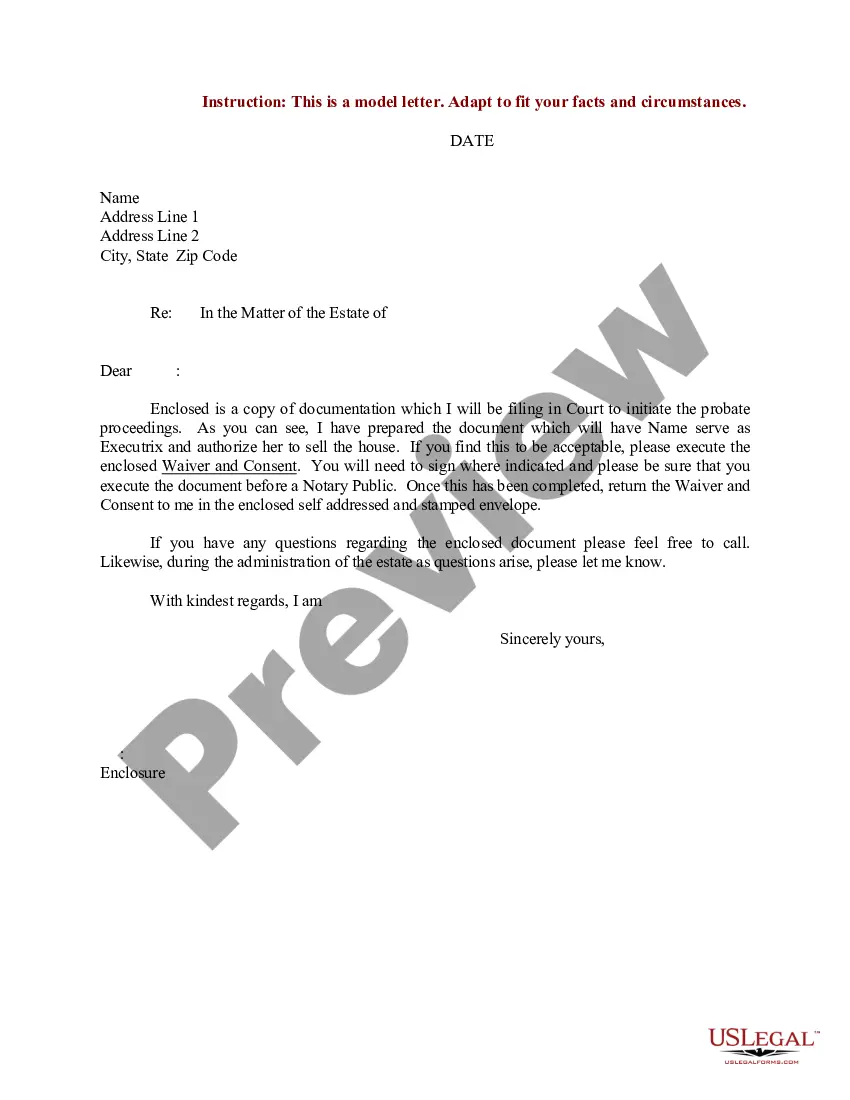
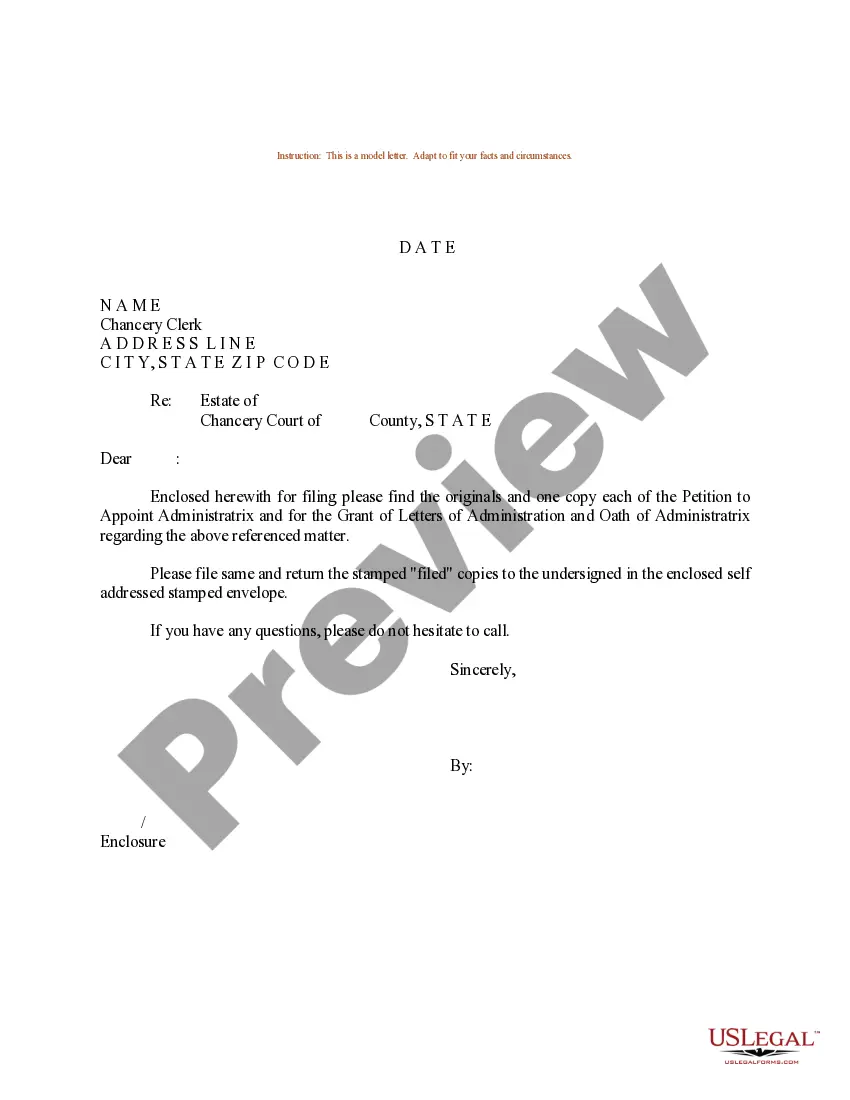
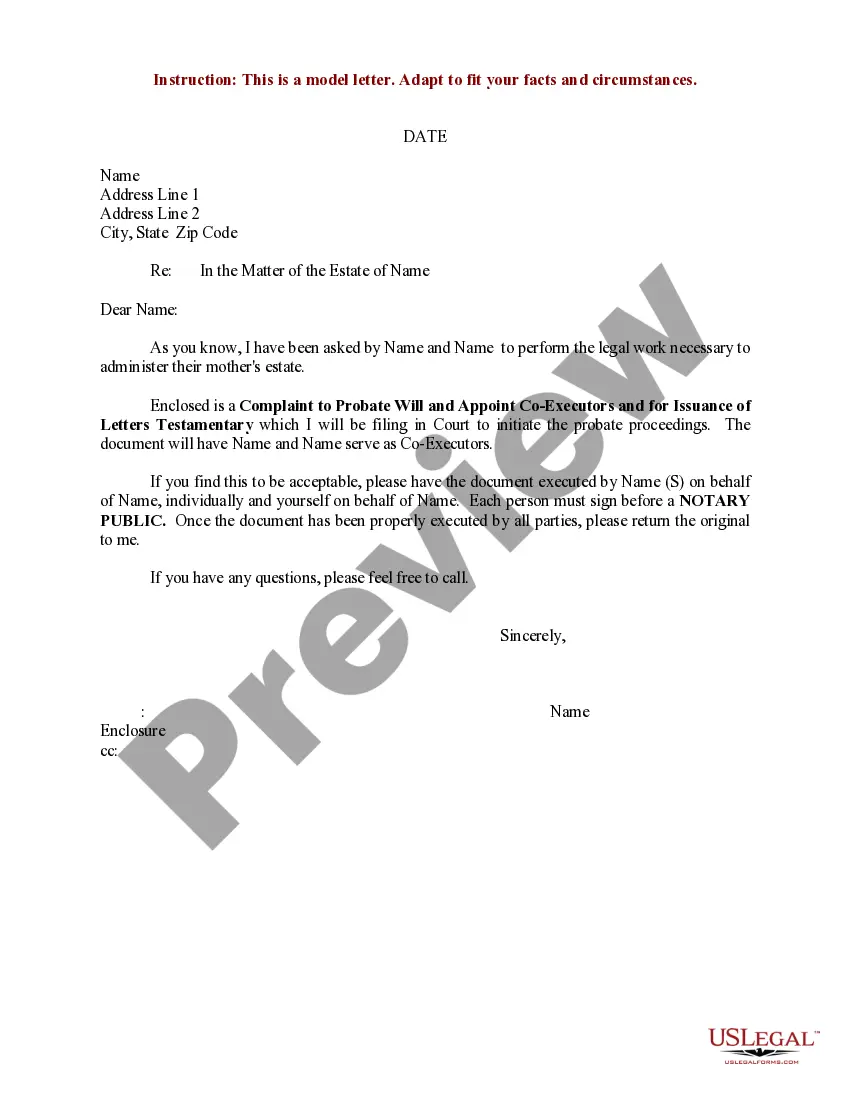
Tennessee Sample Letter for Estate Probate Proceedings
Description
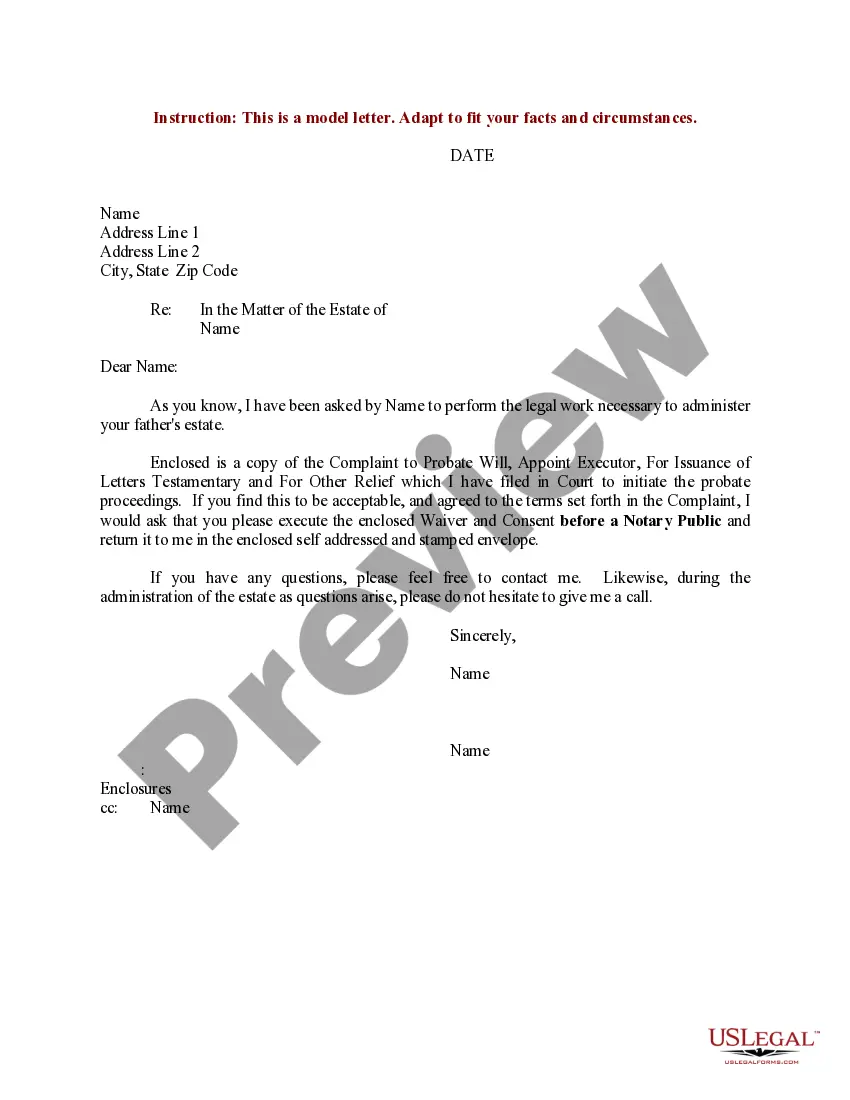
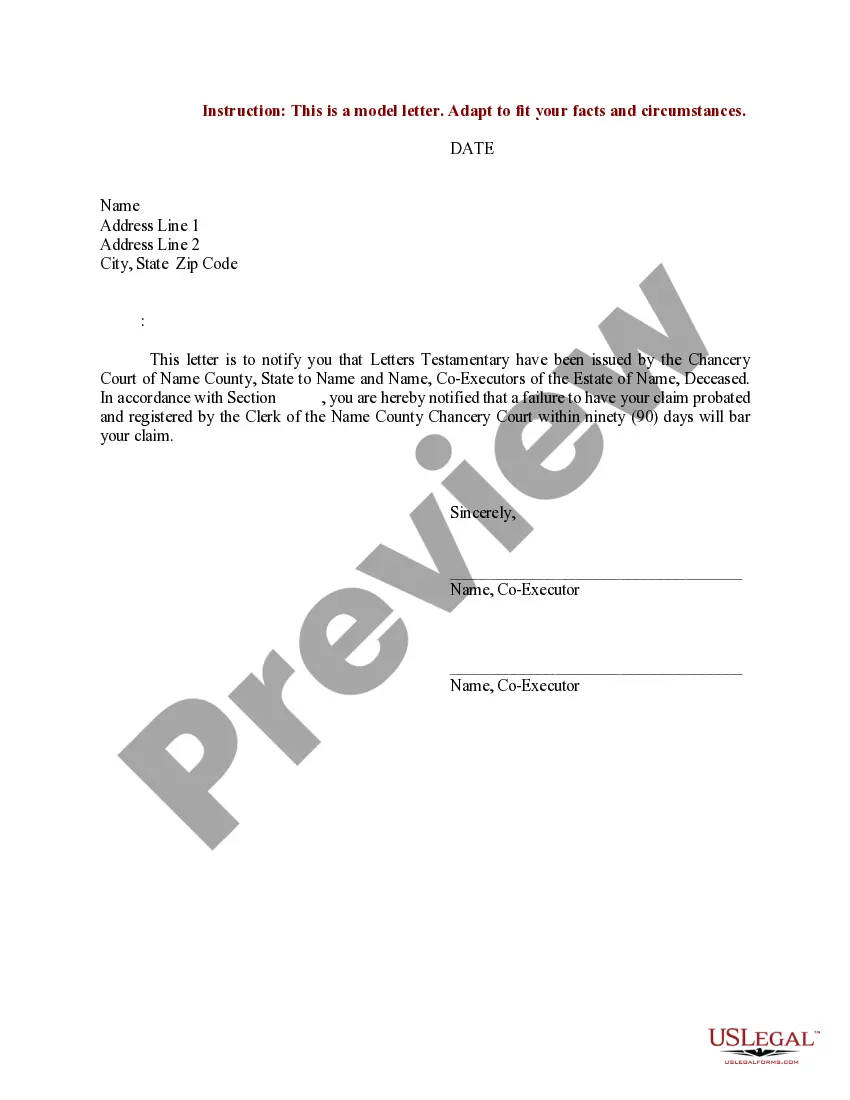
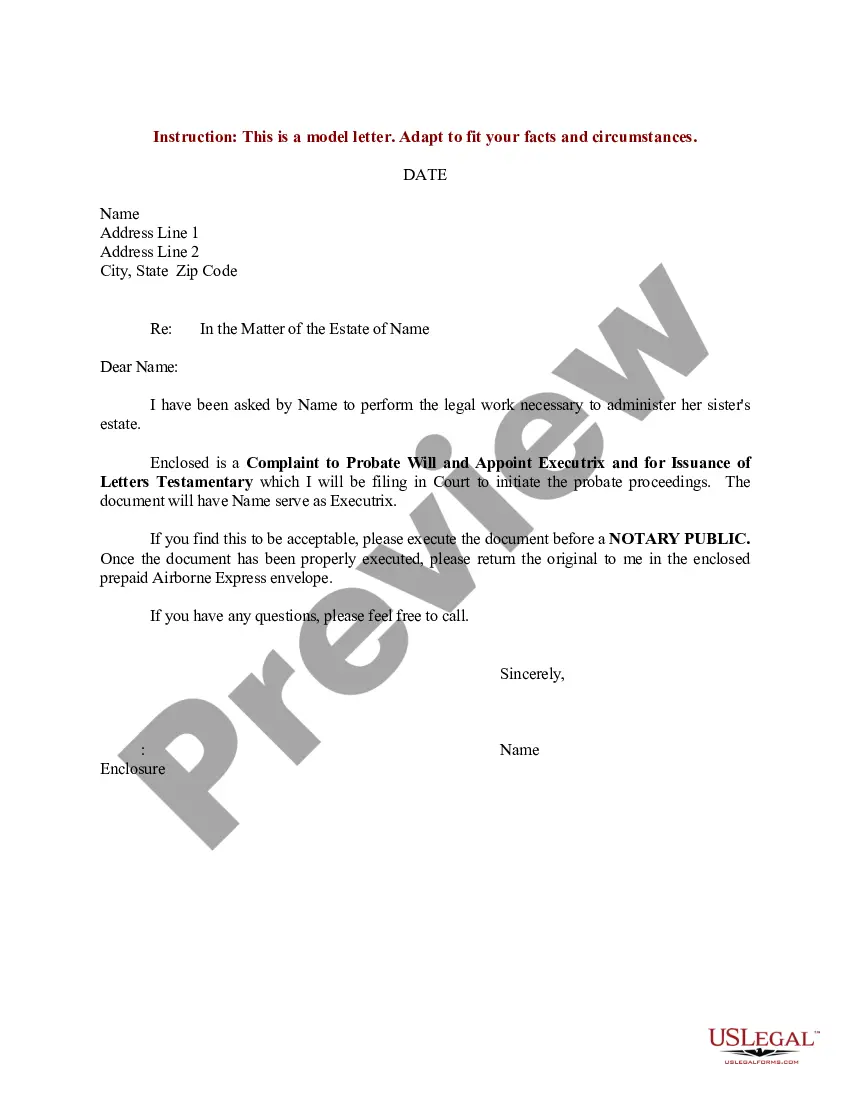
Get your form ready online
Our built-in tools help you complete, sign, share, and store your documents in one place.
Make edits, fill in missing information, and update formatting in US Legal Forms—just like you would in MS Word.
Download a copy, print it, send it by email, or mail it via USPS—whatever works best for your next step.
Sign and collect signatures with our SignNow integration. Send to multiple recipients, set reminders, and more. Go Premium to unlock E-Sign.
If this form requires notarization, complete it online through a secure video call—no need to meet a notary in person or wait for an appointment.
We protect your documents and personal data by following strict security and privacy standards.

Make edits, fill in missing information, and update formatting in US Legal Forms—just like you would in MS Word.

Download a copy, print it, send it by email, or mail it via USPS—whatever works best for your next step.

Sign and collect signatures with our SignNow integration. Send to multiple recipients, set reminders, and more. Go Premium to unlock E-Sign.

If this form requires notarization, complete it online through a secure video call—no need to meet a notary in person or wait for an appointment.

We protect your documents and personal data by following strict security and privacy standards.
Looking for another form?



How to fill out Sample Letter For Estate Probate Proceedings?
US Legal Forms - one of several largest libraries of authorized kinds in America - offers a wide array of authorized record layouts you can obtain or produce. Utilizing the internet site, you can find 1000s of kinds for business and specific reasons, sorted by groups, suggests, or keywords.You will discover the most up-to-date variations of kinds much like the Tennessee Sample Letter for Estate Probate Proceedings in seconds.
If you already have a subscription, log in and obtain Tennessee Sample Letter for Estate Probate Proceedings in the US Legal Forms catalogue. The Down load option can look on every single kind you see. You get access to all earlier acquired kinds from the My Forms tab of the bank account.
In order to use US Legal Forms the very first time, listed below are easy instructions to help you started off:
- Be sure you have picked the right kind to your city/area. Select the Preview option to review the form`s information. Look at the kind description to ensure that you have chosen the correct kind.
- In case the kind doesn`t satisfy your requirements, utilize the Research field near the top of the monitor to discover the one who does.
- When you are content with the form, affirm your decision by clicking the Acquire now option. Then, pick the pricing strategy you want and give your accreditations to register to have an bank account.
- Procedure the transaction. Use your charge card or PayPal bank account to complete the transaction.
- Pick the file format and obtain the form on your system.
- Make modifications. Complete, revise and produce and indicator the acquired Tennessee Sample Letter for Estate Probate Proceedings.
Every single format you included with your bank account lacks an expiration time and is the one you have eternally. So, if you would like obtain or produce yet another duplicate, just check out the My Forms segment and then click in the kind you want.
Obtain access to the Tennessee Sample Letter for Estate Probate Proceedings with US Legal Forms, the most extensive catalogue of authorized record layouts. Use 1000s of expert and status-certain layouts that fulfill your business or specific demands and requirements.
Form popularity
FAQ
These Letters are issued to the personal representative of the estate ? the executor or administrator. The Letters validate to the world that the personal representative listed in the letters is the person responsible for handling the deceased's affairs.
If the estate must go through probate, the probate court will legally confirm your appointment as executor with what are called letters testamentary (sometimes called surrogate certificates).
A Letter of Testamentary is a document granted to the Executor of an estate by the probate court. This document gives the Executor the authority he or she will need to formally act on behalf of the decedent. It gives the right to handle financial and other affairs related to closing out the estate.
The probate process typically involves: Proving in court that a deceased person's will is valid (usually a routine matter), Identifying and inventorying the deceased person's property, Having the property appraised, Paying debts and taxes; and.
As part of the probate process, letters testamentary are issued by your state's probate court. To obtain the document, you need a copy of the will and the death certificate, which are then filed with the probate court along with whatever letters testamentary forms the court requires as part of your application.
One aspect of estate planning that is often overlooked is the letter of intent. This document is typically prepared in conjunction with an estate plan and includes instructions on how the executors or successor trustees should manage the estate's assets and care for loved ones.
A Letter of Appointment of Executor helps prove you have been put in charge of someone's estate after they have passed away. As Executor, you've been given the duty to manage the estate and carry out the directions of the will; however, a court may require official documentation.
The letters probate provide official recognition of the authority of the executor over the testator's estate. The executor may need this proof, for example, to recover money owing to the testator or to transfer certain assets in ance with the instructions in the will.