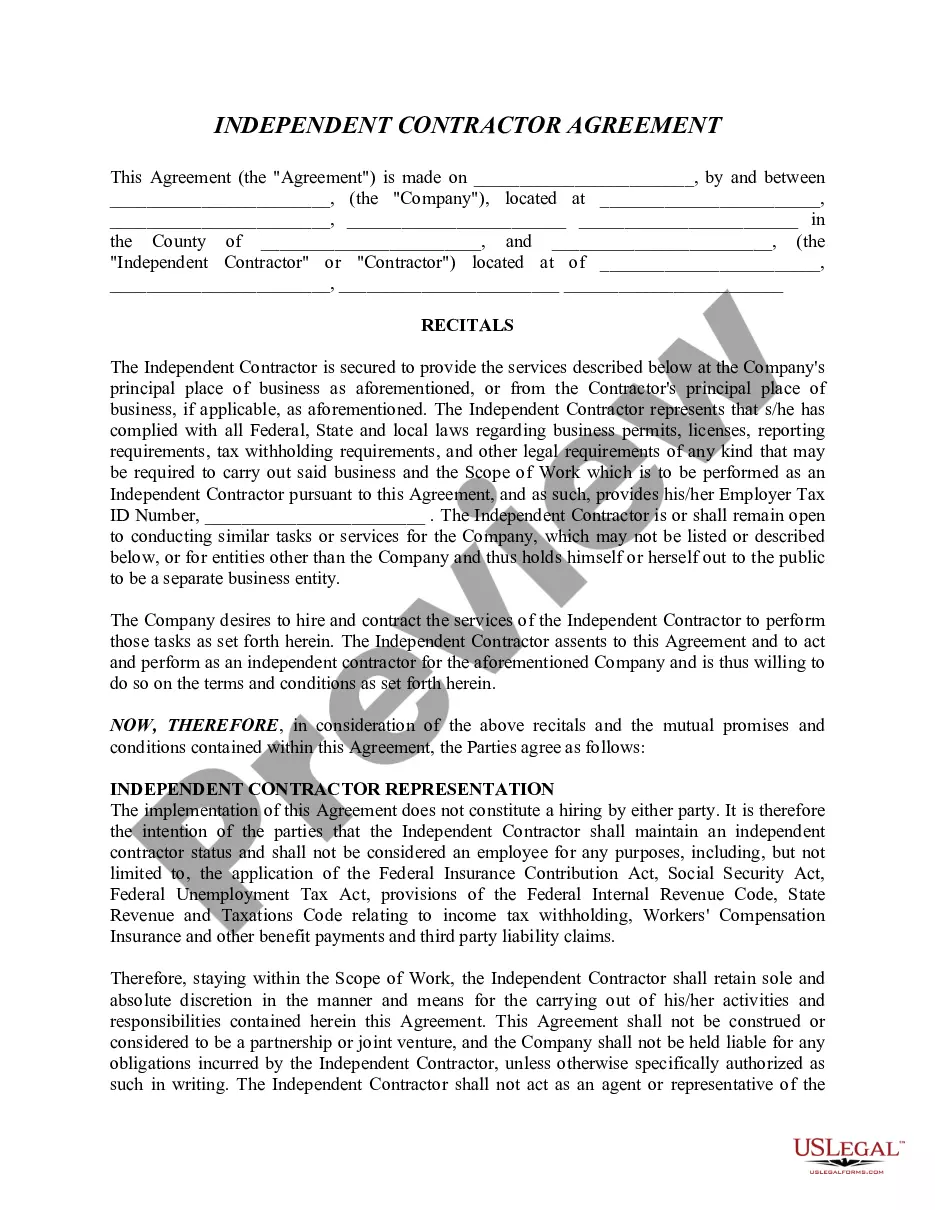
Tennessee Contractor Agreement
Description
Get your form ready online
Our built-in tools help you complete, sign, share, and store your documents in one place.
Make edits, fill in missing information, and update formatting in US Legal Forms—just like you would in MS Word.
Download a copy, print it, send it by email, or mail it via USPS—whatever works best for your next step.
Sign and collect signatures with our SignNow integration. Send to multiple recipients, set reminders, and more. Go Premium to unlock E-Sign.
If this form requires notarization, complete it online through a secure video call—no need to meet a notary in person or wait for an appointment.
We protect your documents and personal data by following strict security and privacy standards.

Make edits, fill in missing information, and update formatting in US Legal Forms—just like you would in MS Word.

Download a copy, print it, send it by email, or mail it via USPS—whatever works best for your next step.

Sign and collect signatures with our SignNow integration. Send to multiple recipients, set reminders, and more. Go Premium to unlock E-Sign.

If this form requires notarization, complete it online through a secure video call—no need to meet a notary in person or wait for an appointment.

We protect your documents and personal data by following strict security and privacy standards.
Looking for another form?

How to fill out Contractor Agreement?
Selecting the appropriate legal document template can be a challenge.
Of course, there are numerous templates accessible online, but how can you secure the legal form you require.
Utilize the US Legal Forms website. This service offers thousands of templates, including the Tennessee Contractor Agreement, that can be used for both business and personal needs.
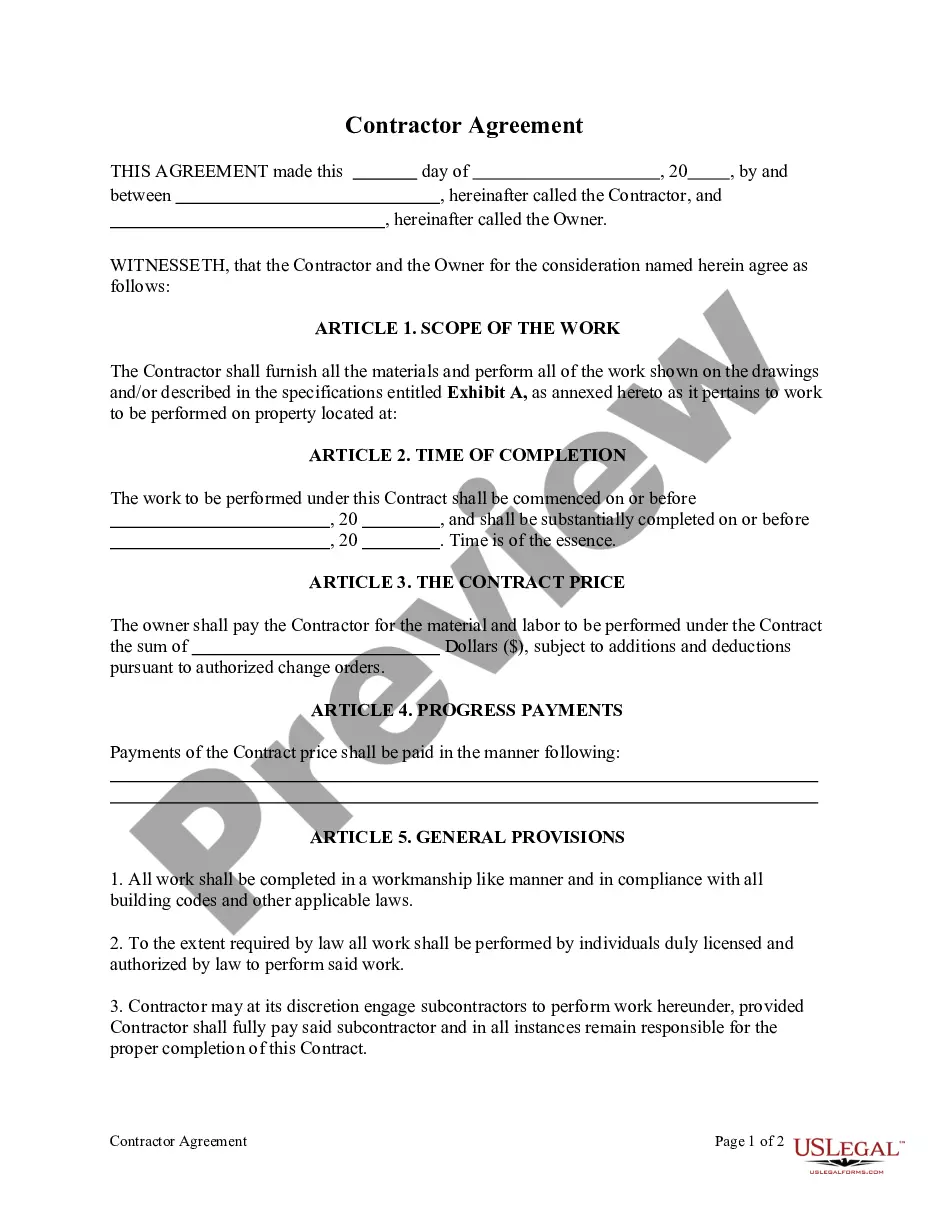
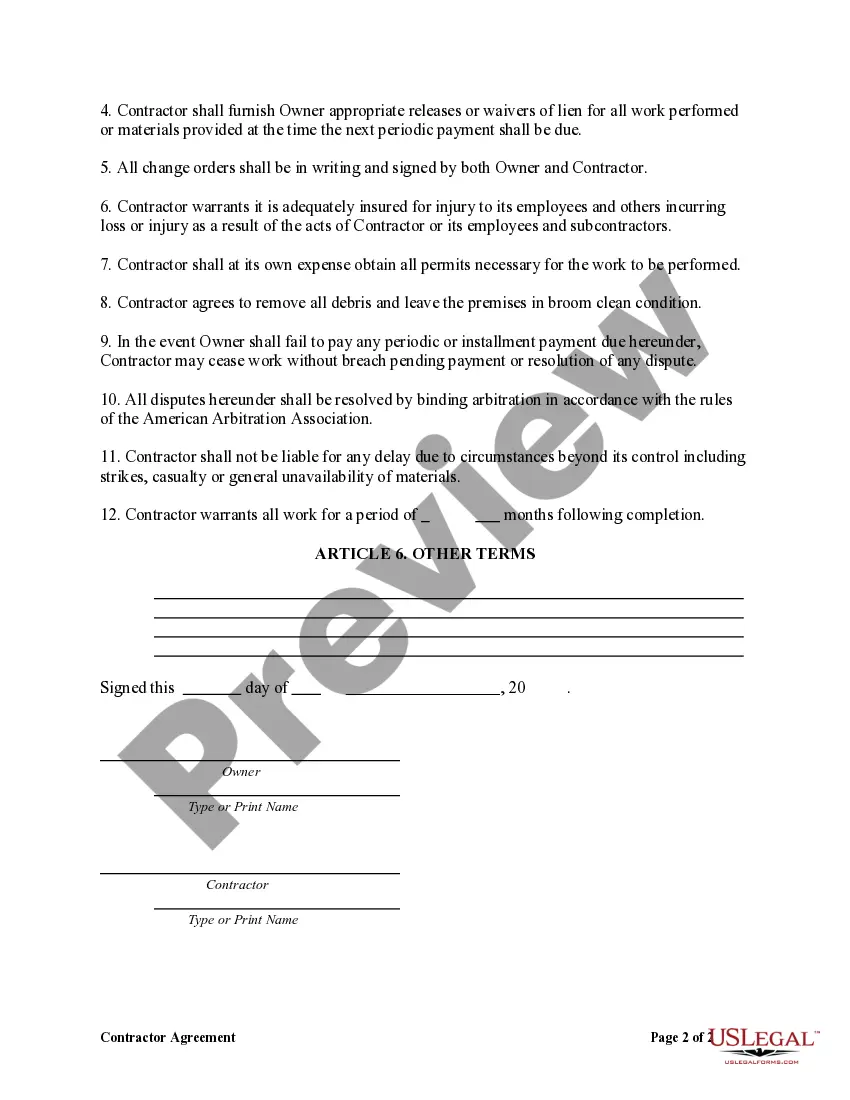
You can review the form using the Review button and read the form description to confirm that this is the right one for you.
- All forms are reviewed by professionals and meet state and federal regulations.
- If you are already registered, sign in to your account and click the Acquire button to locate the Tennessee Contractor Agreement.
- Use your account to search through the legal forms you have purchased previously.
- Visit the My documents section of your account to download an additional copy of the document you need.
- If you are a new user of US Legal Forms, here are straightforward instructions to follow.
- First, ensure that you have selected the correct form for your city/state.
Form popularity
FAQ
To create an independent contractor agreement in Tennessee, begin by outlining the scope of work, payment terms, and duration of the contract. It is essential to include specific clauses that protect both parties' interests, such as confidentiality and dispute resolution. By leveraging resources like U.S. Legal Forms, you can easily draft a comprehensive Tennessee Contractor Agreement that meets all legal requirements and safeguards your business.
Yes, Tennessee law mandates that contractors must have a license for projects over $25,000. This requirement ensures that contractors meet specific standards of skill and reliability. When you utilize a Tennessee Contractor Agreement, you ensure that all parties understand the legal obligations and expectations involved in the project.
In Tennessee, anyone who plans to engage in construction projects that exceed $25,000 must obtain a contractor's license. This includes general contractors, specialty contractors, and certain home improvement professionals. By securing a Tennessee Contractor Agreement, you not only comply with state regulations but also protect your business and clients through clearly defined terms.
To properly vet a contractor, you need to collect their legal name, contact information, and a valid tax identification number. Additionally, having proof of insurance and any necessary licenses is crucial for compliance and protection. Gathering this information in advance and documenting it in a Tennessee Contractor Agreement can provide solid groundwork for your working relationship. Make sure to conduct thorough checks to ensure the contractor meets all necessary requirements.
A contractor typically needs to complete several forms, including a W9 form for tax purposes and any state-specific licenses required to operate legally in Tennessee. It is also a good idea to have a Tennessee Contractor Agreement in place, detailing the project, responsibilities, and payment terms. This ensures both parties are on the same page and helps prevent disputes down the line.
Filling out a contractor agreement involves including essential details such as the project scope, payment terms, and timelines. Begin by specifying both parties' information and clearly stating the services to be provided. Utilizing a Tennessee Contractor Agreement template from a reliable source, like USLegalForms, can simplify this process and ensure all critical components are covered. Always review the agreement for clarity before signing.
For contractors in Tennessee, I-9 forms are not typically required unless you are hiring them as employees. However, it is essential to ensure that all independent contractors complete appropriate paperwork to verify their eligibility to work. The Tennessee Contractor Agreement can help outline and clarify these employment terms. Always consult with your legal advisor for specific requirements.
An independent contractor agreement in Tennessee outlines the terms of the working relationship between a contractor and a client. This document specifies payment, timelines, deliverables, and ensures both parties understand their obligations. Utilizing a well-drafted Tennessee Contractor Agreement can protect you legally and clarify expectations to foster a positive working relationship.
Contractors acquire contracts through networking, referrals, and advertising their services. Building a strong portfolio and demonstrating previous work can attract potential clients. Additionally, utilizing platforms like uslegalforms can streamline the process, as they provide templates for Tennessee Contractor Agreements that help contractors focus on securing jobs rather than paperwork.
Tennessee does indeed require a contractor's license for most construction-related activities. This requirement is especially important for residential and commercial projects exceeding specific monetary limits. Ensuring you have the proper license reflects professionalism and adherence to state laws, which can significantly enhance your reputation as a contractor.