Tennessee Complaint For Libel Against Publisher of Newspaper - Defamation of Character
Description
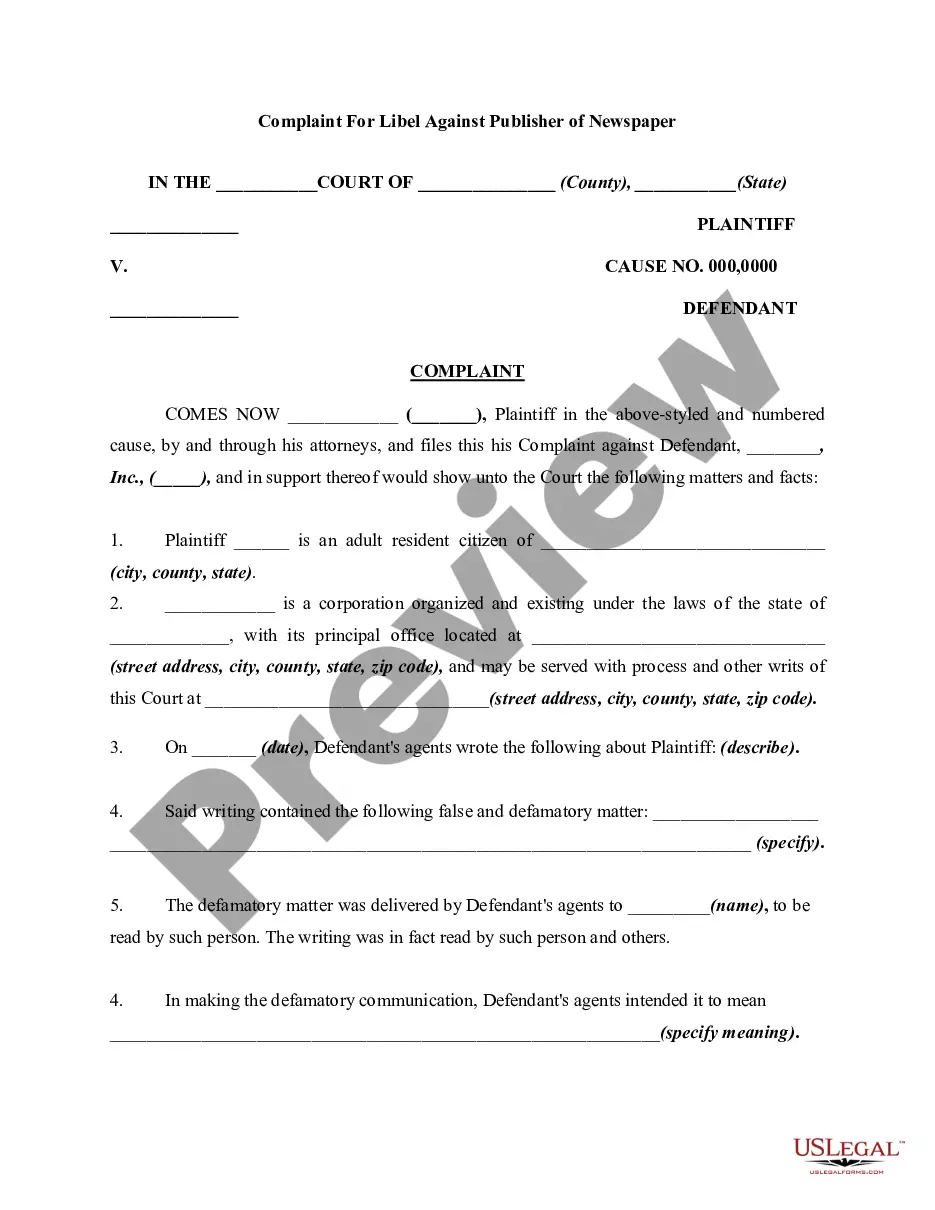
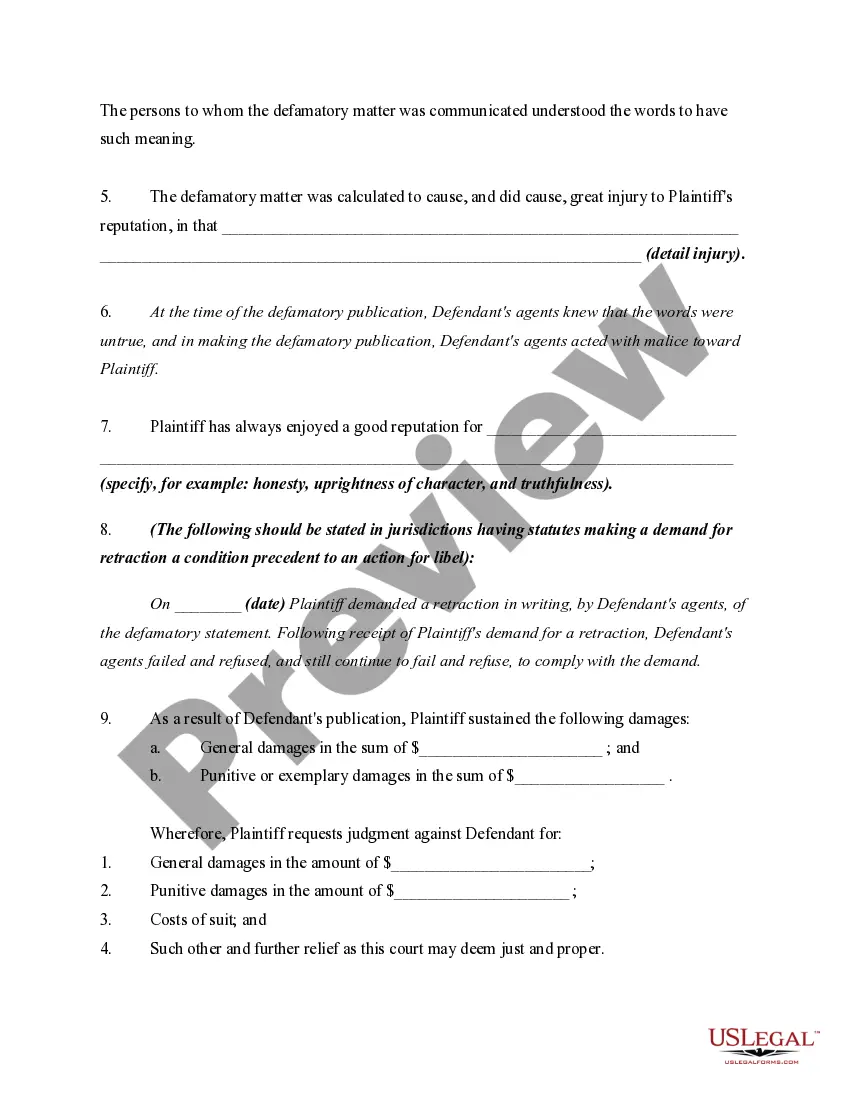
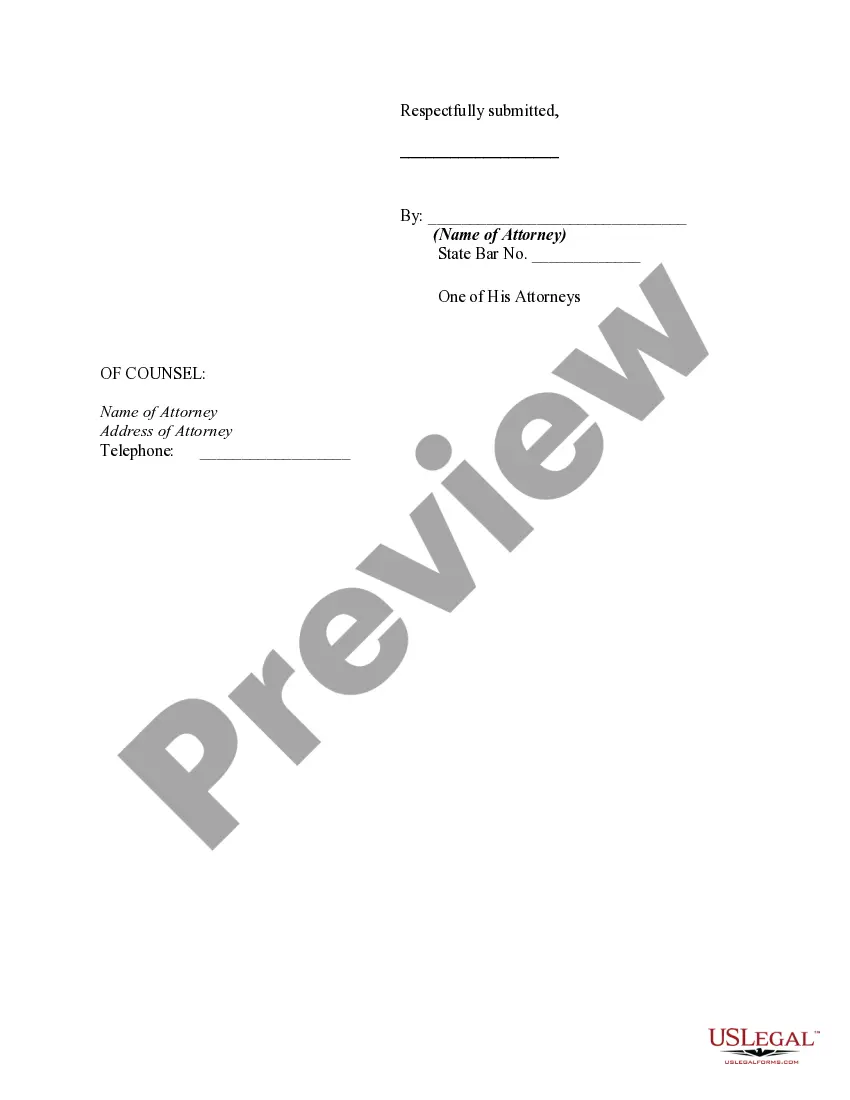
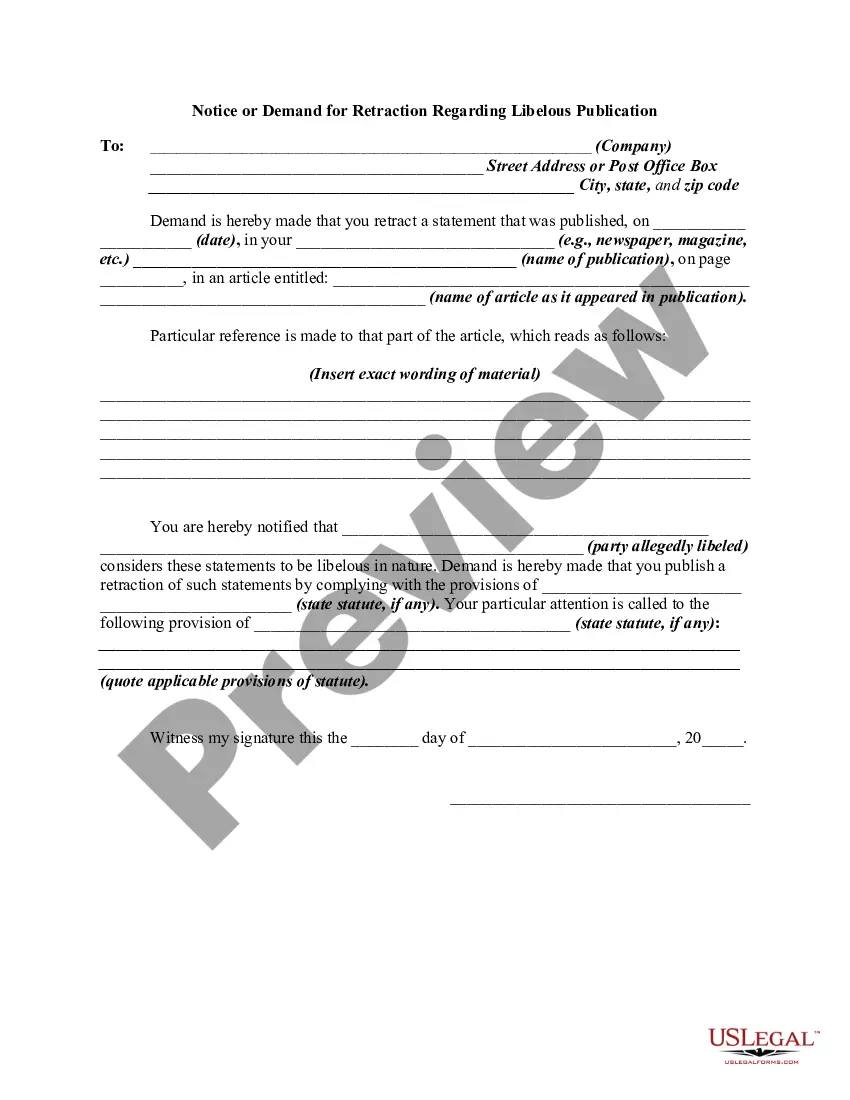
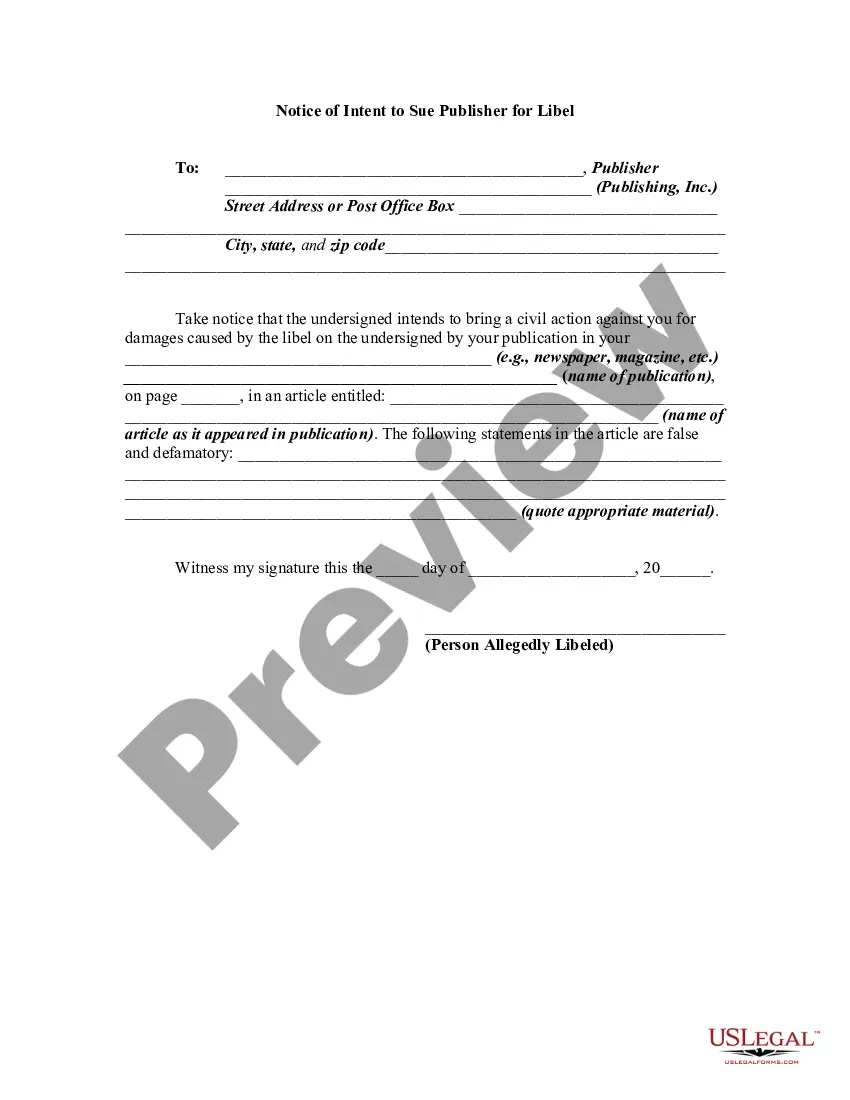
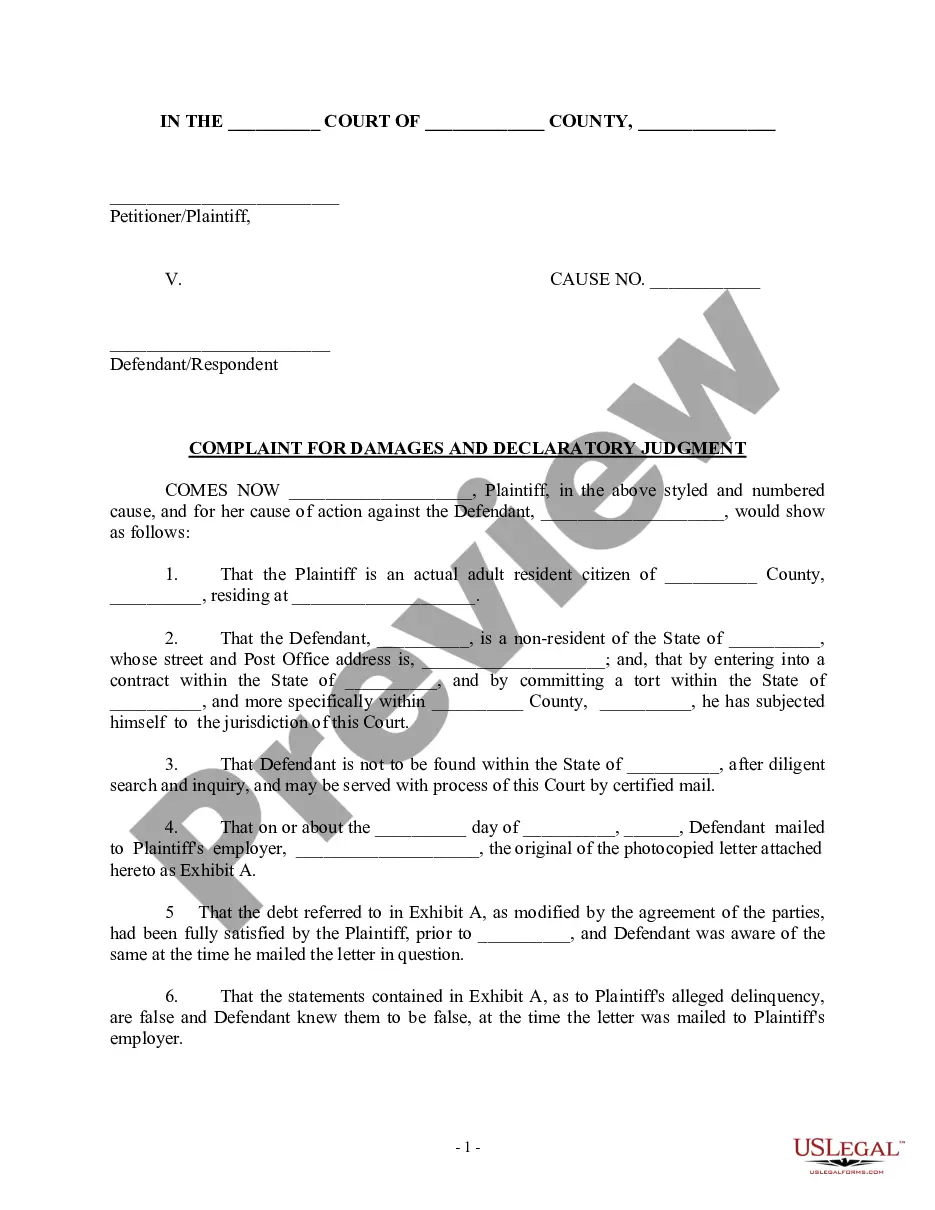
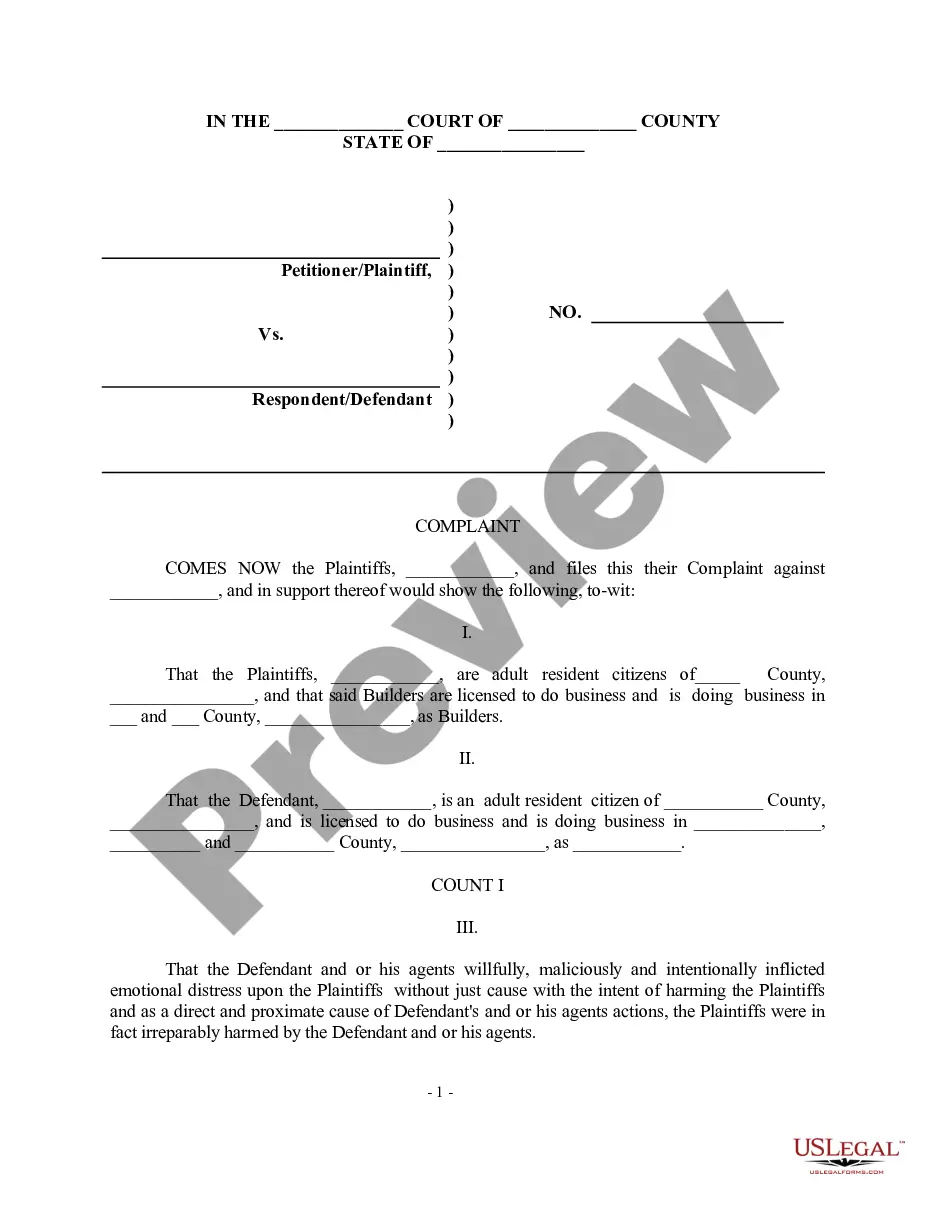

How to fill out Complaint For Libel Against Publisher Of Newspaper - Defamation Of Character?
You can spend hours online trying to locate the legal document template that meets the federal and state requirements you need. US Legal Forms offers a vast array of legal forms that are reviewed by professionals.
It is easy to download or print the Tennessee Complaint For Libel Against Publisher of Newspaper - Defamation of Character from the service. If you already have a US Legal Forms account, you may Log In and click on the Obtain button.
Next, you can complete, modify, print, or sign the Tennessee Complaint For Libel Against Publisher of Newspaper - Defamation of Character. Each legal document template you purchase is yours indefinitely. To obtain another copy of any purchased form, navigate to the My documents section and click on the relevant button.
Select the format of the document and download it to your device. Make adjustments to your document if possible. You can complete, modify, sign, and print the Tennessee Complaint For Libel Against Publisher of Newspaper - Defamation of Character. Obtain and print numerous document templates using the US Legal Forms website, which offers the largest collection of legal forms. Utilize professional and state-specific templates to address your business or personal needs.
- If you are using the US Legal Forms website for the first time, follow the simple instructions below.
- First, ensure that you have selected the correct document template for the county/city of your choice. Review the form details to confirm you have chosen the right one.
- If available, use the Preview button to look through the document template as well.
- If you wish to obtain another version of the form, utilize the Search area to find the template that fits your needs and requirements.
- Once you have found the template you want, click Purchase now to proceed.
- Select the pricing plan you desire, enter your information, and register for your account on US Legal Forms.
- Complete the transaction. You can use your credit card or PayPal account to purchase the legal form.
Form popularity
FAQ
The high court also established what has come to be known as ?the actual malice rule.? This means that public officials suing for libel must prove by clear and convincing evidence that the speaker made the false statement with ?actual malice? ? defined as ?knowledge that it was false or with reckless disregard of ...
A plaintiff who brings a lawsuit for defamation must prove that the defendant's defamatory statement was "published." Published means that the statement was intentionally or negligently communicated by the defendant to someone other than the plaintiff.
To be defamatory, the material has to be published (communicated by any means, including written, orally, pictorially) to at least one person other than the person making the claim.
Under traditional publishing law principles, a publisher or broadcaster is potentially liable for all content it publishes. Generally, ?one who repeats or otherwise republishes defamatory matter is subject to liability as if he had originally published it.
The communication has been published to a third person To be defamatory, the material has to be published (communicated by any means ? written, orally, pictorially) to at least one person other than the plaintiff. The intention of the publisher does not matter ? liability for defamation can arise from errors.
It is a common law principle that any person that has knowingly participated in publishing a defamatory statement may be held liable so long as the party is the: Author- where the statement originated excluding someone that did not intend for the statement to be published.
A plaintiff who brings a lawsuit for defamation must prove that the defendant's defamatory statement was "published." Published means that the statement was intentionally or negligently communicated by the defendant to someone other than the plaintiff.
The general rule is that a person who repeats or republishes a defamatory statement is subject to the same liability as if he/she had originally published the statement.