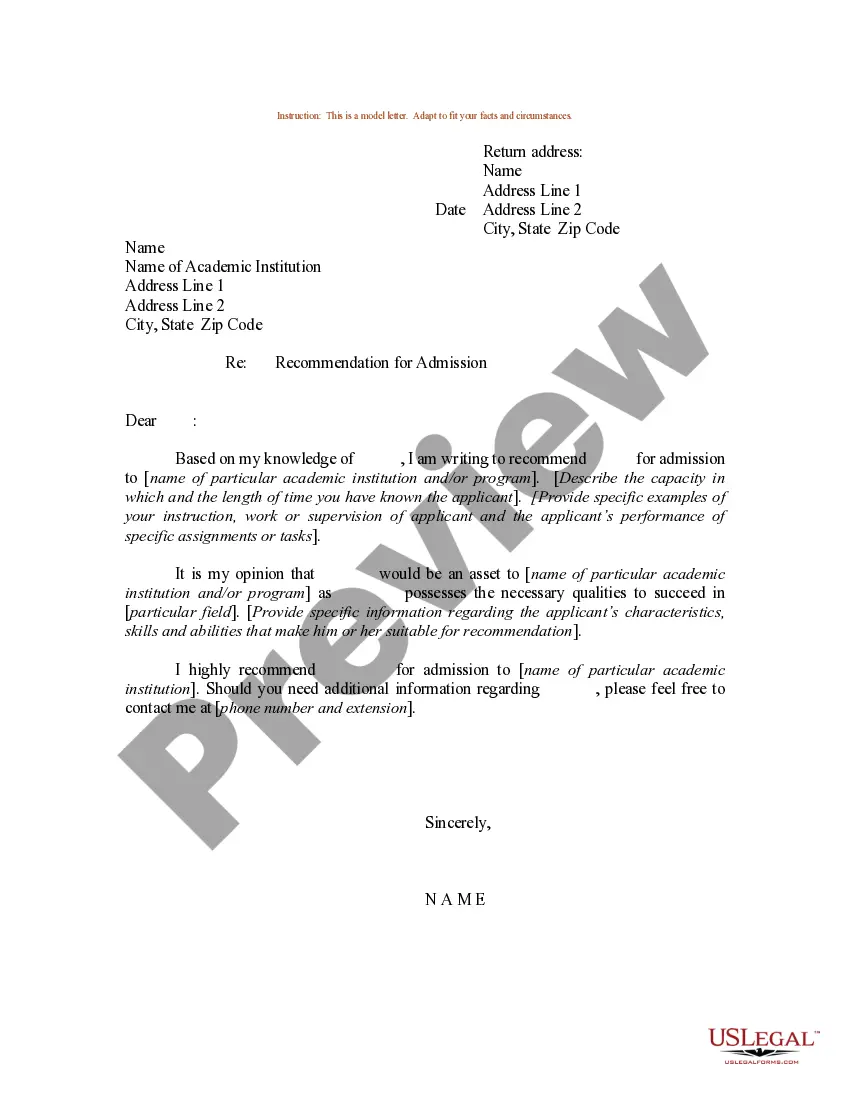
Tennessee Lease of Alarm System to Residential Customer
Description
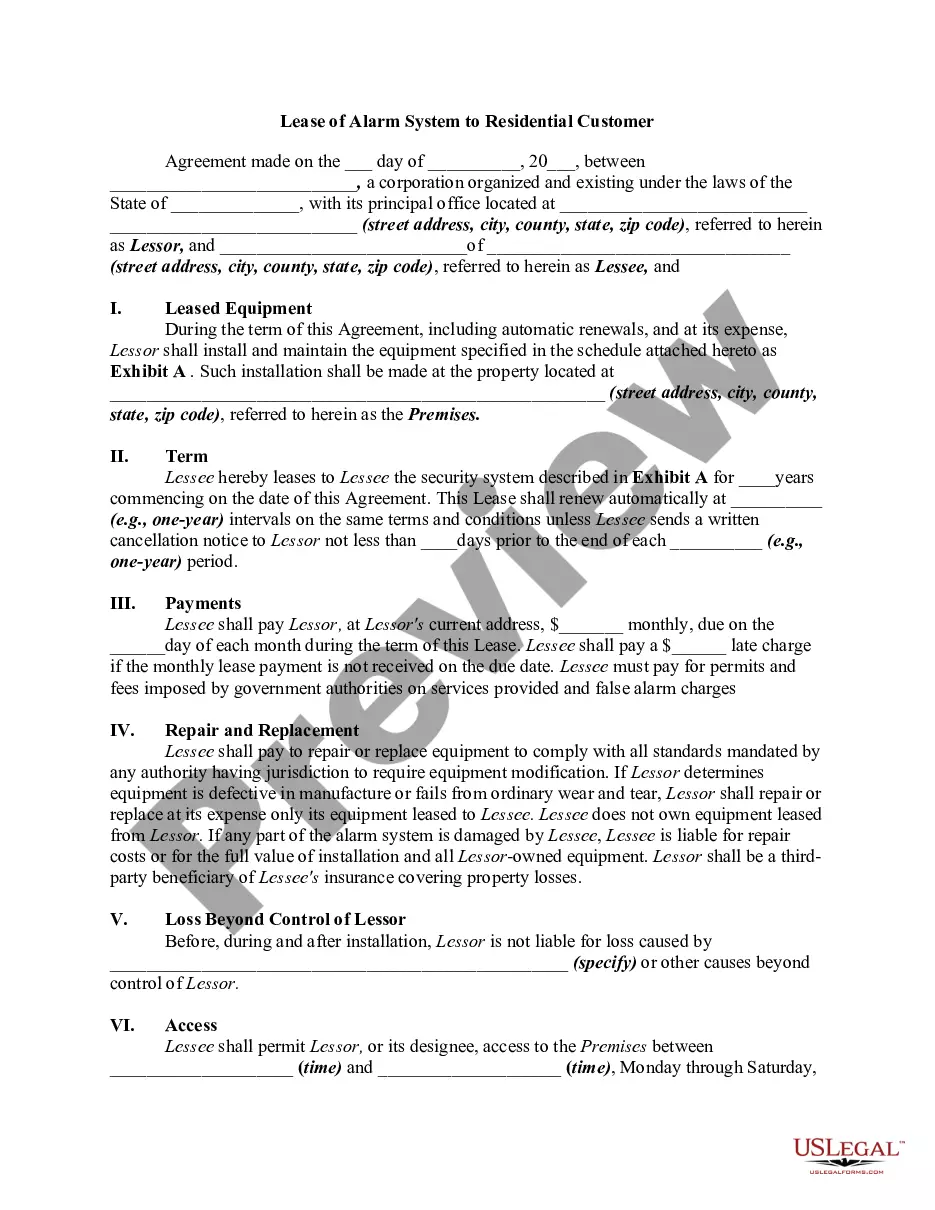
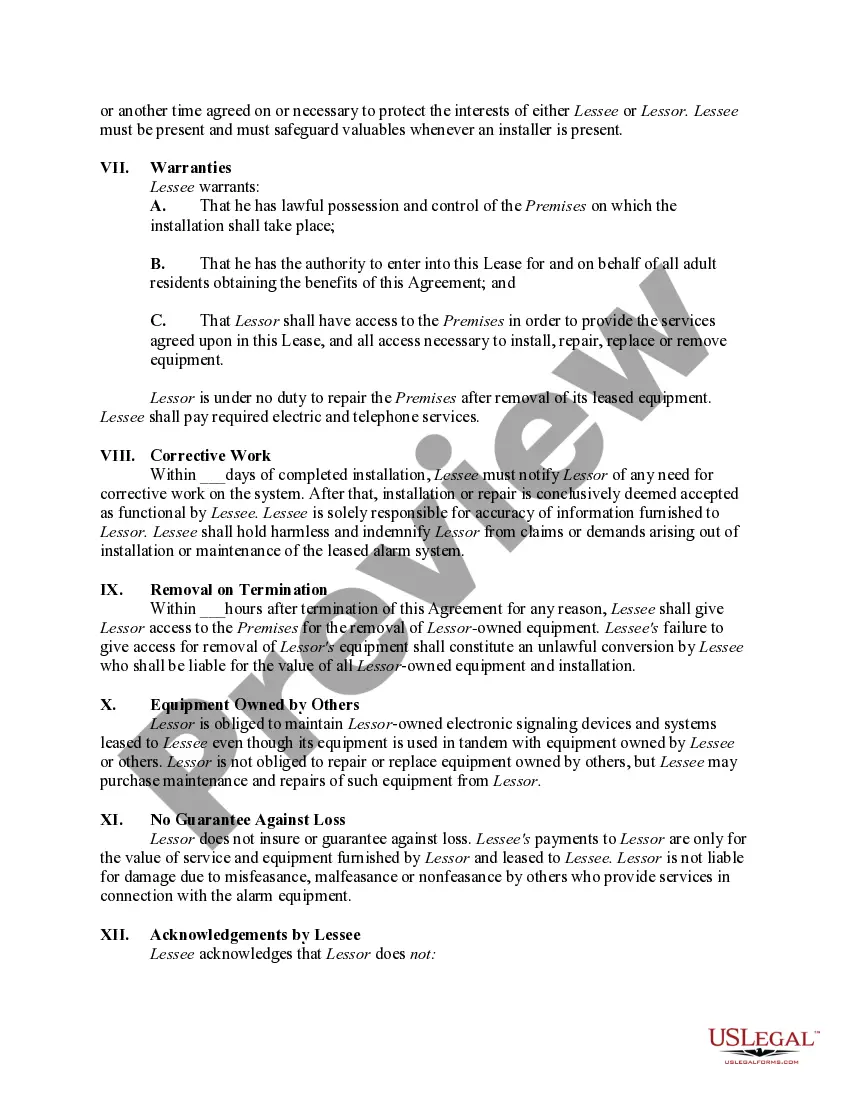
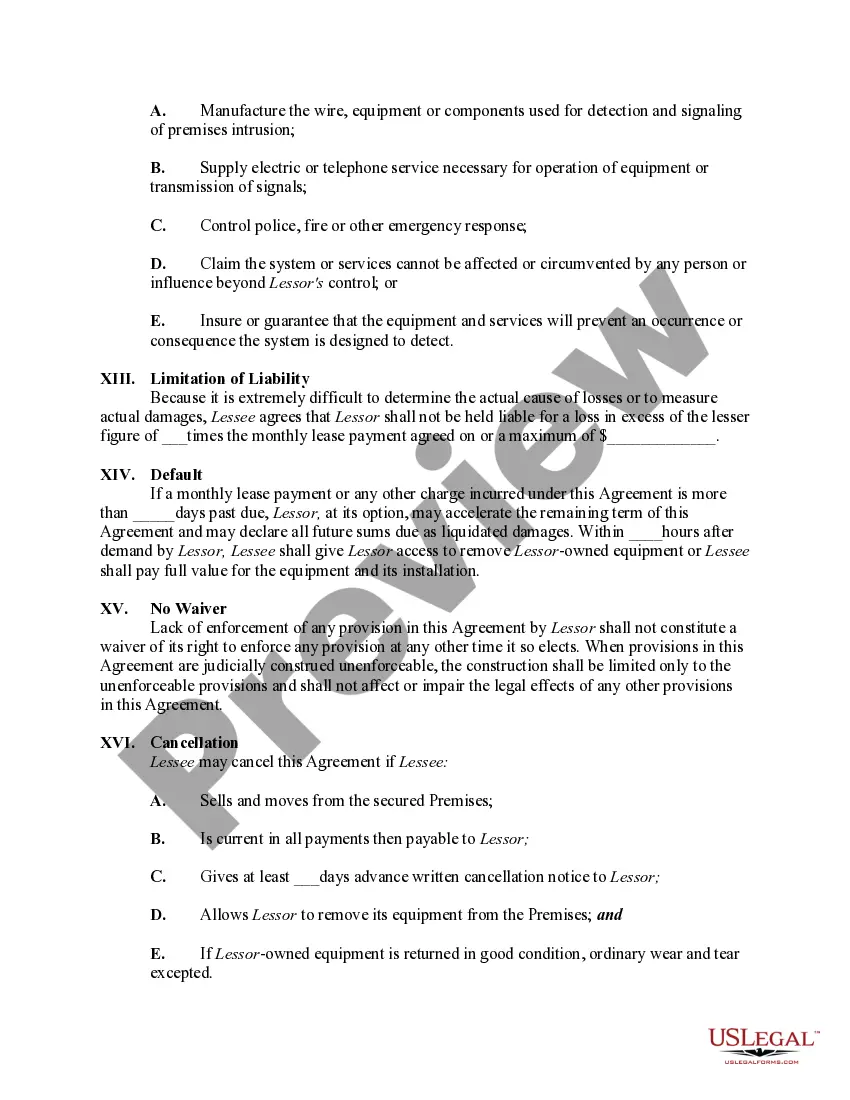
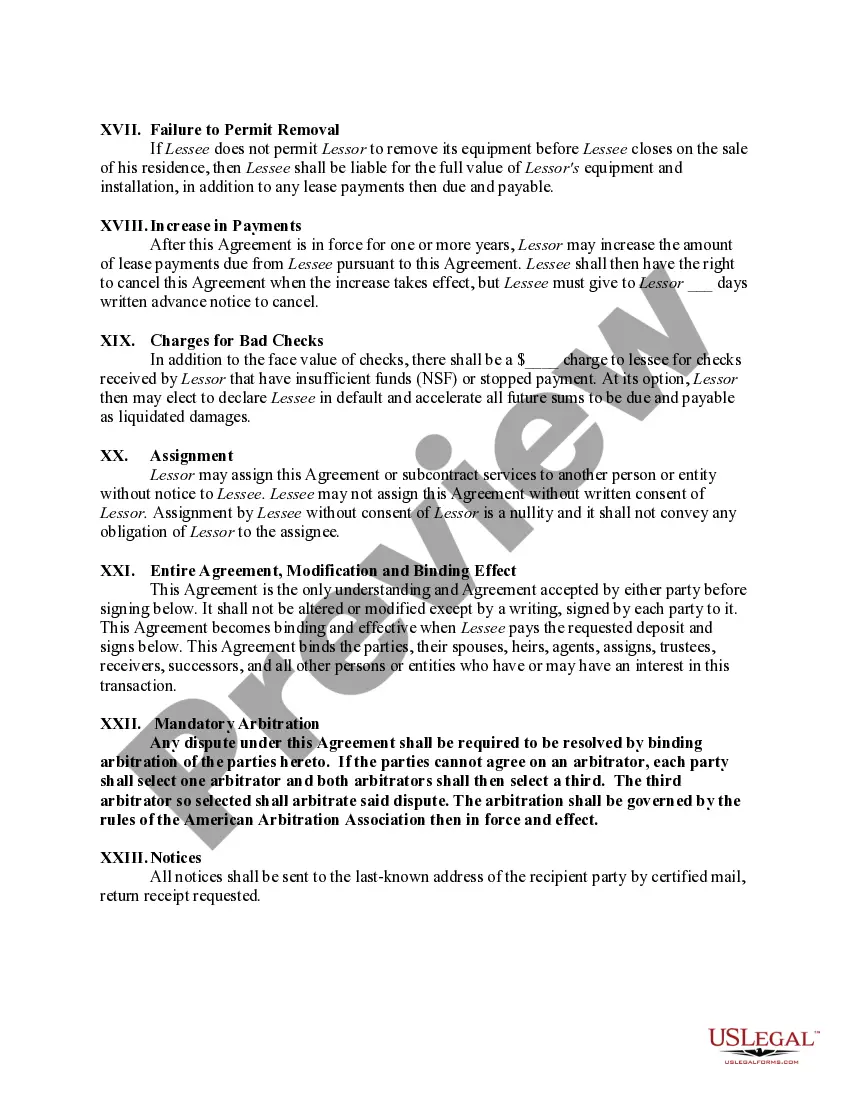
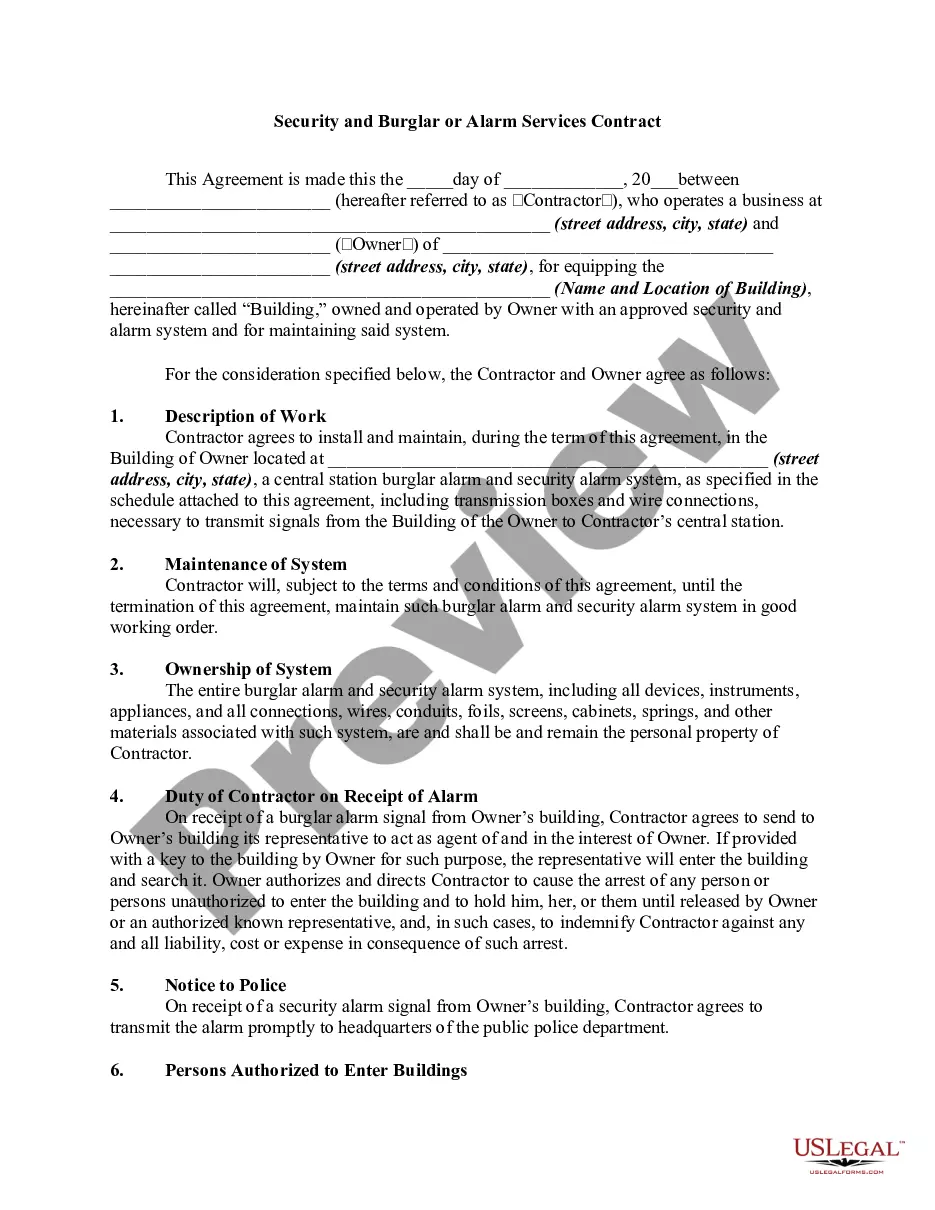
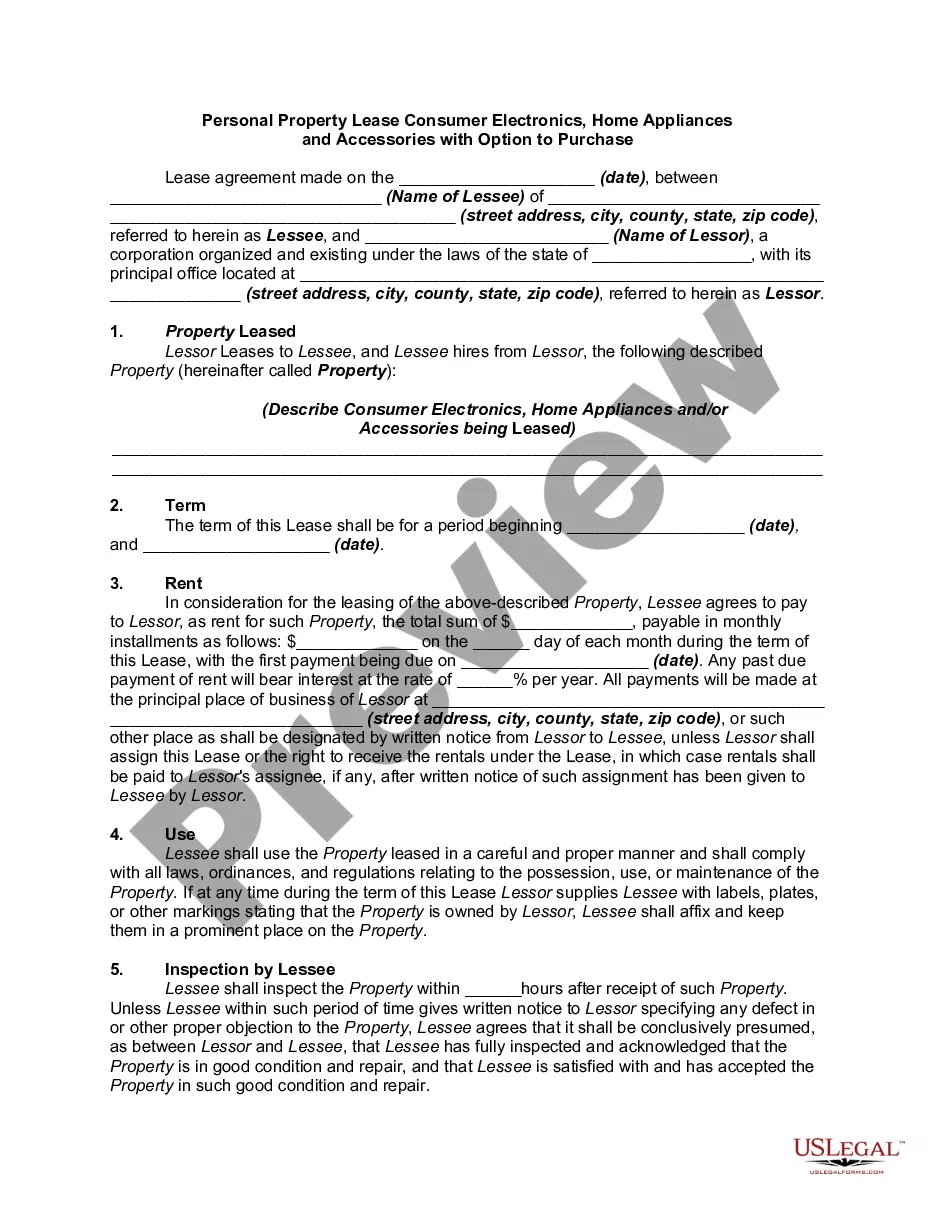
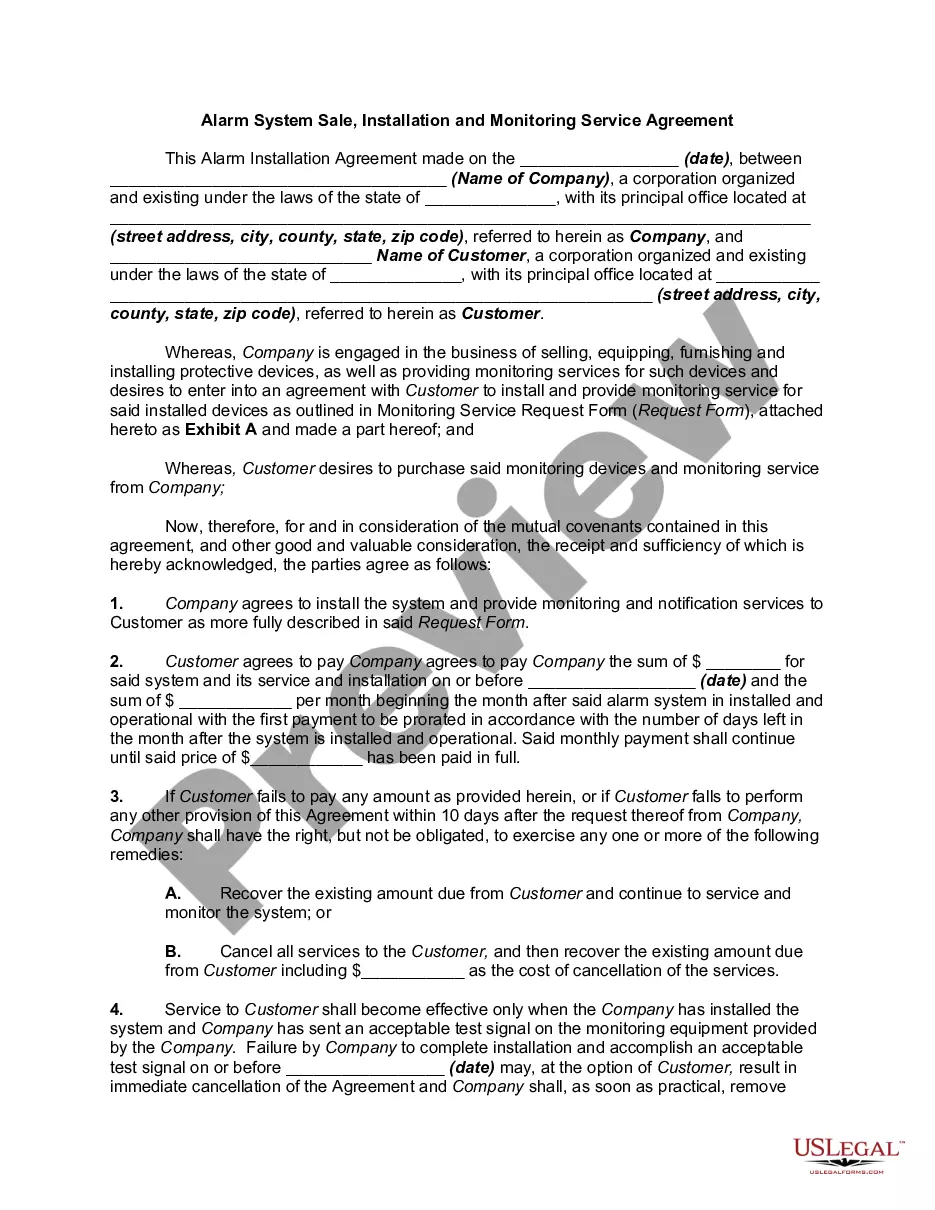
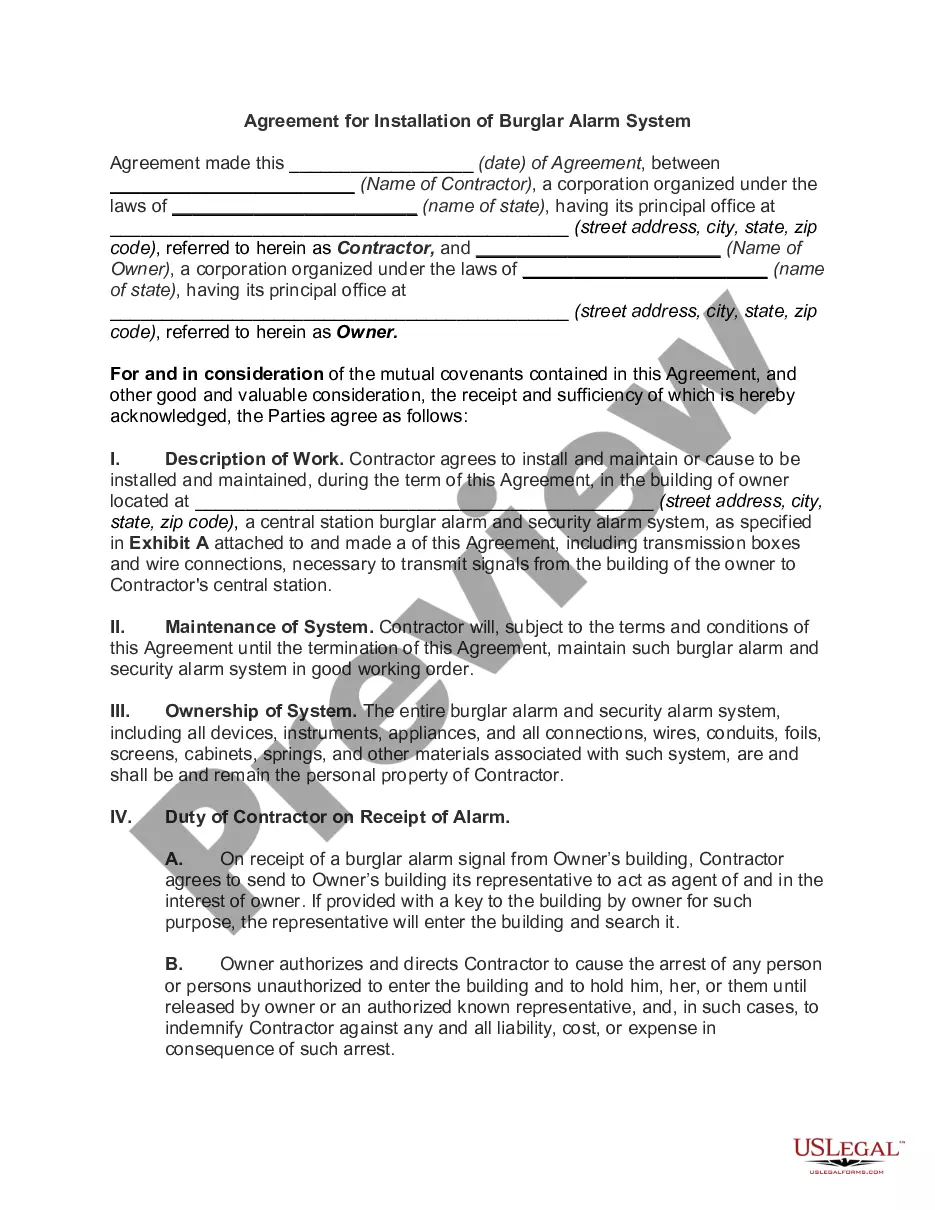
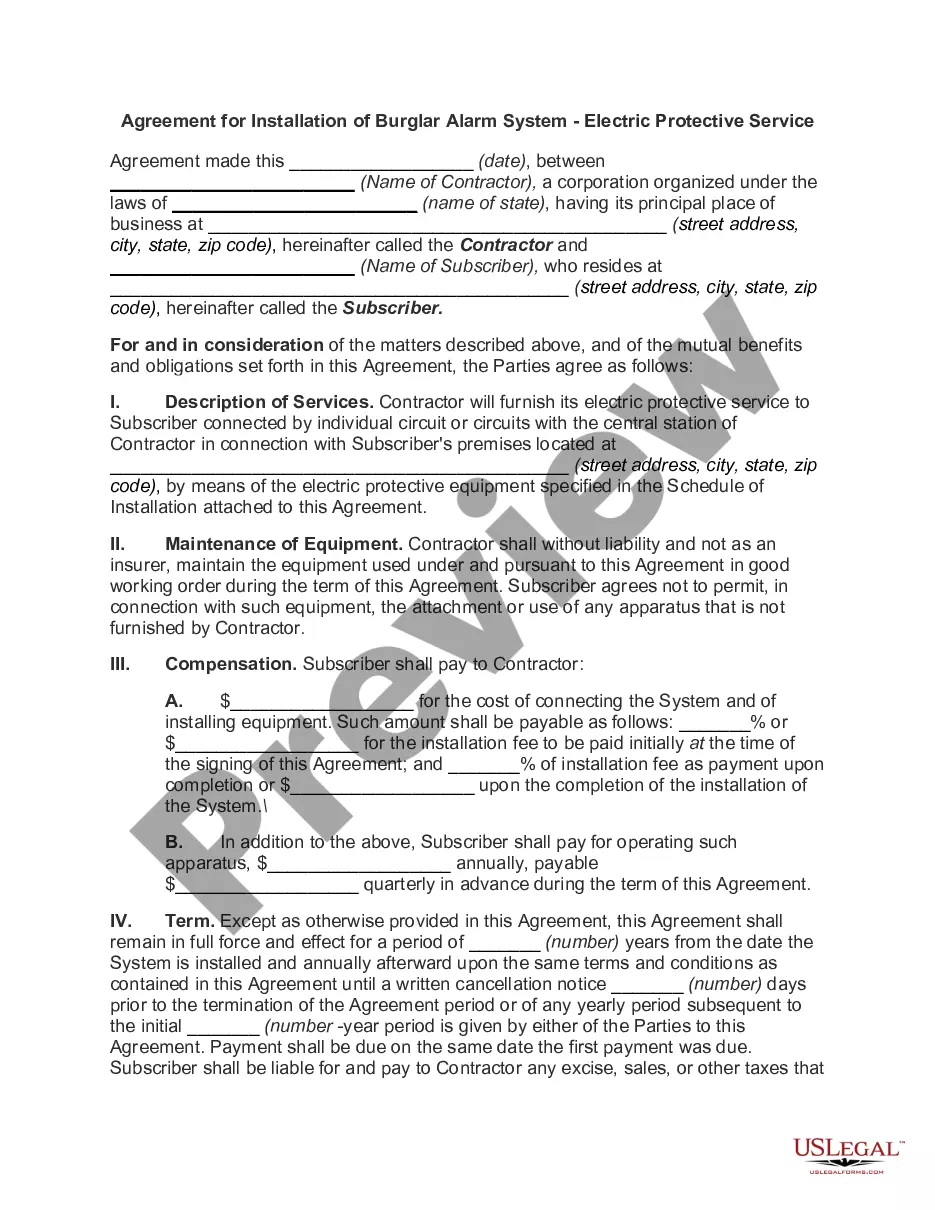
How to fill out Lease Of Alarm System To Residential Customer?
Finding the appropriate legal document template can be quite challenging. Obviously, there are numerous templates available online, but how do you locate the legal form you require.
Utilize the US Legal Forms website. This service provides thousands of templates, including the Tennessee Lease of Alarm System to Residential Customer, which can be utilized for both business and personal purposes. All documents are reviewed by experts and comply with federal and state regulations.
If you are already registered, Log In to your account and click the Download button to obtain the Tennessee Lease of Alarm System to Residential Customer. Use your account to browse through the legal documents you have purchased previously. Visit the My documents section of your account and retrieve another copy of the document you require.
Complete, edit, print, and sign the acquired Tennessee Lease of Alarm System to Residential Customer. US Legal Forms is the premier library of legal forms where you can find various document templates. Utilize this service to download professionally created documents that adhere to state requirements.
- If you are a new user of US Legal Forms, here are simple steps for you to follow.
- First, ensure that you have selected the correct form for your city/region. You can preview the document using the Preview button and read the document description to confirm it is suitable for you.
- If the form does not fit your requirements, use the Search field to find the correct form.
- Once you are certain that the form is appropriate, click the Purchase now button to acquire the form.
- Select the pricing plan you prefer and enter the required information. Create your account and pay for your order using your PayPal account or credit card.
- Choose the file format and download the legal document template to your device.
Form popularity
FAQ
Starting your own alarm company involves a few key steps. Start by conducting thorough market research to identify your target customers. Develop a comprehensive business plan that incorporates services like the Tennessee Lease of Alarm System to Residential Customer. Utilize legal resources from platforms such as uslegalforms to ensure compliance with local and state laws, making your business foundation solid.
To start a security alarm company, begin by researching the market and understanding local regulations. You will need to develop a solid business plan that outlines your services, including the Tennessee Lease of Alarm System to Residential Customer. It's also essential to acquire the necessary licenses and permits. Lastly, consider partnering with a platform, like uslegalforms, which provides valuable resources to help you navigate the legal requirements.
Tennessee Code 66 Chapter 28 Section 101 introduces essential definitions and principles that govern residential leases. This section encompasses the rights and responsibilities of both landlords and tenants, creating a balanced framework. If you are entering a Tennessee Lease of Alarm System to Residential Customer, knowledge of this code ensures compliance and protects your rights. Keeping abreast of these legalities is vital for a successful lease.
Area code 304 is not in Tennessee; it serves areas in West Virginia. However, if you are navigating leasing options in Tennessee, focusing on the right area codes in urban locations will enhance your communication with local landlords. Being aware of the area you are in is essential, especially if you are considering a Tennessee Lease of Alarm System to Residential Customer. Familiarity with local regulations can enhance your renting experience.
In Tennessee, a residential lease does not typically require notarization to be valid. However, notarizing a lease can provide an extra layer of security in case of disputes. If you plan to include a Tennessee Lease of Alarm System to Residential Customer, ensuring all agreements are clear and enforceable helps protect everyone involved. It’s wise to consult legal resources for added peace of mind.
Statute 66-28-301 outlines the general provisions related to residential leasing in Tennessee. It impacts residential leases, including security deposit regulations and rental payment processes. Understanding this statute is essential if you are entering a Tennessee Lease of Alarm System to Residential Customer, as it sets a legal framework governing tenant agreements. Legal clarity aids in building a secure leasing environment.
Tennessee Code 66-28-304 pertains to the rights of landlords regarding access to rental properties. It outlines the circumstances under which a landlord can enter a leased property, generally requiring notice unless there is an emergency. This is particularly relevant if alarm systems are installed, as maintenance may necessitate access. Familiarizing yourself with this code fosters a trustworthy landlord-tenant relationship, especially when leasing alarm systems.
The most common form of tenancy in residential leasing is the month-to-month lease. This arrangement offers flexibility for both the landlord and tenant, allowing easy changes to the agreement with proper notice. If you decide to include a Tennessee Lease of Alarm System to Residential Customer, consider how it affects your lease duration and terms. Understanding your leasing options helps ensure a smoother rental experience.
The recent changes in Tennessee landlord laws focus on tenant rights and landlord responsibilities. This includes updating eviction processes and ensuring that landlords maintain properties up to code. For instance, the updates pertain to the Tennessee Lease of Alarm System to Residential Customer, ensuring that security systems are functioning properly. Staying informed about these laws helps tenants protect their rights.
In Tennessee, a landlord can ask for the first month’s rent and a security deposit, but requesting the last month’s rent is not typical. The security deposit must adhere to state regulations, which include limits on the amount. For landlords leasing alarm systems under the Tennessee Lease of Alarm System to Residential Customer, this understanding is crucial to avoid conflicts. Always clarify these requirements with your landlord before signing any lease.