Tennessee Agreement for Deed and Estoppel and Solvency Affidavit
Overview of this form
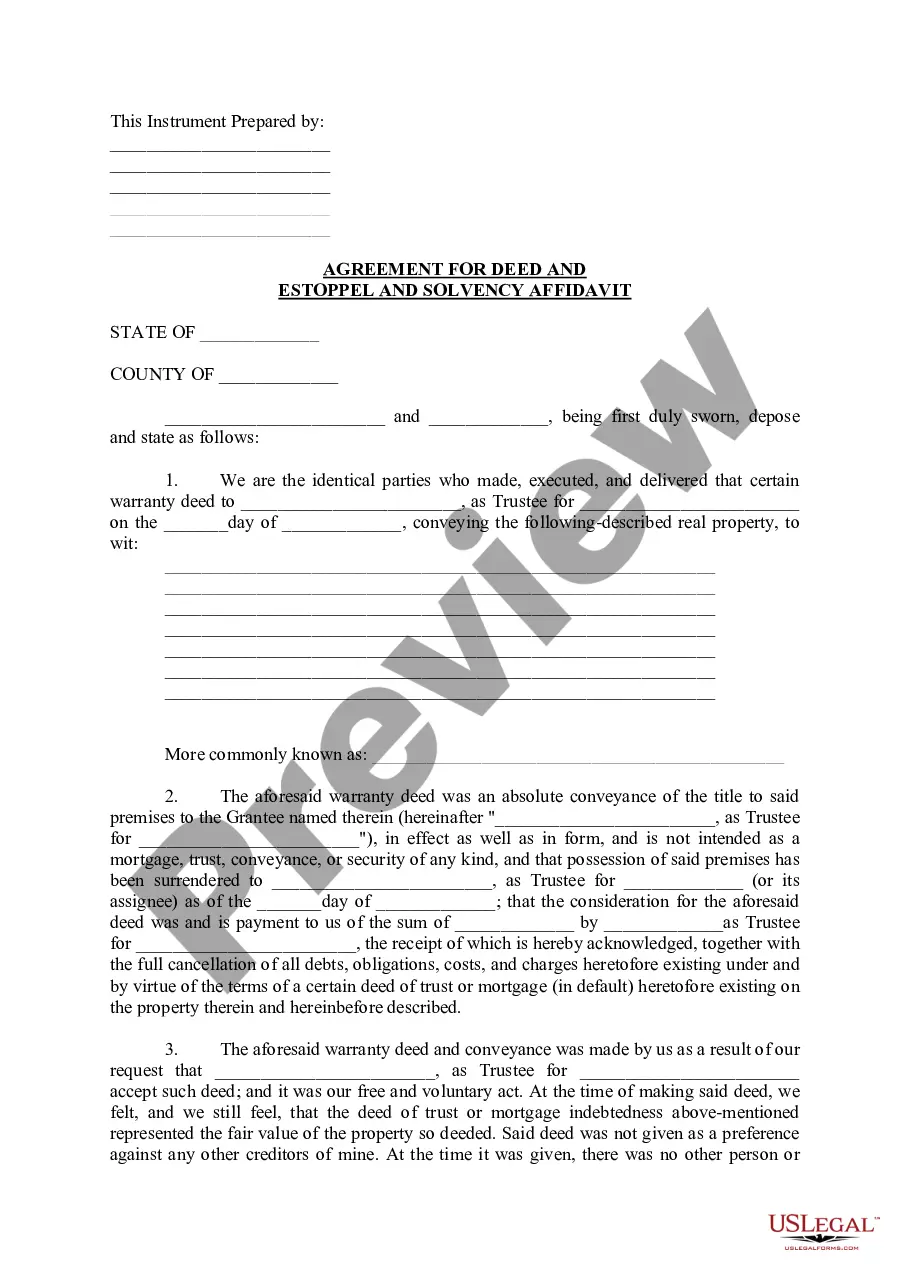
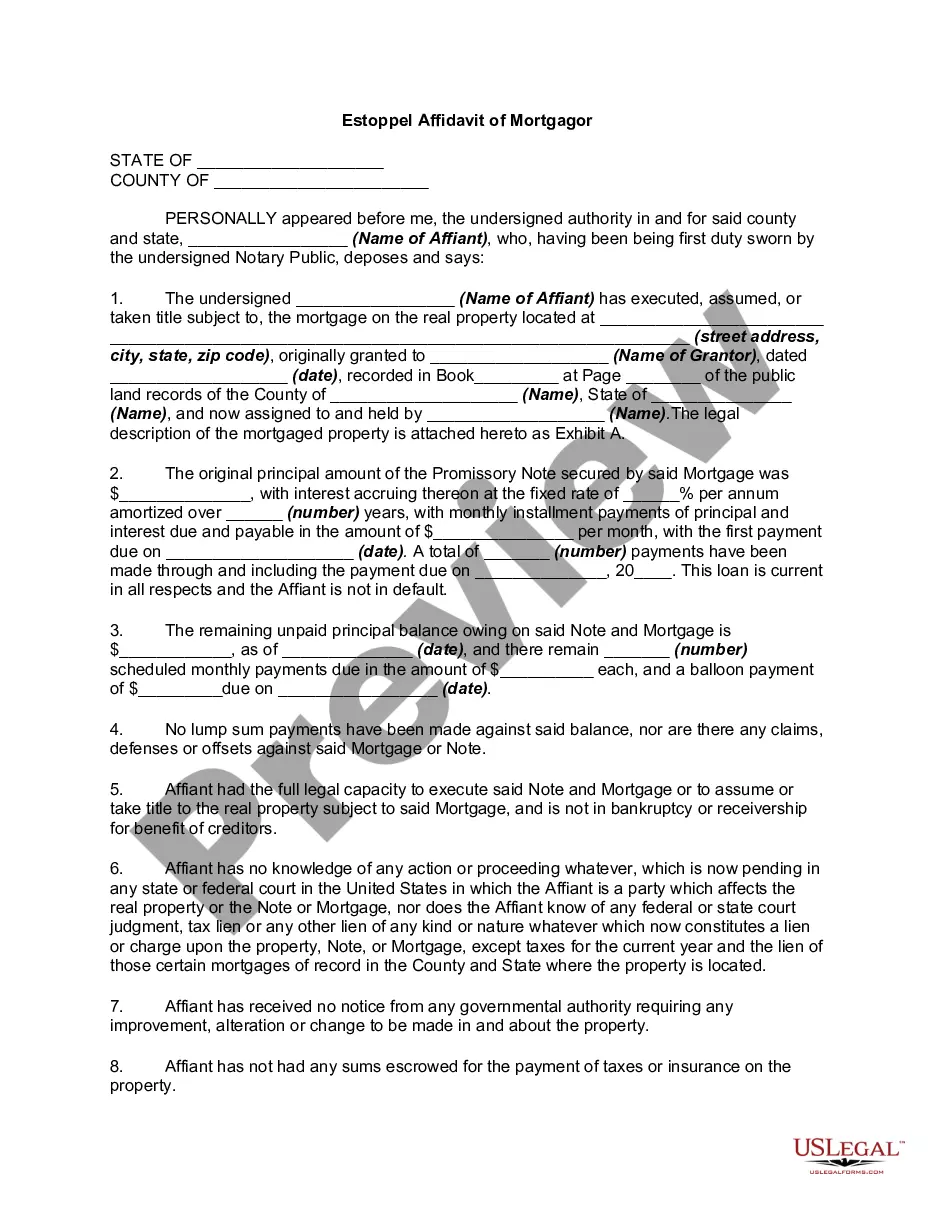
The Agreement for Deed and Estoppel and Solvency Affidavit is a legal document used to clarify the status of property ownership and any associated mortgages or trusts. This form specifically protects all parties involved in property transactions, ensuring transparency regarding the ownership and any debts associated with the property. Unlike traditional deeds, this document highlights solvency and establishes that the conveyance of property does not infringe upon the rights of creditors.
What’s included in this form
- Identification of the parties involved
- Description of the real property being conveyed
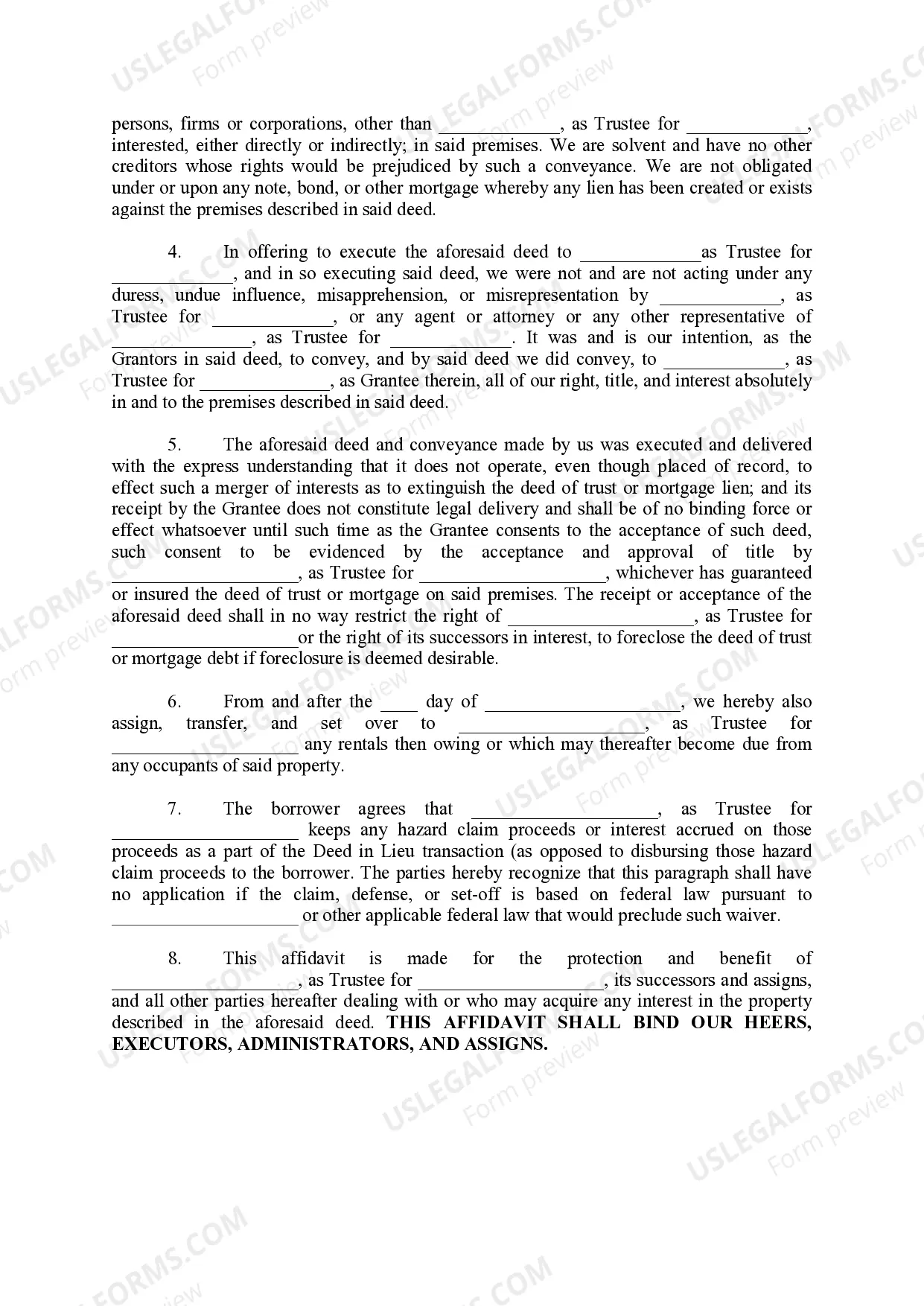
- Confirmation of the mortgage or trust status
- Affidavit of solvency and intent free from duress
- Details regarding rental assignment and rights
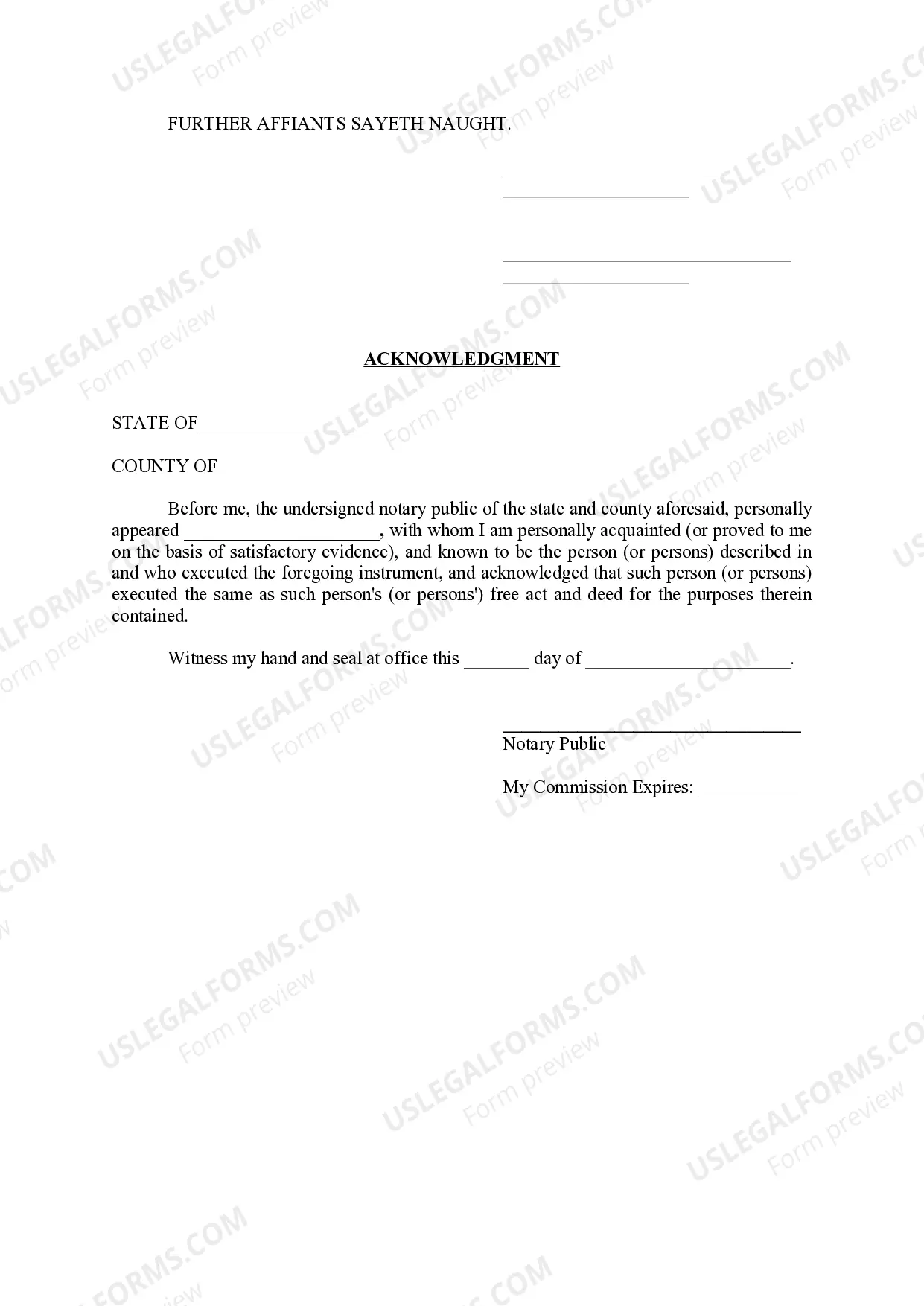
- Acknowledgment and notarization section

When this form is needed
This form is commonly used in real estate transactions where property is being conveyed outright rather than mortgaged. It is particularly relevant when the grantors wish to unequivocally confirm their financial standing and that no creditors will be adversely affected by the transfer. It can be beneficial in situations involving property sales, estates, or when settling debts through property transfer.
Who this form is for
- Property owners transferring real estate to a trust
- Trustees responsible for managing property interests
- Borrowers satisfying mortgage obligations
- Individuals needing to confirm solvency to creditors
- Real estate professionals involved in property transactions
Instructions for completing this form
- Identify the parties: Clearly state the names of the grantors and grantee.
- Specify the property: Provide a detailed description of the property being transferred.
- Enter dates: Fill in the date of the transaction and any relevant signatures.
- Confirm financial status: Ensure that all affidavit statements about solvency are accurate and true.
- Notarize the document: Have the form notarized to validate it legally.
Does this document require notarization?
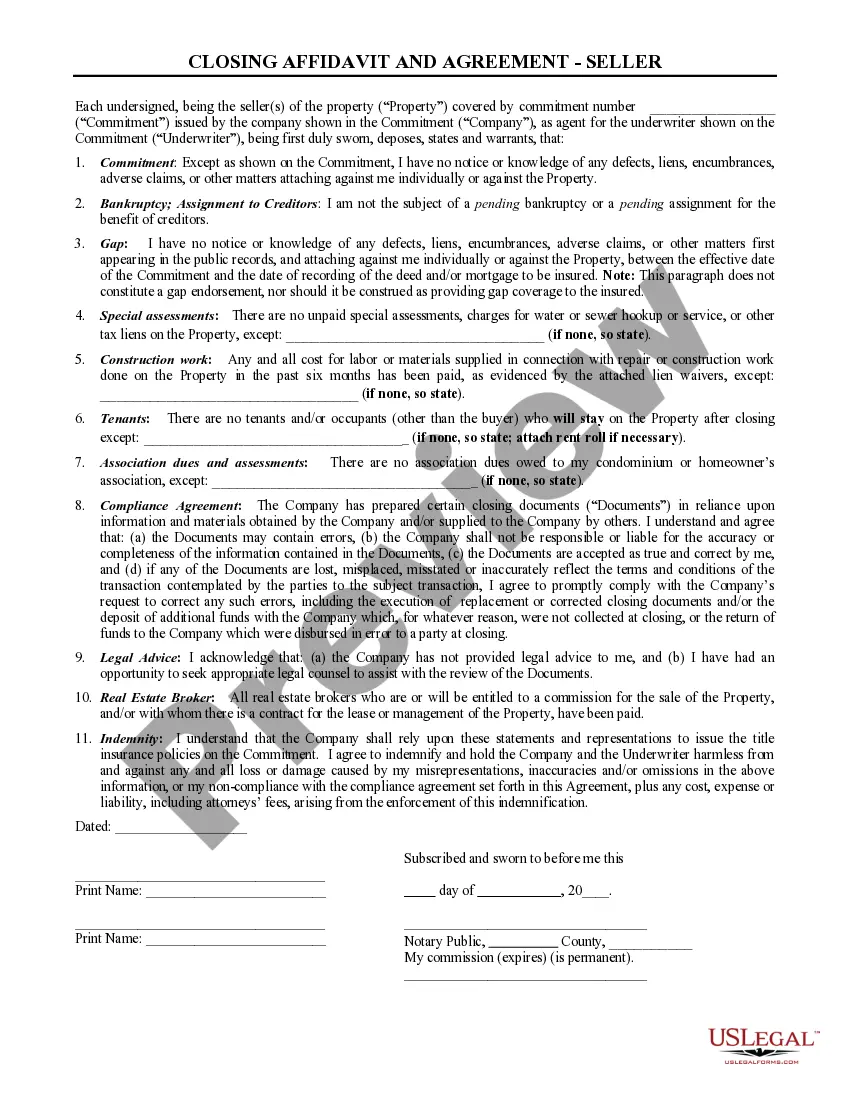
Yes, this form must be notarized to be legally valid. US Legal Forms offers integrated online notarization services, allowing you to notarize securely via video call, ensuring compliance without the need to travel.
Get your form ready online
Our built-in tools help you complete, sign, share, and store your documents in one place.
Make edits, fill in missing information, and update formatting in US Legal Forms—just like you would in MS Word.
Download a copy, print it, send it by email, or mail it via USPS—whatever works best for your next step.
Sign and collect signatures with our SignNow integration. Send to multiple recipients, set reminders, and more. Go Premium to unlock E-Sign.
If this form requires notarization, complete it online through a secure video call—no need to meet a notary in person or wait for an appointment.
We protect your documents and personal data by following strict security and privacy standards.

Make edits, fill in missing information, and update formatting in US Legal Forms—just like you would in MS Word.

Download a copy, print it, send it by email, or mail it via USPS—whatever works best for your next step.

Sign and collect signatures with our SignNow integration. Send to multiple recipients, set reminders, and more. Go Premium to unlock E-Sign.

If this form requires notarization, complete it online through a secure video call—no need to meet a notary in person or wait for an appointment.

We protect your documents and personal data by following strict security and privacy standards.
Common mistakes to avoid
- Failure to accurately describe property details, leading to disputes.
- Omitting dates or signatures required for legal validation.
- Not having the form notarized, which can render it unenforceable.
- Assuming all creditors are accounted for without verifying solvency.
Benefits of completing this form online
- Convenience of downloading and filling the form at your own pace.
- Editability allows for easy adjustments specific to your transaction.
- Access to expert-reviewed legal forms ensures reliability and compliance.
Looking for another form?

Form popularity
FAQ
If your lender agrees to a short sale or to accept a deed in lieu of foreclosure, you might owe federal income tax on any forgiven deficiency. The IRS learns of the deficiency when the lender sends it a Form 1099-C, which reports the forgiven debt as income to you.
A deed in lieu is different from a foreclosure. A deed in lieu means you and your lender reach a mutual understanding that you cannot make your loan payments. The lender agrees to avoid putting you into foreclosure when you hand the property over amicably.
A deed in lieu of foreclosure is different from a short sale because it transfers the property to the lender instead of selling it to a new buyer.Similar to a short sale, a deed in lieu of foreclosure likely will not damage your credit as severely as a foreclosure or a bankruptcy.
A short sale in real estate is when a financially distressed homeowner sells their property for less than the amount due on the mortgage. The buyer of the property is a third party (not the bank), and all proceeds from the sale go to the lender.
Final Thoughts On Deed In Lieu Of Foreclosure When you take a deed in lieu agreement, you transfer your home's deed to your lender voluntarily. In exchange, the lender agrees to forgive the amount left on your loan. A deed in lieu agreement won't stay on your credit report if a foreclosure will.
An estoppel affidavit is a legal document that prohibits the parties from taking any action that's contrary to an agreement previously made.The affidavit usually states that the parties entered into the agreement willingly and cites the fair market value of the property at the time the deal is made.
Disadvantages of a Deed in Lieu of Foreclosure. Perhaps the biggest disadvantage of a deed in lieu is that the Lender takes subject to all other encumbrances and interests in the Property. Therefore if there is a second mortgage, for example, a deed in lieu would likely not be a viable strategy.
Short sales and foreclosures can get homeowners out of paying for their mortgages. Short sales are voluntary and require approval from the lender. Foreclosures are involuntary, where the lender takes legal action to take control of and sell the property.