Tennessee Quitclaim Deed from Limited Liability Company to Corporation
About this form
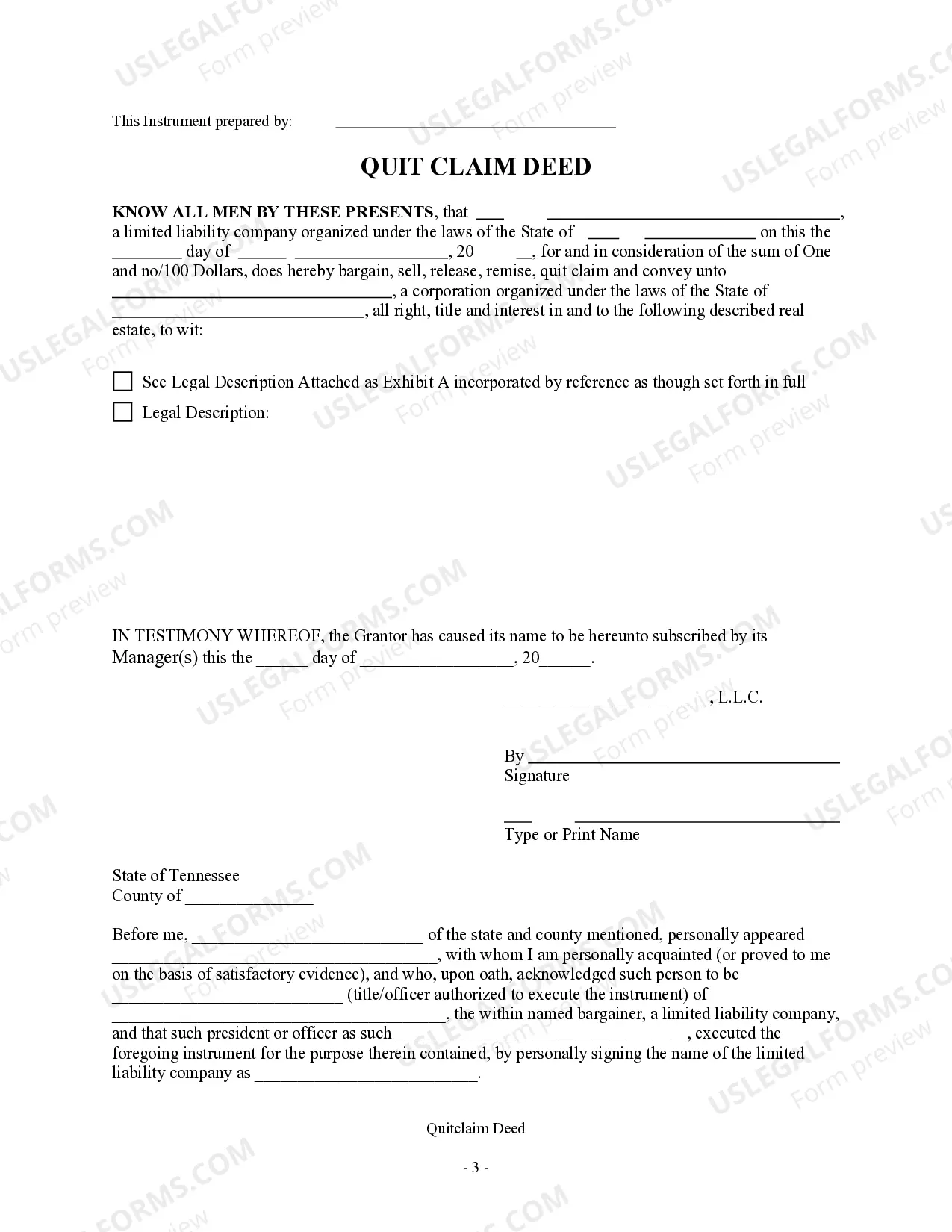
The Quitclaim Deed from Limited Liability Company to Corporation is a legal document used to transfer property ownership from a limited liability company (LLC) to a corporation. This form is specifically designed to ensure that the conveyance complies with state laws, making it distinct from other types of deeds, such as warranty deeds, which provide greater protection to the grantee. This quitclaim deed allows the LLC to transfer any interest it may have in the specified property, though it does not guarantee that the property is free from claims or encumbrances.
Form components explained
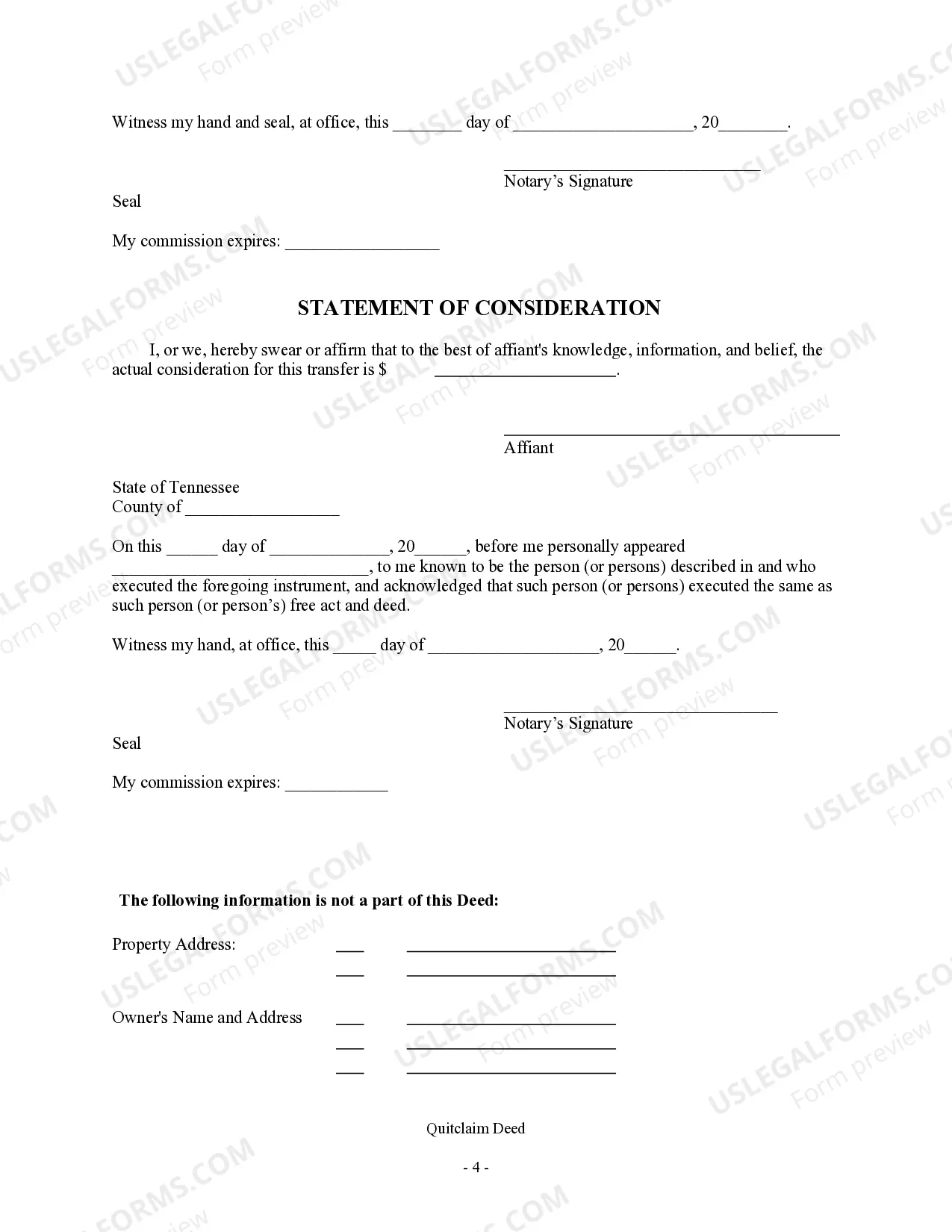
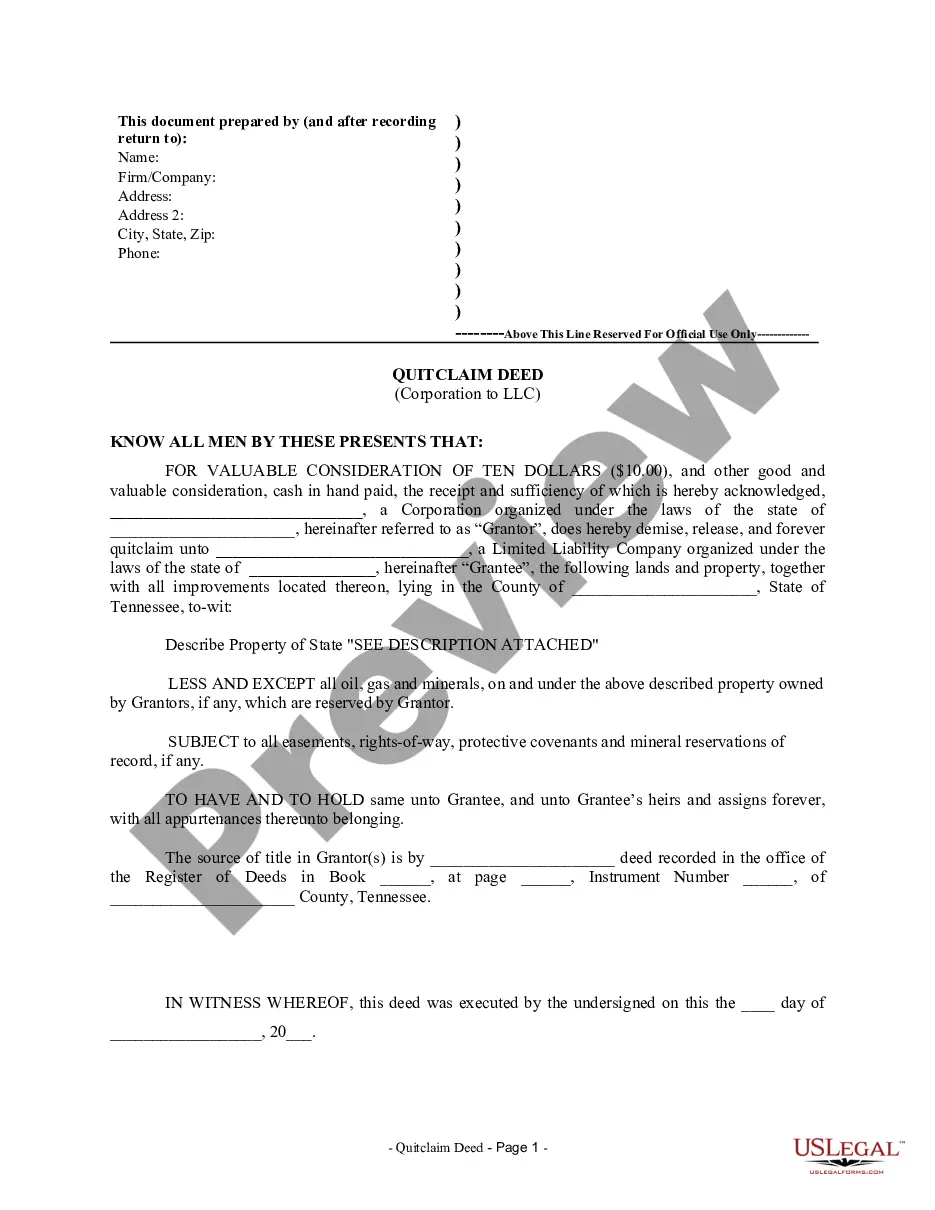
- Identification of the Grantor (limited liability company)
- Identification of the Grantee (corporation)
- Description of the property being conveyed
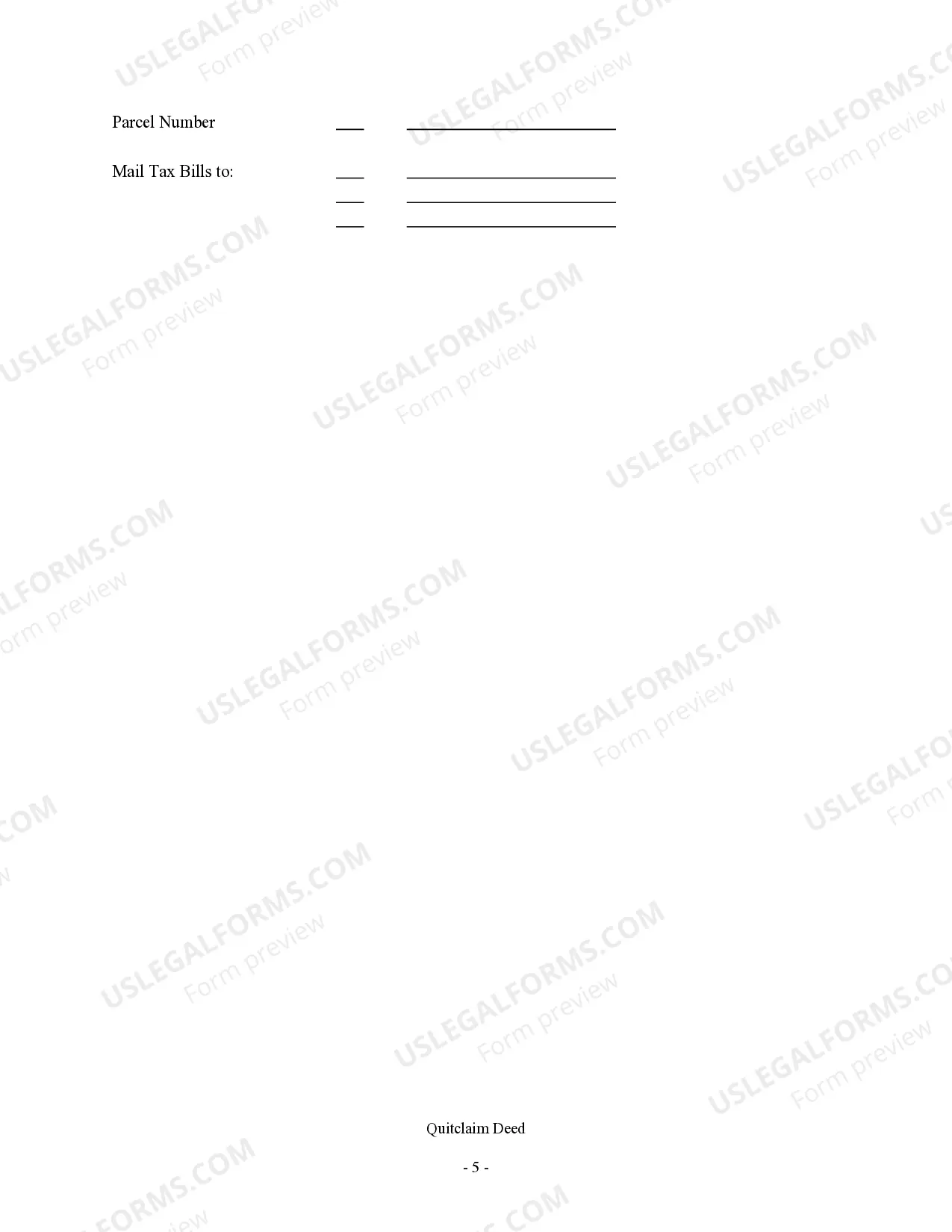
- Statement of consideration (the payment or value exchanged)
- Signatures of notarized witnesses



When to use this form
This quitclaim deed is typically used when a limited liability company is transferring ownership of real estate or property directly to a corporation. Scenarios might include a business restructuring, asset sales, or consolidating ownership within corporate structures. It is important whenever an LLC decides to formally relinquish any claim they might have on real estate or other property assets.
Intended users of this form
The following parties should consider using this quitclaim deed:
- Limited liability companies wishing to transfer property ownership to corporations
- Corporate entities receiving property from an LLC
- Legal representatives or attorneys handling corporate property transfers
Instructions for completing this form
- Identify the parties by entering the names and addresses of the Grantor (LLC) and the Grantee (corporation).
- Provide a detailed description of the property being conveyed.
- Specify the consideration, noting any amount or value exchanged for the transfer.
- Ensure that the document is signed by authorized representatives of both parties.
- Have the signatures notarized to validate the form.
Does this document require notarization?
Yes, this form must be notarized to be legally valid. Notarization confirms the identities of the signers and ensures that the form is signed willingly. US Legal Forms offers integrated online notarization services, available 24/7, ensuring you can complete the process securely via video call without needing to travel.
Get your form ready online
Our built-in tools help you complete, sign, share, and store your documents in one place.
Make edits, fill in missing information, and update formatting in US Legal Forms—just like you would in MS Word.
Download a copy, print it, send it by email, or mail it via USPS—whatever works best for your next step.
Sign and collect signatures with our SignNow integration. Send to multiple recipients, set reminders, and more. Go Premium to unlock E-Sign.
If this form requires notarization, complete it online through a secure video call—no need to meet a notary in person or wait for an appointment.
We protect your documents and personal data by following strict security and privacy standards.

Make edits, fill in missing information, and update formatting in US Legal Forms—just like you would in MS Word.

Download a copy, print it, send it by email, or mail it via USPS—whatever works best for your next step.

Sign and collect signatures with our SignNow integration. Send to multiple recipients, set reminders, and more. Go Premium to unlock E-Sign.

If this form requires notarization, complete it online through a secure video call—no need to meet a notary in person or wait for an appointment.

We protect your documents and personal data by following strict security and privacy standards.
Typical mistakes to avoid
- Failing to provide a complete and accurate property description.
- Not including necessary signatures from both parties.
- Neglecting to have the deed notarized when required.
- Forgetting to specify the consideration amount, which can lead to legal complications.
Advantages of online completion
- Convenience of accessing and completing the form from anywhere.
- Ability to edit the form electronically before finalizing.
- Secure storage options for your completed documents.
- Compliance with legal standards as the forms are drafted by licensed attorneys.
- The quitclaim deed allows for straightforward property transfers between entities, useful for quick transactions.
- It is vital to understand that this form does not guarantee the grantorâs title, so buyers should perform due diligence.
- This deed can be contested if there are claims against the title, so it is best used when property ownership is clear.
Key takeaways
- This quitclaim deed facilitates the transfer of property from an LLC to a corporation.
- Accurate completion and proper signatures are essential for validation.
- State-specific requirements should be verified for compliance.
Looking for another form?
Form popularity
FAQ
Step 1: Form an LLC or Corporation. You can't transfer your real estate property, or any other personal property, into your LLC or corporation until you've actually formed a new legal entity. Step 2: Complete a Quitclaim Deed. Step 3: Record Your Quitclaim Deed.
How to Quitclaim Deed to LLC. A quitclaim deed to LLC is actually a very simple process. You will need a deed form and a copy of the existing deed to make sure you identify titles properly and get the legal description of the property.
Since LLCs are more like partnerships, you cannot force partnerships between people without their agreement. You can only transfer an LLC's ownership interests if all the other LLC owners agree, and even then, only if the state law allows for it.
A Tennessee Quit Claim Deed may be filled out and filed with the Tennessee Register of Deeds of the same County the Property being transferred is in. Laws § 66-5-103(2) Recording (A§ 66-5-106) Submit the quit claim along with the filing fee to the Register's Office in your County.
They are commonly used to add/remove someone to/from real estate title or deed (divorce, name changes, family and trust transfers). The quitclaim deed is a legal document (deed) used to transfer interest in real estate from one person or entity (grantor) to another (grantee).
A Tennessee Quit Claim Deed is a legal document conveys property from a seller to a buyer in an expeditious fashion. This document provides no guarantee that the property title is free of encumbrances and that the seller has the legal right to sell the property.
In order to convey any real property or an interest in property in Tennessee, the deed must be in writing, acknowledged by the grantor, and registered in the county where the property is located. The Annotated Code of Tennessee allows for the transfer of real property through the usage of a variety of deeds.
When done properly, a deed is recorded anywhere from two weeks to three months after closing. However, there are many instances where deeds are not properly recorded. Title agents commit errors, lose deeds, and even go out of business. Even county offices sometimes fail to record deeds that were properly submitted.
But you might be wondering if an owner can transfer a deed to another person without a real estate lawyer. The answer is yes. Parties to a transaction are always free to prepare their own deeds.A quitclaim deed, for example, is far simpler than a warranty deed.