South Dakota Form - Cease and Desist Letter For Trademark Infringement Internet Domain Name
Description
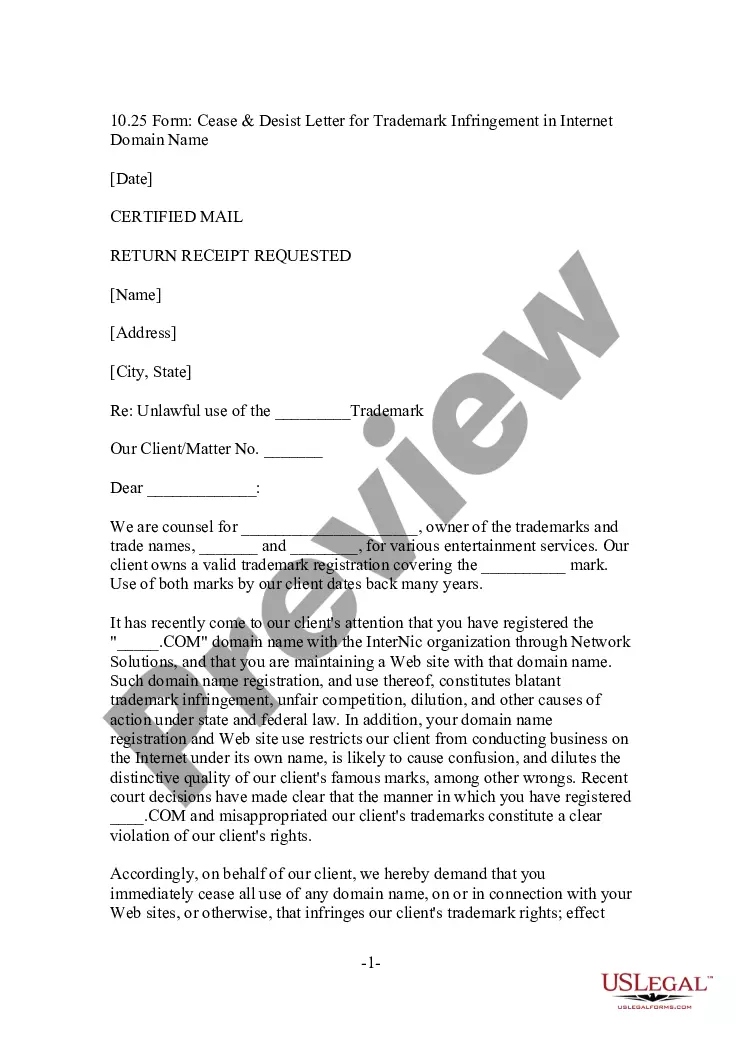
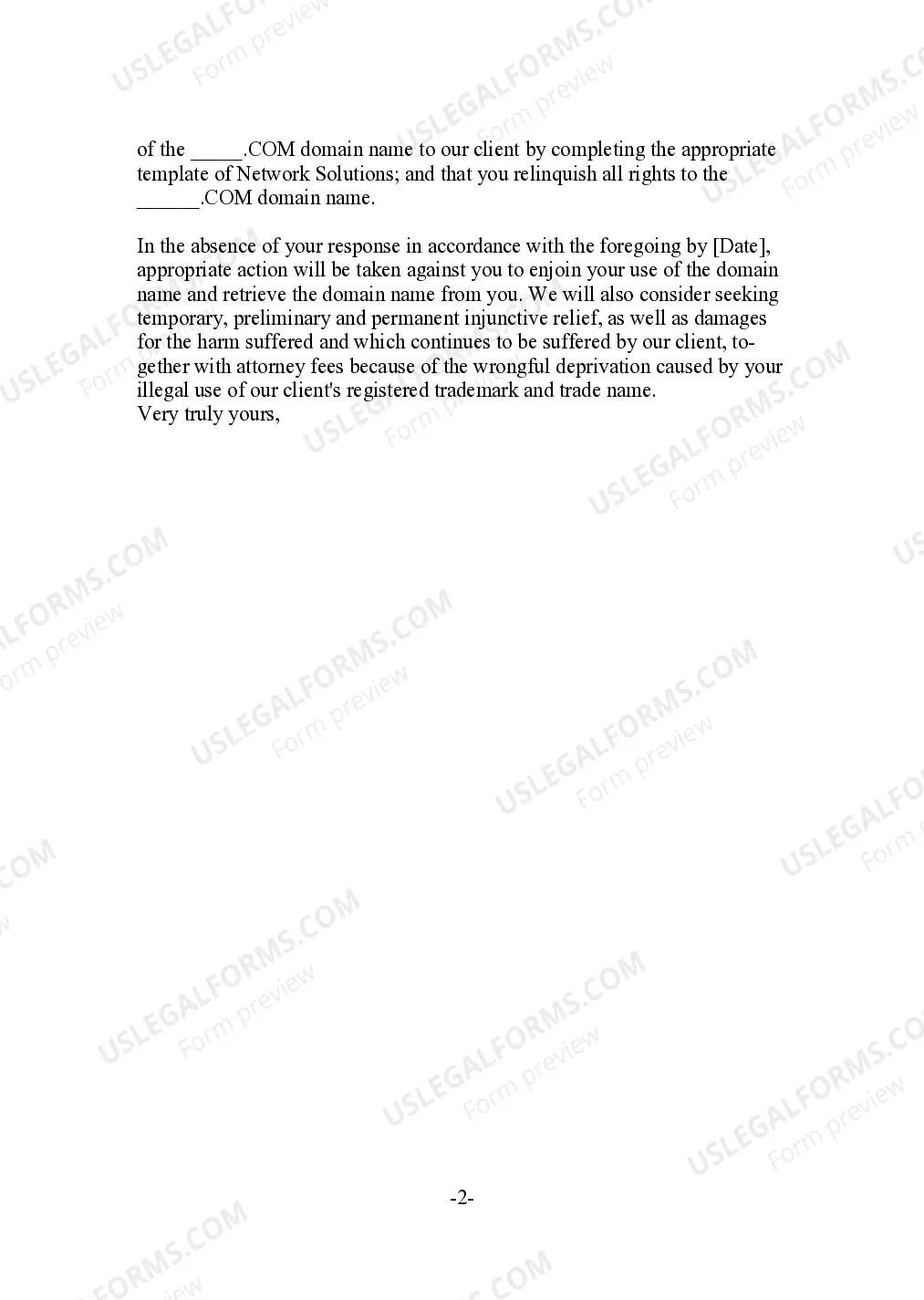
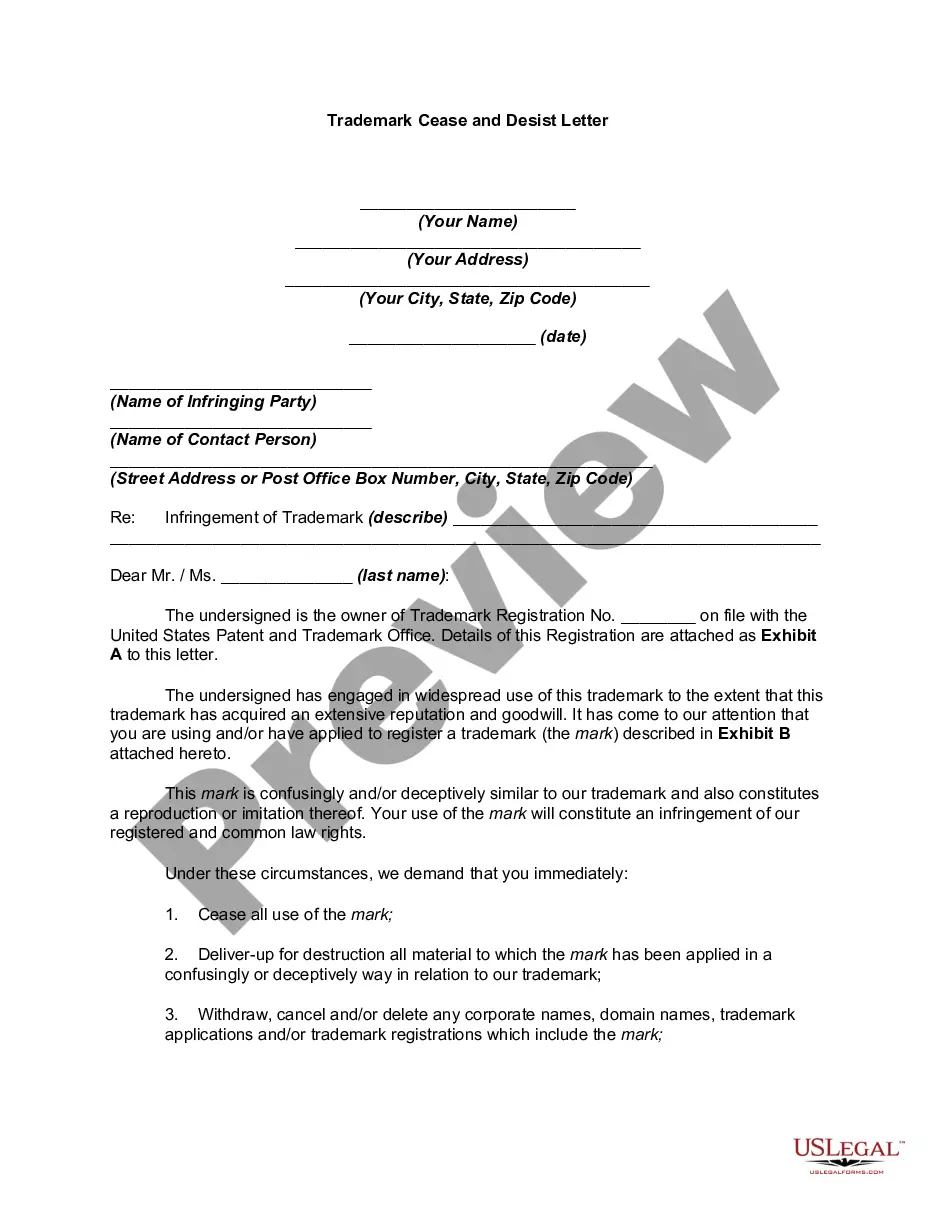
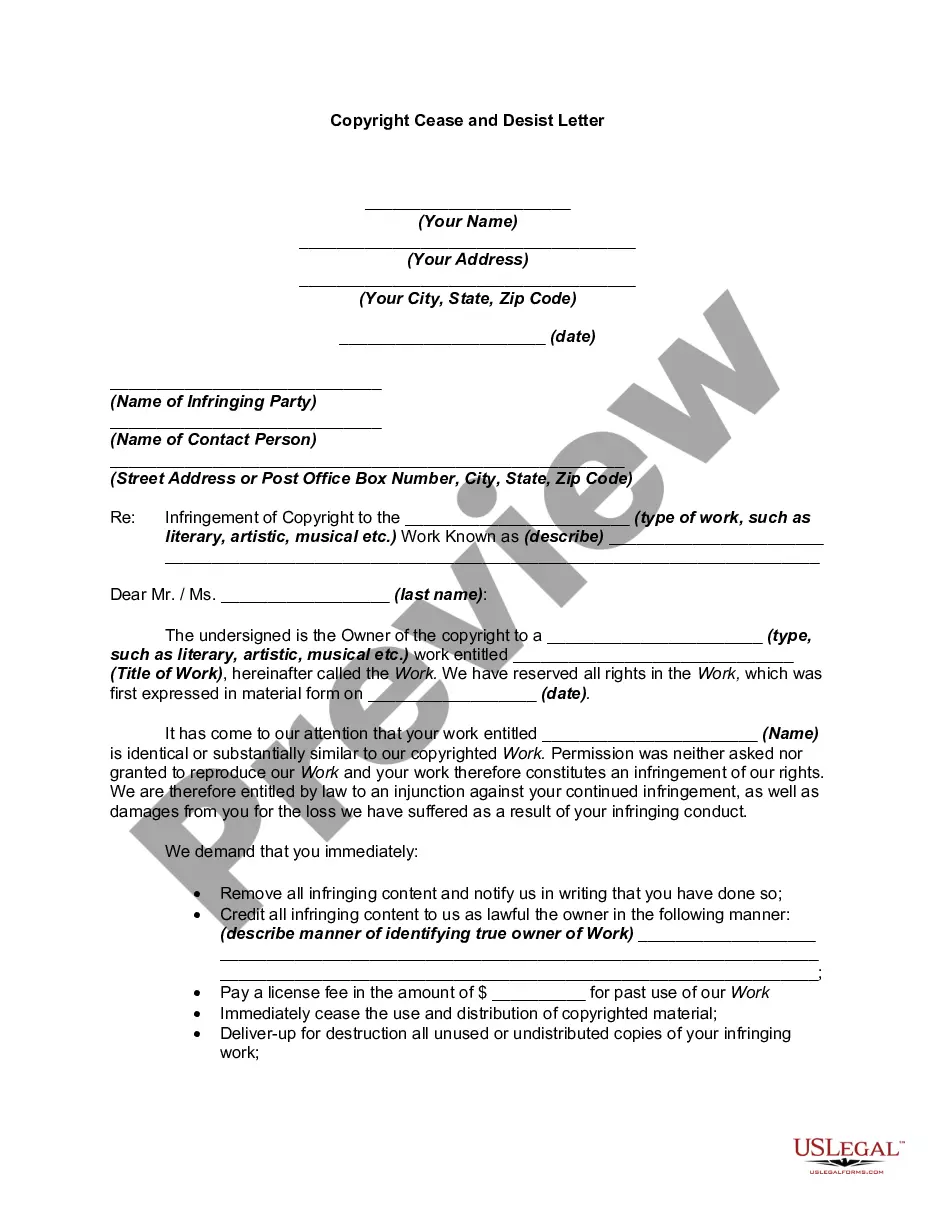
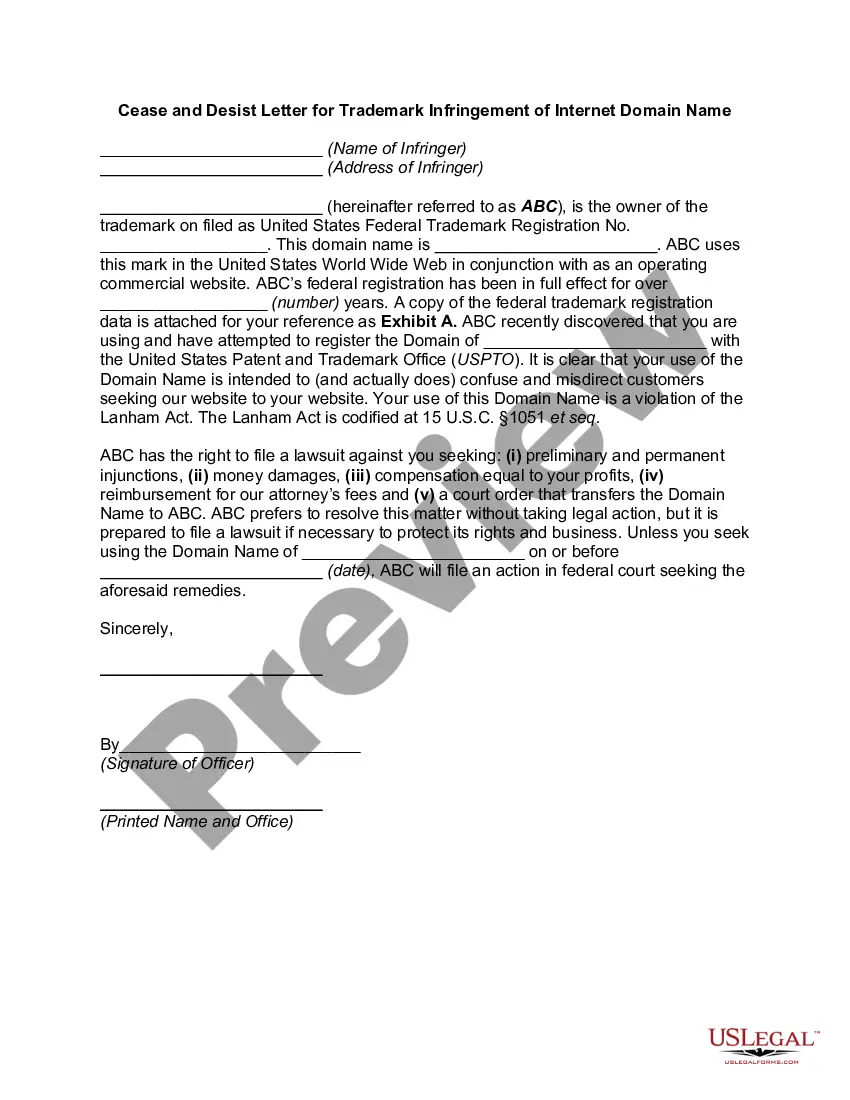
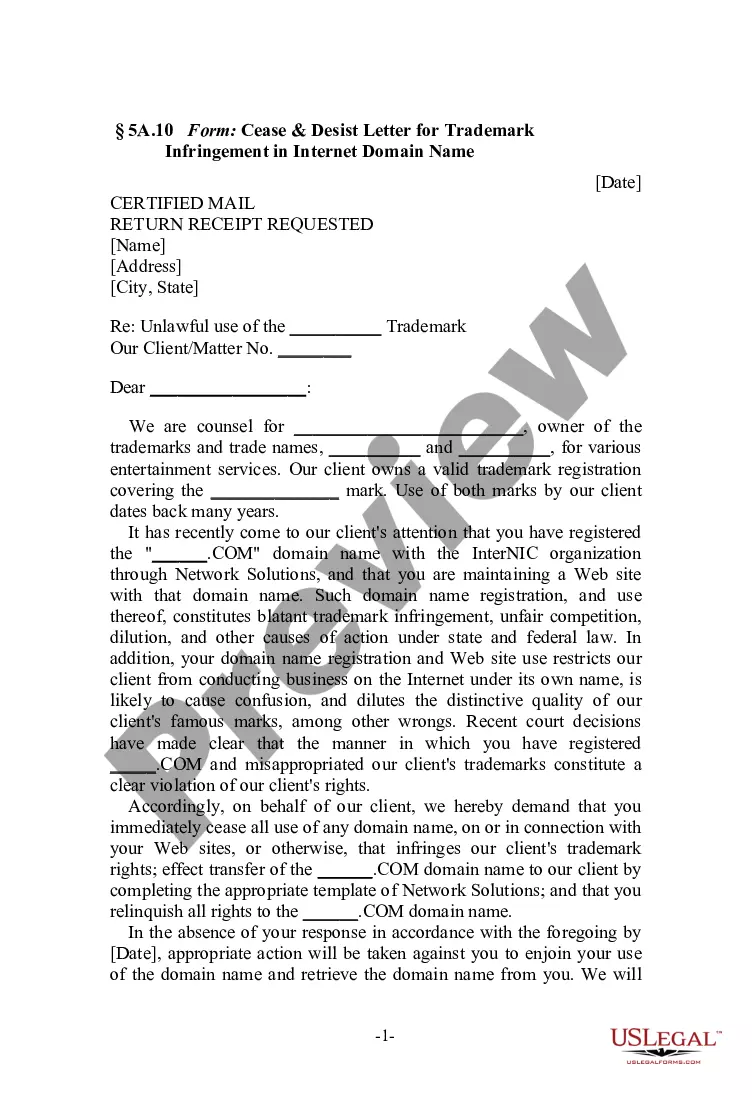
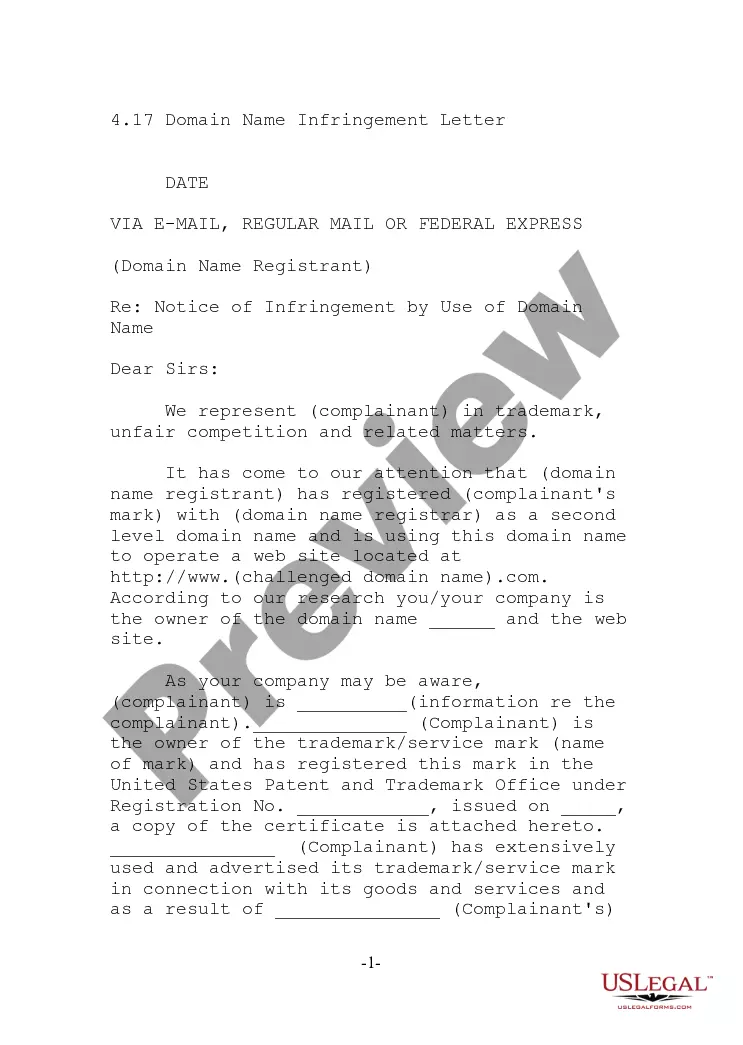
How to fill out Form - Cease And Desist Letter For Trademark Infringement Internet Domain Name?
Are you currently in the position the place you need to have papers for both organization or individual purposes almost every day? There are a variety of lawful record themes available on the net, but locating types you can depend on is not easy. US Legal Forms delivers a huge number of kind themes, much like the South Dakota Form - Cease and Desist Letter For Trademark Infringement Internet Domain Name, that happen to be published to satisfy federal and state specifications.
In case you are currently familiar with US Legal Forms internet site and also have a free account, simply log in. Afterward, you can obtain the South Dakota Form - Cease and Desist Letter For Trademark Infringement Internet Domain Name design.
Unless you provide an bank account and wish to begin using US Legal Forms, abide by these steps:
- Get the kind you will need and ensure it is to the correct metropolis/area.
- Use the Review switch to review the shape.
- Browse the outline to ensure that you have selected the proper kind.
- If the kind is not what you`re trying to find, take advantage of the Lookup field to find the kind that suits you and specifications.
- Once you find the correct kind, click Acquire now.
- Opt for the pricing plan you need, fill in the specified information to create your bank account, and purchase the order utilizing your PayPal or bank card.
- Pick a practical paper formatting and obtain your copy.
Discover every one of the record themes you possess bought in the My Forms menu. You may get a additional copy of South Dakota Form - Cease and Desist Letter For Trademark Infringement Internet Domain Name any time, if necessary. Just click on the needed kind to obtain or print the record design.
Use US Legal Forms, by far the most substantial collection of lawful varieties, to save lots of time and stay away from blunders. The service delivers expertly made lawful record themes which you can use for an array of purposes. Create a free account on US Legal Forms and start creating your daily life a little easier.
Form popularity
FAQ
The purpose of a Trademark Cease and Desist letter is to notify an alleged trademark-infringer that there is indeed trademark infringement underway and stipulate the trademark holder's demands and threats if those demands are not met.
One reason you should always consult with legal counsel before drafting and sending a cease-and-desist letter is that your efforts could backfire.
A domain name cease and desist letter is usually written by an attorney, although sometimes it's written by the trademark owner. The letter is not a court order, so it isn't legally enforceable. The letter contains your opinion, while notifying the offender that they're intruding upon your trademark.
Once a trademark owner becomes aware that a third party is infringing its trademark, the first step frequently is to send the infringing party a cease and desist letter as opposed to immediately resorting to filing a legal complaint, seeking a declaratory judgment, or filing a temporary restraining order.
Cease and desist letters can take many forms (here is one example), but there are six essential components. Proper address of infringing party. ... Proof of your trademark rights. ... Details of the infringement. ... Reasonable time frame for infringing party to respond. ... Demand for written assurance of compliance.
A cease and desist order is not enforceable. However, this does not mean a cease-and-desist letter should be ignored. Cease-and-desist letters can be used as evidence against you if the dispute becomes a lawsuit. The letter demonstrates to the courts that the sender advised you that your actions were unacceptable.
To successfully sue a defendant for cybersquatting, a trademark owner must prove: (i) the defendant's bad faith intent to profit from the use of the trademark; (ii) distinctiveness of the trademark at the time of its registration; (iii) the challenged domain's being identical or confusingly similar to the trademark; ...
Many people use the terms cease-and-desist letter and cease and desist order interchangeably, but one significant difference should not be overlooked. A cease and desist letter has no legal standing. It is merely a warning and a request to stop the offending behavior before legal action is taken.
However, if your domain name contains someone else's registered trade mark, you could be committing trade mark infringement. You can infringe a registered trade mark if you use a sign: that is substantially identical with, or deceptively similar to, the trade mark; and.