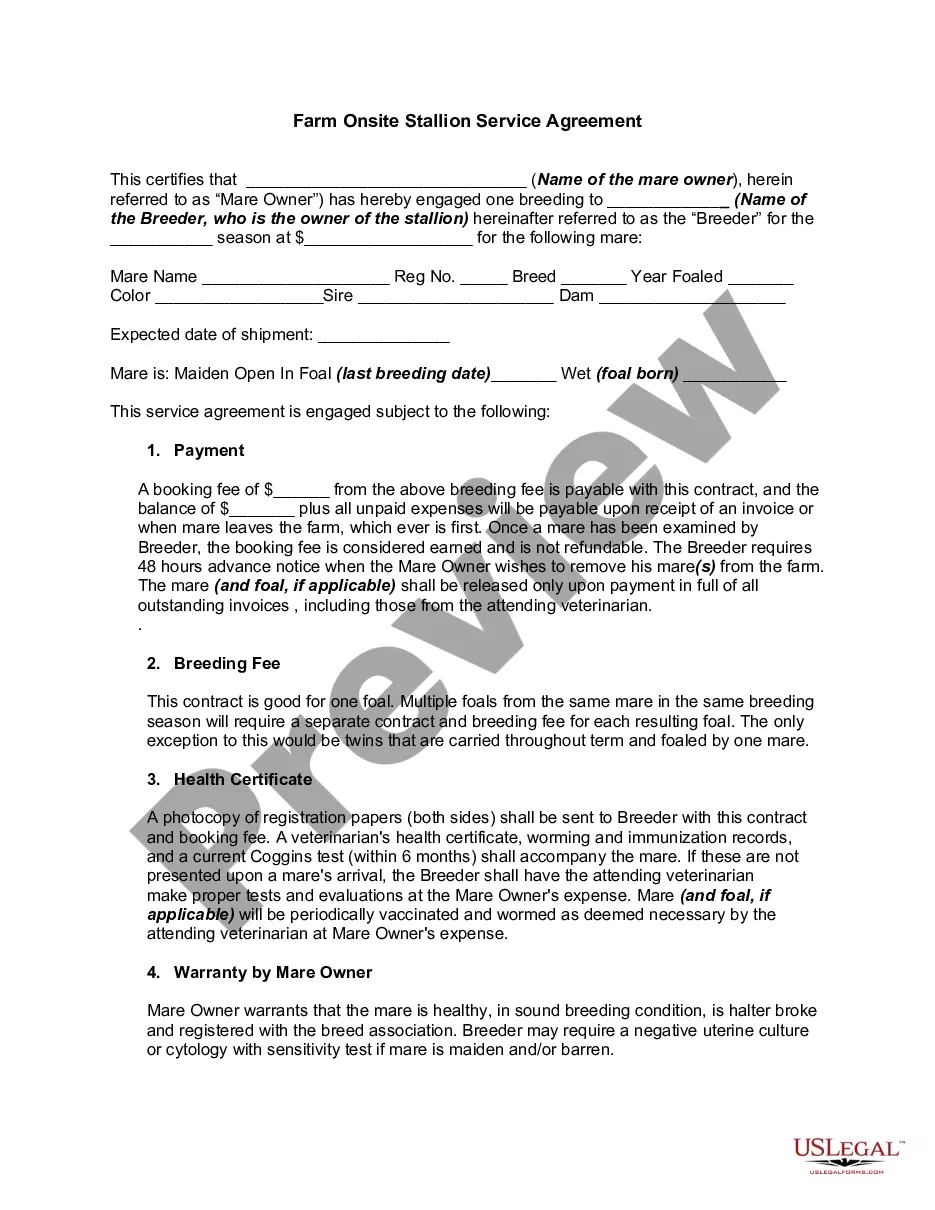
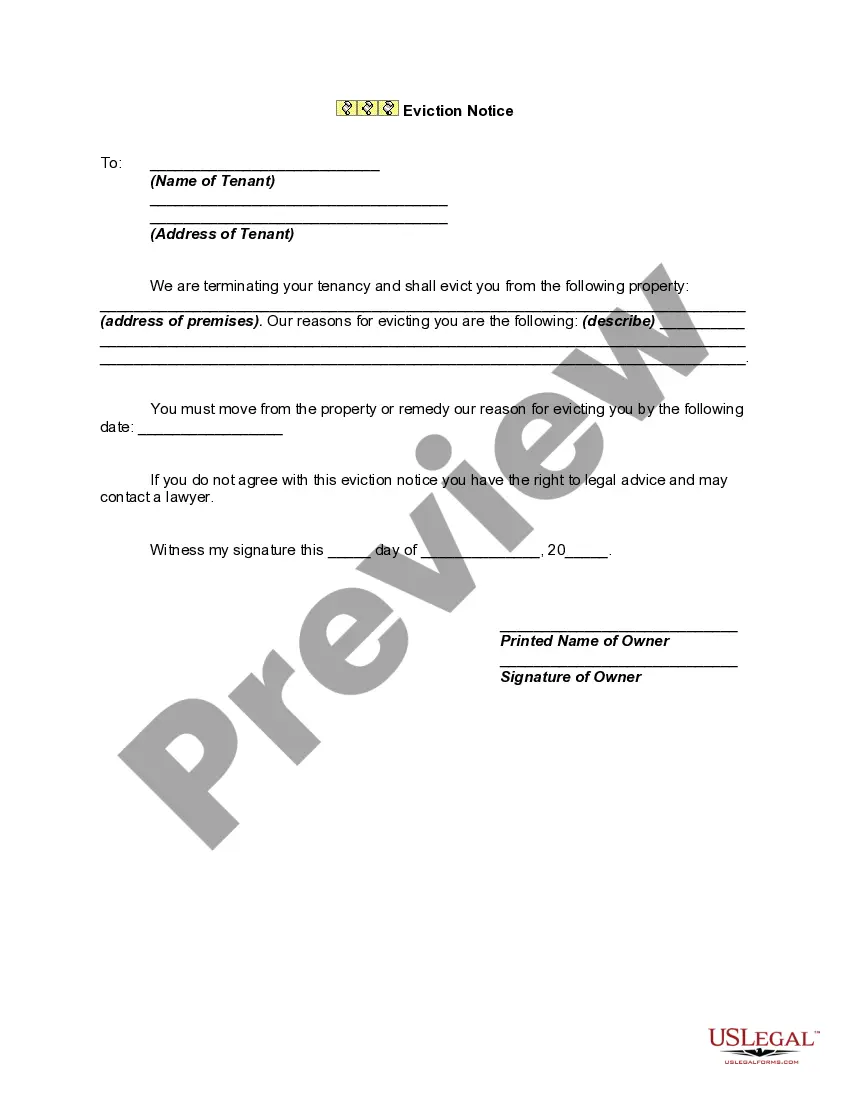
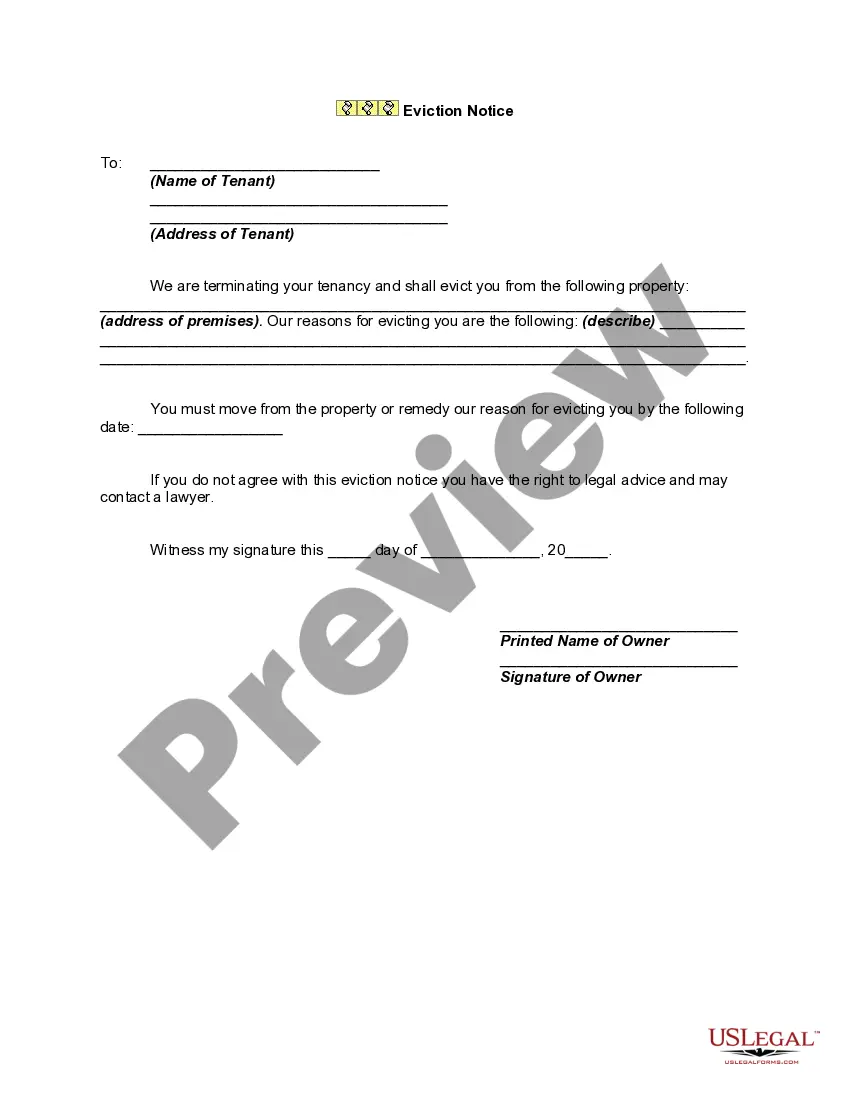
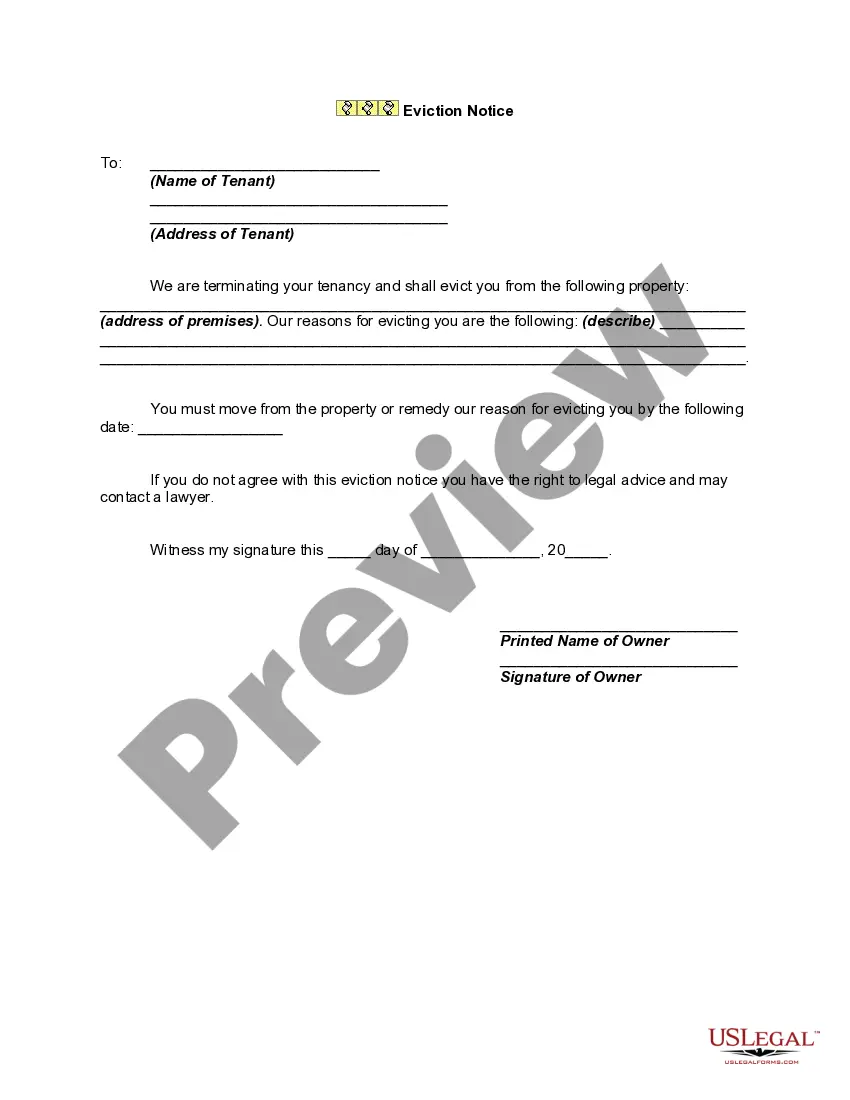
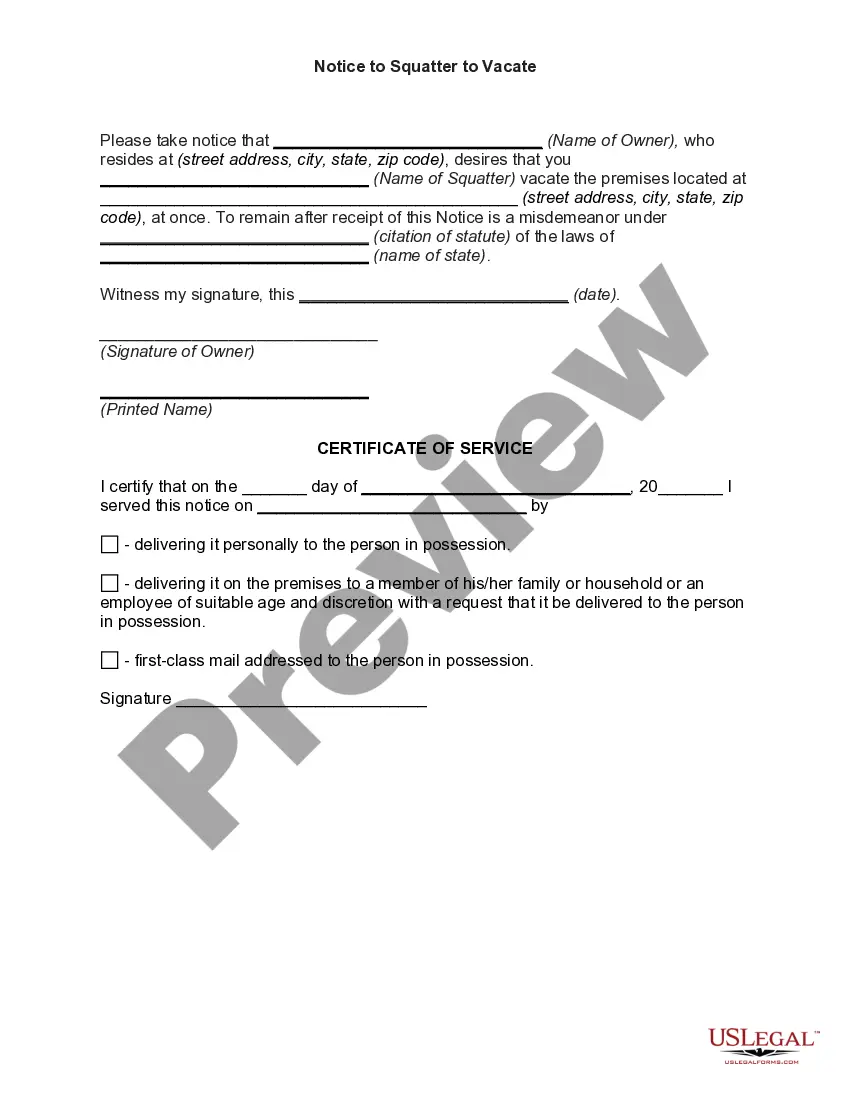
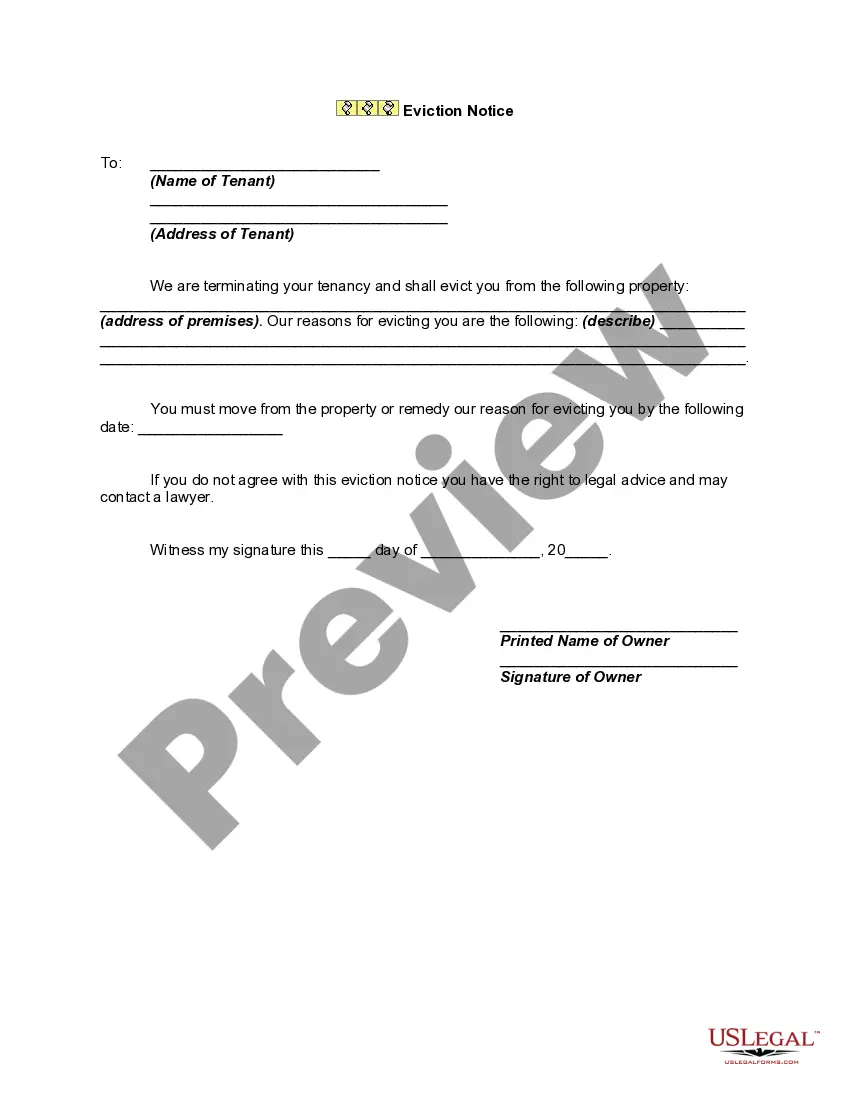
South Dakota Eviction Notice for Spouse
Description
Get your form ready online
Our built-in tools help you complete, sign, share, and store your documents in one place.
Make edits, fill in missing information, and update formatting in US Legal Forms—just like you would in MS Word.
Download a copy, print it, send it by email, or mail it via USPS—whatever works best for your next step.
Sign and collect signatures with our SignNow integration. Send to multiple recipients, set reminders, and more. Go Premium to unlock E-Sign.
If this form requires notarization, complete it online through a secure video call—no need to meet a notary in person or wait for an appointment.
We protect your documents and personal data by following strict security and privacy standards.

Make edits, fill in missing information, and update formatting in US Legal Forms—just like you would in MS Word.

Download a copy, print it, send it by email, or mail it via USPS—whatever works best for your next step.

Sign and collect signatures with our SignNow integration. Send to multiple recipients, set reminders, and more. Go Premium to unlock E-Sign.

If this form requires notarization, complete it online through a secure video call—no need to meet a notary in person or wait for an appointment.

We protect your documents and personal data by following strict security and privacy standards.
Looking for another form?
How to fill out Eviction Notice For Spouse?
Selecting the optimal legitimate document template can be a challenge. Clearly, there are numerous templates available online, but how can you obtain the specific legal form you need? Utilize the US Legal Forms website. The platform provides a vast array of templates, such as the South Dakota Eviction Notice for Spouse, which can be utilized for both business and personal purposes. All of the forms are verified by experts and comply with federal and state regulations.
If you are already registered, Log In to your account and click the Download button to acquire the South Dakota Eviction Notice for Spouse. Use your account to review the legal forms you have previously purchased. Navigate to the My documents section of your account and obtain another copy of the document you need.
If you are a new user of US Legal Forms, here are simple steps for you to follow: First, ensure you have selected the appropriate form for your area/county. You can examine the form using the Preview button and read the form description to confirm it is indeed the right one for you. If the form does not meet your needs, utilize the Search box to find the suitable form. Once you are confident that the form is appropriate, click the Get now button to obtain the form. Choose the pricing plan you prefer and input the required information. Create your account and pay for your order using your PayPal account or credit card. Select the file format and download the legal document template to your device. Finally, complete, edit, print, and sign the acquired South Dakota Eviction Notice for Spouse.
In summary, US Legal Forms is your go-to source for obtaining legitimate document templates that are both reliable and compliant.
- US Legal Forms is the largest collection of legal forms where you can find various document templates.
- Utilize the service to download professionally crafted paperwork that adhere to state requirements.
- Ensure compliance with local regulations when selecting your forms.
- Access previous documents easily through your account.
- Follow the step-by-step guide for new users for a smooth experience.
- Explore the extensive library of templates available online.
Form popularity
FAQ
Talk to your previous landlord. In some cases, a landlord that evicted you might be open to erasing an eviction if you pay any money that's owed and settle any lingering disputes. If you are on good terms, he may also provide a convincing recommendation to your new landlord.
A tenant may have grounds to fight an eviction if any of the following apply: the tenant has paid rent in full. ... the tenant has fixed the problem described by the landlord. ... the landlord did not use the proper procedure for filing an eviction complaint.
If you have bad rental history and have trouble finding an apartment that will approve you for a lease, consider renting with someone else or finding a cosigner. This way, a landlord isn't only depending on your history, but will also take into account your roommate's rental history or co-signer's credit health.
A tenant must be given three (3) days notice to vacate before a Forcible Entry or Detainer action can be commenced by a landlord. If the tenant refuses to move after three (3) days, the landlord can then file a lawsuit (Forcible Entry and Detainer) for eviction.
To stop or stay an eviction you need to ask the court in writing by filling out an Order to Show Cause and bringing it to the courthouse as soon as possible.
If you comply with the eviction notice by either paying all the rent due and owing or correcting the lease violation, then, in Colorado, the landlord cannot proceed with the eviction (Colo. Rev. Stat. § 13-40-104).